
The Cellular Machinery Behind Every Electrolyte Imbalance
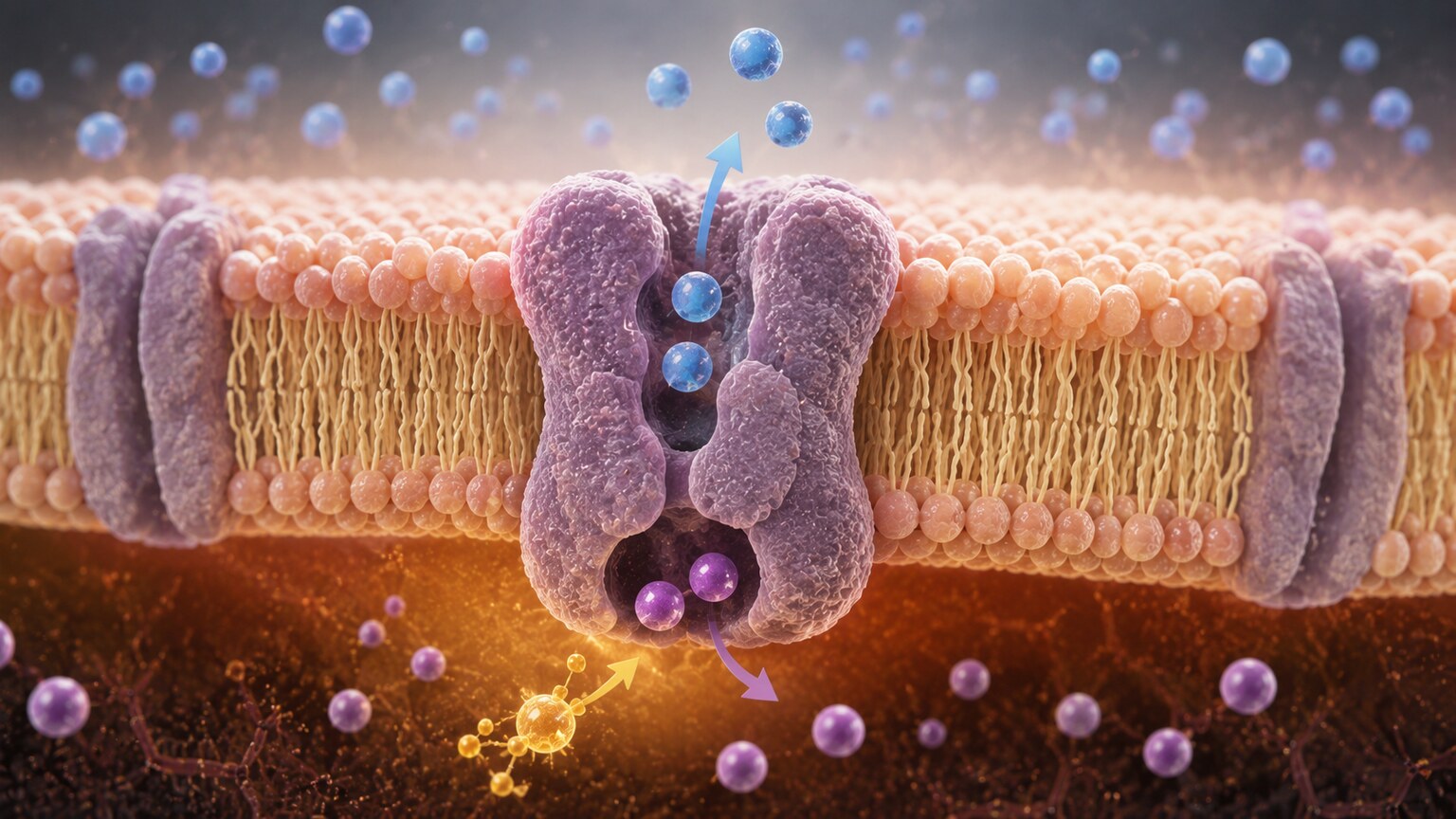
Underneath every abnormal sodium, potassium, or chloride result sits the same small set of physical machinery: ion pumps embedded in cell membranes, hormonal signals that tell the kidneys what to hold onto and what to release, and concentration gradients your body spends real metabolic energy maintaining every second of every day. This article isn't a symptom-by-symptom or condition-by-condition rundown of what raises or lowers a given electrolyte — our other articles on specific triggers like dehydration and medications cover that ground — it's the underlying machinery itself, the pumps and gradients that every one of those specific triggers ultimately disrupts. A study of an unselected group of emergency room patients found 62.6% had at least one abnormal electrolyte on their bloodwork, which says something worth sitting with: this isn't an obscure lab curiosity, it's one of the most common findings in medicine, generated by a genuinely small number of physical mechanisms repeating themselves across an enormous range of illnesses and situations.
What Electrolytes Actually Are, and Why Your Body Needs Them
Electrolytes are simply minerals — sodium, potassium, chloride, and a handful of others — that carry a tiny electrical charge once they're dissolved in the water that makes up most of your blood and body fluids. That's genuinely the whole definition: a mineral with a charge, floating in fluid. What makes them so important is what that charge allows your body to do with them. Every heartbeat, every muscle contraction, and every signal your brain sends down a nerve to move a finger or register a touch depends on electrolytes moving across cell membranes in very specific, carefully controlled amounts. Your body doesn't just tolerate a narrow range for these minerals — it actively, continuously works to hold them there, spending real metabolic energy every second of every day to keep the balance intact.
The Main Electrolytes Your Doctor Actually Tests
A standard electrolyte panel typically reports four values, each with its own specific job. Sodium is the electrolyte most responsible for how much water your body holds onto and where that water sits, making it central to blood pressure and fluid balance. Potassium lives mostly inside your cells rather than in your bloodstream, and it's essential for how your heart muscle and other muscles generate their electrical signal to contract. Chloride tends to follow sodium around and helps maintain the right acid-base balance in your blood. Bicarbonate, sometimes reported as "CO2" on a lab report, is your blood's main buffer against becoming too acidic or too alkaline. Calcium, magnesium, and phosphate are also genuine electrolytes, playing their own essential roles in bone health, muscle function, and cellular energy, but they're usually ordered as separate tests rather than bundled into the standard panel.
The Two Basic Ways an Imbalance Happens
Nearly every specific cause covered in the rest of this article boils down to one of two basic problems, and keeping this framework in mind makes the whole topic far less overwhelming. The first is a water problem: your body can have completely normal total amounts of sodium, for example, but if you lose a lot of water relative to that sodium, or gain a lot of water relative to it, the concentration reported on your blood test shifts even though the actual amount of the mineral itself never changed. The second is a true gain-or-loss problem: your body actually has too much or too little of the mineral itself, through genuine intake, loss, or a shift into or out of your cells. Real-world causes are often a mix of both happening at once, but almost every mechanism described below traces back to one or both of these two basic categories.
Curious what your own lab results are really telling you? Upload them and get a complete, plain-language breakdown in under 15 minutes.
Analyze My ResultsLosing Electrolytes Through Fluid Loss: Vomiting, Diarrhea, and Sweat

Ordinary digestive fluid loss is one of the most common causes of a genuine electrolyte imbalance, and the numbers behind it are striking: research on patients presenting with vomiting and diarrhea has found electrolyte disturbances in 74.7% of them, with low sodium showing up in 41.3% and low potassium in 36.0%. The mechanism is straightforward once you know it — the fluid your body loses through vomiting or diarrhea isn't plain water, it's fluid that's naturally rich in sodium, potassium, and chloride, drawn directly from your digestive tract's own lining. Lose enough of that fluid quickly enough, especially if you're replacing it with plain water rather than anything containing electrolytes, and you dilute what's left in your bloodstream even further on top of what you've already lost directly. Heavy sweating during intense exercise or extreme heat works through a similar route, since sweat also carries meaningful amounts of sodium and chloride out of the body.
When the Kidneys Can't Keep Up
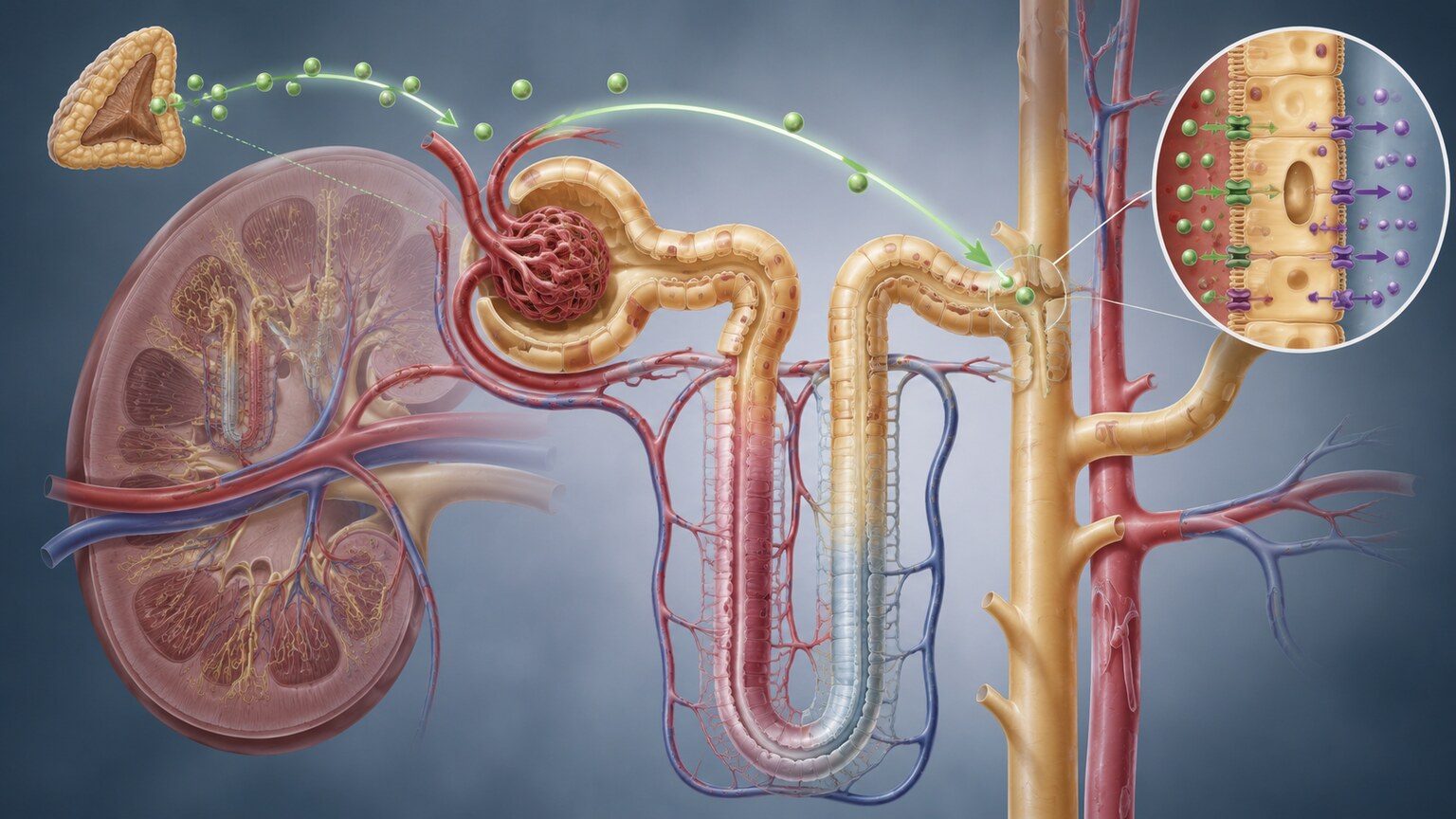
Your kidneys are the single most important organ in this entire story, since they're what decides, moment to moment, exactly how much of each electrolyte gets kept in your blood versus flushed out in urine. When kidney function declines — from chronic kidney disease, an acute injury, or dehydration severe enough to reduce blood flow to the kidneys themselves — that fine-tuned regulation breaks down, and electrolytes that would normally be kept in careful balance start drifting in whichever direction the underlying kidney problem pushes them. Potassium is especially sensitive to this, since struggling kidneys often can't excrete it fast enough, allowing it to build up to genuinely dangerous levels in the blood.
Hormonal Causes: The Body's Own Regulation System Misfiring
Two hormone systems do most of the heavy lifting in electrolyte regulation, and when either one malfunctions, an imbalance predictably follows. The first is the renin-angiotensin-aldosterone system, often shortened to RAAS, which kicks into gear whenever your body senses low blood pressure or low sodium. Aldosterone, the final hormone in that chain, tells the kidneys to reabsorb more sodium and, in the process, push more potassium out into the urine to be eliminated. A tumor or dysfunction affecting the adrenal glands that produce aldosterone can push this system into overdrive or shut it down almost entirely, throwing sodium and potassium off in opposite, predictable directions depending on which way the malfunction runs.
The second major hormone system centers on a substance called antidiuretic hormone, or ADH, sometimes called vasopressin, which controls how much water your kidneys hold onto independent of how much sodium is present. A condition called SIADH — syndrome of inappropriate antidiuretic hormone — causes the body to retain far too much water relative to sodium, diluting blood sodium levels even when the body's actual sodium content hasn't changed at all. This is a textbook example of the "water problem" category described earlier in this article: nothing has gone wrong with sodium itself, only with how much water it's dissolved in.
Medications That Throw Off the Balance
A surprisingly long list of everyday medications can disrupt electrolyte balance as a direct, predictable consequence of how they work, rather than as some unrelated side effect. Diuretics, commonly prescribed for high blood pressure or fluid retention, work specifically by telling the kidneys to excrete more sodium and water — and depending on the exact type of diuretic, they can cause the kidneys to dump extra potassium right alongside it, or in some cases cause the body to retain potassium instead. Certain blood pressure medications, laxatives used in excess, and some antibiotics can each nudge one or more electrolytes out of range through their own specific mechanisms, which is exactly why a doctor reviewing an unexplained electrolyte abnormality will typically ask for a full list of everything you're currently taking, prescription or otherwise.
The Refeeding Syndrome Surprise: When Eating Again Becomes Dangerous
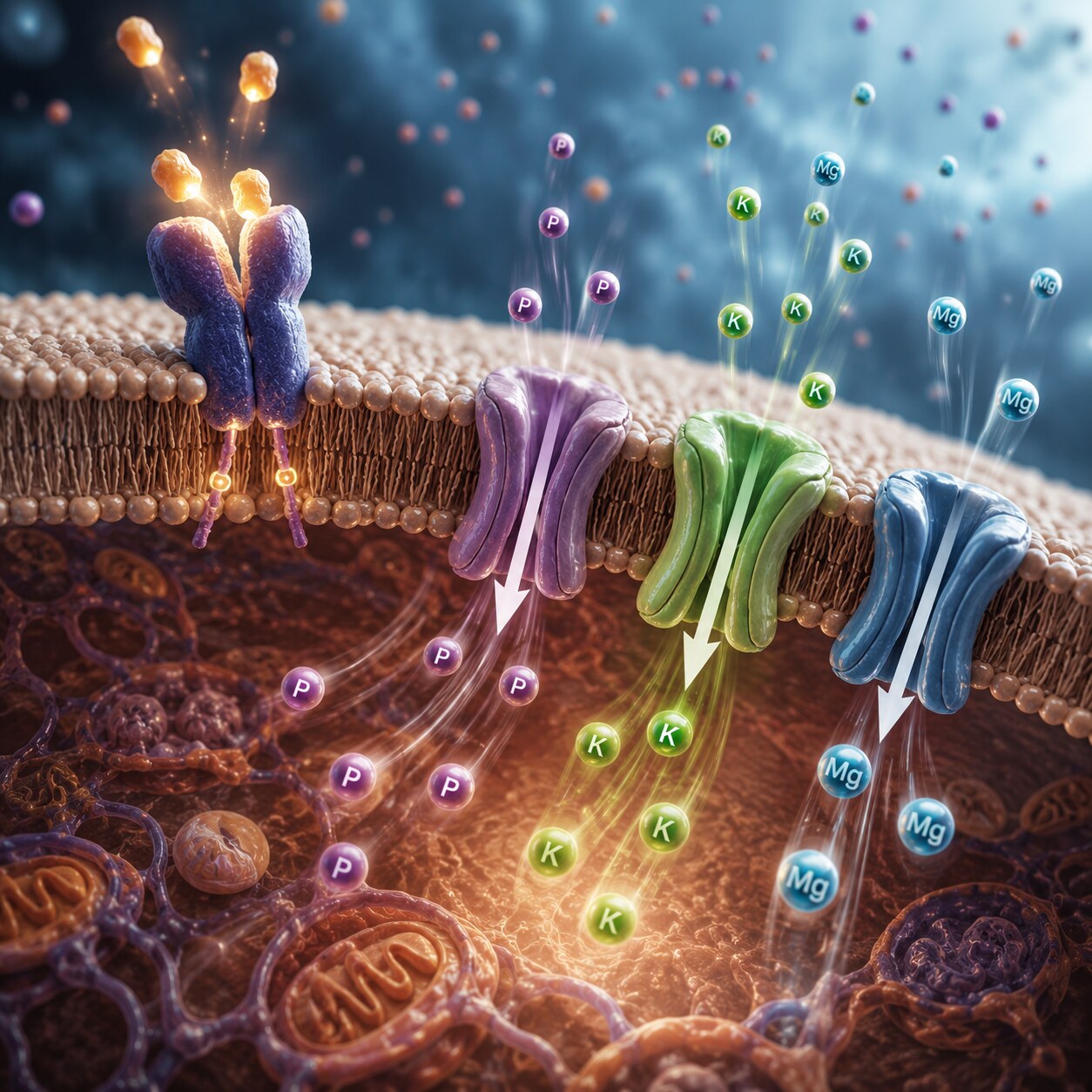
One of the more genuinely counterintuitive causes on this list involves food itself, in a severely malnourished person starting to eat again. During prolonged starvation, the body shifts to burning fat for energy, a process that doesn't require moving phosphate, potassium, or magnesium into cells — so blood levels of these electrolytes can look deceptively normal even while the body's total stores have been quietly depleted for weeks. The moment carbohydrates re-enter the picture, whether through food, tube feeding, or an IV, insulin surges in response, and that insulin surge drives a sudden, massive migration of phosphate, potassium, and magnesium out of the bloodstream and into cells, where they're needed to process the incoming glucose. Blood levels of all three can crash within hours, a genuinely dangerous complication called refeeding syndrome, capable of causing muscle weakness, seizures, and life-threatening heart rhythm problems if it isn't anticipated and managed carefully by reintroducing nutrition slowly and monitoring electrolytes closely along the way.
Why These Numbers Matter So Much for Your Heart and Muscles
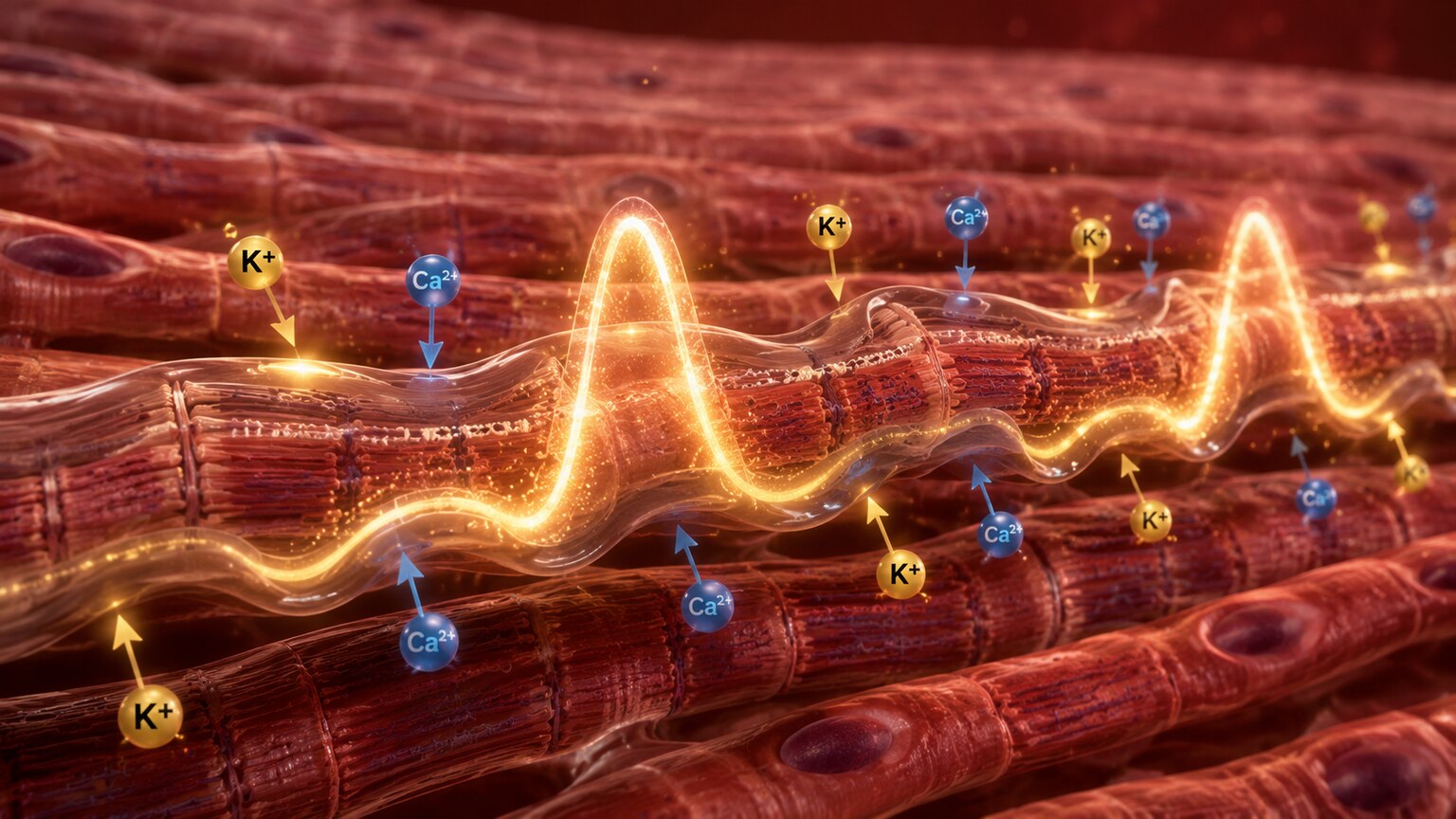
Your heart's steady rhythm depends entirely on electrolytes, particularly potassium and calcium, moving in and out of heart muscle cells in a precisely timed sequence to generate each electrical heartbeat. Push potassium too high or too low, and that electrical timing genuinely breaks down, which is exactly why a severely abnormal potassium level is treated as a medical emergency rather than something to address at a routine follow-up appointment. The same electrical principle governs every other muscle in your body and your entire nervous system, which is why electrolyte imbalances show up as such a wide, seemingly unconnected range of symptoms — muscle cramps, weakness, confusion, an irregular heartbeat, or seizures in more severe cases — all tracing back to the same underlying electrical disruption at the cellular level.
Mild vs. Severe: How Doctors Judge Urgency
Not every electrolyte abnormality carries the same weight, and doctors read severity along a spectrum rather than treating any result outside the reference range as an automatic emergency. A mildly abnormal value found incidentally on routine bloodwork, with no symptoms and no dramatic change from a prior result, is often handled with a simple repeat test and a look for an obvious, easily corrected cause. A markedly abnormal value, a rapid change from a recent baseline, or a result paired with real symptoms — confusion, severe weakness, chest palpitations — moves quickly toward urgent evaluation, sometimes including an EKG to directly check whether the heart's electrical rhythm is already being affected. Research has specifically found that increasing severity and increasing numbers of simultaneous electrolyte imbalances correlate with longer hospital stays and higher mortality, which is part of why the magnitude of an abnormality, not just its presence, drives how doctors respond.
The Anion Gap: A Clue Hidden in the Math
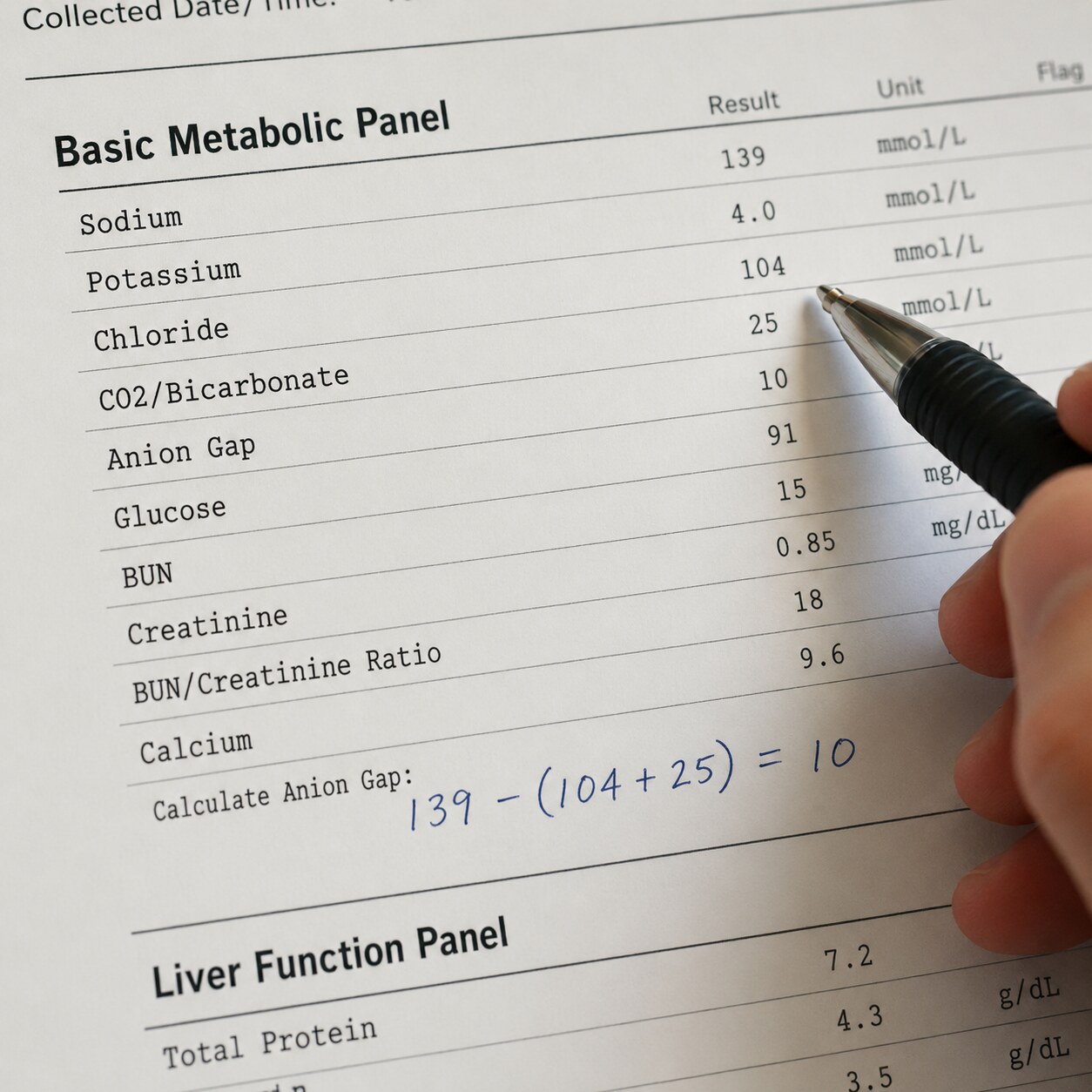
Buried inside a standard electrolyte panel is a calculated value called the anion gap, which most people have never heard explained in plain language. It's simply arithmetic: your doctor's lab software subtracts your chloride and bicarbonate from your sodium, and the leftover number reflects other, unmeasured charged particles normally floating around in your blood in small amounts. When that gap grows unusually wide, it's a genuine clue that something is generating an unusual amount of acid in your body — conditions like uncontrolled diabetes, kidney failure, or certain forms of poisoning are classic causes. The anion gap isn't a separate test you order on its own; it's a number quietly calculated from the same electrolyte panel already being discussed throughout this article, adding one more layer of diagnostic information without requiring an additional blood draw.
What Doctors Do to Fix an Imbalance
Treatment always targets the underlying cause first, not just the number on the page. A sodium level that's low because of excess water retention gets treated by restricting fluids or addressing the hormone problem driving that retention, while a sodium level that's low because of true sodium loss through vomiting or diarrhea gets treated by actually replacing sodium, often through an IV solution formulated with a specific concentration for exactly that purpose. Potassium correction is handled with particular caution, since replacing it too quickly carries its own real risks to heart rhythm — mild deficiencies are often corrected with oral supplements over days, while dangerous levels in either direction may call for medications that shift potassium in or out of cells within minutes as a bridge to more definitive treatment.
What to Ask Your Doctor About Your Own Electrolyte Panel
A few direct questions tend to clarify an unfamiliar result quickly. Ask whether the abnormality looks more like a water-balance issue or a true gain-or-loss of the mineral itself, since that single distinction, covered early in this article, shapes the entire treatment approach. Ask whether any current medications could plausibly explain it, since diuretics and several other common drugs are frequent, easily identified culprits. If you've recently had vomiting, diarrhea, heavy sweating, or a significant change in eating patterns, mention it directly, since each of those maps onto one of the specific mechanisms covered above. And if a value is only mildly abnormal with no symptoms, it's entirely reasonable to ask whether a simple repeat test is a sensible next step before pursuing anything more involved.
Frequently Asked Questions
How common are electrolyte imbalances really?
Very common. One study of unselected emergency room patients found 62.6% had at least one abnormal electrolyte, and among patients presenting specifically with vomiting and diarrhea, electrolyte disturbances were found in 74.7% of cases.
What are the two basic ways an electrolyte imbalance can happen?
Either a water-balance problem, where the total amount of the mineral hasn't changed but the fluid it's dissolved in has, or a true gain-or-loss problem, where the body actually has too much or too little of the mineral itself.
Why do the kidneys matter so much for electrolyte balance?
The kidneys decide, continuously, how much of each electrolyte is kept in the blood versus excreted in urine. When kidney function declines, that fine-tuned regulation breaks down, and electrolytes drift out of their normal range.
Can eating again after not eating for a long time cause an electrolyte imbalance?
Yes, a condition called refeeding syndrome. Reintroducing carbohydrates after prolonged malnutrition triggers an insulin surge that drives phosphate, potassium, and magnesium rapidly into cells, causing blood levels to crash if not carefully monitored.
What is the anion gap, and is it a separate test?
It's a calculated value, not a separate blood draw, found by subtracting chloride and bicarbonate from sodium. An unusually wide gap can indicate the body is generating excess acid, from causes like uncontrolled diabetes or kidney failure.
Why do electrolyte imbalances affect the heart specifically?
The heart's electrical rhythm depends on precisely timed movement of potassium and calcium in and out of heart muscle cells. Significant imbalances in either can disrupt that timing, which is why severe cases are treated as medical emergencies.
Conclusion
Electrolyte imbalances look, on the surface, like a sprawling topic with dozens of unrelated causes — dehydration, kidney disease, hormone disorders, medications, even eating after a period of malnutrition. Underneath that variety, though, sits a genuinely small set of mechanisms repeating themselves: a shift in water relative to the mineral, a true gain or loss of the mineral itself, or a breakdown in the hormonal and kidney systems that normally keep everything in line. Understanding which of those mechanisms plausibly applies to your own situation is what turns an unfamiliar, slightly alarming lab result into something concrete you can discuss clearly with your doctor — and given how many people walk around with at least one electrolyte quietly out of range at any given time, that's a genuinely useful thing to understand.
Still Not Sure What Your Results Mean?
Upload your labs and get a complete, visual, plain-language interpretation of every biomarker — delivered to your inbox in under 15 minutes.
Get My ReportThis article is for educational purposes only and does not constitute medical advice. Always consult your healthcare provider regarding your specific lab results.