
What Does an Abnormal Anion Gap Mean?
The anion gap isn't a value your body produces directly — it's a number your lab's computer calculates from three other results already sitting on your basic metabolic panel: sodium, chloride, and bicarbonate. It's essentially a piece of chemistry bookkeeping, a way of checking whether the electrical charges floating around in your blood add up the way they should. When they don't add up cleanly, it usually means something is quietly dumping extra acid into your bloodstream, or something else entirely — a kidney problem, a toxic exposure, even low blood protein — is throwing the math off. A high anion gap is the more urgent of the two directions and often means your body is fighting to buffer a wave of acid it didn't expect. A low anion gap is rarer and usually points somewhere completely different, toward protein levels rather than acid. Neither number tells the whole story on its own, but together with the rest of your panel, the anion gap is one of the fastest tools a clinician has for narrowing down what's actually going on inside you.

Figure 1. The anion gap represents unmeasured negatively charged particles that must exist to keep blood electrically neutral once sodium, chloride, and bicarbonate are accounted for.
Curious what the rest of your metabolic panel is telling you? Upload your results and get a complete, plain-language breakdown in under 15 minutes.
Analyze My ResultsWhat Exactly Is the Anion Gap?
To understand the anion gap, it helps to picture your bloodstream as a bucket of salty water carrying tiny electrically charged particles called ions. Some of these ions carry a positive charge — the biggest one by far is sodium, the same mineral in table salt. Others carry a negative charge, and the two biggest negatively charged ones your lab actually measures are chloride and bicarbonate (the same buffering substance found in baking soda, which your body uses to neutralize acid). Basic physics says the total positive charge in your blood has to exactly equal the total negative charge — nature doesn't allow a bucket of fluid to sit around with a net electrical charge. But here's the catch: your standard blood panel doesn't measure every single charged particle in your body. It measures sodium on the positive side, and chloride plus bicarbonate on the negative side, and leaves out a whole cast of other charged players — proteins, phosphate, sulfate, and various organic acids — that are present in smaller, normally stable amounts.
Because those "invisible" negative particles exist but aren't directly counted, when you do the math on paper — sodium minus (chloride plus bicarbonate) — you don't get zero. You get a small positive leftover number, and that leftover is the anion gap. Think of it like balancing a household budget where you know your total income, but your expense list only itemizes two out of five categories. The gap between what you counted and what you know must be true represents everything you didn't itemize — in this case, mostly negatively charged proteins like albumin, plus small amounts of other acids and minerals. Under normal circumstances, that uncounted category stays fairly constant from person to person, which is exactly why the anion gap has a predictable normal range. It's when that "uncounted" category swells — usually because your body is suddenly producing a flood of a new, unmeasured acid — that the gap widens past normal, and it's when your unmeasured proteins vanish that the gap can shrink below normal too.
It helps to also understand why your body cares so much about acid-base balance in the first place. Every enzyme in your body — the tiny molecular machines that carry out essentially every chemical reaction keeping you alive, from digesting food to contracting muscle to firing a nerve signal — is built out of proteins folded into a very specific three-dimensional shape. That shape is remarkably sensitive to the acidity of the fluid surrounding it. Blood pH is normally held in an extraordinarily narrow window, between about 7.35 and 7.45, and even a swing of a few tenths of a point outside that range can start to distort how efficiently those enzymes work. Because the margin for error is so small, your body has several overlapping systems dedicated purely to defending it: fast-acting chemical buffers like bicarbonate that neutralize acid within seconds, a respiratory system that can blow off acid-forming carbon dioxide within minutes by breathing faster or deeper, and kidneys that can excrete excess acid over hours to days. The anion gap is essentially a window into how hard that first line of defense — the bicarbonate buffer — has had to work, and by extension, a clue about what's straining it.
It's also worth being clear about what the anion gap is not. It is not a direct measurement of pH, and it's entirely possible to have a normal pH with an abnormal anion gap in early or mild cases, since your body's buffering systems can often keep the blood's overall acidity within range for a while even as the underlying imbalance builds. It's also not a stand-alone diagnostic test in the way a pregnancy test or a strep swab is — nobody receives a diagnosis of "anion gap." Instead, it's best understood as a clue, a mathematical byproduct of values you were already going to get, that helps route the next set of questions a clinician asks. That distinction matters for how much weight to put on a single abnormal result: it's a strong reason to look further, not a verdict on its own.
How Is the Anion Gap Actually Calculated?
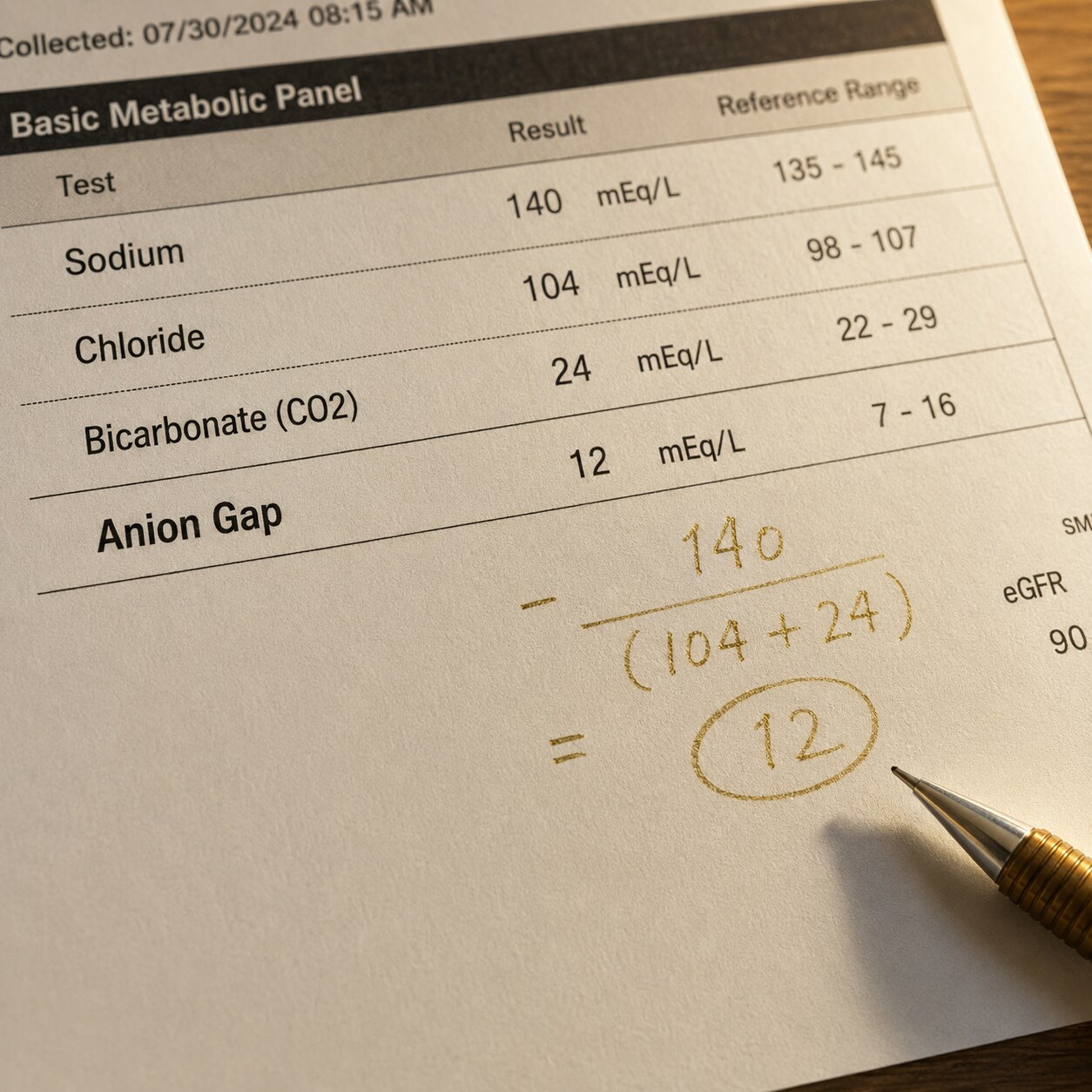
Figure 2. The anion gap is calculated as sodium minus the sum of chloride and bicarbonate, all measured in milliequivalents per liter.
The formula itself is simple arithmetic, and you don't need a chemistry background to follow it: anion gap = sodium − (chloride + bicarbonate). All three numbers already exist on a standard basic metabolic panel (BMP) or comprehensive metabolic panel (CMP) — the same blood draw that checks your kidney function, blood sugar, and other electrolytes — so your lab doesn't need to run any extra test to produce this number. It's calculated automatically, often without a clinician even having to ask for it, and shows up as its own line on the printed report. Some labs also fold potassium into the equation, using sodium plus potassium minus chloride plus bicarbonate, which shifts the "normal" range upward by roughly 3 to 4 points since potassium is also positively charged. Because of this, the exact reference range printed on your report can vary slightly depending on which version your specific lab uses, and it's one more reason a single number should always be read in the context of the range printed right next to it rather than compared to a number you remember from somewhere else.
It's worth pausing on why bicarbonate specifically matters so much here. Bicarbonate is your body's primary chemical buffer — the substance that soaks up excess acid before it can damage your cells, the way a sponge soaks up a spill before it spreads. Every time your body neutralizes a stray acid molecule, it uses up a little bicarbonate to do it. If acid production suddenly increases — from a metabolic problem, a toxin, or simply not making enough insulin — your bicarbonate gets consumed faster than your body can replace it, and the measured bicarbonate number on your panel drops. Since bicarbonate sits on the negative side of the equation, a falling bicarbonate value directly pushes the calculated anion gap upward, which is exactly the mathematical fingerprint of an acid-producing problem happening somewhere in the body.
What Counts as a Normal Anion Gap?
Most laboratories consider a normal anion gap to fall somewhere between roughly 8 and 12 milliequivalents per liter (mEq/L) when calculated using the traditional sodium-minus-chloride-and-bicarbonate formula, though some reference ranges run as wide as 3 to 11, or as high as 16, depending on the exact lab equipment and formula used. This variability is normal and expected — it isn't a sign that any one lab is wrong, just that measurement technology and formulas differ slightly between facilities. What matters most is comparing your result to the specific reference range printed on your own report, not to a number from a website or a friend's results. A gap that falls comfortably inside that printed range generally means the "uncounted" category of ions in your blood — mostly protein, plus a small, stable background of other substances — is behaving as expected, with no unusual acid buildup and no major shift in protein levels pulling the number in either direction.
It's also worth understanding why labs haven't all converged on a single, universal number over the decades this test has been in use. Part of the answer is technical: older lab equipment measured chloride using a method that ran slightly differently than the ion-selective electrodes most labs use today, and that historical shift alone moved the "normal" range for many facilities down by a few points compared to ranges published in older textbooks. If you ever compare an anion gap result from decades ago to one drawn today, don't assume the numbers are directly comparable without checking which formula and equipment produced each one. This is a good example of why lab medicine, as a field, leans so heavily on "reference ranges" rather than one fixed universal number — the underlying biology is consistent from person to person, but the measurement tools calibrating that biology are not perfectly identical across every lab in the country.
There's also a well-known but often overlooked factor that can shift a person's "true" baseline gap even when nothing is medically wrong: age and general health status. Healthy young adults tend to sit toward the middle of the normal range, while older adults — particularly those with mildly reduced kidney function that hasn't yet become clinically significant, or those with slightly lower baseline albumin from age-related changes in nutrition and muscle mass — can run a point or two lower than a 25-year-old would, even with nothing acutely wrong. None of this means the reference range is useless for older patients; it simply means a single borderline result is best interpreted in the context of a person's overall history and prior labs, rather than treated as an isolated red flag in a vacuum.
A High Anion Gap: When the Body Is Producing Extra Acid
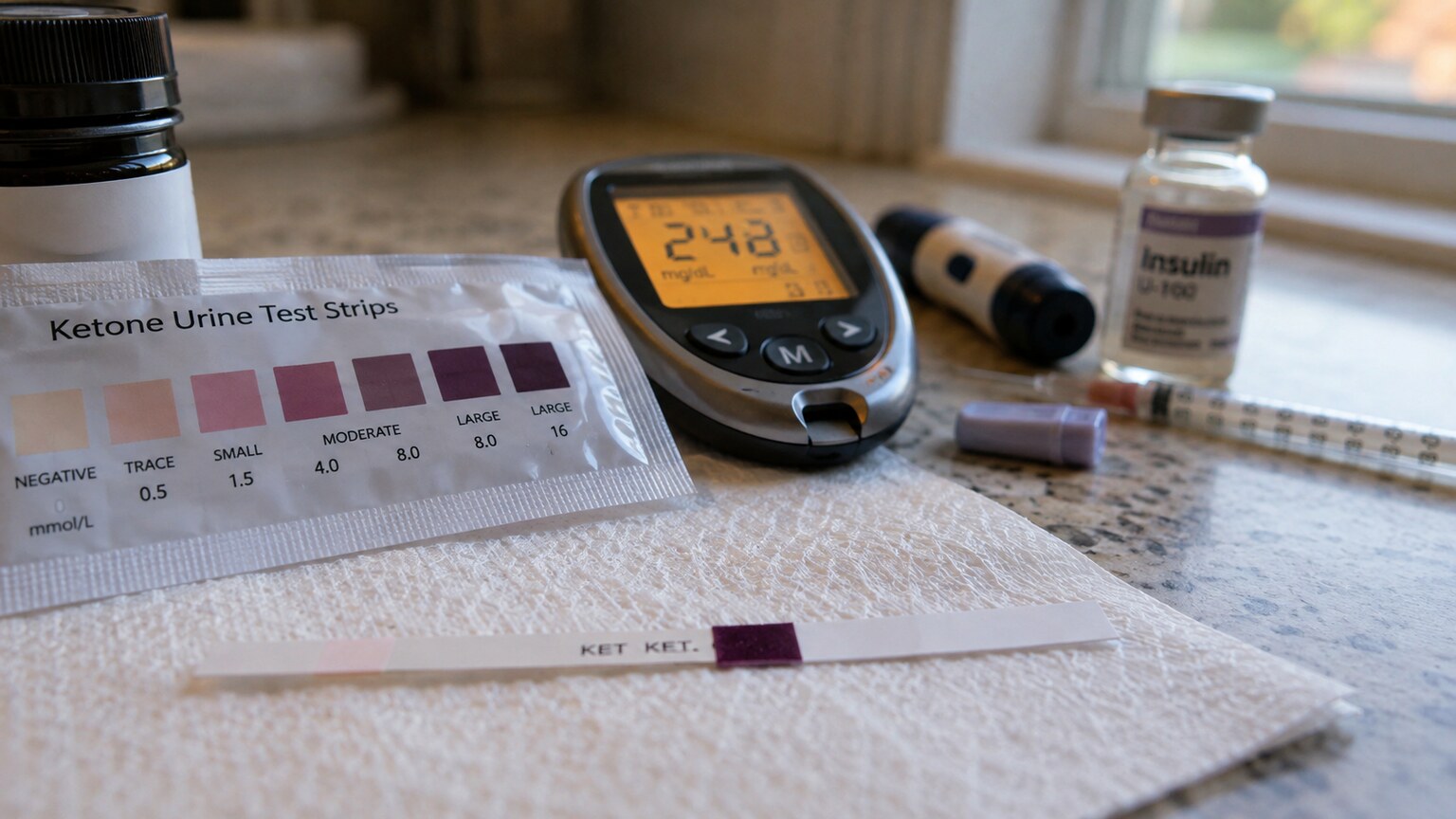
Figure 3. Ketone urine test strips turning deep purple reflect the buildup of ketoacids that widens the anion gap in diabetic ketoacidosis.
A high anion gap is the direction that tends to raise the most immediate concern, because in most cases it means an unmeasured acid — something your standard panel doesn't directly test for — has built up in your bloodstream faster than your body can buffer it. Clinicians sometimes use the mnemonic "MUDPILES" to remember the major categories: methanol, uremia (kidney failure), diabetic ketoacidosis, propylene glycol, isoniazid or iron overdose, lactic acidosis, ethylene glycol, and salicylate (aspirin) poisoning. It's a long list, but nearly every cause on it shares the same underlying logic — some acidic substance is being produced or ingested faster than the kidneys and buffering systems can clear it, bicarbonate gets consumed neutralizing it, and the anion gap widens to reflect that new, unmeasured acid sitting in the blood.
The most common cause seen in emergency settings is diabetic ketoacidosis, or DKA, which happens when the body doesn't have enough working insulin to let cells use glucose for fuel. Starved of usable sugar, the body switches to breaking down fat for energy instead, and that process generates acidic byproducts called ketones. Ketones are a genuine acid — not a metaphor for one — and as they accumulate, they eat into the body's bicarbonate reserves and widen the anion gap in a very measurable, very predictable way. This is part of why a home ketone test strip, the same kind used by people managing type 1 diabetes, can sometimes give an early hint of what a blood anion gap will later confirm: both are picking up the same acidic byproduct, just through different methods.
Lactic Acidosis — When Tissue Isn't Getting Enough Oxygen

Figure 4. When cells can't get enough oxygen, they switch to a backup metabolic pathway that produces lactate, an acid that widens the anion gap.
Lactic acidosis is another major driver of a high anion gap, and it happens whenever body tissue is forced to make energy without enough oxygen available. Normally, your cells burn fuel using oxygen in a slow, efficient process. But when oxygen delivery drops — during severe infection (sepsis), major blood loss, a heart that isn't pumping effectively, or even extremely intense physical exertion — cells switch to a faster, oxygen-free backup pathway. That backup pathway works, but it produces lactate, an acid, as a byproduct. In a healthy person doing a hard sprint, a small, temporary rise in lactate is completely normal and clears within minutes once breathing catches up. But in a hospitalized patient with sepsis or shock, lactate can climb dramatically and stay elevated, and because it's an unmeasured acid on the standard panel, it directly widens the anion gap — which is exactly why a rising anion gap is often one of the earliest warning signs doctors watch for in critically ill patients, sometimes before other vital signs change.
Kidney Failure and the Slow Buildup of Uremic Acids
Your kidneys are the body's primary acid-disposal system, filtering out acidic waste products generated by everyday metabolism and excreting them in urine. When kidney function declines significantly — whether from a sudden injury or from chronic, long-standing kidney disease — that disposal system slows down, and acids that would normally be cleared start to accumulate in the blood instead. This includes substances like sulfate and phosphate, both negatively charged and both normally excreted efficiently by healthy kidneys. As kidney function worsens, these unmeasured anions build up, bicarbonate gets consumed trying to buffer them, and the anion gap climbs — often gradually, over months, tracking right alongside other markers of declining kidney function like creatinine and the estimated glomerular filtration rate (eGFR).
Toxins and Medications

Figure 5. Ethylene glycol, an ingredient in antifreeze, breaks down in the body into oxalic acid, which forms sharp crystals and produces a severely widened anion gap.
A smaller but medically important slice of high anion gap cases comes from ingested substances. Methanol, sometimes found in windshield washer fluid or improperly distilled alcohol, breaks down in the body into formic acid, a potent and dangerous unmeasured acid. Ethylene glycol, the sweet-tasting main ingredient in most automotive antifreeze, metabolizes into glycolic and oxalic acid — the oxalic acid can even go on to form sharp calcium oxalate crystals inside the kidneys, compounding the damage. Aspirin, when taken in very large doses, breaks down into salicylic acid, which both raises the anion gap and can independently affect breathing patterns. And certain older medications, including some formulations used for tuberculosis (isoniazid) and specific antifreeze-adjacent industrial chemicals (propylene glycol, often used as a solvent in some IV medications), can produce the same pattern. In every one of these cases, the underlying chemistry is identical to DKA or lactic acidosis: an unmeasured acid enters the bloodstream, bicarbonate gets consumed buffering it, and the anion gap widens as the mathematical footprint of that fight.
A Low Anion Gap: A Different Story Entirely

Figure 6. Albumin, the body's most abundant blood protein, carries a negative charge — when albumin levels fall, the anion gap tends to fall along with it.
A low anion gap is far less common than a high one, and it points in a completely different medical direction — toward protein levels rather than acid production. Remember that the "uncounted" negative charge in the anion gap equation is made up mostly of albumin, the most abundant protein in your blood. Albumin carries a negative charge at the pH your blood normally operates at, so it's one of the biggest hidden contributors to that gap in the first place. If your albumin level drops significantly — from liver disease, malnutrition, nephrotic syndrome (a kidney condition that leaks protein into urine), or severe burns — there's simply less negatively charged protein floating around, so the calculated gap shrinks. In fact, for every 1 g/dL drop in albumin, the anion gap tends to fall by roughly 2.5 to 3 mEq/L, a relationship well-documented enough that some labs will automatically flag a low anion gap as a signal to check albumin if it hasn't already been tested.
A second, rarer cause of a low anion gap is multiple myeloma, a cancer of plasma cells that can flood the blood with an abnormal protein called a paraprotein. Unlike albumin, this paraprotein sometimes carries a positive charge instead of a negative one, which effectively cancels out some of the sodium on the positive side of the equation and pulls the calculated gap down. A low anion gap discovered unexpectedly, especially in an older adult, is one of the reasons a clinician might order further testing like serum protein electrophoresis to look for this kind of abnormal protein. Certain medications and toxins, including lithium (used for bipolar disorder) and bromide, can also lower the anion gap by adding extra unmeasured positive charge or interfering with how chloride is measured in the lab. In all of these cases, a low anion gap isn't about excess acid at all — it's a completely different signal, rooted in the protein side of the ledger rather than the acid side.
Normal Anion Gap Metabolic Acidosis — Acid Buildup That Doesn't Widen the Gap
It's worth knowing that not every case of low blood pH — a condition called metabolic acidosis — actually shows up as a high anion gap. There's a second category, called normal anion gap (or hyperchloremic) metabolic acidosis, where bicarbonate is still being lost or consumed, but the body compensates by holding onto extra chloride instead of accumulating an unmeasured acid. Because chloride is one of the two numbers already subtracted in the anion gap formula, this substitution keeps the calculated gap looking normal even though something is genuinely wrong. The two most common causes are significant diarrhea, which flushes bicarbonate-rich fluid directly out of the digestive tract, and a group of kidney conditions called renal tubular acidosis (RTA), where the kidneys lose the ability to properly reabsorb bicarbonate or excrete acid. This is exactly why an anion gap should never be read in total isolation — a person can be meaningfully acidotic with a completely unremarkable anion gap, and it's the bicarbonate level itself, alongside symptoms and clinical context, that ultimately tells the fuller story.
What Symptoms Go Along With an Abnormal Anion Gap?
The anion gap itself doesn't cause symptoms — it's a calculated number, not a substance moving through your body. But the underlying acid buildup that widens it very often does. Deep, rapid breathing (sometimes called Kussmaul breathing) is a classic sign of the body trying to blow off carbon dioxide to compensate for rising acid, commonly seen in DKA. Confusion, extreme fatigue, nausea, vomiting, and abdominal pain are common across nearly every high-anion-gap cause, from ketoacidosis to kidney failure to toxic ingestion, because acid buildup affects the brain and gut broadly rather than in one specific, easily recognizable pattern. A distinctive fruity or acetone-like breath odor is fairly specific to ketoacidosis, since the ketones themselves are volatile and partly exhaled. Because none of these symptoms are unique to a single cause, and because some causes (like early kidney disease) can widen the gap with almost no symptoms at all in the early stages, blood testing — not symptoms alone — is what ultimately identifies the specific cause behind an abnormal number.
It's worth noting how differently these symptoms can present depending on how quickly the underlying problem develops. DKA and severe toxic ingestions tend to cause a fast, dramatic acid buildup over hours, so the symptoms — rapid breathing, vomiting, confusion — tend to arrive together and escalate quickly, which is exactly why these situations are treated as medical emergencies. Chronic kidney disease, by contrast, often widens the anion gap slowly over months or years, giving the body time to partially adapt; someone in this situation might feel generally more tired or foggy without ever experiencing the dramatic breathing changes seen in an acute crisis, simply because the acid buildup never spikes fast enough to trigger the same compensatory response. This is one of the more counterintuitive aspects of acid-base physiology: it's often not just how abnormal a number is, but how quickly it got that way, that determines how sick a person actually feels.
Because the symptoms of a high anion gap overlap so heavily with dozens of other, unrelated conditions — fatigue and nausea alone could point to nearly anything — it's rarely the symptoms that lead a clinician to suspect an anion gap problem in the first place. More often, it works the other way around: a routine metabolic panel ordered for a completely different reason quietly reveals an abnormal gap, and that finding is what prompts a closer look at symptoms the patient may not have thought were connected to anything serious. This is part of why routine, seemingly ordinary blood panels remain such a valuable tool in medicine — they can surface a genuine problem well before it's advanced enough to produce symptoms a patient would think to bring up on their own.
Correcting the Anion Gap for Albumin — Why the Raw Number Can Be Misleading
Because albumin makes up such a large share of the "uncounted" negative charge in the anion gap equation, clinicians dealing with critically ill or hospitalized patients — who very often have low albumin from illness, poor nutrition, or IV fluid dilution — will sometimes calculate a corrected anion gap rather than trusting the raw number on its own. The correction is straightforward: for every 1 g/dL that albumin sits below its own normal value (usually treated as roughly 4 g/dL), about 2.5 mEq/L is added back onto the measured anion gap. This matters more than it might seem, because a patient with genuinely significant acid buildup but also very low albumin from being critically ill could show a deceptively normal-looking raw anion gap — the low protein pulling the number down at the same time an unmeasured acid is pushing it up, with the two effects partially canceling each other out on paper. Applying the albumin correction can reveal a clinically significant gap that the raw, uncorrected number was quietly hiding. This is one of the more advanced ways the anion gap is used in hospital settings, and it's part of why an inpatient anion gap interpretation and an outpatient one, seen on a routine annual panel, aren't always evaluated with exactly the same threshold in mind.
There's a related, even more advanced concept some clinicians use in complicated cases called the "delta gap" or "delta-delta," which compares how much the anion gap has risen against how much the bicarbonate has fallen. In a pure, straightforward high anion gap acidosis, these two changes should move roughly in step with each other — for every point the bicarbonate drops, the gap should rise by a similar amount, since one unmeasured acid is essentially replacing one unit of buffering capacity. When the math doesn't line up — when bicarbonate has fallen much more, or much less, than the rise in the gap would predict — it's often a signal that more than one acid-base problem is happening simultaneously, such as a person with DKA who is also vomiting heavily and losing extra bicarbonate through that separate route. This kind of layered analysis is well beyond what any single lab value can tell a patient reading their own report at home, but it's a useful example of just how much diagnostic reasoning can be built on top of three fairly ordinary numbers that were already sitting on a routine panel.
What to Do If Your Anion Gap Comes Back Abnormal
If a routine metabolic panel comes back with a flagged anion gap, the single most useful next step is context, not panic. A mildly elevated gap on an otherwise unremarkable panel — normal glucose, normal kidney function, normal bicarbonate, no symptoms — is far less concerning than the same number appearing alongside high glucose, low bicarbonate, or symptoms like rapid breathing or confusion. Because the anion gap can also shift slightly for reasons that have nothing to do with acid at all — mild dehydration, certain medications, or simply how quickly a blood sample was processed after the draw — many providers will repeat a mildly abnormal result before pursuing an extensive workup, particularly in someone who otherwise feels well. A markedly abnormal result, on the other hand, especially one paired with symptoms or an abnormal bicarbonate or glucose on the same panel, warrants a more immediate conversation with a healthcare provider, since several of the underlying causes — DKA and toxic ingestion in particular — can progress quickly without treatment.
It's also worth asking your provider which specific formula and reference range your lab used, particularly if you're comparing results drawn at different facilities over time, or if a result seems to sit right at the edge of "normal" and "abnormal." Because the anion gap is a calculated value built from three separately measured numbers, small rounding differences or slightly different lab methods between two blood draws can occasionally make a borderline result look like it moved more than it actually did. Trends over multiple panels, drawn under similar conditions and read by the same lab where possible, are generally more informative than reacting strongly to any single borderline number in isolation.
How Doctors Actually Use This Number
In practice, the anion gap functions less like a stand-alone diagnosis and more like a sorting tool — the first fork in the road that narrows a long list of possible causes down to a manageable few. A high gap immediately shifts the clinical conversation toward acid-producing processes: checking blood glucose and ketones for DKA, checking lactate for tissue oxygen deprivation, checking kidney function for uremia, and asking about possible exposures for toxic ingestion. A normal gap in someone who's clearly acidotic redirects attention toward the gut and kidneys instead, prompting questions about diarrhea or a workup for renal tubular acidosis. A low gap, especially an unexpected one, often prompts a look at albumin and, less commonly, at abnormal proteins like those seen in multiple myeloma. In an emergency setting, this single calculated number — derived from three values that were already going to be measured anyway — can meaningfully speed up how quickly a care team lands on the right diagnosis, which matters enormously in genuinely acute situations like DKA or severe toxic ingestion, where minutes and hours of delay can change outcomes.
Frequently Asked Questions
Can dehydration or lab handling affect the anion gap?
Yes, indirectly. Severe dehydration can concentrate sodium and other electrolytes, subtly shifting the calculated gap, and how quickly a blood sample is processed can affect measured bicarbonate, since it's somewhat unstable once drawn. This is one reason a single mildly abnormal anion gap is often repeated before it's treated as clinically meaningful.
Is a high anion gap always an emergency?
Not always, but it's taken seriously until proven otherwise. A markedly elevated gap alongside symptoms like rapid breathing, confusion, or vomiting is treated urgently, since causes like DKA or toxic ingestion can worsen quickly. A mildly elevated gap found incidentally, especially with stable kidney function, is often rechecked and investigated more gradually.
Does a normal anion gap rule out a metabolic problem?
No. A normal gap can still occur alongside real metabolic acidosis, particularly from significant diarrhea or certain kidney conditions that affect acid handling (renal tubular acidosis), since these causes replace the missing bicarbonate with extra chloride instead of an unmeasured acid — which keeps the calculated gap in the normal range despite a genuine underlying problem.
Can diet, fasting, or intense exercise temporarily widen the anion gap?
Yes, mildly. Prolonged fasting or very low-carbohydrate diets can trigger a small, physiological rise in ketones as the body shifts toward burning fat, and intense exercise can transiently raise lactate — both can nudge the anion gap upward without indicating a medical problem. These shifts are typically much smaller and shorter-lived than the ones seen in DKA or lactic acidosis from illness, and they resolve on their own once eating or activity returns to normal.
Why does my anion gap result look different between two different labs?
Reference ranges and even the exact formula (whether potassium is included) vary by lab and by the specific equipment used to measure chloride, so a result of, say, 14 might be flagged high at one facility and normal at another. Always compare your result to the reference range printed on that specific report rather than to a remembered number from a different lab visit.
Conclusion
The anion gap can look like just another line item buried in a metabolic panel, but it's really a small piece of chemistry detective work your lab performs automatically every time your blood is drawn. A high gap is the body's mathematical fingerprint of an unmeasured acid — whether from uncontrolled diabetes, oxygen-starved tissue, failing kidneys, or a toxic exposure — quietly building up faster than it can be cleared. A low gap tells an entirely different story, usually rooted in falling protein levels rather than rising acid. And a deceptively normal gap doesn't always mean nothing is wrong, since certain causes of acid buildup hide behind a chloride swap instead of showing up directly. None of these three outcomes is something to interpret alone from a printed number — but understanding what the anion gap is actually measuring turns a cryptic line on a lab report into a genuinely useful piece of information to bring into a conversation with a healthcare provider.
Still Not Sure What Your Results Mean?
Upload your labs and get a complete, visual, plain-language interpretation of every biomarker — delivered to your inbox in under 15 minutes.
Get My ReportThis article is for educational purposes only and does not constitute medical advice. Always consult your healthcare provider regarding your specific lab results.