
Stress and Poor Sleep Can Raise Your Glucose Reading
If you checked your blood sugar after a night of tossing and turning, or in the middle of a genuinely brutal week at work, and the number was higher than you expected, you didn't imagine it — and you didn't necessarily do anything wrong with food. Blood glucose, the amount of sugar circulating in your bloodstream, isn't only a reflection of what you ate. It's also a direct readout of your body's stress-response system, which is fully capable of raising your glucose on its own, with zero food involved. When you're under psychological stress or running on too little sleep, a cascade of hormones — cortisol and adrenaline chief among them — signals your liver to dump stored sugar into your blood, and it simultaneously makes your cells less willing to soak that sugar back up. The result is a glucose number that climbs for reasons that have nothing to do with your breakfast. This isn't a rare quirk or a sign that something is broken; it's a well-documented, evolutionarily ancient survival mechanism, and understanding exactly how it works is the difference between panicking over a single elevated reading and knowing precisely why it happened.
The Short Answer: Yes, and Here's the Mechanism
To answer the question directly before going deeper: both psychological stress and poor sleep can independently raise your blood glucose, and when they happen together — which is common, since stress often causes the poor sleep in the first place — the effect on your glucose reading tends to compound. This happens through two connected but distinct biological pathways. The first is hormonal: stress triggers your adrenal glands to release cortisol and adrenaline, and both hormones instruct your liver to release stored sugar into your bloodstream while also telling your muscles and fat cells to become temporarily less responsive to insulin, the hormone that normally clears sugar out of your blood. The second pathway is behavioral and circadian: insufficient or fragmented sleep disrupts the internal clock that governs how your body handles sugar overnight, independently reducing insulin sensitivity even in people who aren't consciously stressed about anything. Both pathways converge on the same outcome — more sugar entering your bloodstream, less of it being cleared — which is exactly what shows up as a higher number on a glucose meter or a continuous glucose monitor the next morning.
Meet the Hormones Doing This: Cortisol and Adrenaline
To understand why a stressful thought can move a number on a blood test, it helps to think of your body as running two separate messaging systems that both answer to the same alarm. The first is your hypothalamic-pituitary-adrenal axis, usually shortened to the HPA axis — a chain of communication that starts in a small region of your brain called the hypothalamus, travels to the pituitary gland just beneath it, and ends at your adrenal glands, two small structures that sit like caps on top of each kidney. When your brain perceives a threat — and it makes no distinction between a genuine physical danger and a stressful email, a traffic jam, or a fight with a family member — it sends a signal down this chain that ends with your adrenal glands releasing cortisol into your bloodstream. Cortisol is often called "the stress hormone," but its actual job description is broader and more useful to understand: it's your body's primary hormone for mobilizing energy during a perceived crisis, and mobilizing energy, in blood chemistry terms, means raising blood sugar.
The second messaging system is faster and more primal: your sympathetic nervous system, the "fight-or-flight" branch of your nervous system, which triggers your adrenal glands to release adrenaline (also called epinephrine) within seconds of a stressful trigger, long before the slower HPA axis has finished its multi-step hormonal relay. Adrenaline acts almost immediately on your liver and muscles, prompting a rapid release of stored sugar so that, in a genuine emergency, your muscles would have instant fuel available to run or fight. Cortisol follows a slower timeline — it can take twenty to thirty minutes to rise meaningfully after a stressor and can stay elevated for hours afterward, which is part of why a single stressful morning can leave your glucose elevated well into the afternoon, long after the triggering event itself has passed.
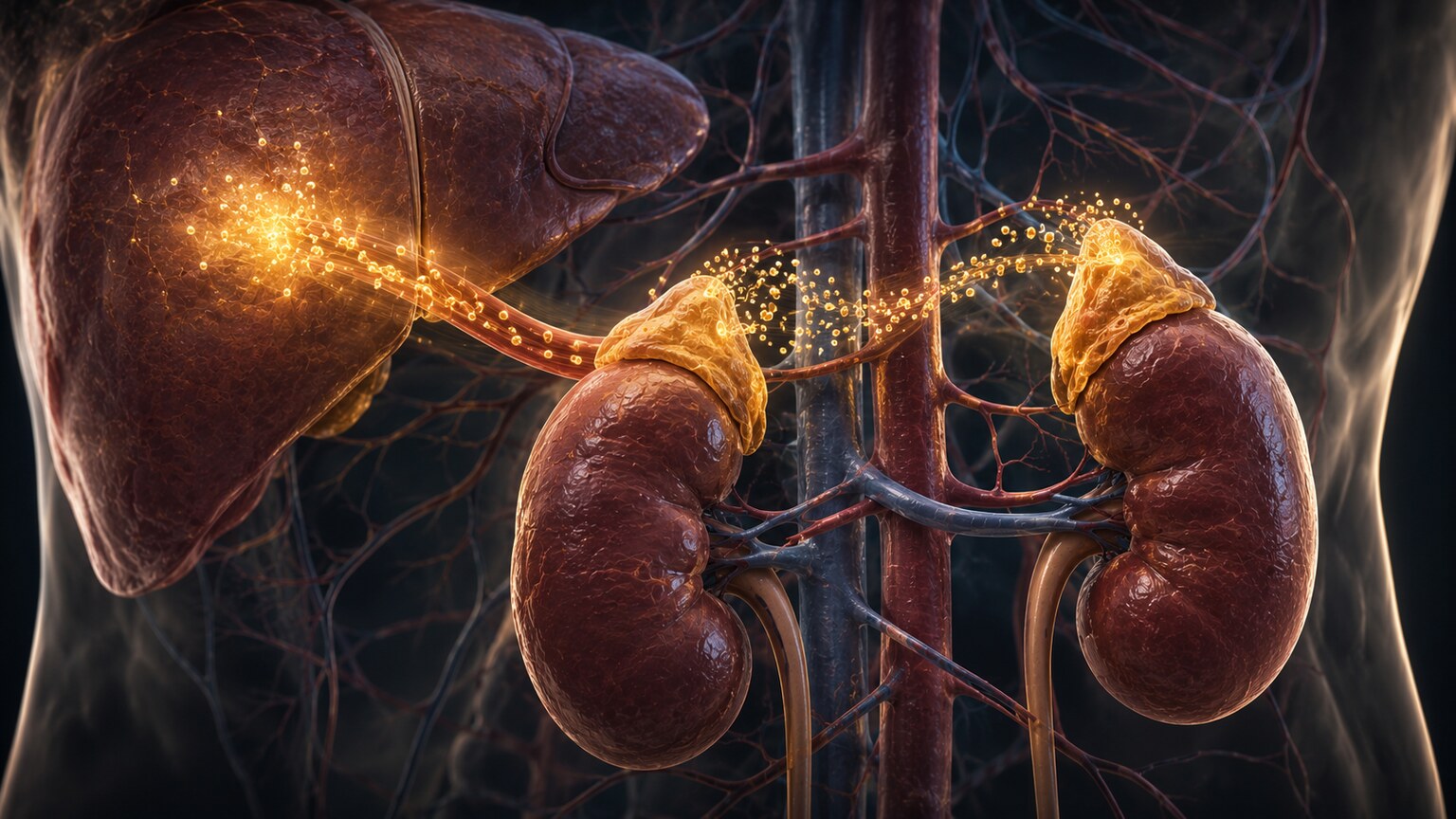
Figure 1. The adrenal glands, positioned atop each kidney, release cortisol and adrenaline in response to a perceived stressor, signaling the liver to release stored glucose into the bloodstream.
What Cortisol and Adrenaline Actually Do to Your Liver
Your liver functions as your body's sugar warehouse. It stores excess glucose in a compact, densely packed form called glycogen — think of it as sugar folded up and shelved for later, similar to how a grocery store keeps most of its stock in a back room rather than out on display. Under normal, unstressed conditions, your liver releases small, steady amounts of this stored glucose to keep your blood sugar stable between meals, especially overnight while you're not eating. Cortisol and adrenaline override this steady, metered release. Adrenaline triggers an enzyme cascade that rapidly breaks glycogen back down into individual glucose molecules and pushes them into your bloodstream — a process called glycogenolysis, which literally means "the breaking apart of glycogen." Cortisol works on a slower, more sustained axis: it promotes gluconeogenesis, a process where your liver manufactures brand-new glucose molecules from non-sugar materials, including amino acids pulled from muscle tissue and glycerol released from fat stores. In a genuine emergency, this is remarkably useful — it guarantees your brain and muscles have fuel available even if you haven't eaten in hours. The problem is that your nervous system fires off this same emergency fuel-mobilization sequence for a stressful budget meeting or a sleepless night with a crying infant just as readily as it would for an actual physical threat, and the resulting glucose has nowhere urgent to go, so it simply raises the number on your next test.
Why Poor Sleep Behaves Like a Metabolic Stressor All On Its Own
Even setting aside psychological stress entirely, insufficient or poor-quality sleep raises blood glucose through its own independent set of mechanisms, and this has been demonstrated repeatedly in controlled research where healthy volunteers with no history of diabetes were deliberately sleep-restricted. After even a handful of nights of shortened sleep — commonly studied at around four to six hours — researchers have measured meaningful drops in insulin sensitivity, meaning the same amount of insulin becomes less effective at clearing sugar out of the bloodstream. Part of this comes down to the same stress hormones already discussed: sleep loss itself is interpreted by your body as a stressor, and cortisol levels tend to rise, particularly in the evening, when they should normally be tapering off to allow you to wind down for the night. But there's a second, sleep-specific mechanism layered on top of the hormonal one: growth hormone, which is normally released in large pulses during deep sleep and plays a role in tissue repair, also has a side effect of temporarily reducing insulin sensitivity. When deep sleep is cut short or fragmented, growth hormone secretion gets pushed later and more diffusely across the night, and some research suggests this disrupted pattern contributes to next-morning insulin resistance independent of cortisol.

Figure 2. Inside a liver cell, glycogen granules are broken down through glycogenolysis into individual glucose molecules, which are then released into the hepatic vein.
There's also a simpler, almost mechanical piece to this: sleep is when your body is normally at its most metabolically quiet, using the least glucose of the entire 24-hour cycle. A sleepless night doesn't just fail to lower your glucose the way a good night's rest would — it actively adds fuel to the fire by keeping your sympathetic nervous system engaged for hours longer than it should be, since the nervous system's nighttime "rest and digest" mode never fully takes over. People who monitor their glucose overnight with a continuous glucose monitor can often see this directly: a fragmented, wakeful night produces a visibly bumpier, higher overnight glucose trace than a night of consolidated deep sleep, even when nothing about that day's food intake changed at all. And because insulin sensitivity is measurably lower the morning after poor sleep, the first meal of that day — even an identical breakfast to the one eaten the day before — tends to produce a bigger, longer-lasting glucose spike than it otherwise would, an effect some researchers have described as your body temporarily behaving in a mildly pre-diabetic way after just one bad night.
Already have a glucose number from a recent test, but not sure if it's actually good or bad for you? Just plug it in and see instantly.
🧮 Try the Free CalculatorThe Dawn Phenomenon: Why Mornings Are Often the Worst
If you've noticed that your glucose tends to run highest right around waking up — even higher than after some meals — you're observing something with an actual name: the dawn phenomenon. Roughly between about four and eight in the morning, your body naturally ramps up its release of several hormones, including cortisol, growth hormone, and glucagon (a hormone that, like cortisol, signals the liver to release glucose), as part of a normal circadian rhythm that's meant to prepare your body to wake up and become active. This is a completely normal and universal pattern that happens in people without diabetes as well, though in most people with healthy insulin sensitivity, the pancreas simply releases a bit more insulin to match the extra glucose being released, keeping the net blood sugar level steady. The trouble is that stress and poor sleep both blunt that compensating insulin response and, at the same time, amplify the hormonal glucose release itself, since cortisol is already one of the key drivers of the dawn phenomenon in the first place. A stressful week or a string of short nights effectively turns up the volume on a process that's already happening every single morning, which is exactly why a fasting glucose check first thing after a rough night so often reads higher than a person expects, despite nothing having been eaten in the eight or more hours beforehand.

Figure 3. Cortisol interferes with the insulin receptor pathway on muscle cells, keeping GLUT4 glucose transporters from moving to the cell surface and slowing glucose uptake from the blood.
Zooming in further, the reason cortisol blunts insulin's effect comes down to a single transporter protein called GLUT4, which normally sits inside muscle and fat cells until insulin signals it to move to the cell's outer surface, where it acts like a doorway that lets glucose move out of the blood and into the cell to be used or stored. Cortisol interferes with the signaling steps between insulin binding its receptor and GLUT4 actually making that move to the surface, meaning that even though insulin is present and binding normally, fewer glucose "doorways" open in response. This is what researchers mean when they describe cortisol as inducing temporary insulin resistance — it isn't that insulin stops working entirely, it's that its usual effect is dampened, so more sugar stays circulating in the blood for longer than it normally would after the same meal or the same fasting stretch. This mechanism is also why people under chronic, ongoing stress — rather than a single bad night — tend to show a more persistent pattern of elevated glucose and, over months or years, a measurably higher risk of developing insulin resistance that doesn't fully reverse once the stressful period ends.
How This Differs From a Glucose Spike That Signals Diabetes
It's worth being direct and reassuring here, because this is usually the real underlying worry: a temporary glucose rise driven by a stressful week or a rough night's sleep is not the same thing as diabetes, and one elevated reading taken under those conditions is not, by itself, diagnostic of anything. The distinction clinicians look for comes down to two things — magnitude and persistence. A stress- or sleep-driven glucose elevation is typically modest, often somewhere in the range of an extra ten to twenty-five milligrams per deciliter above a person's usual baseline, and critically, it resolves. Once the stressful period passes and normal sleep resumes, glucose numbers in a person without underlying insulin resistance typically return to their prior baseline within days, not weeks. Diabetes, by contrast, is defined by a sustained, persistent pattern of elevated glucose that doesn't correct itself once a stressful episode has passed, which is exactly why diagnosis relies on repeated fasting measurements, a hemoglobin A1c test that reflects roughly two to three months of average blood sugar rather than a single moment, or an oral glucose tolerance test — never a single number pulled from one unusually stressful or sleep-deprived day.

Figure 4. A night of fragmented or insufficient sleep keeps the sympathetic nervous system engaged for hours longer than usual, delaying the metabolic "rest" period the body relies on to keep glucose stable overnight.
That said, this stress-driven mechanism is not entirely separate from diabetes risk over the long run — it's more accurate to think of it as sitting on the same continuum. Someone who already has borderline insulin resistance, a family history of type 2 diabetes, or existing prediabetes tends to show a larger and slower-resolving glucose response to the exact same stressful week or bad night than someone with no underlying risk factors, simply because their baseline capacity to compensate with extra insulin is already reduced. And repeated, chronic exposure to high stress or chronically short sleep — as opposed to one bad patch — has been associated in long-term studies with a genuinely elevated risk of developing type 2 diabetes over time, independent of diet and body weight. So while a single rough night is not a diagnosis, a consistent pattern of poor sleep and unmanaged stress is a legitimate long-term risk factor worth addressing, not because of what any one glucose reading says, but because of what it represents happening night after night.
How Long Does It Take for Glucose to Settle Back Down?
The timeline for a stress- or sleep-driven glucose elevation to resolve depends heavily on which trigger caused it and how long that trigger lasted. A single sleepless night in an otherwise healthy person typically shows measurably reduced insulin sensitivity for about one to three days afterward, gradually normalizing as sleep debt is repaid and cortisol rhythms reset to their usual pattern. Acute psychological stress — a single stressful event like a difficult meeting or an argument — tends to resolve faster on the glucose side specifically, often within a few hours to a day, tracking roughly with how long cortisol itself stays elevated after the triggering event ends. Chronic stress is the outlier: because cortisol in genuinely chronic stress states doesn't necessarily spike and fall the way it does with an acute stressor, but instead settles into an elevated or dysregulated pattern that can persist for weeks or months, the associated glucose elevation can likewise persist for as long as the underlying stress remains unaddressed, and doesn't reliably self-correct just by getting one good night of sleep in the middle of an otherwise stressful stretch.
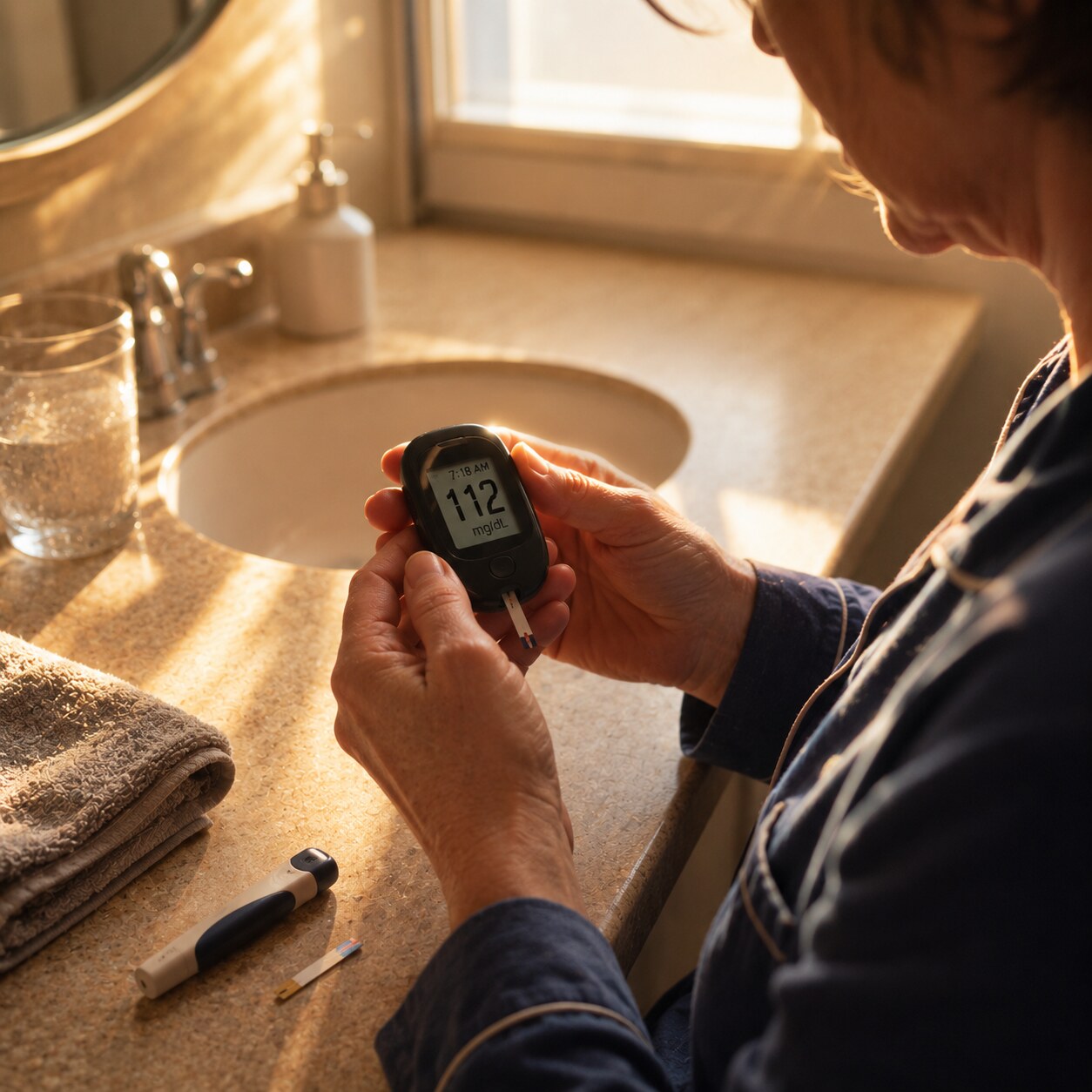
Figure 5. Fasting glucose checked first thing in the morning captures the combined effect of the dawn phenomenon and any residual stress- or sleep-related insulin resistance from the night before.
This is part of why testing pattern matters more than any single number. Checking your glucose once, on the morning after your worst night of the month, and comparing that number to a chart online is a recipe for unnecessary alarm. Clinicians generally care far more about a trend across days or weeks than about any isolated reading, precisely because a trend filters out the noise created by one-off stressors and reveals whether your glucose is actually drifting upward over time or simply reacting, exactly as expected, to a rough patch. If you're using a continuous glucose monitor, this is easy to visualize directly: look for whether your overnight and fasting numbers return to their usual baseline within a few days of a stressful event resolving, rather than staying persistently elevated regardless of how well you slept afterward.
Who Tends to See the Biggest Effect
Not everyone's glucose responds to stress and poor sleep with equal intensity, and a few groups reliably show a larger effect than average. People with existing prediabetes or early insulin resistance, as mentioned above, have less reserve capacity to compensate, so the same stressor produces a proportionally bigger glucose rise. Shift workers — particularly those who rotate between day and night shifts or work overnight regularly — face a compounded version of this problem, since their sleep is chronically misaligned with their body's internal circadian clock, which governs the timing of cortisol release independent of how many total hours of sleep they get. This is one reason shift work has been associated in research with a higher long-term risk of metabolic disturbances, including impaired glucose regulation, even among workers who feel they're getting an adequate number of sleep hours overall, just at the wrong time of day. Older adults also tend to show a more pronounced glucose response to both stress and sleep loss, since insulin sensitivity naturally declines somewhat with age even without any diagnosed condition. And people managing existing diabetes, whether type 1 or type 2, generally see the most clinically significant swings, since they're often already operating with reduced or absent capacity to compensate with extra endogenous insulin, which is why many diabetes care plans explicitly address sleep and stress management as part of overall glucose control, not as an afterthought to diet and medication.
What Actually Helps: Practical Ways to Blunt the Effect
The good news is that this entire mechanism, precisely because it's driven by identifiable hormones and a specific nervous system state, responds meaningfully to a handful of concrete habits — this isn't a mysterious process you have no influence over. Prioritizing sleep consistency, meaning going to bed and waking up at roughly the same time each day, has been shown to support more stable overnight cortisol rhythms than simply logging a similar number of total hours on an irregular schedule, since your circadian clock cares as much about timing as duration. Even short, deliberate stress-reduction practices — slow diaphragmatic breathing, a short walk outdoors, or brief mindfulness exercises — have been shown in research to measurably lower circulating cortisol within minutes to hours, which is a fast enough timescale to blunt an acute glucose response to a stressful event while it's still unfolding. Physical activity, even a short walk after a stressful meal or a stressful day, helps in a second, independent way: contracting muscles can pull glucose out of the bloodstream through a pathway that doesn't require much insulin at all, meaning movement can partially offset the reduced insulin sensitivity that stress and poor sleep create, essentially giving your body an alternate route to clear the extra sugar.
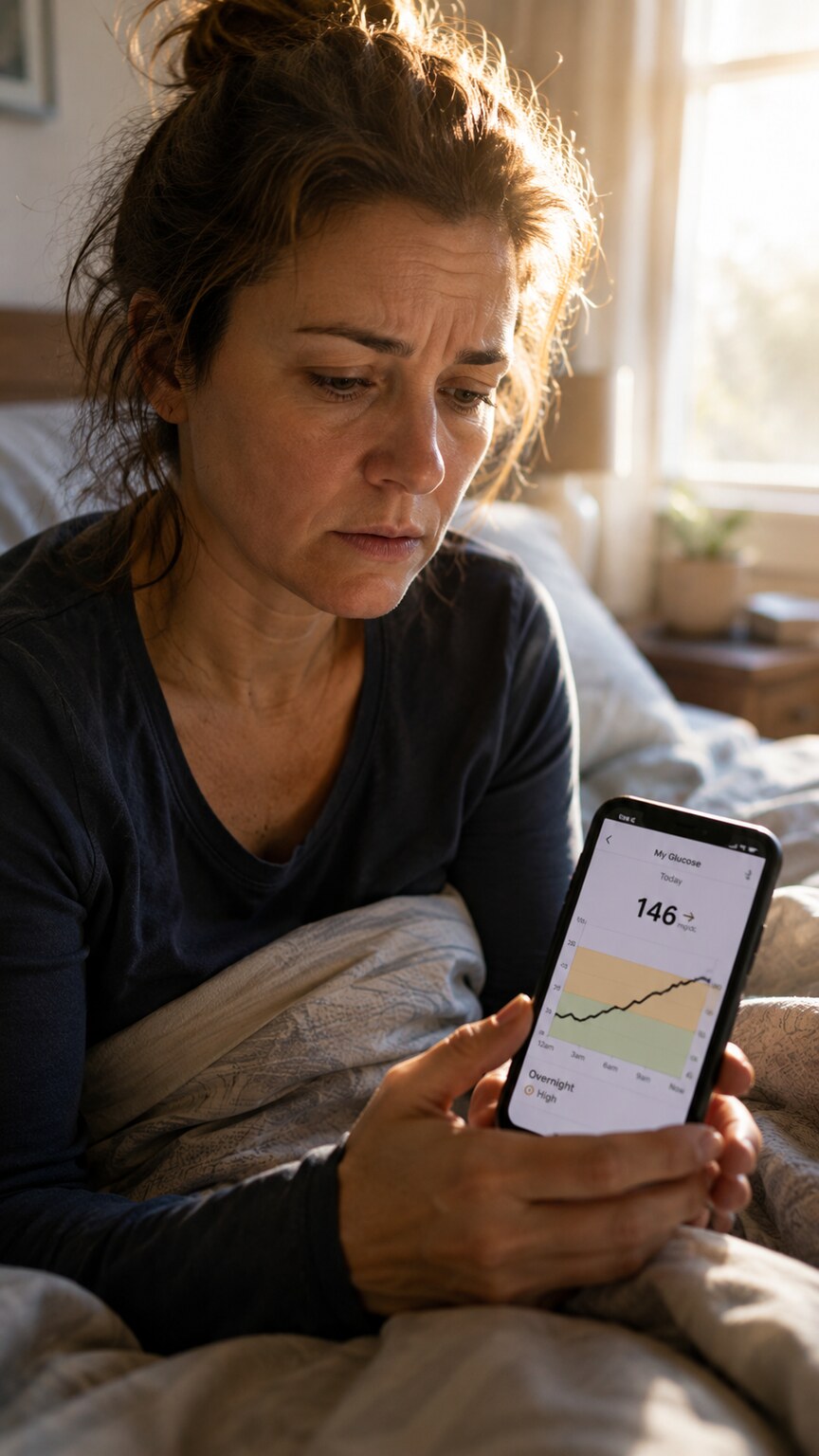
Figure 6. A continuous glucose monitor's overnight trend line often makes the connection between a fragmented night of sleep and next-morning glucose elevation directly visible.
Caffeine timing is another underappreciated factor worth mentioning: consuming caffeine, especially on an empty stomach or in the hours before your usual bedtime, independently raises cortisol and can worsen next-morning insulin sensitivity on top of whatever effect poor sleep already had, which is part of why people who reach for extra coffee to power through a tired, stressful day sometimes notice their glucose runs even higher than the sleep deprivation alone would explain. Meal composition matters too, though it's a secondary lever rather than the primary fix: pairing carbohydrates with protein, fat, or fiber, rather than eating them alone, slows the rate at which glucose enters the bloodstream and gives an already-blunted insulin response more time to keep up, which can meaningfully soften the size of a post-meal spike on a day when your baseline insulin sensitivity is already reduced from a bad night. None of these strategies eliminate the underlying stress-glucose connection entirely — that's not really the goal — but consistently applied, they reliably narrow how far a rough patch pushes your numbers and how long it takes for them to settle back to your usual baseline.
Why People With Diabetes See a Bigger Version of the Same Effect
Everything described so far applies to people without diabetes, but the same underlying mechanism — cortisol and adrenaline pushing glucose out of the liver while blunting insulin's effect at the cellular level — plays out on a larger and more consequential scale for people who already have type 1 or type 2 diabetes. In type 1 diabetes, where the pancreas produces little or no insulin of its own, a stress- or sleep-driven surge in liver glucose output has nothing counteracting it from the inside; any compensation has to come from externally dosed insulin, which means a stressful week or a stretch of poor sleep can push glucose meaningfully higher and require real-time adjustments to insulin dosing that wouldn't be necessary otherwise. Diabetes educators routinely coach people with type 1 diabetes to expect and plan for exactly this pattern — a stressful exam period, a family crisis, or a run of bad nights are all recognized, documented triggers for otherwise unexplained high readings, and many diabetes management plans explicitly include guidance for temporarily adjusting basal insulin rates during periods of high stress.
In type 2 diabetes, where the core problem is often insulin resistance rather than an absolute lack of insulin, the stress-and-sleep effect layers directly on top of an already-reduced capacity to respond to insulin, meaning the same stressor can produce a proportionally larger glucose swing than it would in someone with normal insulin sensitivity to begin with. This is part of why clinicians managing type 2 diabetes increasingly treat sleep quality and stress load as legitimate, modifiable components of glucose control, alongside diet, physical activity, and medication — not as a soft, secondary lifestyle suggestion, but as a measurable lever with a defined hormonal mechanism behind it. Some research has gone as far as showing that structured sleep improvement programs in people with type 2 diabetes produce measurable reductions in A1c, the long-term average glucose marker, independent of any changes to diet or medication during the same period, which is a strong signal that sleep isn't a peripheral factor here — it's a direct input into the same glucose-regulating system that diet and medication also act on.
What a Continuous Glucose Monitor Reveals That a Single Fingerstick Can't
Much of what's described in this article was originally difficult to observe directly, because a single fingerstick blood glucose check only ever captures one instant in time — it can't show you the shape of the rise, how long it lasted, or how it compared to your usual overnight pattern. Continuous glucose monitors, small sensors worn on the arm or abdomen that measure glucose in the fluid just beneath the skin every few minutes, have made this entire stress-and-sleep relationship visible in a way it never was before for people without diabetes who are simply curious about their own metabolic patterns. Many people wearing a CGM for the first time are surprised to see a distinct, gradual upward drift in their glucose trace starting in the early morning hours on nights when their sleep was fragmented, hours before they've eaten anything — a direct visual signature of the dawn phenomenon being amplified by a poor night's sleep. Over several weeks of use, a clear pattern often emerges: nights following a stressful day, or nights with visibly reduced time in deep sleep on a sleep tracker, correlate with a higher and bumpier overnight glucose trace than nights following a calm day and consolidated sleep, even when the food eaten that day was essentially identical. This kind of pattern recognition, seeing your own data play out over real weeks rather than guessing from a single number, is often what finally makes the stress-glucose connection feel concrete rather than abstract.
When an Elevated Reading Is Worth Bringing to a Doctor
Most stress- and sleep-related glucose elevations don't need a phone call to your doctor — they're a normal, expected, and temporary physiological response. A few patterns, though, are worth flagging in a conversation with a healthcare provider rather than assuming they'll resolve on their own. If your fasting glucose is consistently running above 100 mg/dL across multiple mornings, regardless of how well you slept the night before, that's a pattern worth discussing rather than a single data point to dismiss. Similarly, if you're noticing classic symptoms alongside elevated readings — unusual thirst, more frequent urination, unexplained fatigue that doesn't track with how much you actually slept, or blurred vision — those warrant evaluation independent of any stress or sleep explanation, since they can signal a glucose elevation large enough that stress alone is an unlikely full explanation. And if you have known risk factors for diabetes — a family history, a prior prediabetes diagnosis, or a body composition and activity pattern your doctor has flagged as higher risk — it's worth mentioning a pattern of stress- or sleep-linked glucose swings specifically, since your provider may want to track your trend over time using an A1c test rather than relying on your own periodic home readings to rule anything in or out.
A Practical Way to Think About a Single High Reading
When one glucose number looks worse than expected, it helps to run through a short mental checklist rather than reacting to the number in isolation. Start with timing: was this a fasting reading taken during the dawn-phenomenon window, or a post-meal reading, since the "normal" range genuinely differs between the two and comparing a post-meal number against a fasting benchmark will always look artificially alarming. Next, consider the previous 24 to 48 hours honestly: was there a genuinely short or fragmented night of sleep, an unusually stressful event, a new medication, illness, or even a poor night caused by something as simple as a late, heavy meal or an alcoholic drink close to bedtime, all of which can independently push glucose up the next morning through overlapping hormonal pathways. Finally, look at trend rather than isolated data: if you check again over the following two or three mornings once the stressful period has passed or sleep has normalized, and the number settles back toward your usual baseline, that pattern itself is reassuring information, confirming the reading was a reasonable physiological response to a real trigger rather than a sign of a new, persistent problem. This kind of structured, unhurried reasoning is exactly what turns a moment of alarm over one number into a useful, low-stress habit of understanding your own body's patterns over time.
Frequently Asked Questions
Can one bad night of sleep really change a glucose test result?
Yes. Research using controlled sleep restriction has repeatedly shown measurable drops in insulin sensitivity after even a single night of shortened or fragmented sleep, which is enough to raise both fasting glucose and the glucose response to a meal the following day. The effect is usually modest and temporary, typically resolving within a few days once normal sleep resumes.
How much can stress alone raise a glucose reading?
It varies by person and by the intensity and duration of the stressor, but acute psychological stress commonly raises glucose by roughly ten to twenty-five mg/dL above a person's usual baseline through cortisol and adrenaline-driven glucose release from the liver. Chronic, ongoing stress can produce a more sustained elevation that doesn't reliably self-correct until the underlying stress is addressed.
Is a stress-related glucose spike a sign I'm developing diabetes?
Not on its own. A single elevated reading tied to a stressful event or a poor night's sleep is not diagnostic of diabetes, which requires a sustained pattern confirmed through repeated fasting measurements, an A1c test reflecting roughly two to three months of average glucose, or an oral glucose tolerance test. That said, chronic, unmanaged stress and chronically poor sleep are legitimate long-term risk factors for developing insulin resistance over time.
Why is my glucose highest right when I wake up, even before eating?
This is called the dawn phenomenon — a normal early-morning surge in cortisol, growth hormone, and glucagon that prepares your body to wake up and become active, which happens in everyone. Stress and poor sleep amplify this same process by both increasing the hormonal glucose release and blunting the insulin response that would normally keep it in check.
Does exercise help lower a stress-related glucose spike?
Yes. Physical activity allows muscles to take up glucose from the bloodstream through a pathway that doesn't rely heavily on insulin, which helps offset the reduced insulin sensitivity that stress and sleep loss create. Even a short walk after a stressful meal or a difficult day can measurably soften the resulting glucose rise.
Conclusion
A higher-than-expected glucose reading after a stressful stretch or a rough night's sleep isn't a mystery and it isn't a food failure — it's your adrenal glands, your liver, and your nervous system doing exactly what they evolved to do, mobilizing energy in response to what your body interprets as a threat, whether that threat is a saber-toothed tiger or a 6 a.m. wake-up after four hours of fragmented sleep. Cortisol and adrenaline push stored sugar out of your liver and dampen how effectively your cells can pull it back out of your blood, and sleep loss compounds the problem through its own separate effect on insulin sensitivity and growth hormone timing. Understanding this mechanism doesn't mean ignoring a pattern of consistently elevated numbers, but it does mean a single rough-night reading deserves context rather than alarm. If you're seeing a consistent pattern rather than an occasional bump tied to an obviously bad night, that's worth a real conversation with a healthcare provider — not because one number is scary, but because a trend is information worth acting on.
Still Not Sure What Your Results Mean?
Upload your labs and get a complete, visual, plain-language interpretation of every biomarker — delivered to your inbox in under 15 minutes.
Get My ReportThis article is for educational purposes only and does not constitute medical advice. Always consult your healthcare provider regarding your specific lab results.