
Why Is My Glucose High Even Though I Fasted?
You did everything the lab told you to do, exactly as instructed. No breakfast, no snack, no coffee with cream, nothing but plain water since the night before — and the result still came back high anyway, sitting there on the report looking flatly contradictory to the real effort you actually put into following the instructions correctly. It feels almost unfair: fasting is supposed to be the one variable you control completely, the thing that strips away every excuse and shows your body's "true" number. So when that number is elevated anyway, the confusion isn't really about the value itself — it's about the fact that you did everything right and it still happened. The honest, biology-grounded answer is that "fasting" doesn't actually mean your body goes quiet in any meaningful sense. Your liver, your hormones, and a handful of easy-to-miss technicalities around what actually counts as a valid fast are all still fully active while you sleep, and any one of them can push a fasting glucose reading upward without a single bite of food involved. This article walks through exactly what's genuinely happening behind a falsely reassuring assumption — that an empty stomach automatically means an empty explanation — and lays out the real, specific, well-documented mechanisms that can leave a properly-fasted glucose test sitting higher than expected.
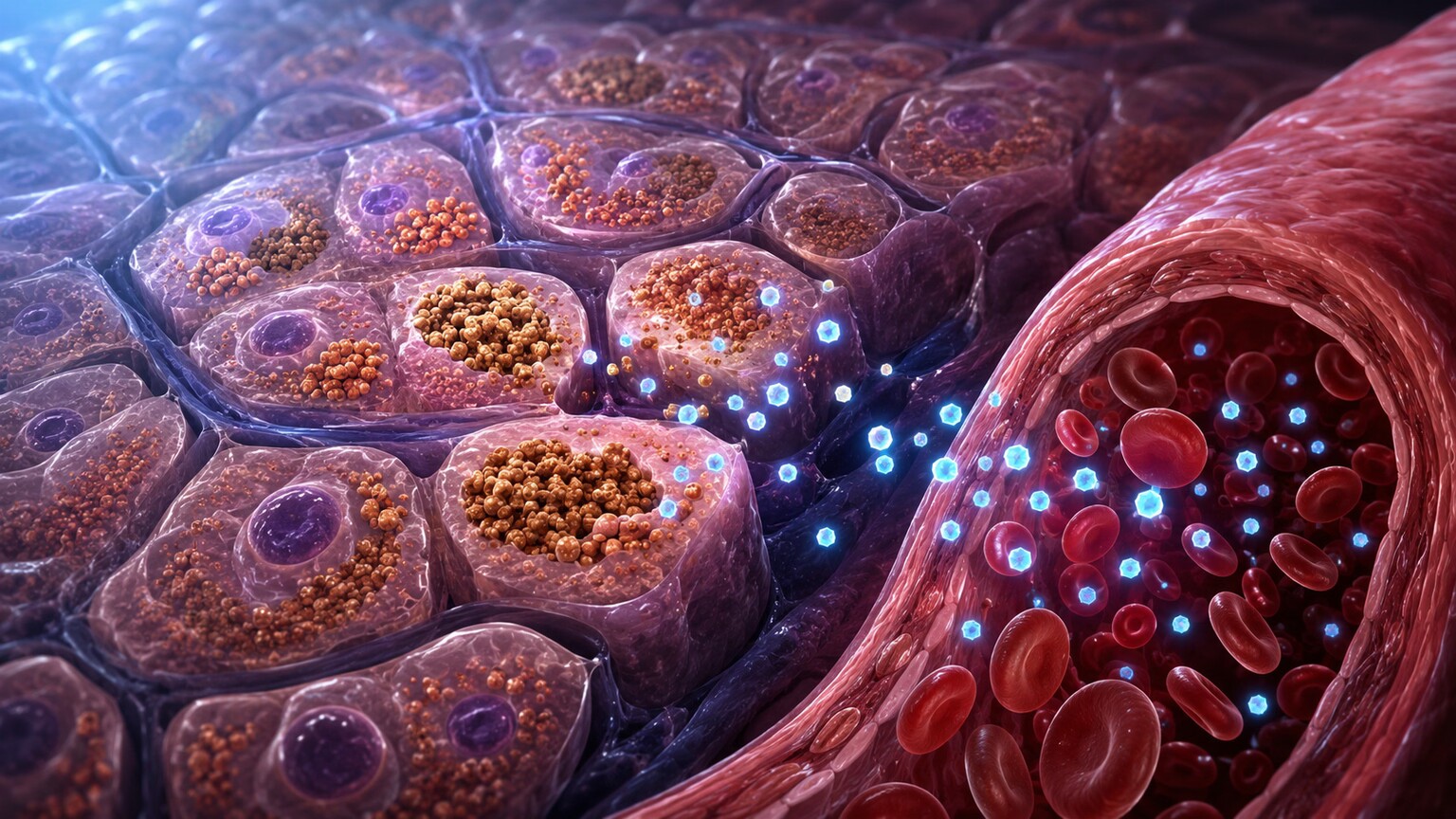
Figure 1. The liver continuously manufactures and releases glucose into the bloodstream overnight through a process called gluconeogenesis, meaning "fasting" never actually means glucose production stops.
Fasting Doesn't Mean Your Body Stops Making Glucose
The single biggest misconception behind this whole question is the assumption that "fasting" is the biological equivalent of a factory shutting down for the night — no fuel going in, so nothing happening inside. In reality, your liver spends the entire fasting window actively manufacturing new glucose and releasing it into your bloodstream, specifically so your brain, which runs almost exclusively on glucose and cannot store its own fuel reserve, never runs dry while you sleep. This process, called hepatic glucose output, draws on two sources: glycogen, a stored form of glucose your liver banked from your last few meals, and gluconeogenesis, a more involved process where your liver builds brand-new glucose molecules out of amino acids, lactate, and other non-sugar raw materials.
This is not a malfunction — it's the system working exactly as designed. A healthy body finely tunes how much glucose the liver releases against how much insulin is quietly circulating to keep that output in check, landing on a stable fasting number typically somewhere in the 70–99 mg/dL range. The problem arises when that balance tips even slightly — insulin's restraining signal weakens, or the liver's production simply runs a bit hot — and the fasting number drifts upward despite there being no food anywhere in the picture. Understanding this single fact reframes the entire question: a high fasting glucose was never really about whether you ate. It was always about how well your liver's overnight glucose output and your body's insulin response were balancing against each other while you slept.
Think of it less like a factory with a light switch and more like a thermostat system that never actually turns off, just adjusts its output up or down based on constant feedback. Insulin is the signal that tells the liver "enough, ease off" — it circulates at low, steady background levels even between meals, quietly leaning on the liver's glucose spigot to keep it from opening too wide. Glucagon, insulin's counterpart hormone, does the opposite job, telling the liver "release more" whenever blood sugar starts trending down. The two hormones are in a constant, second-by-second negotiation throughout the entire fasting window, and your final fasting number is simply a snapshot of wherever that negotiation happened to land at the exact moment the needle went into your arm.
This is also why the same person can get two genuinely different fasting numbers on two different mornings without anything being "wrong" either time — the negotiation between insulin and glucagon is sensitive to dozens of small daily variables, many of which have nothing to do with metabolic disease at all. The sections below walk through the specific, well-documented variables most likely to tip that balance on any given morning.
What "Fasting" Actually Requires — and Where It Quietly Breaks

Figure 2. Cream, sugar, flavored creamer, or anything beyond black coffee or plain water technically ends a fast, even when the person drinking it doesn't think of it as "eating."
A genuinely true, clinically valid fasting glucose test requires 8 to 12 full hours with no caloric intake of any kind whatsoever — and the phrase "no caloric intake" is doing more work than most people realize. Plain black coffee and plain water are really the only universally accepted exceptions, and even those come with caveats some people miss entirely. A splash of cream, a spoonful of sugar, a "sugar-free" flavored creamer that still contains a few grams of carbohydrate from thickeners, or a stick of gum chewed on the way to the lab can each introduce enough glucose, or enough of an insulin-stimulating effect, to nudge a fasting result upward without ever registering as "eating" in the person's own mind.
Medications swallowed with a small amount of juice instead of water, cough drops or mints containing real sugar, and even certain chewable vitamins fall into this same quietly-overlooked category. None of these feel like breaking a fast the way eating a granola bar would, which is exactly why they're worth naming explicitly — the gap between what a person believes counts as fasting and what a lab technically requires is one of the most common, least dramatic explanations for an unexpectedly high result, and it has nothing to do with any underlying health condition at all.
There's also a subtler version of this same problem that has nothing to do with what went into the mouth: chewing gum, even sugar-free gum, stimulates a mild digestive response through the simple act of chewing, sometimes called the cephalic phase of digestion, where the body starts releasing small amounts of insulin and digestive hormones in anticipation of food arriving, purely from the sensory experience of chewing and tasting something sweet or minty. This effect is generally small, but for someone whose fasting number is sitting right at a borderline cutoff, it's exactly the kind of overlooked variable that can tip a result from "normal" into "slightly elevated" without any real food involved.
Even the timing of when medications are taken relative to the blood draw matters more than most people assume. Someone instructed to take their morning blood pressure medication with a small amount of food, who ends up eating a single cracker specifically to avoid stomach upset, has technically broken their fast in a way that feels medically responsible rather than careless — a completely reasonable decision that nonetheless invalidates that particular test as a "true" fasting measurement. This is exactly the kind of detail worth mentioning to the person drawing your blood, since it can be noted on the order and factored into how the result gets interpreted.
Already have a fasting glucose number from a recent test, but not sure whether it's actually normal, borderline, or worth a second look? Enter it and see exactly where it falls in seconds.
🧮 Try the Free CalculatorThe Fasting Window Itself Can Be Miscalibrated — Too Short or Too Long
It's tempting to think of fasting duration as a simple rule — the longer, the "purer" the result — but the relationship isn't linear, and both ends of the spectrum can distort a fasting glucose reading in opposite directions. Fasting for less than the recommended 8 hours means there's a real chance some residual glucose from the previous evening's meal, particularly a large or carbohydrate-heavy dinner eaten late, is still being absorbed and hasn't fully cleared the bloodstream by the time blood is drawn — this isn't a "true" fasting state at all, just an incomplete digestion window mistaken for one.

Figure 3. A fasting window stretched well past the recommended 8-to-12-hour range can trigger the same counter-regulatory hormone release the body uses to defend against true starvation.
The opposite extreme causes real trouble too. Fasting for significantly longer than 14 to 16 hours — a delayed lab appointment, a morning that ran long, or someone deliberately over-fasting under the mistaken belief that "longer is better" — pushes the body toward its actual starvation-defense hormones: cortisol, growth hormone, and glucagon all rise to protect blood sugar from dropping too low, and part of that protection is instructing the liver to ramp up glucose release. This is the body correctly doing its job of preventing dangerous hypoglycemia, but it means an over-extended fast can paradoxically produce a higher glucose reading than a properly-timed one would have, simply because the body interpreted the extended gap as a bigger threat than the lab intended to test for.
This is exactly why lab instructions specify a range rather than a single cutoff, and why sticking closely to that 8-to-12-hour window — not shorter, not dramatically longer — actually matters more than most people assume going in.
A practical way to think about this: count backward from your scheduled draw time rather than forward from when you happened to eat dinner. If your appointment is at 8 a.m., a 7 p.m. dinner puts you at exactly 13 hours by the time blood is drawn — already past the upper edge of the recommended window. Shifting dinner slightly earlier, or requesting a slightly earlier appointment time, is a small logistical adjustment that keeps the fast inside its intended range rather than accidentally drifting into the over-extended territory that triggers its own counter-regulatory response. This single scheduling detail resolves more unexpectedly high fasting results than almost anything else covered in this article, precisely because it's so easy to overlook when the focus is entirely on "did I eat," rather than "exactly how many hours has it actually been."
The Somogyi Effect: When a Silent Overnight Low Triggers a Rebound High
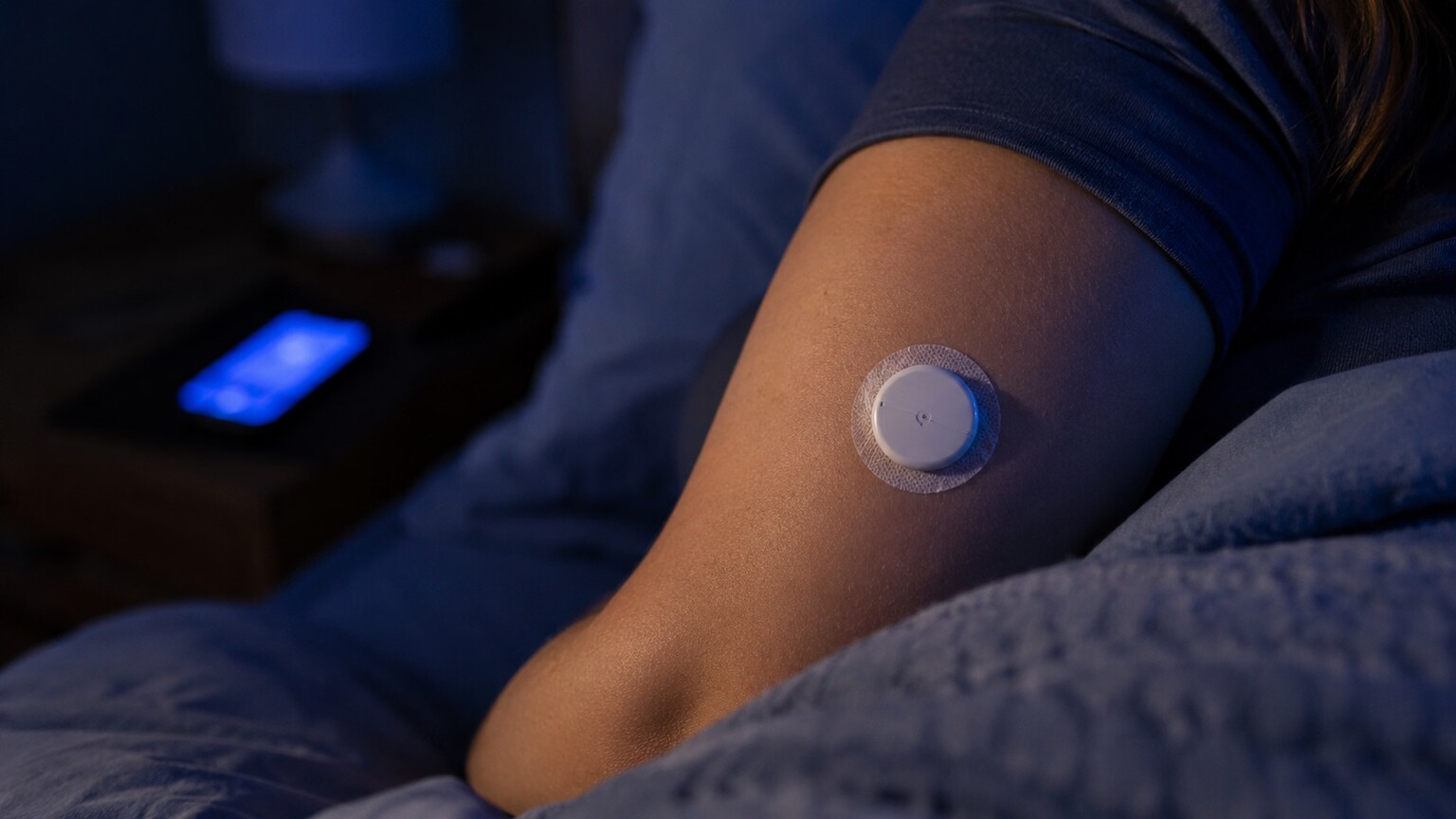
Figure 4. A continuous glucose monitor can capture an undetected overnight low that the sleeping body corrects for by releasing a surge of counter-regulatory hormones, producing an elevated reading by morning.
For people managing diabetes with insulin or certain oral medications, there's a specific and well-documented pattern worth knowing by name: the Somogyi effect, sometimes called rebound hyperglycemia. Here's what happens — a dose of insulin taken the evening before turns out to be slightly too strong relative to what the body actually needed overnight, and blood sugar drops low, sometimes low enough to qualify as hypoglycemia, sometime in the middle of the night while the person is asleep and completely unaware anything happened.
The body doesn't tolerate low blood sugar quietly. It responds to that overnight low the same way it would to any threat to brain fuel supply: releasing a surge of counter-regulatory hormones — glucagon, epinephrine, cortisol, and growth hormone — that instruct the liver to dump stored glucose back into the bloodstream, fast. By the time morning arrives and the fasting test is drawn, the low blood sugar that actually happened hours earlier has already been overcorrected into a high one, and the reading reflects the rebound, not the original dip. Someone experiencing this pattern often has no memory of the overnight low at all — no sweating that woke them, no restless dream, nothing — which is exactly what makes a high fasting number in this scenario feel so disconnected from anything they can consciously point to.
This is distinct from the dawn phenomenon, a separate and more common overnight pattern where hormone levels rise naturally in the few hours before waking regardless of what happened earlier in the night — the two patterns can look identical on a single fasting reading, and telling them apart usually requires a continuous glucose monitor or a 3 a.m. fingerstick check to see whether blood sugar actually dipped low first or simply rose steadily from bedtime onward.
Distinguishing between the two matters a great deal for what happens next, because the appropriate response is nearly opposite in each case. If the dawn phenomenon is driving a high morning number, the medical adjustment often involves changing the timing or type of evening medication to better cover those pre-dawn hours. If the Somogyi effect is the actual cause, doing that same thing — increasing evening insulin to chase down a high morning number — would be exactly the wrong move, since it would deepen the overnight low that's already triggering the rebound in the first place, creating a worsening cycle rather than fixing it. This is precisely why anyone on insulin therapy who consistently sees high fasting numbers is generally advised to check overnight glucose directly, rather than adjusting doses based on the morning reading alone.
This pattern isn't limited to people using insulin, either, though it's most pronounced and most clinically significant in that group. Certain oral diabetes medications that stimulate insulin release can produce a milder version of the same overnight dip-and-rebound cycle, and even in people without diagnosed diabetes, an unusually large, high-carbohydrate dinner eaten very late can occasionally provoke a similar overshoot-and-recovery pattern purely from the body's own insulin response overcorrecting, without any medication involved at all.
Illness, Even a Mild One, Can Push a Fasting Number Up

Figure 5. Even a mild infection triggers the release of cortisol and other stress hormones as part of the immune response, and those same hormones independently push the liver to release more glucose.
A body fighting off any infection — a sinus cold, a mild stomach bug, a urinary tract infection with barely noticeable symptoms — is under physiological stress whether or not the person feels particularly sick. Part of the immune system's response to infection involves releasing cortisol and inflammatory signaling molecules, and those same molecules that help coordinate an immune response also happen to instruct the liver to increase glucose output and make the body's cells somewhat more resistant to insulin's effect, a temporary state sometimes called stress hyperglycemia.
This means a fasting glucose test drawn during, or even in the few days after, a minor illness can run measurably higher than that same person's true baseline — not because anything has changed about their underlying glucose regulation, but because their immune system was actively engaged in a process that happens to share hormonal machinery with blood sugar control. This is one of the more commonly overlooked reasons a single fasting result looks alarming and then simply resolves on its own at the next routine check once the illness, however minor it felt, has fully passed.
This same mechanism explains why hospitals routinely see elevated blood sugar in patients admitted for entirely non-diabetes-related reasons — a broken bone, a severe allergic reaction, an appendix that needs to come out. The physical trauma or acute stress of the event itself, independent of any infection, triggers a very similar surge of cortisol and adrenaline, producing what's sometimes called stress hyperglycemia in the hospital setting. This is a well-recognized phenomenon in emergency medicine specifically because it can look, at a glance, exactly like new-onset diabetes in someone who has never had a glucose problem in their life, which is why hospital teams are trained to interpret an elevated glucose during an acute medical crisis with real caution rather than treating it as an immediate new diagnosis.
Even something as mundane as recovering from dental work, a minor outpatient procedure, or a bad allergic flare-up can produce a smaller-scale version of this same effect for a day or two afterward. The common thread across every example in this section is that your body's stress-response system and its blood-sugar-regulation system share overlapping hormonal wiring by design — cortisol and adrenaline exist to mobilize energy quickly during a threat, and glucose is the most immediately available form of that energy, so raising it is a built-in, evolutionarily old part of how your body responds to almost any kind of physical or immune challenge, illness very much included.
Medications That Quietly Raise a Fasting Reading
A surprising number of common, everyday medications list elevated blood glucose as a known side effect, and most people taking them have no reason to connect the two unless someone specifically points it out. Corticosteroids — prescribed for everything from a bad poison ivy reaction to asthma flares to autoimmune conditions — are the most well-documented culprit, since they directly promote glucose release from the liver and reduce how effectively insulin works at the cellular level, sometimes raising fasting glucose noticeably even from a short prescribed course.
Several other medication categories carry a smaller but real version of this same effect: certain diuretics used for blood pressure, some antipsychotic medications, niacin taken at higher doses for cholesterol management, and even some decongestants containing pseudoephedrine, which stimulates the same adrenaline-related pathways involved in the body's stress response. None of these need to be stopped based on a single elevated fasting result — but if a new prescription started around the same time a glucose test came back unexpectedly high, that timing is genuinely worth mentioning to whoever ordered the test, since it can meaningfully change how that one result should be interpreted.
Beta-blockers, commonly prescribed for high blood pressure and certain heart conditions, deserve a specific mention of their own, since their effect on glucose works a little differently than the other medications listed here. Rather than directly increasing how much glucose the liver releases, beta-blockers can blunt some of the body's usual early warning signals for low blood sugar — the racing heart and trembling that normally alert someone to a developing low — which indirectly makes both highs and lows harder to catch early and self-correct through normal eating patterns. For someone on a beta-blocker who also happens to be managing blood sugar, this interaction is worth flagging specifically, since it changes how much a person can rely on how they physically feel as a signal of what their glucose is actually doing.
It's also worth noting that the reverse situation exists and matters just as much: some medications lower blood glucose, and stopping one of those recently, even briefly, can make a fasting number look artificially high compared to what a person has grown used to seeing while on that medication regularly. A missed dose of metformin, a skipped injection, or a supplement routine that fell off for a few days can all shift a fasting result upward in a way that has nothing to do with new disease progression and everything to do with a simple, correctable gap in an existing routine.
Sleep Loss the Night Before, Separate From Illness or Stress Hormones
Even a single night of poor or shortened sleep, entirely apart from any illness or medication, measurably reduces how effectively the body's cells respond to insulin the following day — a well-replicated finding across sleep-deprivation research. One night of significant sleep restriction can produce an insulin sensitivity dip comparable to what's seen in the early stages of prediabetes, purely as a temporary, reversible consequence of that single night's poor rest. Someone who tossed and turned for a stressful work presentation, or whose sleep was disrupted by a crying infant or a late flight, can walk into a fasting blood draw the next morning carrying a genuinely elevated number that has nothing to do with their day-to-day metabolic health and everything to do with how their body processed one rough night.
This particular effect tends to be the most under-recognized of everything in this article, precisely because sleep doesn't feel like it belongs in the same category as illness, medication, or hormone patterns — but the biological pathway is real and measurable, and it's worth remembering the next time a single fasting result looks off after a genuinely bad night's sleep.
The full hormonal chain behind this effect — how sleep loss interacts with cortisol, growth hormone, and the insulin-signaling machinery inside individual cells — is its own detailed topic covered elsewhere on this site. What matters for the specific question this article is answering is simpler: that chain is active and measurable after just one restricted night, which means a single night of poor sleep is a legitimate, evidence-backed explanation for a single unexpectedly high fasting result, distinct from anything related to whether or how long you actually fasted.
A single night explains a single unexpected result; a long-standing pattern of chronically poor sleep is a different, more durable issue worth addressing on its own terms as part of a broader conversation about glucose trends over time, separate from the one-off troubleshooting this article focuses on.
What's useful to isolate here, specifically for someone troubleshooting one confusing fasting result, is timing: did the bad night happen the single evening before the test, or has sleep been consistently poor for weeks? A one-off late night, a newborn keeping you up, jet lag from travel, or a stressful deadline the evening before a scheduled blood draw are all plausible, self-limiting explanations for that one morning's number, resolving on their own once normal sleep resumes — no different in spirit from the other temporary, easily-explained variables already covered throughout this article.
Impaired Fasting Glucose: When the High Result Isn't a Fluke
All of the explanations above describe temporary, one-off reasons a properly-fasted test can run high without reflecting a person's actual baseline. But it's equally important to be honest about the other real possibility: sometimes a high fasting result, even one drawn under perfect conditions with no illness, no sleep disruption, and no missed instructions, is an accurate reflection of a body that's genuinely starting to struggle with glucose regulation. A fasting glucose consistently landing between 100 and 125 mg/dL falls into a category called impaired fasting glucose, more commonly known as prediabetes — a state where the liver's overnight glucose output and the body's insulin response have drifted out of balance not for one night, but as an ongoing pattern.
The distinction between "this one result was thrown off by something temporary" and "this reflects a genuine, ongoing shift" comes down almost entirely to repetition and trend. A single elevated fasting number, especially one with an obvious explanation attached — illness, poor sleep, a fasting window that ran long — is far less concerning than the same elevated range showing up consistently across multiple separate tests weeks or months apart, with no identifiable temporary cause each time.
It's worth being clear about what impaired fasting glucose actually represents physiologically, since the term itself can sound alarming without context. It doesn't mean the pancreas has stopped producing insulin, and it doesn't mean a diagnosis of diabetes is inevitable. It means the finely-tuned balance between the liver's glucose output and the body's insulin response, described earlier in this article, has started running slightly less efficiently than it once did — often as a result of gradual, accumulated insulin resistance in muscle and fat tissue, frequently connected to excess weight, particularly around the abdomen, along with reduced physical activity and, yes, some of the same chronic sleep and stress factors already discussed. Because this shift tends to happen gradually over years, it's exactly the kind of change a single snapshot test can miss entirely unless it's caught and then confirmed with a follow-up.
This is also why catching this range early carries real, practical value rather than just being an anxious label. Research consistently shows that the changes most effective at reversing impaired fasting glucose — modest weight loss, increased physical activity, improved sleep, and general dietary pattern changes — work considerably better the earlier they're started, before the underlying insulin resistance has had years to compound. A confirmed impaired fasting glucose result is best understood not as a verdict, but as an early, actionable signal arriving well before more serious complications would otherwise announce themselves.
What Actually Happens Next After a High Fasting Result
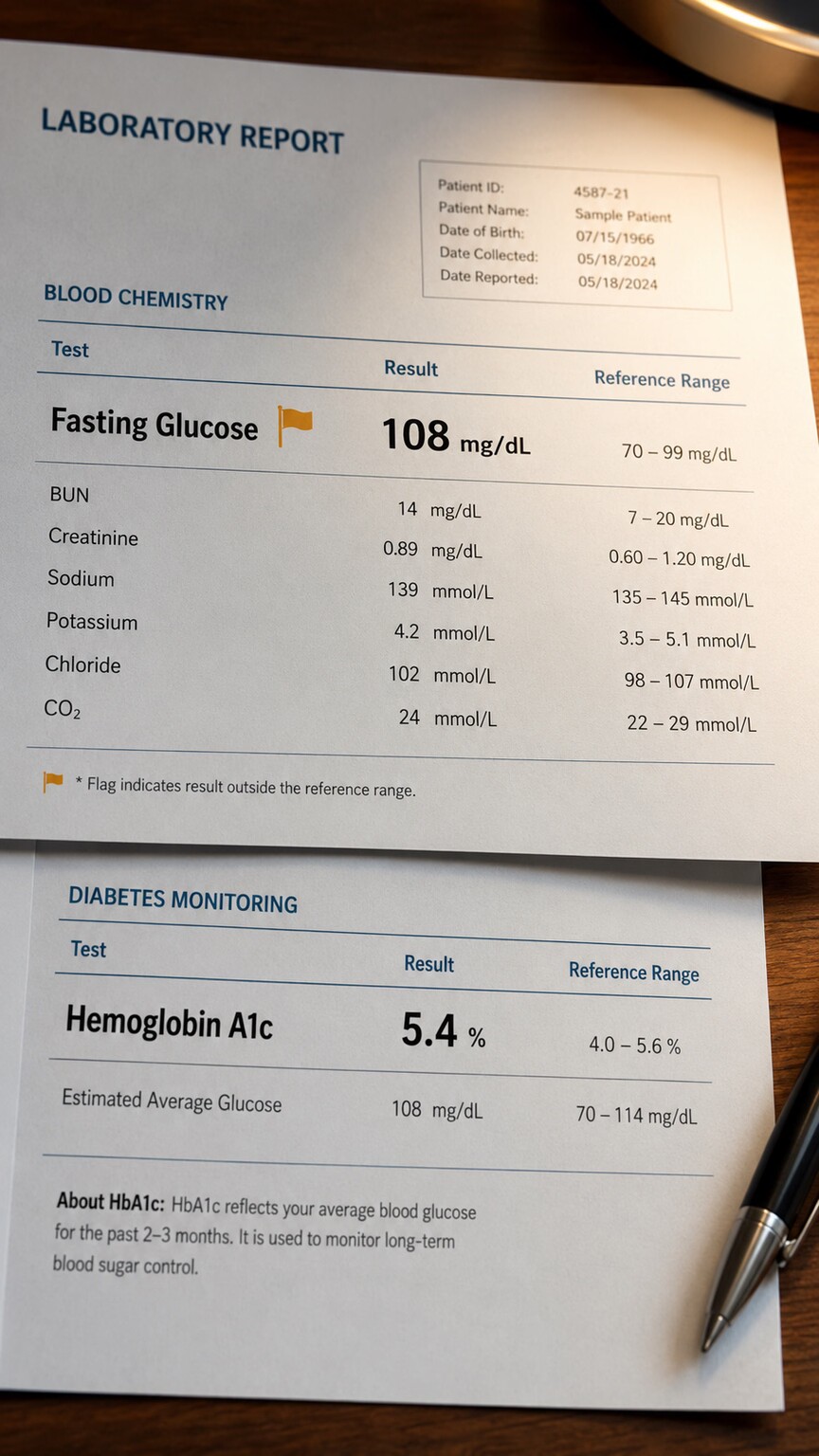
Figure 6. A single flagged fasting glucose result typically prompts either a repeat fasting test or an HbA1c, which reflects average blood sugar over roughly the past three months rather than one single morning.
A single elevated fasting glucose reading, on its own, is almost never treated as a final diagnosis of anything. The standard next step is either simply repeating the fasting test on a separate day under clean conditions, or ordering an HbA1c, a different kind of blood test that measures the average percentage of glucose attached to red blood cells over roughly the past two to three months rather than reflecting a single morning's snapshot. Because HbA1c isn't affected by what happened the night before a specific test, it's a genuinely useful way to sort out whether a high fasting number was a one-off event or part of a longer, real pattern.
If a repeat fasting test or an HbA1c comes back within a normal range, the original high result is reasonably attributed to one of the temporary explanations covered throughout this article, and no further action beyond routine monitoring is typically needed. If the elevated pattern holds up across separate, independently-drawn tests, that's the point where a more structured evaluation for prediabetes or diabetes genuinely becomes appropriate — but that determination is always built carefully on a pattern across multiple separate data points collected over time, never on the discomfort of a single unexpectedly high morning taken entirely in isolation.
A Practical Way to Think Through Your Own Result
If your own fasting glucose came back higher than expected, it's worth working through a short, calm mental checklist before assuming the worst. Did you truly stick to the full 8-to-12-hour window, with nothing but plain water or black coffee the entire time? Were you sick, even mildly, in the days leading up to the draw? Did you sleep unusually poorly the night before, for any reason at all? Have you started any new medication recently, particularly a steroid or a decongestant? Do you know, or have a reasonable way to check, whether your blood sugar might have quietly dropped overnight without you ever noticing it happen?
Any single "yes" to those questions offers a plausible, benign explanation worth mentioning at your next appointment rather than something to panic over immediately. It's only when none of those explanations fit, or when the same elevated range keeps showing up test after test with nothing obvious changing in between, that the conversation reasonably shifts from "what happened this one morning" to "what does this pattern actually mean for my metabolic health going forward" — and that's a conversation worth having with an actual healthcare provider, armed with more than just one confusing number.
Keeping a brief written note alongside any glucose test — how many hours you actually fasted, whether you were sick, how you slept the night before, anything new you recently started taking — turns a single confusing number into genuinely useful, well-documented information the next time you or your provider look back at it, rather than leaving it as an isolated data point stripped of the surrounding context that would actually explain it properly.
Frequently Asked Questions
Can drinking only water during a fast still affect my glucose result?
Plain water itself doesn't raise blood glucose, but dehydration from drinking too little water can concentrate the blood slightly and, in some cases, contribute to a modestly higher reading — staying normally hydrated with water alone is fine and recommended.
How long should I actually fast before a glucose test?
Most labs specify 8 to 12 hours with nothing but water. Fasting significantly shorter than that risks residual glucose from the last meal; fasting significantly longer can trigger stress hormones that raise glucose independently.
Is one high fasting glucose result something to worry about?
Generally not on its own. A single elevated result is commonly explained by incomplete fasting, illness, poor sleep, medication, or an overnight low blood sugar rebound, and is typically followed up with a repeat test or an HbA1c rather than treated as a diagnosis.
What's the difference between the dawn phenomenon and the Somogyi effect?
The dawn phenomenon is a natural hormone-driven glucose rise in the few hours before waking, unrelated to what happened earlier in the night. The Somogyi effect is a rebound high specifically triggered by an undetected low blood sugar episode overnight.
Should I mention a recent illness or new medication when I get my glucose tested?
Yes. Both can temporarily raise a fasting glucose reading, and mentioning them gives whoever is interpreting your result important context that can change how seriously a single elevated number should be taken.
Conclusion
A high fasting glucose result feels like it should have a simple explanation, precisely because fasting itself feels like the one variable you fully controlled. But your liver, your immune system, your sleep, your medications, and even the exact timing of your fast are all still quietly influencing that number long after your last meal ended. Most of the time, a single unexpectedly high reading traces back to one of these temporary, explainable factors rather than a fundamental shift in your metabolic health — and the way to know the difference isn't to stare harder at one morning's number, but to look at whether that number repeats itself once the temporary explanation has had a genuine chance to fully pass.
Still Not Sure What Your Results Mean?
Upload your labs and get a complete, visual, plain-language interpretation of every biomarker — delivered to your inbox in under 15 minutes.
Get My ReportThis article is for educational purposes only and does not constitute medical advice. Always consult your healthcare provider regarding your specific lab results.