
Genetics, Thyroid, and Medications: The Non-Diet Drivers of High Triglycerides
Run through this checklist before you run through your own diet: an inherited lipid disorder in the family, an underactive thyroid that's never been screened for, a kidney or liver condition, a medication started sometime in the past year, a pregnancy, or blood sugar that's been quietly drifting out of range. Each one of those can independently drive triglycerides upward in someone eating a genuinely reasonable diet, sometimes dramatically so — and unlike a dietary explanation, none of them get fixed by simply eating differently. This article is a working checklist through each of those non-dietary mechanisms specifically, because misattributing an elevated result to diet alone doesn't just waste effort on the wrong fix, it can mean missing the actual condition driving the number.
What a Triglyceride Number Is Actually Measuring
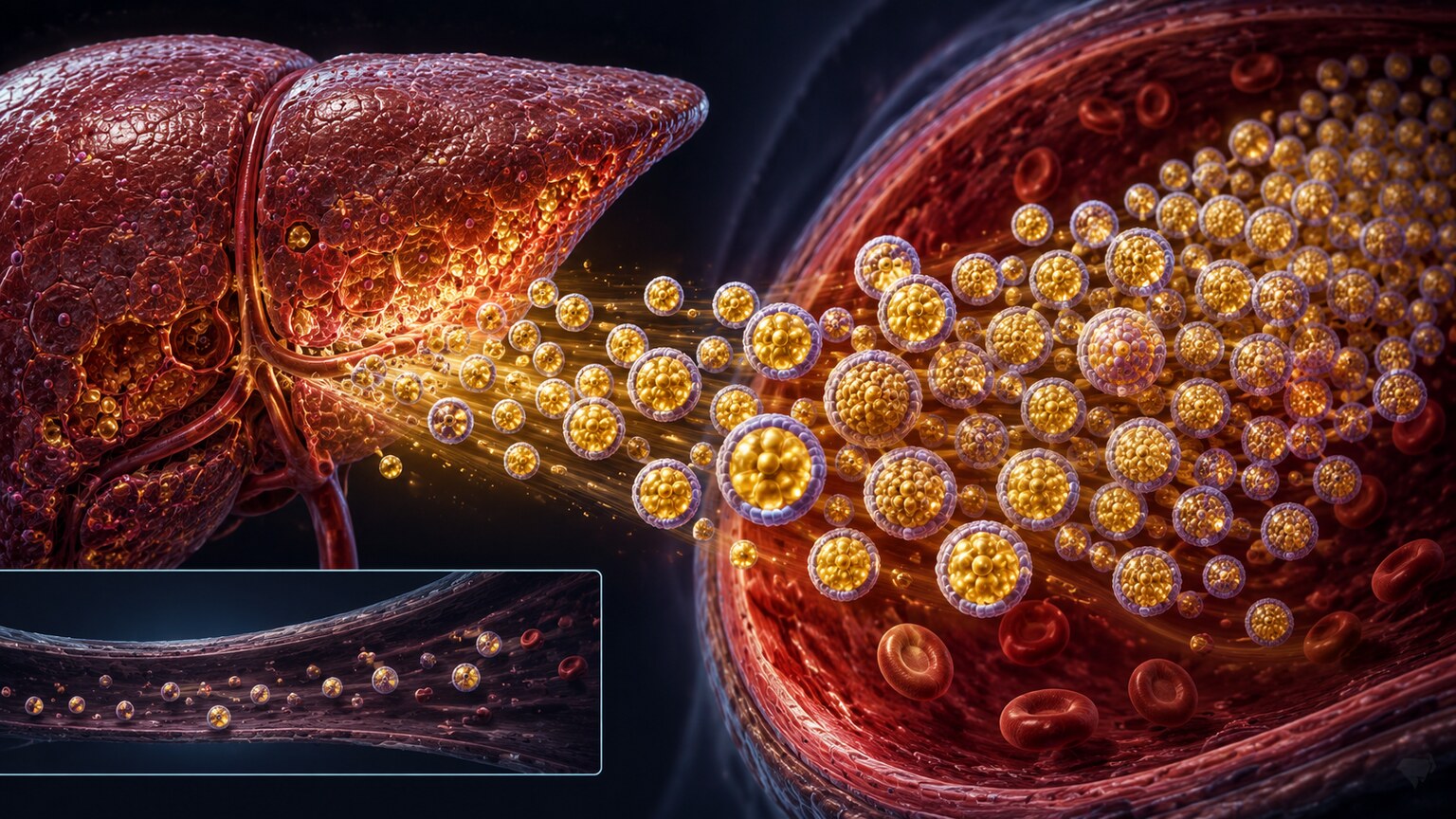
Triglycerides are a type of fat molecule, and they're the primary form your body uses to store energy for later use — every extra calorie you eat that isn't immediately burned, regardless of whether it originally came from fat, sugar, or protein, can ultimately be converted and stored as a triglyceride. They don't float around your bloodstream on their own, because fat and the watery part of blood don't mix; instead, your liver packages them, along with cholesterol, inside a delivery vehicle called a lipoprotein, and it's specifically a triglyceride-rich lipoprotein called VLDL (very-low-density lipoprotein) that carries most of the triglycerides measured on a standard lipid panel. A healthy triglyceride level reflects a working balance between two things: how much your liver is producing and packaging into VLDL, and how efficiently an enzyme called lipoprotein lipase, stationed in the walls of blood vessels throughout your body, is breaking those particles down and pulling the triglycerides out of circulation to be used or stored. A high number on a lab report means that balance has tipped — and because both sides of that balance are influenced by things well beyond what's on your plate, diet is only ever part of the explanation.
It helps to picture this system as a two-sided ledger rather than a single dial. On the production side sits the liver, deciding moment to moment how much VLDL to manufacture and release based on signals it receives about energy status, hormone levels, and inflammation elsewhere in the body. On the clearance side sits lipoprotein lipase, an enzyme that has to be actively switched on by the right hormonal signals — chiefly insulin — to do its job of pulling triglycerides back out of the bloodstream at the tissue level. A high result can come from the production side running too hot, the clearance side running too slow, or both problems compounding each other at once, and diet realistically only ever influences one input into one side of that ledger: how much raw material the liver has available to package in the first place. Every other cause covered in this article works through a completely different lever on the same two-sided system, which is exactly why fixing the input side of the ledger through diet alone often isn't enough when the actual malfunction is happening somewhere else entirely.
Genetics: When High Triglycerides Run in the Family
Some people are simply born with a body that handles triglycerides differently, regardless of what they eat. Familial hypertriglyceridemia is an inherited condition, often affecting multiple members of the same family across generations, where the liver tends to overproduce VLDL particles as a baseline trait — someone with this condition can eat a very ordinary diet and still show up with triglycerides that would be considered high in anyone else. A related and generally more severe inherited pattern involves mutations affecting lipoprotein lipase itself or a protein it depends on called apolipoprotein C-II — with that clearance enzyme not working properly, triglyceride-carrying particles simply aren't broken down and removed from the blood efficiently, and levels can climb into the thousands, a range associated with a real, direct risk of pancreatitis rather than just a long-term cardiovascular concern. These genetic forms typically show up earlier in life than diet-driven elevation, often in someone who is lean, physically active, and eating reasonably well, which is exactly the kind of case that should prompt a doctor to think beyond lifestyle and consider ordering additional testing or asking about family history.
Family history carries genuine diagnostic weight here in a way that's easy to underestimate. A person who mentions that a parent or sibling has also struggled with high triglycerides, or that a close relative had a heart attack or an episode of pancreatitis at an unusually young age, is handing a doctor a piece of information that can shortcut a lengthy workup considerably. Genetic forms of high triglycerides don't skip generations in any predictable way, and because they involve how the body handles fat at a fundamental level rather than a single easily-tested gene in most cases, a careful family history conversation often does more diagnostic work than any single blood test. This is part of why an initial doctor's visit for an unexplained high triglyceride result usually includes detailed questions about relatives' health history, not just a review of the patient's own recent meals and exercise habits.
Curious what the rest of your lipid panel is telling you? Upload your results and get a complete, plain-language breakdown in under 15 minutes.
Analyze My ResultsInsulin Resistance: The Most Common Hidden Driver
If there's a single non-dietary factor responsible for more elevated triglyceride results than any other, it's insulin resistance — a state where your cells stop responding normally to insulin, the hormone that signals them to absorb sugar from the blood. Insulin's job isn't limited to managing blood sugar; it also normally suppresses the liver's own fat production and helps activate the lipoprotein lipase enzyme that clears triglycerides from the blood. When cells become resistant to insulin, the pancreas compensates by producing more of it, but the liver, in a cruel twist, often stays fully sensitive to that extra insulin's fat-producing signals even while the rest of the body has become resistant to its blood-sugar-lowering ones — the net effect is a liver pushed to manufacture more VLDL than it should, at the same time that lipoprotein lipase's ability to clear it from the blood is working less efficiently. This is precisely why elevated triglycerides are considered one of the five components of metabolic syndrome, alongside abdominal obesity, elevated blood pressure, high blood sugar, and low HDL cholesterol, and why a high triglyceride result — especially paired with low HDL — often prompts a doctor to check for insulin resistance even in someone who isn't yet diabetic and doesn't consider their diet to be a major problem.
An Underactive Thyroid Can Quietly Raise This Number Too
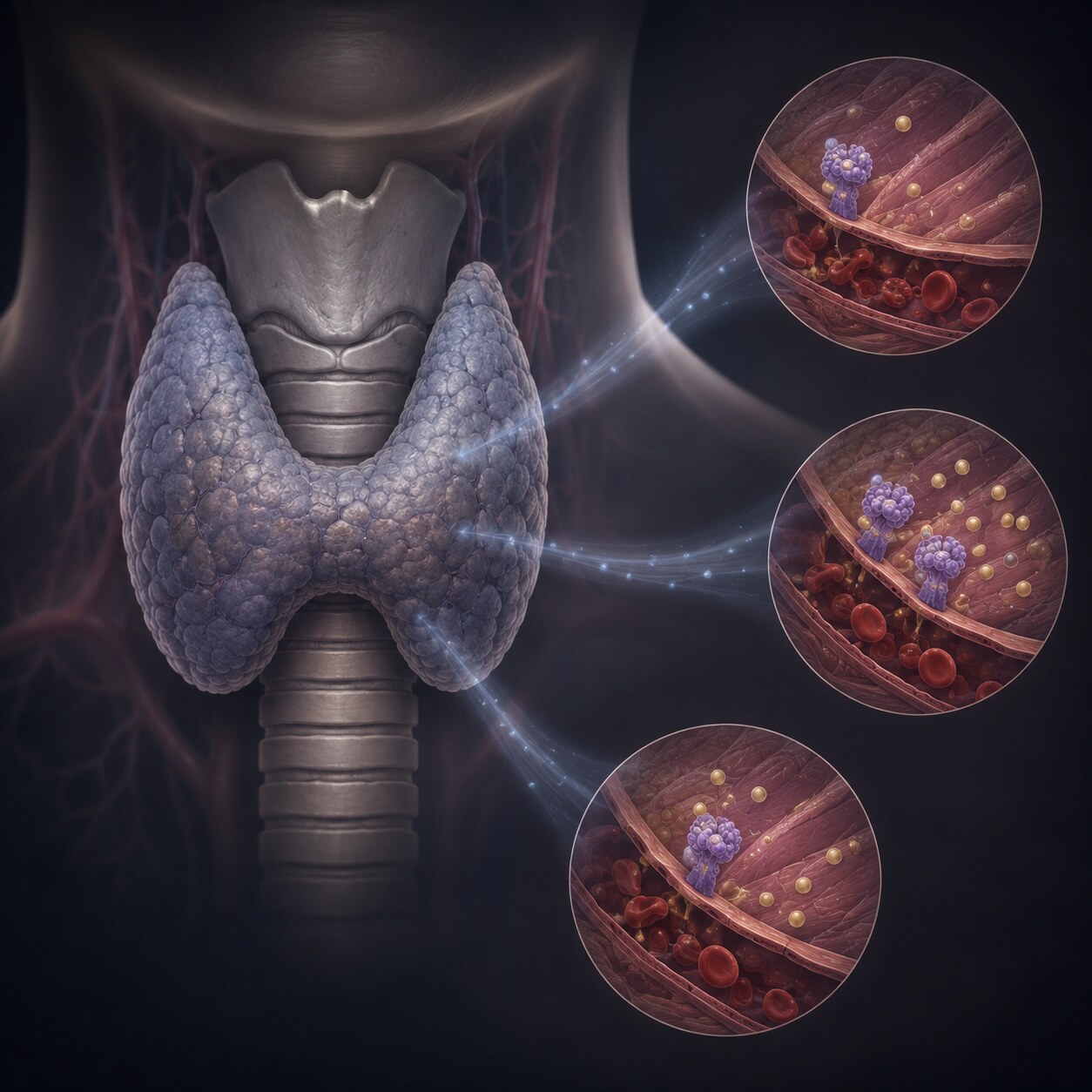
Your thyroid gland, a small butterfly-shaped organ at the base of your neck, produces hormones that set the pace for your body's overall metabolism, and that influence extends directly to how efficiently triglycerides get cleared from your blood. Thyroid hormone normally helps keep lipoprotein lipase active and supports the liver's ability to remove leftover lipoprotein particles from circulation once they've delivered their triglyceride cargo. When the thyroid is underactive, a condition called hypothyroidism, that clearance process slows down measurably, and triglycerides — along with LDL cholesterol — tend to drift upward as a direct consequence, independent of any dietary change at all. This connection is well-established enough that a thyroid-stimulating hormone (TSH) test is a fairly standard part of the workup when someone presents with unexplained high triglycerides, particularly if other hypothyroidism symptoms are present, like fatigue, unexplained weight gain, feeling cold more easily than usual, or dry skin. The genuinely useful part of this particular cause is that it's often fully reversible: correcting the thyroid hormone deficiency with standard replacement medication frequently brings triglycerides back down without any other intervention being necessary.
Kidney Disease: A Less Obvious but Real Contributor
The kidneys aren't an organ most people associate with fat metabolism, but a specific kidney condition called nephrotic syndrome has a well-documented and fairly dramatic effect on triglyceride levels. Nephrotic syndrome occurs when the kidney's filtering units become damaged enough to leak large amounts of protein into the urine that should normally stay in the bloodstream. In response to that ongoing protein loss, the liver ramps up production of several proteins to compensate — and lipoprotein production gets swept up in that same generalized manufacturing increase, resulting in significantly elevated triglycerides and cholesterol as something of a metabolic side effect of the kidney problem itself. Chronic kidney disease more broadly, even without full nephrotic syndrome, can also modestly impair triglyceride clearance through effects on lipoprotein lipase activity. This is exactly the kind of cause that a routine metabolic panel, checked alongside a lipid panel, is designed to catch — significant protein in the urine or an abnormal kidney function marker sitting next to an unexplained triglyceride elevation is a pattern worth investigating together rather than treating as two unrelated findings.
Liver Disease and Triglycerides: A Two-Way Relationship
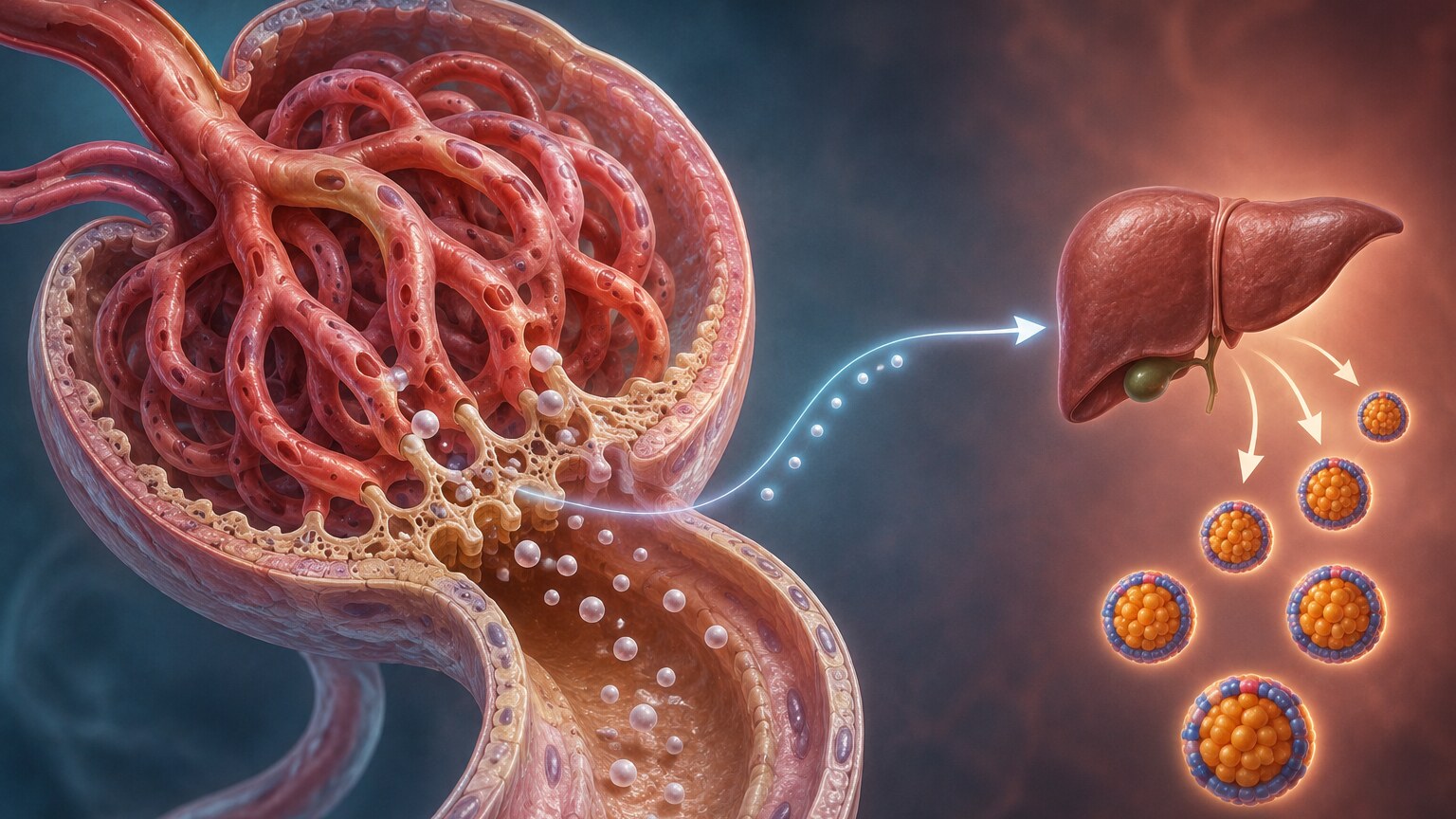
Fatty liver disease and elevated triglycerides are closely intertwined, but the relationship genuinely runs in both directions, which makes it easy to misread which one came first. High triglycerides can contribute to fat accumulating inside liver cells over time, one recognized pathway toward non-alcoholic fatty liver disease. But the reverse is equally true and often underappreciated: once fat has already accumulated inside the liver, that fatty liver itself becomes less efficient at properly processing and clearing lipoproteins, and it tends to produce larger amounts of VLDL as part of the same underlying metabolic dysfunction, which pushes triglycerides higher still — a self-reinforcing cycle where each problem quietly makes the other one worse. Because fatty liver disease often develops silently, with no symptoms at all until it's fairly advanced, a persistently elevated triglyceride level is sometimes the first hint that prompts a doctor to check liver enzymes or order imaging, rather than the fatty liver being found first and the triglyceride connection being made afterward.
Medications That List Triglyceride Elevation as a Known Effect

A surprisingly long list of common, everyday medications carry a documented, mechanism-based effect on triglyceride levels, entirely separate from anything related to diet. Oral estrogen, used in some forms of hormone replacement therapy and certain birth control formulations, stimulates the liver to increase VLDL production as a known pharmacological effect. Corticosteroids like prednisone, prescribed for everything from asthma flares to autoimmune conditions, promote fat breakdown elsewhere in the body that ultimately gets rerouted through the liver as new triglyceride production. Certain beta-blockers used for blood pressure and thiazide diuretics, one of the most commonly prescribed blood pressure medication classes, have both been shown to raise triglycerides modestly in some people, generally as a secondary metabolic effect layered on top of their intended blood-pressure-lowering action. Retinoid medications used for severe acne and certain skin conditions, tamoxifen used in breast cancer treatment, and some antipsychotic and antiretroviral medications round out a list that's genuinely worth reviewing with a doctor or pharmacist whenever an unexplained triglyceride elevation shows up on a panel, since in many of these cases, switching to an alternative medication in the same class can meaningfully bring the number back down without any other change required.
It's worth being clear that recognizing a medication as the likely cause is never a reason to stop taking it without first talking to the prescriber. Every medication on this list is being prescribed to manage a real, often serious condition of its own — blood pressure, inflammation, hormone levels, or a chronic viral infection — and the triglyceride effect has to be weighed against the actual benefit that medication is providing. In many cases, a doctor can simply monitor the triglyceride level periodically alongside the medication rather than changing anything at all, reserving an actual switch for situations where the elevation is severe or where a reasonable alternative genuinely exists. Bringing an unexplained triglyceride result to the same appointment where medications are being reviewed, rather than treating it as a separate issue, is usually the most efficient way to get a clear answer about whether a specific prescription is playing a role.
Uncontrolled Diabetes and the Most Extreme Elevations
While insulin resistance in its earlier, more moderate stages tends to raise triglycerides in a gradual way, genuinely uncontrolled diabetes — particularly when the body has very little functioning insulin available at all, as can happen in poorly managed type 1 diabetes or advanced, neglected type 2 diabetes — can push triglycerides to an entirely different order of magnitude. Insulin doesn't just regulate blood sugar; it's essential for activating lipoprotein lipase, so a severe enough insulin deficiency effectively shuts down the body's main mechanism for clearing triglyceride-rich particles from the blood altogether. In this setting, triglycerides can climb into the thousands, occasionally producing visibly milky, opaque blood plasma — a condition sometimes called chylomicronemia — that carries a genuine, immediate risk of pancreatitis, a serious and painful inflammation of the pancreas, independent of any long-term cardiovascular risk. This is one of the more dramatic examples of how a triglyceride result reflects an active, ongoing metabolic emergency rather than a slow accumulation from months of dietary habits, and it typically requires urgent glucose and insulin management rather than a conversation about future dietary changes.
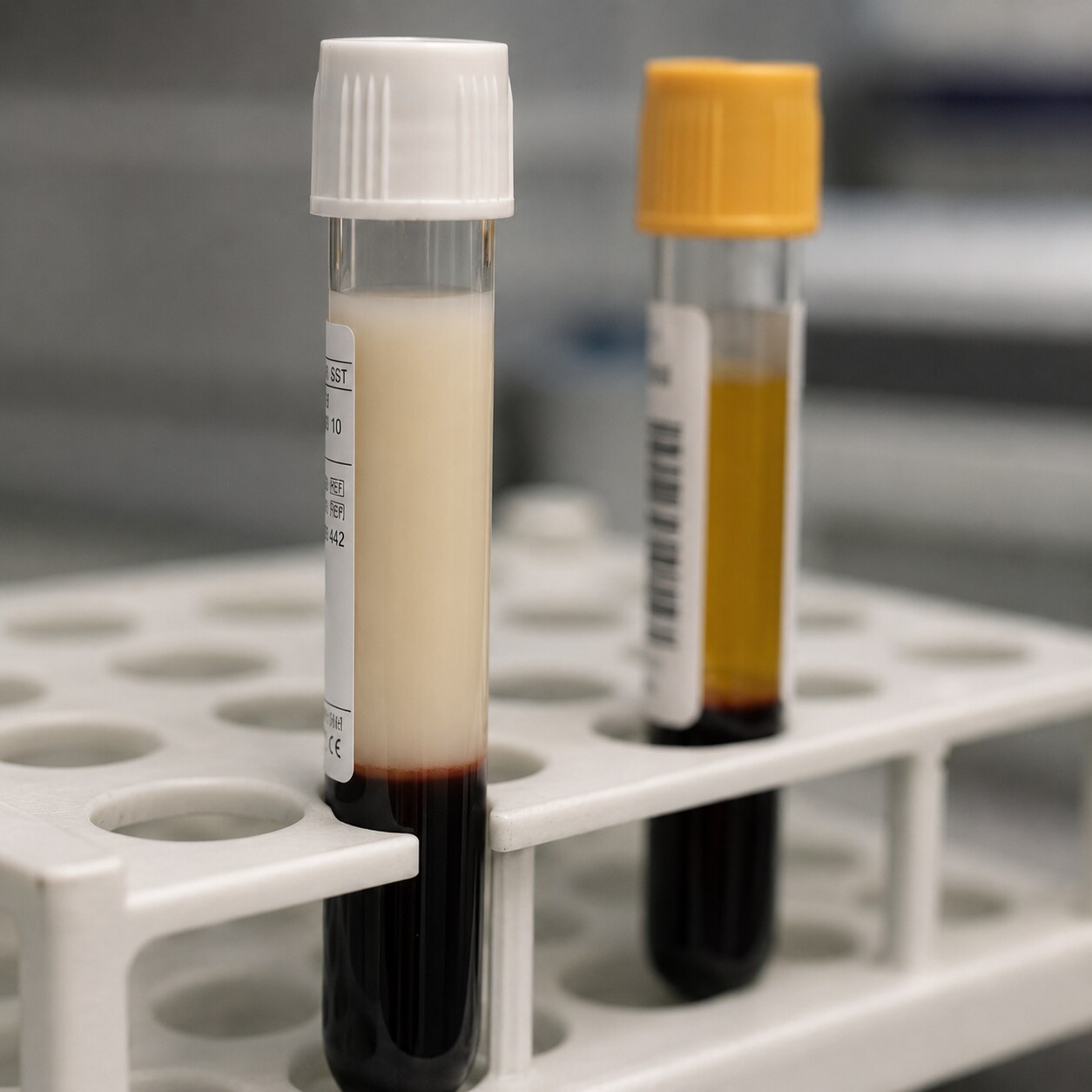
This visible clue is actually something lab technicians watch for directly, independent of the numeric result itself. When a triglyceride level climbs high enough, the excess fat particles scatter light passing through the sample, turning the normally clear, straw-colored plasma into something closer to diluted milk — a lab finding formally called lipemia. Beyond just being a striking visual, significant lipemia can interfere with several other lab measurements that rely on light passing cleanly through the sample, meaning a severely elevated triglyceride level can sometimes cause a cascade of unreliable results across an entire panel, not only its own number, until the underlying triglyceride level is addressed and a repeat sample can be drawn.
The extreme end of this range is also directly relevant to how a low triglyceride result should be interpreted, if only by contrast. Just as a high result can stem from many mechanisms beyond diet, an unusually low triglyceride level — well below the standard reference range rather than simply comfortably normal — can also point toward specific underlying processes, including malabsorption disorders that prevent fat from being properly absorbed from food, an overactive thyroid working in the opposite direction of the hypothyroidism discussed earlier, or certain rare genetic conditions affecting lipoprotein production. This isn't the main focus of this article, but it's a useful reminder that triglycerides sit within a genuinely normal range for a reason, and both directions of abnormality — not only the high end most people worry about — reflect an underlying mechanism worth understanding rather than dismissing.
Pregnancy: A Temporary, Expected Rise

Pregnancy deserves its own mention because it produces one of the most predictable, universal, and entirely normal triglyceride elevations discussed in this article. Hormonal shifts across pregnancy, particularly rising estrogen and increasing insulin resistance that builds naturally as pregnancy progresses, both push triglycerides upward as a matter of course — by the third trimester, it's genuinely normal and expected for triglyceride levels to run two to three times higher than a person's typical baseline, supporting the substantial rise in energy demands of a growing fetus and preparing the body for breastfeeding afterward. This is exactly why routine lipid panels generally aren't ordered during pregnancy purely to monitor cardiovascular risk, and why an elevated result found incidentally during this window is usually interpreted very differently than the same number would be outside of pregnancy. Levels typically return to a person's pre-pregnancy baseline within weeks to a few months after delivery; a result that stays persistently elevated well beyond that window is what would prompt a doctor to look further, rather than the pregnancy-related peak itself.
There is one specific pregnancy scenario where this expected rise becomes genuinely dangerous rather than simply notable: pre-existing severe hypertriglyceridemia, especially the inherited clearance disorders described earlier, layered on top of pregnancy's normal hormonal increase. Because pregnancy already pushes triglycerides two to three times higher as a matter of course, someone who entered pregnancy with an already elevated baseline from an underlying genetic condition can find that baseline pushed into the range associated with pancreatitis risk, sometimes for the first time in their life. This is specifically why women with a known history of significantly elevated triglycerides, or a family history suggesting a possible genetic lipid disorder, are often followed more closely by a specialist throughout pregnancy, with triglycerides checked periodically rather than left to the usual once-a-pregnancy lipid screening that most people receive.
Autoimmune and Inflammatory Conditions Can Move This Number Too
Chronic inflammation, whatever its source, has a documented tendency to disturb normal lipid handling, and several autoimmune conditions raise triglycerides through this route as a secondary effect of the disease process itself rather than anything related to eating habits. Lupus and rheumatoid arthritis, for example, are both associated with elevated triglycerides during active disease flares, likely tied to inflammatory signaling molecules called cytokines that interfere with lipoprotein lipase activity in a way that parallels, but is mechanistically distinct from, the insulin resistance pathway described earlier. HIV infection presents a particularly layered example: the virus itself can raise triglycerides through chronic immune activation, and several of the antiretroviral medications used to treat it carry their own independent triglyceride-raising effect, meaning the elevation in someone living with HIV often reflects two separate mechanisms compounding each other rather than one. This is one more reason a thorough medical history, not just a dietary recall, is such a central part of correctly interpreting an unexpected triglyceride result — a person's broader health picture, including any chronic inflammatory or autoimmune condition, is directly relevant information rather than a side note.
Why Getting the Cause Right Actually Changes Treatment
Sorting out which of these mechanisms is driving an elevated result isn't an academic exercise — it genuinely determines what happens next. Diet and lifestyle changes remain valuable in nearly every case discussed here, but they're not sufficient on their own when the underlying driver is a genetic clearance defect, an untreated thyroid problem, an undiagnosed kidney condition, or a medication side effect, none of which respond meaningfully to cutting back on dessert. A doctor investigating an unexplained elevated triglyceride result will typically start with a basic metabolic panel and thyroid function test, review the full medication list in detail, and ask about family history of high triglycerides or early heart disease — and depending on how high the number is and what else those initial results show, may order additional testing for kidney or liver function, fasting glucose or an A1c, or in select cases, genetic testing for a suspected inherited lipid disorder. Getting the actual cause right is what allows treatment to target the real problem, whether that's thyroid hormone replacement, adjusting a medication, managing blood sugar more aggressively, or, when diet genuinely is the primary driver, a much more confidently targeted conversation about specific dietary changes.
It's also worth understanding roughly where a result falls on the broader severity scale, since the urgency of the next step depends heavily on that. A result in the borderline-high range often warrants a calm, unhurried workup — repeat testing, a look at medications, and a conversation about the factors covered in this article, without any expectation of an immediate crisis. A markedly high result, particularly one climbing into the high hundreds or beyond, moves the conversation faster, since the risk of pancreatitis rises meaningfully at that range regardless of the underlying cause, and a doctor will typically want to identify and address the driver more urgently rather than waiting through a slower, stepwise workup. Knowing this rough framework helps make sense of why two people with "high triglycerides" on paper can walk out of the same appointment with very different next steps — the number alone tells only part of the story, and the underlying cause, and the number's exact severity, together decide how quickly things need to move.
Fasting Status and Lab-Draw Timing Also Play a Role
Before assuming a cause is biological at all, it's worth ruling out something far simpler: whether the sample itself was drawn under the right conditions. Triglycerides, unlike many other lipid panel values, are genuinely sensitive to recent food intake, since they spike temporarily after nearly any meal as newly absorbed fat is packaged and released into the bloodstream for delivery to tissues — this is a normal, expected physiological response, not a sign of an underlying problem. A triglyceride level drawn without proper fasting, or after a meal unusually high in fat eaten just a few hours earlier, can read substantially higher than a person's true baseline, which is exactly why most lipid panels still request nine to twelve hours of fasting beforehand, despite growing clinical interest in non-fasting values for cholesterol specifically. A single unexpectedly high result obtained without fasting, especially in someone with no other risk factors and no relevant symptoms, is often worth discussing with a doctor, who may simply repeat it under proper fasting conditions before pursuing any of the more involved explanations covered elsewhere in this article — the simplest explanation deserves to be ruled out first.
Frequently Asked Questions
Can someone with a healthy diet still have high triglycerides?
Yes. Genetics, an underactive thyroid, insulin resistance, kidney or liver conditions, certain medications, and pregnancy can all raise triglycerides independent of diet. A high result in someone eating reasonably well is a meaningful clue that one of these other factors deserves investigation.
What medications are most commonly linked to raised triglycerides?
Oral estrogen, corticosteroids like prednisone, certain beta-blockers and thiazide diuretics, retinoids, tamoxifen, and some antipsychotic and antiretroviral medications are among the most commonly recognized. Reviewing the full medication list is a standard step when investigating an unexplained elevation.
Is it normal for triglycerides to be high during pregnancy?
Yes. It's genuinely normal and expected for triglycerides to run two to three times higher than baseline by the third trimester due to hormonal changes. Levels typically return to a person's usual baseline within weeks to a few months after delivery.
How high can triglycerides get, and when does it become an emergency?
In severe, uncontrolled diabetes with very little functioning insulin, triglycerides can climb into the thousands, sometimes turning blood plasma visibly milky. That level carries a real, immediate risk of pancreatitis and requires urgent medical attention rather than routine follow-up.
What tests might a doctor order to find the actual cause of high triglycerides?
A thyroid function test, basic metabolic panel, fasting glucose or A1c, and a review of kidney and liver function are common first steps, alongside a full medication review and questions about family history. Genetic testing may be considered for suspected inherited lipid disorders.
Conclusion
A high triglyceride result deserves more curiosity than an automatic assumption about diet, because so many of the mechanisms capable of raising it — an inherited clearance defect, an underactive thyroid, insulin resistance, kidney or liver disease, a routine medication, or a temporary and entirely normal pregnancy-related rise — have nothing to do with what's on a person's plate. Diet still matters, and it's still worth addressing in almost every case, but treating it as the only possible explanation risks missing a thyroid problem, a kidney condition, or a genetic disorder that actually needs its own specific treatment. The most useful next step after an unexpected result isn't a stricter diet plan by default — it's a conversation with a doctor about which of these other mechanisms might actually be behind the number.
Still Not Sure What Your Results Mean?
Upload your labs and get a complete, visual, plain-language interpretation of every biomarker — delivered to your inbox in under 15 minutes.
Get My ReportThis article is for educational purposes only and does not constitute medical advice. Always consult your healthcare provider regarding your specific lab results.