
Why Are My Triglycerides Low?
Almost everything written about triglycerides is aimed at people whose number came back too high, so a result flagged low can be genuinely disorienting — there's very little popular health content explaining what it actually means, and the instinct to assume "lower must be better" doesn't always hold up the way it does for cholesterol. Triglycerides are a normal, necessary part of how your body stores and uses energy, and a level sitting well below the standard reference range, not just comfortably in the lower half of normal, can reflect a real underlying process worth understanding rather than a health win to celebrate. This article walks through what triglycerides actually are and why the body needs a baseline level of them in circulation, the malabsorption disorders that prevent dietary fat from ever making it into your bloodstream, how an overactive thyroid pushes triglycerides down as a side effect of a faster overall metabolism, why very low-fat and very low-calorie diets can produce a genuinely low result, broader undernutrition and malnutrition, the specific genetic conditions that affect the body's ability to package and transport fat, liver disease's role in reduced triglyceride production, medications that lower triglycerides as an intended or incidental effect, why critical illness can temporarily suppress the number, and how doctors actually sort a benign, expected low result from one that deserves a closer look.
What Triglycerides Actually Are — and Why Zero Isn't the Goal

Figure 1. When the small intestine can't properly absorb dietary fat, less of it ever reaches the bloodstream to be packaged into triglycerides in the first place, producing a genuinely low result.
Triglycerides are your body's primary form of stored energy — essentially fat molecules built to be efficiently stored in fat tissue and released back into the bloodstream whenever your body needs fuel between meals. After you eat, your intestines package dietary fat into particles called chylomicrons and release them into circulation; your liver also continuously, steadily manufactures its own triglycerides directly from excess carbohydrates and releases them into circulation as a closely related particle called VLDL. A genuinely healthy body needs a stable baseline level of circulating triglycerides at essentially all times, since they're a genuinely important, actively used energy source for muscle tissue and other organs, not simply an unwanted byproduct that should always be minimized.
This is exactly why "low is always good" doesn't actually apply to triglycerides the same way it does to, say, LDL cholesterol. A result sitting comfortably near the bottom of the normal range is generally nothing to think twice about, and often simply reflects a lean diet or an active, healthy lifestyle overall. But a result that falls clearly below the standard reference range altogether is a different situation — it suggests something is actively interfering with how your body produces, absorbs, or maintains its normal triglyceride supply, and identifying that specific underlying cause, rather than the number itself, is really the actual point of this entire article.
Malabsorption: When Dietary Fat Never Makes It Into the Bloodstream
One of the most common genuine causes of a low triglyceride level is malabsorption — a group of conditions where the small intestine can't properly digest and absorb fat from food, regardless of how much fat someone actually eats. Celiac disease, which damages the intestinal lining in response to gluten, is one well-known cause; chronic pancreatitis, which reduces the pancreas's output of the digestive enzymes fat absorption depends on, is another. Inflammatory bowel diseases like Crohn's disease can also physically damage enough intestinal surface area to meaningfully impair fat absorption, particularly when a significant length of small intestine is affected or has been surgically removed.
In each of these situations, dietary fat that should normally be efficiently absorbed and packaged into chylomicrons instead passes largely undigested straight through the digestive tract, which is exactly why malabsorption so often comes with its own distinctive, recognizable symptom: pale, bulky, unusually foul-smelling stools that are notably difficult to flush completely, a finding called steatorrhea, caused directly by that unabsorbed dietary fat being excreted rather than absorbed as intended. When a low triglyceride result shows up alongside this kind of digestive symptom, or alongside unexplained weight loss and nutrient deficiencies, malabsorption becomes one of the first, most likely explanations a doctor considers.
An Overactive Thyroid: Hyperthyroidism's Effect on Fat Metabolism

Figure 2. An overactive thyroid speeds up how quickly the liver clears triglycerides from the bloodstream, often producing a low result well before other hyperthyroidism symptoms become obvious.
Thyroid hormone directly regulates how quickly your body burns through fat stores, and this relationship works in both directions. Hypothyroidism, an underactive thyroid, is a well-known cause of elevated triglycerides, since a sluggish metabolism slows down how efficiently the body clears fat particles from the bloodstream. Hyperthyroidism, an overactive thyroid, produces the mirror-image effect: excess thyroid hormone speeds up metabolism broadly, including how quickly the liver clears triglyceride-carrying particles out of circulation, often pushing triglyceride levels down as a direct, measurable consequence.
This connection is genuinely useful diagnostically in practice, since an unexpectedly low triglyceride result, especially when paired with other classic hyperthyroidism symptoms like unintentional weight loss, a persistently rapid heart rate, noticeable heat intolerance, or increased anxiety and jitteriness, can sometimes be one of the earlier clues pointing a doctor toward thyroid testing before the more recognizable, classic symptoms become obvious enough on their own to prompt that testing directly. A thyroid-stimulating hormone (TSH) test, typically the first step in evaluating thyroid function, usually follows directly from this kind of unexplained low result.
Curious what your own metabolic panel is actually telling you? Upload your results and get a complete, plain-language breakdown in under 15 minutes.
Analyze My ResultsVery Low-Fat and Very Low-Calorie Diets

Figure 3. A sustained, genuinely very low-fat or low-calorie eating pattern gives the body little raw material to build triglycerides from, which can push a routine result below the normal range.
Since triglycerides are built directly from the dietary fat and excess calories you actually consume, a sustained pattern of eating genuinely very little fat, or very few calories overall day after day, can quite straightforwardly produce a low result simply because there's meaningfully less raw material available for the body to build them from in the first place. This applies broadly to strict very-low-fat diets sometimes used deliberately for specific medical conditions, prolonged fasting or intermittent fasting taken to a genuine extreme, and any sustained pattern of significant caloric restriction overall, whether fully intentional or instead driven by an underlying eating disorder.
This particular cause is usually the most straightforward of all the explanations covered in this article to identify, since it correlates directly and quite predictably with a person's own actual reported eating pattern rather than requiring extensive, invasive additional testing to properly uncover or confirm. That said, an unexpectedly low triglyceride result discovered in someone who hasn't described any deliberate dietary restriction is still worth exploring honestly, since it can sometimes surface a pattern of undereating the person hadn't previously framed as a medical concern.
Broader Malnutrition and Undernutrition
Beyond a specific low-fat diet, more general malnutrition — inadequate overall nutrient and calorie intake from any cause, including chronic illness, advanced age with reduced appetite, or limited access to food — produces a similar downward pressure on triglycerides through the same basic mechanism. When the body isn't taking in enough energy to meet its needs, it has little excess fat or carbohydrate available to convert into stored triglycerides, and existing fat stores are being actively drawn down rather than added to.
In a hospital or long-term care setting specifically, a low triglyceride level discovered alongside other markers of genuinely poor nutritional status, such as low albumin or significant unintended weight loss over a short period, often becomes just one of several supporting data points feeding into a broader formal nutritional assessment, rather than something interpreted entirely in isolation from everything else going on. This is exactly why a doctor evaluating a genuinely low result will typically ask about appetite, recent weight changes, and overall food intake as a standard, early part of the workup, since this cause is common enough to rule in or out quickly through conversation alone.
Genetic Conditions Affecting Fat Transport
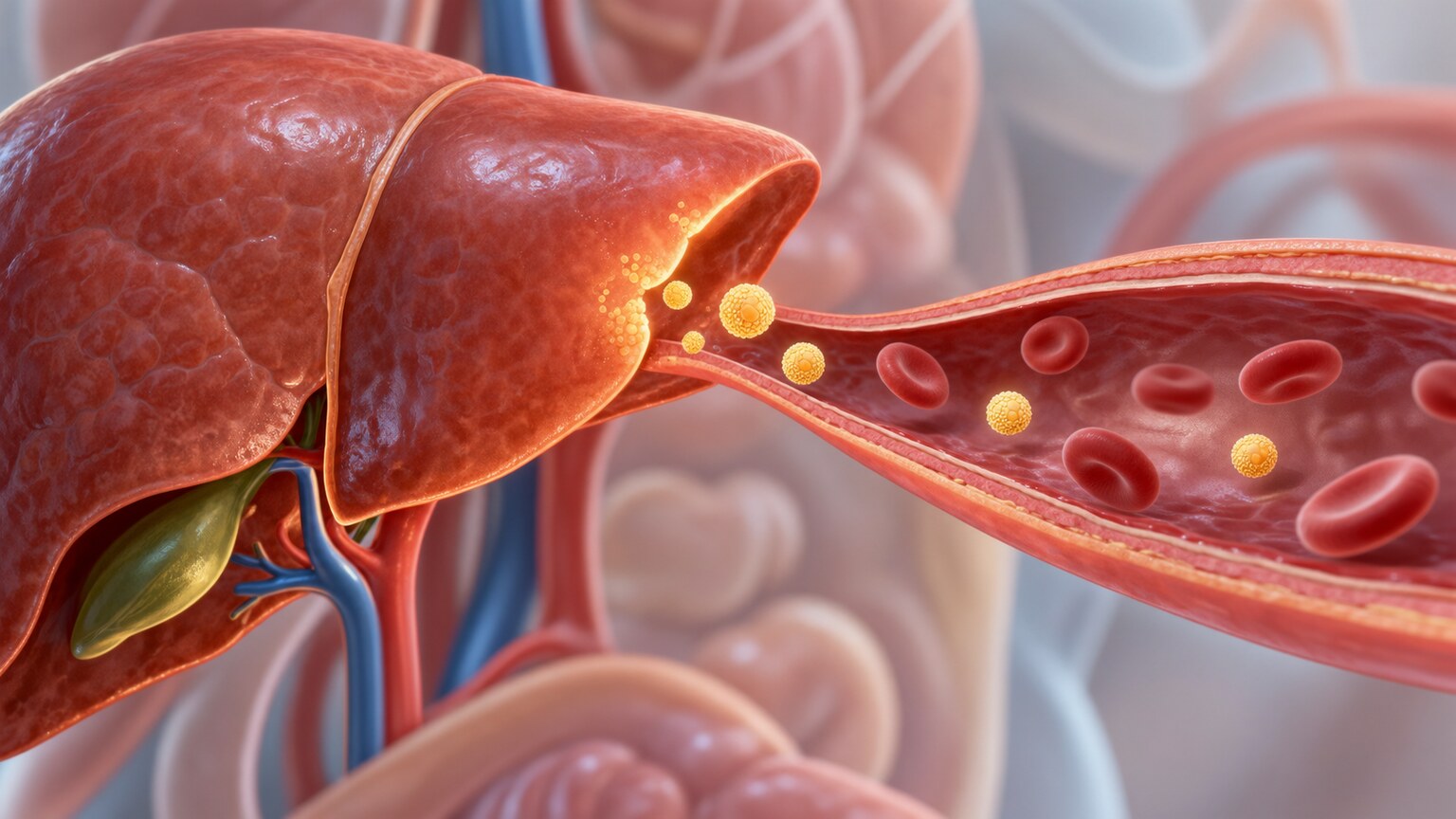
Figure 4. Certain rare inherited conditions impair the liver's ability to package and release fat as VLDL particles at all, producing a persistently, sometimes severely, low triglyceride level from birth.
A small but genuinely important category of low triglyceride results traces back to rare inherited conditions affecting how the body builds and releases the specific particles that carry fat through the bloodstream. Abetalipoproteinemia and familial hypobetalipoproteinemia are two such conditions, both involving defects in the machinery the liver and intestines use to assemble triglyceride-carrying lipoprotein particles in the first place. In these conditions, triglyceride levels run persistently, often severely, low from a young age, frequently accompanied by fat malabsorption symptoms and, in more severe cases, vitamin deficiencies since certain vitamins depend on fat absorption to be taken up properly.
These genetic causes are considerably rarer overall than the dietary and thyroid-related causes covered earlier in this article, but they remain an important consideration specifically when a low triglyceride result is discovered very early in life, runs consistently in a family alongside similar findings in multiple relatives, or persists stubbornly despite an otherwise genuinely normal diet and no clear evidence of malabsorption from any other identifiable cause. Specialized lipid testing and, in some cases, genetic testing can confirm this category of diagnosis when it's genuinely suspected.
Liver Disease's Role in Reduced Production
Because the liver manufactures a significant share of the body's circulating triglycerides, significant liver dysfunction can reduce that production directly, particularly in advanced liver disease where the liver's overall synthetic capacity — its ability to manufacture proteins and lipids generally — becomes meaningfully impaired. This is somewhat genuinely counterintuitive given how commonly fatty liver disease specifically is discussed as a cause of elevated triglycerides earlier in that disease's overall progression; but as liver damage advances further toward more severe, advanced cirrhosis, the liver's own actual manufacturing capacity can decline enough to push triglyceride production in the completely opposite direction instead.
This particular pattern — declining triglycerides appearing alongside other genuine signs of worsening liver synthetic function, such as falling albumin levels or noticeably prolonged clotting times on bloodwork — is generally regarded as a marker of more advanced, progressed disease rather than an early one, which is exactly why a low triglyceride result found in someone with already-known liver disease is taken quite seriously as a potential sign of ongoing disease progression, rather than being casually treated as an unrelated, reassuring finding.
Medications That Lower Triglycerides

Figure 5. Fibrate medications and high-dose prescription fish oil are specifically prescribed to lower triglycerides, and a result running low is often simply that treatment working as intended.
Some medications lower triglycerides as their entire intended purpose, most notably fibrates and high-dose prescription omega-3 fatty acid formulations, both specifically prescribed to treat elevated triglycerides in the first place. Someone already taking one of these medications who then sees a genuinely low result show up on a follow-up panel is, in the vast majority of cases, simply seeing the treatment working exactly as it was designed and prescribed to do, rather than experiencing some unexpected, concerning side effect that would otherwise be worth investigating any further.
A smaller number of medications lower triglycerides as a secondary, less-publicized effect rather than their primary purpose, including certain blood pressure medications and some medications used for other metabolic conditions. Reviewing a genuinely complete, up-to-date current medication list is consequently one of the very first, simplest steps in interpreting an unexpectedly low triglyceride result, often resolving the entire question almost immediately once a specific medication's already well-known effect on triglycerides is properly identified and accounted for.
Critical Illness and Acute Stress States

Figure 6. During significant acute illness, the body's metabolic priorities shift substantially enough to temporarily lower circulating triglycerides, usually normalizing once the underlying illness resolves.
During significant acute illness — a severe infection, major trauma, or a stay in an intensive care unit — the body's normal metabolic priorities shift substantially, and triglyceride levels can drop as part of that broader shift, alongside changes in several other routine lab values. This pattern is generally temporary and tied directly to the acute illness itself, typically normalizing again as the underlying condition resolves and the body's metabolism returns to its usual baseline state.
Because of this, a low triglyceride result drawn during a hospital admission for a completely unrelated acute illness is usually interpreted quite differently than that exact same result would be if found on a routine outpatient panel in someone who otherwise feels genuinely well — the surrounding clinical context, specifically the clear presence of significant acute illness at the time of the draw, is ultimately what tells a doctor whether this particular explanation reasonably and confidently applies.
Why Endurance Athletes Sometimes See Unusually Low Results
One specific population worth mentioning separately is competitive endurance athletes — long-distance runners, cyclists, and triathletes training at a high volume — who sometimes see triglyceride levels running notably low compared to the general population, even without any of the underlying medical causes covered elsewhere in this article. Sustained, genuinely high-volume aerobic exercise significantly increases just how efficiently muscle tissue actively clears and burns circulating triglycerides for fuel, and when combined with the generally lean body composition and disciplined, consistent diet common among competitive endurance athletes, the net effect can be a triglyceride level sitting well below the standard population reference range as an entirely expected, genuinely benign consequence of real athletic training rather than any actual underlying problem.
This is a genuinely useful category to keep firmly in mind specifically because it illustrates, once again, just how much context matters enormously when interpreting any low result — that exact same low number found in a sedentary person eating a typical diet would reasonably prompt a very different level of concern than it would in a competitive athlete training dozens of hours a week, even though the underlying lab value itself looks completely identical on paper in both cases.
How Doctors Distinguish a Benign Result From One Worth Investigating
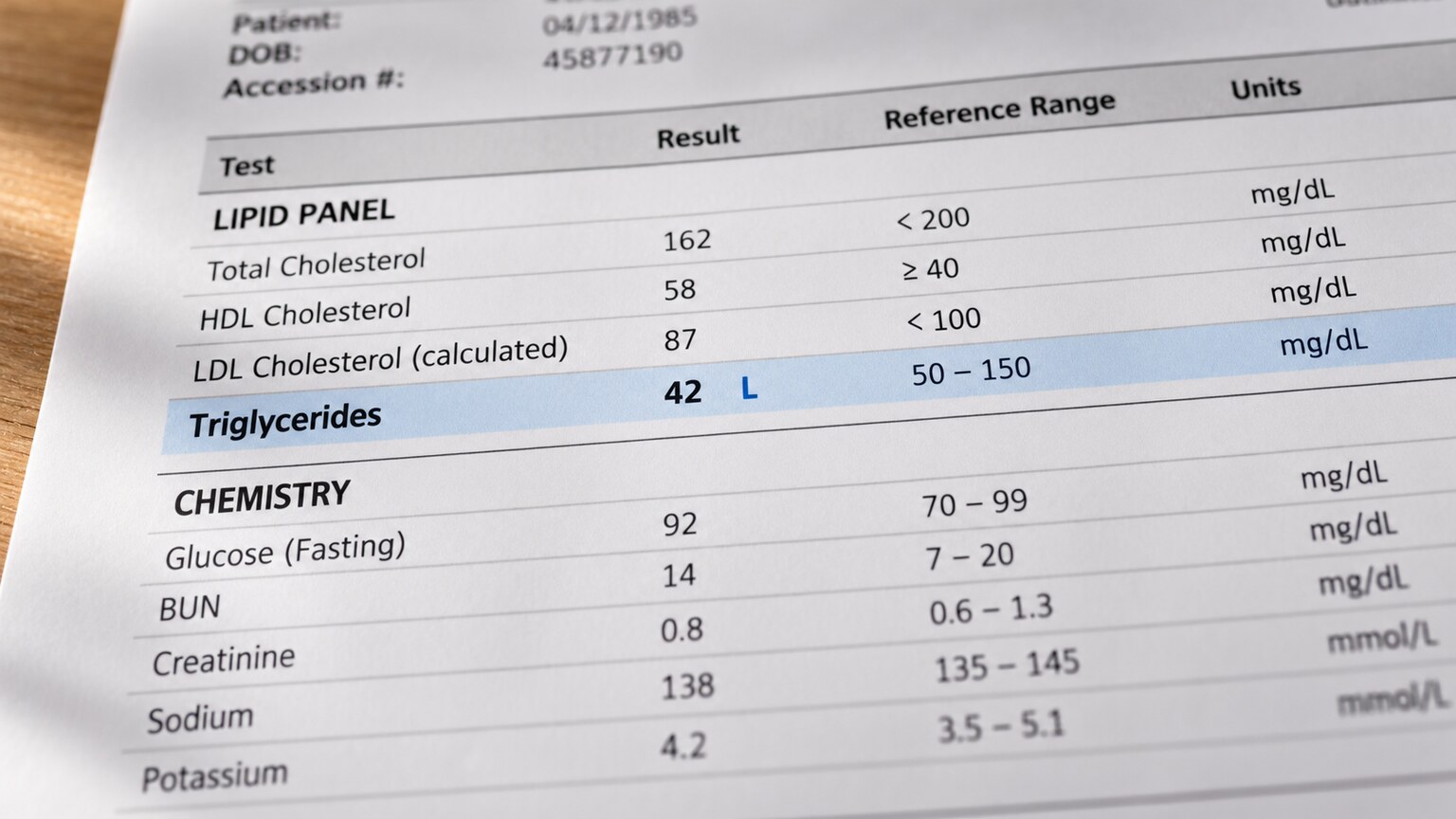
Figure 7. A doctor weighing a low triglyceride result looks at how far below range it sits, whether other lab values move with it, and the person's diet, weight, and overall health picture together.
Given how many genuinely different explanations can produce the same low reading, doctors lean on a combination of context clues rather than the number alone. A mildly low result found in someone eating a lean, genuinely healthy diet, sitting at a stable healthy weight, and showing no other abnormal findings anywhere else on the panel, is generally not considered concerning at all and often reflects nothing more than perfectly normal individual variation between people. A significantly more pronounced low result, particularly one accompanied by unexplained weight loss, ongoing digestive symptoms, other abnormal thyroid or liver values on the same panel, or clear signs of malnutrition, reasonably prompts a considerably more thorough evaluation, working carefully through the specific individual causes already covered throughout this article one at a time.
The starting point for that evaluation is usually a detailed, careful history — diet, recent weight changes, digestive symptoms, current medication list, exercise habits, and any known thyroid or liver conditions — since, as covered throughout this article, each individual cause tends to leave its own distinct, recognizable trail in a person's history and surrounding lab values, narrowing the list of likely explanations well before any additional specialized testing genuinely becomes necessary at all.
Common Misconceptions About Low Triglycerides
One common misconception is that a low triglyceride result is automatically a good sign, mirroring how a low LDL cholesterol is generally viewed favorably. As covered throughout this article, triglycerides don't work the same way — the body genuinely needs a baseline supply, and a result well below the normal range often points toward an underlying cause worth understanding rather than a marker of excellent health.
A second misconception is that diet is always the explanation for a low result, the same way it's frequently blamed for a high one. While diet genuinely can and often does explain a low triglyceride level on its own, several of the specific causes covered throughout this article — thyroid dysfunction, malabsorption, advanced liver disease, and inherited genetic conditions — have essentially nothing whatsoever to do with diet, which is exactly why a genuinely thorough evaluation always looks well beyond eating habits alone before settling on any single explanation.
A third misconception is that a single low result, on its own, requires immediate, extensive testing. In someone who is otherwise genuinely healthy, without any accompanying symptoms or other unrelated abnormal values elsewhere on the panel, a mildly low triglyceride result is very often simply noted in the chart and reasonably monitored again on a future routine panel, rather than immediately triggering a more invasive, resource-intensive workup right away.
A Practical Comparison of the Main Causes
Malabsorption typically comes with distinctive digestive symptoms like foul-smelling, hard-to-flush stools, unexplained weight loss, and nutrient deficiencies, and traces back to a specific intestinal or pancreatic condition. Hyperthyroidism usually appears alongside unintentional weight loss, a racing heart, heat intolerance, and anxiety, confirmed quickly with a TSH test. Restrictive diets correlate directly with a person's own reported eating pattern and are usually the easiest cause to confirm through conversation alone. Broader malnutrition shows up alongside other markers of poor nutritional status, like low albumin, in someone with reduced overall intake. Genetic lipid disorders tend to appear early in life, often with a family history of similar findings. Advanced liver disease shows declining triglycerides alongside other signs of failing liver synthetic function, like falling albumin or prolonged clotting times. Medications correlate directly with a person's current prescription list, particularly fibrates or prescription fish oil. Critical illness is tied to a clear, active acute medical event and is expected to resolve once that event does. Working carefully through this list roughly mirrors how a doctor actually, practically approaches an unexplained low triglyceride result in real clinical practice, generally starting with the most statistically common, easiest-to-confirm explanations first before moving on to rarer possibilities.
Why Pregnancy Complicates This Picture in the Opposite Direction
It's worth noting one situation where the usual interpretation of triglycerides flips entirely: pregnancy, which normally raises triglyceride levels substantially as part of a healthy, expected metabolic adaptation supporting the growing fetus. Because of this, a triglyceride level that would otherwise look entirely unremarkably low outside of pregnancy can actually represent a meaningfully blunted or reduced rise during pregnancy specifically, sometimes prompting a closer, more careful look at overall maternal nutrition, since genuinely adequate triglyceride availability throughout pregnancy directly supports healthy fetal growth and development.
This is exactly why pregnancy status is genuinely one of the very first pieces of context factored directly into interpreting any triglyceride result at all, in either direction — a number that reads as reassuringly low in a non-pregnant adult can represent something genuinely worth a closer, more careful look specifically during pregnancy, given just how differently the body's own expected triglyceride trajectory shifts throughout that particular, physiologically demanding period.
Why This Distinction Matters More the Lower the Number Runs
Not every low triglyceride result carries the same weight, and the degree of the drop matters considerably in how seriously it gets investigated. A result sitting modestly below the standard reference range, particularly in someone eating a lean diet, is generally treated as a low-priority finding worth simply noting rather than actively pursuing. A result running dramatically low — well below what diet alone would typically explain — carries much more diagnostic weight, and is far more likely to prompt the kind of thorough workup covering thyroid function, liver function, and malabsorption screening described throughout this article.
This same graduated approach mirrors how doctors generally handle most lab abnormalities across the board: the further a given result sits from the expected reference range, the less likely a simple, entirely benign explanation genuinely fully accounts for it, and the more warranted a considerably more thorough, deliberate evaluation reasonably becomes at that point. Understanding this graduated, threshold-based thinking helps explain fairly clearly why two different people with technically "low" triglyceride results might reasonably receive genuinely different levels of medical follow-up, depending almost entirely on exactly how low each individual result actually runs below the reference range.
How This Fits Into a Broader Lipid Panel
Triglycerides quite rarely ever get interpreted entirely on their own in practice, since they're almost always measured together as part of a broader standard lipid panel that also routinely includes total cholesterol, LDL, and HDL values. A low triglyceride result sitting comfortably alongside otherwise normal or genuinely favorable cholesterol values generally supports a more reassuring overall clinical picture, particularly when it also lines up consistently with a genuinely healthy diet and a stable, unremarkable body weight over time. A low triglyceride result appearing alongside other unexpected abnormalities found elsewhere on that exact same panel, or alongside abnormal values discovered on a broader metabolic or liver panel drawn at that same visit, meaningfully shifts the overall interpretation toward one of the more specific underlying causes already covered in detail throughout this article.
This is exactly why any single flagged value, triglycerides very much included, is genuinely best read in the fuller context of the complete panel it actually came from rather than viewed entirely in isolation — the surrounding numbers on that same panel frequently either reinforce an already-benign explanation or point fairly clearly toward one specific direction worth investigating further, well before any additional, more specialized testing genuinely becomes necessary at all.
Frequently Asked Questions
Is a low triglyceride level ever dangerous on its own?
Rarely, by itself. A low triglyceride level is usually more useful as a clue pointing toward an underlying cause, like malabsorption or thyroid dysfunction, than as a directly dangerous finding on its own.
Can a strict diet alone explain a low triglyceride result?
Yes, a sustained very low-fat or very low-calorie diet can genuinely produce a low result, since triglycerides are built directly from consumed fat and excess calories. This is usually the easiest cause to confirm through diet history alone.
Why would an overactive thyroid lower triglycerides instead of raising them?
An overactive thyroid speeds up overall metabolism, including how quickly the liver clears triglyceride-carrying particles from the bloodstream, producing the opposite effect from an underactive thyroid, which is a well-known cause of elevated triglycerides.
What symptoms would suggest malabsorption is behind a low triglyceride result?
Pale, bulky, foul-smelling stools that are difficult to flush (steatorrhea), unexplained weight loss, and nutrient deficiencies are classic signs of fat malabsorption worth mentioning to a doctor alongside a low triglyceride finding.
Should I be worried if my triglycerides are low but everything else on my panel is normal?
Usually not significantly. A mildly low result with no other abnormal findings, in someone eating a lean diet at a stable weight, is generally reassuring and often simply reflects normal individual variation.
Can low triglycerides affect how well I absorb vitamins?
In cases involving significant malabsorption or a severe genetic lipid disorder, yes. Fat-soluble vitamins A, D, E, and K rely on the same fat-absorption machinery, so a doctor investigating a significantly low result will often check these vitamin levels too.
Do I need to fast before a triglyceride test for the result to be accurate?
Yes, typically nine to twelve hours. Triglycerides rise noticeably after eating, so a result drawn without proper fasting can look misleadingly different from a properly fasted sample, complicating any comparison over time.
Are low triglycerides more common in children than adults?
Children and adolescents generally run lower baseline triglyceride levels as a normal part of development, which is why pediatric reference ranges are calibrated separately rather than using the adult chart.
Why Very Low Triglycerides Can Also Affect Vitamin Absorption
Since triglyceride-carrying particles play a direct role in transporting fat through the bloodstream, and several of the causes covered in this article specifically involve impaired fat handling, it's worth understanding a related downstream consequence: fat-soluble vitamins A, D, E, and K rely on the same basic fat-absorption machinery to be taken up from food in the first place. Someone with malabsorption, a severe genetic lipid disorder, or advanced liver disease severe enough to meaningfully lower triglycerides is often at real risk for deficiencies in one or more of these vitamins as well, since the same underlying process that's suppressing triglycerides is frequently also limiting how well these vitamins are absorbed.
This is exactly why a doctor carefully investigating a genuinely low triglyceride result, once one of the specific fat-handling causes described earlier in this article seems reasonably likely, will often go ahead and check vitamin A, D, E, and K levels as part of that same broader, more complete workup, rather than treating the original triglyceride finding as an entirely isolated issue on its own. Catching an accompanying vitamin deficiency genuinely early, well before it eventually goes on to produce its own separate, distinct symptoms like noticeable vision changes, gradually weakened bones, or unexpected easy bleeding issues, is one of the more practically important, genuinely tangible reasons to take a significantly low triglyceride result seriously rather than simply dismissing it outright as an unimportant medical curiosity.
How Age and Sex Shape What Counts as a Genuinely Low Result
Reference ranges for triglycerides, like most lab values, are built from broad population data, and a few real, well-documented factors shift where an individual's own expected baseline sits within that range. Children and adolescents generally run lower baseline triglyceride levels than adults, reflecting normal differences in body composition and metabolism during growth, which is why pediatric reference ranges are calibrated separately rather than borrowing the adult chart directly. Triglyceride levels also tend to rise gradually with age in the general population, meaning a result that would look unremarkably low in a healthy young adult might represent a more meaningful drop, relative to an individual's own expected trajectory, in an older adult.
Sex plays a modest role as well, with men on average running somewhat higher baseline triglyceride levels than premenopausal women, a difference partly attributed to the protective metabolic effects of estrogen. None of this genuinely changes how any single result should be interpreted entirely in isolation, but it does meaningfully help explain why a lab's own printed reference range ultimately represents a broad population average rather than some fixed, universal target every single person is somehow expected to sit within regardless of their own individual age, sex, or personal baseline.
Why a Repeat Fasting Sample Matters Before Drawing Conclusions
Triglycerides are one of the more diet-sensitive values on a standard lipid panel, rising noticeably for several hours after a meal and settling toward a stable baseline only after a genuine fasting period, typically nine to twelve hours without food. A result drawn under inconsistent fasting conditions, or compared against a previous result drawn under different conditions, can create a misleading picture of a trend that isn't actually there. Before ever concluding that a given low triglyceride result genuinely reflects a real, meaningful change worth investigating further, confirming that the original sample was actually drawn under proper, consistent fasting conditions, and ideally comparing it directly against a properly fasted repeat sample, is a simple but genuinely important step that gets overlooked more often than it probably should.
This is a meaningful part of why doctors are often genuinely cautious about reacting strongly to any single unexpected triglyceride value without first carefully confirming the testing conditions were actually consistent and appropriate — a genuinely low, properly fasted result carries real, substantial diagnostic weight, while a result drawn under inconsistent or unclear conditions is far less reliable ground for drawing any firm conclusion at all.
Putting the Full Picture Together
Taken together, the causes covered throughout this article all point toward one consistent theme: a low triglyceride result is a starting point for investigation, not a self-explanatory finding, and definitely not an automatic marker of good health the way it can feel intuitive to assume. The same lab value can mean something entirely benign, like a lean diet in an otherwise healthy person, or something that calls for real follow-up, like malabsorption, hyperthyroidism, or advanced liver disease, and the only way to know which situation actually applies is through the fuller evaluation described throughout this piece rather than through the number alone.
For anyone currently looking at a flagged low triglyceride result right now, the most genuinely useful next step closely mirrors what this article has walked through step by step: consider your own diet and recent weight trend honestly and carefully, think through whether any digestive symptoms, thyroid symptoms, or already-known liver or genetic conditions might reasonably apply, and bring that fuller context directly to whoever ordered the test so the number can be properly read against everything surrounding it rather than in complete isolation.
Conclusion
A low triglyceride result flips the usual script most people are familiar with, and understanding why requires looking past the instinct that "lower is always better." Whether the actual explanation traces back to malabsorption, an overactive thyroid, a genuinely restrictive diet, broader underlying malnutrition, a rare inherited genetic condition, advanced liver disease, a specific medication, or a purely temporary acute illness, identifying the real underlying cause — rather than simply assuming the result is either meaningless or automatically reassuring on its own — is ultimately what turns a confusing, unfamiliar flag into a clear, genuinely useful answer.
Still Not Sure What Your Results Mean?
Upload your labs and get a complete, visual, plain-language interpretation of every biomarker — delivered to your inbox in under 15 minutes.
Get My ReportThis article is for educational purposes only and does not constitute medical advice. Always consult your healthcare provider regarding your specific lab results.