
Why Did My Doctor Order a Fasting Triglyceride Test?
If your doctor's office told you not to eat or drink anything but water for 9 to 12 hours before your lipid panel, that instruction wasn't a generality applied to every blood test — it exists almost entirely because of one specific number on the panel: triglycerides. Unlike cholesterol, which stays fairly stable whether or not you've recently eaten, triglycerides rise sharply and predictably within hours of a meal, especially a meal containing any real amount of fat, and can climb several times above your true baseline level before settling back down. Draw blood in that window and the number on your report reflects, in large part, what you just ate rather than your actual metabolic baseline — the very thing your doctor needs to know to assess your cardiovascular risk, your pancreatitis risk, or how well a treatment is working. Understanding why fasting matters this much for this one specific value changes how you read the number that eventually comes back, and why your doctor was so particular about the timing of your last meal.
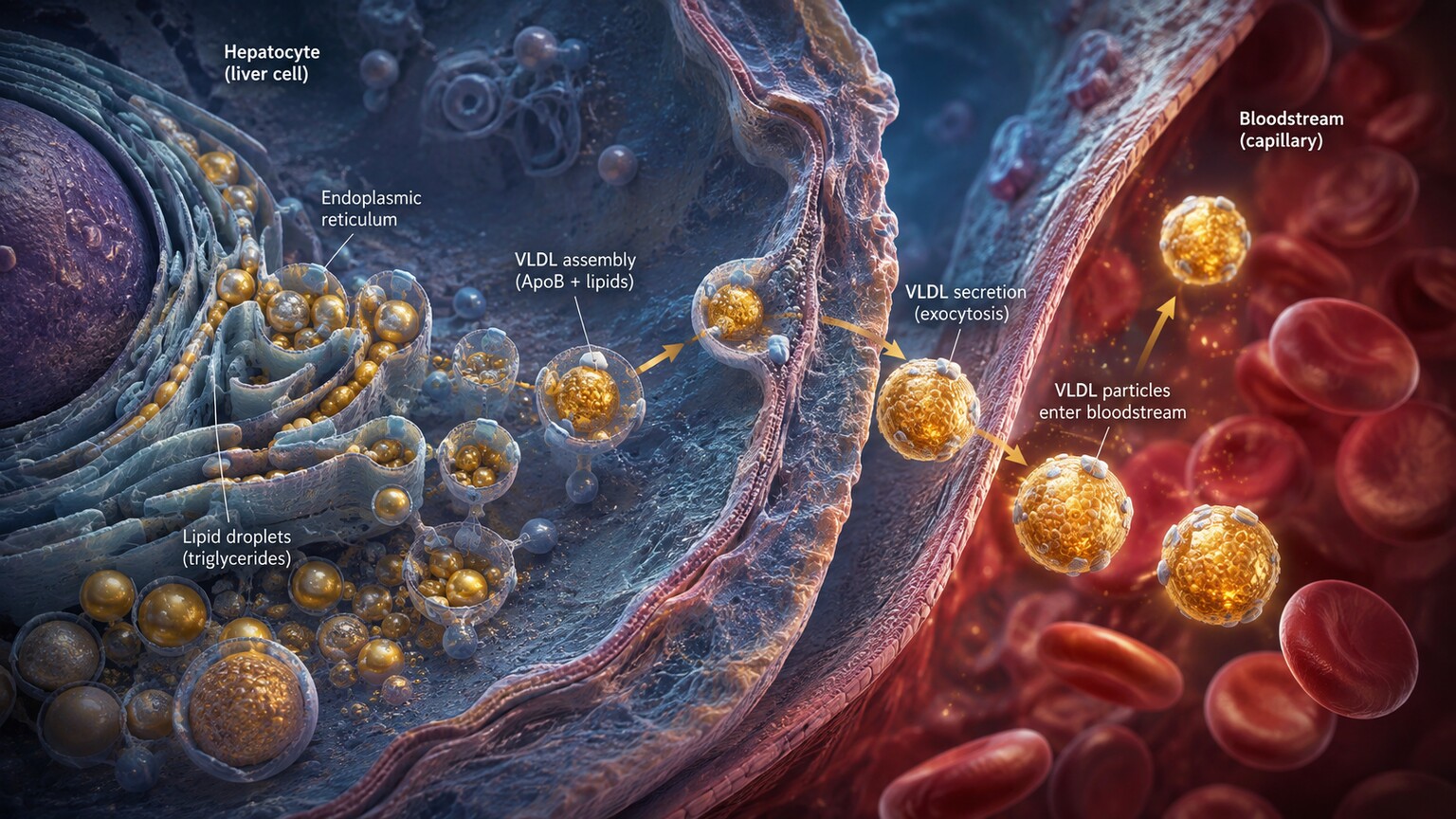
Figure 1. In the fasting state, nearly all circulating triglycerides come from VLDL particles the liver assembles and releases on its own, reflecting your body's true baseline output.
Curious what your own lab results are really telling you? Upload them and get a complete, plain-language breakdown in under 15 minutes.
Analyze My ResultsTwo Sources of Triglycerides — And Why Only One Is What Your Doctor Wants to Measure
Most people, understandably, think of a blood test as a fairly neutral snapshot — a straightforward measurement of whatever happens to be circulating at that moment, unaffected by anything as ordinary as breakfast. Triglycerides are the clearest exception to that assumption on a standard lipid panel, and understanding why requires stepping back from the number itself and looking at where triglycerides in the blood actually come from in the first place. To understand why fasting matters this much, it helps to know that the triglycerides circulating in your blood at any given moment come from two genuinely different sources, and a fasting test is specifically designed to isolate one of them. The first source is your liver, which continuously packages triglycerides into particles called VLDL, or very-low-density lipoprotein, and releases them into circulation at a steady, predictable rate that reflects your underlying metabolic state — how insulin-sensitive your tissues are, how much sugar and alcohol you've been consuming over recent weeks, and, in some people, genetic factors that affect how efficiently the liver clears these particles back out of the blood. This liver-driven output is what a fasting triglyceride test is actually trying to capture, since it represents a stable, reproducible baseline rather than something that swings wildly hour to hour. The second source is your gut, which packages the fat you just ate into much larger particles called chylomicrons and releases them directly into your bloodstream within roughly 30 minutes to a few hours of a meal. Chylomicrons are so large and so loaded with fat that even a single meal can measurably cloud a blood sample with them, and it's specifically this second, meal-driven source that a fasting requirement is designed to eliminate from the picture.
It's worth appreciating just how quickly and reliably this liver-driven baseline reasserts itself once the meal-related noise has cleared, since that reliability is exactly what makes fasting testing so clinically trustworthy. VLDL production isn't a static, unchanging number either — it responds to your broader metabolic state over the preceding days and weeks, rising when the liver is being asked to process more incoming sugar and alcohol than it can efficiently handle, and falling when that metabolic load eases. This is part of why a fasting triglyceride result, unlike a single post-meal spike, is considered a genuinely meaningful reflection of a person's underlying metabolic health rather than a snapshot of one unusual day: it's the liver's settled, resting output, built up from a pattern of behavior rather than a single event, which is exactly the kind of number a doctor wants when trying to assess long-term cardiovascular or metabolic risk rather than what happened at lunch.
Chylomicrons — Why a Recent Meal Can Cloud the Entire Picture
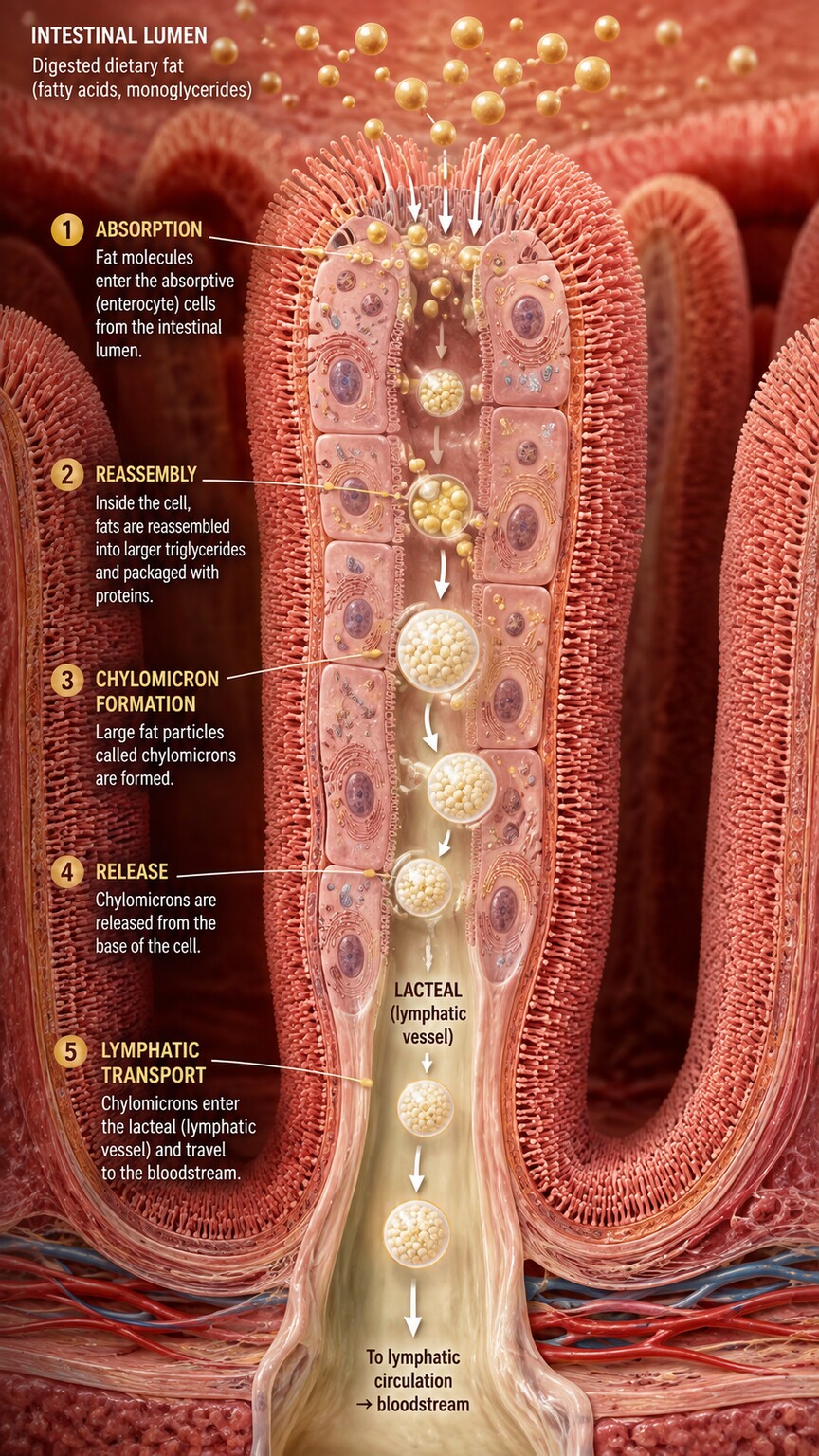
Figure 2. Cells lining the small intestine package absorbed dietary fat into chylomicrons within roughly 30 minutes to a few hours of eating, temporarily flooding the blood with fat particles unrelated to baseline triglycerides.
Chylomicrons are, quite literally, visible to the naked eye once there are enough of them in a blood sample — a tube of blood drawn a few hours after a fatty meal can turn visibly cloudy or milky, a phenomenon lab professionals call lipemia, purely from the sheer number and size of these fat-carrying particles suspended in the plasma. This isn't a subtle statistical nudge to the final number; triglyceride levels can rise two to ten times above a person's fasting baseline in the hours following a substantial meal, entirely as a normal, expected physiological response that has nothing to do with underlying cardiovascular or metabolic risk. The intestinal cells responsible for this process, called enterocytes, absorb fat broken down during digestion and reassemble it inside the cell into these large, triglyceride-dense particles specifically because free fat can't travel through the watery environment of blood plasma on its own — it needs to be packaged, the same basic principle behind why oil and water don't mix without an emulsifier. Once released into the lymphatic system and then the bloodstream, chylomicrons circulate for a matter of hours before specialized enzymes break them down, which is also why the standard fasting window for a triglyceride test — generally 9 to 12 hours — is long enough to let this entire post-meal wave clear out completely, leaving only the liver's own steady VLDL output behind to measure.
How Long Does Full Chylomicron Clearance Actually Take?
The specific 9-to-12-hour window recommended for most fasting triglyceride tests isn't an arbitrary round number — it's built directly on how long it actually takes a healthy person's body to finish clearing chylomicrons from a typical meal. Research measuring triglyceride levels at intervals after a standardized fatty meal has generally found that levels peak somewhere between three and six hours after eating and return close to baseline by around eight to twelve hours later in someone with normal chylomicron clearance, which is exactly the logic behind the recommended fasting duration. This clearance process depends on an enzyme called lipoprotein lipase, anchored to the walls of small blood vessels throughout fat and muscle tissue, which breaks chylomicrons apart piece by piece as blood flows past, releasing their fat content to be used or stored locally while the shrinking remnant particle eventually gets cleared by the liver. In someone with reduced lipoprotein lipase activity — whether from insulin resistance, certain medications, or a genetic cause — this clearance process runs more slowly than typical, meaning a standard overnight fast might not be quite long enough to fully normalize triglycerides in every single person, which is one more reason a doctor may specifically ask about the timing of a person's very last meal or drink rather than simply trusting a generic "I fasted last night" without any further detail.
What a Fasting Triglyceride Level Is Actually Screening For
Once that meal-driven noise is removed, a fasting triglyceride result becomes genuinely useful for two related but distinct clinical purposes. The first is cardiovascular risk assessment: persistently elevated fasting triglycerides, generally above 150 mg/dL, are an independent risk factor for heart disease and are frequently seen alongside low HDL cholesterol and insulin resistance as part of a recognizable metabolic pattern, even in people whose LDL cholesterol looks entirely unremarkable on its own. The second, and in some ways more urgent, purpose is screening for a level of triglyceride elevation high enough to pose an immediate physical risk rather than a long-term one — once fasting triglycerides climb above roughly 500 mg/dL, and especially once they cross 1,000 mg/dL, the risk of acute pancreatitis rises sharply, a genuinely dangerous inflammation of the pancreas that can develop suddenly and requires emergency treatment. These two purposes call for somewhat different thresholds of concern and different urgency in follow-up, but both depend entirely on the number reflecting a true fasting baseline rather than a temporary post-meal spike, since treating a meal-inflated number as if it were someone's genuine, sustained baseline could either trigger unnecessary alarm or, just as problematically, mask a real, sustained elevation that happened to be drawn on an unusually low-fat day.
It's also worth understanding that fat isn't the only dietary trigger for a temporary triglyceride spike, even though it's the most direct one. A large intake of refined carbohydrates or simple sugars can push triglycerides upward too, since the liver readily converts excess circulating glucose into new triglycerides through a metabolic pathway called de novo lipogenesis, essentially manufacturing fat from sugar when more glucose is available than the body immediately needs for energy. This means a high-carbohydrate meal without much fat at all can still meaningfully raise triglycerides within a matter of hours, working through a genuinely different biological route than the direct fat-absorption pathway responsible for chylomicrons, but arriving at a similarly misleading elevated number if the blood happens to be drawn during that window. Both pathways reinforce the same underlying point: a triglyceride level measured too close to any substantial meal, whether high in fat or high in sugar, reflects recent digestion more than it reflects the steady metabolic baseline a doctor actually needs to see.
When Triglycerides Get Dangerously High — The Pancreatitis Connection
The relationship between severely elevated triglycerides and pancreatitis is one of the more mechanically well-understood connections in lipid biology, and it's worth walking through because it explains why doctors treat a very high fasting triglyceride result with real urgency rather than routine follow-up. When triglyceride-rich particles circulate in extremely high concentrations, they can be broken down directly within the pancreas's own small blood vessels by an enzyme called pancreatic lipase, releasing a surge of free fatty acids locally, right at the pancreas itself. In high enough concentrations, these free fatty acids are directly toxic to the delicate cells lining those small blood vessels, triggering local inflammation, impairing blood flow through the pancreatic microcirculation, and setting off the same cascade of tissue injury and inflammation that defines acute pancreatitis, regardless of whether gallstones or alcohol — the two more commonly known causes — are involved at all. This form of the condition, called hypertriglyceridemia-induced pancreatitis, accounts for a meaningful minority of all pancreatitis cases and becomes disproportionately more likely as fasting triglycerides climb into the thousands, which is exactly why a severely elevated fasting result — as opposed to a moderately elevated one tied more to long-term cardiovascular risk — often prompts same-day or next-day clinical attention rather than a routine follow-up appointment weeks later.

Figure 3. Sudden, severe upper-abdominal pain is the hallmark symptom of acute pancreatitis, a genuine medical emergency that becomes more likely once fasting triglycerides climb into the thousands.
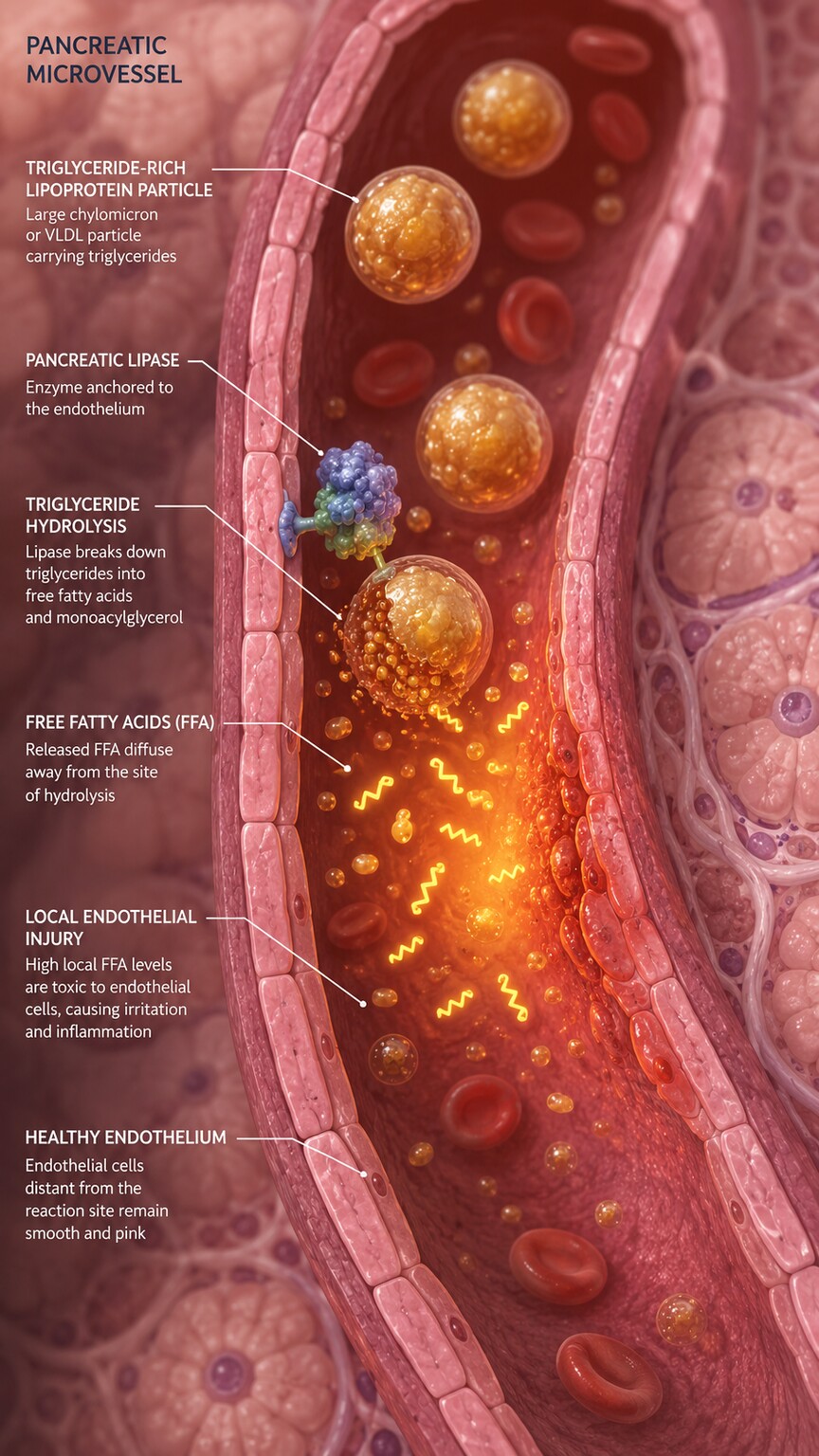
Figure 4. Pancreatic lipase breaking down triglyceride-rich particles directly inside the pancreas's own small vessels releases a local surge of free fatty acids toxic enough to trigger acute pancreatitis.
This local mechanism is why hypertriglyceridemia-induced pancreatitis behaves somewhat differently from gallstone- or alcohol-related cases even though the end result — an inflamed, injured pancreas — looks similar once it develops. The triggering event happens inside the organ's own microcirculation rather than at the pancreatic duct, which is part of why simply removing the more commonly suspected causes doesn't resolve the underlying risk if triglycerides themselves remain severely elevated; the concentration of circulating triglyceride-rich particles is the variable that actually needs to come down, whether through emergency treatment during an acute episode or through sustained management afterward.
The Shifting Debate — Fasting vs. Non-Fasting Testing
It's worth being upfront that the fasting requirement itself has become genuinely more nuanced over the past decade rather than staying a fixed, unquestioned rule, and understanding that shift actually clarifies rather than muddies why your doctor may have specifically asked for a fasting sample regardless. Several major cardiology and lipid societies have moved toward accepting non-fasting lipid panels for general, routine cardiovascular risk screening, based on research showing that non-fasting triglycerides — and even the modest, expected rise they show after a typical meal — still correlate meaningfully with cardiovascular risk, and that requiring fasting for every single lipid panel created real logistical friction for patients, including delayed testing, missed appointments, and lower testing rates overall, especially among people who found fasting from early hours difficult. That said, this shift toward accepting non-fasting testing applies most clearly to routine, general screening in someone without a known lipid disorder — the fasting requirement remains the clear preference whenever a triglyceride result specifically needs to be accurate and reproducible, which includes anyone with previously elevated triglycerides being monitored over time, anyone being evaluated specifically for a genetic lipid disorder, and — critically — anyone whose triglycerides need to be assessed for pancreatitis risk, where a falsely elevated non-fasting number could trigger unnecessary alarm and a falsely reassuring one could miss a genuinely dangerous level. If your doctor specifically asked for fasting rather than simply ordering a routine panel, it's a reasonable sign that one of these more precision-dependent situations applies to your particular case.
Familial Hypertriglyceridemia — When the Cause Is Genetic Rather Than Dietary
Not every case of severely elevated fasting triglycerides traces back to diet, alcohol, or insulin resistance — a meaningful minority of cases have a genetic basis, and recognizing this possibility matters because it changes both the urgency and the treatment approach. Familial combined hyperlipidemia, one of the more common inherited lipid disorders, tends to run in families alongside a mixed pattern of elevated triglycerides and elevated cholesterol, often showing up as premature heart disease across multiple generations. Far more severe, though considerably rarer, is familial chylomicronemia syndrome, a condition in which the enzyme lipoprotein lipase — responsible for breaking chylomicrons down after a meal — is deficient or entirely absent due to an inherited genetic mutation. People with this condition can have fasting triglycerides in the thousands or even tens of thousands, since chylomicrons that would normally clear within hours instead linger in circulation indefinitely, placing them at chronic, ongoing risk for pancreatitis rather than only during unusually high-fat stretches. This particular genetic condition typically becomes apparent in childhood or early adulthood, often after a first, unexplained episode of pancreatitis, and its management differs meaningfully from more common, diet-driven triglyceride elevation — it generally requires a very strict, lifelong low-fat diet regardless of medication, since standard triglyceride-lowering drugs that work by reducing the liver's VLDL output have little effect on a condition rooted in an inability to clear chylomicrons in the first place. A fasting triglyceride test, particularly one showing an extreme, disproportionate elevation in someone without the usual risk factors like obesity or poorly controlled diabetes, is often the first clue that prompts this more specific genetic evaluation.
What Symptoms or Findings Actually Prompt This Test
A fasting triglyceride test doesn't usually get ordered in a vacuum — it tends to follow a specific clinical trigger. Routine lipid screening as part of general cardiovascular risk assessment is the most common reason, typically recommended on a periodic basis for most adults regardless of symptoms, since elevated triglycerides frequently produce no noticeable symptoms at all until they've already reached a dangerous range. Beyond routine screening, a doctor might specifically request a fasting sample after finding unrelated signs on a previous non-fasting panel that warrant a cleaner, more precise number — an unexpectedly high total cholesterol reading, for instance, where distinguishing how much of that number is actually driven by triglycerides matters for interpretation. A new diagnosis of type 2 diabetes or prediabetes commonly prompts fasting triglyceride testing too, since insulin resistance directly drives the liver to package and release more VLDL, making elevated triglycerides one of the more consistent companions of impaired insulin sensitivity. Small, waxy, yellowish bumps on the skin called xanthomas, particularly around the eyelids or over joints, can be a visible sign of a significant, sometimes genetic lipid disorder and often prompt fasting lipid testing specifically. And anyone with a personal or strong family history of early heart disease, or a family history of a known genetic lipid condition, is frequently screened with fasting triglycerides as part of a more thorough evaluation than routine screening alone would call for.
How to Actually Prepare for a Fasting Triglyceride Test
Preparing correctly for this specific test is genuinely simple compared to how much it changes the reliability of the result, which is exactly why it's worth taking the instructions seriously rather than treating them as an inconvenient formality to work around.

Figure 5. A 9-to-12-hour fast, water permitted, gives chylomicrons from the previous day's meals enough time to fully clear before the blood draw.
Most labs ask for a 9-to-12-hour fast specifically before a triglyceride-focused lipid panel, generally meaning no food and no caloric beverages after a set point the evening before, with plain water still permitted and, in most cases, encouraged, since dehydration can independently affect several other values drawn from the same sample. Alcohol deserves specific mention separate from ordinary food, since it can raise triglycerides substantially on its own by pushing the liver toward making more VLDL, and its effect can linger longer than a typical meal's — most labs recommend avoiding alcohol for at least 24 hours before a fasting triglyceride test, not just avoiding food the night before. Unlike some other fasting blood tests, moderate, ordinary physical activity in the days leading up to the test isn't typically restricted, though a single unusually intense endurance workout shortly before the draw can transiently affect triglycerides and is worth mentioning to whoever orders the test if it applies. It's also worth confirming with the ordering provider whether any regular medications should be taken as usual on the morning of the test, since most should continue unless specifically instructed otherwise — the fasting instruction applies to food and alcohol, not to routine prescribed medication, unless a doctor has said otherwise for a specific reason.
How Fasting Triglyceride Testing Differs Across Age and Life Stage
The fasting requirement and the underlying biology behind it stay consistent across most of adulthood, but the context a doctor reads a result against shifts meaningfully depending on life stage. In children and adolescents, fasting lipid panels including triglycerides are increasingly recommended as a one-time universal screen during childhood, largely to catch genetic lipid disorders early, since severe inherited conditions like familial chylomicronemia syndrome can otherwise go unrecognized until a first, frightening episode of pancreatitis. Pregnancy presents a genuinely different picture: triglycerides rise substantially and predictably as a normal part of pregnancy, often climbing two to three times above a person's pre-pregnancy baseline by the third trimester, driven by pregnancy-related hormonal changes that increase fat mobilization to support fetal growth — a pattern doctors account for directly rather than treating as an abnormal finding, though very high triglycerides during pregnancy still carry real pancreatitis risk and are monitored accordingly. In older adults, triglycerides tend to be interpreted alongside a broader picture of overall frailty, kidney function, and existing cardiovascular disease, since the same numeric threshold used to flag concern in a 40-year-old may carry somewhat different weight in someone in their 80s already being closely managed for multiple other conditions. None of this changes the core fasting requirement itself, but it's part of why the same fasting triglyceride number can prompt meaningfully different next steps depending on who the patient actually is.
What Happens Next If Your Fasting Result Comes Back High
A single elevated fasting triglyceride result is typically treated as a starting point for further evaluation rather than an immediate, final diagnosis, largely because triglycerides can be transiently elevated by a recent illness, an unusually high-carbohydrate or high-alcohol stretch of days, or poorly controlled blood sugar that happens to be worse than usual at the time of testing. For a moderately elevated result, doctors commonly look for and address secondary contributing causes before assuming a primary lipid disorder is responsible — checking thyroid function, since an underactive thyroid slows the clearance of triglyceride-rich particles from the blood; reviewing medications, since certain drugs including some beta-blockers, corticosteroids, estrogen-containing medications, and certain diabetes and HIV medications can raise triglycerides as a side effect; and evaluating blood sugar control more closely, given how tightly insulin resistance and triglyceride production are linked. For a severely elevated result, particularly one crossing into the range associated with pancreatitis risk, the workup moves faster and may include screening for rare genetic conditions such as familial chylomicronemia syndrome, in which the enzyme responsible for clearing chylomicrons from the blood is deficient or missing entirely, since these genetic cases require a different, more specialized treatment approach than triglyceride elevation driven by diet, alcohol, or insulin resistance alone. Repeat fasting testing, done correctly and under consistent conditions, is a routine and expected part of this process — a truly elevated baseline should reproduce on a second properly fasted sample, while a result driven by an unusual day beforehand often normalizes once conditions are more typical.
Treatment approach also depends heavily on which of the two clinical concerns described earlier is driving the response. When the primary concern is long-term cardiovascular risk, lifestyle changes — reducing added sugar and refined carbohydrate intake, limiting alcohol, increasing physical activity, and losing excess weight when applicable — are typically tried first and can produce genuinely substantial reductions in triglycerides within weeks, since the liver's VLDL output responds relatively quickly to these changes compared to how slowly other lipid values tend to shift. Omega-3 fatty acids at prescription-level doses, distinct from over-the-counter fish oil supplements, are specifically approved for meaningfully lowering triglycerides and are commonly used either alongside lifestyle changes or when those changes alone aren't sufficient. When the primary concern is pancreatitis risk instead, treatment tends to be more aggressive and faster-moving, sometimes including fibrate medications, which work specifically by increasing the breakdown of triglyceride-rich particles, and in a genuine emergency with triglycerides in the thousands, hospital-based treatments including insulin infusion or a specialized blood-filtering procedure called apheresis, both of which can lower triglycerides rapidly enough to reduce imminent pancreatitis risk when the level is dangerously high.
Triglycerides and the Rest of Your Lipid Panel
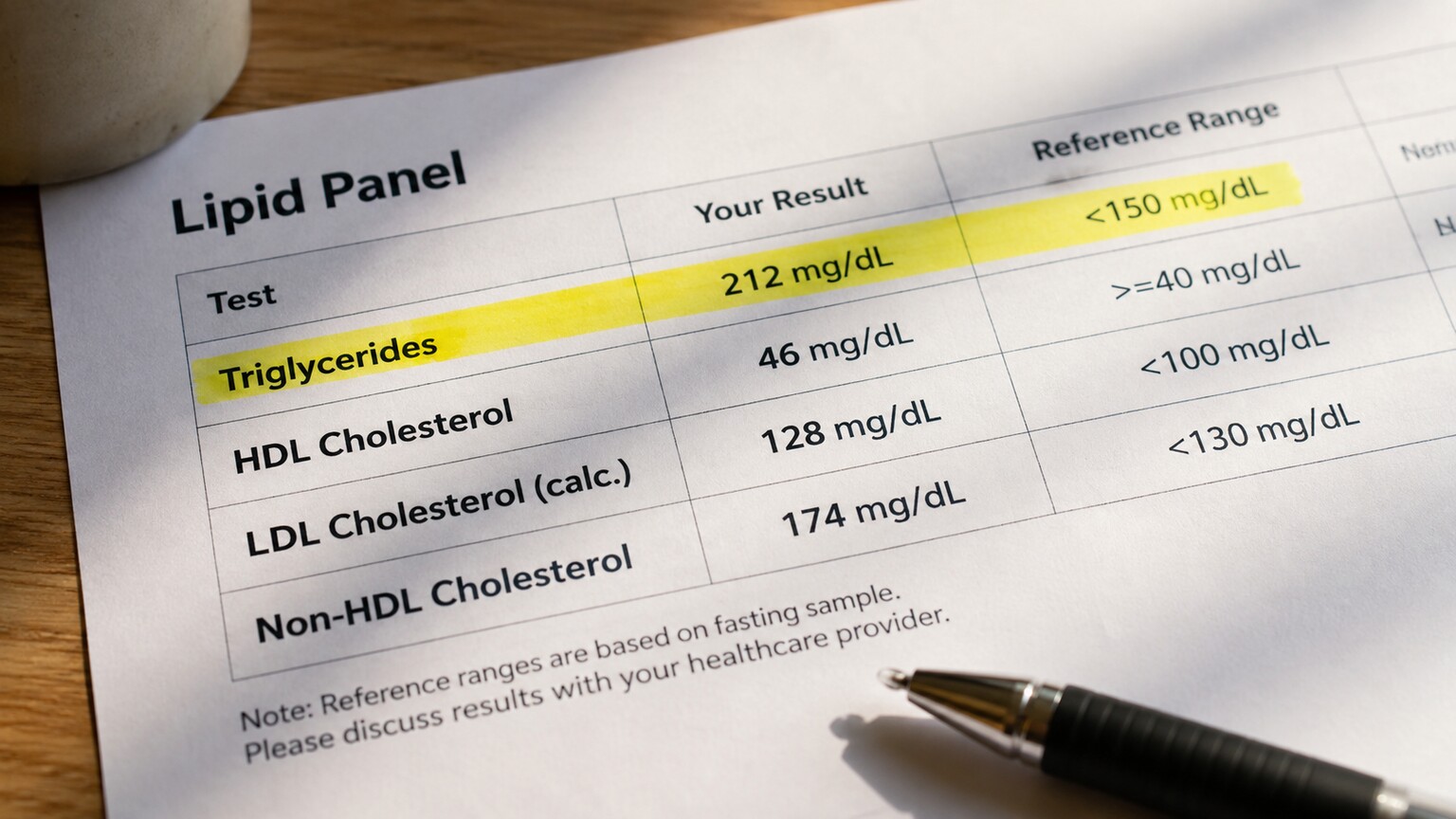
Figure 6. Triglycerides are rarely read in isolation — clinicians weigh the value alongside HDL, LDL, and non-HDL cholesterol to build a complete picture of cardiovascular risk.
A fasting triglyceride number is almost never interpreted entirely on its own — it's woven into the broader lipid panel it was drawn alongside, and several of the panel's other calculated values depend directly on it. Total cholesterol includes a contribution estimated from triglycerides, and the commonly reported LDL cholesterol value on a standard panel is, in most labs, not directly measured at all but calculated using a formula that requires an accurate triglyceride number as one of its inputs — meaning a triglyceride level distorted by a recent meal doesn't just misrepresent itself, it can throw off the calculated LDL figure too, and this particular calculation becomes notably less reliable once triglycerides climb above roughly 400 mg/dL, sometimes requiring a directly measured LDL instead. Non-HDL cholesterol, calculated simply by subtracting HDL from total cholesterol, has increasingly been recognized as a genuinely useful risk marker precisely because it captures the cardiovascular risk carried by triglyceride-rich particles that LDL alone can miss. And the ratio between triglycerides and HDL cholesterol is frequently used as a rough, accessible marker of insulin resistance, since the same metabolic dysfunction that lowers HDL tends to raise triglycerides in tandem, making a high triglyceride-to-HDL ratio a reasonably useful flag for underlying metabolic syndrome even before a formal diabetes diagnosis is made. Taken together, these interconnected values are exactly why an accurate, properly fasted triglyceride number matters beyond its own single row on the report — distort that one input with a recent meal, and several of the calculations built on top of it drift out of alignment right along with it.
Common Mistakes That Can Still Skew a "Fasting" Result
Even with a technically correct fast, a handful of less obvious factors can still distort a triglyceride result enough to matter, and being aware of them helps explain why a doctor might occasionally ask for a retest even after a patient insists they followed the fasting instructions correctly. Chewing gum, mints, or cough drops containing any sugar, though often dismissed as negligible, can in some people trigger enough of a digestive and insulin response to mildly affect the result, which is why most labs simply advise avoiding anything besides water during the fasting window rather than trying to parse which small exceptions matter and which don't. Recent illness, even a mild cold or a stomach bug in the days before testing, can transiently raise triglycerides as part of the body's general inflammatory and stress response, independent of diet entirely — mentioning a recent illness to whoever orders or interprets the test is genuinely useful context. Significant recent weight loss, ironically, can sometimes cause a temporary triglyceride elevation during the loss phase itself, as stored fat is mobilized and processed by the liver faster than usual, before settling to a new, often lower baseline once weight has stabilized. And for anyone taking insulin or other diabetes medications, a fasting glucose that's unusually high or low on the morning of testing is also worth noting, since poor glucose control at the exact moment of the blood draw can independently push triglycerides upward through the same insulin-resistance pathway discussed earlier in this article, on top of whatever the person's more typical, day-to-day baseline actually is.
Frequently Asked Questions
Does the type of fat I eat the night before matter?
Not meaningfully, as long as the full fasting window is observed. A well-fasted sample clears chylomicrons from any fat source before the draw, so the composition of the previous evening's meal has little bearing once enough hours have genuinely passed since eating, whether that meal leaned heavily toward fat, carbohydrate, or a mix of both.
What if I accidentally ate before my fasting triglyceride test?
Tell the lab and your doctor's office before the blood is drawn, or make sure it's noted afterward. A non-fasting result should generally be interpreted with that context in mind, or the test may need to be rescheduled after a proper fast, especially if the result comes back significantly elevated.
Can I drink water or take my medications while fasting for this test?
Plain water is almost always permitted and encouraged during the fasting window. Routine prescribed medications are typically continued as usual unless your doctor specifically instructs otherwise — the fasting instruction applies to food and alcohol, not medication.
Why does alcohol matter more for this test than for other fasting blood tests?
Alcohol directly pushes the liver to produce more VLDL, raising triglycerides independent of any food eaten. Its effect can linger longer than a typical meal, which is why most labs recommend avoiding alcohol for at least 24 hours before the draw, not just fasting overnight.
Is a non-fasting triglyceride test ever acceptable?
Yes, for general routine cardiovascular screening in someone without a known lipid disorder, several major guidelines now accept non-fasting panels. Fasting remains preferred whenever precision matters most, including monitoring a known elevation, evaluating pancreatitis risk, or investigating a suspected genetic lipid condition.
How high do triglycerides need to be before pancreatitis becomes a real concern?
Risk rises meaningfully once fasting triglycerides climb above roughly 500 mg/dL and increases further above 1,000 mg/dL. A result in this range is typically treated with real urgency rather than routine follow-up because of this specific risk, often prompting same-day contact from the ordering provider rather than a message left for the next scheduled visit.
Conclusion
Few values on a standard blood panel are as sensitive to timing as triglycerides, and few carry as much practical consequence riding on that sensitivity — the same number can represent a genuine, sustained metabolic finding worth acting on, or nothing more than a snapshot of a recent meal, depending entirely on how carefully the fasting window was observed. The fasting requirement behind a triglyceride test exists because triglycerides genuinely behave differently from almost every other value on a standard lipid panel — they respond to a single meal within hours, in a way cholesterol simply doesn't, which means the timing of your last meal can be the difference between a number that reflects your true metabolic baseline and one that mostly reflects lunch. Fasting removes the temporary flood of chylomicrons your gut releases after eating, leaving behind the liver's own steady, meaningful output — the number that actually matters for assessing cardiovascular risk, catching a dangerous level tied to pancreatitis risk, and calculating the other values, like LDL and non-HDL cholesterol, that depend on it. An elevated result at that properly fasted baseline is a genuine, actionable finding, not a fluke of bad timing, and it's very often the clearest signal your doctor has for deciding what to check next — whether that means addressing a reversible lifestyle factor, investigating a secondary medical cause, or, in rarer cases, uncovering a genetic condition that had been quietly present for years before a single well-timed blood draw finally brought it into view.
Still Not Sure What Your Results Mean?
Upload your labs and get a complete, visual, plain-language interpretation of every biomarker — delivered to your inbox in under 15 minutes.
Get My ReportThis article is for educational purposes only and does not constitute medical advice. Always consult your healthcare provider regarding your specific lab results.