
Why Did My Doctor Order a Fungal Culture?
A fungal culture is a test where your doctor takes a tiny piece of you — a scrap of skin, a nail clipping, a bit of hair, or a swab from somewhere on your body — and gives it food and warmth for weeks, on purpose, to see if a fungus is hiding inside it and grows big enough to spot with the human eye. It sounds strange to "grow" part of a sick person on purpose, but that is exactly the point: fungi are slow, sneaky, and they come in hundreds of different types that all look almost the same under a plain microscope. Growing the sample out is the only way to find out exactly which fungus it is, which matters enormously, because the wrong medicine for the wrong fungus can fail completely even after weeks of use. Your doctor ordered this test because guessing wasn't good enough anymore — they needed proof, and they needed to know the fungus's exact name before picking the right weapon against it.
Curious what the rest of your test results are telling you? Upload them and get a complete, plain-language breakdown in under 15 minutes.
Analyze My ResultsFirst, What Actually Happens to Your Sample
Picture a tiny plastic dish, a little bigger than a coffee cup lid, filled with a layer of clear or pale-yellow jelly. That jelly is not medicine and it is not a test in the way a home pregnancy test is a test. It is food. It is built from sugar, a bit of protein, and sometimes a beef-broth-like base, mixed with something firm (called agar, which comes from seaweed) so it sets like Jell-O instead of staying liquid. Your doctor's office takes the tiny piece of skin, nail, or hair they collected from you and gently presses it onto that jelly. Then the whole dish gets closed up and put in a warm, dark box called an incubator, set to about the same temperature as your skin. And then everybody waits.
Nothing happens for a while — often several days. That is completely normal and does not mean the sample failed. Fungi grow far slower than bacteria. A bacteria culture might show results in one or two days. A fungus, especially the kind that causes nail and skin infections, can take one to four weeks to grow into something a lab worker can actually see and study. During that stretch of time, if even one living fungal cell landed on that jelly, it slowly divides, and divides again, until it forms a fuzzy, colored patch called a colony — big enough now to look at, poke, and identify. That patch is the whole point of the test. Nothing about your appointment moved slowly by accident; the fungus itself sets the pace, and no lab on Earth can safely rush it.
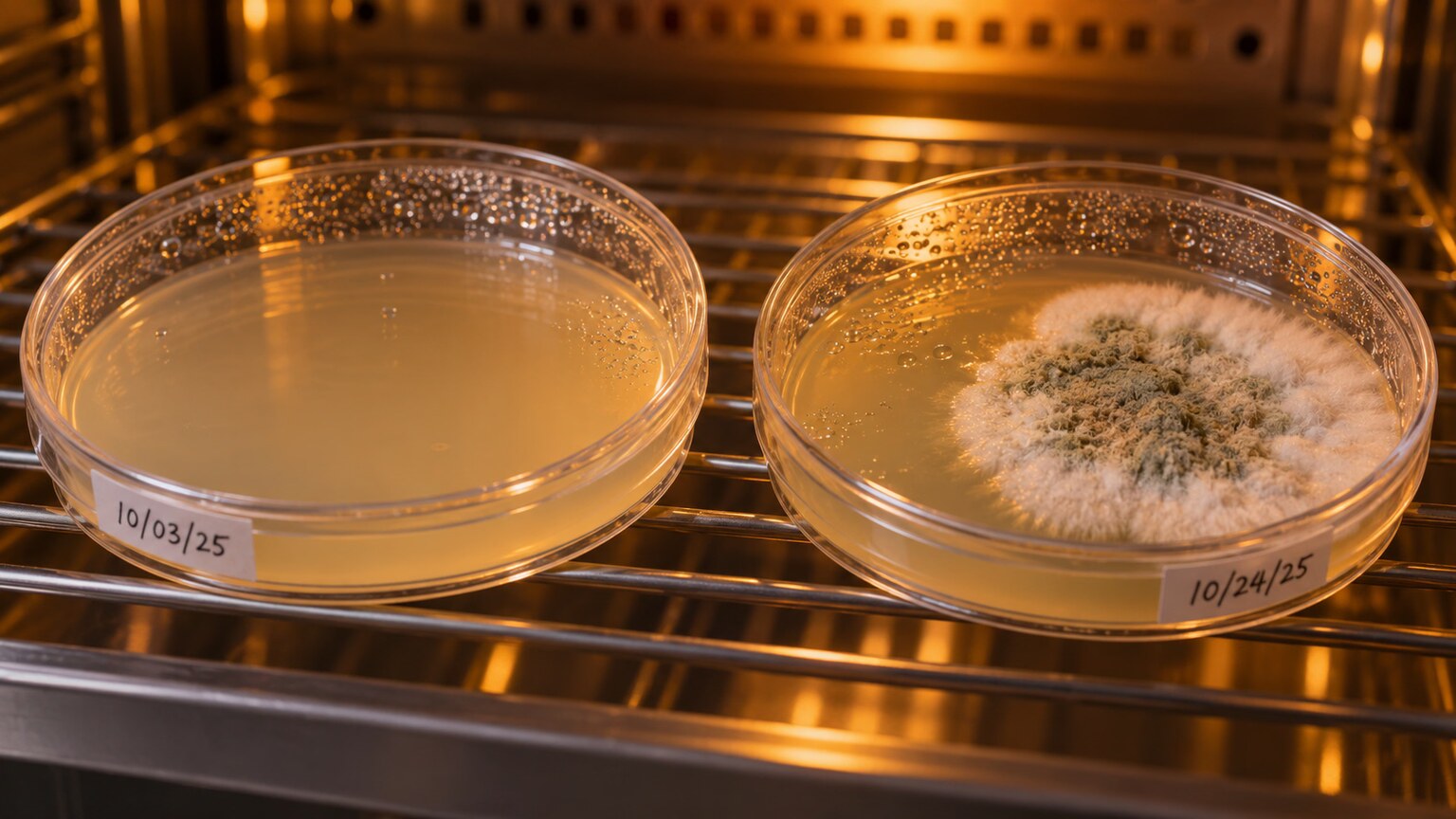
Figure 1. A fungal culture plate before growth appears (left) and after several weeks of incubation, once a visible colony has formed (right).
Reason One: A Toenail or Fingernail That's Thick, Yellow, or Crumbly
This is, by far, the most common reason a fungal culture gets ordered. A nail infection called onychomycosis makes a nail turn yellow or white, grow thick, get crumbly at the edge, and sometimes lift up away from the skin underneath it. Here's the part most people don't know: nails can look exactly like that for reasons that have nothing to do with fungus at all — psoriasis, an old injury, poor circulation, or a totally different skin condition can all fake a fungal nail almost perfectly to the naked eye. Doctors call this "the great mimicker" problem. Treating a nail with months of antifungal medicine, only to find out afterward it was never a fungus in the first place, wastes time, money, and exposes you to a drug you didn't need. A culture settles the question for good, and if it is a fungus, it tells the doctor which type — because the medicine used against a nail fungus caused by a mold is not always the same medicine used against the far more common yeast or dermatophyte types.
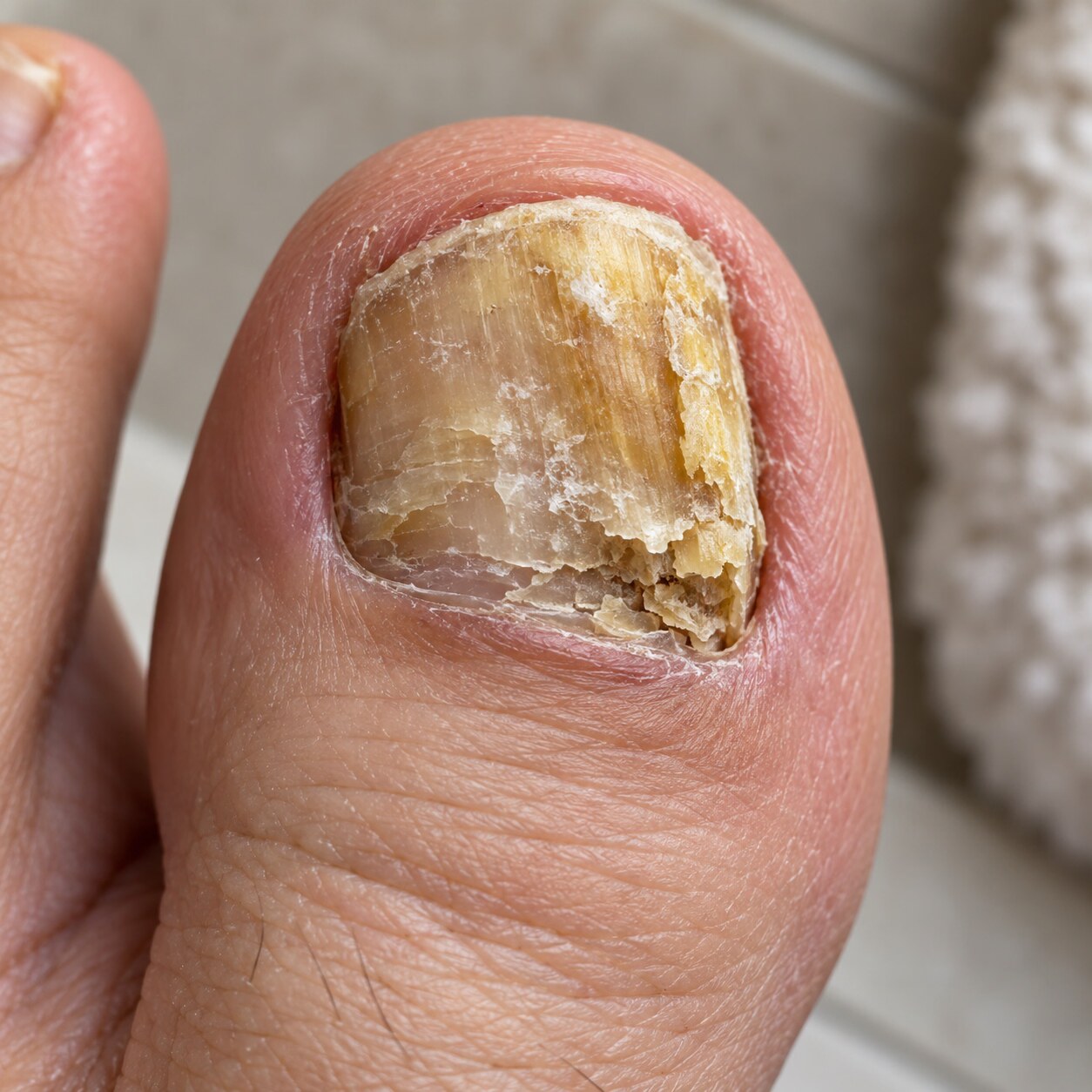
Figure 2. A thickened, discolored, crumbling nail — the single most common trigger for a fungal culture order.
Doctors are also taught a simple rule of thumb: a nail should not be treated for fungus for months at a time without ever proving fungus is actually there. Oral antifungal pills, the kind strong enough to reach a nail, are processed by the liver and are usually not handed out on a guess. Before committing you to three months of daily pills and periodic blood tests to watch your liver, your doctor wants a lab result in hand, not just a look and a hunch. A culture (sometimes paired with a quicker microscope look called a KOH prep, which only confirms that something fungus-shaped is present without saying what kind) is how that proof gets built. If your case involves the microscope-only version of this story instead of the grow-it-out version, that quicker test is covered in a separate article on this site — this one is specifically about why the doctor chose to wait for a full culture instead of stopping at that faster look.
Reason Two: A Skin Patch That Won't Quit, Even After Cream
The second most common reason is a stubborn patch of skin — often round or ring-shaped, sometimes flaky, sometimes itchy — that a person has already tried to treat at home with an over-the-counter antifungal cream, and it simply isn't going away. When that happens, a doctor has to figure out one of two things: either the cream never had a fair chance to work (wrong strength, stopped too early, or reinfection from a shoe or towel), or the patch was never a fungus to begin with, and it's actually eczema, psoriasis, or a bacterial skin infection wearing a fungus costume. Both of those situations point to the same next step — a culture, because it is the only test that can say with real confidence "yes, this is fungus, and here is its exact name" instead of "this looks fungus-shaped."
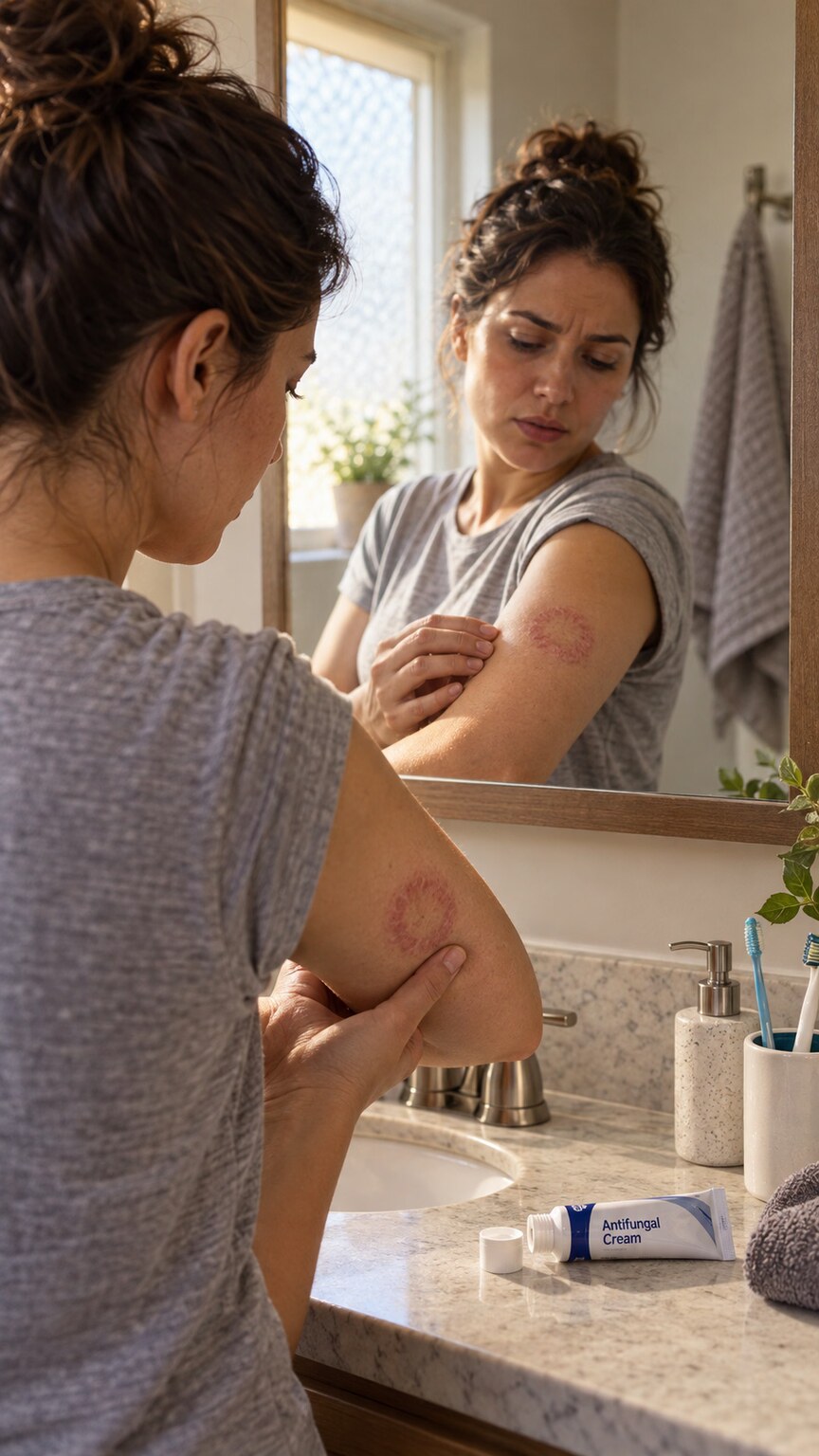
Figure 3. A ring-shaped patch that hasn't cleared with an over-the-counter cream is one of the clearest signals for a doctor to send a sample for culture instead of guessing again.
This is exactly the situation where a culture earns its keep, even though it takes longer than a quick look. Think of it like calling in a locksmith instead of trying every key on your keyring one more time. You already tried the obvious key (the cream) and the door didn't open. Trying a slightly different cream, and then another, wastes weeks and can even change how the fungus looks under a microscope later, making a future test less reliable. A culture skips the guessing entirely: it grows the exact organism, in its own handwriting, so the next round of treatment is aimed correctly the first time. This matters even more for patches on the scalp, the groin, or areas that keep coming back, because those places tend to hide more stubborn or less common fungal species that don't always respond to the cheapest over-the-counter option.
Doctors also lean on a culture when a patch of skin keeps returning in the exact same spot every few months. A pattern like that raises a different question entirely — not "what is this," but "why does it keep coming back." Sometimes the answer is a fungus quietly living in a shoe, a shower mat, or a shared towel that keeps reinfecting the same skin. Other times, a fungus that keeps returning despite treatment is a clue that something else is going on with the body's defenses, which is a topic covered in more depth in this site's article on the connection between immune health and fungal infections. Either way, identifying the exact fungus by culture is usually the first concrete step toward solving the "why does it keep coming back" mystery, because different fungal species survive in different places and spread in different ways.
Reason Three: The Doctor Needs to Know the Exact Name, Not Just "Yes, It's a Fungus"
Here is the idea that ties this whole article together: not all fungi are the same, and the medicine that kills one type does not reliably kill another. There are three broad fungus "families" that cause most human skin, hair, and nail infections — dermatophytes (fungi that specifically eat keratin, the tough protein your skin, hair, and nails are made of), yeasts like Candida, and a wide, messy category of molds that only occasionally cause infection but can be much harder to treat when they do. A quick microscope look can often tell a doctor "yes, I see fungus-shaped threads in this sample," but it usually cannot tell them which of these three families is responsible, and it almost never identifies the exact species within that family.
A culture solves that problem because a lab worker doesn't just look at what grows — they study it. The color of the colony, whether it's fuzzy or smooth or powdery, how fast it grew, and what its underside looks like when the plate is flipped over all act like a fingerprint. A trained lab technician compares those features against a known reference to land on a specific answer, sometimes down to the exact species. That answer changes real decisions: some antifungal pills work beautifully against dermatophytes but do very little against certain molds, and using the wrong one for months means the infection just sits there, unaffected, while the person keeps taking a medicine that was never going to work for their specific case. Getting the name right the first time is the entire reason the wait is considered worth it.
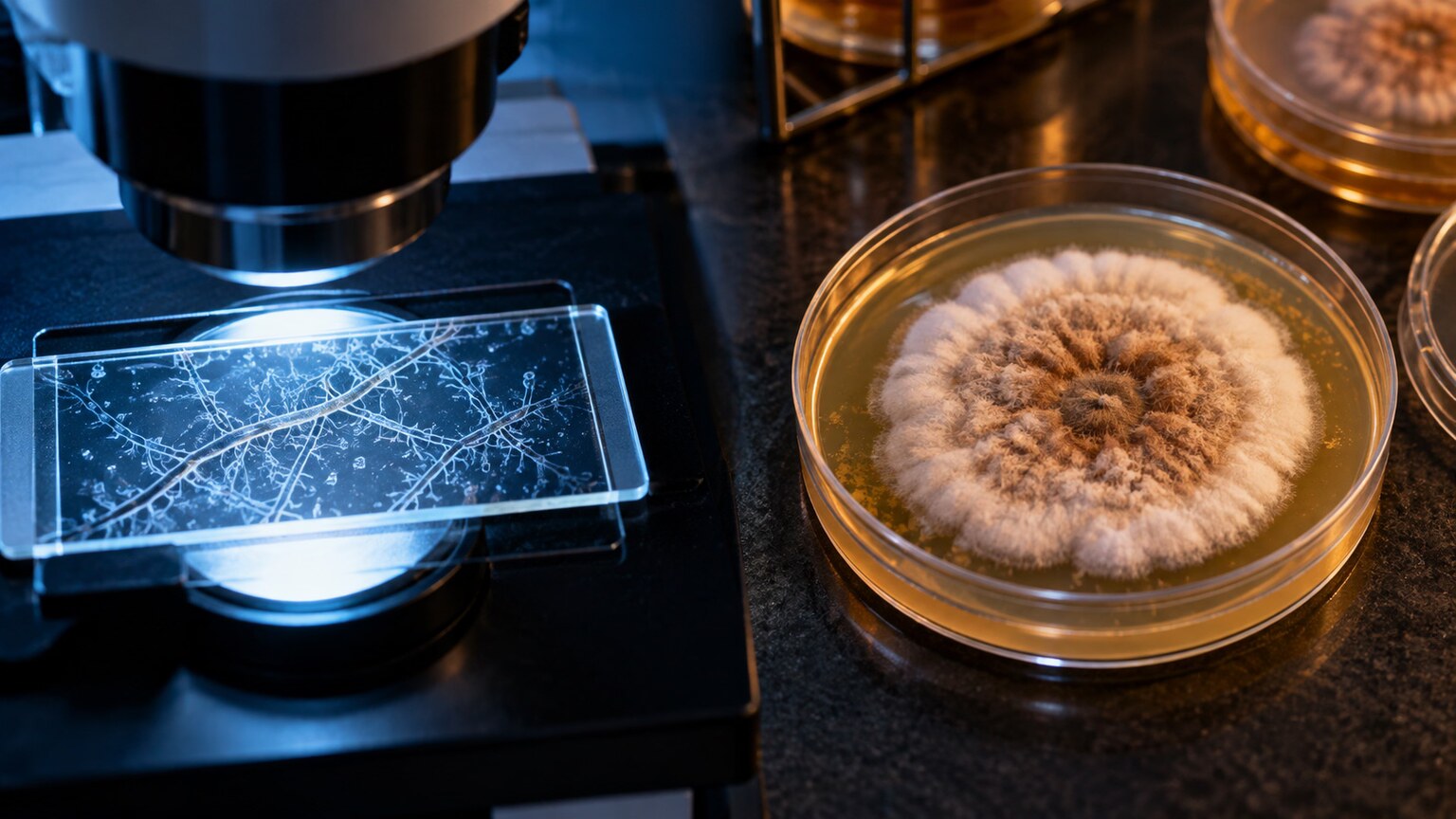
Figure 4. A microscope view can confirm that fungal threads are present within minutes, but only a grown culture reveals which specific fungus is responsible.
Reason Four: The Infection Is on the Scalp, Especially in a Child
Scalp fungal infections, called tinea capitis, come with their own separate reason for a culture, and it has nothing to do with cosmetic worry — it has to do with contagion and school policy. Tinea capitis usually shows up as one or more round, scaly patches where hair has thinned or broken off close to the scalp, and it spreads easily between children through shared combs, hats, pillows, and close head-to-head contact. Because it spreads so easily, many schools and daycare centers ask for written confirmation of the exact diagnosis, and sometimes proof that treatment has started, before a child returns. A culture is often the test that provides that proof, because oral antifungal medicine (which scalp infections almost always require, since creams can't reach hair follicles deep enough to clear it) is not something doctors prescribe for children without solid confirmation first.
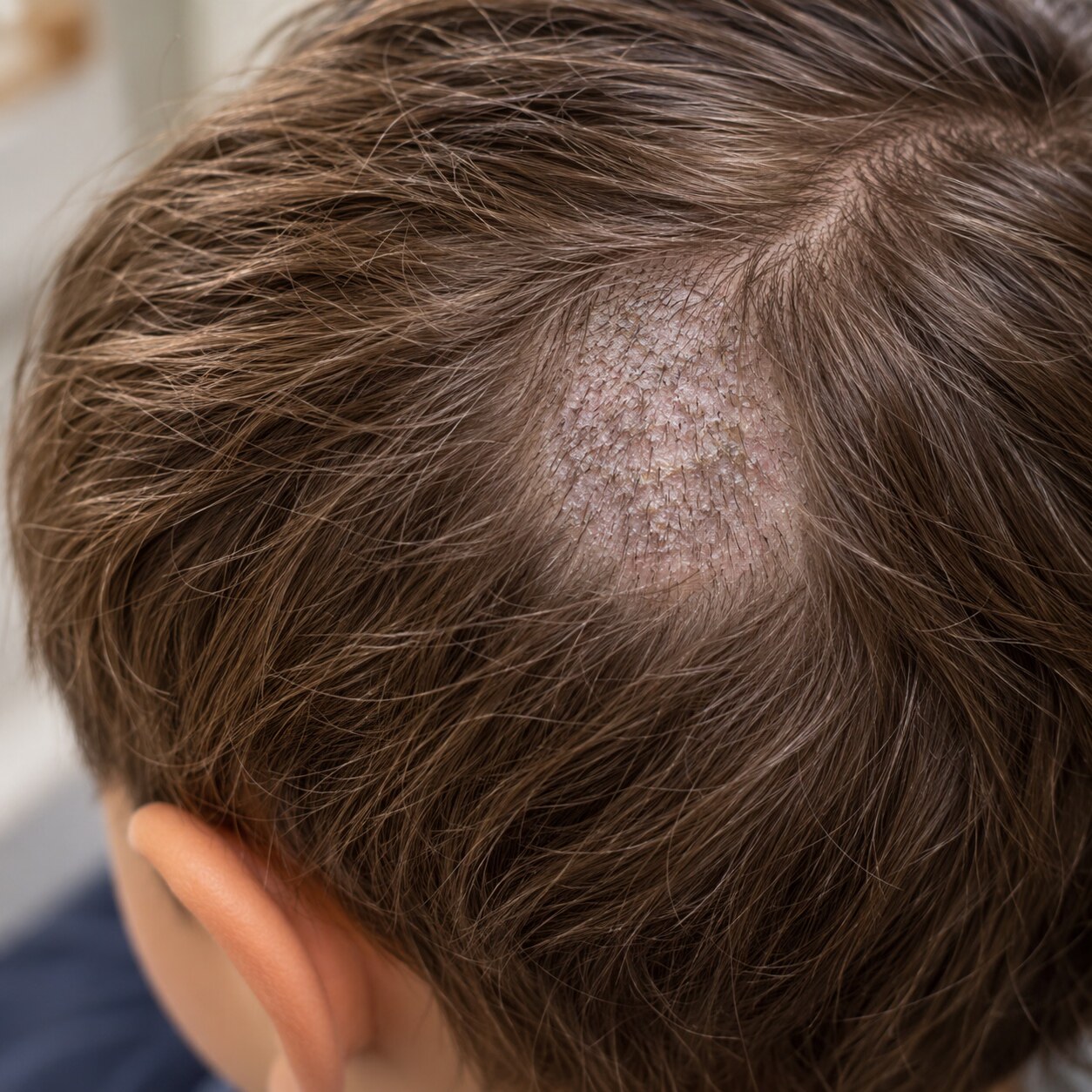
Figure 5. A round, scaly patch of hair loss on a child's scalp is a classic sign of tinea capitis, a fungal infection almost always confirmed by culture before oral treatment begins.
This is also one of the few situations where the specific fungus type genuinely changes how contagious the infection is considered, and therefore how aggressively a household needs to disinfect combs, hats, and bedding. Some species that cause tinea capitis live mainly on humans and spread person-to-person very efficiently, while others come from animals — a family cat or a pet guinea pig, for example — and spread differently. Knowing the exact species from a culture can point a doctor toward asking about a pet that might also need to see a veterinarian, closing the loop on why the infection isn't going away even after a child finishes treatment: it can quietly keep passing back and forth between a child and a pet that's carrying the same fungus.
Reason Five: A Weaker Immune System Changes the Stakes Completely
For most healthy people, a fungal skin or nail infection is annoying but never dangerous — it stays exactly where it started and never causes real harm beyond appearance and discomfort. That changes for people whose immune system isn't working at full strength: someone going through chemotherapy, someone who has had an organ transplant and takes medicine to suppress their immune system on purpose, someone with poorly controlled diabetes, or someone living with a condition like HIV that weakens the body's natural defenses. In these situations, a fungus that would normally stay confined to skin can, in rare but serious cases, spread deeper into the body. Because the stakes are higher, doctors are far less willing to guess, treat, and wait to see what happens. A culture, sometimes combined with other lab tests, gives a confirmed answer before a treatment plan is built, and it also lets the medical team track whether the same infection is coming back after treatment or whether a brand-new one has appeared.

Figure 6. For a patient with a weakened immune system, confirming the exact fungus through culture — rather than treating based on appearance alone — becomes a safety priority, not just a convenience.
This is also why a doctor may order a fungal culture from an unusual site — a lung sample, a spinal fluid sample, or a swab from inside the mouth or throat — in someone with a weakened immune system, even without an obvious skin problem at all. In this group of patients, fungi that almost never bother a healthy person, and that most people carry harmlessly in small amounts every day, can occasionally cause real illness once the body's normal defenses are turned down. A positive culture from one of these deeper sites is treated very differently from a positive nail culture in an otherwise healthy adult, and it usually leads to fast follow-up rather than a routine, unhurried treatment plan. If your doctor ordered a culture from a site other than your skin, hair, or nails, that context — a weaker immune system, a hospital stay, or symptoms that don't add up any other way — is very likely the reason.
The Three Fungus Families Behind Almost Every Human Infection
To really understand why the exact name matters so much, it helps to know that "fungus" is not one single thing, the same way "animal" is not one single thing. Nearly every fungal skin, hair, and nail infection in humans is caused by one of three broad groups, and picturing them as three different kinds of houseguests who all look similar at the front door but behave very differently once inside makes the whole idea click.
The first group is called dermatophytes, and they are the picky eaters of the fungus world — they only want keratin, the tough, fibrous protein that makes up the outer layer of your skin, your hair, and your nails, and nothing else. Because they need keratin specifically, dermatophytes are the usual cause of ringworm on the body, athlete's foot, jock itch, scalp infections in children, and most nail infections. They spread easily from person to person, from pets to people, and even from soil, which is why a fungal skin patch can sometimes be traced back to a new puppy or a barefoot walk on a locker room floor.
The second group is yeast, and the one that matters most here is called Candida. Unlike dermatophytes, Candida already lives on and inside most healthy people in small, harmless amounts — on the skin, in the mouth, and in the gut. It only becomes a problem when something upsets the normal balance: too much moisture trapped against skin, a course of antibiotics that wipes out the competing bacteria that normally keep it in check, or a weakened immune system that can no longer hold it steady. Candida infections often show up in warm, damp folds of skin, under the breasts, in the diaper area, or around the nails, and they usually need a different family of medications than a dermatophyte infection does.
The third group is the broadest and the least predictable: molds. Most molds that land on human skin or nails simply sit there harmlessly and never cause a problem, which is exactly what makes them tricky — when a mold does cause a real infection, especially in a nail, it can be genuinely difficult to prove, because the same mold might also just be a bystander that happened to be growing nearby. This is one of the main reasons a single positive culture result is sometimes not considered enough proof on its own for a mold, and a doctor may ask for the test to be repeated before treating, to make sure the mold found really is the cause and not an innocent passenger.
None of these three groups can be told apart with total confidence just by looking at the skin, the nail, or even a quick microscope slide. A dermatophyte infection, a Candida infection, and a mold infection of a nail can genuinely look almost identical to the naked eye at certain stages. Growing the organism out in a culture is what finally separates them, because each group grows differently, at different speeds, in different colors and textures — and once a lab technician sees which of the three showed up, the medication choice stops being a guess and becomes a targeted decision.
How the Sample Actually Gets Collected
The collection itself is quick and, for the vast majority of cases, barely uncomfortable. For a nail, the doctor or nurse clips off a piece of the affected nail and scrapes a bit of the crumbly material from underneath it, since that debris tends to carry the highest concentration of living fungus. For a skin patch, they gently scrape the surface with a dull blade or the edge of a microscope slide, focusing on the active, slightly raised border of the patch rather than its faded center, because a fungal patch grows outward and the newest, most active fungus lives right at that expanding edge. For a scalp infection, they may pluck a few affected hairs or use a small brush or cotton swab to collect broken hair stubble and scale. None of these methods require a needle, and none of them are designed to hurt — a little pressure or a brief scratchy feeling is the most anyone typically reports.
What happens next is entirely out of the patient's hands and entirely in the lab's. The sample goes onto the growing medium, and it's exactly here that the "why is this taking so long" feeling usually kicks in, because there is genuinely nothing to do but wait once the sample leaves the exam room. That wait is not a sign that something has gone wrong with your care — it is the test working exactly as designed. A doctor who orders a fungal culture has already accepted, going in, that this is a slow answer chosen specifically because it is a trustworthy one.
What the Result Actually Tells Your Doctor Next
Once a colony finally grows, the lab technician examines its color, texture, growth speed, and microscopic structure, then reports back a specific identification — for example, a particular dermatophyte species rather than simply "positive for fungus." Some labs go a step further and run a sensitivity test on the grown organism, which checks how well different antifungal medications actually stop that specific fungus from growing, similar in concept to how a bacterial infection's antibiotic choice can be guided by testing the exact bacteria involved. With that information in hand, your doctor can choose a treatment aimed squarely at what's actually present, rather than reaching for whatever antifungal is used most often across all cases. This is also the point where treatment length gets decided with more confidence — nail infections, for example, are treated for very different lengths of time depending on which fungal family caused them.
A negative culture result is also genuinely useful information, even though it can feel disappointing after weeks of waiting. It tells your doctor that whatever is going on with your skin, hair, or nail probably isn't a fungus at all, which redirects the investigation toward other explanations — an autoimmune skin condition, a reaction to a product, or a bacterial infection, among other possibilities. It's worth knowing that a negative culture doesn't always mean "no fungus, for certain" in every single case; a sample collected from the wrong spot, a very small amount of fungus, or recent antifungal treatment before the sample was taken can all cause a real infection to grow poorly or not at all on the plate. If your symptoms are still very clearly present despite a negative result, that mismatch is worth bringing back to your doctor directly, since a repeat sample collected more carefully sometimes tells a different story the second time.
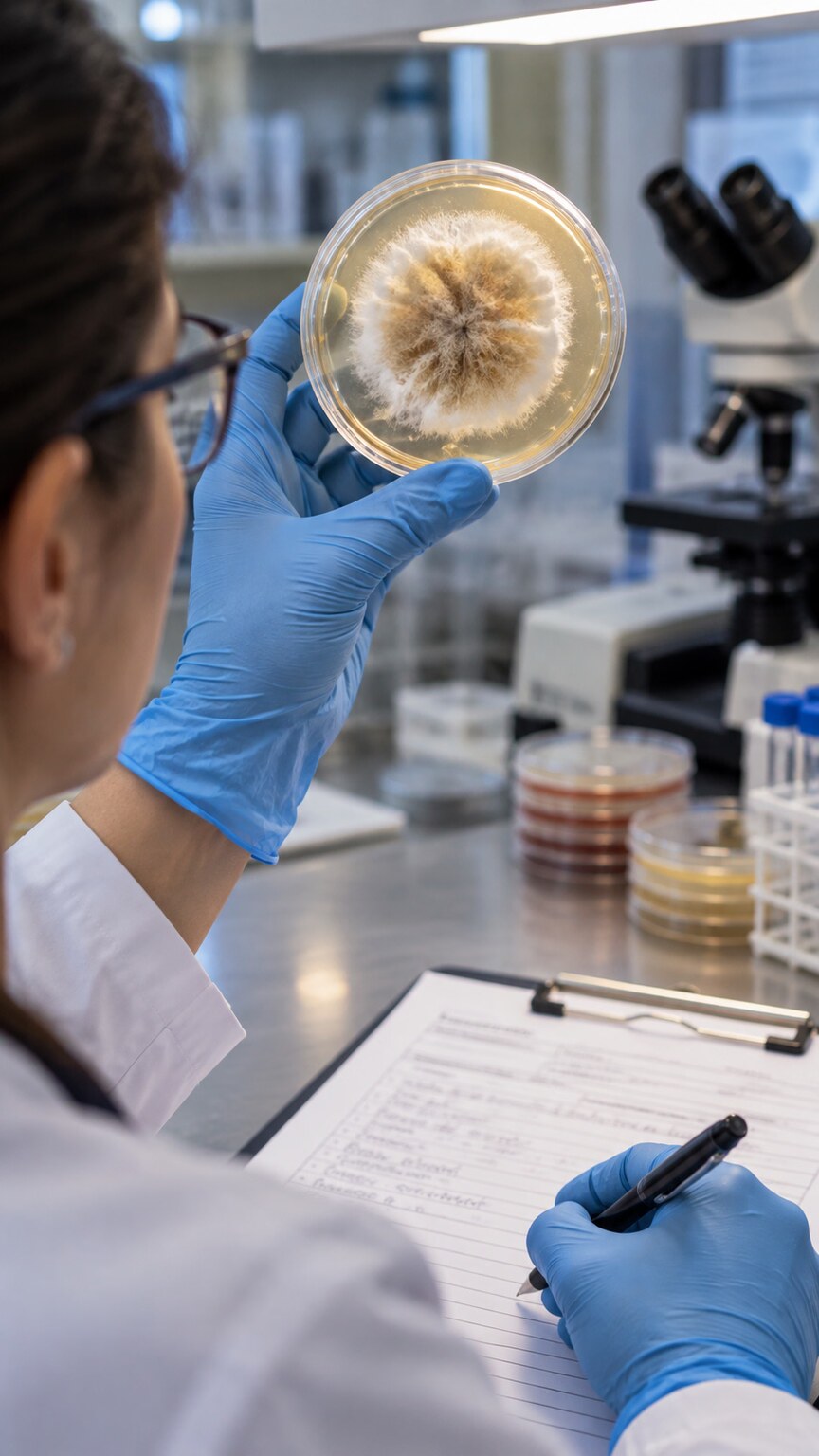
Figure 7. A lab technician studies the color, texture, and growth pattern of the colony to identify the exact fungal species before results are reported back to the ordering doctor.
It's also common for a doctor to order a fungal culture and a bacterial culture from the very same sample at the same time, especially when a skin area looks irritated, moist, or slightly infected-looking beyond what a simple fungus would explain on its own. Fungal infections can create small breaks in the skin's surface that let bacteria move in on top of the original problem, so testing for both at once, from a single sample, saves the patient a second uncomfortable collection and gets a complete answer faster. If your results mention both types of testing being run, this dual-purpose approach — not a mistake or a mix-up — is almost always the explanation.
The person doing this identification work is usually a trained microbiology lab technician, not the doctor who saw you in the exam room. That technician follows a specific, standardized process for every single plate that grows: comparing the colony's color, texture, and growth speed against a reference guide, sometimes examining a small sample of it under a microscope for a closer look at its structure, and writing down the exact match once one is confirmed. This step is why a lab report can take a day or two to reach your doctor even after the colony has clearly finished growing — the growing is only half the job, and turning "something grew" into a precise, written identification is a careful, deliberate process rather than an instant readout.
What Sensitivity Testing Adds, and Why It Doesn't Happen Every Time
Once a lab has grown enough of the fungus to identify it by name, some labs take one additional step called sensitivity testing, sometimes written as "susceptibility testing" on a report. This step exposes the grown fungus to small amounts of several different antifungal medications, right there in the lab, and watches which ones actually stop it from growing and which ones it shrugs off. Think of it like trying several different keys on the exact lock in front of you, instead of trusting that the key which usually works on most locks will work on this one too. For most everyday nail and skin infections caused by common dermatophytes, doctors already know from decades of experience which medications reliably work, so this extra step often isn't necessary or ordered. It becomes much more valuable when the fungus identified is a mold, an unusual species, or one already known to sometimes resist standard treatment, and it is also used more often for people with a weakened immune system, where getting the medication choice right on the first try matters more than usual.
When sensitivity testing is done, it adds extra time on top of the wait for identification, since the fungus first has to grow enough to be identified and then be tested again against each medication. A doctor who has ordered this extra step has usually already explained that the full answer will take a bit longer than a standard culture — if that wasn't mentioned and the wait feels unusually long, it's completely reasonable to call the office and ask exactly what stage the sample is at.
What to Do While You Wait
The waiting period between giving a sample and getting a result is, understandably, the hardest part for most people, because it can stretch on for weeks while the affected nail, patch of skin, or scalp keeps looking the same or even a little worse. A few things are worth knowing to make that stretch easier. First, unless your doctor specifically told you to start a treatment right away, it's usually best to hold off on trying new over-the-counter creams or home remedies during the wait, because some of them can actually slow down or kill the fungus just enough to make the culture come back falsely negative — which then means starting the whole process over with a fresh sample. Second, basic everyday habits still help regardless of what the final answer turns out to be: keeping the area clean and dry, changing socks if it's a foot or nail concern, and avoiding sharing towels, combs, or nail clippers with other people in the household reduces the chance of spreading whatever it is, fungal or not, while everyone waits for the answer.
Third, it helps to know ahead of time how the result will actually reach you, since that varies by clinic. Some offices call only if the result is positive and something needs to change, while others notify every patient either way, often through a patient portal message or a nurse callback. If several weeks have passed with no word at all, calling to check is always reasonable — cultures do occasionally get lost in routine lab paperwork, and a quick check-in costs nothing and can save more waiting on top of an already long process.
Cost, Insurance, and Why This Test Isn't Ordered Casually
A fungal culture costs more than a simple in-office microscope look, both in laboratory fees and in the doctor's time spent collecting the sample properly, which is part of why it's reserved for situations where the answer genuinely changes what happens next rather than ordered automatically for every itchy patch of skin. Most health insurance plans in the United States cover fungal cultures when a doctor documents a reasonable medical reason for ordering one — a nail that looks infected, a patch that failed initial treatment, or a scalp concern in a child, for example — the same way most lab tests are covered when they're tied to a real clinical question. Costs without insurance can vary widely between labs and regions, so anyone concerned about out-of-pocket cost has every right to ask the office, before the sample is collected, roughly what the test is expected to cost and whether a faster or cheaper option (like the microscope-only KOH prep) might reasonably answer the immediate question instead.
It's also worth understanding that ordering a culture is, in a sense, a doctor choosing patience over speed on your behalf, because it is almost always the more thorough and more expensive option compared to treating based on appearance alone. That choice usually signals one of the reasons already covered in this article — genuine diagnostic uncertainty, a treatment that already failed once, a child or a contagious setting involved, or a weakened immune system that raises the stakes of getting it wrong. Understanding which of those situations applies to your own case is usually the fastest way to make sense of why this particular test, and not a faster alternative, was the one your doctor reached for.
Frequently Asked Questions
How long does a fungal culture actually take to come back?
Most nail and skin fungal cultures take between one and four weeks, because the fungus itself has to grow large enough to study — nothing about the wait is caused by a slow lab or a lost sample. Some fast-growing yeasts can show results in a matter of days, while certain molds can take even longer than four weeks in rare cases.
Is a fungal culture painful?
No. Collecting the sample involves clipping a nail, gently scraping a small area of skin, or plucking a few hairs — brief pressure or a light scratchy feeling is the most anyone typically notices. No needles or blood draws are involved in a standard skin, hair, or nail culture.
Why didn't my doctor just treat me based on how it looked, without waiting for the culture?
Because several non-fungal skin and nail conditions can look almost identical to a fungal infection to the naked eye, and the medications used to treat true fungal infections — especially oral pills for nails or the scalp — aren't prescribed casually. A culture confirms the diagnosis and identifies the exact fungus, so treatment is targeted correctly from the start instead of guessed at.
My culture came back negative but my symptoms haven't gone away — what does that mean?
It usually means either the problem isn't fungal after all and needs a different explanation, or the sample happened to miss the small amount of fungus actually present. If symptoms persist despite a negative result, it's reasonable to ask your doctor whether a repeat sample, collected from a different spot or without recent antifungal cream on the skin, would be worth trying.
Can I keep using antifungal cream while I wait for the culture result?
It's best to check with the office that ordered the test first. If the sample was already collected before you ask, continuing a cream on that same spot usually isn't a problem, but starting a brand-new antifungal product on an area that hasn't been sampled yet, or on a spot that might need a second sample later, can suppress the fungus just enough to cause a falsely negative result and delay getting a real answer.
Conclusion
A fungal culture gets ordered whenever "it looks like a fungus" isn't a good enough answer to build a treatment plan on — because the wrong guess means months of medicine that never had a chance to work, and because the exact fungal species genuinely changes which medicine actually works. Thickened, discolored nails; a skin patch that ignored an over-the-counter cream; a scaly patch on a child's scalp; or any fungal concern in someone whose immune system isn't at full strength are the situations that most reliably send a sample to the lab instead of straight to a prescription pad. The slow wait that follows isn't a delay in your care — it's the test doing exactly what it was designed to do, patiently growing out a definite, specific answer instead of handing back a fast but uncertain one.
Still Not Sure What Your Results Mean?
Upload your labs and get a complete, visual, plain-language interpretation of every biomarker — delivered to your inbox in under 15 minutes.
Get My ReportThis article is for educational purposes only and does not constitute medical advice. Always consult your healthcare provider regarding your specific lab results.