
What Does a Positive Stool Parasite Test Mean?
Seeing the word "positive" on a stool parasite test can be alarming, but on its own that single word doesn't actually tell you very much. A positive result simply means that a lab technician, using a microscope, an antigen test, or a molecular panel, found evidence of an organism in your stool sample that doesn't belong to the normal, harmless bacteria that live in everyone's gut. What that positive result actually means for your health depends entirely on which organism was identified, how many were found, whether it was a live, feeding form or a dormant, protective form, and whether it's an organism capable of causing disease in the first place. Some positive results point to something that needs prompt treatment. Others point to an organism so common and so harmless that most labs and doctors barely react to it at all. This guide walks through exactly how to read a positive stool parasite result, organism by organism, so you understand what you're actually looking at before your doctor even calls.

Figure 1 — Giardia lamblia trophozoites attach directly to the lining of the small intestine using a suction-disc structure, which is what causes bloating and diarrhea.
It also helps to remember that stool testing is, in a sense, an indirect window into an organism living somewhere along the roughly 25 feet of your digestive tract — the test itself never examines your intestines directly, only what your body has already passed. That indirectness is exactly why the specific method used, how the sample was collected and handled, and how many samples were tested all affect how confidently a lab can call something positive or negative, and it's part of why the rest of this guide spends time on those details rather than jumping straight to a list of organism names.
How a Stool Parasite Test Actually Works
Most people picture "the parasite test" as a single test, but it's really a family of different methods, and which one your doctor ordered changes how the result should be interpreted. The traditional approach, still widely used, is called an ova and parasite exam, or O&P for short — "ova" simply means eggs. A lab technician spreads a small sample of your stool on a slide, sometimes after concentrating it with a centrifuge to make rare organisms easier to spot, stains it with a special dye, and examines it under a microscope looking for eggs, cysts (a dormant, armored survival form), or trophozoites (the active, feeding form of a parasite). Because different parasites shed at different times and in different amounts, doctors often ask for stool samples collected on three separate days to reduce the chance of a false negative.
Increasingly, labs are moving toward molecular testing — a stool PCR panel that doesn't rely on a human eye spotting an organism under a microscope at all. Instead, it looks for small fragments of the parasite's own genetic material, DNA or RNA, using a technology that can detect an organism even when it's present in very small numbers or not actively shedding recognizable eggs that day. PCR panels are generally more sensitive than a single traditional O&P exam and can test for a dozen or more organisms — parasitic, bacterial, and viral — from one sample. A third, older approach, antigen testing, looks for specific proteins on the surface of a parasite using an immune-based test similar in concept to a home pregnancy test, and is commonly used as a fast, targeted way to check specifically for organisms like Giardia and Cryptosporidium.
Curious what the rest of your lab work is telling you? Upload your results and get a complete, plain-language breakdown in under 15 minutes.
Analyze My ResultsReading the Report: What "Positive" Actually Says
Lab reports also vary somewhat in format depending on which lab performed the test and which method was used, but nearly all of them share the same essential building blocks: the organism's scientific name, the life stage or form detected, and often a rough quantity indicator. Learning to recognize these three pieces is usually enough to get a meaningfully clearer picture of your own result before you even speak with your doctor, simply by looking up the organism name and checking whether it falls into the generally pathogenic or generally harmless category described below.
A well-formatted lab report doesn't just say "positive" — it names the specific organism, and sometimes tells you which life stage was seen and roughly how many were present. This detail matters enormously, because the entire spectrum of stool parasite findings runs from completely harmless bystanders to organisms that can cause serious illness, and the name of the organism is the single biggest clue to which end of that spectrum you're dealing with. A report might read something like "Giardia lamblia cysts identified" or "Entamoeba coli present, non-pathogenic," or "Blastocystis hominis, moderate quantity." Each of those phrases carries very different clinical weight, even though all three would technically count as a "positive" stool parasite test.
It also helps to understand that stool testing looks for two broad categories of organisms: protozoa, which are single-celled organisms invisible to the naked eye, and helminths, which are parasitic worms — some visible, some only identifiable through their microscopic eggs. Both categories can turn up positive results, but they behave, spread, and get treated in meaningfully different ways, which is covered in more detail further down.
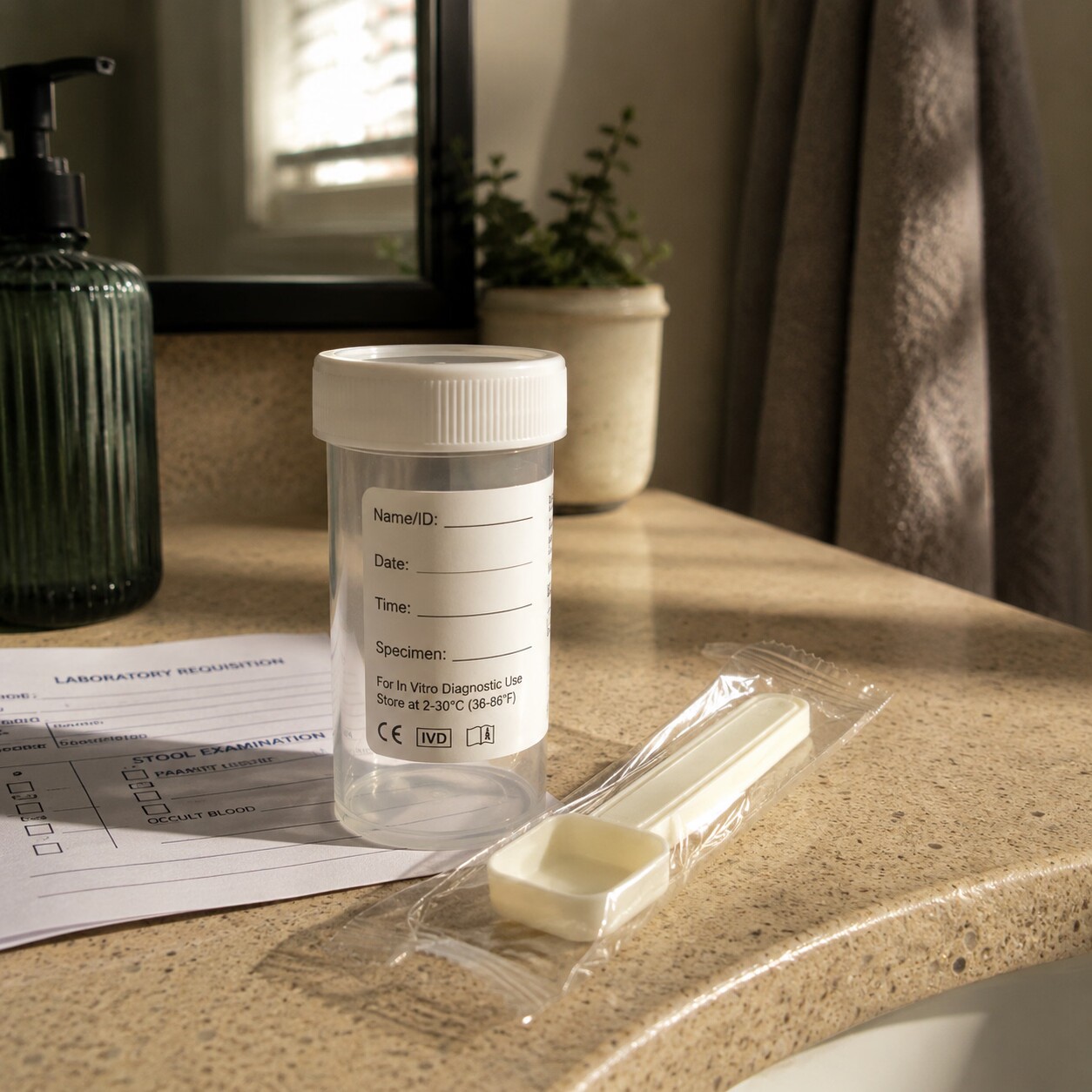
Figure 2 — A typical home collection kit, usually requested across multiple days to catch parasites that don't shed every time.
Timing also matters when interpreting a result. Because parasites go through life cycles and don't shed eggs, cysts, or antigens on a constant schedule, a single stool sample collected on the "wrong" day can miss an infection that's genuinely present — which is exactly why doctors so often ask for repeat samples spaced out over about a week. This cuts both ways: a positive result on any one of those samples is still a true positive, even if the other two came back clear, because it only takes one sample catching the organism during an active shedding window to confirm it's there. If your doctor ordered repeat testing and only one sample came back positive, that doesn't make the finding less real — it's simply how these organisms are designed to be caught.
Quantity notation, when a lab provides it (such as "rare," "few," "moderate," or "many," or sometimes an actual organism count per high-power microscope field) gives a rough sense of how heavy the infection is, which can factor into how urgently your doctor wants to treat it and how closely they expect your symptoms to track with the lab finding. A "rare" finding of a mildly pathogenic organism in someone with no symptoms is treated very differently from a "many" finding of the same organism in someone with weeks of diarrhea and weight loss.
Protozoa vs. Helminths: Why the Type of Organism Changes Everything
Before getting into individual organism names, it helps to understand the two fundamentally different categories a "positive" result can fall into, because they behave, spread, and get treated in very different ways. Protozoa are single-celled organisms, invisible without magnification, that reproduce inside the human intestine by simple division — meaning a handful of organisms swallowed from contaminated water can multiply into a much larger population entirely within your gut. Because they reproduce internally, protozoal infections can, in theory, get worse over time even without any additional exposure, and the number seen on a follow-up test is a genuine reflection of how the infection is progressing or resolving.
Helminths, the parasitic worms, work differently. With a few notable exceptions like Strongyloides, most helminths cannot complete their entire reproductive cycle inside a human host — an adult roundworm or hookworm living in your intestine produces eggs that need to leave the body and develop further in soil or water before they become infectious again. This means that, for most helminths, the number of worms you're carrying is capped by how many infectious eggs or larvae you were originally exposed to; it generally does not multiply internally the way a protozoal infection can. This distinction matters practically: a "few" hookworm eggs on a stool exam reflects a genuinely light worm burden, whereas a "few" Giardia cysts today could still represent an infection actively expanding by the time you're tested again next week.
The two categories also differ in how visible they can become. Some helminths, particularly larger worms like Ascaris or tapeworm segments, are occasionally seen with the naked eye in stool, which is often what prompts someone to seek testing in the first place. Protozoa, by contrast, are never visible without a microscope — the only way a protozoal infection gets identified is through laboratory testing, which is part of why these infections can go unrecognized for so long when they cause mild or intermittent symptoms that get dismissed as ordinary digestive upset.
Organisms That Almost Always Require Treatment
A handful of organisms are unambiguously disease-causing, meaning a positive result — regardless of how mild your symptoms are, or even if you have none — typically leads a doctor to recommend treatment, both to resolve the infection and to prevent you from unknowingly spreading it to others. Giardia lamblia (also called Giardia intestinalis or Giardia duodenalis, three names for the same organism) is one of the most commonly identified parasites in stool testing across the developed world. It attaches directly to the lining of the small intestine, where it interferes with the body's ability to absorb fat and other nutrients, producing greasy, foul-smelling diarrhea, bloating, gas, and cramping that can drag on for weeks if untreated. It spreads through contaminated water — including lakes, streams, and inadequately treated municipal supplies — as well as through person-to-person contact in daycare settings and among people who work with young children.
Cryptosporidium is another protozoan that reliably causes disease, known for causing watery diarrhea that can be prolonged and particularly severe in people with weakened immune systems. It's notably resistant to standard chlorine levels used in swimming pool disinfection, which is why it's a frequent cause of recreational water-associated outbreaks. Entamoeba histolytica deserves special attention because it's genetically distinguishable but microscopically almost identical to a completely harmless look-alike organism called Entamoeba dispar — a distinction that matters enormously, since E. histolytica is capable of invading the intestinal wall and, in a minority of cases, spreading beyond the gut entirely to form abscesses in the liver. Because older microscopy-only tests sometimes couldn't reliably tell the two apart, a positive "Entamoeba histolytica/dispar" result on an older-style report may prompt your doctor to order a more specific antigen or PCR test to determine which of the two you actually have before deciding on treatment.
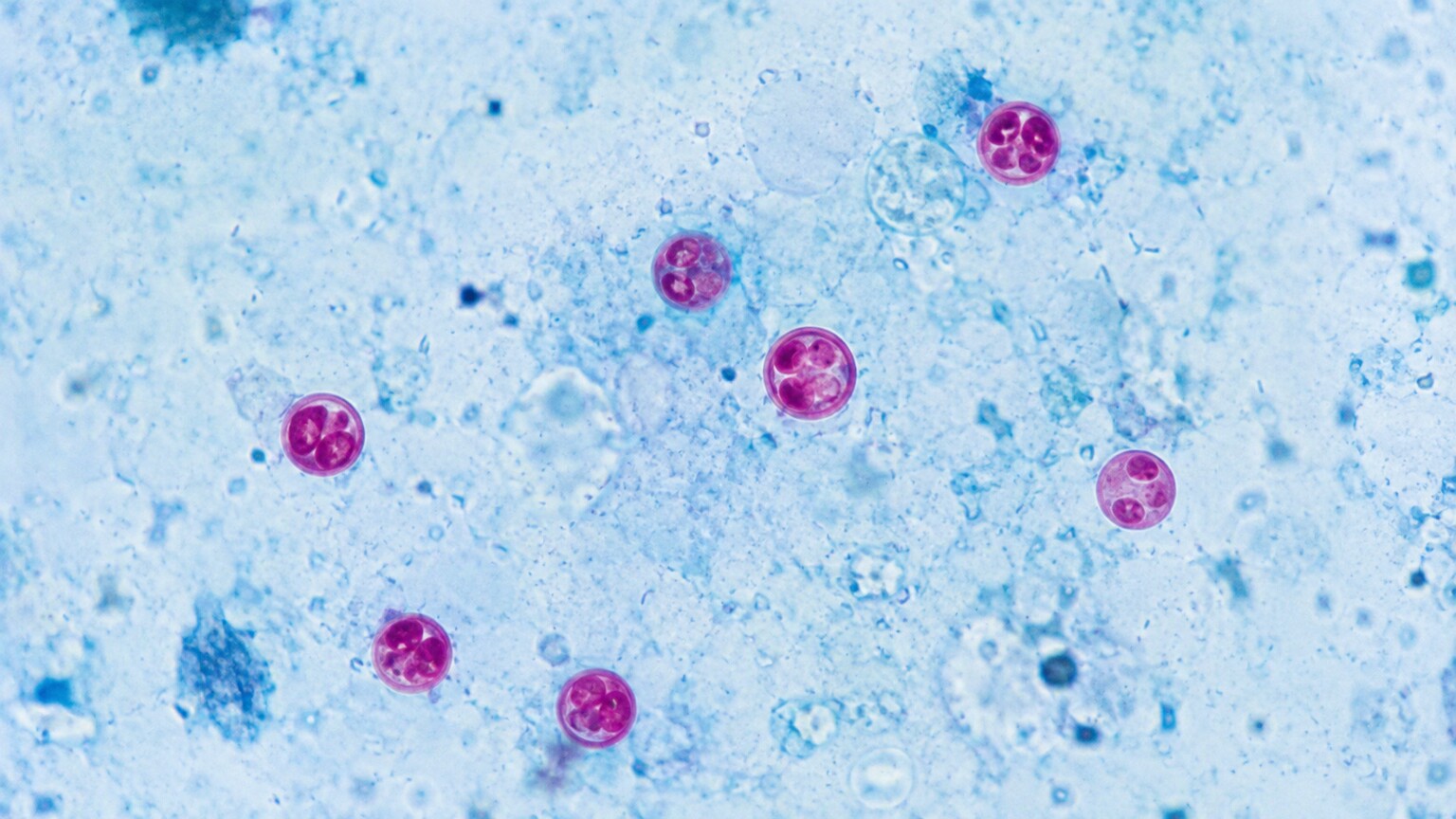
Figure 3 — Cryptosporidium oocysts under acid-fast staining, the technique labs use because these organisms are too small and translucent to spot with routine stains alone.
Dientamoeba fragilis and Cyclospora cayetanensis round out the group of protozoa doctors generally treat when found. Dientamoeba is unusual among protozoa in that it has no known cyst stage, which historically made it harder to detect and led to it being underdiagnosed for years; it's now recognized as a genuine cause of chronic abdominal pain and diarrhea, particularly in children. Cyclospora causes prolonged, sometimes relapsing watery diarrhea and has been linked to outbreaks tied to contaminated fresh produce like berries and leafy greens.
Among the worms, or helminths, a positive test for organisms like hookworm, whipworm (Trichuris trichiura), roundworm (Ascaris lumbricoides), Strongyloides stercoralis, or tapeworm species is treated essentially every time it's found, because these organisms cause real, sometimes serious, disease as they establish themselves in the intestines — ranging from nutrient malabsorption and anemia (hookworm is a leading global cause of iron-deficiency anemia) to intestinal blockage in heavy roundworm infections. Strongyloides deserves particular caution because, unlike most other helminths, it can complete its entire life cycle inside the human body without ever leaving, allowing it to persist for years or even decades after the original exposure and to flare into a severe, sometimes life-threatening illness if the immune system is later suppressed by medication or illness — which is why doctors tend to treat even mild or incidental Strongyloides findings.
Organisms That Are Usually Harmless — Even Though the Result Says "Positive"
This is the part of a stool parasite report that surprises people the most: a meaningful share of "positive" results are for organisms that live in the human gut without causing disease in the vast majority of people, and many labs report them purely because they were seen under the microscope, not because they require any action. Entamoeba coli (a completely different organism from the well-known bacterium E. coli, despite the confusingly similar name) is one of the most frequently reported of these — it's a normal gut commensal found in a large share of stool samples worldwide and is not considered disease-causing. Endolimax nana and Iodamoeba butschlii fall into the same category: both are protozoa that live in the human colon as harmless residents, and neither is treated when found on its own.
Blastocystis hominis occupies a genuinely gray zone that even specialists debate. It's an extremely common finding — studies have detected it in stool from a substantial share of both symptomatic and completely healthy people — and most researchers today consider it, in the majority of cases, a harmless part of the normal gut microbiome rather than a true pathogen. However, because a subset of research has linked it to symptoms like bloating and irregular bowel habits in some individuals, particularly at high concentrations, doctors sometimes treat it selectively: when it's found alongside genuine symptoms and no other, more clearly pathogenic organism has been identified as the actual cause. If your report lists Blastocystis hominis and you feel completely well, it's reasonable to expect your doctor may simply note it and move on rather than treat it.
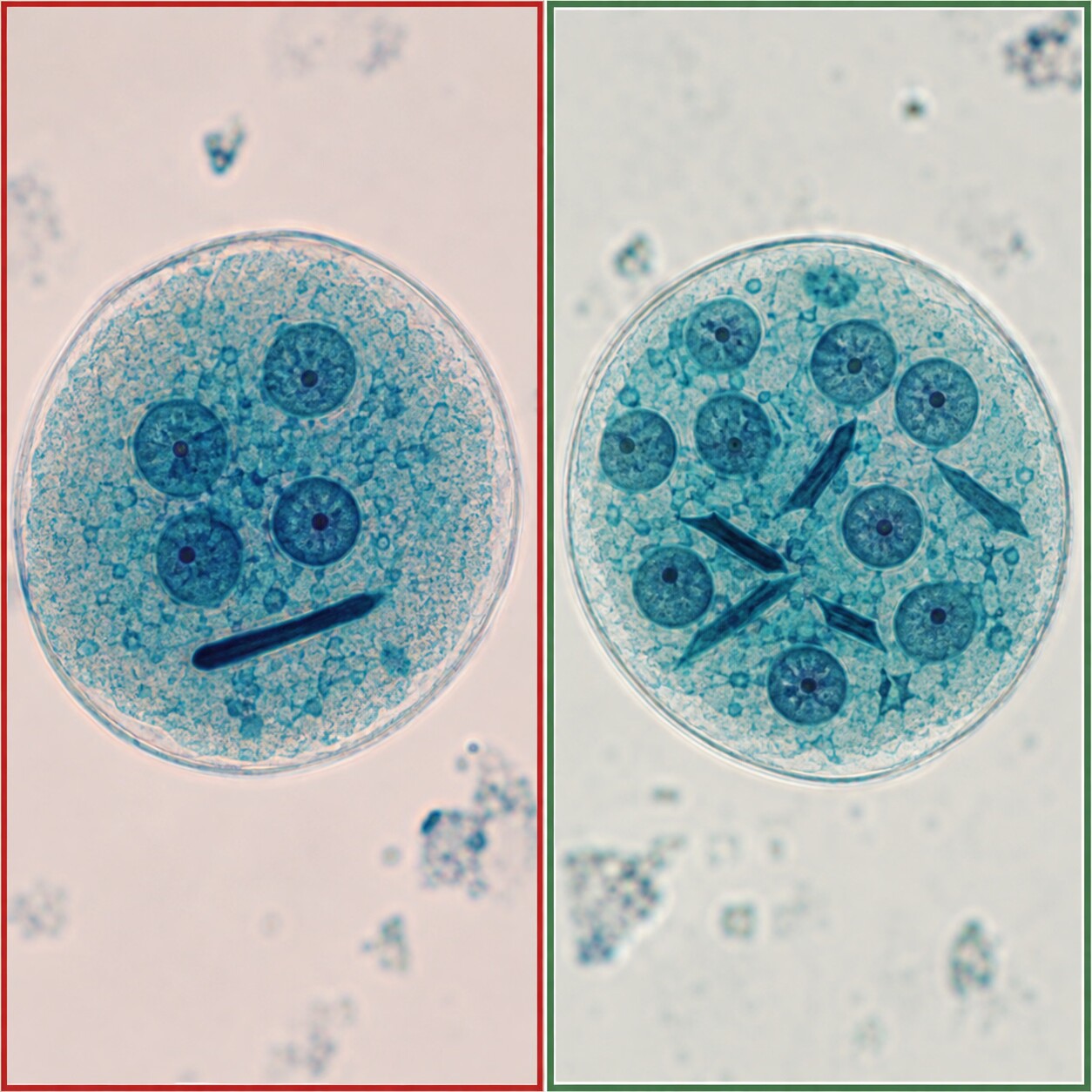
Figure 4 — Entamoeba histolytica (left) and the harmless look-alike Entamoeba coli (right) can appear nearly identical under a standard microscope, which is why specific antigen or PCR confirmation matters.
This distinction between pathogenic and non-pathogenic organisms is exactly why it's worth reading your report closely rather than reacting to the word "positive" alone, and why a phone call with your doctor to ask "which organism, specifically, and does it need treatment" is one of the most useful questions you can ask after receiving results like these. Labs are required to report what they see, even organisms they know are typically harmless, because occasionally a finding of one harmless commensal organism is a clue that you were exposed to contaminated water or food that could also carry more dangerous organisms the test didn't happen to catch that particular day — so your doctor may still want to discuss your exposure history even for a "harmless" finding.
Why a Positive Result Doesn't Always Match How You Feel
One of the more confusing aspects of parasite testing is the mismatch that can exist between the lab finding and how a person actually feels. It's entirely possible to test positive for a genuinely pathogenic organism, like Giardia, and have few or no symptoms at all — some people are simply better able to tolerate a given parasite load than others, particularly if their immune system has encountered it before or if the number of organisms present is low. It's equally possible to have significant gastrointestinal symptoms — cramping, urgency, bloating, fatigue — driven by something other than the parasite that happened to also be found, such as a separate bacterial infection, a food intolerance, or an unrelated digestive condition like irritable bowel syndrome that simply coincided with the timing of the stool collection.
This is part of why doctors weigh a positive parasite finding alongside the full clinical picture — your symptoms, your recent travel or water exposure, your immune status, and whether other family or household members are also sick — rather than treating the lab result as the entire story on its own. A positive result for a known pathogen in someone with matching symptoms is usually a fairly straightforward call to treat. A positive result for a commensal organism in someone with unrelated symptoms may prompt further investigation rather than treatment of the parasite itself, since treating it wouldn't actually resolve what's making the person feel unwell.
How Doctors Decide Whether — and How — to Treat
Once the specific organism is identified, treatment decisions generally follow a fairly established pattern built around three questions: is this organism capable of causing disease, is the person symptomatic or at elevated risk of complications even without symptoms, and is there a real risk of the person spreading it to others in their household or community. For clearly pathogenic protozoa like Giardia, Cryptosporidium, and Entamoeba histolytica, oral antiparasitic medications — commonly drugs in the nitroimidazole family for Giardia and amoebas, or targeted agents for Cryptosporidium — are typically prescribed as a matter of course, usually as a short course lasting anywhere from a few days to about two weeks depending on the specific organism and drug chosen.
For helminth infections, treatment usually involves a short course, sometimes even a single dose, of medications that either paralyze the worm so it can be passed out of the body or disrupt its ability to absorb the nutrients it needs to survive. Because reinfection is common in areas or households with ongoing exposure risk, doctors sometimes recommend a repeat dose several weeks later to catch any organisms that were in an earlier life-cycle stage not fully affected by the first round of medication, and repeat stool testing a few weeks after treatment to confirm the infection has actually cleared — a positive result found again after treatment could mean either treatment failure or a brand-new reinfection from the same environmental source.
Common Sources of Exposure — and Why Knowing Yours Helps
Understanding roughly where a parasite likely came from doesn't just satisfy curiosity — it genuinely helps a doctor interpret a positive result and decide what else, if anything, needs checking. Untreated or under-treated drinking water is one of the most common sources for organisms like Giardia and Cryptosporidium, which is why a positive result in someone who recently went backcountry camping and drank from a stream without filtering makes complete clinical sense and rarely raises further questions. Recreational water — public pools, splash pads, lakes, and water parks — is another major route, particularly for Cryptosporidium, which tolerates chlorine levels that would kill most other pathogens; outbreaks tied to a single pool are common enough that public health agencies track them specifically.
Food is a less obvious but still significant source. Fresh produce, particularly leafy greens and berries grown or processed in regions with inconsistent water sanitation, has been linked to outbreaks of Cyclospora and, less commonly, other protozoa, when contaminated irrigation water or handling introduces the organism before the food ever reaches a grocery shelf. Undercooked meat is the classic route for certain tapeworm species, since larval cysts embedded in muscle tissue survive unless the meat is cooked to a safe internal temperature. International travel, especially to regions with less developed water treatment and sanitation infrastructure, remains one of the single strongest predictors of a positive parasite result, which is exactly why travel history is one of the first questions a doctor asks when a stool test comes back positive for an organism that's uncommon domestically.
Household and interpersonal transmission — hand-to-mouth spread within a home, daycare, or other close-contact setting — rounds out the major categories, and is the dominant route for organisms like pinworm that don't require an environmental water or food source at all to spread from person to person. Knowing which of these categories likely applies to your situation doesn't change the treatment for a clearly pathogenic organism, but it does shape the practical advice your doctor gives you afterward, from "avoid untreated stream water on future trips" to "treat everyone in the household at the same time."
What Happens After a Positive Result: Household and Public Health Steps
Because many of the organisms found on stool testing spread through the fecal-oral route — meaning microscopic amounts of stool, invisible to the eye, get transferred to the mouth via contaminated hands, food, water, or surfaces — a positive result for a genuinely contagious organism often prompts steps beyond simply treating the individual. Depending on the specific organism, your doctor or local health department may recommend that other household members, especially young children, be tested as well, since it's common for an entire household to share the same exposure source without everyone showing symptoms. Certain organisms, including Giardia, Cryptosporidium, and Cyclospora, are reportable conditions in the United States, meaning laboratories are required to notify public health authorities, who may follow up to identify a shared source, particularly if multiple unrelated households test positive around the same time — this is exactly how outbreaks tied to a specific restaurant, daycare, or water source get identified and stopped.

Figure 5 — Pinworm eggs survive on hands, bedding, and household surfaces for days, which is why reinfection within a household is so common without proper hygiene steps after treatment.
Household-level hygiene measures make a real, measurable difference in preventing reinfection or spread once a positive result comes back, especially for organisms like pinworm (Enterobius vermicularis), which spreads almost entirely through this hand-to-mouth cycle within a home. Thorough handwashing with soap after using the bathroom and before eating, washing bedding and underwear in hot water, keeping fingernails short and clean, and avoiding sharing towels are all genuinely effective, evidence-supported steps — not just generic advice — for the specific organisms that spread this way. For parasites picked up from contaminated water, avoiding swallowing water while swimming in lakes, rivers, or pools, and using filtered or boiled water when traveling to areas with unreliable water treatment, addresses the actual exposure route rather than a generic precaution.
Why a Positive Result Can Mean More for Some People Than Others
The same organism, at the same quantity, can carry very different weight depending on who tests positive. People with weakened immune systems — including those undergoing chemotherapy, living with HIV, taking immunosuppressive medications after an organ transplant, or on long-term steroids for an autoimmune condition — are at real risk of a parasite behaving far more aggressively than it would in someone with a fully functioning immune system. Cryptosporidium, which typically causes a self-limited, if unpleasant, bout of diarrhea in an otherwise healthy adult, can cause severe, prolonged, and difficult-to-treat diarrhea with significant fluid and weight loss in someone whose immune system can't mount an effective response. Strongyloides is the clearest example of this danger: in someone starting high-dose steroids or other immunosuppressive therapy, a previously silent, longstanding Strongyloides infection can transform into a condition called hyperinfection syndrome, where the parasite multiplies explosively and spreads beyond the intestine — a genuine medical emergency. This is exactly why doctors sometimes screen for Strongyloides specifically before starting certain immunosuppressive treatments in anyone with a relevant travel or residence history, even without any digestive symptoms at all.
Pregnancy is another context where a positive result gets handled with extra care, both because certain antiparasitic medications are avoided or adjusted during pregnancy and because some infections, if left untreated, can affect nutrient absorption at a time when nutritional needs are already elevated. Young children and infants also warrant particular attention: their smaller fluid reserves make them more vulnerable to dehydration from parasite-related diarrhea, and certain organisms, including Giardia, are disproportionately common in daycare-age children due to close contact and developing hygiene habits.
On the other end of the spectrum, a healthy adult with a strong immune system and a positive result for a low-grade, non-pathogenic organism is often the group least likely to need any intervention at all beyond reassurance. Age, underlying health conditions, medication use, and recent travel or exposure history all factor into how a doctor weighs the same lab finding — which is one more reason two people with an identical-looking "positive" line on their report can walk away with two completely different treatment plans.
Should You Get Retested After Treatment?
Whether a follow-up stool test is necessary after treatment depends on the organism and how you're doing symptom-wise. For many uncomplicated Giardia or pinworm infections that resolve completely with treatment and no lingering symptoms, doctors often don't require a repeat stool test at all — resolution of symptoms is considered sufficient confirmation. For organisms where treatment failure or reinfection is more of a concern, such as Cryptosporidium in someone with a weakened immune system, or any parasite in someone whose symptoms haven't improved a couple of weeks after finishing treatment, a repeat stool sample is a reasonable and often recommended next step to confirm the organism is actually gone rather than assuming it based on how you feel.
It's worth knowing that some parasites can be detected on stool testing for a period of time even after they've been effectively killed by treatment, particularly with molecular PCR tests that detect fragments of genetic material rather than only live organisms — meaning a positive PCR result checked too soon after treatment isn't necessarily proof that treatment failed. This is one of several reasons doctors typically wait a specific interval, often around two to four weeks, before ordering a test-of-cure sample, rather than checking immediately.

Figure 6 — Thorough handwashing after bathroom use and before meals is one of the few household measures shown to meaningfully cut reinfection risk for fecal-oral parasites.
Reinfection is genuinely common for certain organisms in certain settings, particularly Giardia among people who work in childcare or have young children in diapers, and pinworm within households with school-age kids, simply because the exposure source — another infected person, a shared water supply, a daycare environment — often hasn't changed even after an individual's own infection has cleared. A second positive result weeks or months after successful treatment usually represents a new infection from the same ongoing exposure rather than a failure of the original treatment, which is an important distinction your doctor will likely factor into how they approach it the second time, sometimes including a broader look at the household or environment rather than just re-treating the individual.
For travelers, it's also worth knowing that some parasites acquired abroad, particularly certain helminths, can have long incubation periods or produce eggs only intermittently, meaning a stool test performed immediately upon return from travel can sometimes miss an infection that a repeat test weeks later would catch. If you developed gastrointestinal symptoms after international travel and an initial stool test came back negative but symptoms persist, it's reasonable to ask your doctor about repeat testing rather than assuming the travel-related possibility has been fully ruled out.
Frequently Asked Questions
Does a positive stool parasite test always mean I need medication?
No. It depends entirely on which organism was found. Organisms like Entamoeba coli, Endolimax nana, and often Blastocystis hominis are commonly considered harmless gut residents and don't automatically require treatment, while organisms like Giardia, Cryptosporidium, hookworm, and Strongyloides are treated in nearly all cases once identified.
Can a stool test give a false positive for a parasite?
True false positives are uncommon with modern testing, but misidentification is possible with older microscopy-only methods, particularly distinguishing pathogenic Entamoeba histolytica from its harmless look-alike Entamoeba dispar. This is one reason doctors sometimes order a more specific antigen or PCR test to confirm a microscopy finding before deciding on treatment.
Why did my doctor ask me to collect stool samples on three different days?
Parasites don't shed eggs, cysts, or antigens in a constant, predictable amount every single day — some organisms are only detectable intermittently. Testing three samples collected on separate days significantly reduces the chance that a real infection gets missed simply because it happened to be caught during a low-shedding window.
If I test positive, should my whole family get tested too?
For contagious organisms that spread through household contact or shared water and food sources, such as Giardia or pinworm, it's often reasonable, and your doctor may specifically recommend it, especially if there are young children in the home. For organisms considered harmless commensals, family testing typically isn't necessary.
Is Blastocystis hominis dangerous?
Most research today considers Blastocystis hominis a common, usually harmless part of the normal gut microbiome, found in a large share of both symptomatic and completely healthy people. Some doctors treat it selectively when it's found alongside genuine symptoms and no clearer cause has been identified, but a positive finding in someone with no symptoms is usually not treated — a decision your doctor should confirm based on your specific case.
How long after treatment until symptoms go away?
Most people notice improvement within a few days of starting treatment for a pathogenic parasite, with full symptom resolution typically within one to two weeks. If diarrhea, cramping, or fatigue persist significantly beyond that window, it's reasonable to follow up with your doctor about repeat testing rather than assuming the medication simply needs more time.
Conclusion
A positive stool parasite test is really the start of a more specific question, not the end of one: which organism, exactly, and does that particular organism actually cause disease in the concentration and context it was found. Some positive results — Giardia, Cryptosporidium, hookworm, and a handful of others — call for prompt treatment nearly every time. Others, including several protozoa that are extremely common in completely healthy people, are frequently left untreated because they simply don't behave like disease-causing organisms in the first place. Reading past the word "positive" to the specific organism name, and asking your doctor directly whether that particular finding is something that needs treatment, is the single most useful thing you can do with a result like this — and it turns a vague, worrying lab word into a concrete, answerable question.
Still Not Sure What Your Results Mean?
Upload your labs and get a complete, visual, plain-language interpretation of every biomarker — delivered to your inbox in under 15 minutes.
Get My ReportThis article is for educational purposes only and does not constitute medical advice. Always consult your healthcare provider regarding your specific lab results.