
Why Do Some Parasitic Infections Show No Symptoms?
It's genuinely one of the more unsettling facts in all of infectious disease medicine: a parasite can genuinely take up long-term residence inside a person's body, sometimes for years on end, without ever producing a single symptom that person would ever actually notice on their own. This isn't a rare, isolated edge case either — for several genuinely common parasites, the completely silent, entirely symptom-free presentation is actually the more typical, statistically expected outcome across a given population, not some unusual, rare exception to an otherwise reliable general rule. Genuinely understanding why this happens requires looking past the outdated, overly simplified popular idea that "infection automatically equals illness" and instead toward the actual, well-documented underlying biology: symptoms genuinely aren't a direct, one-to-one readout of a parasite's mere presence, they're instead a downstream byproduct of specific, complex interactions between the organism itself, the host's own immune system, and the particular tissue type involved, and several genuinely distinct biological mechanisms can each independently prevent that entire interaction from ever producing anything a person actually feels at all. This article walks through why symptoms actually come from the body's reaction rather than the parasite itself, the role of immune tolerance and long-term carrier states, why parasite burden (the actual number of organisms present) matters enormously, how the specific location a parasite occupies in the body shapes whether it gets noticed, why the same parasite can be silent at one life-cycle stage and symptomatic at another, the specific evasion strategies parasites have evolved to avoid detection, what centuries of human-parasite coexistence has done to shape this relationship, how age and overall health status shift this entire picture in either direction, and why the complete absence of any noticeable symptoms doesn't always, by itself, mean the complete absence of any underlying real-world risk at all.
Symptoms Come From the Body's Reaction, Not the Parasite's Mere Presence
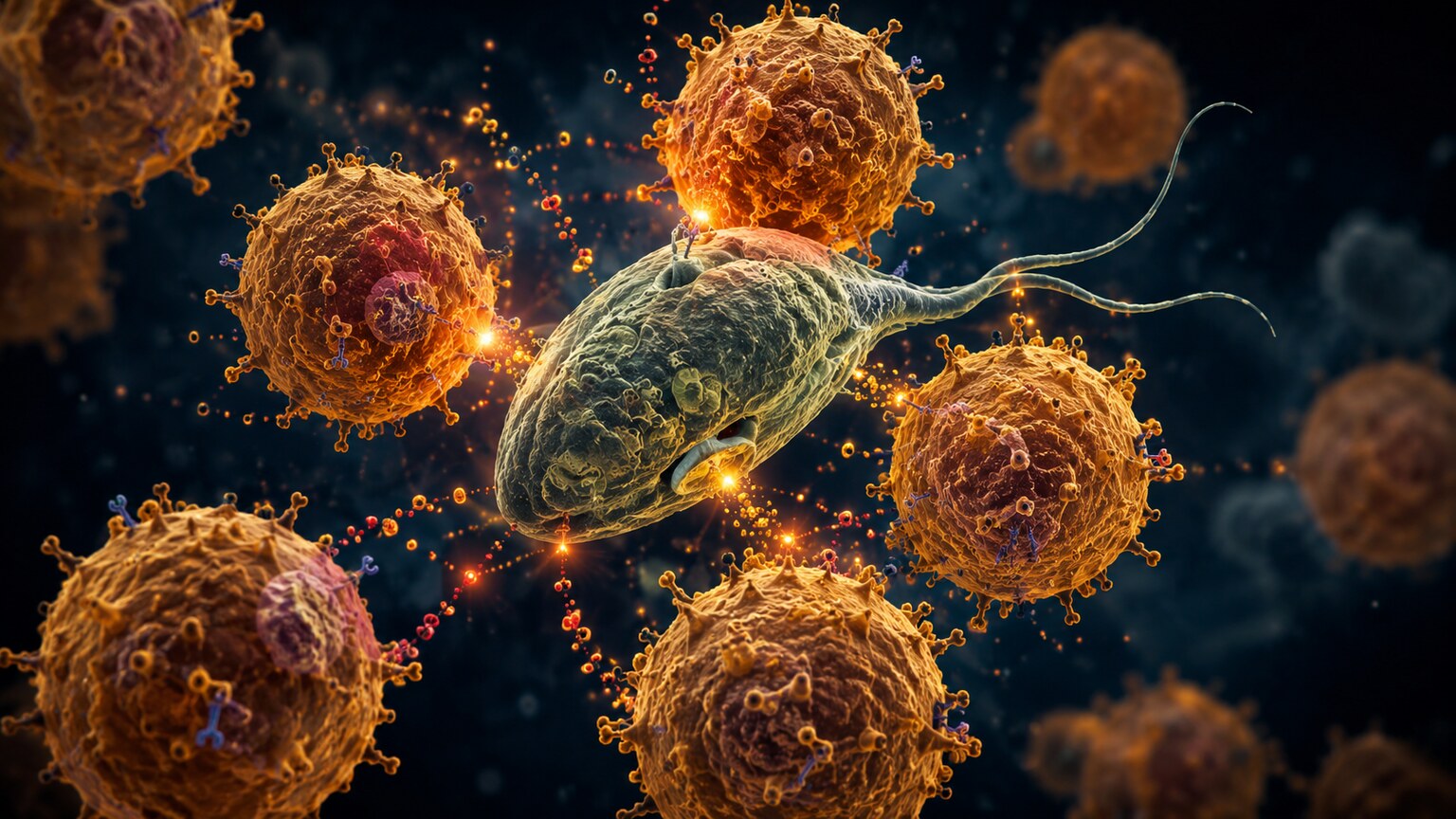
Figure 1. Most of what a person actually feels during an infection — inflammation, cramping, fatigue — is produced by the immune system's response to a parasite, not by the organism itself directly damaging tissue.
The single most important concept for understanding silent parasitic infections is this: the uncomfortable symptoms people associate with infection — inflammation, cramping, diarrhea, fatigue, fever — are, in the large majority of cases, produced by the body's own immune response reacting to the parasite, not by direct damage the organism itself inflicts. When specialized immune cells first detect the presence of a foreign organism, they release a cascade of chemical signaling molecules that together increase local blood flow, actively recruit additional immune cells to the affected site, and directly trigger the very physical sensations of illness a person actually consciously notices — visible swelling, genuine pain, and noticeable digestive upset among them. A parasite that successfully manages to avoid triggering a genuinely strong version of this entire signaling cascade can, at least in principle, go on to occupy the body relatively undisturbed for a considerable stretch of time, producing minimal or entirely no perceptible symptoms whatsoever even while remaining genuinely present, fully alive, and metabolically active the whole time.
This genuinely reframes the entire underlying question in a useful way. Rather than simply asking "why doesn't this particular parasite cause damage," the considerably more accurate question to ask instead is "why doesn't the host's immune system mount the kind of aggressive, symptom-producing response it typically mounts against other, unrelated invaders" — and the answer to that second, more precise question involves several distinct, well-studied biological mechanisms, each one covered in its own dedicated section further below in this article.
The Threshold Concept: Why "Some Reaction" Isn't the Same as "Noticeable Symptoms"
It's worth introducing a concept immunologists call the symptom threshold, since it clarifies a subtlety easy to miss: the immune system reacting at all, and that reaction producing symptoms a person actually notices, are two different things separated by a meaningful gap. A small, contained amount of localized inflammation, a mild, entirely temporary shift in local gut bacterial balance, or a brief, genuinely low-grade immune signaling response can all occur perfectly well without ever crossing the specific threshold of intensity or sustained duration actually needed to register as a consciously felt symptom — meaning some real, measurable biological reaction to a parasite's ongoing presence is happening more or less constantly in many genuinely silent infections, it simply never accumulates enough to reach the point of producing something the affected person consciously experiences and recognizes as illness.
This threshold concept helps explain several patterns already discussed in this article from a slightly different angle: low organism burden keeps cumulative reaction below threshold; a relatively immune-quiet body location means even a full-intensity local reaction stays contained enough to avoid crossing threshold; and immune tolerance actively lowers the baseline reaction intensity so that even a moderate stimulus no longer reaches threshold the way it once did during an initial exposure. Thinking in terms of a graded, continuous threshold, rather than relying on a simple, oversimplified binary of "reacting" versus "not reacting" at all, represents a genuinely more accurate, more useful model of what's actually happening at the cellular and tissue level throughout the entire duration of a typical silent, well-tolerated infection.
Immune Tolerance and the Chronic Carrier State
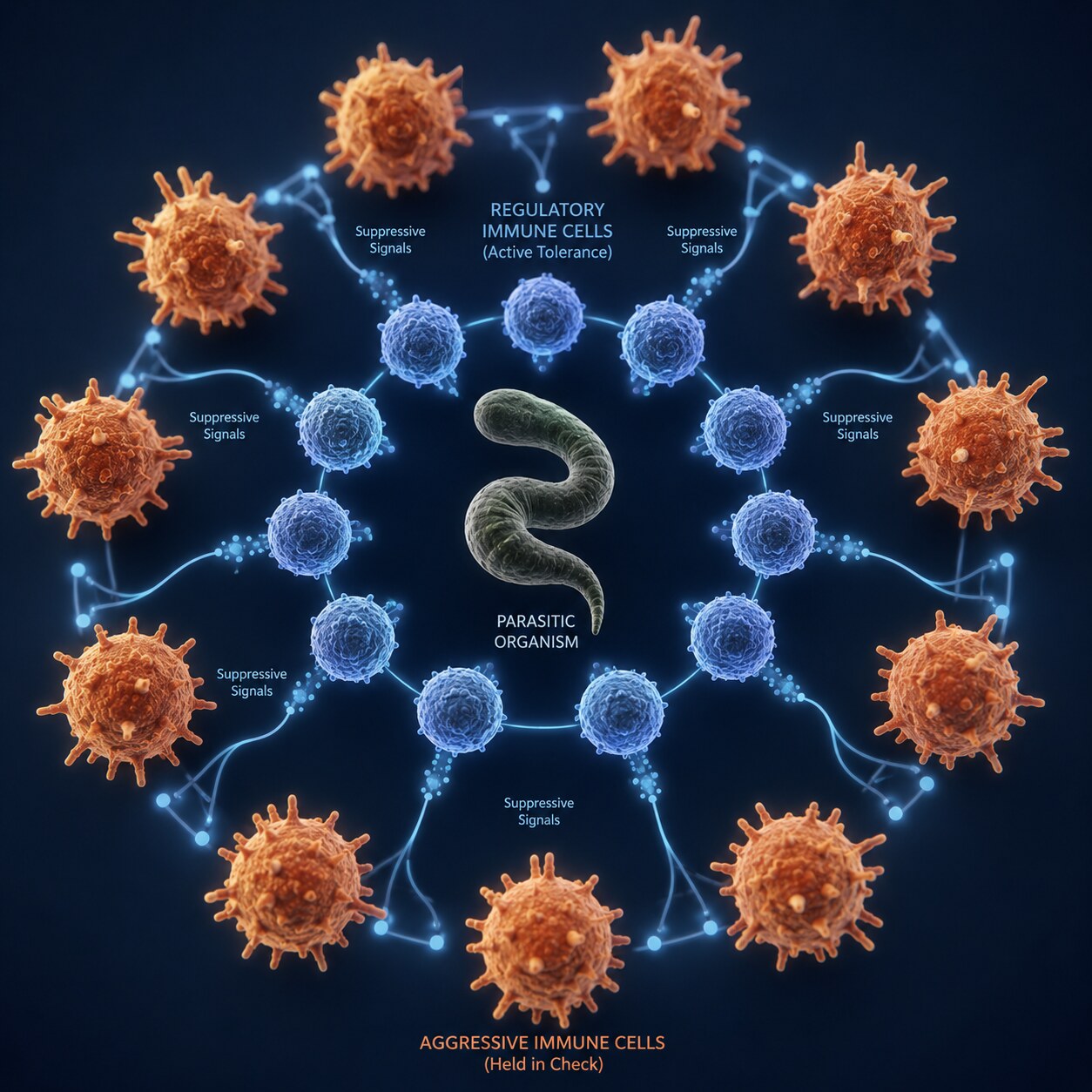
Figure 2. Over months of continued exposure, the immune system can shift into a tolerant state, actively dialing down its own inflammatory response to a parasite it has already recognized many times before.
When a parasite establishes a long-term presence rather than being cleared quickly, the immune system doesn't necessarily keep fighting at full intensity indefinitely. In many chronic parasitic relationships, the immune system shifts into a state researchers call immune tolerance or modulation, where specific regulatory immune cells actively dial down the inflammatory response to a specific, already-recognized organism, rather than continuing to mount the same aggressive reaction that characterized the initial exposure. This isn't immune failure — it's an active, deliberate biological process, and it's part of why a first exposure to a given parasite sometimes produces more noticeable symptoms than a long-standing, established infection with the same organism.
This tolerance process explains a pattern seen repeatedly with several common intestinal protozoa and certain helminths as well: an initial, genuinely first-time infection might produce mild, temporary digestive symptoms as the immune system mounts its earliest response, followed afterward by a much longer, extended period where the same underlying organism remains genuinely present but the immune response itself has settled into a lower, more tolerant baseline that produces essentially no perceptible symptoms at all — sometimes lasting for years on end, until something eventually changes that established baseline (a new illness, immune suppression, or a meaningful change in organism burden) and symptoms unexpectedly reappear once again.
Why Parasite Burden Matters More Than Presence Alone
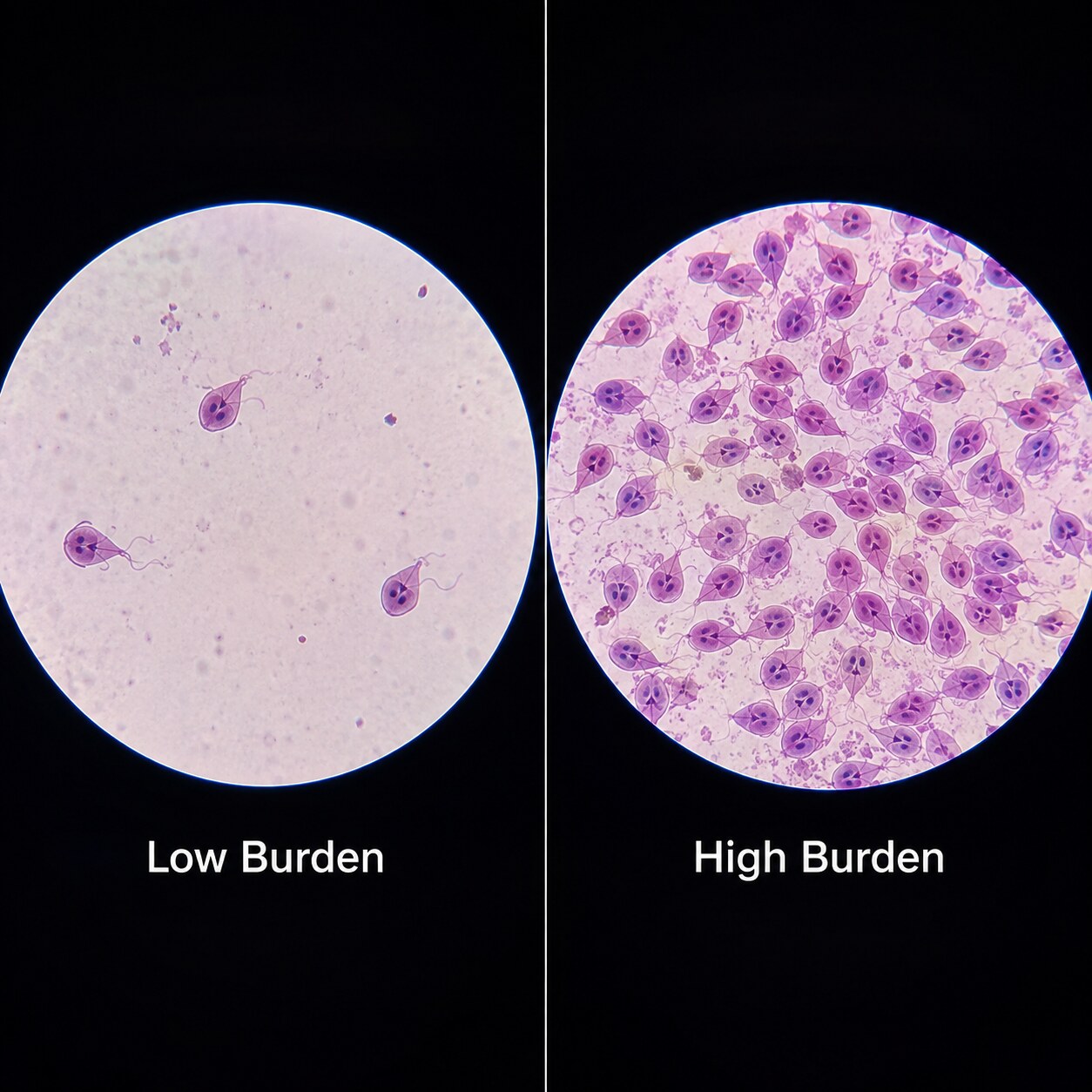
Figure 3. A low parasite burden — just a few organisms present — can sit below the threshold needed to trigger a noticeable symptomatic response, while a heavier burden of the identical organism often crosses that threshold.
Beyond the qualitative question of immune tolerance, the sheer quantity of organisms present makes a genuinely large difference. Most parasitic symptoms scale, at least partly, with organism burden — a handful of hookworms, for instance, absorbing a small, manageable amount of nutrients and causing minimal, localized irritation, produces a very different clinical picture than a heavy hookworm burden causing significant blood loss and measurable anemia. Many people carrying a low burden of a given parasite simply never accumulate enough organisms, or enough cumulative tissue irritation, to cross the threshold where symptoms become noticeable.
This burden-dependent relationship is precisely why lab reports sometimes note approximate quantity ("rare," "few," "moderate," "many," or occasionally an actual organism count per microscope field) rather than simply reporting a flat presence-or-absence result, and why two entirely different people found positive for the exact same identical organism can go on to have completely different symptom experiences depending almost entirely on how many organisms each individual person actually happens to harbor at that particular moment. Ongoing reinfection risk also interacts directly with this same underlying concept: in regions with continuous, ongoing environmental exposure, organism burden can build up gradually across repeated separate exposures over time, meaning someone still in an early, genuinely low-burden phase might feel nothing at all, while that same infection, left entirely unaddressed and allowed to steadily accumulate across subsequent repeated exposures, eventually goes on to produce noticeable symptoms once accumulated burden finally crosses that specific individual's own personal threshold.
Curious what your own lab results actually mean for your specific situation? Upload your results and get a complete, plain-language breakdown in under 15 minutes.
Analyze My ResultsCommon Misconceptions Worth Addressing Directly
A few persistent misconceptions tend to make silent parasitic infections feel more confusing or contradictory than they actually are, and directly addressing them helps clarify the overall picture this article has built. The first misconception treats a positive test result in someone with no symptoms as inherently suspicious or likely to be a lab error — in reality, as this article has explained at length, an asymptomatic positive is often the biologically expected outcome for many organisms, not an anomaly requiring an alternative explanation. The underlying biology of tolerance, threshold, and location genuinely produces this pattern routinely, not occasionally.
A second misconception assumes that "no symptoms" is equivalent to "no infection was ever really there," leading some people to dismiss a positive finding as a false positive simply because it doesn't match their subjective experience of feeling unwell. Modern parasitology testing methods, when performed correctly, are generally quite specific for what they're designed to detect, meaning a genuine positive result reflects a genuine finding regardless of whether it happens to align with symptoms — the mismatch between test result and subjective feeling is the expected pattern for many organisms, not evidence the test itself was wrong. A third misconception assumes that if an infection has been silent for years already, it will necessarily remain silent indefinitely — as the sections on immune status and age above make clear, that tolerant balance can shift, meaning past silence doesn't guarantee future silence under changed circumstances.
Location in the Body: Some Places the Immune System Rarely Patrols Closely
Where in the body a parasite establishes itself has a major effect on whether it gets noticed. Certain body sites are what immunologists call immune-privileged or relatively immune-quiet compared to others — tissue with less routine immune surveillance traffic passing through, or tissue where a strong inflammatory response would risk more collateral damage than the immune system is generally willing to trigger without stronger provocation. A parasite that manages to settle into one of these relatively quiet locations can persist with considerably less immune attention than one occupying a more actively patrolled tissue.
The intestinal lumen itself — the hollow, open space inside the gut, as distinct from the gut wall tissue surrounding it — is a particularly relevant, illustrative example of this concept: it's technically considered outside the body's internal tissue in a strict immunological sense, meaning an organism living purely within that open space, without ever actually invading or penetrating the gut wall itself, triggers considerably less of a systemic, whole-body immune reaction than an organism that genuinely penetrates into deeper, more actively surveilled tissue. Several genuinely common intestinal protozoa spend most or all of their entire life cycle situated in exactly this relatively immune-quiet luminal space, which represents a meaningful, well-understood part of why they so consistently produce minimal or entirely no symptoms across the broad majority of hosts they colonize.
Life Cycle Stage: Silent at One Point, Symptomatic at Another
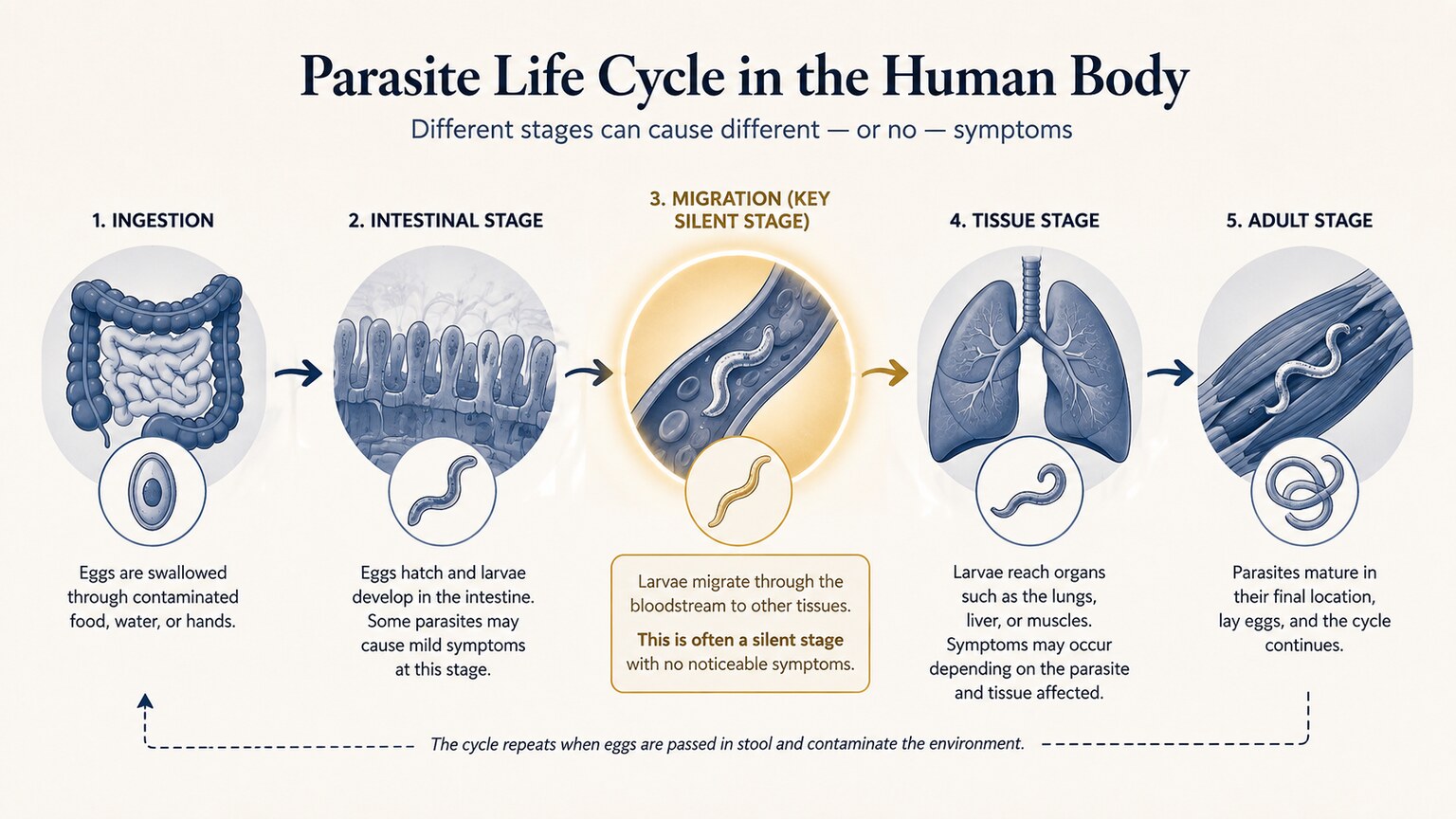
Figure 4. Many parasites pass through several distinct life-cycle stages, each occupying a different location and tissue type — meaning the same infection can be silent during one stage and symptomatic during another.
Many parasites, particularly helminths specifically, don't remain in one single form or one single body location throughout the entire duration of an infection — instead, they progress through several genuinely distinct life-cycle stages, sometimes migrating through several different organs and tissue types along the way, and each stage can produce a genuinely different symptom profile, including no symptoms at all during certain phases. An organism might travel entirely silently through the bloodstream or the lymphatic system during one specific phase of its overall life cycle, producing nothing noticeable to the host whatsoever, before eventually settling into a final resting location where it either remains genuinely quiet indefinitely from that point forward, or eventually goes on to produce symptoms specific to that particular final tissue type.
This staged pattern explains why timing matters so much in the broader field of parasitic disease diagnosis: a stool test performed during a genuinely quiet life-cycle phase, or performed before an organism has actually reached the specific stage that produces detectable eggs or noticeable symptoms, can straightforwardly miss an infection that a later test — timed more deliberately to a genuinely active or detectable phase of that same organism's cycle — would go on to successfully identify without any real ambiguity. The same underlying infection, tested at two different points along its own life cycle, can present an entirely different clinical and laboratory picture.
Genetic Variation: Why Two People Respond Differently to the Same Organism
Beyond the organism-level and location-level factors already covered, genuine variation between individual people's own immune systems plays a real, documented role in why the same parasite produces symptoms in one person and none at all in another. Specific genetic variations affecting how immune cells recognize foreign organisms, how strongly inflammatory signaling gets triggered, and how efficiently the body regulates and eventually resolves an immune response all differ meaningfully from person to person, and research has identified several specific genetic factors associated with a greater or lesser likelihood of symptomatic presentation for particular parasitic organisms.
This individual variation is part of why family members sharing the same household, the same diet, and plausibly the same exposure source can nonetheless experience genuinely different outcomes from what turns out to be the same underlying infection — one person developing noticeable digestive symptoms while another, tested only because the first person's diagnosis prompted household screening, turns out to carry the identical organism with no symptoms at all. Neither outcome reflects anything unusual; it reflects the same organism encountering two different individual immune profiles, each producing its own distinct threshold for what counts as a noticeable reaction.
Evasion Strategies: How Some Parasites Actively Avoid Detection
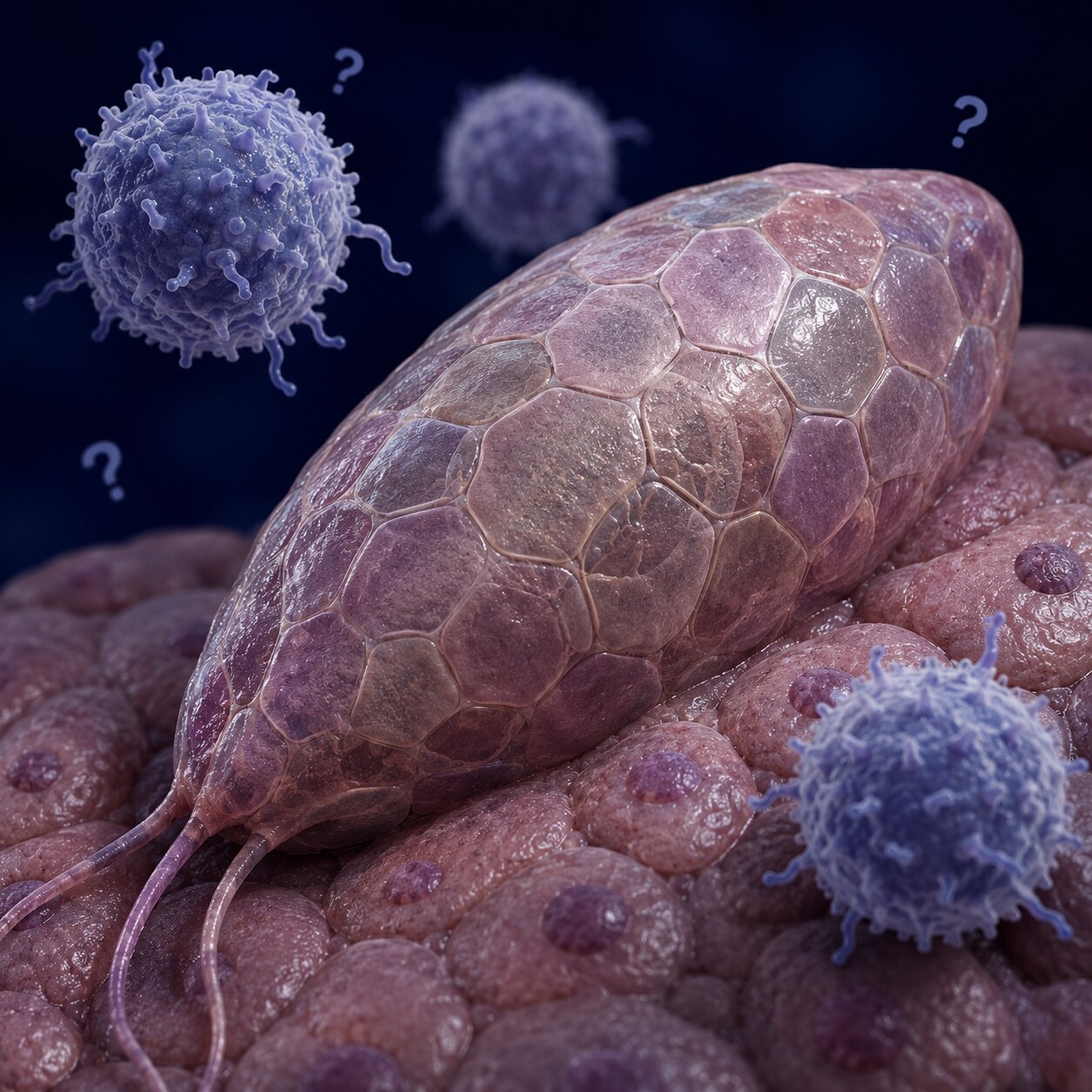
Figure 5. Some parasites actively coat themselves in molecules resembling the host's own tissue, or continually change their surface markers, specifically to avoid triggering immune recognition in the first place.
Beyond passive factors like location and burden, some parasites have evolved genuinely active strategies specifically to avoid triggering an immune response at all. One well-documented, extensively studied strategy, called molecular mimicry, involves a parasite actively coating its own outer surface with specific molecules closely resembling the host's own native tissue, making it considerably harder for patrolling immune surveillance cells to correctly recognize the organism as genuinely foreign in the first place. Another distinct strategy, known as antigenic variation, involves a parasite periodically and deliberately changing the specific surface markers the host immune system relies on to recognize it, effectively staying consistently one step ahead of an immune response that remains calibrated to recognize only an earlier, now-outdated version of that organism's original surface signature.
Some parasites go further still, actively releasing their own signaling molecules that directly suppress or redirect the host's immune response, essentially manipulating the immune system's own regulatory machinery to favor a quieter, less symptomatic coexistence — a strategy that benefits the parasite directly, since a host who feels sick enough to seek treatment represents a greater threat to the parasite's continued survival than a host who never notices anything is present at all. Certain helminths are particularly well studied for this specific capability, secreting molecules that closely resemble the host's own natural regulatory signals, effectively hijacking the body's built-in mechanisms for calming inflammation rather than fighting against them directly.
How the Gut Microbiome Interacts With Parasite Symptom Expression
An additional, increasingly researched layer worth mentioning is the role the broader gut microbial community plays in shaping whether a parasite produces symptoms. The gut is home to an enormous, diverse community of resident bacteria that interact constantly with the immune system, and a growing body of research suggests this resident microbial community can influence how the immune system responds to an incoming parasite — in some documented cases, appearing to promote a more tolerant, less symptomatic response, and in others, appearing to intensify the reaction depending on the specific bacterial species involved and their existing relationship with the host's immune system.
This microbiome interaction adds yet another layer of individual variation on top of the genetic factors already discussed, since two people's resident gut bacterial communities can differ substantially based on diet, prior antibiotic use, geography, and many other factors — meaning the same parasite entering two different gut environments may encounter meaningfully different existing immune conditions shaped, in part, by each person's own distinct microbial community. This remains an active area of ongoing research, but it represents a genuinely promising additional piece of the broader explanation for why identical organisms can produce such different outcomes across different individuals.
Human-Parasite Coevolution: A Relationship Shaped Over Many Generations
Several of the parasites most commonly associated with silent, asymptomatic infection are ones that have coexisted with human populations for an extremely long evolutionary timescale, and this long shared history has shaped the relationship in a specific direction. From the parasite's evolutionary perspective, a strategy that keeps the host alive, mobile, and unaware for as long as possible is generally more successful at ensuring the parasite's own transmission and survival than a strategy that quickly and severely sickens the host — a severely ill or incapacitated host is less likely to continue normal activities that facilitate the parasite's transmission to new hosts, and a host who dies quickly ends the relationship entirely.
This evolutionary logic doesn't mean parasites are making conscious choices, but it does mean that, over enormous timescales, natural selection has favored parasite lineages and specific evasion strategies that tend toward quieter, more sustainable coexistence with human hosts, particularly for organisms with a very long shared history alongside human populations. Some human populations with especially long historical exposure to certain parasites have also been found, in some published research, to carry immune system variations associated with a more tolerant, better-regulated response specifically to those familiar organisms — a genuinely two-way evolutionary conversation playing out simultaneously on both sides of the host-parasite relationship over an extended, multi-generational period of time, rather than a one-sided story of the parasite alone adapting to the host.
How Age and Underlying Health Status Shape This Whole Picture
The mechanisms described throughout this article don't operate identically across every person — age and underlying health status meaningfully shift how likely a given infection is to stay silent versus become symptomatic. Young children, whose immune systems are still actively developing and haven't yet built up the same broad repertoire of prior immune experience that most adults have accumulated over decades of life, often respond quite differently to a genuine first-time parasitic exposure than an adult typically would, sometimes producing considerably more noticeable symptoms during that initial infection precisely because the gradual, cumulative tolerance-building process described earlier in this article simply hasn't yet had sufficient time to properly establish itself in a still-developing immune system.
At the other end of the spectrum, older adults and anyone with a condition or medication that suppresses immune function represent the population most likely to see a previously silent, well-tolerated infection suddenly become symptomatic, since the entire tolerance mechanism keeping the infection quiet depends on an actively functioning, appropriately regulated immune system continuing to maintain that balance. This is precisely why a parasitic organism that caused zero noticeable symptoms for years, even decades, in an otherwise healthy adult can go on to produce a sudden, sometimes genuinely serious illness if that same person later undergoes chemotherapy treatment, receives an organ transplant requiring long-term immunosuppressive medication, or develops any condition that meaningfully weakens overall immune function — the organism itself hasn't necessarily changed at all in this scenario, but the delicate immune balance that had been quietly keeping it tolerated has now been genuinely disrupted.
Why No Symptoms Doesn't Always Mean No Risk

Figure 6. A completely asymptomatic infection can still carry real transmission risk to others, or produce slow, silent tissue damage over years — which is why some findings are treated even without symptoms present.
It's worth being clear that a lack of symptoms doesn't automatically mean a lack of consequence. Two distinct risks can exist even in a completely silent infection. First, a person with no symptoms can still shed infectious organisms — eggs, cysts, or larvae — capable of infecting other people, making asymptomatic carriage a genuine public health consideration even when it poses little apparent problem for the carrier themselves. Second, certain organisms produce slow, cumulative tissue damage over years of silent presence, only becoming clinically apparent once that accumulated damage eventually crosses its own separate threshold that does produce symptoms, sometimes long after the original exposure occurred and often, unfortunately, long after a window for straightforward, uncomplicated treatment has already passed by.
This is precisely why some parasitic findings are treated by a doctor even in a completely asymptomatic person, particularly for organisms with well-documented public health transmission risk or well-documented long-term silent damage potential — the decision to treat isn't based solely on how a person happens to currently feel in the moment, but on the specific organism's already-known, well-studied behavior pattern across both of these separate dimensions of risk.
Why Testing Sometimes Finds What Symptoms Never Revealed
Given how effectively silent a genuine parasitic infection can remain, it's worth understanding why testing gets ordered at all in someone with no symptoms in the first place, since this context shapes how the eventual result should be interpreted. Some testing happens as part of routine screening in specific populations or circumstances — international travel to a region with well-documented parasitic disease prevalence, immigration or refugee health screening protocols, pre-employment screening for certain food-handling or childcare occupations, or as part of a broader diagnostic workup for an unrelated symptom where a parasitic finding turns out to be incidental rather than the actual cause of whatever originally prompted the visit.
Other testing happens specifically because a household member or close contact has already been diagnosed, prompting screening of everyone else in that same household even without any symptoms present in those additional family members, since certain parasites spread quite efficiently within a shared household environment, and identifying every silently infected person within that household helps meaningfully break the ongoing transmission chain rather than treating only the one person whose symptoms happened to prompt the initial testing. Understanding which of these scenarios prompted your own testing is genuinely useful context, in much the same way understanding why any lab test was ordered shapes how meaningfully to interpret whatever the result turns out to show.
When Doctors Decide to Treat an Asymptomatic Finding Anyway
Given everything covered above, a positive parasite finding in someone with no symptoms doesn't automatically mean "no action needed" — the decision depends on which specific organism was identified. For organisms well-documented to eventually produce silent long-term tissue damage, or organisms with a well-established capacity to cause severe illness if the immune system's tolerant balance is ever disrupted (by another illness, medication, or age-related immune changes), treatment is often still recommended despite the complete absence of current symptoms, specifically to prevent that future risk rather than to address any present-day discomfort.
For organisms considered largely commensal or minimally pathogenic based on the current research literature, an asymptomatic finding is more often managed with straightforward watchful observation rather than immediate treatment, since the overall risk-benefit calculation of actively treating (medication side effects, direct cost, and the practical burden of a treatment course) doesn't clearly favor intervention when the organism itself carries minimal genuinely documented risk to begin with. This is exactly the kind of nuanced, organism-specific judgment call that makes discussing any positive parasite finding directly with a knowledgeable provider considerably more valuable than trying to interpret a lab report in isolation.
Real-World Examples: Organisms Known for Frequently Silent Presentations
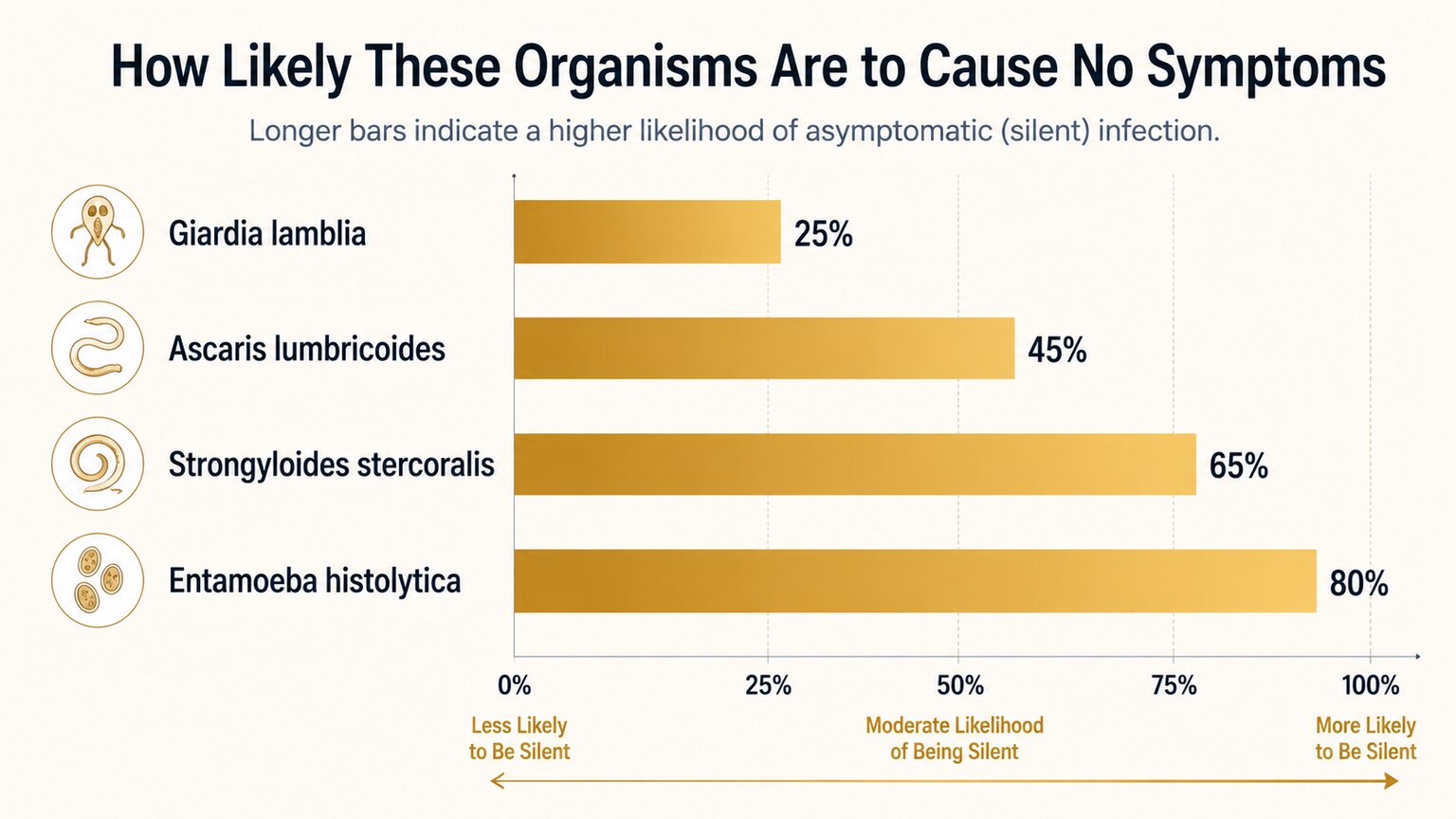
Figure 7. Some organisms, like Blastocystis hominis and Entamoeba coli, present asymptomatically in the large majority of cases, while others, like Giardia in a first-time exposure, more reliably produce noticeable symptoms.
Grounding the mechanisms above in specific, real-world organisms makes the pattern considerably more concrete. Blastocystis hominis, one of the most frequently identified organisms found on routine stool testing worldwide, is detected in a substantial share of both symptomatic and completely healthy people alike, and most current research treats it as a common, generally harmless part of the normal gut microbiome rather than a reliably disease-causing organism in its own right — a genuinely useful textbook illustration of low inherent pathogenicity combined with a tissue location (the intestinal lumen described above) that rarely triggers a strong systemic immune reaction on its own. Entamoeba coli, despite its somewhat intimidating, easily misread name, is a genuinely non-pathogenic intestinal protozoan species that essentially never causes symptoms regardless of how heavy the organism burden happens to be, existing quietly as a harmless bystander species that simply happens to share the same testing methods used to detect its far more clinically concerning relative, Entamoeba histolytica, which is a genuinely distinct and separate organism entirely despite the closely related name.
Toxoplasma gondii offers a particularly striking example of the immune-tolerance mechanism in action: in people with a fully functioning immune system, this organism typically produces either no symptoms at all or a brief, mild, flu-like illness before settling into a genuinely dormant, walled-off tissue cyst stage that can persist for the rest of a person's life without any further symptoms whatsoever — unless immune function later becomes significantly compromised, at which point the same dormant organism can reactivate and cause serious illness, directly illustrating how disrupting an established immune-tolerance balance can convert a silent infection into a symptomatic one.
Trichuris trichiura, the whipworm, provides yet another illustrative example specifically of the burden-dependent pattern discussed earlier: a light whipworm infection, involving only a small number of worms embedded in the lining of the large intestine, frequently produces no noticeable symptoms at all, while a heavy infection involving hundreds of worms can produce genuinely significant chronic diarrhea and, in children, measurable growth and cognitive effects — the same organism, the same basic biology, but a dramatically different clinical picture depending almost entirely on how many worms are actually present.
Frequently Asked Questions
If I have no symptoms, does that mean my immune system successfully cleared the parasite?
Not necessarily. Absence of symptoms can reflect a genuinely cleared infection, but it can equally reflect an ongoing, tolerated infection that simply isn't producing a noticeable reaction — only testing can distinguish between these two very different possibilities.
Can a silent infection suddenly become symptomatic later?
Yes. Changes that disrupt the existing immune tolerance — a new illness, immune-suppressing medication, significant stress, or simply an increase in parasite burden over time — can shift a previously silent infection into a symptomatic one.
Are protozoa or helminths more likely to cause silent infections?
Both categories include organisms well-known for frequently asymptomatic presentations, and both include organisms that reliably cause symptoms — the specific organism species matters considerably more than the broad category it belongs to.
Should an asymptomatic finding still be discussed with a doctor?
Yes. Since the appropriate response varies significantly by organism — some warrant treatment despite no symptoms, others are reasonably observed — a knowledgeable provider's input is genuinely valuable even when a finding feels inconsequential.
Does having no symptoms mean I couldn't have passed the infection to someone else?
No. A completely asymptomatic person can still actively shed infectious organisms capable of infecting others, which is exactly why asymptomatic carriage remains a genuine public health consideration even when it poses minimal problem for the carrier.
Can stress or diet trigger a previously silent infection to become symptomatic?
Significant physical stress on the body, including major illness or substantial dietary changes, can shift the immune balance enough in some cases to convert a previously tolerated, silent infection into a symptomatic one, though this varies considerably by organism and individual.
Conclusion
A parasite living silently inside the body for years isn't a medical mystery — it's the predictable result of several well-understood biological mechanisms working together: an immune system that shifts toward tolerance over time, organism burden staying below a symptom-triggering threshold, a parasite settling into a relatively immune-quiet location, life-cycle timing, active evasion strategies some organisms have evolved, individual genetic variation, and, for certain organisms, a long shared evolutionary history that favors quiet coexistence over dramatic illness. Understanding these mechanisms replaces the confusing, seemingly contradictory experience of "testing positive but feeling completely fine" with a genuinely coherent picture of what's actually happening inside the body — and why the right next step still depends on knowing exactly which organism is involved.
This broader framework — that symptoms reflect a threshold-based interaction between organism and host, not a simple, direct readout of presence — extends usefully beyond parasitic infections specifically. Many chronic and infectious conditions share this same underlying logic, where the body's own regulatory processes, individual variation, and the specific biological niche an organism occupies all shape whether a given finding translates into something a person actually feels. Approaching an unexpected lab finding with this more nuanced understanding, rather than assuming presence automatically equals illness, is a genuinely useful lens for interpreting far more than parasitology alone.
Still Not Sure What Your Results Mean?
Upload your labs and get a complete, visual, plain-language interpretation of every biomarker — delivered to your inbox in under 15 minutes.
Get My ReportThis article is for educational purposes only and does not constitute medical advice. Always consult your healthcare provider regarding your specific lab results.