
Understanding the Difference Between Normal Flora and Pathogens
If your stool culture report came back mentioning bacteria you don't recognize, it's natural to assume every name on that page is bad news. But your gut isn't a sterile place that's supposed to be empty — it's home to trillions of bacteria, living there on purpose, doing jobs that actually keep you healthy. Microbiologists call this population your normal flora, or more precisely your gut microbiota, and a huge part of what a stool culture is actually designed to do isn't just to find bacteria — it's to sort the bacteria that are supposed to be there from the small number of specific troublemakers that aren't. Learning how a lab draws that line, and why the exact same species of bacteria can be either a harmless resident or a dangerous pathogen depending on the strain, the amount, and the context, is the key to actually understanding what your own report is telling you.
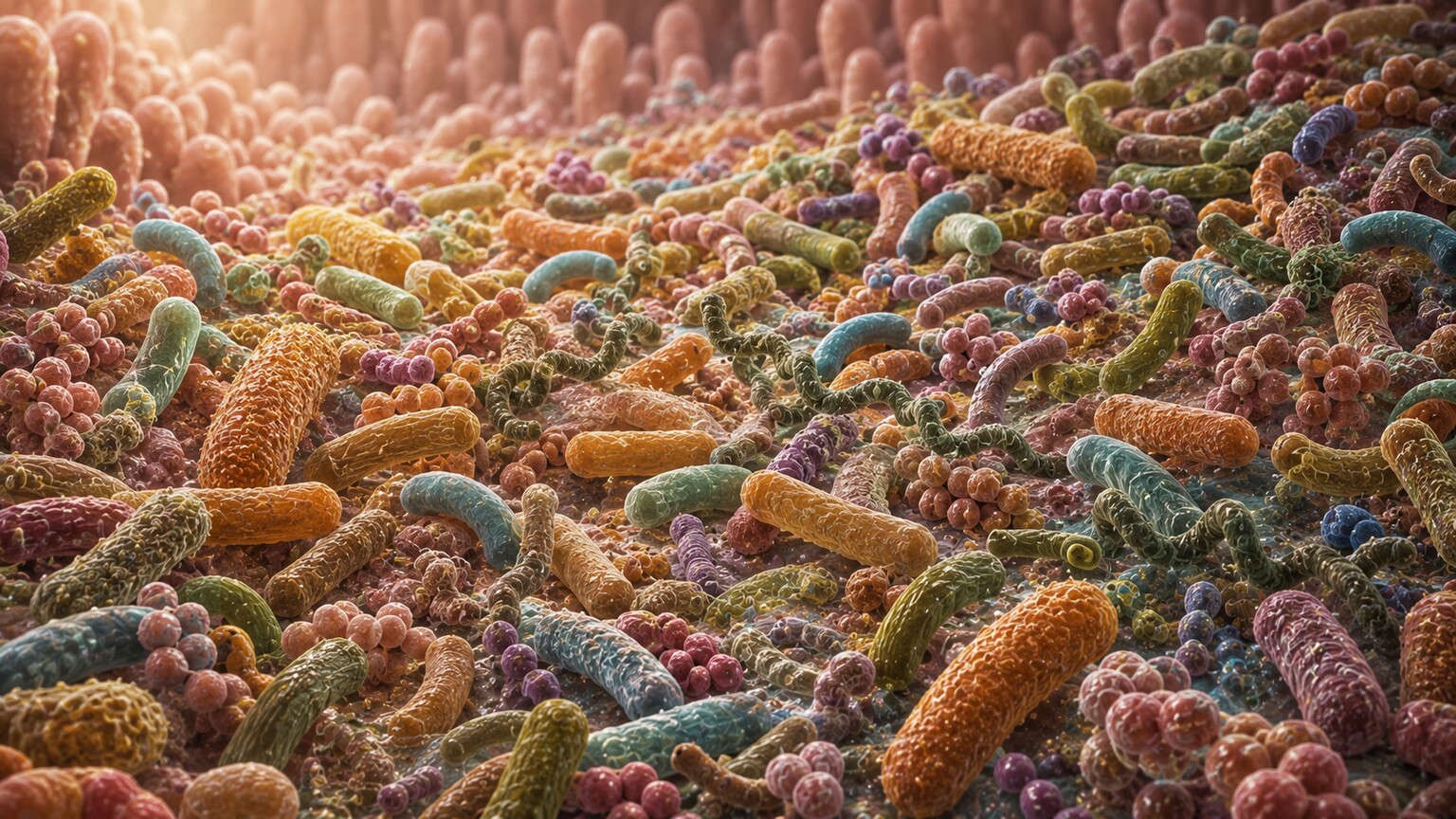
Figure 1. A healthy gut hosts hundreds of different bacterial species living together in a stable, largely beneficial community known as the normal flora.
What Do We Actually Mean by "Normal Flora"?
Every person's digestive tract, from the moment of birth onward, becomes home to an enormous and constantly shifting population of microorganisms — mostly bacteria, along with smaller numbers of fungi and other microbes. Scientists estimate that a typical adult gut houses somewhere between several hundred and over a thousand distinct bacterial species, adding up to trillions of individual cells, which is roughly on the same order of magnitude as the number of human cells in your entire body. This isn't a passive infestation your body merely tolerates. It's closer to a long-term roommate arrangement that both sides actually benefit from, which is why microbiologists describe most of this population as commensal — a term that simply means the bacteria and the human host live together in a way that doesn't harm either party, and in this case actively helps both.
Normal flora isn't one single organism or even one type of organism; it's an entire ecosystem, similar in concept to the community of plants, insects, and fungi that make up a healthy forest floor. The major bacterial groups that dominate a typical healthy gut include Bacteroidetes and Firmicutes, two large families that together often make up the vast majority of gut bacteria, alongside smaller but important populations like Bifidobacterium, Lactobacillus, and yes — even a modest, everyday amount of Escherichia coli, the same species that gets a bad reputation from headlines about food poisoning. In small, normal numbers, living peacefully in the gut, E. coli is simply one more ordinary resident, not a threat.
These bacteria earn their keep in several concrete ways. Many of them break down fiber and other plant material your own digestive enzymes can't process on their own, fermenting it into short-chain fatty acids like butyrate, which serve as a primary fuel source for the cells lining your colon and help keep that lining strong and intact. Others manufacture vitamins your body can use directly, including vitamin K and several B vitamins. Perhaps most importantly for the topic of this article, normal flora plays defense: by physically occupying space, consuming available nutrients, and in many cases producing their own antimicrobial compounds, these bacteria make it genuinely difficult for a new, disease-causing organism to move in and establish itself. Microbiologists call this protective effect colonization resistance, and it's one of the main reasons a healthy gut with a rich, diverse population of normal flora is naturally more resistant to infection than one that's been thinned out or disrupted.
No two people carry an identical version of this community, either. Your specific mix of normal flora is shaped by a long list of factors: whether you were delivered vaginally or by cesarean section, whether you were breastfed or formula-fed as an infant, your typical diet, where in the world you live, your age, and your lifetime history of antibiotic use all leave a lasting imprint on which species dominate your gut and in what proportions. This is one of the reasons stool culture reports don't attempt to compare your normal flora against a single fixed "correct" list of species — there isn't one. Instead, the lab is trained to recognize the broad category of ordinary, expected gut bacteria as a group, regardless of the exact species mix, and to let that entire category grow through largely unscrutinized while watching specifically for the handful of organisms that don't belong in anyone's gut, healthy or not.
What Turns a Normal Inhabitant Into a "Pathogen"?
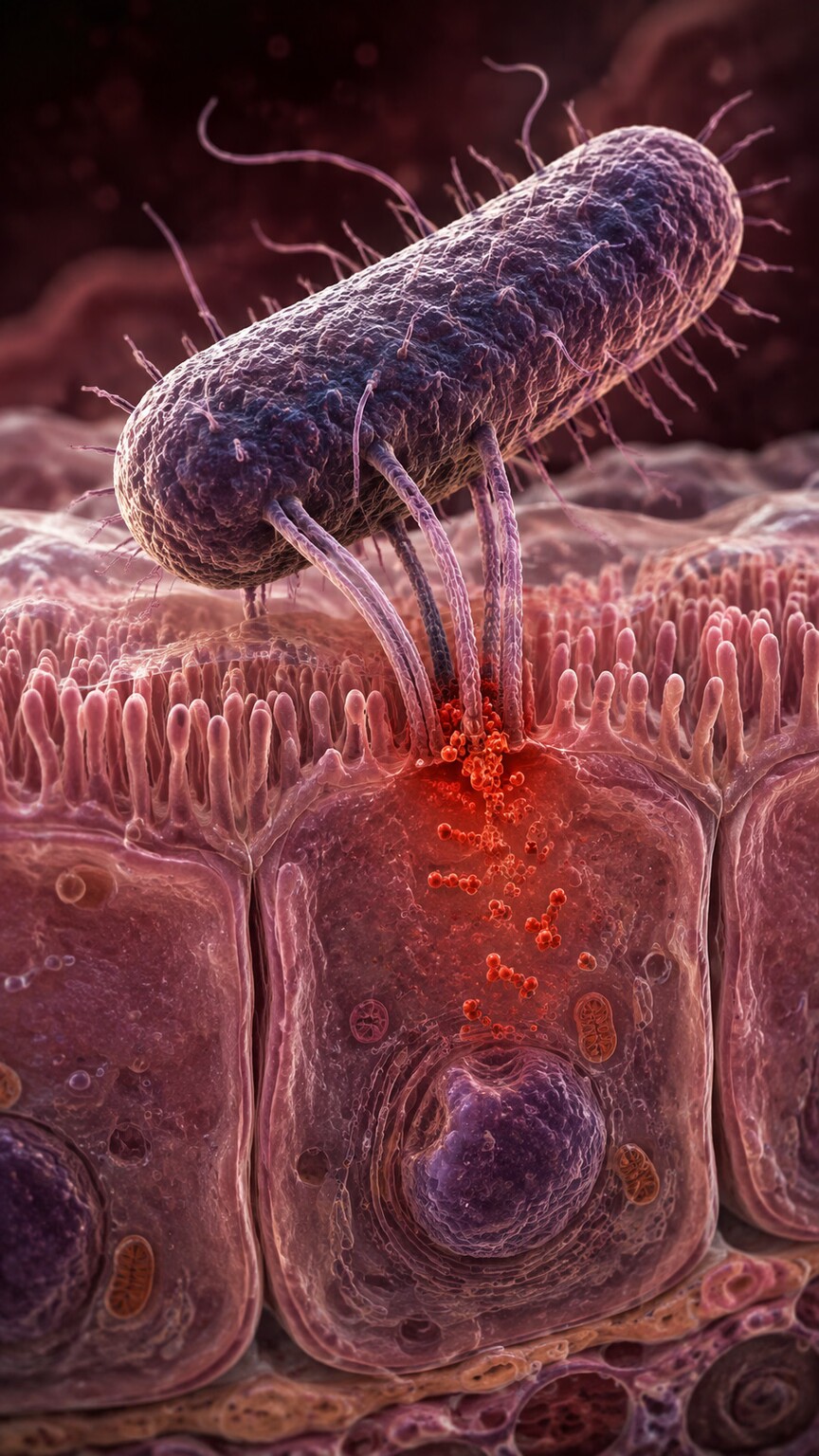
Figure 2. Pathogens carry specialized tools called virulence factors — attachment structures, toxins, and invasion machinery — that ordinary gut bacteria lack.
A pathogen, by the strict microbiological definition, is any organism capable of causing disease. What separates a pathogen from the trillions of harmless bacteria already living in your gut isn't some vague sense of "badness" — it comes down to a specific toolkit of biological features called virulence factors, which normal flora generally either lacks entirely or possesses in a much weaker, less dangerous form. Think of virulence factors as the specialized equipment a break-in artist would need that an ordinary houseguest simply doesn't carry: lock picks, a getaway plan, something to disable the alarm system. A bacterium without this equipment might wander into your gut and get swept along with everything else your digestive system processes and eliminates. A bacterium with the right equipment can force its way in and do damage.
One major category of virulence factor is the ability to attach firmly to the lining of your intestine instead of simply passing through. Many pathogens produce hair-like structures called pili or fimbriae, or specialized adhesion proteins, that let them grip onto the surface of intestinal cells with remarkable strength — strong enough to resist being flushed away by the normal, constant forward motion of digestion. Once anchored, some pathogens go further and actively invade, pushing their way inside the cells lining your gut or even punching through that lining entirely to reach deeper tissue, which is how organisms like Shigella and certain strains of E. coli cause the kind of bloody, painful diarrhea that's clearly more serious than routine stomach upset.
The other major category, and often the most dangerous, is toxin production. Many disease-causing bacteria manufacture and release potent toxins that interfere directly with how your intestinal cells function — some trigger those cells to dump enormous volumes of water and salt into the gut, which is exactly the mechanism behind the severe, life-threatening dehydration seen in cholera. Others, like the Shiga toxin produced by certain dangerous E. coli strains, damage cells so severely that they can cause bleeding in the intestine and, in rare but serious cases, trigger kidney injury elsewhere in the body. A handful of pathogens also carry a protective outer capsule that helps them evade detection and destruction by your immune system, buying themselves more time to multiply and cause harm before your body can mount an effective response. None of these features are automatic; a bacterium either carries the specific genes needed to build this equipment, or it doesn't — and that genetic difference, more than anything else, is what separates a harmless gut resident from a true pathogen, even when the two organisms are otherwise closely related.
Curious what the rest of your results are telling you? Upload them and get a complete, plain-language breakdown in under 15 minutes.
Analyze My ResultsHow the Lab Actually Tells Normal Flora From Pathogens
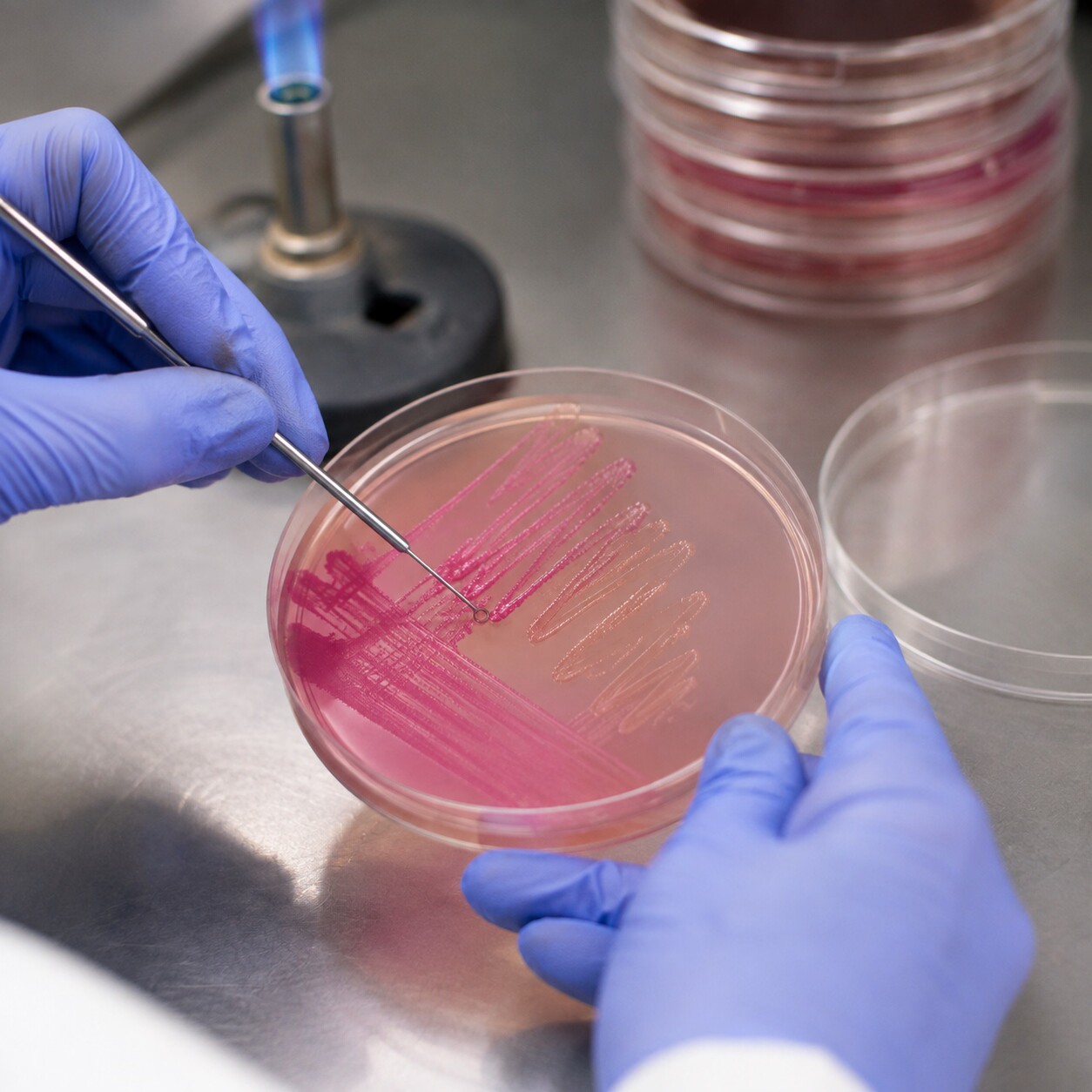
Figure 3. Selective and differential agars like MacConkey plates use color changes to separate ordinary lactose-fermenting gut bacteria from suspect colonies that need closer identification.
Given how many hundreds of bacterial species already call your gut home, you might wonder how a lab technician could possibly sort through all of them looking for one specific pathogen without drowning in noise. The answer is that stool culture doesn't actually try to identify everything present — it's specifically engineered, from the very first step, to make normal flora nearly invisible while making a handful of specific suspects stand out clearly. This is done primarily through selective and differential culture media: nutrient gels formulated with particular chemicals, dyes, and inhibitors that either stop certain bacteria from growing at all or cause them to change color in a very specific, recognizable way.
A classic example is MacConkey agar, one of the most widely used media in stool culture. It contains bile salts and a dye that together suppress the growth of many bacteria that aren't typically found causing gut infections, while allowing the bacteria that matter most — a family called Enterobacteriaceae, which includes both harmless E. coli and dangerous pathogens like Salmonella and Shigella — to grow freely. The differential part comes from lactose, a sugar mixed into the gel. Bacteria that can ferment lactose, including ordinary commensal E. coli, produce acid as a byproduct that turns their colonies a distinctive pink or red. Bacteria that can't ferment lactose — and this includes most of the classic stool pathogens, like Salmonella and Shigella — stay pale, colorless, or translucent. That single color difference, visible to the naked eye, immediately splits the plate into "probably normal flora" and "worth a closer look," long before any further testing happens.
For suspect colorless colonies, the lab typically moves on to more specialized media, such as Hektoen enteric agar or xylose lysine deoxycholate (XLD) agar, which go a step further by also detecting hydrogen sulfide production — a gas that turns colonies visibly black in the center, a hallmark reaction for many Salmonella strains. Campylobacter, another leading cause of bacterial gut infections, requires an entirely different approach: it's grown on its own selective medium, incubated at a body temperature slightly higher than normal — around 42°C, close to the internal body temperature of the birds it commonly comes from — in a low-oxygen atmosphere it prefers, conditions that most normal gut flora simply can't tolerate, which effectively filters it out from the background noise. Any colony that behaves suspiciously at this stage doesn't get an automatic pathogen label; it moves into confirmatory testing, including biochemical reactions that probe how the organism metabolizes different nutrients, and in many modern labs, a technology called MALDI-TOF mass spectrometry, which can identify a bacterial species within minutes by essentially reading its unique molecular fingerprint.
Why Quantity Matters, Not Just Identity
Identifying a bacterial species is only half of what a stool culture report is actually communicating — the other half, often overlooked by readers who aren't familiar with lab terminology, is quantity. Many culture reports use a semi-quantitative scale to describe how much of a given organism grew, using terms like "rare," "few," "moderate," or "many," or sometimes a numeric scale from 1+ to 4+. This detail exists because, in microbiology, the amount of an organism present can matter almost as much as its identity when it comes to deciding whether it's clinically significant.
For normal flora, labs generally aren't concerned with precise counts at all — the report simply notes that a typical, mixed population grew, without breaking down the exact proportion of each individual species, since that level of detail wouldn't change how the result gets used clinically. For suspected pathogens, though, quantity can shift how confidently a result gets interpreted. A pathogen recovered in heavy growth is a much stronger signal of active infection than the same organism recovered as a single, isolated colony, which can sometimes represent minor contamination during sample collection, a very early or resolving infection, or, in certain organisms, simple low-level carriage rather than active disease. This is part of why an experienced lab technician doesn't just ask "is this organism present," but "how much of it is here, and does that amount fit the clinical story."
This same logic extends to how opportunistic organisms are reported. Because bacteria like Klebsiella or Enterococcus can be part of a normal, low-level gut population, many labs won't even bother reporting them unless they're recovered in unusually heavy growth, since a small amount is expected and clinically meaningless, while a sample overwhelmingly dominated by one of these organisms — crowding out the usual diverse mixture — is a much more meaningful finding that may point toward the kind of imbalance described later in this article. Quantity, in other words, is often what turns "just another resident" into "worth a second look," even for organisms that aren't classic pathogens in the first place.
The Same Bacteria, Two Very Different Verdicts: The E. coli Example
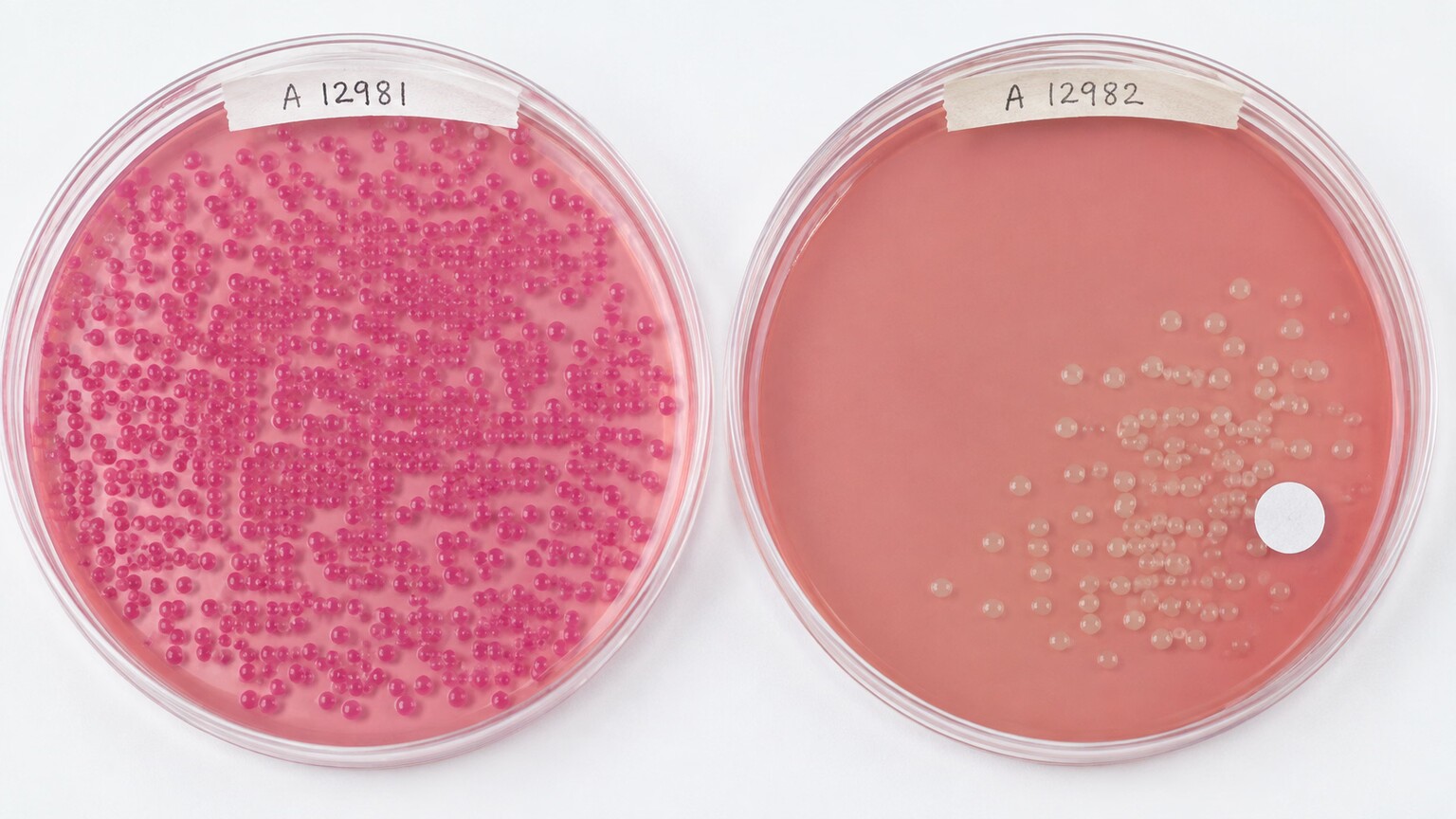
Figure 4. Ordinary E. coli ferments sorbitol and turns pink, while the dangerous O157:H7 strain typically doesn't, letting labs flag it for confirmation on sight.
No single organism illustrates the normal-flora-versus-pathogen distinction better than Escherichia coli, because the exact same species name can describe both a completely harmless, permanent resident of your gut and one of the most dangerous foodborne pathogens in modern medicine — and the only thing separating them is which specific strain you're dealing with. The E. coli living quietly in your intestine right now, as part of your normal flora, lacks the genes for the dangerous toxins and invasion tools described earlier. It ferments lactose without incident, causes no symptoms, and in fact helps produce vitamin K and competes for space against organisms that would cause you harm.
Contrast that with E. coli O157:H7, a member of a group known as Shiga toxin-producing E. coli, or STEC. This strain has acquired, through a process of horizontal gene transfer, the genetic instructions to produce a toxin nearly identical to the one made by Shigella dysenteriae — a toxin potent enough to damage the lining of blood vessels and, in a small but serious percentage of cases, trigger a life-threatening kidney complication called hemolytic uremic syndrome, most often in young children. Labs use a clever trick to catch this specific strain: unlike the vast majority of normal E. coli, O157:H7 typically cannot ferment a sugar called sorbitol. By using a variant of the standard test plate — sorbitol-MacConkey agar instead of regular lactose-MacConkey agar — technicians can watch for colonies that stay pale instead of turning pink, flagging them immediately for confirmatory testing rather than waiting for a full identification process to run its course.
E. coli O157:H7 isn't the only pathogenic variant hiding under the same species name. Enterotoxigenic E. coli, often abbreviated ETEC, is the single most common cause of traveler's diarrhea worldwide and produces toxins that trigger the intestine to secrete excess fluid, without causing the bloody diarrhea seen with Shiga toxin strains. Enteropathogenic E. coli, or EPEC, is a significant cause of diarrhea in infants and works differently still, attaching tightly to intestinal cells and effectively rearranging their internal structure to its own advantage. Enteroinvasive E. coli, or EIEC, behaves almost like a cousin of Shigella, invading the cells of the colon directly. Because routine stool culture is built to efficiently screen for the handful of the most common and dangerous possibilities rather than sequence the genome of every E. coli colony on the plate, a standard report that simply lists "normal flora including E. coli" means the lab didn't see anything suggesting one of these dangerous variants — not that every single E. coli cell in your gut was individually tested and cleared.
The way microbiologists ultimately confirm a suspect E. coli colony is through a system called serotyping, which classifies strains by two specific surface markers: the O antigen, a sugar-based structure on the bacterium's outer coating, and the H antigen, a protein found on its whip-like flagella. The now-familiar name "O157:H7" is literally a shorthand for this classification — the 157th recognized O antigen paired with the 7th recognized H antigen, a combination strongly associated with Shiga toxin production. Hundreds of different O and H antigen combinations exist across the E. coli species, and the overwhelming majority of them describe entirely harmless strains. Serotyping alone, though, is really just a supporting clue; the gold-standard confirmation for a dangerous strain today usually comes from directly detecting the Shiga toxin genes themselves, either through a targeted toxin immunoassay or a PCR test that looks for the genetic sequence responsible for making the toxin, since serotype and toxin production don't always align perfectly.
Reading "Mixed Normal Flora" or "No Significant Pathogen Isolated" on Your Report

Figure 5. The phrase "mixed normal flora, no significant pathogen isolated" is a genuinely reassuring result, not a vague placeholder the lab uses when it isn't sure.
When a stool culture report comes back with wording like "mixed normal fecal flora," "predominant normal flora," or "no Salmonella, Shigella, or Campylobacter isolated," it's easy to read that phrasing as oddly non-specific, almost like the lab is hedging rather than giving a real answer. In reality, that language is precise and deliberate. It's telling you exactly what the technician saw on the plate: a typical, expected mixture of the ordinary bacterial species that live in every healthy gut, with none of the specific pathogens the test was designed to detect showing up.
It helps to understand that a routine stool culture is not an open-ended search for "anything abnormal." It's a targeted screen for a defined, relatively short list of the bacteria most commonly responsible for infectious diarrhea in a given clinical setting — typically Salmonella, Shigella, Campylobacter, and Shiga toxin-producing E. coli as the core panel, sometimes expanded to include Yersinia, Vibrio, or others depending on your symptoms, recent travel, and what your doctor specifically requested. A report of "no significant pathogen isolated" means none of those specific organisms grew. It doesn't mean your gut was scanned for every conceivable microbe and pronounced perfectly pristine, and it's not the lab's way of saying "we're not totally sure." When a lab is genuinely uncertain about a colony, standard practice is to pursue further identification, not to write around the uncertainty with vague language.
It's also worth knowing that a normal culture doesn't automatically mean nothing is going on. Certain causes of gut illness simply don't grow on a standard bacterial culture at all — viruses like norovirus and rotavirus, parasites like Giardia, and toxin-mediated conditions like Clostridioides difficile infection typically require entirely different testing methods, such as PCR panels, antigen tests, or specific toxin assays, rather than the growth-based culture described throughout this article. A clean stool culture in someone who's still clearly sick is one of the more common reasons a doctor orders additional, more targeted testing rather than concluding the symptoms have no identifiable cause.
When a Normal Inhabitant Turns Dangerous: Opportunistic Infection
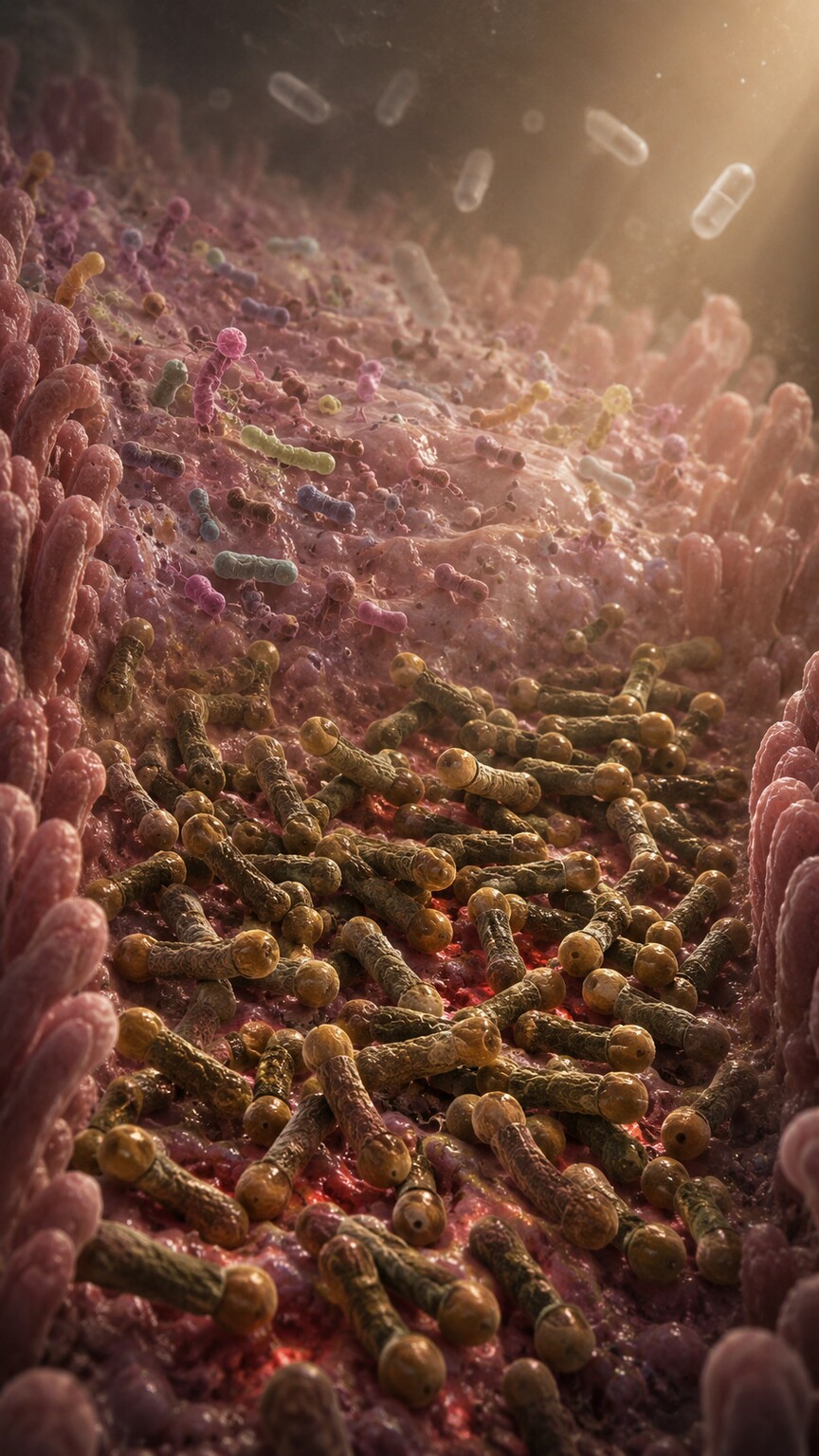
Figure 6. When antibiotics clear away large portions of normal flora, they leave an emptied niche that opportunistic organisms like C. difficile can rapidly overgrow.
So far, this article has drawn a fairly clean line: normal flora stays put and behaves, pathogens carry special tools and cause disease. Biology, unfortunately, rarely stays inside such tidy boxes. There's an important middle category called opportunistic pathogens — organisms that live peacefully as part of the normal flora under ordinary circumstances, but that can cause real, sometimes serious infection when the balance of the gut environment shifts in their favor.
The clearest and most clinically important example is Clostridioides difficile, commonly known as C. diff. In small numbers, C. diff can exist quietly in some healthy people's guts, kept in check by the sheer density and competitive pressure of the surrounding normal flora — those trillions of other bacteria are literally occupying the space and consuming the nutrients C. diff would need to multiply out of control. Antibiotic treatment for an unrelated infection can disrupt that balance dramatically, wiping out large swaths of normal flora — including many of the "good" bacteria that were physically crowding C. diff out — while C. diff itself, protected by tough, antibiotic-resistant spores, often survives the same treatment relatively unscathed. With its competition suddenly gone, C. diff can multiply rapidly and begin producing toxins that damage the colon lining, causing everything from mild diarrhea to a severe, life-threatening form of colitis in more serious cases.
A similar dynamic plays out with several other organisms under the right conditions: Klebsiella species, certain strains of Enterococcus, and Candida yeast can all exist harmlessly in small numbers as part of a diverse gut community, yet overgrow and cause problems when that community is disrupted by antibiotics, illness, or a weakened immune system. This is part of why microbiologists increasingly think about gut health less in terms of "good bacteria versus bad bacteria" and more in terms of balance and diversity — a rich, varied population of normal flora is what keeps every individual member, including the ones with opportunistic potential, from ever getting the chance to dominate.
The immune system itself is the other half of this equation, and it's a big part of why the same organism can be a total non-issue for one person and a genuine threat to another. Someone undergoing chemotherapy, living with an organ transplant on immunosuppressive medication, managing poorly controlled diabetes, or simply older and more physiologically vulnerable has a reduced ability to keep opportunistic organisms in check even without any disruption to their normal flora at all. In hospital settings, this reality shapes a great deal of infection-control practice — patients who are immunocompromised are often managed with extra caution around antibiotic use specifically because the combination of a suppressed immune system and disrupted normal flora is what creates the highest-risk environment for an opportunistic infection to take hold and become serious quickly.
Colonization vs. Infection: Why "Found" Doesn't Always Mean "Caused Your Illness"
One of the more counterintuitive facts in clinical microbiology is that finding a technically "bad" organism in a stool sample doesn't automatically mean it's the cause of whatever symptoms prompted the test in the first place. Microbiologists draw a careful distinction between colonization, meaning an organism is simply present and living in the body without causing active harm, and infection, meaning that organism is actively multiplying, invading tissue, or producing toxins in a way that's making the person sick. This distinction matters enormously for how results get interpreted.
Even some genuinely capable pathogens can be found in small numbers in people who feel completely fine. Studies looking specifically for this have found that a measurable percentage of healthy, asymptomatic people can carry organisms like toxin-producing C. diff or even, in some populations, low levels of Salmonella, without any symptoms of illness at all — their immune system and remaining normal flora are keeping the organism's numbers low enough, or its toxin production suppressed enough, that it never crosses the threshold into causing actual disease. This is exactly why a positive test result is always interpreted alongside the full clinical picture — your actual symptoms, how long they've lasted, and sometimes the quantity of organism detected — rather than treated as an automatic, isolated verdict.
The practical takeaway is that "the lab found something" and "that something is definitely responsible for how you're feeling" are two related but genuinely separate questions, and a good clinician, or a well-designed lab report, keeps both in view rather than collapsing them into one. If your doctor calls with a positive result and you're not currently having any symptoms, that's a legitimate reason for a follow-up conversation about what the finding actually means for you specifically, rather than an automatic alarm.
Timing plays into this too. Someone tested in the middle of an acute illness, with active diarrhea and cramping, presents a very different interpretive picture than someone tested as part of routine screening or after being identified as a close contact of a confirmed case. The same organism, recovered in the same quantity, can reasonably be read two different ways depending on what prompted the test and how the person is actually feeling at the time the sample was collected — which is exactly why a stool culture result was never meant to be read in isolation from the rest of the clinical story.
Why This Distinction Actually Changes Your Treatment
Understanding whether an organism is normal flora, a confirmed pathogen, or somewhere in the colonization gray zone isn't just an academic exercise — it directly shapes what happens next in your care. Treating every unfamiliar name on a stool culture report as an infection requiring antibiotics would be a serious mistake for several concrete reasons. First, unnecessary antibiotics don't just fail to help; they actively damage the very population of normal flora that provides colonization resistance, potentially opening the door for an opportunistic organism like C. diff to move in, as described earlier — meaning inappropriate treatment can, in a very real sense, cause the exact kind of infection it was meant to prevent.
Second, several of the classic stool pathogens — Salmonella, Shigella, and Shiga toxin-producing E. coli among them — are considered reportable or notifiable conditions in most jurisdictions, meaning a confirmed positive result triggers a report to public health authorities, who may investigate potential shared exposures like a contaminated restaurant or food product to prevent a wider outbreak. Correctly distinguishing a true pathogen from an incidental, harmless finding is part of what keeps that public health system accurate and useful rather than flooded with false alarms.
Third, and most directly relevant to your own care, the specific identity of a true pathogen often determines the treatment itself. Some bacterial gut infections, particularly milder cases of Salmonella or Campylobacter in an otherwise healthy adult, are frequently managed with supportive care like hydration alone, since antibiotics may not meaningfully shorten the illness and, in certain Salmonella infections, can actually prolong how long a person continues shedding the bacteria afterward. Other infections, especially in young children, older adults, or anyone with a weakened immune system, warrant more active treatment. Getting this decision right depends entirely on the lab first getting the identification right — separating true pathogens from normal flora and from organisms present but not actually causing disease.
This same identification work also shapes what happens after treatment. For certain infections, particularly in people whose jobs involve food handling or working in daycare settings, a doctor may want documented proof that a true pathogen has actually cleared before someone returns to those responsibilities, sometimes requiring a repeat stool culture showing the organism is no longer detectable. For most everyday infections in otherwise healthy people, though, a repeat test isn't automatically necessary once symptoms have resolved, since ongoing testing after recovery adds cost and inconvenience without changing the outcome. Knowing which category a given infection falls into — something that traces directly back to correctly identifying the organism in the first place — is what allows a doctor to recommend the right amount of follow-up, rather than defaulting to either too little caution or more testing than the situation actually calls for.
Frequently Asked Questions
If my stool culture found E. coli, does that mean I have a bacterial infection?
Almost certainly not, on its own. Ordinary E. coli is a normal, expected part of everyone's gut flora, and standard MacConkey agar is specifically designed to let it grow and turn pink without treating that as a red flag. Only specific, dangerous variants — like Shiga toxin-producing E. coli O157:H7 — are flagged for further testing, typically because they behave differently on the plate, such as failing to ferment sorbitol.
What does "mixed normal flora" or "no significant pathogen isolated" actually mean on my report?
It means the lab looked specifically for the common bacterial pathogens included in a standard stool culture panel — typically Salmonella, Shigella, Campylobacter, and dangerous E. coli strains — and didn't find any of them. What did grow was the expected, ordinary mixture of harmless bacteria that live in every healthy gut. It's a genuinely reassuring result, not a vague or inconclusive one.
Can normal gut bacteria ever make a person sick?
Yes, under certain circumstances. Organisms like C. difficile, certain Klebsiella strains, and Candida yeast can live harmlessly in small numbers as part of normal flora, but overgrow and cause infection when that flora is disrupted — most commonly by antibiotics — or when the immune system is weakened. This is called opportunistic infection, and it's a different mechanism than a classic pathogen invading from outside.
Why doesn't a stool culture test for every single bacteria living in my gut?
A routine gut has hundreds of bacterial species, and identifying every single one would be neither practical nor clinically useful for diagnosing an infection. Instead, stool culture uses selective and differential media engineered to suppress or highlight a specific, well-defined list of the bacteria most commonly responsible for infectious diarrhea, screening efficiently for those while letting normal flora pass through largely unremarked upon.
If a "bad" organism is found but I don't have symptoms, do I still need treatment?
Not always. Microbiologists distinguish between colonization, where an organism is present but not currently causing illness, and active infection. A positive result in someone without symptoms is typically discussed with a healthcare provider in the context of the full clinical picture, rather than automatically treated, since some organisms can be carried without causing active disease.
How does a lab technician know which colony on the plate deserves a closer look?
Selective and differential media do most of the initial sorting automatically through visible cues like color change — for example, lactose fermenters turning pink versus non-fermenters staying pale on MacConkey agar. Any colony that behaves like a known suspect moves on to confirmatory biochemical testing or mass spectrometry identification before it's ever reported as a specific pathogen.
Conclusion
Your gut was never meant to be bacteria-free, and a stool culture was never designed to prove that it is. What it's actually built to do is something more useful and more specific: separate the enormous, largely beneficial population of normal flora that belongs there from the small, well-defined list of organisms capable of causing genuine disease — using tools like selective media, color-changing chemical reactions, and confirmatory identification testing to draw that line accurately, colony by colony. Understanding that the same bacterial species, like E. coli, can be either a harmless everyday resident or a dangerous pathogen depending entirely on which strain it is, and that even genuine troublemakers like C. diff usually only cause harm once the surrounding balance of normal flora has been disrupted, reframes how to read your own results.
The next time a stool culture report mentions "normal flora" or lists a bacterial name you don't recognize, it's worth remembering that identification alone doesn't tell the whole story — quantity, strain, and your own symptoms all factor into what a result actually means for you. If anything about your report still doesn't add up with how you're feeling, that's exactly the kind of nuance worth bringing directly to your healthcare provider.
Still Not Sure What Your Results Mean?
Upload your labs and get a complete, visual, plain-language interpretation of every biomarker — delivered to your inbox in under 15 minutes.
Get My ReportThis article is for educational purposes only and does not constitute medical advice. Always consult your healthcare provider regarding your specific lab results.