
Why Do Some Bacterial Stool Infections Require Repeat Testing?
Feeling completely back to normal and no longer carrying a contagious infection are not automatically the same thing — and for a specific, well-defined group of bacterial gut infections, that gap is exactly why a doctor or health department asks for a second, sometimes a third, stool sample days or weeks after symptoms have already resolved. This isn't extra caution for its own sake. Certain bacteria, most notably Salmonella and Shigella, can keep shedding from the body in detectable numbers for days to weeks after diarrhea and cramping have completely stopped, and a small number of people go on to become long-term carriers who shed the organism for months or, in rare documented cases, years without ever feeling sick again. This article walks through exactly why repeat testing exists as its own distinct step in gut-infection care, which specific infections trigger it, what the actual clearance criteria look like in practice, and why — perhaps counterintuitively — a different set of infections are specifically told never to bother with a repeat test at all.
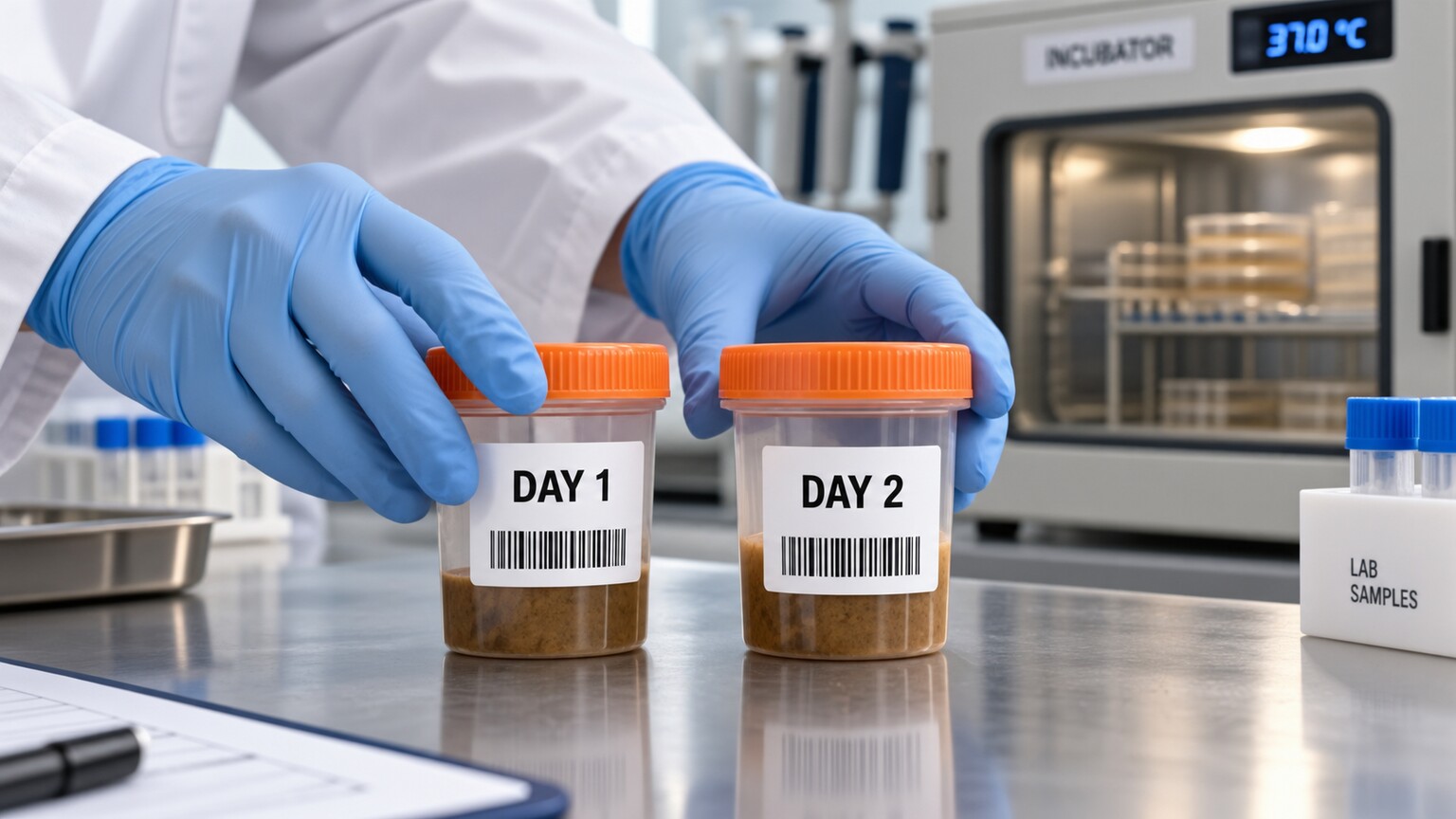
Figure 1. Clearance testing, unlike a single diagnostic culture, requires collecting consecutive samples on separate days to confirm a bacterial pathogen is no longer detectable before it's considered fully resolved.
Diagnostic Testing vs. Clearance Testing: Two Different Jobs
It helps to start by separating two things that get lumped together as "the stool test" but are actually answering two completely different questions. A diagnostic stool culture, the kind ordered when someone first shows up with diarrhea and cramping, exists to answer one question: what's making this person sick right now? A clearance test, sometimes called a test of cure, is ordered later and answers a genuinely different question: has the bacteria that caused this person's illness actually left their body, or are they still capable of infecting other people even though they personally feel fine?
This distinction matters because the two tests are ordered under entirely different logic. A diagnostic culture is driven by symptoms — you're sick, so a doctor wants to know why. A clearance test is driven by risk to other people, and it's ordered regardless of how the patient feels, purely because of what that specific organism is capable of doing after symptoms end, or because of what that person does for work, or where they spend their day. Understanding which category a given test falls into is the key to understanding everything else in this article, since nearly every point of confusion people have about "why do I need another test, I feel fine" traces back to conflating these two genuinely separate purposes.
It also helps to understand that this isn't a distinction unique to gut infections — the same basic logic applies across infectious disease medicine more broadly. Someone recovering from active tuberculosis, for example, undergoes a very similar kind of clearance process before being declared no longer contagious, built around the same underlying principle: symptom improvement and elimination of the organism from the body are related, but they don't happen on identical timelines, and the more contagious or consequential an organism is if missed, the more formal and rigorous that clearance process tends to become. Bacterial gut infections that trigger repeat stool testing sit on this same spectrum — not as an isolated, unusual quirk of gastroenterology, but as one specific application of a much broader, well-established principle in how infectious diseases are managed once symptoms alone can no longer be trusted to tell the whole story.
Why This Matters Most for Certain Jobs and Settings

Figure 2. Food handlers are one of the specific groups for whom local health regulations often require documented clearance testing before returning to work, since even a fully recovered person can still transmit certain bacteria through food.
Repeat clearance testing isn't applied evenly to everyone who's had a bacterial gut infection — it's specifically targeted at situations where an undetected, lingering carrier state could realistically spread to other people at meaningful scale. Food handlers are the clearest example: someone who works in food preparation and unknowingly continues shedding Salmonella or Shigella after their own symptoms resolve can contaminate food served to dozens or hundreds of other people before anyone realizes what's happening, since the bacteria can transfer from unwashed or inadequately washed hands directly onto food that's never cooked afterward. This is exactly why many local and state health departments have specific regulations requiring documented clearance — not just a doctor's note saying someone feels better — before a food handler can return to work after certain confirmed infections.
Healthcare workers and childcare or daycare staff fall into a similar category for related but distinct reasons. In a hospital or long-term care setting, a still-shedding staff member risks spreading infection to patients who may already be immunocompromised and considerably more vulnerable to a severe outcome than a healthy adult would be. In a daycare setting, the concern is compounded by the fact that young children have notoriously poor hand hygiene and close, frequent physical contact with each other, creating an unusually efficient transmission environment even under normal circumstances. Both settings often have their own institutional or regulatory return-to-work policies layered on top of general public health guidance, which is part of why the exact requirements someone encounters can vary meaningfully depending on where they work rather than following one single universal national rule.
Children attending daycare or school face their own version of this issue, separate from the adult food-handler and healthcare-worker categories, since a young child obviously isn't preparing food or providing care to vulnerable patients but is still capable of spreading a highly contagious organism like Shigella to an entire classroom through the kind of close contact and imperfect hygiene ordinary childhood play involves. Many school districts and licensed daycare facilities maintain their own written exclusion policies specifying exactly how long a child must stay home after a confirmed bacterial gut infection, and whether documented clearance is required before returning — policies that often exist somewhat independently of state health department requirements and can vary meaningfully from one facility to the next, which is exactly why parents are generally advised to ask their specific daycare or school directly what their policy requires, rather than assuming a state-level guideline automatically applies unchanged to every individual facility.
Curious what your own lab results are actually telling you? Upload your results and get a complete, plain-language breakdown in under 15 minutes.
Analyze My ResultsWhat the Actual Clearance Criteria Look Like
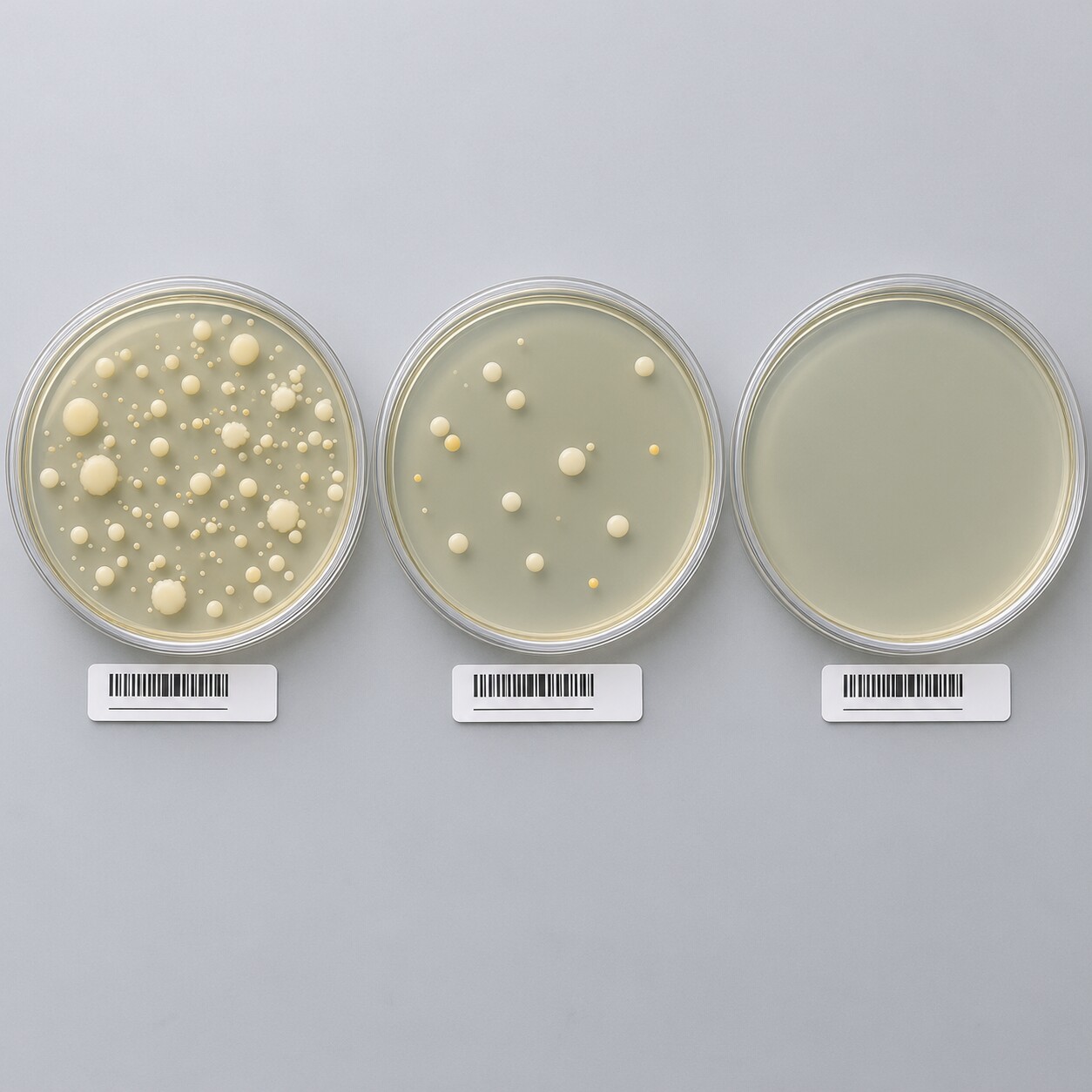
Figure 3. Clearance is defined by a specific, published standard, not a judgment call — typically two consecutive negative stool cultures collected at least 24 hours apart, with the person off antibiotics for a defined window beforehand.
Clearance isn't a vague, subjective judgment call left to an individual doctor's discretion — it follows a specific, published standard, though the exact numbers vary somewhat by pathogen and by which health authority's guidance is being followed. The most commonly cited general standard for Salmonella and Shigella clearance in a food handler or similarly high-risk setting is two consecutive negative stool cultures, collected at least 24 hours apart, with the samples ideally taken after the person has been off any antibiotics for at least 48 hours, since antibiotics still in the system can suppress bacterial growth on a culture plate without actually meaning the organism is gone — the exact same false-negative problem that makes stool cultures unreliable as a diagnostic tool shortly after antibiotic treatment for a different reason entirely.
The 24-hour spacing between samples isn't an arbitrary scheduling convenience — it exists because bacterial shedding from an infected gut isn't perfectly steady from hour to hour or day to day. A single negative sample could, in principle, simply reflect a temporary lull in shedding rather than the infection actually being cleared, similar to how a single blood pressure reading doesn't tell a doctor as much as a trend across several readings. Requiring two separate negative samples on two separate days meaningfully reduces the chance that a lucky, temporarily quiet sample gets mistaken for genuine clearance.
It's worth being specific about why the antibiotic-free window matters just as much as the spacing between samples, since skipping this step is one of the more common ways clearance testing goes wrong in practice. A stool culture works by giving live bacteria the opportunity to grow into visible colonies on a specialized growth medium over one to a few days, and any antibiotic still active in a person's system at the time the sample is collected can suppress that growth in the lab dish, exactly the same way it would in the person's own gut — producing a negative-looking result that reflects ongoing drug suppression rather than the organism's actual absence. Waiting the recommended window after the last antibiotic dose, rather than collecting the sample the moment symptoms improve, is what separates a result that genuinely means "cleared" from one that simply means "temporarily suppressed and possibly still there once the drug wears off."
Salmonella and Shigella: The Two Classic Reportable Organisms
Salmonella and Shigella are singled out for this level of scrutiny for a specific, well-documented reason: both are classified as reportable, or notifiable, conditions in essentially every U.S. jurisdiction, meaning a confirmed lab result automatically triggers a report to the local health department, independent of anything the treating doctor decides to do. This reporting requirement exists precisely because both organisms have well-documented histories of large-scale outbreaks traced back to a single infected food handler, a contaminated water source, or an under-recognized daycare cluster, and public health authorities treat prevention of repeat spread as seriously as treating the individual patient in front of them.
Shigella carries an additional wrinkle worth understanding specifically: it's spread by a remarkably small number of bacteria — as few as 10 to 100 organisms can cause infection in a healthy adult, compared to the many thousands typically required for most other bacterial gut pathogens. This unusually low infectious dose is exactly why Shigella spreads so efficiently in daycare settings and other close-contact environments, and it's a major part of the reasoning behind why documented clearance, rather than simply waiting out a fixed number of days, is considered the safer standard for this specific organism.
Salmonella's reportable status also connects directly to how outbreaks actually get identified and stopped in real time. When a local health department receives multiple reports of confirmed Salmonella infections within a short window, disease investigators can compare the specific strain identified in each case — since modern labs increasingly use a technique called whole-genome sequencing to characterize the exact genetic fingerprint of the bacteria involved — to determine whether several seemingly unrelated illnesses actually trace back to one shared source, such as a specific restaurant, a particular batch of eggs, or a contaminated produce shipment distributed across multiple states. This kind of outbreak detection depends entirely on individual cases being reported promptly and accurately in the first place, which is exactly why the reporting requirement exists as a mandatory step rather than an optional courtesy, and why the same underlying infrastructure that flags an infection for clearance testing is also the infrastructure that catches large multistate outbreaks before they grow even larger.
The Chronic Carrier Problem
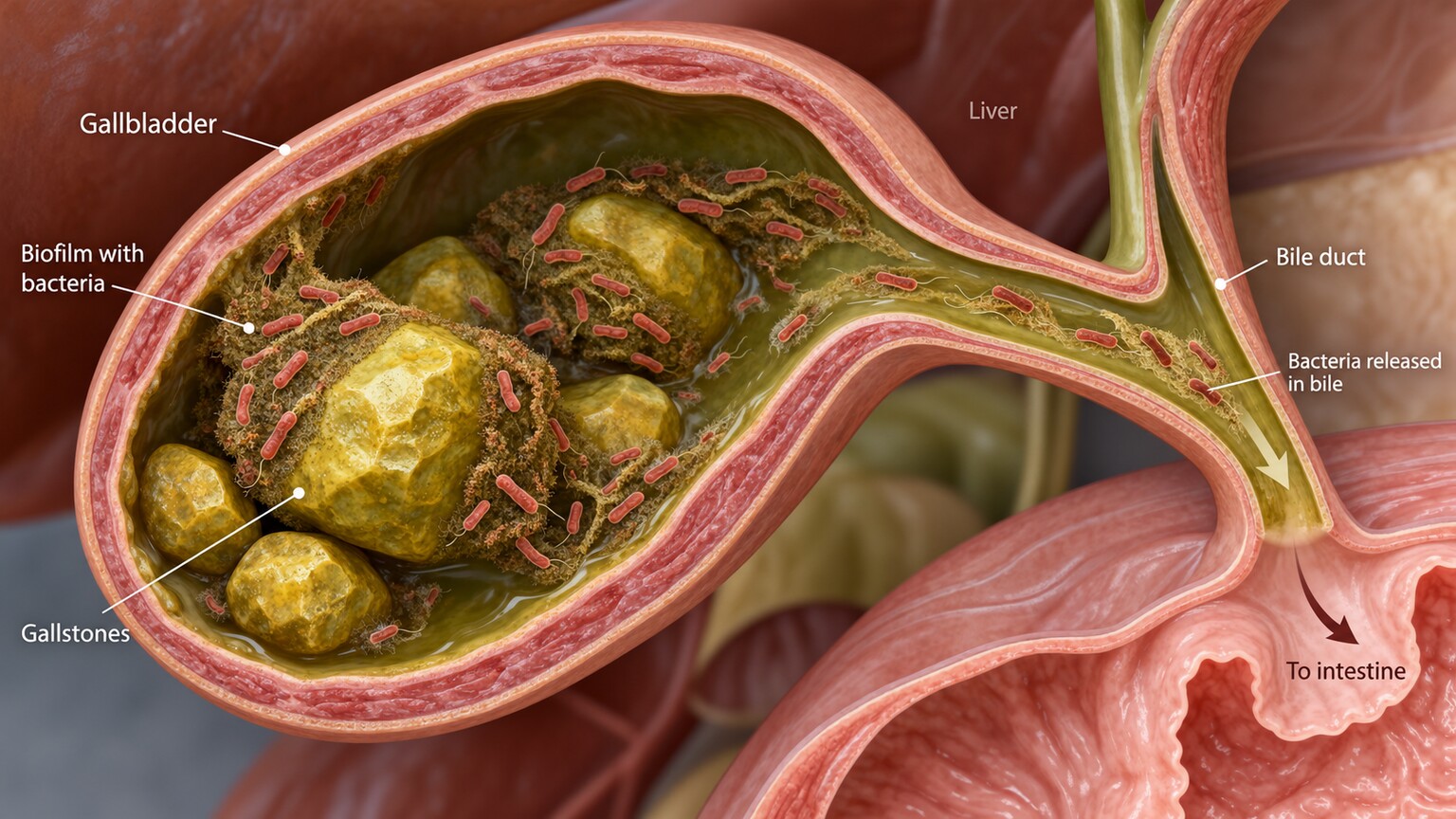
Figure 4. Salmonella typhi and, less commonly, non-typhoidal Salmonella can establish a long-term reservoir inside the gallbladder, particularly when gallstones are present, allowing bacteria to keep shedding into the intestine for months or years after all symptoms have resolved.
The reason clearance testing exists at all, rather than simply waiting a fixed number of days after symptoms end, traces back to a genuinely fascinating and clinically important phenomenon: some people go on to become chronic carriers, continuing to shed a bacterial pathogen in their stool for months, or in a small number of documented cases, indefinitely, despite feeling completely healthy the entire time. The most historically famous example is Mary Mallon, known to history as "Typhoid Mary," an asymptomatic carrier of Salmonella typhi in early 1900s New York who worked as a cook and was ultimately linked to dozens of confirmed typhoid fever cases across several households, despite never experiencing symptoms of the illness herself.
Her case is worth understanding in a bit more detail specifically because it illustrates, in a genuinely concrete historical example, why clearance testing eventually became standard practice rather than an afterthought. Public health investigators at the time traced a cluster of typhoid cases across several wealthy households back to a common factor: the same cook had worked in each home in the months before each outbreak. When she was finally tested, stool cultures confirmed she was shedding large numbers of Salmonella typhi despite having no memory of ever being seriously ill herself, and later investigation strongly suggested she had experienced a mild, unrecognized case of typhoid fever years earlier that had gone on to establish a permanent gallbladder reservoir. She was, in a very real historical sense, the case that first demonstrated at scale that a person could be both entirely healthy-feeling and a serious ongoing public health risk at the same time — a finding that directly shaped how public health authorities have approached bacterial gut infections and clearance requirements ever since.
The biological mechanism behind chronic carriage is now well understood, and it centers on one specific organ: the gallbladder. In a small percentage of people infected with Salmonella typhi, and less commonly with certain non-typhoidal Salmonella strains, the bacteria can establish a persistent colony inside the gallbladder, particularly when gallstones are already present, since the stone surfaces provide an ideal physical structure for bacteria to cling to and form a protective biofilm that shields them from both the immune system and, often, from antibiotics circulating in the bloodstream. From this gallbladder reservoir, bacteria are continuously released into the bile duct and from there into the intestine, appearing in stool in detectable numbers indefinitely, entirely independent of whether the person has any gut symptoms at all.
This biofilm-protection mechanism is worth understanding a little further, since it explains something that otherwise seems contradictory: how can an antibiotic that's genuinely effective against a bacterium in a lab dish repeatedly fail to clear the same bacterium from a living person's body? A biofilm is a structured, cooperative community that bacteria build together, encasing themselves in a self-produced protective layer of sugars and proteins that physically blocks many antibiotics from penetrating deep enough to reach the bacteria sheltering inside. Bacteria living within a biofilm on a gallstone's surface can also shift into a slower-growing, more dormant metabolic state, and many antibiotics work specifically by targeting processes involved in active bacterial growth and division — meaning a dormant, biofilm-protected bacterium can, in effect, simply wait out a course of antibiotics that would easily kill the same species growing freely in a lab culture. This is precisely the combination — physical shielding plus reduced metabolic activity — that makes gallstone-associated chronic carriage so difficult to resolve without directly addressing the physical reservoir itself.
This is precisely why a documented chronic carrier sometimes requires more aggressive intervention than the standard antibiotic course used for an acute infection — in some cases, surgical removal of the gallbladder itself, specifically to eliminate the physical reservoir where the bacteria have taken up long-term residence, since antibiotics alone frequently fail to clear an infection sheltered inside a gallstone biofilm. While full-blown chronic typhoid carriage is now rare in the United States given modern sanitation and food safety standards, understanding this mechanism is exactly what explains why clearance testing exists as a distinct, deliberate step rather than something automatically assumed once diarrhea stops — a small number of people are, this mechanism shows, genuinely capable of feeling completely fine while still being actively contagious.
Age also plays a documented role in how likely someone is to become a carrier in the first place, independent of the gallbladder-specific mechanism described above. Young children, particularly those under five, are statistically more likely than adults to continue shedding Salmonella for an extended period after infection, even without any gallstone involvement at all, likely reflecting a still-developing immune system that takes longer to fully clear the organism from the intestinal tract compared to a mature adult immune response. This is one of several reasons pediatric return-to-daycare guidance sometimes differs somewhat from adult return-to-work guidance for the exact same organism, even though the underlying bacteria and the underlying clearance logic are identical in both cases.
Why Antibiotics Don't Always Solve the Shedding Problem

Figure 5. Because young children have close, frequent contact and inconsistent hand hygiene, daycare and school settings often follow their own specific return-to-care policies after a confirmed bacterial gut infection.
Here's a detail that surprises a lot of people: for non-typhoidal Salmonella specifically, the more common form seen in everyday food poisoning cases, antibiotics don't just fail to help most otherwise-healthy adults recover faster — some research has actually found they can prolong how long a person continues shedding the bacteria in their stool afterward, compared to people who recover through supportive care alone without antibiotics. The proposed mechanism involves how antibiotics disrupt the broader population of normal, protective gut bacteria that would otherwise help crowd out and eventually eliminate the Salmonella naturally, potentially giving the pathogen more room to persist once the antibiotic course ends and its direct suppressive effect wears off.
This is exactly why the decision about whether to treat a mild, uncomplicated Salmonella infection with antibiotics in an otherwise healthy adult is genuinely more nuanced than "positive test, prescribe antibiotics" — a decision covered in more depth in a companion article on this site about when antibiotics are and aren't recommended for a positive stool culture. For someone in a high-risk occupational category who will eventually need clearance testing regardless, this shedding-prolongation effect is a real, practical consideration that a treating doctor has to weigh directly against the benefits antibiotics do provide in more severe or invasive infections.
This creates a genuinely difficult, situation-specific tradeoff for a food handler or healthcare worker with a confirmed, uncomplicated Salmonella infection: treating with antibiotics might, somewhat counterintuitively, delay the very clearance testing that determines when they can safely return to work, while withholding antibiotics accepts a longer period of active symptoms in exchange for a potentially shorter overall shedding period. There's no single universal answer that applies to every case, since the right call depends on how severe the person's symptoms actually are, how urgently they need to return to their role, and whether they fall into a higher-risk group where antibiotics are more clearly warranted regardless of the shedding tradeoff — which is exactly the kind of individualized judgment call a treating physician, ideally one who also understands the specific occupational clearance requirements involved, is positioned to make.
The Notable Exception: C. diff and Why Repeat Testing Is Actively Discouraged
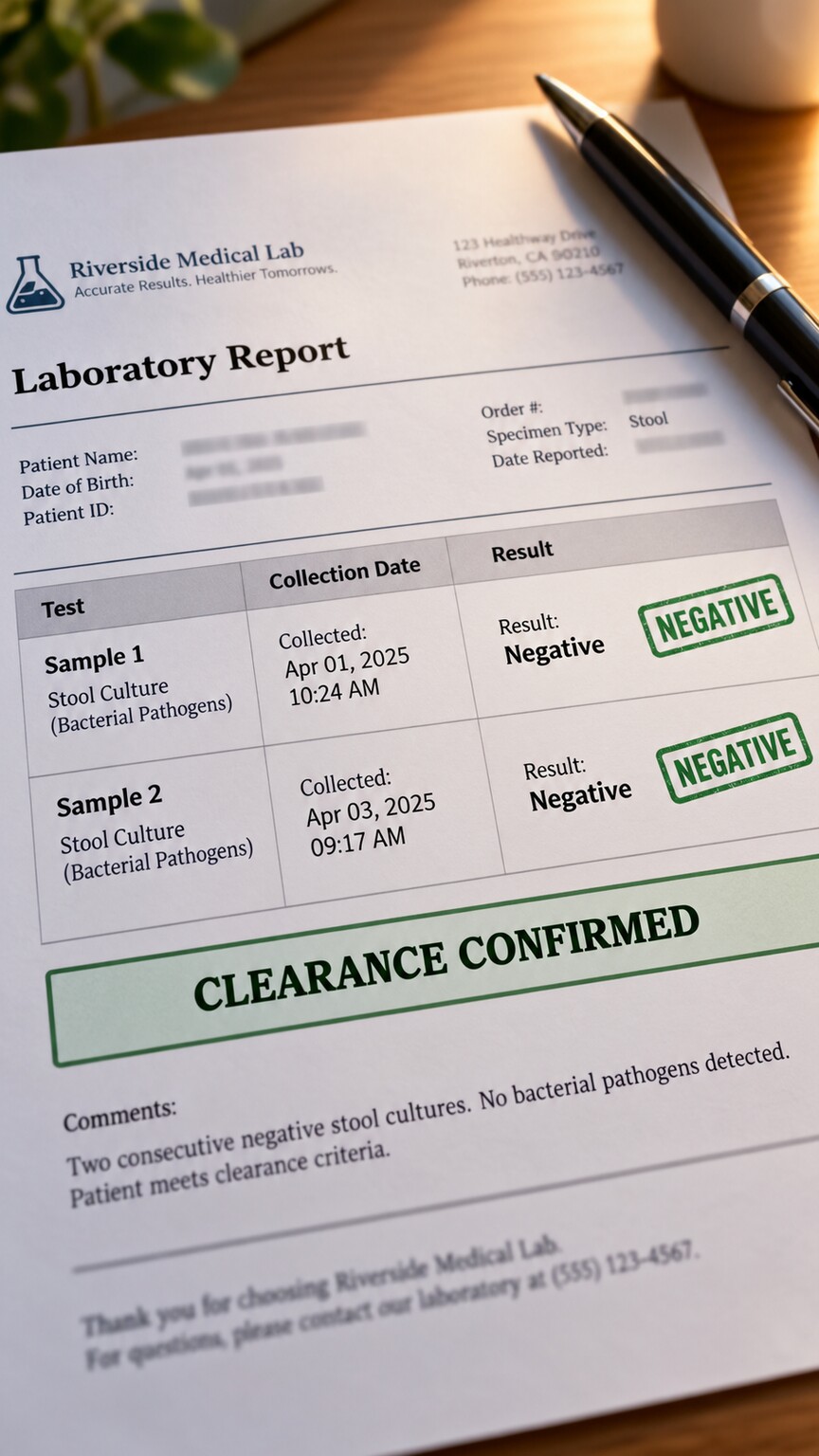
Figure 6. A completed clearance record documents both negative dates explicitly — this specific paperwork is what many food-service and healthcare employers require before someone can return to a high-contact role.
Given everything covered so far, it might seem logical that every bacterial gut infection should get the same repeat-testing treatment. Clostridioides difficile, commonly called C. diff, is the clearest and most instructive exception to that assumption, and current guidelines from infectious disease professional societies are explicit and unambiguous on this specific point: a repeat or "test of cure" stool test after C. diff treatment is not recommended and, in fact, actively discouraged under normal circumstances.
The reason comes down to a specific quirk of how C. diff testing actually works. The standard test detects the toxin genes or the toxin protein itself, but a meaningful percentage of people who have successfully completed treatment and are genuinely symptom-free continue to test positive for weeks or even months afterward, simply because some C. diff spores or residual toxin-producing organisms remain present in the gut at a low, clinically insignificant level without causing any ongoing disease. Retesting a person who feels completely fine risks generating a "false alarm" positive result that leads to unnecessary additional antibiotic treatment — treatment that, ironically, raises the risk of a genuine C. diff relapse by further disrupting the protective gut bacteria that keep the organism in check in the first place. This is precisely why the guidance for C. diff inverts the general pattern covered throughout this article: here, resolution of symptoms alone, without any repeat test at all, is considered the reliable and sufficient marker of successful treatment.
This distinction becomes especially important for someone who has genuinely recurring C. diff symptoms, since it's tempting to reach for a stool test every time a stomach issue shows up after a past episode, given how memorable and unpleasant the original infection often was. Current guidance instead directs doctors to diagnose a genuine C. diff recurrence primarily based on the return of characteristic symptoms — watery diarrhea occurring three or more times in 24 hours, alongside the other clinical features of the original illness — rather than by testing reflexively at the first sign of any loose stool, precisely because a positive test in someone with unrelated, mild digestive symptoms could otherwise be misread as a relapse when it's actually just residual, harmless colonization left over from the earlier treated infection. Reserving testing for a genuine, symptom-driven concern rather than routine reassurance-seeking keeps the test's result meaningful rather than diluting it with a large number of clinically irrelevant positives.
What to Actually Expect If You're Asked for Repeat Samples
If a doctor or a workplace health office tells you that you need clearance testing, the practical process is more straightforward than it might sound. You'll typically be asked to remain off any antibiotics for a specified window (commonly 48 hours) before the first clearance sample is collected, since testing too soon after finishing antibiotics risks a falsely reassuring negative result caused by lingering drug suppression rather than genuine clearance. From there, two samples are collected on separate days, at least 24 hours apart, and both need to come back negative before you're cleared. If either sample comes back positive, the clock effectively resets — you'll typically need to wait and provide another set of samples rather than simply repeating the one that was positive. This reset requirement, frustrating as it can feel in the moment, exists for the same core reason the two-sample standard exists in the first place: a single positive result after an otherwise improving course means shedding is still measurably occurring, and starting the clearance window over again is what keeps the final "cleared" determination genuinely meaningful rather than a technicality achieved by simply outlasting the calendar.
It's worth asking specifically, upfront, whether your particular workplace, school district, or daycare has its own written policy on this, since requirements genuinely do vary by state, by employer, and by the specific pathogen involved, and having that specific written standard in hand — rather than relying on general internet advice, including this article — is what actually determines exactly how many samples you need, how far apart, and who needs to receive the documentation once you're cleared.
It's also worth planning for the practical, non-medical side of this process, since it's easy to underestimate how much coordination two properly spaced samples can actually require. Because each sample needs its own separate collection day, and results often take a day or two to come back from the lab once submitted, the full clearance process from first sample to final documented result frequently stretches to a week or more in practice, even though the biological requirement itself is technically just two days apart. Planning for this realistic timeline in advance — rather than assuming clearance can be finalized the same week symptoms improve — helps avoid the frustration of an unexpectedly extended wait before returning to work or school, and gives whoever is managing your case (an employer's occupational health office, a school nurse, a treating physician) accurate information to relay to everyone else who needs to know when you'll actually be cleared.
A Reason Clearance Matters Beyond Contagion: Post-Infectious Complications

Figure 7. Reactive arthritis — joint inflammation triggered by the immune system's response to a gut infection rather than by the bacteria directly invading the joint — can appear weeks after a Salmonella or Shigella infection has already cleared.
Tracking a confirmed Salmonella or Shigella infection through to documented clearance matters for a second reason beyond preventing spread to other people: both organisms are well-documented triggers of a delayed immune complication called reactive arthritis, in which joint pain and swelling — most often in the knees, ankles, or feet — develop one to four weeks after the original gut infection, sometimes well after diarrhea has completely resolved. Unlike a joint infection where bacteria have physically invaded the joint itself, reactive arthritis is caused by the immune system's own antibodies, originally produced to fight the gut infection, mistakenly cross-reacting with proteins in joint tissue that happen to resemble bacterial proteins closely enough to confuse the immune response.
Having a clearly documented record of which organism caused the original infection, and confirmation of when it actually cleared, gives a treating doctor a considerably clearer picture if joint symptoms show up weeks later — rather than starting from scratch trying to piece together a connection between a seemingly unrelated joint problem and a gut illness the patient may have already mentally filed away as resolved and irrelevant. This is a genuinely underappreciated reason careful record-keeping around a confirmed bacterial gut infection has value that extends well past the acute illness itself, even for someone who was never in a food-handling or childcare role requiring formal clearance testing in the first place.
Reactive arthritis also illustrates something genuinely important about how the same original infection can produce very different second-act problems depending on the organism involved and, to some degree, the individual person's own genetic background. Research has found that people who carry a specific genetic marker called HLA-B27 face a meaningfully higher risk of developing reactive arthritis after a gut infection with Salmonella, Shigella, Campylobacter, or Yersinia than people who don't carry that marker, though carrying it doesn't guarantee the complication will occur and most people who develop reactive arthritis eventually see it resolve on its own within several months, even without ever needing genetic testing to explain why it happened in the first place. This genetic angle is a useful reminder that two people can experience what looks, on paper, like the identical confirmed infection and clearance process, and still go on to have meaningfully different downstream experiences — which is exactly why persistent or new joint symptoms following a gut infection are worth mentioning to a doctor specifically, rather than being dismissed as an unrelated coincidence simply because the original diarrhea has already resolved.
Frequently Asked Questions
If I feel completely fine, why would I still need another stool test?
Feeling better means your symptoms have resolved, but it doesn't guarantee the bacteria are gone from your gut. Certain organisms, especially Salmonella and Shigella, can keep shedding in detectable amounts for days to weeks after symptoms end, which is exactly what clearance testing checks for.
How many negative tests do I actually need?
The most common standard is two consecutive negative stool cultures, collected at least 24 hours apart, with the person off antibiotics for at least 48 hours beforehand — though exact requirements can vary by state, employer, and specific pathogen.
Does everyone with a positive stool culture need clearance testing?
No. It's specifically required for certain reportable organisms like Salmonella and Shigella, and mainly applies to people in higher-risk roles like food handling, healthcare, and childcare, rather than being a universal requirement for every bacterial gut infection.
Why doesn't C. diff require the same repeat testing?
C. diff testing can stay positive for weeks after successful treatment even in people who feel completely fine, since some organisms can remain at low, harmless levels. Retesting risks unnecessary additional antibiotics, which can actually raise the risk of relapse.
Can someone become a long-term carrier without ever having severe symptoms?
Yes. Chronic carriage, most classically associated with Salmonella typhi settling in the gallbladder, can occur even after a relatively mild initial illness, which is part of why documented clearance rather than symptom resolution alone is the standard for certain organisms.
Conclusion
Repeat stool testing after a bacterial gut infection exists to answer a genuinely different question than the original diagnostic test ever did: not "what made me sick," but "am I still capable of making someone else sick." For most otherwise-healthy people with an uncomplicated gut infection, this entire conversation never comes up, since the requirement is specifically targeted at reportable organisms like Salmonella and Shigella and at roles — food handling, healthcare, childcare — where an undetected carrier state carries real consequences for other people.
Understanding the specific, published clearance criteria behind that requirement, and knowing that a completely different, opposite standard applies to an infection like C. diff, turns what can feel like an arbitrary bureaucratic hurdle into what it actually is: a deliberate, evidence-based safeguard built around exactly how these specific bacteria are known to behave after the symptoms they cause have already gone quiet.
If there's one detail worth carrying forward from everything covered here, it's this: the right question after a bacterial gut infection isn't always simply "do I feel better?" For most people, most of the time, that question and the medically relevant one — "has the organism actually left my body?" — happen to line up closely enough that no one ever needs to think about the difference. But for a specific, well-defined set of organisms and a specific, well-defined set of roles, that gap is exactly wide enough to matter, and knowing which category applies to your own situation is what turns a confusing extra lab order into a request that makes complete, logical sense.
Still Not Sure What Your Results Mean?
Upload your labs and get a complete, visual, plain-language interpretation of every biomarker — delivered to your inbox in under 15 minutes.
Get My ReportThis article is for educational purposes only and does not constitute medical advice. Always consult your healthcare provider regarding your specific lab results.