
Understanding How Fecal Occult Blood Testing Works
"Occult" doesn't mean anything mysterious or supernatural here — in medicine, it simply means hidden, present in an amount too small to see with the naked eye. A fecal occult blood test exists precisely because a small amount of bleeding somewhere along your digestive tract can leave no visible trace at all in the toilet bowl, and yet be an important early clue about your health. But how does a lab, or a small card you use at home, actually detect blood that you yourself cannot see? The honest answer is that there are two genuinely different technologies hiding under this one umbrella term, and they work in almost entirely different ways: an older chemical test that triggers a color-changing reaction, and a newer immunological test that uses lab-made antibodies to specifically recognize human blood. Understanding the actual mechanism behind whichever version you were given changes how you should think about your result, what you need to do to prepare for it, and why your doctor may have chosen one version over the other. This article walks through exactly what's happening, step by step, inside each of these two tests.

Figure 1. The heme portion of hemoglobin mimics an enzyme called peroxidase, catalyzing a reaction between hydrogen peroxide and guaiac resin that produces a visible blue color — this pseudo-peroxidase activity is the entire chemical basis of the older guaiac-based test.
Why "Hidden" Blood Even Needs a Special Test in the First Place
It's worth pausing on why this kind of test needs to exist at all. When bleeding in the digestive tract is significant enough, it's visible without any test whatsoever — bright red blood in the stool, or a dark, tarry, unmistakably abnormal stool color, are both signs serious enough that most people would call a doctor immediately. But a meaningful amount of clinically relevant bleeding, particularly from an early-stage polyp or a small area of irritated tissue, happens at a volume far too small to visibly discolor the stool at all — often just a few milliliters spread across an entire bowel movement, invisible to the eye but still detectable at the molecular level if you have the right tool to look for it.
This gap between "bleeding significant enough to matter clinically" and "bleeding significant enough to see" is exactly the space fecal occult blood testing was invented to fill. Without a test capable of detecting blood at concentrations far below the threshold of visibility, this category of early, low-volume bleeding would go completely unnoticed until it eventually grew large enough to become visible on its own — often at a considerably more advanced and harder-to-treat stage. Both mechanisms described in this article exist specifically to close that detection gap, just through two very different chemical and biological routes.
The Older Technology: The Guaiac Chemical Test (gFOBT)
The original version of this test, still used in some settings today, is called a guaiac fecal occult blood test, or gFOBT. Its mechanism has nothing to do with antibodies or biology recognizing itself — it's a pure chemistry trick that exploits a property of the iron-containing part of blood, called heme. Heme, it turns out, behaves a lot like a natural enzyme called peroxidase: it can catalyze, or speed up, a chemical reaction between hydrogen peroxide and a plant-derived compound called guaiac resin, which is extracted from the wood of the guaiacum tree. When that reaction happens, the guaiac resin, which is normally colorless on the test card, oxidizes and turns a distinct blue color.
In practice, this means a gFOBT card works like this: a small stool sample is smeared onto a paper card that's already been treated with guaiac resin, and then, at the lab (or sometimes at home with a home version), a drop of hydrogen peroxide developer solution is applied directly on top. If the sample contains even a small amount of blood, the heme in that blood catalyzes the reaction, and the paper turns blue within about 30 to 60 seconds. No blue color means the reaction didn't happen, which suggests no significant blood was present in that sample.
Curious what the rest of your digestive or lab panel is telling you? Upload your results and get a complete, plain-language breakdown in under 15 minutes.
Analyze My ResultsWhy the Guaiac Test Requires Dietary Restrictions Beforehand
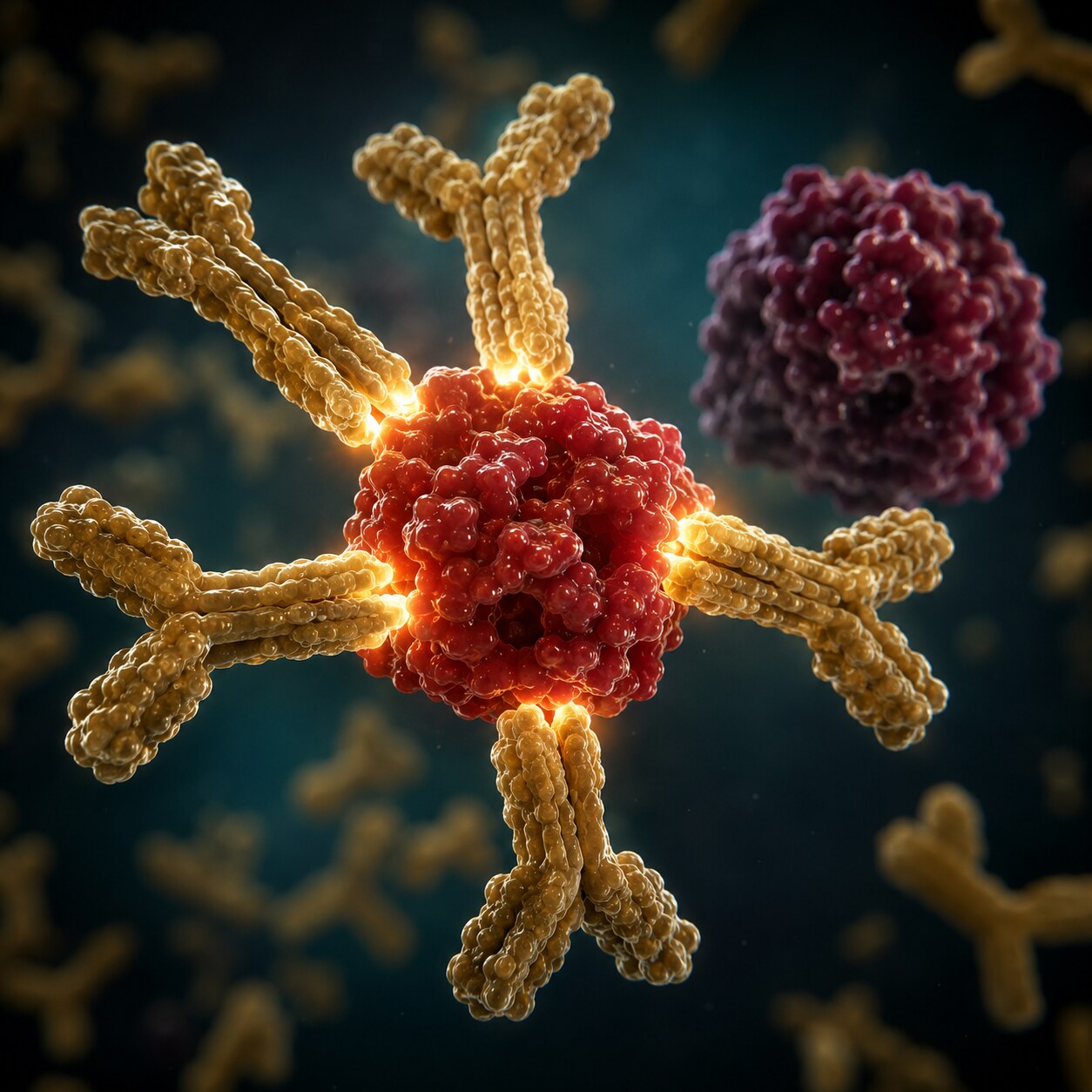
Figure 2. The antibodies used in a fecal immunochemical test are engineered to bind specifically to human globin protein, physically ignoring the animal hemoglobin found in dietary meat — this is the mechanical reason FIT testing doesn't require avoiding red meat beforehand.
This is the direct, mechanical consequence of how the guaiac reaction actually works: because the test's peroxidase-mimicking reaction responds to heme in general, not specifically to human heme, it can't tell the difference between blood from a bleed inside your own digestive tract and heme-containing compounds you simply ate. Red meat contains substantial amounts of animal heme, and eating it in the days before a gFOBT can trigger a false positive purely through this chemical overlap, with no actual bleeding involved at all. This is exactly why doctors ask patients to avoid red meat, and often certain vegetables with naturally high peroxidase activity of their own (like broccoli, cauliflower, radishes, and turnips), for about three days before a guaiac test.
Vitamin C creates the opposite problem: because it's a strong antioxidant, it can interfere with and block the very oxidation reaction the test depends on, potentially causing a false negative even when real blood is present in the sample. This is why high-dose vitamin C supplements, and sometimes citrus fruit in large quantities, are also restricted beforehand. None of these dietary restrictions exist because of anything to do with digestion or absorption — they exist purely because of this one specific chemical reaction's inability to distinguish its intended target (human blood heme) from chemically similar molecules that simply happen to share the same reactive iron structure.
The Newer Technology: The Fecal Immunochemical Test (FIT)
The fecal immunochemical test, or FIT, largely replaced the older guaiac test for routine colorectal cancer screening because it solves the exact false-positive problem described above, by working through a completely different mechanism: instead of a chemical reaction, it uses antibodies. Antibodies are Y-shaped proteins that the immune system normally produces to recognize and bind to one very specific target, and the antibodies manufactured for a FIT kit are engineered in a lab specifically to recognize human globin, the protein component of human hemoglobin, and essentially nothing else.
Because these antibodies are built to bind only to human globin's exact molecular shape, they simply don't react to the hemoglobin found in beef, pork, or fish, since animal hemoglobin has a different enough protein structure that the antibody doesn't recognize it as a match. This is the direct mechanical reason FIT testing doesn't require any dietary restrictions beforehand at all — there's no chemical overlap to avoid, because the test isn't reacting to heme chemistry in the first place, it's checking for one specific human protein shape.
This antibody-based approach is also considerably more sensitive at low blood concentrations than the guaiac chemical reaction, since antibody binding is an extremely specific, high-affinity interaction that can pick up on very small quantities of the target protein, whereas the guaiac reaction depends on there being enough heme present to meaningfully speed up the peroxide-guaiac reaction within the short reading window. This sensitivity difference is a major reason most national colorectal cancer screening guidelines have shifted toward recommending FIT over gFOBT as the preferred stool-based screening option over the past decade.

Figure 3. A FIT collection kit typically consists of a small vial pre-filled with a liquid buffer solution and a probe built into its cap, designed to gather a consistent, small amount of stool sample for the antibody reaction to be run against at the lab.
In practical terms, this design difference is also why FIT kits tend to feel simpler to use at home than older guaiac cards. Rather than smearing a sample onto a paper card window, most FIT kits use a small probe attached to the vial's cap, which is dragged across the surface of the stool sample to collect a small, standardized amount before being twisted back into the buffer-filled vial and sealed. This consistency in sample volume matters mechanically, since the automated analyzer described later in this article measures a specific concentration of hemoglobin per milliliter of buffer — too little or too much stool mixed into that buffer would skew the resulting number in either direction, independent of how much blood was actually present.
Why FIT Only Detects Bleeding From Lower in the Digestive Tract
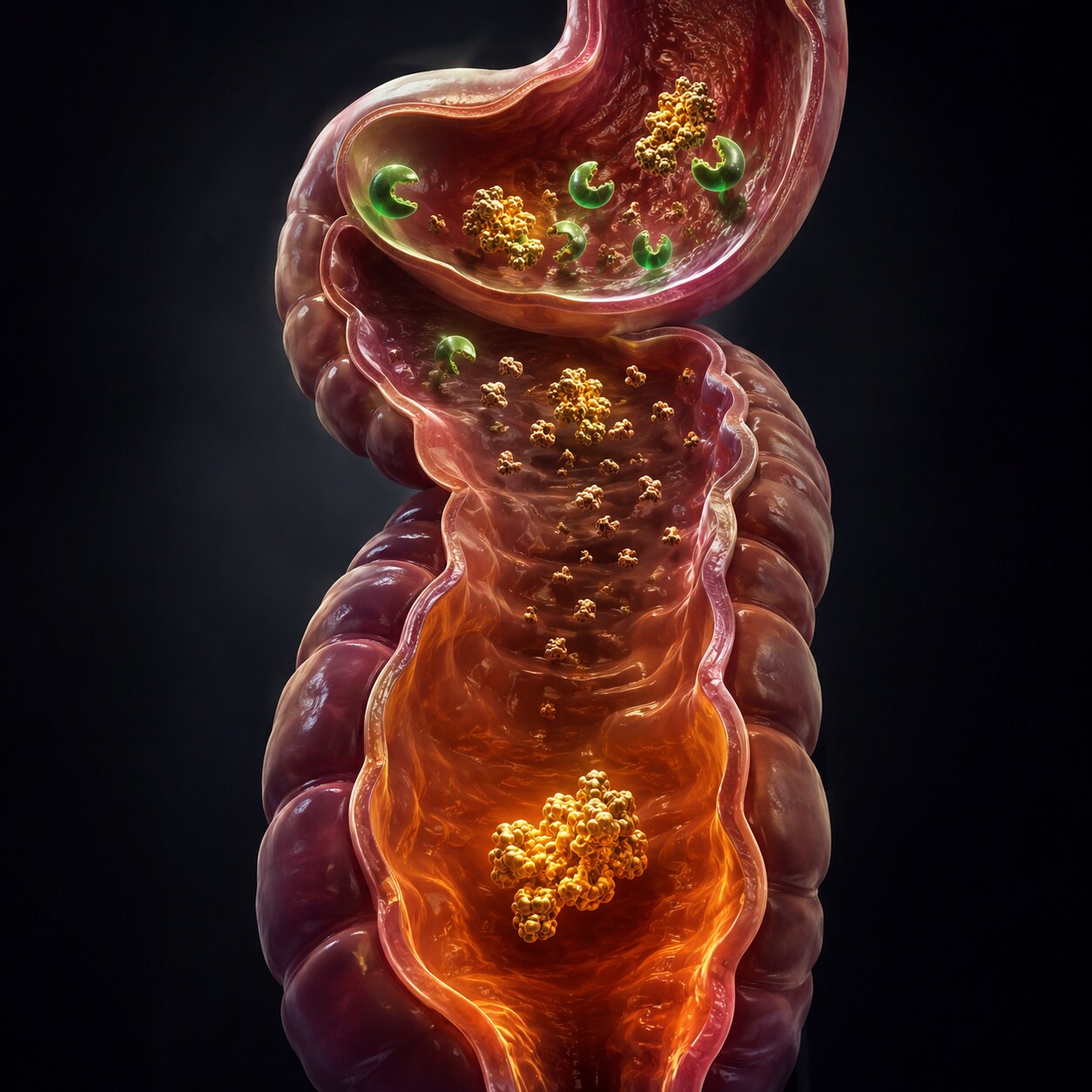
Figure 4. Digestive enzymes in the stomach and small intestine break globin protein down into fragments the FIT antibody can no longer recognize, which is why the test is mechanically limited to detecting bleeding from the lower colon and rectum.
This same antibody-specificity mechanism has an important side effect that's worth understanding directly: FIT is considerably better at detecting bleeding from the lower part of your digestive tract, particularly the colon and rectum, than bleeding from higher up, like the stomach or the beginning of the small intestine. The reason comes down to simple digestive physics. As blood travels down through your digestive system from a bleed higher up, it passes through a long stretch of powerful digestive enzymes designed specifically to break proteins apart into smaller pieces for absorption. By the time that blood reaches the far end of the tract, the globin protein has often been broken down into fragments too small and structurally different for the FIT antibody to still recognize as a match.
Blood entering the stool from a source closer to the rectum or colon, on the other hand, hasn't traveled through nearly as much of this enzymatic breakdown, so its globin protein largely remains intact enough for the antibody to bind to it successfully. This isn't a flaw in the test so much as a built-in mechanical characteristic of it — it's part of why FIT is specifically well-suited to colorectal cancer screening, where the bleeding of interest typically originates from the colon or rectum itself, and why an entirely different test (like an upper endoscopy) is used when a doctor specifically suspects bleeding higher up in the digestive tract.
What Actually Happens to Your Sample at the Lab
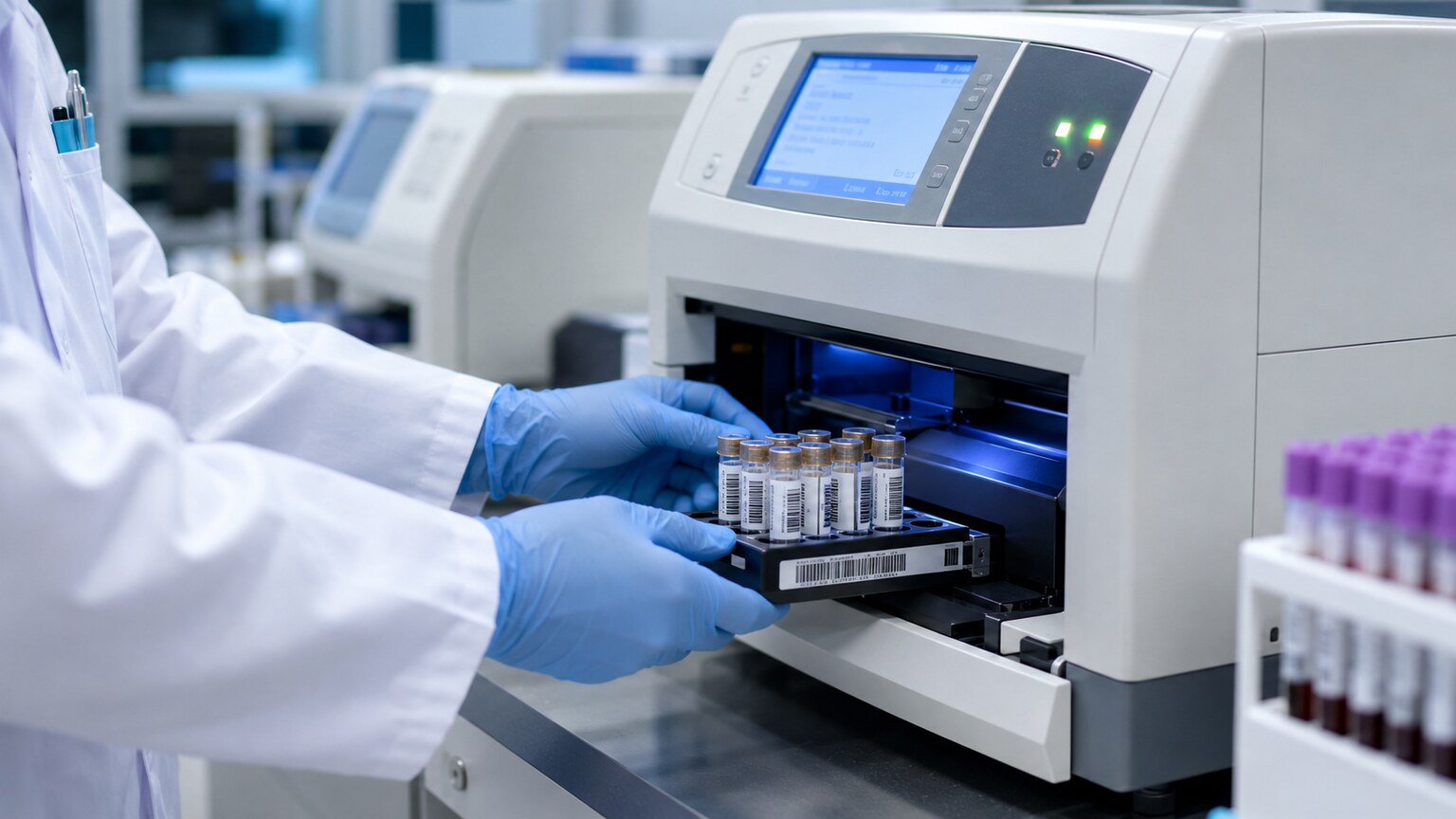
Figure 5. An automated analyzer measures how cloudy the buffer solution becomes as antibodies clump together with any human globin present, converting that turbidity reading into a specific hemoglobin concentration rather than a simple positive or negative result.
Once your sample arrives at the lab, what happens next depends on which version of the test was used. For a FIT sample, the small collection device is loaded directly into an automated analyzer, exactly like the one shown above. That machine mixes the sample with the antibody reagent and then measures the resulting reaction using a method called turbidimetric immunoassay, which detects how much the solution's cloudiness changes as the antibodies clump together with any human globin present, then converts that measurement into a specific concentration value rather than a simple yes-or-no color change. This is why many modern FIT results come back as an actual number (often reported in nanograms of hemoglobin per milliliter of buffer) rather than a flat positive or negative, giving your doctor a sense of how much blood was actually detected, not just whether any was present at all.
A guaiac card, by contrast, is read visually rather than by machine in most settings — a lab technician (or you, for an at-home kit) simply applies the developer solution and watches for the blue color to appear within the specified window of time, making the result inherently a straightforward positive-or-negative call rather than a graded number.
The turnaround time between these two approaches also differs meaningfully in practice. A guaiac card can typically be read within a minute of applying the developer solution, making it feasible to interpret in a doctor's office during the same visit a sample is submitted, in some settings. A FIT sample, because it requires the automated analyzer and its specific reagent processing, is almost always sent out to a centralized lab and takes longer to return a result, though the tradeoff is the considerably higher sensitivity and specificity described earlier in this article.
Why You Collect Samples Over Multiple Days

Figure 6. Bleeding from a polyp or early lesion is frequently intermittent rather than constant, which is why both gFOBT and FIT kits typically require samples from two to three separate bowel movements rather than just one.
Neither test mechanism described above is capable of detecting a source of bleeding that isn't actively bleeding at the exact moment a sample happens to be collected. Polyps and early cancerous lesions frequently bleed intermittently rather than continuously — a polyp might bleed a small amount one day and not at all the next several days, purely due to its own irregular surface and blood supply. If your sample was only ever collected on one of the "quiet" days, a real, clinically significant source of bleeding could be entirely missed, not because the test's underlying chemistry or antibody mechanism failed, but simply because there was nothing present in that particular sample for either mechanism to detect.
This is the direct, practical reason most FIT and gFOBT kits ask for samples from two to three separate bowel movements rather than a single one: it meaningfully increases the odds that at least one of the samples happens to be collected during an active bleeding episode, improving the overall sensitivity of the screening process without changing anything about how either individual test itself works.
Sensitivity, Specificity, and Why This Test Is Used for Screening, Not Diagnosis
Because of everything described above — the possibility of intermittent bleeding, the chemical overlap issues unique to gFOBT, and the anatomical detection limits unique to FIT — neither test mechanism is designed to serve as a final, definitive diagnosis on its own. Both are screening tools, meaning their entire purpose is to flag who should go on to receive a more thorough, direct examination (almost always a colonoscopy), not to confirm or rule out a specific diagnosis by themselves. A positive result means blood was mechanically detected in the sample; it does not, on its own, specify where that blood came from or why, which is exactly why a colonoscopy — a direct visual and tissue-level examination of the colon itself — is the necessary next step after any positive result, regardless of which version of the test was used.
This distinction matters because it shapes how much weight a single result should carry either way. A negative result, particularly from a single sample, reduces the likelihood of significant bleeding at that moment but doesn't mechanically rule it out entirely, given the intermittent-bleeding limitation described above — this is precisely why regular, repeated screening over time, rather than a single one-off test, is what actually drives down colorectal cancer mortality at a population level, not any single test result in isolation.
This is also why the specificity of a test — how good it is at correctly returning a negative result when no clinically significant bleeding is actually present — matters just as much as its sensitivity. A test that flags too many false positives sends a large number of people who don't actually need one into an invasive follow-up colonoscopy, with all the cost, discomfort, and small procedural risk that involves, while a test that misses too many real cases through poor sensitivity defeats the entire purpose of screening in the first place. The specific chemical and antibody mechanisms described throughout this article are, in a very real sense, the product of decades of effort to balance exactly this tradeoff as well as current technology allows.
How a Faint Blue vs. a Strong Blue Reaction Is Interpreted on a Guaiac Card
One detail that often confuses people who've had a guaiac test is that the blue color doesn't always appear the same way — sometimes it's a faint, barely-there tint, and other times it's a deep, unmistakable blue that spreads quickly across the entire sample window. Because the underlying mechanism is a chemical reaction whose speed and intensity scale with how much heme is actually present to catalyze it, the strength and speed of the color change does carry some rough information: a faster, darker reaction generally indicates a larger quantity of blood in the sample than a slow, faint one. That said, gFOBT was designed and validated as a qualitative test — meaning its official interpretation is simply positive or negative — so most labs and clinicians treat any degree of blue within the reading window as a positive result requiring the same follow-up, rather than trying to grade the intensity into a meaningful numeric scale the way a FIT result can be.
This qualitative nature is actually one of gFOBT's real limitations compared to FIT's quantitative output described earlier. Two positive gFOBT results — one from a small, superficial source of bleeding and one from a much larger, more concerning source — can look essentially identical on the card, both simply read as "positive," whereas two FIT results with meaningfully different hemoglobin concentrations give a clinician additional information to work with when deciding how urgently to pursue follow-up testing.
Why Hemorrhoids Can Also Trigger a Positive Result Through the Same Mechanism
Because both test mechanisms are built to detect the physical presence of blood (heme chemistry for gFOBT, human globin protein for FIT) rather than to identify its clinical cause, neither one can mechanically distinguish blood from a colon polyp or early cancer from blood contributed by a much more common and far less serious source: hemorrhoids, anal fissures, or other benign sources of minor lower-GI bleeding. If a hemorrhoid bleeds even a small amount as stool passes by it on its way out, that blood becomes mixed into the same stool sample being tested, and both mechanisms described in this article will register it exactly the same way they'd register blood from a polyp deeper in the colon.
This is precisely why a positive occult blood result, from either test, is never treated as confirmation of a serious diagnosis on its own — it's a nonspecific finding, mechanically incapable of telling the difference between a benign, common source and a source that genuinely needs further investigation. The only way to make that distinction is the direct visual examination a colonoscopy provides, which is exactly why that follow-up step exists regardless of which test flagged the initial positive result.
Why Doctors Choose One Test Over the Other
Given that FIT is generally more sensitive, doesn't require dietary restrictions, and produces a quantitative result, a reasonable question is why the older guaiac test is still used in any setting at all. The answer largely comes down to cost, infrastructure, and speed rather than any advantage in detection mechanism. A guaiac card requires only a bottle of hydrogen peroxide developer solution and a trained eye to read the color change, making it inexpensive and usable in settings without access to an automated immunoassay analyzer, including some primary care offices and lower-resource clinical settings worldwide. FIT, by contrast, requires the specific reagents and automated analyzer described earlier, along with the lab infrastructure to run and interpret that equipment, which represents a real cost and logistics barrier in some settings even though it's now the preferred, guideline-recommended option in most well-resourced healthcare systems.
In practice, most major colorectal cancer screening guidelines in the United States and many other countries now specifically recommend annual FIT testing over gFOBT for average-risk adults, precisely because of the sensitivity, specificity, and dietary-restriction advantages the antibody-based mechanism provides. If you're specifically choosing between the two, or wondering why your doctor's office uses one over the other, this underlying difference in mechanism, cost, and required infrastructure is almost always the real explanation.
Large-scale public screening programs, including several national colorectal cancer screening initiatives outside the United States, have also specifically favored FIT for a related, more logistical reason: because it requires only a single stool sample rather than the two or three samples traditionally recommended for gFOBT, it tends to produce meaningfully higher participation rates in population-wide screening efforts, simply because a single-sample kit is less burdensome for people to actually complete and mail back than a multi-day collection process, even though the underlying detection mechanism is what ultimately determines its accuracy.
What Other Substances Can Interfere With Each Mechanism
Beyond the red meat, certain vegetables, and vitamin C already discussed for gFOBT, a handful of other substances are worth knowing about because they interact with these test mechanisms in ways that aren't always obvious. Nonsteroidal anti-inflammatory drugs, including common over-the-counter pain relievers, don't interfere with either test's underlying chemistry or antibody-binding mechanism directly, but they're still worth mentioning to your doctor before testing, since regular use of these medications can itself cause small amounts of genuine gastrointestinal bleeding as a side effect — meaning a positive result in someone taking these regularly may reflect medication-related irritation rather than a polyp or tumor, information that's relevant context for interpreting the result even though it doesn't change how either test mechanism physically works.
Iron supplements are a substance worth clarifying specifically, since they're a common source of confusion: oral iron supplements can turn stool a dark, greenish-black color that some people mistake for blood, but the iron in a swallowed supplement pill is not in the heme-bound form that either test mechanism actually detects, so iron supplementation alone does not cause a true positive result on either test — the dark stool color and a genuine positive occult blood result are two entirely separate phenomena that happen to sometimes look similar to an untrained eye, but stem from completely different underlying causes.
Menstrual blood is another practical consideration specific to people who menstruate: because stool samples are collected from the toilet or a collection device that may not perfectly separate from other bodily fluids in the bathroom, contamination from menstrual blood can trigger a positive result on either test through the exact same detection mechanism that would flag genuine gastrointestinal blood, which is why most testing instructions specifically advise avoiding stool collection during a menstrual period, or taking extra care to avoid contamination if testing can't be postponed.
What This Test Cannot Tell You
It's worth being explicit about the limits of both mechanisms described throughout this article, since a lot of confusion and unnecessary worry comes from expecting more precision from this test than either version was ever designed to provide. Neither test can tell you the exact volume of blood present, beyond the rough intensity signal on a guaiac card or the specific concentration number on a FIT result. Neither test can identify the specific cause of bleeding — polyp, cancer, hemorrhoid, fissure, inflammatory condition, or something else entirely all produce the same basic detection event. And neither test, run as a single sample, can rule out bleeding that simply wasn't happening at the moment that particular sample was collected, given the intermittent-bleeding limitation discussed earlier.
What both tests can do, reliably and by design, is flag the presence of blood well before it would ever become visible to the naked eye, giving you and your doctor a meaningful head start on investigating a potential problem long before it reached a more advanced, harder-to-treat stage. That head start, not a definitive diagnosis, is the actual clinical value both of these test mechanisms are built to provide, and it's worth holding onto that framing specifically if a positive result ever feels alarming on its own: it is an invitation to look further, not a verdict.
Frequently Asked Questions
Why does my test require avoiding red meat, but my neighbor's test didn't?
You most likely received the older guaiac-based test (gFOBT), which reacts to heme chemistry in general and can't distinguish human blood from animal heme in red meat. Your neighbor likely received the newer FIT test, which uses antibodies specific to human globin protein and doesn't react to dietary meat at all.
Can this test tell me exactly where the bleeding is coming from?
No. Both test mechanisms only detect the presence of blood (or, for FIT, specifically human blood) in the sample — neither one can identify the exact source or location. That's determined by a follow-up procedure, typically a colonoscopy, which directly visualizes the colon.
Why did I need to test more than one sample?
Sources of bleeding like polyps often bleed intermittently rather than constantly. Testing samples from two or three separate bowel movements meaningfully increases the chance that at least one sample is collected while active bleeding happens to be present.
Is a numeric FIT result more informative than a simple positive or negative?
It can be. Because automated FIT analyzers measure the actual concentration of detected human hemoglobin rather than giving a flat yes-or-no reading, some providers use the specific number, and how it changes on repeat testing, as additional context — though a positive result at any concentration above the lab's cutoff is still generally followed up with a colonoscopy.
Could hemorrhoids alone cause a positive result, with nothing else wrong?
Yes. Both test mechanisms detect the physical presence of blood regardless of its source, and a bleeding hemorrhoid or anal fissure can trigger a positive result exactly the same way a polyp or early cancer would. This is exactly why a positive result is always followed up with a colonoscopy rather than treated as a diagnosis on its own.
If I got a faint blue reaction on a guaiac card, does that mean the bleeding is minor?
Not necessarily in a clinically reliable way. While reaction intensity does roughly correlate with how much heme was present in that specific sample, gFOBT was validated as a qualitative positive-or-negative test, not a graded scale, so any visible blue color within the reading window is generally treated the same way regardless of how faint it appeared.
Why does my doctor still want a colonoscopy if my FIT result was positive?
Because the test's antibody mechanism can only confirm that human blood was present in the sample — it can't identify where that blood came from or why. A colonoscopy provides the direct visual examination needed to actually locate and evaluate the source, which is why it's the standard next step after any positive result.
How These Mechanisms Fit Into a Broader Screening Schedule
Understanding the mechanism behind whichever test you've had also helps make sense of why it's typically repeated on a schedule rather than done once and forgotten. Because both mechanisms are only capable of detecting blood that happens to be present in the specific sample tested, and because early lesions bleed intermittently as discussed earlier, a single negative result at one point in time is a snapshot, not a guarantee. Annual FIT testing, the schedule most commonly recommended for average-risk adults in current guidelines, exists specifically to compensate for this single-sample limitation by giving an intermittently bleeding lesion many additional opportunities, across separate years, to eventually coincide with a testing window.
This is also why occult blood testing is generally described as one option within a broader menu of colorectal cancer screening strategies, rather than a complete, standalone solution by itself. Other options, like a colonoscopy performed on its own fixed schedule (typically every ten years for average-risk adults) or a stool DNA test that looks for genetic mutations shed by tumor cells in addition to blood, work through entirely different mechanisms with their own tradeoffs in sensitivity, invasiveness, cost, and how frequently they need to be repeated. None of these approaches is universally "best" independent of a person's individual risk factors and preferences, which is exactly why this decision is typically made in conversation with a doctor familiar with your personal and family history, rather than by default.
Knowing the actual mechanism behind your specific test — whether it's the older peroxidase-based color reaction or the newer antibody-based immunoassay — puts you in a considerably better position to have that conversation. It lets you understand what your specific result can and can't tell you, why certain preparation steps mattered (or didn't), and why a follow-up procedure is being recommended even when the test itself came back negative or positive without further explanation from whoever ordered it.
It's also a genuinely useful thing to know the next time you're handed either kind of test with only a brief verbal instruction and a small pamphlet — understanding that you're either avoiding a specific chemical overlap (gFOBT) or simply providing a clean, standardized sample for an antibody reaction (FIT) makes the whole process feel considerably less like a mysterious ritual and considerably more like exactly what it is: two different, well-understood pieces of chemistry and biology, each doing a specific, limited job extremely well.
Conclusion
A fecal occult blood test isn't one single technology — it's two genuinely different mechanisms that happen to share a name. The older guaiac test relies on a chemical reaction where blood's iron-containing heme mimics an enzyme, triggering a visible blue color change that unfortunately can't distinguish human blood from dietary animal heme, which is exactly why it requires avoiding red meat and certain vegetables beforehand. The newer FIT test sidesteps that entire problem using lab-made antibodies engineered to recognize only human globin protein, at the cost of being less sensitive to bleeding from higher up in the digestive tract, where that same protein has already been broken down by digestion before reaching the stool. Understanding which mechanism produced your particular result — and what that mechanism can and cannot actually detect — is the clearest way to understand what a positive or negative result genuinely does and doesn't tell you, and why your doctor will very likely still recommend a colonoscopy regardless of which way your result came back.
Still Not Sure What Your Results Mean?
Upload your labs and get a complete, visual, plain-language interpretation of every biomarker — delivered to your inbox in under 15 minutes.
Get My ReportThis article is for educational purposes only and does not constitute medical advice. Always consult your healthcare provider regarding your specific lab results.