
What Does a Positive Stool Ova and Parasite Test Mean?
A positive stool ova and parasite test — often shortened to "O&P" on a lab report — means a trained laboratory professional examined your stool sample under a microscope and found direct, visible evidence of a parasitic organism: an egg (ovum), a larva, or the actual body of a protozoan parasite in one of its life-cycle forms. What that positive result actually means for your health, though, depends enormously on exactly which organism was identified, since this single test can detect dozens of genuinely different parasites, ranging from ones that routinely cause no symptoms at all and don't need treatment, to ones capable of causing serious, debilitating illness if left unaddressed. Unlike many other lab tests where "positive" and "negative" map fairly consistently onto "problem" and "no problem," a positive O&P result is really just the starting point of a more specific conversation about which organism was found, whether it's known to cause disease, and whether your particular situation calls for treatment. This article walks through what the test actually looks for and how it's performed, why a positive result isn't one uniform finding, the most commonly identified organisms and what they generally mean, the genuinely different category represented by worm infections, how a parasite's life cycle affects testing itself, how this traditional method compares to newer molecular testing, and what typically happens once a positive result is in hand.
What the Ova and Parasite Test Actually Looks For

Figure 1. Laboratory technologists examine specially prepared stool slides under a microscope, searching for parasite eggs, larvae, and protozoan life-cycle forms too small to see with the naked eye.
The ova and parasite exam is one of the oldest and still most widely used methods for diagnosing intestinal parasitic infections, and despite newer molecular tests entering clinical use, it remains a standard first-line test precisely because it can detect such a broad range of organisms in a single examination. The name itself describes exactly what's being searched for: "ova" refers to the eggs laid by parasitic worms, while "parasite" more broadly covers the actual bodies of protozoa (single-celled parasites) in whichever life-cycle stage happens to be present in the sample, along with visible larvae shed by certain worm species. To perform the test, a laboratory technologist prepares the stool sample using specific staining and concentration techniques designed to make these structures more visible, then systematically scans the prepared slide under a microscope at increasing magnification, looking for the distinctive size, shape, and internal structural features that allow trained eyes to identify and distinguish one organism from another.
This process is a genuinely skilled task, since many parasite eggs and protozoan forms are strikingly small — often measured in just tens of micrometers — and some organisms bear a passing resemblance to others, making correct identification dependent on real training and experience rather than simple pattern-matching. A genuinely positive result specifically and precisely means the technologist identified real structures matching the well-established known appearance of a particular organism clearly and confidently enough to report it by name, which is precisely why the report you receive doesn't just say "positive" — it names the specific organism (or organisms, since more than one can sometimes be found in the same sample) that was actually seen, information that turns out to matter enormously for everything that follows.
How the Test Is Actually Performed, Start to Finish
Understanding the mechanics of how an O&P exam actually gets performed helps explain both why it's so effective at detecting such a wide range of organisms and why certain preparation instructions matter as much as they do. The process typically begins with the collection of a fresh stool sample, placed into a special preservative-containing container designed to keep any parasites present in a stable, identifiable state until the sample reaches the laboratory, since many protozoan forms degrade or change shape relatively quickly once outside the body, potentially becoming unrecognizable if left untreated for too long before analysis. Once received, the laboratory typically performs several distinct preparation steps on the same sample: a direct wet mount examination, allowing very fresh samples to be viewed with minimal processing; a concentration technique, which uses centrifugation and specific chemical reagents to separate and concentrate any parasitic eggs or cysts present, making them easier to spot even when only present in small numbers; and a permanent stained smear, where the sample is fixed onto a slide and stained with dyes that make internal structural details of protozoa far more visible under high magnification.
Each of these three preparation methods has particular strengths, catching things the others might miss, which is exactly why a complete O&P exam typically involves all three performed together on the same sample rather than relying on just one technique alone. The technologist examining the final slides works through a systematic scanning pattern across multiple fields of view at different magnifications, methodically searching for anything matching the known appearance of dozens of different possible organisms — a genuinely careful process that takes real time and sustained concentration, and one significant reason results aren't always available on the very same day the sample was originally submitted. This thoroughness is part of why the O&P exam, despite being a decades-old technique, remains clinically valuable even as newer molecular tests have become available, since it can detect organisms a narrower, more targeted molecular panel might not have been designed to specifically look for in the first place.
Why a "Positive" Result Isn't a Single, Uniform Finding
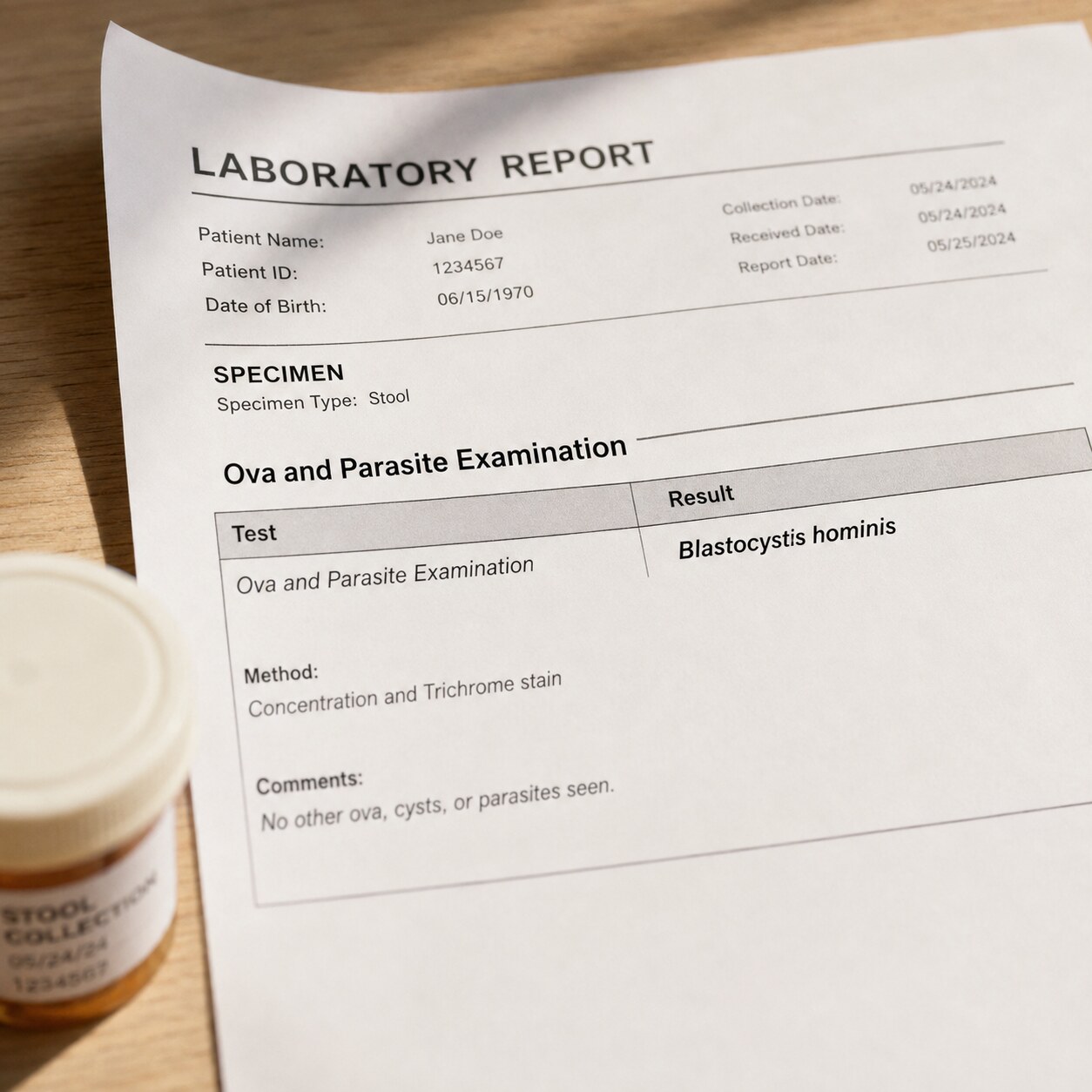
Figure 2. Unlike a simple positive-or-negative result, an ova and parasite report always names the exact organism identified, since that specific identity is what determines clinical significance.
Dozens of different parasitic organisms are capable of infecting the human intestinal tract, and the ova and parasite exam is designed to detect essentially any of them that happen to be present and shedding a detectable form at the time of collection. These organisms fall into two broad biological categories that behave quite differently: helminths, the multicellular worms (including roundworms, tapeworms, and flukes) that typically reproduce by laying eggs your body then passes in stool, and protozoa, single-celled organisms that exist in either an active, feeding form called a trophozoite or a dormant, protective form called a cyst, depending on conditions inside the gut at that moment.
Critically, not every organism this test can detect is actually harmful. Several protozoa considered "commensal" — meaning they live in the human gut without causing disease in the overwhelming majority of people — are routinely identified on O&P exams, and finding one of these organisms is generally considered incidental rather than diagnostically significant. This is the single most important concept for understanding a positive result correctly: the word "positive" tells you an organism was found, but it says nothing on its own about whether that organism is one known to cause illness, which is exactly why the specific name reported matters so much more than the positive-or-negative status alone. A single stool sample can occasionally reveal more than one organism at once, since it's entirely possible to be simultaneously colonized or infected with multiple distinct parasites, particularly for people with certain shared exposure risks — in these cases, the report will list each organism identified separately, and each one needs to be considered individually using the same framework described throughout the rest of this article, rather than being averaged together into some single combined level of concern.
Common Organisms Found and What They Generally Mean
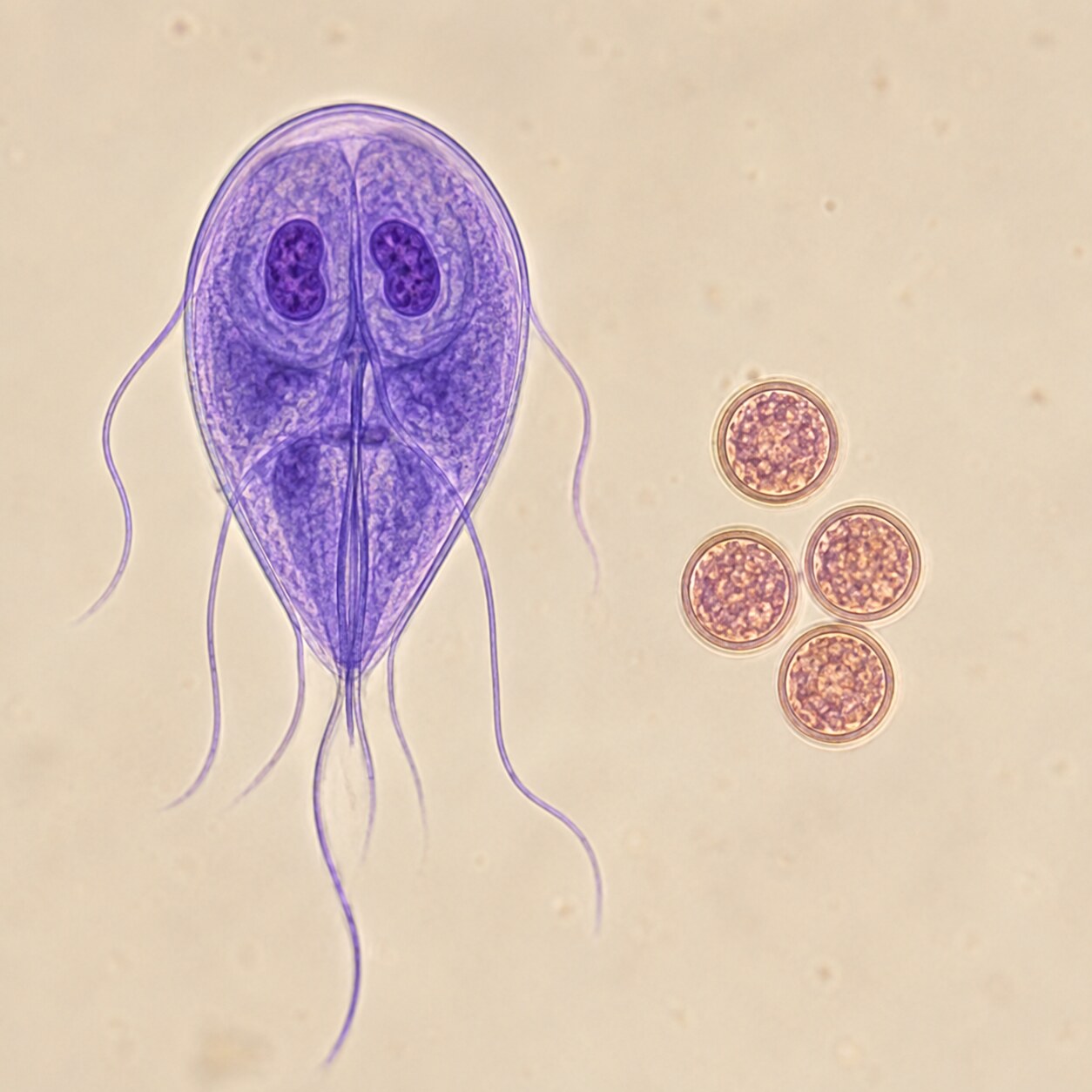
Figure 3. Giardia and Cryptosporidium, two of the most commonly identified disease-causing organisms on O&P testing, have distinctive shapes that trained technologists learn to recognize under the microscope.
Among the disease-causing organisms most frequently identified, Giardia lamblia (also frequently called Giardia intestinalis in medical literature) stands as one of the single most common parasitic causes of diarrheal illness worldwide, typically producing persistent watery diarrhea, noticeable bloating, excess gas, and abdominal cramping capable of continuing for several weeks if it goes untreated, and it's readily and easily transmitted through contaminated drinking water, including in popular outdoor recreational settings like natural lakes and flowing streams. Cryptosporidium, another very frequently identified protozoan on this type of testing, causes a broadly similar watery diarrheal illness and is notably, unusually resistant to standard levels of water chlorination, making it a well-recognized cause of larger outbreaks specifically linked to public swimming pools and municipal water systems in various parts of the world. Entamoeba histolytica deserves particular attention because it's capable of causing genuinely serious disease, including invasive intestinal infection and, in more severe cases, abscesses forming in the liver — a stark, important contrast to the many other organisms on this same broad list that typically cause only milder, self-limited illness, or in some cases no illness whatsoever. Cyclospora and Cystoisospora, two less commonly encountered but still clinically relevant protozoa, round out the more frequently identified disease-causing organisms, each associated with their own characteristic pattern of prolonged watery diarrhea, particularly in travelers returning from specific regions where these organisms are more prevalent.
On the other side of the spectrum, several organisms commonly reported on O&P testing are generally considered non-pathogenic commensals in most people: Entamoeba coli (a genuinely different, harmless species entirely distinct from the disease-causing Entamoeba histolytica, despite sharing a deceptively similar-sounding name), along with Endolimax nana and Iodamoeba bütschlii, are all typically reported on a lab result without any accompanying recommendation for treatment whatsoever. Blastocystis hominis occupies a genuinely debated middle ground in current medical understanding — found in a substantial share of both symptomatic and entirely healthy, asymptomatic people alike, with ongoing, active scientific disagreement about whether it causes real disease in some individuals, in certain specific genetic strains, or effectively in none at all, which is part of why its overall clinical significance continues to be handled somewhat differently from one clinician to the next, even today.
Curious what your own stool test results actually mean for your specific situation? Upload your results and get a complete, plain-language breakdown in under 15 minutes.
Analyze My ResultsWhy Some Positive Results Don't Require Treatment

Figure 4. Some organisms found on stool testing simply coexist within the gut without invading or damaging tissue, which is why not every positive result warrants treatment.
The reason harmless organisms show up on the same test as dangerous ones comes down to how the test itself works: the microscope can't distinguish "friend from foe" on its own — it simply reveals whatever structures are physically present in the sample, and it's the technologist's identification of the specific organism, combined with established medical knowledge about that organism's behavior in humans, that determines whether the finding is clinically meaningful. Non-pathogenic commensal organisms have coexisted with humans for a very long time, occupying a niche in the gut's ecosystem without invading tissue, triggering significant inflammation, or causing the cellular damage that produces actual symptoms — behaviorally, they're closer to some of the many bacteria that make up your normal gut flora than they are to a disease-causing invader, even though they happen to be classified as parasites in the strictest biological sense.
This is precisely why treating a positive result for one of these organisms isn't standard practice, and in most clinical guidelines, isn't recommended at all in the absence of symptoms specifically attributable to it — unnecessary antiparasitic treatment carries its own side effects and doesn't offer a meaningful benefit when the organism found isn't actually the source of any problem. When a genuinely symptomatic patient is found to have only a non-pathogenic organism on testing, that finding is generally treated as incidental, prompting a clinician to look elsewhere for what's actually causing the symptoms, rather than assuming the parasite identified on the report is automatically the explanation, simply because it showed up as "positive."
Worm Infections: A Genuinely Different Category Worth Understanding
While much of this article has focused on protozoa, since they're among the most frequently identified organisms in many regions, the "ova" half of the ova and parasite exam exists specifically because multicellular worms represent a genuinely distinct category of intestinal parasite, worth understanding on its own terms. Roundworms like Ascaris lumbricoides, genuinely one of the most common helminth infections found worldwide, are typically acquired by ingesting microscopic eggs, most often from contaminated soil or inadequately washed produce grown in or exposed to that soil, which then hatch and gradually mature within the digestive tract over a period of weeks, with adult worms eventually producing truly enormous numbers of new eggs that pass steadily in stool and are precisely what the O&P exam is specifically designed to detect and identify.
Tapeworms, another major and genuinely distinct helminth category, are typically acquired by eating undercooked meat or fish that happens to contain the parasite's dormant larval stage, after which the resulting adult tapeworm attaches firmly to the intestinal wall using specialized hooks or suckers and can grow to a genuinely surprising overall length over the following months, continuously shedding individual egg-containing segments that periodically break off and pass visibly in stool. Hookworms, which are acquired when their microscopic larvae present in contaminated soil penetrate directly through exposed skin (often bare feet), then migrate through the bloodstream and lungs before eventually settling permanently in the small intestine, where they attach firmly to the intestinal lining and feed steadily on blood over an extended period, making chronic hookworm infection a well-recognized and significant cause of iron deficiency anemia in regions where the infection remains heavily prevalent. Unlike many protozoa, essentially all confirmed helminth infections identified on stool testing are considered to genuinely warrant treatment, since these particular organisms, by their very nature as larger, actively feeding, tissue-attached parasites, simply don't have the same category of harmless, non-pathogenic "commensal" members that some protozoa do — a worm found on testing is, in essentially every case, one that's actually causing some degree of harm, even if that harm hasn't yet produced obvious, easily noticeable symptoms.
Symptoms That Commonly Accompany a Genuine Infection

Figure 5. Persistent watery diarrhea, cramping, bloating, and fatigue are common symptoms of an actively symptomatic parasitic infection, though not everyone who is infected experiences noticeable symptoms.
When a genuinely disease-causing organism is identified and is actively producing symptoms, certain patterns tend to show up consistently across different types of infection, even though the exact severity and duration can vary depending on the specific organism involved. Watery or loose diarrhea, sometimes intermittent rather than constant, is among the most common presenting symptoms, often accompanied by abdominal cramping, excessive gas, and noticeable bloating that can feel disproportionate to how much someone has actually eaten. Nausea, a noticeable loss of appetite, and unintentional weight loss can all develop with more prolonged, longer-lasting infections, particularly when the specific parasite involved interferes directly with normal nutrient absorption occurring in the small intestine, exactly as Giardia is well known and well documented to do in a meaningful share of cases.
Fatigue is another genuinely commonly reported symptom, sometimes stemming directly and specifically from the nutrient malabsorption just described above, and sometimes simply reflecting the broader, general toll that an ongoing gastrointestinal illness naturally takes on the body over time. It's genuinely important to understand, though, that a meaningful number of people infected with even disease-causing organisms remain entirely asymptomatic, particularly with certain parasites and in people with robust immune function — meaning the presence or absence of symptoms alone can't reliably confirm or rule out a genuine infection, which is exactly why the specific organism identified on testing, not just how someone feels, ultimately drives the decision about whether treatment is warranted.
How the Parasite's Life Cycle Affects What Shows Up on Testing

Figure 6. Many parasites shed detectable eggs or cysts intermittently rather than continuously, which is exactly why a positive finding confirms infection reliably, while a single negative test cannot fully rule it out.
Understanding why a positive result carries strong diagnostic weight requires understanding a genuinely important biological detail about how most intestinal parasites actually behave: many species don't shed detectable eggs, cysts, or larvae in a constant, steady stream — instead, shedding often follows a cyclical, sometimes unpredictable pattern tied to the organism's own reproductive cycle within the gut. Giardia, for example, is well known to shed cysts intermittently, meaning a stool sample collected on one particular day might contain plenty of detectable cysts, while a sample from the very same infected person collected just a day or two later might contain too few to be reliably identified, even though the underlying infection hasn't changed or improved at all in the meantime.
This intermittent shedding pattern has a genuinely important, asymmetric consequence for how positive and negative results should each be interpreted. Because finding an organism at all requires it to actually be present and visible in that specific sample at that specific moment, a positive result is a highly reliable, essentially unambiguous confirmation that the organism is genuinely present in the gut — false positives from misidentification are possible but relatively uncommon in an experienced lab. A single negative result, on the other hand, carries meaningfully less certainty, since it may simply reflect a low-shedding day rather than the true absence of infection, which is exactly why testing guidelines commonly recommend collecting multiple stool samples on separate days when a parasitic infection is genuinely suspected, rather than relying on the result of just one sample to rule the possibility out entirely.
Why Recent Travel and Other History Matter for Interpretation
The clinical significance of a positive result can also shift depending on genuinely practical details about a person's recent history, which is why a thorough clinician gathering context around a positive result typically asks about more than just symptoms alone. Recent international travel, particularly to regions where certain parasites are more commonly encountered, meaningfully raises the likelihood that a positive finding represents a genuine, recently acquired infection rather than an incidental, longstanding commensal organism — some parasites are considerably more common in specific parts of the world due to differences in water treatment infrastructure, sanitation, and local prevalence, making travel history a genuinely useful piece of supporting context.
Occupational and recreational exposures matter as well: people who work in childcare settings, where fecal-oral transmission spreads more easily among young children, camping or hiking enthusiasts who drink from natural water sources without proper filtration, and people who have recently swum in freshwater lakes or rivers all carry a somewhat elevated likelihood of specific exposures relevant to interpreting a positive result correctly. A history of recent antibiotic use is also worth mentioning to a provider, since certain antibiotics can temporarily reduce the number of detectable parasites in a sample without necessarily eliminating the infection entirely, potentially producing a falsely reassuring negative result if testing happens to occur during that window — another example of how context surrounding a stool parasite result often matters just as much as the laboratory finding itself.
What Happens After a Positive Result
Once a specific organism has been identified, the practical next step depends almost entirely on which organism it was and whether the person has symptoms consistent with it. For confirmed disease-causing organisms like Giardia, Cryptosporidium, or Entamoeba histolytica in a symptomatic person, targeted antiparasitic medication is the standard treatment, with the specific drug chosen depending on the exact organism identified, since different parasites respond to different medications, and using the wrong one is generally ineffective. Follow-up stool testing after treatment is sometimes recommended, particularly for organisms known to be more difficult to fully clear or in situations where symptoms persist despite treatment, to confirm the infection has genuinely resolved rather than simply assuming it has based on symptom improvement alone. The timing of this follow-up testing matters, since checking too soon after finishing treatment can sometimes still detect residual, non-viable organism remnants that don't reflect a true treatment failure, which is why providers typically specify a particular waiting period, often several weeks, before a confirmatory sample is collected and re-examined.
For non-pathogenic organisms found incidentally, no treatment is typically needed, and the finding is generally noted without further action unless the person has ongoing, unexplained symptoms that warrant continued investigation into other possible causes. Because many intestinal parasites spread through fecal-oral transmission — meaning through contaminated water, food, or surfaces, or from person to person in households and childcare settings — practical hygiene measures, including thorough handwashing and, when relevant, screening or treating close household contacts, are often part of a complete response to a confirmed, genuine infection, helping prevent both reinfection and further spread to others sharing the same living space. For organisms transmitted through contaminated food or water rather than person-to-person contact, identifying and avoiding the original exposure source, when it can reasonably be determined, adds an additional layer of protection against a repeat infection from the very same route that caused the first one, particularly for people who travel frequently or regularly engage in activities involving natural water sources.
How This Test Compares to Newer Molecular Testing Methods
In recent years, molecular testing methods — particularly PCR-based stool panels that detect a pathogen's genetic material rather than relying on visual identification under a microscope — have become increasingly available and are sometimes used alongside or instead of traditional O&P microscopy. These molecular panels offer real advantages in certain respects: they can be considerably faster to run, don't depend on a technologist's visual identification skill for accuracy, and can sometimes detect very low levels of an organism that might be missed on a single microscopy sample. However, they typically test for a specific, predetermined list of common organisms rather than examining the sample broadly for anything present, meaning a molecular panel can occasionally miss a less common organism that traditional microscopy would have caught simply by looking for whatever was actually there.
Because of these complementary strengths and limitations, many laboratories and clinicians use both approaches strategically rather than choosing one over the other entirely — molecular testing for rapid detection of the most common, clinically important organisms, with traditional O&P microscopy reserved for situations involving recent relevant travel, unusual or persistent symptoms not explained by a negative molecular panel, or other clinical circumstances suggesting a broader search is warranted. Understanding that these are complementary tools with different strengths, rather than one simply being an outdated replacement for the other, helps explain why a clinician might order one, the other, or both depending on the specific clinical picture in front of them.
When a Positive Result Warrants Urgent Attention

Figure 7. A positive result in an immunocompromised person, or one involving a specific high-risk organism, generally prompts faster, more thorough evaluation than the same finding in an otherwise healthy adult.
While most positive O&P results, even for genuinely disease-causing organisms, are managed on a fairly routine, outpatient basis, certain circumstances call for a more urgent response. People who are immunocompromised — including those with advanced HIV infection, those on immunosuppressive medications following organ transplantation, or those undergoing chemotherapy — can experience considerably more severe, prolonged, and occasionally life-threatening illness from parasites that would otherwise cause only mild, self-limited symptoms in someone with normal immune function, and a positive result in this population is generally treated with a heightened sense of urgency and considerably closer follow-up than the same finding would receive in someone with fully intact, normal immune function. Cryptosporidium in particular is well recognized for causing especially prolonged, severe, and difficult-to-treat diarrheal illness in people with significantly compromised immune systems, sometimes persisting for weeks or months rather than resolving on the more typical, shorter timeline seen in otherwise healthy individuals, which is part of why immune status is always one of the first pieces of context a clinician considers when a positive result comes back in this specific population.
Significant dehydration from prolonged diarrheal illness, especially in young children or older adults, is another situation warranting more immediate medical attention regardless of which specific organism is responsible, since dehydration itself can become dangerous faster than the underlying infection in these more vulnerable age groups. Certain specific organisms also carry a higher inherent likelihood of causing severe, invasive disease — Entamoeba histolytica's capacity to cause liver abscesses, described earlier in this article, is a clear example — which is why a positive result for one of these particular organisms, especially alongside symptoms suggesting they've already spread beyond the intestinal tract — such as fever, right-upper-abdominal pain, or other signs potentially pointing toward an abscess elsewhere in the body — is generally evaluated and treated considerably more urgently than a routine, uncomplicated intestinal case would be, sometimes involving imaging studies alongside the standard antiparasitic treatment to rule out or confirm that more serious, invasive spread has actually occurred.
Special Considerations: Children and Chronic, Unexplained Symptoms
Certain populations and clinical scenarios call for their own particular perspective when interpreting a positive result, worth addressing directly. Children, particularly those in group childcare or school settings, are both more likely to be exposed to organisms spreading through fecal-oral transmission and, in the case of certain parasites, more likely to experience meaningful nutritional consequences from infection during a developmentally important period, since chronic diarrheal illness and malabsorption can affect growth and development if left unaddressed for an extended time. This is part of why a positive result for a genuinely disease-causing organism in a child is generally treated promptly rather than watched, even when symptoms seem relatively mild at the time.
People with chronic, unexplained digestive symptoms — persistent bloating, irregular bowel habits, or ongoing discomfort that hasn't responded to more common initial treatments — represent another group worth specific mention, since parasitic infection is a genuinely reasonable, if sometimes overlooked, possibility to investigate in this situation, particularly when other more common explanations have already been reasonably ruled out. At the same time, it's worth balancing this against the earlier point about non-pathogenic organisms: finding a commensal parasite in someone with chronic symptoms doesn't necessarily mean the mystery is solved, and continuing to investigate other possible causes remains appropriate unless the organism identified is genuinely one known to produce the symptoms being experienced.
Frequently Asked Questions
Does a positive result always mean I need to take medication?
No. Whether treatment is needed depends entirely on which specific organism was identified. Several commonly found organisms are considered non-pathogenic and typically don't require treatment, while others, like Giardia or Cryptosporidium, generally do. Your provider will base this decision on the exact organism named in your report, not on the positive result alone.
Can I get a false positive on an ova and parasite test?
True false positives are relatively uncommon when the test is performed by an experienced laboratory, since identification is based on distinctive physical structures. Misidentification between similar-looking organisms can occasionally occur, which is one reason unusual or unexpected results are sometimes confirmed with additional testing before treatment decisions are finalized.
If I test negative once, does that rule out a parasitic infection?
Not necessarily, especially with organisms known to shed intermittently, like Giardia. A single negative sample can miss an infection that's genuinely present but simply wasn't shedding detectable forms on that particular day, which is why multiple samples collected on separate days are often recommended when a parasitic infection is still clinically suspected despite an initial negative result.
Can other household members catch the same parasite?
Yes, this is a genuine possibility for organisms that spread through fecal-oral transmission, particularly in households with young children or shared bathroom facilities. Depending on the specific organism and your household's circumstances, a provider may recommend screening or preventive treatment for close contacts alongside standard hygiene measures to reduce the chance of further spread.
Does a positive stool antigen test mean the same thing as a positive O&P microscopy result?
Not exactly. Stool antigen tests detect specific proteins from a particular organism rather than visually identifying the organism itself, and they're generally used for a smaller, more targeted set of common pathogens rather than the broad range the microscopy-based O&P exam can detect. A positive antigen result is still meaningful, but it reflects a somewhat different testing method with its own strengths and limitations.
Why did my doctor ask me to collect three separate stool samples instead of one?
This is a standard practice specifically because of the intermittent shedding pattern described earlier in this article. Collecting three samples on separate days meaningfully increases the overall sensitivity of testing, since an organism missed on one day's sample is often caught on another, giving a far more reliable overall picture than a single sample could provide alone.
Conclusion
A positive stool ova and parasite test confirms that a specific organism was physically identified in your sample, but that single word "positive" covers a genuinely wide range of possible realities — from a harmless, non-disease-causing organism that needs no treatment at all, to a genuine infection capable of causing real illness if left unaddressed. The specific organism named on your report, not the positive result by itself, is what actually determines what happens next, which is exactly why reading a positive result in context, with the organism's identity and your own symptoms both taken into account, matters so much more than reacting to the word "positive" alone. Bringing your complete report, along with a clear description of any symptoms you're experiencing, any recent travel or relevant exposures, and your immune health history, into a conversation with a healthcare provider is the clearest way to understand what your specific result genuinely means for you individually and what, if anything, needs to happen next — rather than reacting to the word "positive" printed on a page without the surrounding context that actually gives it meaning.
Still Not Sure What Your Results Mean?
Upload your labs and get a complete, visual, plain-language interpretation of every biomarker — delivered to your inbox in under 15 minutes.
Get My ReportThis article is for educational purposes only and does not constitute medical advice. Always consult your healthcare provider regarding your specific lab results.