
What's the Link Between T3 and Energy Levels?
T3, or triiodothyronine, is the single most biologically active thyroid hormone in your body, and it connects to your energy levels in a far more direct way than most hormones do: it physically enters the nucleus of nearly every cell you have and switches on the genes responsible for your baseline metabolic rate — how many mitochondria your cells build, how hard those mitochondria work, how much fuel gets burned, and even how much heat your body generates while doing it. This isn't a loose, general association between "thyroid health" and "feeling tired." It's a specific, well-mapped chain of cellular mechanisms, and understanding each link in that chain is what actually explains why too little T3 leaves people exhausted and cold, why too much T3 can paradoxically leave people just as exhausted through a completely different mechanism, and why some people with a perfectly normal T3 blood level still don't feel like themselves. This article walks through exactly what T3 does inside a cell, mechanism by mechanism, and what that ultimately means for interpreting your own energy levels alongside your own lab results.
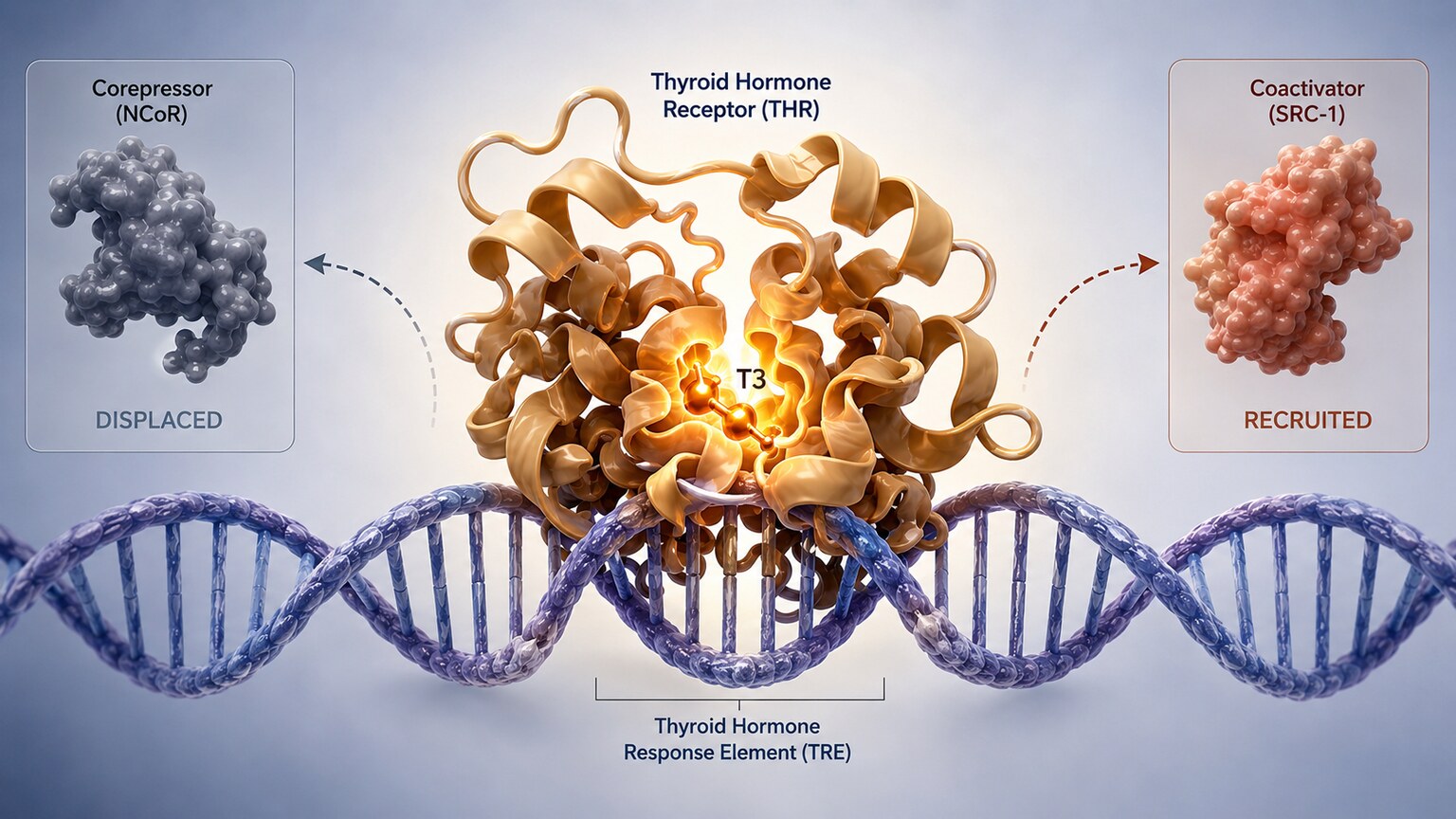
Figure 1. Unlike many hormones that act only at the cell surface, T3 crosses into the nucleus and binds directly to DNA, functioning as a genetic switch for metabolic activity.
Why T3 Works Differently From Almost Any Other Hormone
Most hormones you're familiar with act like a knock at the door — they bind a receptor sitting on the outside of a cell's membrane, and that receptor relays a signal inward without the hormone itself ever entering the cell. T3 works differently. Because it's a small, fat-soluble molecule, T3 passes directly through the cell membrane and travels into the nucleus itself, where it binds to a specific type of receptor — a thyroid hormone receptor — that's already sitting attached to your DNA at specific locations called thyroid hormone response elements. When T3 binds that receptor, it changes the receptor's shape in a way that switches on (or, in some cases, switches off) the transcription of specific genes, meaning T3 isn't just sending a signal about metabolism — it's directly and immediately altering which metabolic proteins your cell's machinery is instructed to build. This distinction matters enormously for understanding energy levels, because it means T3's effects aren't a vague, downstream ripple; they're the direct genetic instructions for how much metabolic machinery your cells are actively constructing at any given time.
Before T3 even arrives, most of these receptors already sit bound to their DNA target sites in an inactive configuration, often paired with a class of proteins called corepressors that actively keep the associated genes switched off — meaning the "default" state of many T3-regulated genes is not neutral but actively suppressed, at least until T3 shows up to reverse that suppression. When T3 binds the receptor, it displaces the corepressor and recruits a different set of proteins called coactivators instead, converting the same DNA-bound receptor from an active gene-blocker into an active gene-promoter. This two-way switch mechanism is part of why thyroid hormone changes tend to produce a genuinely bidirectional shift in metabolic gene activity, and it's a large part of the molecular basis for why both too little and too much T3 produce distinct, opposite patterns of gene expression rather than simply more or less of the same pattern.
It helps to compare this to how a company might respond to a change in demand. A surface-level hormone signal is a bit like a manager relaying an instruction down the chain of command, with each layer interpreting and passing along a simplified version of the message — effective, but slower, and prone to some signal loss along the way. T3 binding directly to DNA is closer to that same company's central leadership rewriting the actual operating manual itself — changing, at the source, exactly how many workers get hired, how much raw material gets ordered, and how fast the whole operation runs. There are two main receptor subtypes involved, called TRα and TRβ, distributed somewhat differently across tissues — TRα is especially prominent in heart and skeletal muscle, while TRβ predominates in the liver and is heavily involved in the brain's own regulation of the broader thyroid system — which is part of why thyroid hormone's effects aren't perfectly uniform across every tissue in the body, even though the underlying genetic-switch mechanism is the same everywhere it occurs.
Curious what your own thyroid panel is actually telling you? Upload your results and get a complete, plain-language breakdown in under 15 minutes.
Analyze My ResultsMechanism 1: Building More Power Plants — Mitochondrial Biogenesis

Figure 2. T3 directly increases the number and activity of mitochondria within cells, effectively expanding a cell's total energy-generating capacity.
Among the genes T3 turns on are several directly responsible for mitochondrial biogenesis — the process of building new mitochondria, the structures inside nearly every cell responsible for actually generating usable cellular energy in the form of ATP. More T3 signaling generally means more mitochondria per cell, and mitochondria that are individually more active as well, essentially expanding a cell's total energy-production capacity. This is one of the most direct, literal links between T3 and energy: it isn't a metaphor to say T3 controls how many "power plants" your cells are running, it's a description of an actual, measurable cellular process.
This mechanism also explains why thyroid hormone deficiency affects some tissues more noticeably than others. Tissues with naturally high energy demands and a correspondingly dense population of mitochondria to begin with — heart muscle, skeletal muscle, and brain tissue among them — are particularly sensitive to changes in T3-driven mitochondrial activity, which is part of why fatigue, muscle weakness, and cognitive slowing are such consistent, prominent symptoms when T3 signaling drops, compared to tissues with more modest baseline energy needs.
The specific molecular players involved in this process have been mapped out in considerable detail. T3 increases expression of a regulatory protein called PGC-1alpha, often described as the master coordinator of mitochondrial biogenesis, since it in turn switches on a whole cascade of other genes responsible for building new mitochondrial components, replicating mitochondrial DNA, and assembling the finished structures. This is the same PGC-1alpha pathway that endurance exercise training is independently known to activate, which is part of why regular aerobic exercise and healthy thyroid hormone signaling both push cellular metabolism in a similar direction, even though they work through different upstream triggers — one through sustained physical demand, the other through a direct hormonal instruction.
Mechanism 2: The Sodium-Potassium Pump — Where Most of Your Baseline Energy Actually Goes
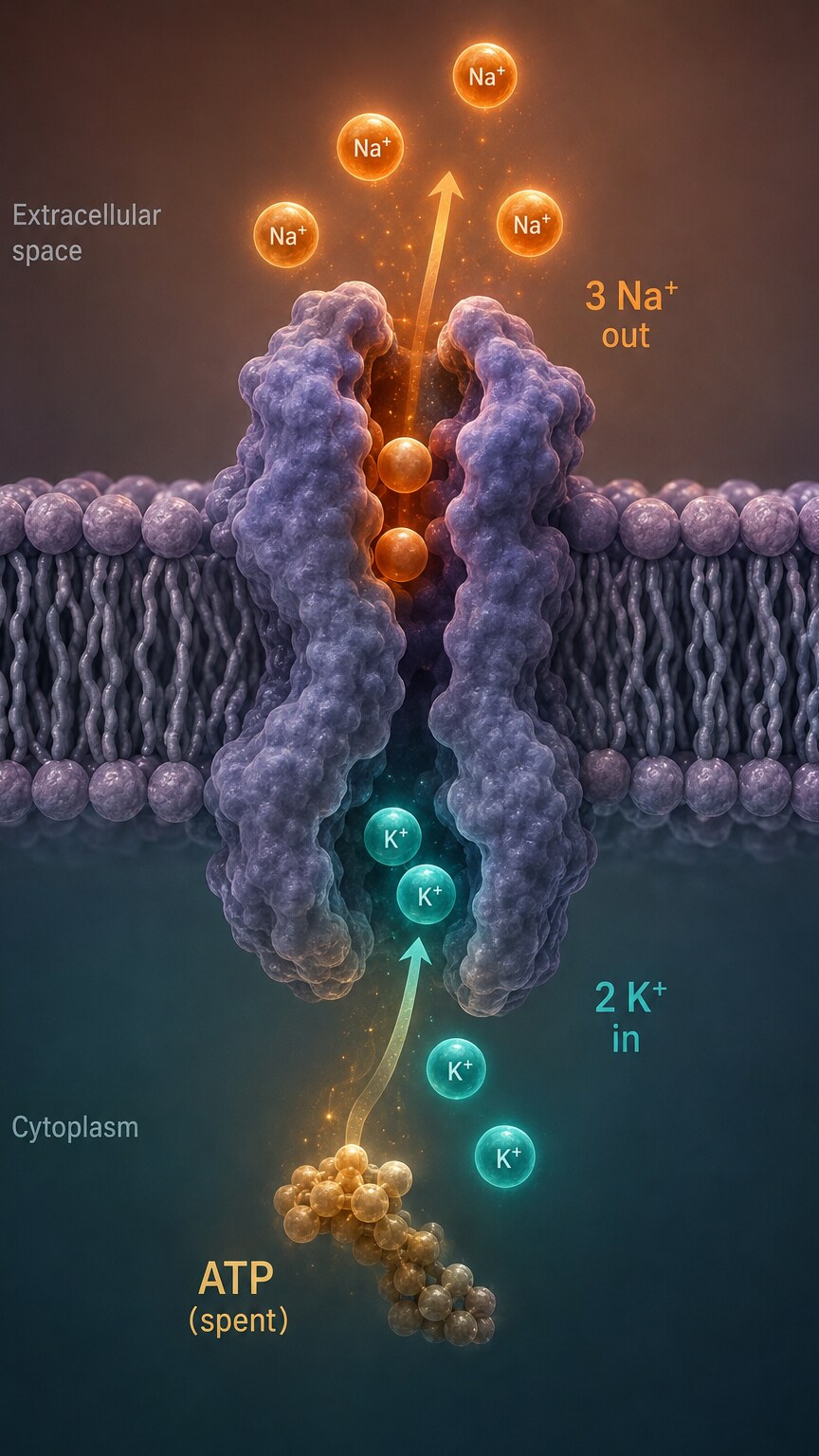
Figure 3. The sodium-potassium pump consumes a substantial share of a cell's resting energy budget, and T3 directly increases both the number of these pumps and how actively they run.
Before turning to that pump specifically, it's worth noting that T3's effects on mitochondria and on ion transport aren't entirely separate stories — they're deeply intertwined. Once T3-driven mitochondrial biogenesis has expanded a cell's total energy-generating capacity, that additional capacity has to actually be put to use somewhere, and the sodium-potassium pump is, by a wide margin, the single largest consumer of that newly available energy in most tissues. In this sense, the two mechanisms function as a matched pair rather than two independent effects: more mitochondria without a correspondingly larger energy demand to meet would simply leave capacity unused, and it's specifically the pump's own T3-driven expansion that supplies much of that demand, keeping supply and demand moving together as T3 signaling rises or falls.
One of the most underappreciated pieces of this whole system is a specific membrane protein called the sodium-potassium pump (or Na+/K+-ATPase), a molecular machine embedded in the outer membrane of nearly every cell that continuously pumps sodium out and potassium in, maintaining the electrical and chemical gradients your nerves and muscles depend on to function. This single pump is remarkably energy-hungry — in a resting, non-exercising body, the collective activity of these pumps across all your cells is estimated to consume somewhere around 20 to 40% of your total baseline energy expenditure, simply maintaining ion gradients you never consciously notice.
Put simply, T3 directly increases both the number of sodium-potassium pumps a cell builds and how actively existing pumps run, which means T3 signaling is a major direct driver of how much energy your body burns just idling — what's measured clinically as basal metabolic rate. This single mechanism goes a long way toward explaining the whole-body feeling of thyroid-related energy changes: when T3 signaling is low, fewer and less active pumps mean your baseline energy consumption drops, plainly translating into feeling sluggish even at rest, while excessive T3 pushes baseline energy consumption up substantially, which is part of why hyperthyroidism can cause noticeable, unintentional weight loss even without any change in appetite or activity.
It's worth appreciating just how large a share of total body energy this single pump represents, and why it, of all things, ended up being one of thyroid hormone's primary levers in the first place — a detail that becomes clearer once you consider how universal this pump's job is across nearly every cell type in the body, unlike more specialized processes confined to particular tissues. Popular understanding of metabolism tends to focus almost entirely on visible activity — exercise, movement, digestion — but a substantial portion of the calories your body burns every single day, even lying perfectly still, goes toward maintaining the electrical gradients this one pump is responsible for, gradients that make nerve signaling, muscle contraction, and countless other basic cellular functions possible in the first place. Because T3 has such direct control over how many of these pumps exist and how hard they work, it's genuinely accurate to say that thyroid hormone status is one of the single biggest hormonal levers controlling how much energy your body spends before you've done anything at all.
Mechanism 3: Uncoupling Proteins and Why Thyroid Hormone Makes You Warm
A third mechanism, distinct from mitochondrial biogenesis and pump activity though closely related to both, explains one of the most familiar thyroid-related symptoms: temperature sensitivity. Mitochondria normally generate ATP through a tightly coupled process — burning fuel to create an electrochemical gradient across their inner membrane, then using that gradient specifically to manufacture ATP. T3 increases the expression of specialized proteins called uncoupling proteins, which create a controlled "leak" in that gradient, allowing mitochondria to burn fuel and release the resulting energy as heat directly, rather than channeling all of it into ATP production. This process, called thermogenesis, is most concentrated in brown adipose tissue (a specialized, mitochondria-dense fat type distinct from ordinary white fat) and in skeletal muscle, and it's a major reason thyroid hormone status affects how warm or cold a person tends to feel.
This mechanism ties directly back to energy levels in a way that's easy to overlook: generating heat this way is itself an energy expenditure, meaning higher T3-driven thermogenesis contributes to a higher overall metabolic rate, on top of the separate mitochondrial and pump-related mechanisms described above. It's also a genuinely useful diagnostic clue in everyday life — persistent cold intolerance alongside fatigue points fairly specifically toward reduced T3 signaling, while feeling overheated, sweaty, and intolerant of warm rooms alongside a racing, wired feeling points toward the opposite, excessive end of the spectrum.
The specific uncoupling protein most associated with this process, called UCP1, was long thought to be almost exclusively confined to brown fat, a tissue type present in much greater relative abundance in infants (where it plays a crucial role in maintaining body temperature before shivering is fully developed as a heat-generating reflex) than in most adults. More recent research using imaging techniques capable of detecting active brown fat in adults has found that meaningful, functional deposits persist into adulthood, typically concentrated around the neck and upper back, and that their activity can be modulated by thyroid hormone status along with cold exposure itself — one of several reasons some research has explored deliberate cold exposure as a way of stimulating this same metabolic pathway, entirely independent of any change in thyroid hormone levels.
Mechanism 4: Mobilizing the Actual Fuel — Glucose and Fat
Building more mitochondria, running more ion pumps, and generating more heat all require an actual fuel supply to burn, and none of the mechanisms described so far would matter much without a fourth mechanism ensuring that fuel is actually available — T3 directly stimulates the pathways that mobilize it. It increases glucose uptake into cells and promotes glycogenolysis, the breakdown of stored glycogen into usable glucose, while separately promoting lipolysis, the breakdown of stored fat into fatty acids that can be oxidized for energy. In effect, T3 doesn't just tell your cells to build more energy-generating machinery — it simultaneously arranges for more raw fuel to be available to actually run that machinery, coordinating both sides of the energy-production equation at once.
This coordination extends to the liver specifically, which plays an outsized role in whole-body fuel availability. T3 increases the liver's own glucose output between meals, supports cholesterol clearance from the blood by upregulating LDL receptors on liver cells, and influences how efficiently fat is processed and packaged for transport elsewhere in the body — which is part of why abnormal cholesterol panels are sometimes an incidental clue that prompts thyroid testing, and why cholesterol levels can shift meaningfully once a thyroid hormone imbalance is corrected, entirely apart from any change in diet.
Mechanism 5: Amplifying Adrenaline's Effect on Your Body
A fifth, often-overlooked mechanism, and the last of the five covered in depth here, involves T3's effect on beta-adrenergic receptors, the same receptors adrenaline and noradrenaline (your body's "fight or flight" signaling molecules) use to speed up heart rate, increase alertness, and mobilize energy reserves during stress or exertion. T3 increases the number of these receptors on the surface of target cells, particularly in the heart and fat tissue, which effectively makes the body more sensitive to whatever adrenaline and noradrenaline are already circulating. This is part of why hyperthyroidism can produce symptoms that closely resemble an adrenaline surge — a racing heart, tremor, anxiety, and a wired, jittery feeling — even without any actual increase in adrenaline itself; the same amount of adrenaline is simply landing on a larger, more responsive set of receptors. Conversely, reduced T3 signaling blunts this same amplification, contributing to the flat, sluggish feeling often described alongside hypothyroid fatigue.
This particular mechanism also explains a detail that sometimes confuses people evaluating hyperthyroidism: certain medications called beta-blockers, normally used to manage blood pressure or heart rhythm, are often prescribed as an early, fast-acting treatment for hyperthyroid symptoms even before the underlying excess thyroid hormone itself has been brought under control. Beta-blockers work by directly blocking the very adrenergic receptors T3 has amplified, effectively muting the racing heart, tremor, and anxious symptoms at their receptor-level source, without doing anything to correct the elevated T3 level driving that amplification in the first place — a genuinely useful stopgap that treats the symptom pathway directly while the slower-acting underlying treatment takes effect.
What Happens When T3 Runs Too Low: The Biology of Hypothyroid Fatigue

Figure 4. Reduced mitochondrial activity, fewer active ion pumps, and diminished fuel mobilization combine to produce the persistent, whole-body fatigue characteristic of low thyroid hormone signaling.
It's worth pausing on just how consistently these five mechanisms reinforce rather than offset each other, since that reinforcement is exactly what makes thyroid-driven fatigue feel so pervasive compared to fatigue from a single isolated cause. A person who's simply sleep-deprived, for instance, typically still has fully intact mitochondrial capacity, normal ion pump activity, and normal fuel mobilization — their cells can still generate energy efficiently, they simply haven't had adequate rest to feel the benefit of it. Someone with significantly reduced T3 signaling, by contrast, has the underlying energy-generating capacity itself reduced across nearly every cell simultaneously, which is a categorically different kind of problem that no amount of sleep or rest can fully compensate for on its own.
Pulling all five mechanisms together explains why hypothyroid fatigue feels the specific way it does, rather than resembling ordinary tiredness from a poor night's sleep. With reduced T3 signaling, cells build fewer mitochondria and run existing ones less actively, sodium-potassium pumps slow down, thermogenesis drops (producing the classic cold intolerance), fuel mobilization from glycogen and fat stores slows, and cells become less responsive to adrenaline's energizing effects. None of these changes happen in isolation — they compound across essentially every tissue in the body simultaneously, which is why hypothyroid fatigue tends to feel like a pervasive, whole-body heaviness rather than fatigue localized to one system, and why it often doesn't meaningfully improve with more sleep or rest the way ordinary tiredness does, since the underlying issue is reduced cellular energy production capacity rather than an unmet need for recovery time.
Cognitive symptoms as well — brain fog, slowed thinking, difficulty concentrating — follow that same underlying logic, since neurons are among the most metabolically demanding cells in the body and are directly affected by all five mechanisms described above, along with T3's separate, more specific roles in supporting neurotransmitter synthesis and neural development.
The heart provides one of the clearest, most measurable illustrations of this whole cascade in action. Heart muscle cells are exceptionally mitochondria-dense and metabolically demanding even at rest, given the heart's job of contracting continuously for an entire lifetime, and they're correspondingly rich in thyroid hormone receptors. With reduced T3 signaling, heart muscle cells build fewer mitochondria, run fewer and less active sodium-potassium pumps, and become less responsive to adrenergic stimulation all at once — collectively producing a measurably slower resting heart rate and reduced cardiac output, findings a doctor can directly observe on a basic exam or EKG in someone with significant hypothyroidism. This is a useful, concrete example of how the cellular mechanisms described throughout this article aren't abstract biochemistry — they translate into physical findings a clinician can actually measure at the bedside.
The Hyperthyroid Paradox: Why Too Much T3 Also Causes Exhaustion
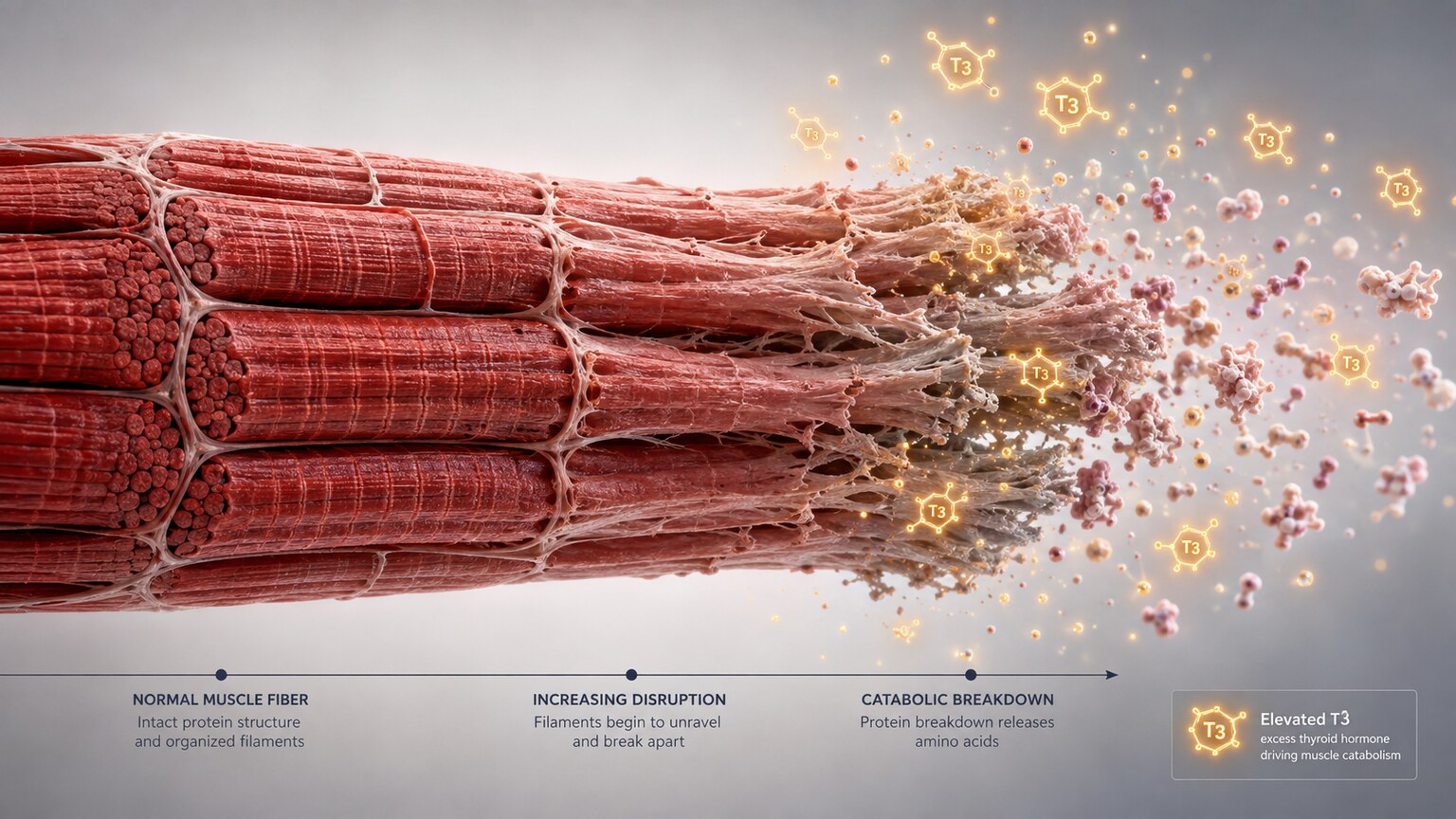
Figure 5. Excess T3 can push the body into a catabolic state, breaking down muscle protein for fuel faster than it can be rebuilt, producing genuine physical weakness despite an elevated metabolic rate.
It would be a mistake to assume the relationship between T3 and energy is simply linear — more T3 doesn't mean endlessly more usable energy. Past a certain point, excess T3 pushes the body into an unsustainable catabolic state: mitochondrial activity, ion pump activity, and fuel mobilization all run so aggressively that the body starts breaking down its own muscle protein for fuel faster than it can rebuild it, a process directly visible in the illustration above. This produces genuine, measurable muscle weakness — sometimes called hyperthyroid myopathy — that coexists uncomfortably alongside the restless, wired, can't-sit-still feeling excess T3 also produces through the adrenaline-sensitizing mechanism described earlier.
This combination is exactly why hyperthyroidism so often gets described as feeling "wired but tired" — a racing heart and anxious alertness sitting alongside real physical exhaustion and weakness, driven by two different mechanisms operating at once rather than a single, simple "too much energy" state. It's a useful reminder that T3's relationship to energy isn't about maximizing output; it's about maintaining metabolic activity within a range the body can sustainably support, and both ends of that range — too little and too much — produce genuine fatigue, just through entirely different biological routes.
The muscle weakness specifically, distinct from the wired, anxious symptoms described above, tends to follow a recognizable, somewhat counterintuitive pattern: it typically affects the large, proximal muscles closest to the body's core — the muscles used to climb stairs, rise from a low chair, or lift the arms overhead — more than the smaller muscles of the hands and feet, which is part of why someone with untreated hyperthyroidism may specifically struggle with tasks like getting up from a couch unassisted, even while retaining fine motor coordination for tasks like writing or buttoning a shirt. This pattern reflects the fact that larger, more metabolically active muscle groups have a greater ongoing protein turnover requirement to maintain, making them more vulnerable when the balance between protein breakdown and rebuilding is pushed as far out of balance as sustained, significant T3 excess can push it.
Why You Can Feel Exhausted With a "Normal" T3 on a Blood Test

Figure 6. Because most T3 is generated locally within individual tissues, blood levels don't always reflect how much active hormone a specific tissue, like muscle or brain, actually has available.
One detail rarely explained clearly is that a standard blood test measures circulating T3, but roughly 80% of the T3 your tissues actually use isn't made by the thyroid gland directly — it's produced locally, inside individual tissues, by enzymes called deiodinases that convert T4 into active T3 right where it's needed. This local conversion process is regulated somewhat independently in different tissues, meaning it's genuinely possible for someone's circulating blood T3 to look completely normal while local conversion within a specific tissue — the brain or skeletal muscle, for instance — is running below what that tissue actually needs.
Several factors can suppress this local, tissue-level conversion without necessarily showing up as an abnormal blood T3 level: significant physical or psychological stress, chronic inflammation, selenium deficiency (selenium is a required component of the deiodinase enzymes themselves), and even aggressive calorie restriction can all reduce local T3 activation in specific tissues. This is part of the biological basis behind why some people with lab results that look entirely unremarkable still describe genuine, persistent low-energy symptoms — the blood test is measuring what's circulating, not necessarily what's being actively used at the cellular level in the specific tissues responsible for how a person actually feels day to day.
There are actually three distinct deiodinase enzymes involved in this local conversion system, and they don't all point in the same direction. Type 1 and type 2 deiodinases activate thyroid hormone, converting T4 into the more potent T3, with type 2 being especially important within the brain and pituitary gland specifically. Type 3 deiodinase does the opposite: it inactivates thyroid hormone, converting T4 into an inactive form and converting T3 itself into an inactive byproduct, effectively acting as a built-in brake on local thyroid hormone activity. During significant illness, injury, or prolonged stress, type 3 deiodinase activity often increases in various tissues while type 1 and 2 activity decreases — a coordinated shift sometimes described as an adaptive, energy-conserving response, since a body under serious strain may temporarily benefit from redirecting energy away from ordinary maintenance metabolism. The complication is that this same adaptive shift, when prolonged well beyond the initial stressor, can itself become a significant, self-sustaining contributor to persistent low energy that doesn't track cleanly with a standard blood T3 or even TSH result.
What This Means for Interpreting Your Own Results
Bringing all of this together, three separate ideas are worth holding at once when looking at your own T3 result alongside how you actually feel: first, that T3 works through direct, well-mapped cellular mechanisms rather than a vague hand-wave toward "metabolism," which is exactly why specific symptoms like cold intolerance, muscle weakness, or a resting heart rate that's noticeably slow or fast can be traced back to a particular mechanism rather than treated as unexplained background noise. Second, that the relationship isn't linear — both too little and too much T3 produce genuine fatigue, through different mechanisms, which is why "more energy hormone" isn't a meaningful goal in itself. And third, that a blood test captures circulating hormone, not necessarily what's happening inside the specific tissues responsible for how you feel, which is exactly why symptoms and lab numbers sometimes appear to disagree without either one being wrong.
None of this means a normal-range T3 result should be dismissed as automatically reassuring, nor does it mean every case of fatigue traces back to thyroid hormone. What it does mean is that T3's relationship to energy is genuinely mechanistic rather than vague — specific, identifiable cellular processes connect this one hormone to how much energy your body generates, how warm you feel, how your muscles function, and how alert you are. If your energy levels and your T3 result don't seem to line up the way you'd expect, that mismatch is a legitimate, biologically grounded reason to have a more detailed conversation with your doctor — about local conversion, about other contributing factors like stress or nutrient status, and about whether additional testing genuinely makes sense — rather than a sign that something about your experience doesn't add up.
It's also worth keeping some perspective, before finishing this article, on how many other, entirely non-thyroid factors converge on these exact same cellular systems described throughout the sections above. Iron deficiency, vitamin B12 deficiency, poor sleep quality, and chronic low-grade inflammation from unrelated causes can each independently impair mitochondrial function, fuel availability, or cellular energy metabolism through their own separate mechanisms, producing symptoms that can look remarkably similar to thyroid-related fatigue even when thyroid hormone signaling itself is functioning completely normally. This overlap is exactly why persistent, unexplained fatigue is generally worked up broadly rather than assumed to be thyroid-related by default, even in someone whose symptoms fit the thyroid pattern closely — the same underlying cellular machinery this article describes can be disrupted from several different directions, and untangling which one actually applies in a given case is precisely the kind of judgment call that benefits from a full clinical picture rather than a single test result viewed in isolation.
Frequently Asked Questions
Is T3 or T4 the more important hormone for energy levels?
T3 is the biologically active hormone actually responsible for the cellular mechanisms described in this article — building mitochondria, running ion pumps, and generating heat. T4 functions mainly as a longer-lasting reservoir that tissues convert into T3 locally as needed, so while both matter, T3 is the form directly doing the metabolic work.
Can boosting T3 through supplements or medication increase my energy if my levels are already normal?
This isn't generally recommended and can be genuinely counterproductive. Since excess T3 pushes the body into the catabolic, muscle-breakdown state described in this article, artificially raising an already-normal T3 level risks trading one set of fatigue-causing problems for another, rather than producing sustainable extra energy.
Why does cold intolerance specifically point toward low thyroid hormone rather than some other cause?
Because thermogenesis — heat generation through uncoupling proteins in mitochondria — is one of T3's specific, well-documented cellular effects. While other conditions can cause cold sensitivity too, its combination with fatigue, weight changes, and other thyroid-related symptoms makes it a genuinely useful clue pointing toward reduced T3 signaling specifically.
Does exercise affect how much active T3 my tissues actually use?
Yes, indirectly. Regular exercise is associated with healthy mitochondrial function and can support the same cellular machinery T3 signaling relies on, though exercise itself doesn't directly change thyroid hormone production. Extreme or excessive exercise, on the other hand, can act as a physical stressor that suppresses local T3 conversion, similar to other forms of significant physiological stress.
Why do some people with hypothyroidism still feel tired even after starting thyroid hormone replacement?
Standard thyroid hormone replacement typically provides T4, relying on the body's own tissue-level deiodinase enzymes to convert it into active T3 as needed. In most people this works well, but in some, ongoing factors like chronic stress, inflammation, or nutrient deficiencies affecting those same conversion enzymes can mean tissue-level T3 activity remains suboptimal even once blood levels look adequately corrected, which is why persistent symptoms despite treatment are worth revisiting with a doctor rather than assumed to be unrelated.
Conclusion
The link between T3 and energy levels isn't a loose correlation — it's a direct chain of cellular mechanisms, from T3 binding DNA in the nucleus to building mitochondria, powering ion pumps, generating heat, mobilizing fuel, and amplifying adrenaline's effects. Too little T3 signaling means less of all of this happening at once, producing the pervasive, whole-body fatigue and cold intolerance characteristic of hypothyroidism, while too much pushes the body into an unsustainable catabolic state that produces its own distinct form of exhaustion. And because so much of the T3 your tissues actually use is generated locally rather than reflected fully in a blood test, energy levels and blood T3 numbers don't always move in perfect lockstep. Understanding these specific mechanisms is what turns "thyroid hormone affects energy" from a vague idea into something concrete enough to actually reason about your own results and symptoms together.
Perhaps the most useful single takeaway from all five mechanisms together is this: T3 doesn't generate energy out of nothing, and it isn't simply a dial that goes from "less energy" to "more energy" as it rises. It's better understood as a calibration signal, setting how much metabolic machinery your body builds and runs relative to what it can actually sustain with the fuel, oxygen, and structural resources available to it. A well-calibrated system, with T3 signaling appropriately matched to the body's genuine needs, is what produces the steady, resilient energy most people associate with simply feeling well — and it's exactly that calibration, rather than any single lab number in isolation, that these mechanisms are ultimately in service of maintaining.
Still Not Sure What Your Results Mean?
Upload your labs and get a complete, visual, plain-language interpretation of every biomarker — delivered to your inbox in under 15 minutes.
Get My ReportThis article is for educational purposes only and does not constitute medical advice. Always consult your healthcare provider regarding your specific lab results.