
Why Do T3 Levels Matter in Diagnosing Hyperthyroidism?
When a thyroid panel comes back with a suppressed TSH, most people's eyes go straight to T4 — it's the hormone most lab reports list first, and the one more people have at least heard of. T3 sometimes reads like an afterthought, if it's even ordered at all. But in the specific job of diagnosing an overactive thyroid, T3 — short for triiodothyronine, the thyroid hormone your body's cells actually put to work — frequently carries the more important part of the story. It's often the first number to climb outside the normal range, it can occasionally be the only number that's abnormal in an otherwise confusing case, and how high it climbs relative to T4 can help a doctor tell apart two conditions that are managed in completely different ways: Graves' disease, an autoimmune condition that usually needs ongoing treatment, and thyroiditis, a temporary gland inflammation that frequently resolves on its own within months. Understanding what T3 is actually doing when the thyroid overproduces hormone — and why physicians lean on it the way they do — turns what looks like a confusing cluster of lab numbers into something that actually makes sense.

Figure 1. In an overactive thyroid, follicular cells increase secretion of both T4 and T3, but the shift toward T3 is disproportionately larger than the shift toward T4.
Curious what the rest of your thyroid panel is actually telling you? Upload your results and get a complete, plain-language breakdown in under 15 minutes.
Analyze My ResultsHow an Overactive Thyroid Changes What It Makes, Not Just How Much
To understand why T3 behaves the way it does in hyperthyroidism, it helps to know how a healthy thyroid normally divides its labor. Your thyroid — the small, butterfly-shaped gland sitting at the base of your neck — makes two hormones: thyroxine (T4) and triiodothyronine (T3). A healthy gland's own output is weighted heavily toward T4; T3 mostly gets built afterward, outside the gland, by enzymes in the liver, kidneys, and other tissues that snip one iodine atom off a T4 molecule to activate it. Think of the thyroid as a factory shipping out a raw material (T4) in bulk, while separate local workshops around the body assemble the finished, ready-to-use product (T3) only as it's needed.
When the thyroid becomes overactive — whether from Graves' disease, a toxic nodule, or another cause — that division of labor doesn't just scale up proportionally. The signal driving the gland into overdrive, whether it's TSH itself or an antibody that mimics it, doesn't just tell the factory to ship more raw material. It also revs up machinery inside the gland's own cells that does some of that T4-to-T3 conversion on-site, before the hormone is even released into the bloodstream. The practical result is a thyroid that secretes a noticeably richer mix of T3 relative to T4 than it would under normal conditions — not just more of everything, but proportionally more of the fast-acting hormone specifically.
This distinction is more than a biochemical curiosity. It's the reason a hyperthyroid lab panel doesn't always show T4 and T3 rising in lockstep. It's also the underlying reason T3 shows up disproportionately elevated in a meaningful share of thyrotoxicosis cases, why it tends to move first as disease develops, and why comparing how far T3 has climbed relative to T4 gives doctors a genuinely useful clue about what's driving the overactivity in the first place. The rest of this article walks through exactly how that plays out — and what it means if your own T3 has come back high.
T3 Toxicosis: When T3 Is High but T4 Looks Deceptively Normal
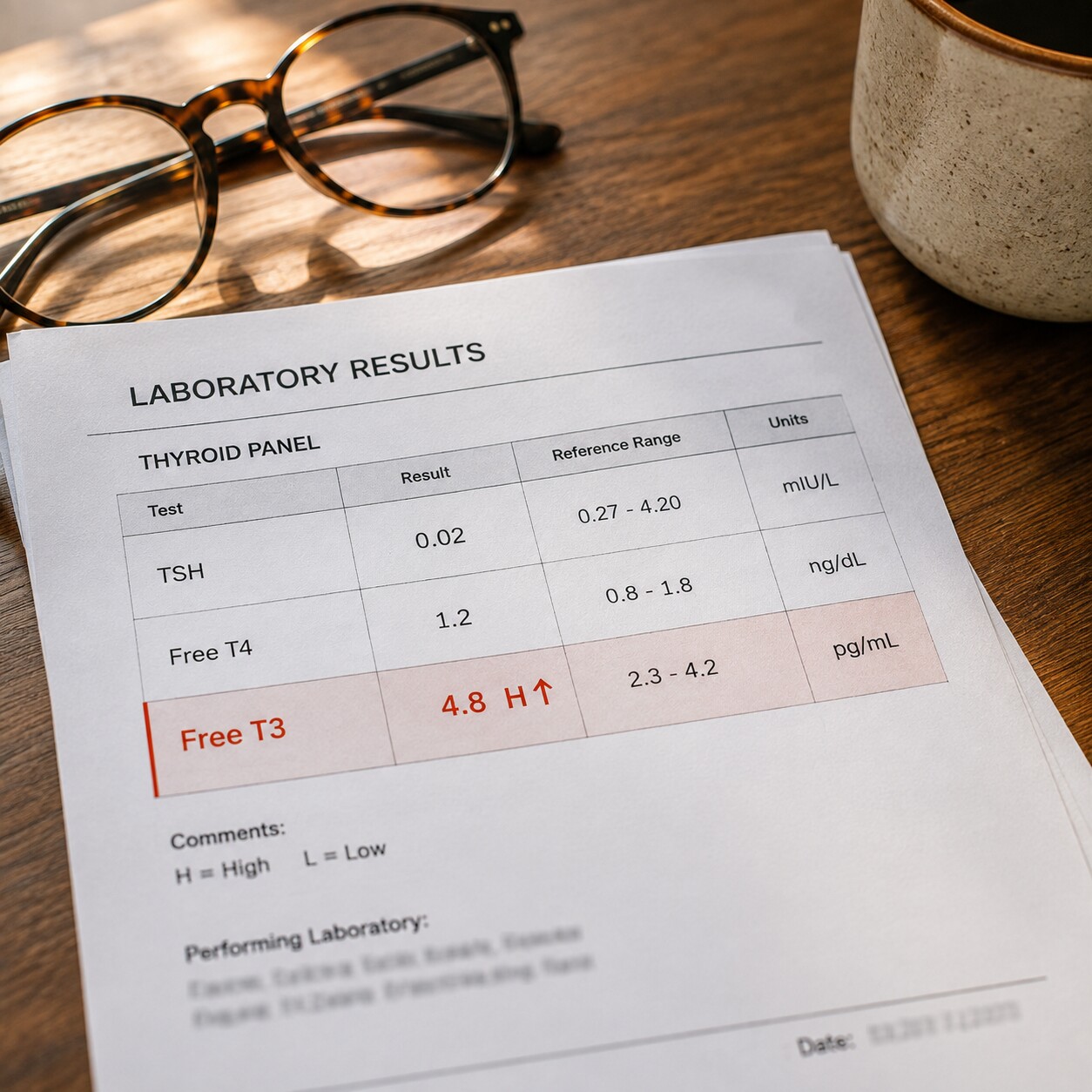
Figure 2. In isolated T3 toxicosis, free T3 climbs above the normal range while free T4 remains within it — a pattern a TSH-and-T4-only panel would miss entirely.
Picture a patient who comes in with a racing heart, unexplained weight loss, and hands that won't stop shaking. Their TSH comes back suppressed, exactly what you'd expect with an overactive thyroid. But their free T4 comes back squarely normal. If T3 is never ordered, this case can look confusing, borderline, or even get written off, because the two most commonly checked numbers — TSH and T4 — don't add up to a clean diagnosis on their own. Order a free T3, though, and it comes back clearly elevated. This specific pattern — suppressed TSH, normal T4, high T3 — has its own name: T3 toxicosis, sometimes called isolated T3 toxicosis or T3-predominant hyperthyroidism. Without checking T3 directly, it's a diagnosis that's easy to miss entirely.
Estimates of how often this pattern shows up vary across studies and populations, but research has generally placed it somewhere in the range of roughly 1 in 20 to 1 in 10 new cases of thyrotoxicosis, with some regions and patient groups reporting it more often than others. It's most closely associated with early-stage Graves' disease or an autonomously functioning thyroid nodule, and it tends to represent a genuinely earlier point in the disease process rather than a permanently different condition — left untreated, most people who present with isolated T3 toxicosis go on to develop the more familiar pattern of elevated T4 as well, as the underlying overactivity continues. That progression is itself informative: it supports the idea that T3-predominant secretion is often simply what hyperthyroidism looks like at its earliest, most treatable stage, before it becomes obvious on a standard T4 test.
This is part of why T3 testing carries real clinical weight rather than being an optional extra. A patient with classic hyperthyroid symptoms and a suppressed TSH, but a T4 that comes back frustratingly normal, isn't necessarily someone whose symptoms have another explanation entirely — they may simply be earlier in the disease course than a T4-only panel can detect. Checking free T3 in exactly this scenario is one of the more common reasons a doctor orders it specifically, rather than defaulting to TSH and T4 alone.
Why T3 Often Moves First — The Enzyme Working Inside the Gland Itself
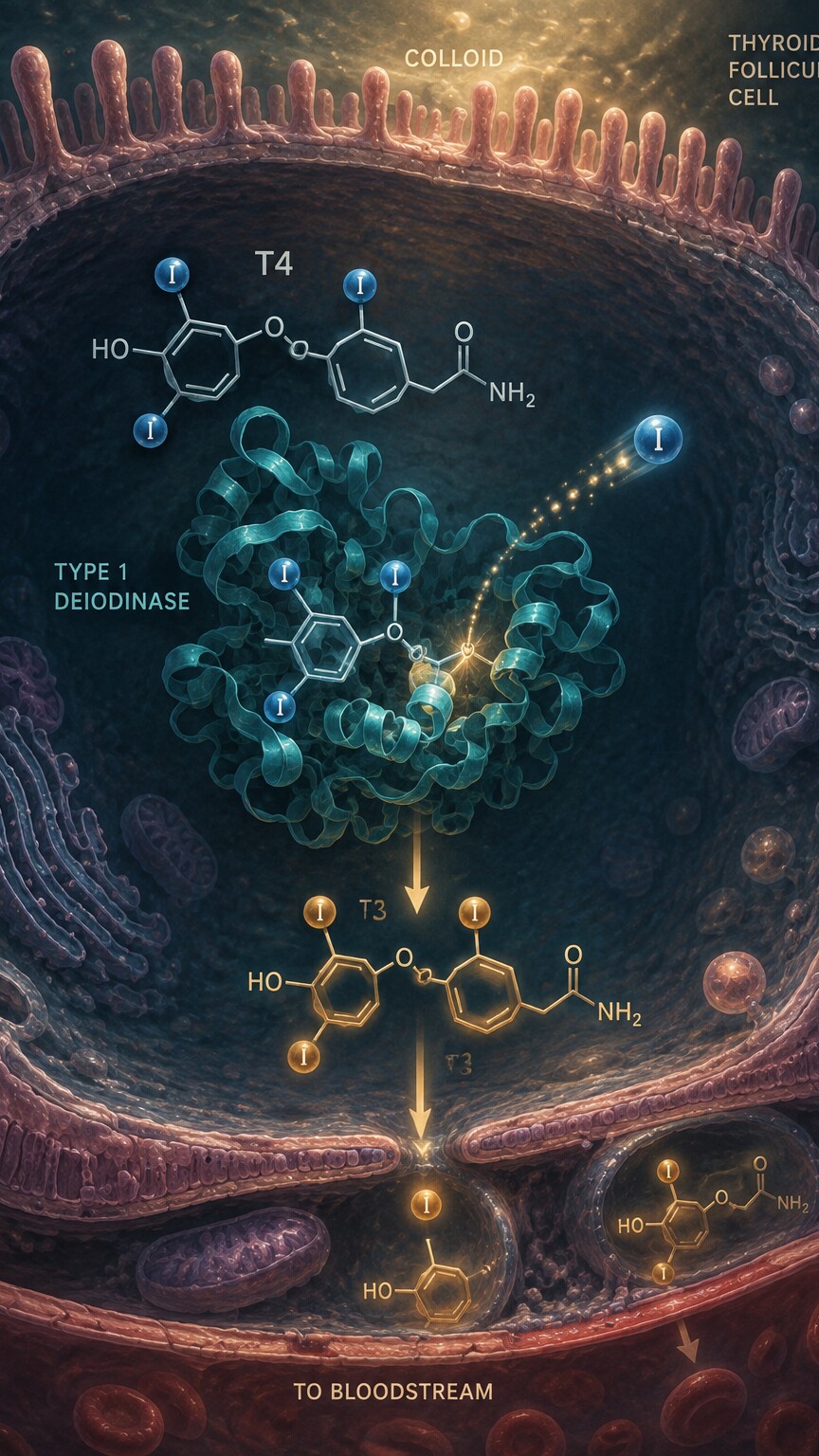
Figure 3. Type 1 deiodinase activity increases directly inside thyroid follicular cells in Graves' disease, letting the gland convert and secrete extra T3 independent of conversion happening elsewhere in the body.
The enzymes responsible for turning T4 into T3 are called deiodinases — literally, enzymes that remove an iodine atom. Most explanations of thyroid physiology focus on where these enzymes work throughout the rest of the body: the liver, the kidneys, skeletal muscle. That peripheral conversion matters enormously in everyday thyroid function. But in hyperthyroidism specifically, a second, less-discussed site of conversion becomes important — the deiodinase enzymes sitting inside the thyroid gland's own follicular cells, the very cells that manufacture and release hormone in the first place.
When the thyroid is driven into overdrive — whether by ordinary TSH, or, in Graves' disease, by an antibody that binds the same receptor TSH normally uses and switches it on — that stimulation doesn't just accelerate hormone synthesis. Research has found it also increases the activity of type 1 deiodinase directly within the gland itself, meaning the thyroid does more of its own finishing work on T4 before ever releasing hormone into the blood. The gland essentially stops behaving like a plant that ships out mostly raw material and starts behaving more like one that increasingly ships out the finished product on-site. Layered on top of the normal conversion happening elsewhere in the body, this intrathyroidal step is a major reason T3 climbs earlier and more sharply than T4 once the thyroid becomes overactive — it isn't only about how much extra hormone the gland is making, but about where in the pipeline that hormone gets finished.
This is also why some clinicians specifically add free T3 to a thyroid panel the moment they suspect early hyperthyroidism, rather than waiting to see whether T4 becomes abnormal first. If T3 genuinely tends to move before T4 does in this condition, checking T4 alone and waiting for it to climb means, in some patients, missing the disease at its most treatable, least advanced stage.
Free T3 vs. Total T3 — Which Number Actually Matters Here
As with T4, there isn't just one flavor of "T3 test." The overwhelming majority of T3 circulating in your blood — well over 99% of it — travels bound to carrier proteins, mainly one called thyroxine-binding globulin, the way a passenger rides attached to a bus rather than walking freely down the street. Only the small, unbound sliver, called free T3, is actually available to enter cells and act on them. A total T3 test measures the bound and unbound portions together; a free T3 test isolates just the active fraction.
In the specific context of diagnosing hyperthyroidism, this distinction is not just a technicality. Anything that shifts how much carrier protein is floating around — pregnancy, oral estrogen or birth control pills, liver disease, certain inherited variations in binding proteins — can nudge a total T3 result up or down without the amount of biologically active hormone changing at all. A total T3 that looks mildly elevated in someone who is pregnant or taking oral estrogen, for example, may partly reflect more carrier protein in circulation rather than a genuinely overactive thyroid. For this reason, free T3 is generally the preferred test when hyperthyroidism is actually suspected, since it more directly reflects what's available to act on the body's cells rather than what's simply being transported through the bloodstream.
That said, total T3 still has a role — it's the version used in much of the older research establishing the T3-to-T4 ratio discussed next, and it remains a reasonably reliable, widely available option when free hormone assays aren't accessible or when binding-protein conditions aren't a concern for a particular patient. What matters most in practice is that the type of T3 test being interpreted is understood clearly, since a "high T3" means something different depending on whether it's the free or total measurement being discussed.
The T3-to-T4 Ratio: A Clue for Telling Graves' Disease from Thyroiditis
Once hyperthyroidism is confirmed, the next question a doctor usually needs to answer is what's causing it — and here, T3 does something T4 alone can't. The two most common causes of new-onset thyrotoxicosis are strikingly different in how they're managed: Graves' disease, an autoimmune condition where antibodies continuously stimulate the thyroid to keep manufacturing new hormone, and thyroiditis (subacute, silent, or postpartum), a temporary inflammation that causes the gland to leak out hormone it had already made and stored, without ramping up new production at all. Graves' disease usually needs ongoing treatment — antithyroid medication, radioactive iodine, or sometimes surgery. Thyroiditis, by contrast, frequently resolves on its own over a period of weeks to months as the inflammation settles and the gland's stored hormone supply runs out, sometimes even followed by a temporary underactive phase before things normalize.
Here's where the ratio between T3 and T4 becomes genuinely useful. Because Graves' disease drives active new synthesis — and because that synthesis, as described above, is disproportionately weighted toward T3 — blood tests in Graves' disease tend to show T3 elevated out of proportion to T4. Thyroiditis, on the other hand, is releasing hormone that was already sitting in storage inside the gland, in roughly the same T4-heavy ratio a healthy thyroid normally stores it in, rather than a ratio shaped by accelerated production. It's a useful way to picture the difference: Graves' disease is like a factory told to run its line faster, and it happens to manufacture proportionally more of the fast-acting product while doing so; thyroiditis is like a warehouse with a hole in its wall, spilling out whatever inventory was already sitting on the shelves — mostly T4, because that's what a healthy gland normally has in storage.
Published research comparing these two conditions has found that a distinctly elevated ratio of T3 to T4 in the blood shows up more often in Graves' disease than in thyroiditis, with some studies using cutoffs around a 20-to-1 ratio for total hormone levels and others working out different cutoffs specifically for the free hormone versions. It's an imperfect tool on its own — the ranges for the two conditions overlap enough that no single cutoff sorts every case correctly, and different studies have found different balances between how often the ratio catches true Graves' disease versus how often it's wrong. But as one piece of evidence considered alongside TSH, physical exam findings, and antibody testing, a strikingly high T3-to-T4 ratio is a genuinely useful early clue that points a workup in the right direction before more specific confirmatory testing comes back.
The trade-off researchers keep running into with this ratio is the same one that shows up with a lot of diagnostic cutoffs: setting the threshold lower catches more true cases of Graves' disease but also flags more people who don't actually have it, while setting it higher does the opposite, missing some real Graves' cases in exchange for fewer false alarms. Studies using a comparatively low cutoff for the free-hormone ratio have reported catching the large majority of Graves' disease cases correctly, but also incorrectly flagging a substantial share of thyroiditis cases along the way; studies using a much higher cutoff report the reverse — very few false alarms, but a large share of true Graves' disease cases falling below the line and getting missed. Neither extreme is "the right answer" in isolation, which is exactly why this ratio functions best as a supporting clue layered onto TSH, symptoms, and antibody or imaging results, rather than as a single number a diagnosis gets built on by itself.
Confirming the Picture: Uptake Scans and Antibody Testing
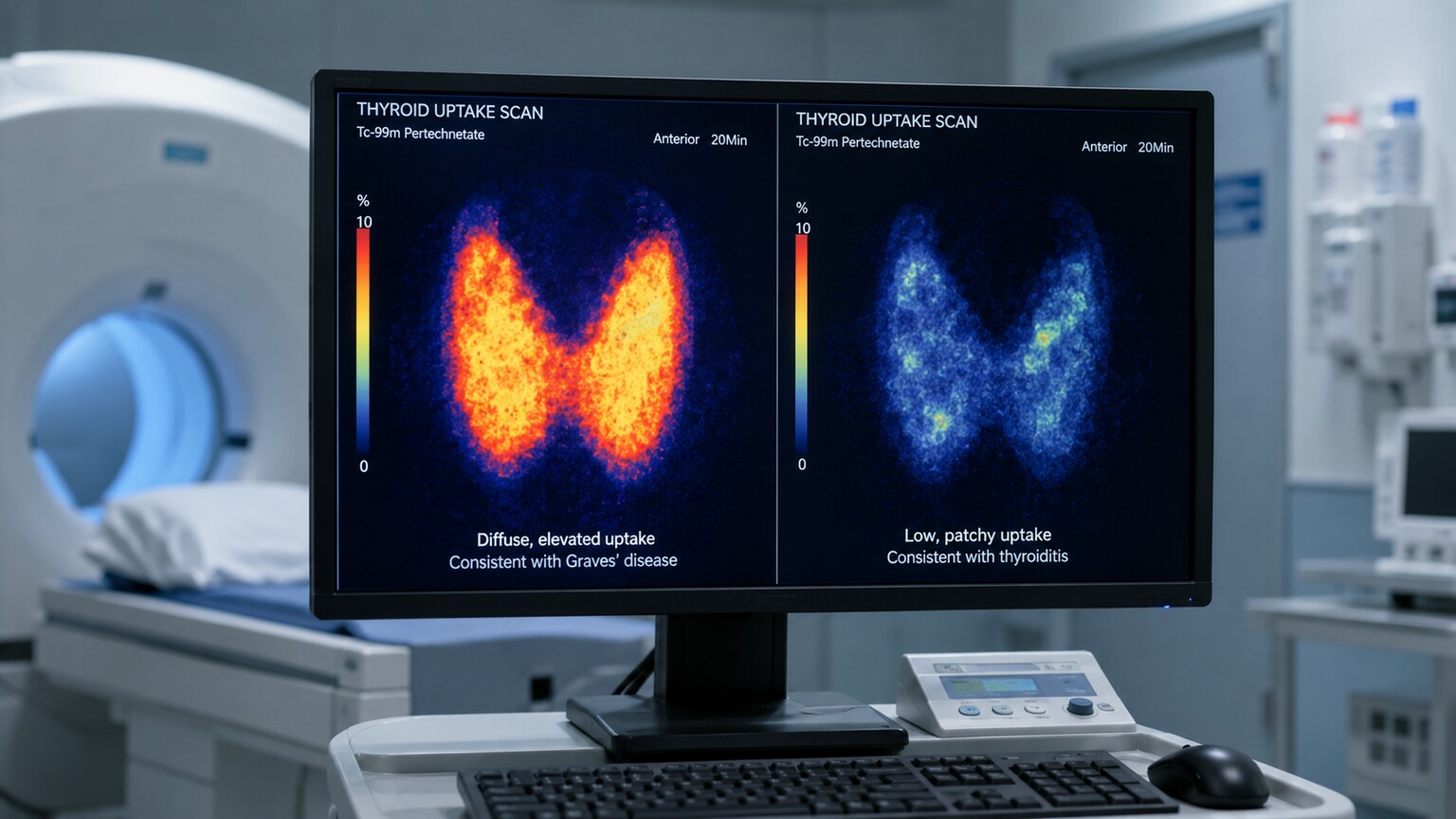
Figure 4. A diffusely elevated pattern on a radioactive iodine uptake scan reflects active new hormone manufacturing, as in Graves' disease, compared with the low or patchy uptake typical of thyroiditis.
Because the T3-to-T4 ratio is a clue rather than a verdict, doctors generally confirm the underlying cause with more direct testing once hyperthyroidism is established. A radioactive iodine uptake scan is one of the classic tools for this: the patient swallows a very small, tracked dose of radioactive iodine, and a scanner measures how much of it the thyroid gland absorbs over the following hours. Because Graves' disease involves the gland actively building new hormone, it typically shows a diffusely elevated uptake spread evenly across the whole gland. Thyroiditis shows the opposite pattern — low or even suppressed uptake — because an inflamed gland that's leaking pre-formed hormone isn't pulling in new iodine to manufacture more.
A second, increasingly preferred option is a blood test for TSH-receptor antibodies, sometimes called TRAb or thyroid-stimulating immunoglobulin (TSI) testing. These antibodies are the actual drivers of Graves' disease — they're the molecules that bind the TSH receptor and switch the gland into overdrive in the first place — so a positive result is fairly specific confirmation of Graves' disease without requiring any radiation exposure at all. This matters especially in pregnancy, where a radioactive scan isn't an option; antibody testing, alongside the T3 and T4 pattern already discussed, becomes one of the main ways doctors sort out the cause of thyrotoxicosis in a pregnant patient. Ultrasound with Doppler imaging, which can show increased blood flow through a gland actively over-producing hormone, is another radiation-free option used in a similar way.
It's worth distinguishing TRAb from a different, more commonly ordered antibody test: thyroid peroxidase antibodies, or anti-TPO. Anti-TPO antibodies are associated with autoimmune thyroid disease broadly, including both Graves' disease and Hashimoto's thyroiditis, so a positive anti-TPO result on its own doesn't specifically point toward hyperthyroidism versus an underactive thyroid — it simply flags that the immune system is targeting the thyroid gland in some way. TRAb, by contrast, is far more specific to the overactive, stimulating antibody pattern seen in Graves' disease. A doctor working through a thyrotoxicosis case will often order TRAb specifically for this reason, rather than relying on a more general antibody panel that wasn't designed to answer this particular question.
What Elevated T3 Feels Like in Everyday Life

Figure 5. Palpitations, hand tremor, and heat intolerance trace directly back to elevated T3, since it is the hormone form that actually enters cells and drives up metabolic rate.
T3's outsized role in hyperthyroidism isn't only a lab curiosity — it's also the reason the symptoms of an overactive thyroid feel the way they do. T3 is the form of thyroid hormone that actually crosses into cells and binds receptors in the nucleus, turning up the machinery that governs metabolic rate throughout the body. Because of that, the classic symptoms of hyperthyroidism trace almost directly back to T3 specifically: a racing or irregular heartbeat, a fine tremor in the hands, feeling uncomfortably hot or sweating more than usual, losing weight despite eating the same amount or more, anxiety or irritability that feels out of character, trouble falling or staying asleep, and more frequent bowel movements. Someone might first notice it as their hands shaking while they're holding their morning coffee, or their heart pounding climbing a flight of stairs that never used to bother them — small, physical moments that eventually add up to a reason to see a doctor.
This same mechanism explains a detail that can otherwise seem unrelated: doctors frequently prescribe a beta-blocker, most often propranolol, for fast symptom relief the moment hyperthyroidism is diagnosed, well before antithyroid medication has had time to work. Beta-blockers calm the racing heart and tremor by blocking the effects of adrenaline-type signaling that T3 has sensitized the body to respond to more strongly. Propranolol specifically has a second, more targeted benefit in this exact situation — at higher doses, it also partially blocks the peripheral conversion of T4 into T3, meaning it doesn't just mask symptoms, it modestly reduces the very hormone driving them, at least until longer-term treatment brings the underlying overactivity under control.
How Doctors Use T3 to Track Treatment, Not Just Diagnose It
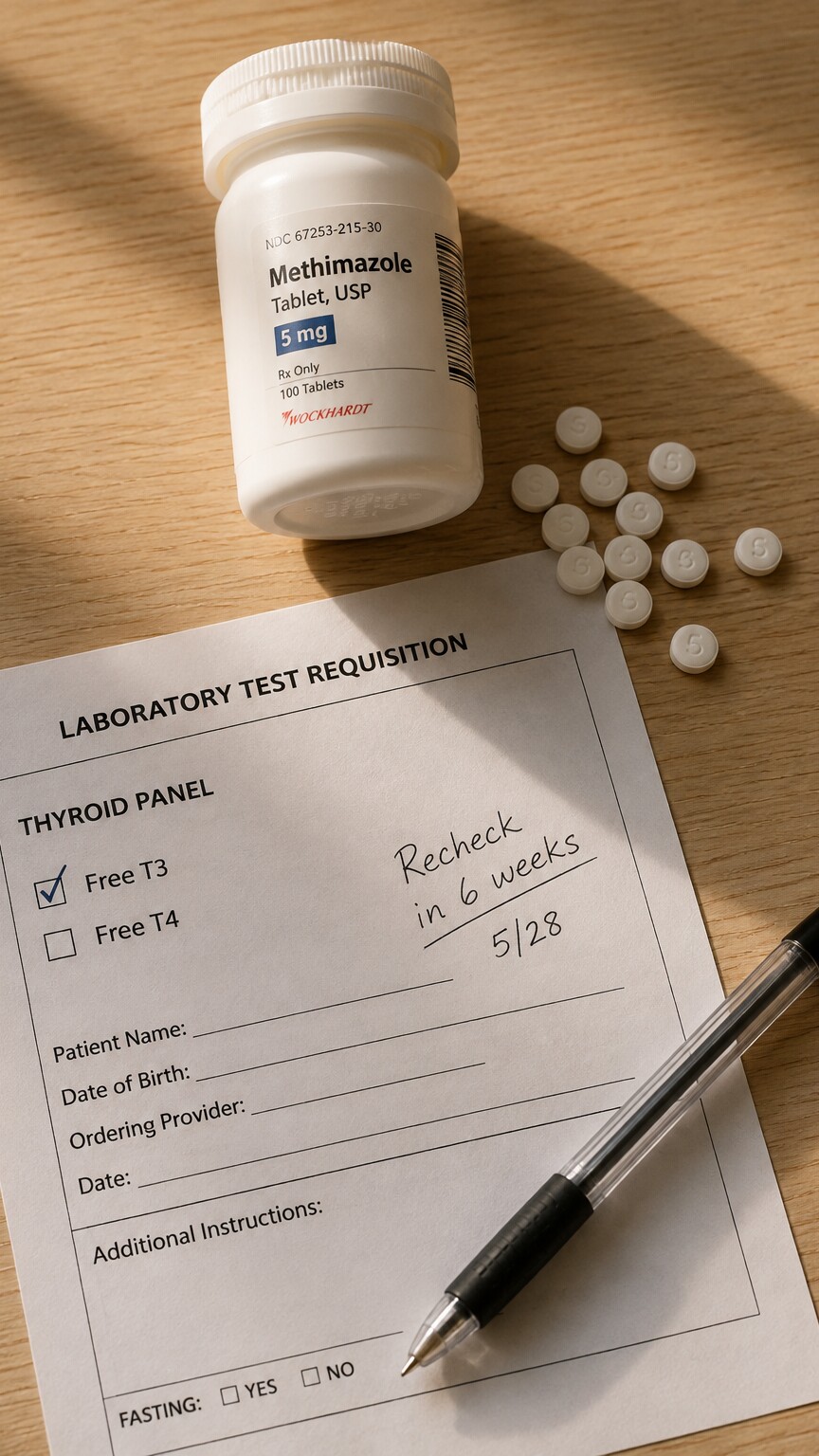
Figure 6. Serial free T3 measurements help track how well antithyroid medication is working, since T3 and T4 often normalize on a different timeline than TSH does.
Once a diagnosis is made and treatment begins — most often methimazole in the United States, or propylthiouracil in specific situations such as the first trimester of pregnancy — doctors don't just check labs once and move on. Free T4 and free T3 are typically rechecked every four to six weeks in the early phase of treatment to see how well the medication is working and to guide dose adjustments. T3 is often one of the more responsive markers during this window, since it's frequently the number that moved first at diagnosis and can be one of the first to show a clear treatment response as well.
This is also where a detail that confuses a lot of patients gets explained: TSH can stay suppressed for weeks or even months after T3 and T4 have already returned to normal on treatment. That's not a sign treatment isn't working — it reflects the fact that the pituitary gland's hormone-sensing cells, having been suppressed by high thyroid hormone levels for a stretch of time, simply need time to recover their normal sensitivity once the excess hormone is gone. Because of this lag, doctors lean more heavily on the trend in free T3 and free T4 than on TSH alone during the early weeks of treatment, precisely because those two numbers respond to therapy more promptly and give a truer real-time picture of whether the medication dose is right.
Special Situations Where T3 Testing Carries Extra Weight
Pregnancy
Human chorionic gonadotropin (hCG), the hormone that pregnancy tests detect, is structurally similar enough to TSH that very high hCG levels — as seen in early pregnancy, and especially with severe morning sickness or a multiple pregnancy — can weakly stimulate the thyroid on their own, producing a temporary, usually mild and self-resolving pattern that can look like hyperthyroidism on a first-trimester lab panel. Telling this benign, pregnancy-related pattern apart from true Graves' disease matters a great deal, since one needs no treatment at all and the other typically does. Because a radioactive uptake scan is off the table during pregnancy, doctors lean more heavily on the T3-and-T4 pattern together with TSH-receptor antibody testing to sort out which situation they're looking at.
Older Adults
Hyperthyroidism in older adults frequently doesn't look like the textbook picture at all — instead of the anxious, sweaty, racing-heart presentation seen in younger patients, it can show up as unexplained weight loss, a new and otherwise unexplained irregular heart rhythm, or a kind of quiet withdrawal and low energy that gets mistaken for depression or ordinary aging. This atypical pattern, sometimes referred to as apathetic hyperthyroidism, is part of why thyroid testing — including T3, not just TSH — is commonly included in the workup for unexplained weight loss or a new heart rhythm problem in older adults, even when the more obvious hyperthyroid symptoms aren't present.
Amiodarone Use
Amiodarone, a medication used to control serious heart rhythm disorders, is extremely rich in iodine and can, in a subset of people, trigger genuine thyroid overactivity — either from the iodine load feeding a thyroid gland that already had a tendency toward overproduction, or from a more destructive, thyroiditis-like process that releases stored hormone without ramping up new production. Telling these two amiodarone-related patterns apart matters enormously for treatment, and it draws on the exact same tools discussed throughout this article: the relationship between T3 and T4, along with uptake imaging, when it can safely be used.
How Severe Does T3 Get in Thyroid Storm?
At the far end of the severity spectrum sits thyroid storm — a rare, life-threatening escalation of hyperthyroidism that requires emergency treatment, usually triggered by an added stressor like infection, surgery, trauma, or childbirth landing on top of an already overactive, often previously undiagnosed or undertreated thyroid. It's not simply "a very high T3 number." Thyroid storm is a clinical diagnosis, built from a cluster of findings — a dangerously fast heart rate, high fever, confusion or agitation, and signs of the body's organs struggling to keep up — scored using tools like the Burch-Wartofsky point scale rather than any single lab value on its own. In fact, someone in thyroid storm can have thyroid hormone levels that aren't dramatically higher than another person with milder, stable hyperthyroidism; what typically distinguishes storm is less about the absolute height of the number and more about how the whole body is responding to it.
Even so, T3 still plays a meaningful supporting role here. Because T3 is the hormone form actually acting on tissue throughout the body, it correlates more closely with how symptomatic and physiologically stressed a person is than T4 does, which is part of why emergency teams still check it alongside T4 and TSH when storm is suspected — both to confirm that thyrotoxicosis is genuinely present and to help track the response to the aggressive combination of medications used to treat it, which typically includes high-dose antithyroid drugs, beta-blockers, iodine solution, and sometimes corticosteroids given specifically because they blunt peripheral T4-to-T3 conversion. That last detail is worth sitting with for a moment: in a true medical emergency built around too much active thyroid hormone, part of the treatment strategy is aimed directly at slowing down the conversion step that turns T4 into the more potent T3 — the same conversion step responsible for so much of what makes T3 diagnostically important in milder hyperthyroidism to begin with.
Thyroid storm is uncommon, and the overwhelming majority of people with an elevated T3 from hyperthyroidism will never come anywhere close to it. It's included here mainly to make a broader point clearly: T3 is genuinely useful for diagnosis, for distinguishing causes, and for tracking treatment, but at the most severe end of the disease, doctors are trained to treat the whole clinical picture — the heart rate, the fever, the mental status — rather than chase a single number, even one as informative as T3 usually is.
When a High T3 Doesn't Automatically Mean Hyperthyroidism
A high T3 result deserves context before it's treated as a settled diagnosis. High-dose biotin supplements, widely marketed for hair, skin, and nail health, can interfere with the immunoassay technology many labs use to measure T3 and other thyroid hormones, producing a result that doesn't reflect what's actually happening in the body at all. This is exactly why labs typically recommend pausing high-dose biotin for a few days before thyroid testing, and why it's worth mentioning any supplement use to a doctor reviewing an unexpected result.
There are also rare inherited conditions — including resistance to thyroid hormone and familial dysalbuminemic hyperthyroxinemia — where thyroid hormone levels run persistently high in the blood without the person actually being hyperthyroid or having a suppressed TSH. In classic resistance to thyroid hormone, for instance, TSH tends to be normal or even mildly elevated rather than suppressed, which is precisely the opposite of what's seen in true hyperthyroidism. This is exactly why T3 is never interpreted by itself in a real clinical workup — it's always read alongside TSH, since the relationship between the two is what actually distinguishes true thyroid overactivity from these rarer look-alike conditions.
What to Do If Your T3 Comes Back High
If you're looking at an elevated T3 result right now, a practical, unpanicked next step looks something like this. First, check what else was on the panel, especially TSH and free T4, since the combination of all three is what actually tells the story a single number can't. Second, think about anything that might explain it on its own — a recent high-dose biotin supplement, a new medication like amiodarone, or, if relevant, an early pregnancy. Third, pay attention to symptoms like a racing heart, tremor, unexplained weight loss, or heat intolerance, and bring the full picture — the numbers, the timeline, and how you've been feeling — to a healthcare provider rather than trying to interpret an isolated result on your own. From there, additional testing like TSH-receptor antibodies or an uptake scan can pin down the specific cause, which matters enormously, since Graves' disease, thyroiditis, and a toxic nodule are managed in genuinely different ways even though they can all start with the same elevated T3 on a printed lab report.
Frequently Asked Questions
Can T3 be high while TSH and T4 are both normal?
TSH being genuinely normal alongside a truly elevated T3 is unusual and worth double-checking, since suppressed TSH is the expected finding once T3 is meaningfully elevated from an overactive thyroid. A normal T4 alongside a suppressed TSH and high T3, however, is common — that's the classic pattern of isolated T3 toxicosis described earlier in this article.
Does a high T3-to-T4 ratio guarantee Graves' disease?
No. It's a meaningful clue supported by research, not a stand-alone diagnosis. The ranges for Graves' disease and thyroiditis overlap enough that doctors typically confirm the cause with TSH-receptor antibody testing, an uptake scan, or ultrasound before settling on a final diagnosis.
Will my T3 always be tested alongside TSH and T4?
Not always — TSH is usually the first-line screening test, and T4 often follows if TSH is abnormal. T3 tends to get added specifically when hyperthyroidism is suspected but T4 looks normal, when a doctor wants to distinguish Graves' disease from thyroiditis, or when tracking how well antithyroid treatment is working.
How quickly does T3 normalize after starting antithyroid medication?
It varies by person and by how elevated levels were to start, but T3 and T4 often move into the normal range within a matter of weeks on an appropriate dose, while TSH can lag behind for weeks to months even after T3 and T4 have normalized. That's why doctors watch the trend rather than a single follow-up value.
Can stress or a minor illness cause a temporarily high T3?
Ordinary stress or a minor illness is far more commonly associated with lower thyroid hormone levels, not higher ones. A genuinely elevated T3, especially paired with a suppressed TSH, is much more likely to reflect true thyroid overactivity than everyday stress, and it's worth having evaluated rather than assumed to be temporary.
Is T3 testing reliable during pregnancy?
Yes, though results need to be interpreted with pregnancy in mind. Reference ranges shift somewhat during pregnancy, and conditions like severe morning sickness can temporarily affect thyroid hormone patterns, so a provider familiar with pregnancy-specific thyroid ranges should be the one interpreting an abnormal result.
Does a high T3 always mean I'll need long-term thyroid treatment?
Not necessarily. Whether treatment is short-term or long-term depends heavily on the underlying cause. Thyroiditis often resolves on its own within weeks to months without ongoing medication, while Graves' disease and toxic nodules typically require sustained treatment, which is exactly why identifying the specific cause matters as much as confirming that T3 is elevated in the first place.
Can a high T3 level alone confirm thyroid storm?
No. Thyroid storm is a clinical diagnosis based on a cluster of findings like a dangerously fast heart rate, high fever, and altered mental status, typically scored with a tool like the Burch-Wartofsky scale rather than determined by any single lab value. T3 and T4 are checked to confirm thyrotoxicosis is present, but the diagnosis itself rests on the overall clinical picture.
Conclusion
T3 isn't a secondary number tacked onto a thyroid panel as an afterthought — in hyperthyroidism specifically, it's frequently the number carrying the most diagnostic weight. It tends to rise earlier and more sharply than T4 because an overactive thyroid doesn't just make more hormone, it shifts what it makes toward the fast-acting form. It can be the only abnormal number in a real and clinically important condition, T3 toxicosis. And the relationship between how far it climbs relative to T4 offers a genuine, research-backed clue for telling Graves' disease apart from thyroiditis — two conditions that share a lab pattern at first glance but are managed in very different ways. None of this means a single T3 number, high or low, tells the whole story on its own. It means that of all the numbers on a thyroid panel, T3 is often the one doing the most work behind the scenes — and understanding what it's actually reflecting is what turns a confusing lab report into a picture that finally makes sense.
Still Not Sure What Your Results Mean?
Upload your labs and get a complete, visual, plain-language interpretation of every biomarker — delivered to your inbox in under 15 minutes.
Get My ReportThis article is for educational purposes only and does not constitute medical advice. Always consult your healthcare provider regarding your specific lab results.