
What Causes T4 Levels to Rise or Fall?
T4 can move in either direction for genuinely different biological reasons, and understanding which mechanism applies to your own result matters far more than simply knowing whether the number is high or low. T4 rises when the thyroid gland is either tricked into overproducing hormone by a misdirected immune signal, or when inflammation physically ruptures thyroid tissue and dumps stored hormone into the blood all at once — two completely different processes that both show up as "high T4" on a lab report. T4 falls, in turn, when the gland itself is being slowly destroyed by the immune system, when the body simply lacks the raw material (iodine) needed to build the hormone in the first place, or when the pituitary gland's own signaling breaks down somewhere upstream of the thyroid entirely. And in some cases, T4 does both — rising first, then falling later, as part of a single underlying condition working through distinct phases over time. This article walks through each of these mechanisms individually, plus a separate wildcard that can shift your T4 number without any real change in thyroid function at all: the carrier protein that ferries most of your T4 through the bloodstream.
It's worth stating upfront why this distinction matters so much in practice, rather than treating it as an academic detail. Two people can both show up with an elevated T4 result and yet need completely opposite treatment plans depending on which mechanism is actually responsible — one may need medication that blocks the thyroid gland from producing more hormone, while the other may need nothing at all beyond monitoring, since their gland isn't overproducing anything and the elevated number will resolve on its own as inflammation settles. Treating every high or low T4 as though it has one universal cause and one universal fix is exactly the kind of mistake this article is trying to help you avoid, both as a patient trying to understand your own results and as a way of appreciating why your doctor asks the specific follow-up questions they do.
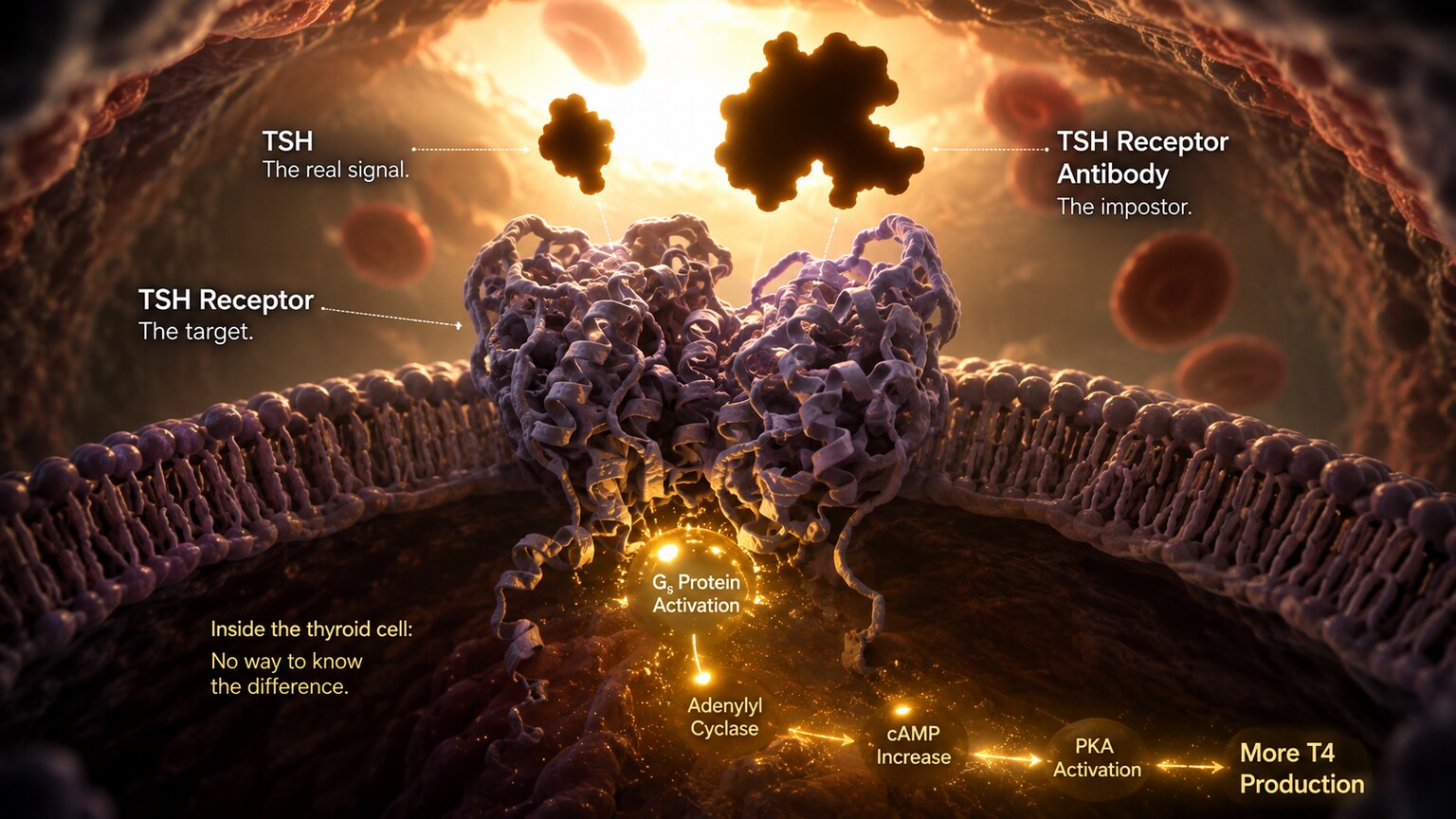
Figure 1. In Graves' disease, an antibody mimics TSH closely enough to bind and activate the same receptor, driving continuous thyroid hormone production the body has no way to switch off.
Why T4 Rises, Reason 1: Autoimmune Overproduction (Graves' Disease)
The most common cause of a genuinely elevated T4 in an otherwise straightforward case is Graves' disease, an autoimmune condition in which the immune system produces an antibody that happens to bind the same receptor on thyroid cells that TSH (thyroid-stimulating hormone) normally uses to signal the gland to produce more hormone. Because this antibody activates the receptor just as effectively as real TSH would, but isn't subject to the normal feedback control that keeps TSH production in check, it drives the thyroid gland to keep producing hormone continuously, regardless of how much T4 is already circulating. This is fundamentally an overproduction problem — the gland's actual hormone-making machinery is working overtime, genuinely churning out newly manufactured T4 rather than simply releasing hormone that was already sitting in storage waiting to be used.
Graves' disease is more common in women than men and often runs in families alongside other autoimmune conditions, reflecting a broader genetic predisposition toward this kind of misdirected immune activity rather than a single isolated malfunction. The antibody responsible, called a thyroid-stimulating immunoglobulin, is itself detectable on specific blood testing, and its presence is one of the more definitive ways to confirm Graves' disease specifically rather than another cause of an overactive thyroid, since the antibody's presence directly explains the continuous stimulation driving the gland's behavior rather than simply describing the resulting hormone levels.
This mechanism also explains a detail that often confuses people newly diagnosed with Graves' disease: TSH itself is typically measured as very low or undetectable in this condition, not high, even though the thyroid gland is clearly being pushed to overproduce. This isn't a contradiction — the pituitary gland is correctly sensing the already-elevated T4 in the blood and appropriately shutting down its own real TSH output in response, exactly as the normal feedback system is supposed to work. The problem is entirely downstream of that feedback loop: the antibody bypasses it completely, continuing to stimulate the thyroid gland directly regardless of what the pituitary is doing.
Because the underlying feedback machinery is still intact and functioning correctly in Graves' disease, treatment approaches generally focus on interrupting the antibody's effect or reducing the gland's ability to respond to it, rather than trying to fix a broken feedback loop that was never actually the problem in the first place. Anti-thyroid medications work by directly blocking an enzyme the gland needs to actually manufacture new hormone, effectively slowing production regardless of how strongly the antibody continues to stimulate the receptor. Radioactive iodine treatment and, less commonly, surgical removal of thyroid tissue work through a different logic entirely — reducing the amount of functional gland tissue available to respond to ongoing stimulation, whether from real TSH or the mimicking antibody. Each approach carries its own tradeoffs around speed, permanence, and side effects, which is part of why the choice between them is typically an individualized conversation rather than a single default answer.
Curious what your own thyroid panel is actually telling you? Upload your results and get a complete, plain-language breakdown in under 15 minutes.
Analyze My ResultsWhy T4 Rises, Reason 2: Thyroiditis — Destructive Release, Not Overproduction
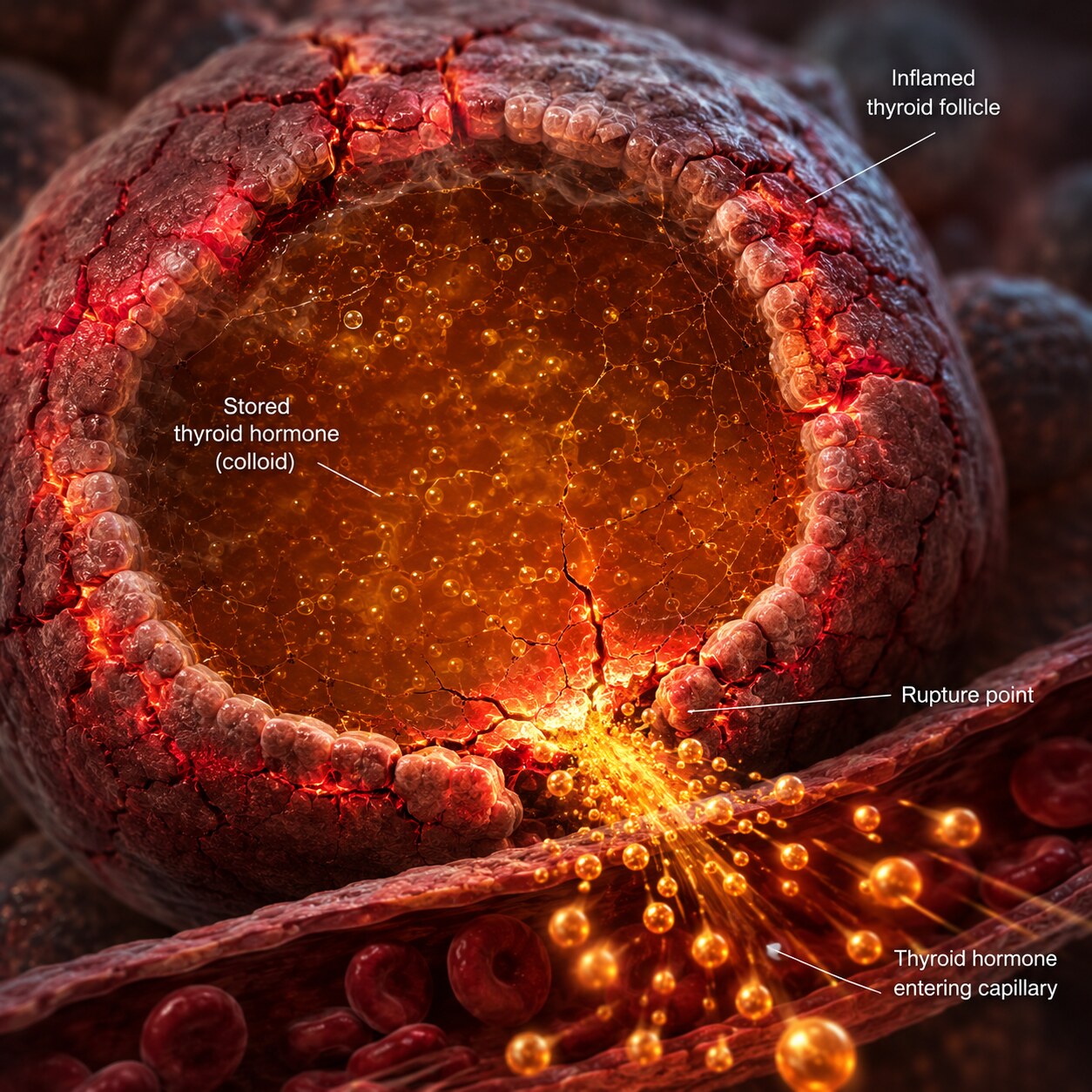
Figure 2. Thyroiditis raises T4 through a fundamentally different mechanism than Graves' disease — inflammation physically damages storage follicles, spilling pre-formed hormone into the blood rather than manufacturing new hormone.
A second, mechanistically distinct way T4 can rise is thyroiditis — inflammation of the thyroid gland itself, which can be triggered by a viral infection, an autoimmune process, or occur in the months following childbirth. Unlike Graves' disease, thyroiditis doesn't involve the gland being stimulated to make more hormone at all. Instead, the inflammatory process physically damages the thyroid's storage follicles — small, sac-like structures where finished thyroid hormone is normally kept in reserve — causing them to leak or rupture and spill their stored contents directly into the bloodstream all at once.
This distinction matters enormously in practice, because it means thyroiditis-related "hyperthyroidism" is fundamentally a release problem, not a production problem, and it's self-limited in a way Graves' disease typically isn't: once the gland's existing hormone reserves are depleted from this one-time (or occasionally recurring) release, T4 has nowhere further to come from, and levels naturally fall, often overshooting into a temporary hypothyroid phase before eventually recovering, discussed further below. Several distinct triggers can set off this same underlying inflammatory process: subacute thyroiditis often follows a viral upper respiratory infection and is frequently accompanied by genuine neck pain and tenderness over the gland itself, a helpful distinguishing clue at the bedside; silent thyroiditis produces the identical hormonal pattern without any pain at all, and is thought to have an autoimmune basis similar to Hashimoto's; and postpartum thyroiditis, covered in more detail later in this article, follows the same fundamental mechanism specifically in the months after childbirth. This is also why thyroiditis-related hyperthyroidism generally isn't treated with the same anti-thyroid medications used for Graves' disease, since those medications work by blocking hormone production — a mechanism that isn't the actual problem when excess hormone is simply leaking out of damaged storage rather than being freshly manufactured.
Because the actual problem in thyroiditis is symptomatic excess hormone circulating temporarily rather than an ongoing production issue, treatment during the high-T4 phase generally focuses on managing symptoms — beta-blockers to ease a racing heart and tremor, for instance — while the underlying inflammation runs its natural course, rather than attempting to shut down hormone production the gland isn't actually ramping up in the first place. This symptom-focused approach, rather than a mechanism-blocking one, is itself a useful clue for a patient trying to understand their own treatment plan: if a doctor prescribes something to calm symptoms rather than something aimed specifically at reducing thyroid hormone production, that's often a sign the release-versus-production distinction described here has already shaped the treatment decision, whether or not it was explained in those exact terms.
Why T4 Rises, Reason 3: Excess Intake — Medication or Iodine Overload
A third, more straightforward path to elevated T4 involves simply taking in more thyroid hormone or more of its raw material than the body needs. Someone on thyroid hormone replacement medication whose dose is higher than what their body actually requires will show an elevated T4 for the least mysterious reason possible — the medication itself is directly supplying the excess. Separately, a sudden large intake of iodine — from certain iodine-containing medications, some contrast dye used in imaging studies, or, less commonly, an abrupt dietary shift — can push T4 production up in a phenomenon called iodine-induced thyrotoxicosis, particularly in someone whose thyroid gland already has some degree of underlying nodularity or dysfunction that makes it more sensitive to a sudden surplus of raw material. Both of these causes are typically identified quickly once medication and recent procedure history are reviewed, and they resolve once the excess intake is adjusted or stops.
It's also worth noting that not everyone taking thyroid hormone replacement whose T4 comes back elevated is actually being overdosed in a meaningful clinical sense — timing relative to the last dose taken before a blood draw can shift a total T4 reading upward somewhat, since levels peak for a few hours after the medication is taken before settling back down. This is part of why some clinicians prefer measuring T4 well before that day's dose is taken, or simply interpreting a mildly elevated result in the context of when the last dose was actually swallowed, rather than assuming the prescribed dose itself is automatically too high based on a single number drawn at an inconvenient time.
A particular medication called amiodarone, used to treat certain heart rhythm disorders, deserves specific mention here because it contains an unusually high concentration of iodine relative to other medications and can affect thyroid function through more than one mechanism at once, sometimes pushing T4 up and sometimes down depending on the individual and the underlying state of their thyroid gland. Because amiodarone can remain in body tissue for months after a person stops taking it, its effects on thyroid function can also persist well beyond the period of active use, which is part of why thyroid function is monitored specifically and repeatedly in anyone taking this medication, rather than checked once and assumed stable.
Why T4 Falls, Reason 1: Autoimmune Destruction (Hashimoto's Thyroiditis)

Figure 3. Hashimoto's thyroiditis involves a slow, sustained immune infiltration that gradually destroys functional thyroid tissue over months to years, distinct from the acute rupture seen in other forms of thyroiditis.
The most common cause of a genuinely low T4, at least in regions with adequate dietary iodine, is Hashimoto's thyroiditis, an autoimmune condition in which immune cells gradually infiltrate and destroy functional thyroid tissue over a period of months to years. Unlike the acute, one-time rupture seen in some other forms of thyroiditis, Hashimoto's is a sustained, ongoing process — immune cells continuously target and damage thyroid tissue, progressively reducing how much functional gland remains to produce hormone. Early on, this can actually produce a brief, mild elevation in T4 as damaged cells release their stored hormone, similar in principle to the destructive-release mechanism described above, but the dominant, long-term trajectory is a gradual decline in T4 as functional tissue is steadily lost.
Because this process unfolds slowly, T4 can remain within a technically normal range for a long time even as functional thyroid tissue is being lost, with TSH rising first as the pituitary works harder to compensate for the gland's diminishing capacity — which is exactly why a rising TSH, even alongside a still-normal T4, is often the earliest detectable sign of this process, well before T4 itself actually falls out of range.
This staged progression is often described using the term subclinical hypothyroidism for the period when TSH has risen but T4 has not yet fallen out of its normal range, a state that can persist for years in some people before progressing further, and that doesn't always progress to overt, T4-low hypothyroidism at all — some people remain in this compensated state indefinitely, their pituitary successfully working a little harder to keep T4 within range even as the underlying gland damage continues. This is part of why the decision to treat someone in this earlier stage, before T4 has actually fallen, is often more individualized than the more straightforward decision to treat once T4 itself has clearly dropped.
Why T4 Falls, Reason 2: Iodine Deficiency — The Raw Material Problem

Figure 4. The rise of specialty and gourmet salts, none of which are iodized, has quietly moved some households away from what was historically a reliable, built-in dietary source of iodine.
Unlike Hashimoto's or Graves' disease, iodine deficiency doesn't involve any malfunction of the thyroid gland's own machinery or the immune system at all — it's a raw material shortage. T4 is chemically built around four iodine atoms (the "4" in T4 refers to this exact count), and without adequate dietary iodine, the thyroid gland simply doesn't have the building blocks required to manufacture the hormone, no matter how well the gland itself is otherwise functioning or how strongly TSH is signaling it to produce more.
In many countries with widespread iodized salt programs, severe iodine deficiency is now uncommon, but milder, borderline insufficiency still occurs, particularly among people who avoid iodized salt specifically (using only specialty salts like kosher or sea salt without realizing these typically lack added iodine), follow certain restrictive diets low in dairy, seafood, and iodized grain products, or live in regions where soil iodine content is naturally low and dietary fortification programs are less comprehensive. Pregnant and breastfeeding women face an especially elevated iodine requirement, since they need to supply enough for a developing fetus or nursing infant on top of their own baseline needs, which is part of why prenatal vitamin formulations in many countries specifically include iodine as a standard ingredient rather than treating it as optional. Because this cause is purely about supply rather than any dysfunction in the gland or immune system, it's also one of the most directly reversible causes of low T4 once identified — restoring adequate iodine intake typically allows T4 production to recover, provided no separate, unrelated thyroid damage has occurred alongside it.
Interestingly, iodine's relationship to thyroid function isn't a simple "more is always better" story, since the thyroid gland has its own internal mechanism for protecting itself against a sudden iodine surplus, temporarily suppressing hormone production when iodine intake spikes unusually high — a phenomenon sometimes called the Wolff-Chaikoff effect. In a healthy gland, this protective mechanism typically resolves within a couple of weeks as the gland adapts, but in a gland already compromised by autoimmune damage or other underlying dysfunction, this same protective shutdown can fail to reverse properly, occasionally tipping a borderline thyroid into overt hypothyroidism following a large iodine load rather than the excess-driven overproduction described earlier in this article. This is a useful reminder that iodine's effect on the thyroid genuinely can move in either direction depending on the dose and the underlying state of the gland receiving it.
Why T4 Falls, Reason 3: A Breakdown in the Signal From Above
A less common, but important, cause of low T4 involves a problem not in the thyroid gland itself, but in the pituitary gland or hypothalamus that normally signal it — a condition called central or secondary hypothyroidism. If the pituitary gland is damaged (by a tumor, surgery, radiation, or a blood flow problem, among other causes) and can no longer produce adequate TSH, the thyroid gland — despite being completely healthy and fully capable of producing hormone — never receives the signal telling it to do so, and T4 production falls simply because the instruction to produce it is missing.
This cause is important to recognize specifically because it produces a lab pattern that can initially look confusing: TSH in this scenario is often normal or even mildly low, rather than the high TSH typically expected alongside a low T4 in primary thyroid gland failure like Hashimoto's — since the pituitary itself is the source of the problem, it isn't correctly ramping up TSH output the way a healthy pituitary would in response to falling T4. Recognizing this pattern, low T4 with a TSH that isn't appropriately elevated, is often what first points a doctor toward investigating the pituitary gland directly, rather than assuming the thyroid gland itself is at fault.
Central hypothyroidism is considerably less common than primary thyroid gland failure, but it's clinically important to recognize because the pituitary rarely produces just one hormone in isolation — a pituitary tumor or area of damage significant enough to impair TSH production frequently affects other pituitary hormones as well, meaning someone with this pattern may also have other hormonal deficiencies (affecting cortisol, growth hormone, or reproductive hormones, among others) that need to be identified and addressed alongside the thyroid finding, rather than treating the low T4 as an isolated problem on its own.
The Wildcard: When the Binding Protein Changes, Not the Thyroid

Figure 5. The estrogen surge that begins with a confirmed pregnancy increases the liver's production of thyroxine-binding globulin, which can shift total T4 levels without reflecting any real change in thyroid function.
Every cause described so far in this article involves a genuine, real change in how much thyroid hormone is actually being produced, released, or signaled somewhere along the underlying regulatory pathway. But there's a completely separate way a T4 number can shift that has nothing to do with the thyroid gland's actual function at all: changes in thyroxine-binding globulin (TBG), the liver-produced protein that carries roughly 99% of circulating T4 through the bloodstream, with only a small free fraction actually available for cells to use.
Estrogen — whether from pregnancy, oral contraceptives, or hormone therapy — increases the liver's production of TBG, which increases how much total T4 the blood is carrying, since more binding protein means more capacity to carry bound hormone. This can raise a total T4 measurement noticeably without the thyroid gland actually producing any more hormone, and without the biologically active free T4 fraction necessarily changing at all. Certain liver diseases and some medications can shift TBG levels in the opposite direction, correspondingly lowering total T4 readings without any true change in thyroid function. This is precisely why free T4 (the unbound, active fraction) is generally considered the more reliable, more clinically meaningful measurement whenever TBG-affecting factors like pregnancy or hormonal medication are genuinely in the picture, since it isn't distorted one way or another by how much carrier protein happens to be circulating and available at the exact time of testing.
A useful way to picture this relationship is comparing TBG to a fleet of delivery trucks and T4 to the cargo those trucks carry. If a company suddenly acquires more trucks (more TBG, from rising estrogen), it can carry more total cargo (bound T4) even if the actual amount of cargo being delivered and used at its final destination each day hasn't changed at all — the total inventory sitting in transit has simply expanded because there's more capacity to hold it. Total T4 testing measures the entire fleet's cargo, bound and unbound together, while free T4 measures only the small portion that's actually been unloaded and made available for use — which is exactly the number that reflects genuine thyroid status regardless of how many "trucks" happen to be in circulation at the time.
When One Condition Causes Both: The Biphasic Pattern of Thyroiditis
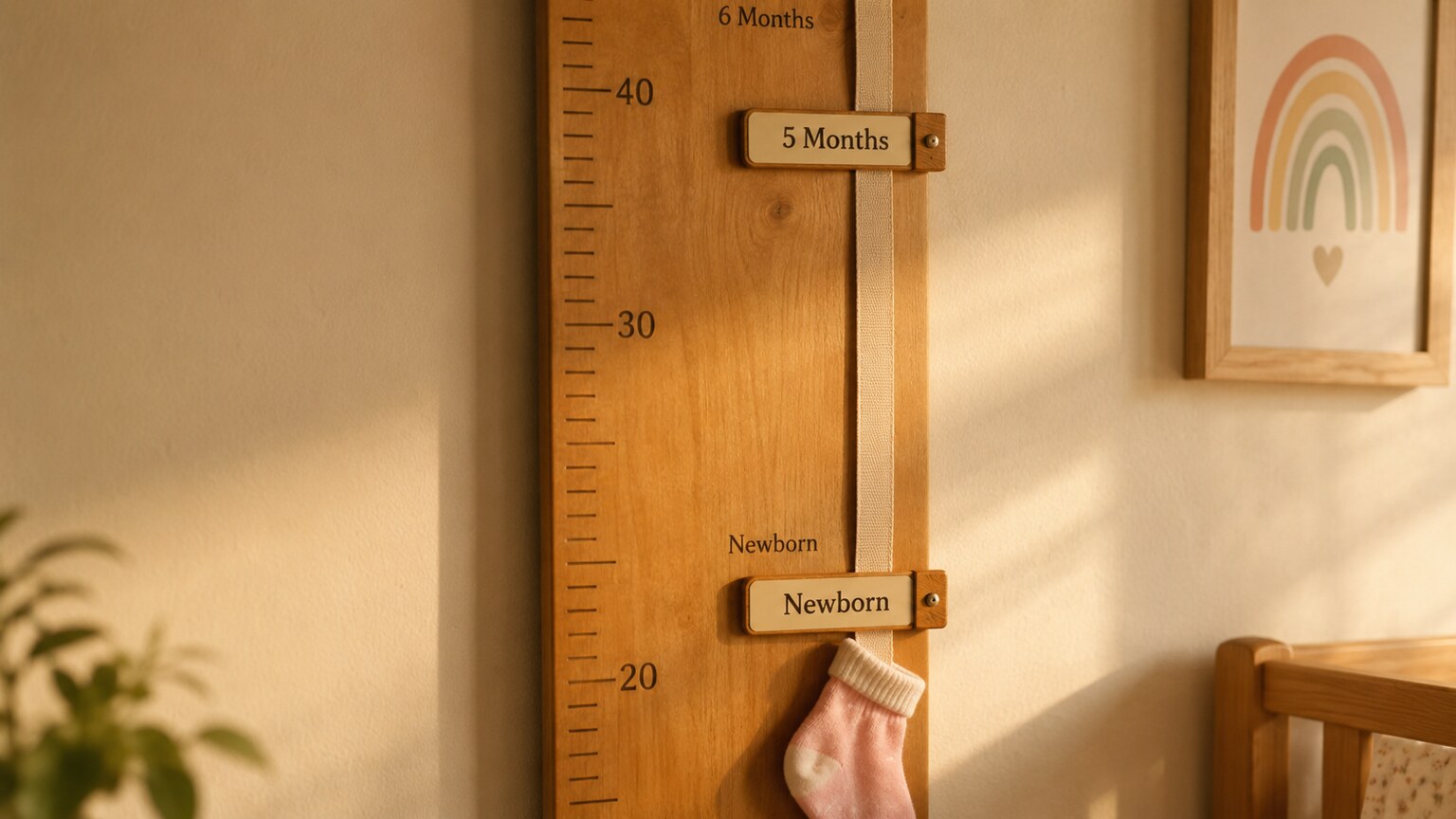
Figure 6. Postpartum thyroiditis classically produces a temporary high-T4 phase in the early months after delivery, often followed by a temporary low-T4 phase several months later, before typically resolving within about a year.
Postpartum thyroiditis, along with certain other forms of thyroiditis discussed earlier in this article, is worth understanding as its own special, unifying case, because it demonstrates that "what causes T4 to rise" and "what causes T4 to fall" aren't always two separate, unrelated questions — sometimes they're two acts of the exact same underlying condition playing out on a timeline. In the classic pattern, an inflammatory process in the months following delivery first ruptures thyroid storage follicles, releasing stored hormone and producing a temporary high-T4, low-TSH phase lasting a few weeks to a couple of months. As those hormone reserves are depleted and the underlying inflammatory process continues to affect the gland's remaining functional tissue, T4 often then swings the opposite direction, into a temporary low-T4, high-TSH phase, before the whole process typically resolves and thyroid function returns to normal within about a year for most people affected.
Understanding this biphasic pattern is genuinely useful beyond the postpartum context specifically, since it reframes how to think about a thyroid condition that seems to change character over time — a person who was told they had "hyperthyroidism" a few months ago and now appears to have "hypothyroidism" hasn't necessarily developed a new, second condition; they may simply be watching a single underlying inflammatory process move through its own natural, self-limited course.
Postpartum thyroiditis specifically is thought to affect somewhere around 5 to 10% of women in the year following delivery, and it shares an underlying autoimmune tendency with Hashimoto's thyroiditis — women who test positive for thyroid peroxidase antibodies during pregnancy carry a meaningfully higher risk of developing postpartum thyroiditis afterward. Because the symptoms of both phases — anxiety and a racing heart in the early phase, fatigue and low mood in the later one — can each be so easily mistaken for the ordinary exhaustion, hormonal shifts, and mood changes that already accompany life with a new baby, this condition is frequently under-recognized in the general population, which is part of why some obstetric and primary care practices specifically screen at-risk women during the postpartum period, including those with a personal or family history of thyroid disease, rather than waiting for symptoms alone to eventually prompt a round of testing.
How Doctors Sort Out Which Mechanism Applies
Figuring out which of these mechanisms is actually driving a given T4 result relies on a combination of clues working together rather than any single test in isolation. The direction and pattern of TSH alongside T4 is usually the first and most informative clue, since TSH and T4 are supposed to move in predictable, opposite directions relative to each other under normal circumstances, and it's specifically when that expected relationship breaks that the underlying mechanism starts to become clearer: a low TSH with high T4 points toward Graves' disease or thyroiditis, a high TSH with low T4 points toward primary gland failure like Hashimoto's or iodine deficiency, and a T4 that's abnormal while TSH stays unexpectedly normal points toward either a central pituitary problem or a TBG-related shift rather than the thyroid gland itself. From there, thyroid antibody testing (TSH receptor antibodies for Graves' disease, thyroid peroxidase antibodies for Hashimoto's and some forms of thyroiditis) can confirm or rule out an autoimmune process, a radioactive iodine uptake scan can distinguish true overproduction (high uptake, consistent with Graves' disease) from destructive release (low uptake, consistent with thyroiditis, since a damaged gland isn't actively taking up new iodine to make hormone even while releasing what it already had stored), and a thorough medication and dietary history rounds out the picture for the remaining causes.
The radioactive iodine uptake scan deserves a closer look, since it's one of the more elegant diagnostic tools used in this workup precisely because it distinguishes between mechanisms rather than simply confirming a direction. The test involves giving a small, safe tracer dose of radioactive iodine and measuring how much of it the thyroid gland actively absorbs over a set period. A gland driven by Graves' disease-style overstimulation absorbs unusually high amounts, since it's being pushed to make as much new hormone as possible and needs the raw material to do it. A gland affected by thyroiditis, by contrast, shows unusually low uptake, since the excess hormone already in the blood is coming from damaged, leaking storage rather than active new production, and an inflamed, damaged gland isn't well positioned to actively pull in and use new iodine at that same moment. Two glands that look identical on a basic hormone panel alone can look completely different on this single additional test, which is exactly why it remains such a valuable tool when the underlying mechanism genuinely isn't clear from history and bloodwork alone.
Bringing the Whole Picture Together
Stepping back across every mechanism covered in this article, a useful mental model is to picture T4 not as a single dial that simply turns up or down, but as the output of several genuinely separate control points that all feed into the same final number: how strongly the gland is being stimulated, whether that stimulation is legitimate or an autoimmune impostor, whether the gland's storage tissue is intact or actively leaking, whether enough raw iodine is available to manufacture new hormone, whether the signal from the pituitary is arriving correctly in the first place, and how much carrier protein happens to be circulating to transport whatever hormone is actually present. A single abnormal T4 result is really the combined readout of all of these control points at once, which is exactly why untangling which one has actually shifted is worth the extra diagnostic effort rather than treating the number itself as the whole story.
Frequently Asked Questions
If my T4 is high, does that always mean I have Graves' disease?
No. High T4 can come from genuine overproduction (Graves' disease), destructive release from thyroiditis, excess thyroid medication, or iodine overload, each of which requires a meaningfully different treatment approach. TSH levels, thyroid antibody testing, and sometimes a radioactive iodine uptake scan are used together to reliably distinguish between these otherwise similar-looking possibilities, rather than relying on the T4 number alone.
Can stress alone cause T4 to rise or fall?
Severe physical stress, such as a major illness, surgery, or a significant injury, can affect thyroid hormone levels temporarily through a separate mechanism related to how the body handles thyroid hormone during acute illness — sometimes called sick euthyroid syndrome or non-thyroidal illness syndrome — but this is generally distinct from the structural causes described throughout this article and typically resolves on its own once the underlying stressor or illness has fully resolved, without requiring any thyroid-specific treatment.
Why did my T4 look abnormal during pregnancy when my thyroid was actually fine?
Pregnancy significantly raises estrogen, which increases thyroxine-binding globulin and can raise total T4 without reflecting any real change in thyroid function. This is exactly why free T4, rather than total T4, is generally the preferred measurement during pregnancy and other situations involving significant estrogen changes, such as oral contraceptive use or hormone replacement therapy more broadly.
If I had high T4 a few months ago and now have low T4, does that mean I have two separate thyroid conditions?
Not necessarily, and this is a genuinely common source of confusion. This pattern is classic for the biphasic course of thyroiditis, particularly postpartum thyroiditis, where a single underlying inflammatory process first releases stored hormone (causing a temporary phase of high T4) and later, once those reserves are fully depleted, produces a separate, temporary low-T4 phase, before the whole process typically resolves within about a year for most people affected by it.
Does everyone with thyroiditis eventually develop permanent hypothyroidism?
No. Many people, particularly those with postpartum or subacute thyroiditis, recover full, normal thyroid function once the underlying inflammatory process resolves on its own. A meaningful minority do go on to develop permanent hypothyroidism afterward, though, which is part of why a follow-up thyroid check some months after apparent recovery is often recommended even once symptoms themselves have fully settled and the person feels entirely well again.
How does a doctor tell Graves' disease apart from thyroiditis if both cause high T4 and low TSH?
Beyond symptoms like neck pain (more typical of some thyroiditis) or eye changes (more specific to Graves' disease), a radioactive iodine uptake scan is often the most definitive tool available for telling the two apart: Graves' disease shows unusually high uptake since the gland is actively working to overproduce hormone, while thyroiditis shows unusually low uptake since the excess hormone circulating in the blood is leaking from damaged storage tissue rather than reflecting genuine new production.
Conclusion
T4 rises and falls through genuinely distinct biological mechanisms, not a single sliding scale of "more or less thyroid function." Autoimmune overproduction, destructive release from inflammation, excess intake from medication or supplements, autoimmune destruction, iodine shortage, a signaling breakdown at the pituitary level, and shifts in the carrier protein that transports T4 through the blood are each mechanistically different stories, with their own distinct biology and their own distinct treatment implications, that happen to produce the same broad category of abnormal lab result. Getting the mechanism right, not just the direction, is what actually determines the correct next step — whether that step is a specific medication, a period of watchful monitoring, an adjustment to diet, or simply patience while a temporary inflammatory process runs its own natural course — and it's exactly why a thorough evaluation looks well beyond the T4 number itself, at TSH, antibodies, imaging, medication history, and sometimes simply the passage of time to see which direction a value is actually trending. None of these mechanisms are interchangeable, and none of them are guesswork — each has its own specific biological signature, its own set of confirmatory tests, and its own appropriate treatment, which is exactly the level of specificity worth bringing into any conversation about your own abnormal result.
Still Not Sure What Your Results Mean?
Upload your labs and get a complete, visual, plain-language interpretation of every biomarker — delivered to your inbox in under 15 minutes.
Get My ReportThis article is for educational purposes only and does not constitute medical advice. Always consult your healthcare provider regarding your specific lab results.