
Can Stress or Illness Temporarily Affect Your TSH Level?
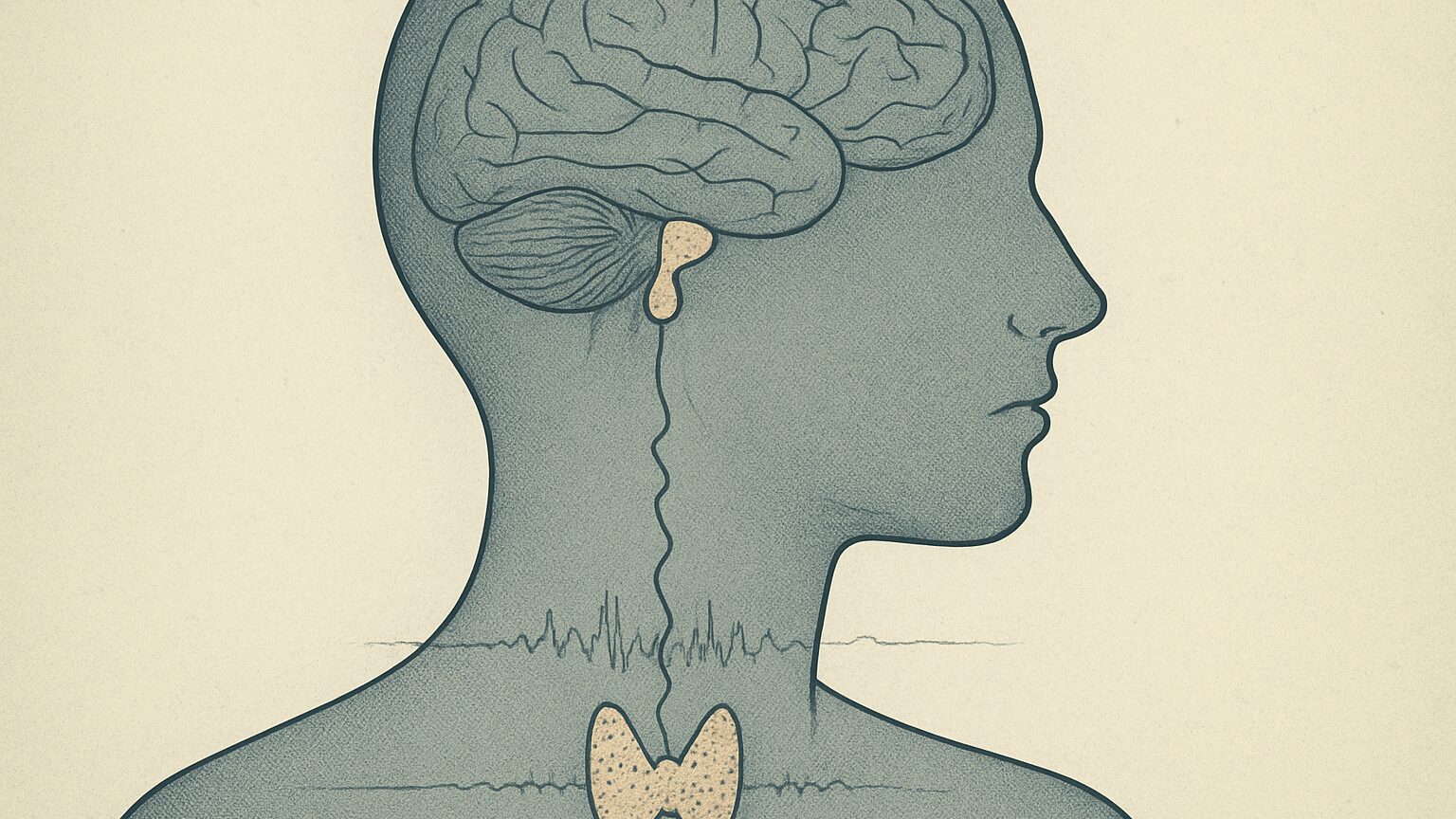
Yes — and the direction it moves depends entirely on timing, which is what makes this so easy to misread. TSH, short for thyroid-stimulating hormone, isn't produced by your thyroid at all — it's sent down from a small gland at the base of your brain called the pituitary, which acts like a thermostat constantly adjusting how hard your thyroid works. That thermostat is wired into the same stress-response system that reacts to a tense meeting, a bad night's sleep, or a full-blown flu, so it's genuinely reactive to what else is happening in your body at the moment of the blood draw. A short burst of acute stress can actually push TSH up. Weeks of chronic stress tends to push it down. A serious illness can suppress it entirely while you're sick, then send it swinging in the opposite direction as you recover. None of this means your thyroid is broken — it usually means your blood was drawn at an interesting moment.
Already have a TSH number from a recent test, but not sure if it's actually good or bad for you? Just plug it in and see instantly.
🧮 Try the Free CalculatorWhat TSH Is Actually Reacting To
Think of your thyroid as an engine and your pituitary gland as the foot on the gas pedal. When your thyroid's output runs a little low, the pituitary presses down harder — releasing more TSH — to get it producing more. When output runs a little high, the pituitary eases off. This feedback loop is remarkably sensitive, which is exactly why it's useful as a screening test: small thyroid problems show up as noticeably bigger swings in TSH long before the thyroid hormones themselves move much. But that same sensitivity is a double-edged sword. The pituitary doesn't operate in isolation — it sits right next to, and shares chemical signals with, the parts of your brain that manage your stress response. A hormone released during a stressful moment or a serious infection can reach the pituitary and nudge that gas pedal, independent of anything actually happening inside your thyroid gland itself.
How a Short Burst of Stress Can Actually Raise TSH
Here's the part that surprises most people: a brief, acute stressor doesn't calm your thyroid signal down — it tends to activate it. Researchers who deliberately exposed healthy volunteers to a standardized psychological stress test found that TSH rose measurably afterward, peaking around 20 minutes after the stressful event began and then gradually settling back down — while T3 and T4, the actual thyroid hormones, barely moved at all. The likely explanation is that acute stress triggers a quick pulse of cortisol, and in this short window, cortisol appears to briefly rev up the pituitary-thyroid signal rather than dampen it. If you've ever had bloodwork drawn right after an argument, a near-miss on the highway, or a panic-inducing work deadline, this is a plausible reason your TSH came back slightly higher than your usual number, with nothing else on the panel out of place.

This is a genuinely short-lived effect — we're talking about a window of roughly 20 to 60 minutes around the stressful event, not something that lingers for days. It also appears specific to acute, one-off stress rather than the kind of low-grade tension that builds over a long week. If your blood draw happened to land inside that narrow window — stuck in traffic on the way to the lab, a tense phone call in the waiting room, an anxious wait for the needle itself — a mildly elevated TSH with completely normal thyroid hormones is a plausible, benign explanation, and repeating the test on a calmer day usually settles the question quickly.
Why Long-Term, Chronic Stress Tends to Push TSH the Other Way
Chronic stress plays by different rules. When cortisol stays elevated for weeks or months rather than spiking briefly, it starts to suppress the signal from the brain that tells the pituitary to release TSH in the first place, and it also blunts the normal daily rhythm TSH is supposed to follow. The net effect tends to run in the opposite direction from a single stressful moment — sustained stress nudges TSH down rather than up. This is one reason burnout, prolonged caregiving stress, or an unrelenting high-pressure stretch at work can sometimes show up on a lab report as a borderline-low TSH even when the thyroid gland itself is functioning normally. It's a subtle effect, usually not dramatic enough to look like true hyperthyroidism, but it's a real, physiologically explainable one — and it's a good example of why the same stressor can move the same lab value in opposite directions depending purely on how long it's been going on.
What Happens to TSH During a Genuine Illness
Serious illness — a bad infection, a hospitalization, major surgery, a significant flare of a chronic condition — triggers something researchers call non-thyroidal illness syndrome, sometimes nicknamed "sick euthyroid syndrome." During the acute phase of being sick, your body deliberately dials back thyroid hormone activity as an energy-conservation strategy, similar to the adaptive slowdown covered in this site's article on fasting and T3. TSH during this phase is often described as "inappropriately normal" — meaning it doesn't rise the way you'd expect even though thyroid hormone levels are dropping — and in roughly half of these cases, TSH actually falls as well, reflecting a temporary dampening of signaling all the way up at the pituitary and the brain region above it. None of this reflects a thyroid disorder. It's considered a physiological adaptation to being sick, not a form of hypothyroidism, and it's been documented across essentially every category of acute and chronic illness studied.

What makes this tricky in practice is that this pattern can look, at a glance, like the opposite of what people expect from being sick. A slightly low or unremarkable TSH during a rough bout of the flu isn't a sign your thyroid is failing to respond — it's closer to your body pulling back on non-urgent processes so it can direct energy toward fighting off whatever's actually wrong. Clinicians generally avoid interpreting a thyroid panel drawn in the middle of a significant acute illness the same way they'd interpret one drawn on an otherwise healthy day, precisely because of how routinely this pattern shows up.
The Surprising TSH Rebound After You Recover
Here's the twist that catches a lot of people off guard: once you start recovering from a serious illness, TSH doesn't just quietly return to normal — it frequently overshoots first. Research on patients recovering from significant nonthyroidal illness has repeatedly documented a transient rise in TSH above the normal range during the recovery window, sometimes described as the system's way of signaling that it's coming back online. This rebound can genuinely look like mild, subclinical hypothyroidism on paper if you happen to get retested during that specific stretch. The reassuring detail clinicians rely on here is the ceiling: this recovery-phase bump typically doesn't climb particularly high, and staying below that threshold is one of the clues used to distinguish "my body is still resetting after being sick" from "I actually have an underlying thyroid problem that predates the illness." In most people, this settles back to their normal baseline on its own within a matter of weeks, with no treatment needed.

This is exactly the scenario that trips people up: they get sick, feel better, get bloodwork done as part of a routine follow-up, and see a TSH that's flagged as high — despite feeling completely fine. Rather than the start of a new thyroid problem, this is frequently just the tail end of the recovery process still playing out. It's a good example of why a single number, pulled out of context, can tell a misleading story on its own.
How to Tell a Temporary Blip From a Real Thyroid Problem
A few practical anchors help separate a genuine, lasting thyroid issue from a stress- or illness-related blip. First, timing matters enormously — a TSH drawn during an acute stressful event, in the middle of a significant illness, or in the weeks immediately following one deserves more skepticism than a number drawn on an unremarkable, healthy day, and mentioning that context to whoever ordered the test is genuinely useful information, not an excuse. Second, a temporary shift tends to travel alone: your actual thyroid hormones (Free T4, and sometimes Free T3) usually stay in range even while TSH moves, whereas a true thyroid disorder typically nudges those values out of range as well, especially if the shift is more than mild. Third, and most reliably, time itself is the best test — a repeat TSH drawn several weeks after you've fully recovered and returned to your normal routine, ideally on a day without acute stress beforehand, will settle the question far more convincingly than any single result can on its own.
Frequently Asked Questions
Should I get my TSH retested if I was sick or stressed on the day of my blood draw?
If the result came back only mildly outside your usual range and your other thyroid values (Free T4) were normal, retesting a few weeks after you've fully recovered and had a calmer day is a reasonable next step before assuming anything is wrong. Mention the context — recent illness, a stressful morning, poor sleep — to whoever ordered the test, since that detail changes how the result should be interpreted.
How long can a stressful event affect my TSH result?
The acute rise documented in research studies is short-lived — TSH peaks around 20 minutes after a stressful event and gradually returns toward baseline within roughly an hour. Chronic, longer-running stress works differently and can suppress TSH somewhat for as long as the stress itself persists, rather than in a brief spike.
Why did my TSH come back high weeks after I already recovered from being sick?
This is a well-documented pattern: TSH commonly overshoots above normal during the recovery phase after a significant illness before settling back to baseline, sometimes described as the pituitary-thyroid signal coming back online. It typically resolves on its own within a matter of weeks and doesn't require treatment unless it persists or your thyroid hormone levels are also abnormal.
Conclusion
TSH is one of the most reliably useful numbers on a lab report, but it's also genuinely reactive to what else your body is dealing with in the moment — a brief stressful event can push it up, sustained stress can push it down, and a real illness can suppress it during the acute phase before sending it swinging back upward as you heal. None of these patterns mean your thyroid is malfunctioning; they mean the same feedback loop that watches your thyroid is also listening to the rest of your body. Context — what was happening on the day of the draw, and what your other thyroid values show — almost always explains an unexpected number better than assuming the worst.
Still Not Sure What Your Results Mean?
Upload your labs and get a complete, visual, plain-language interpretation of every biomarker — delivered to your inbox in under 15 minutes.
Get My ReportThis article is for educational purposes only and does not constitute medical advice. Always consult your healthcare provider regarding your specific lab results.