Subclinical Hypothyroidism Can Show Up as Mildly Elevated TSH
If your TSH came back a little high — often somewhere in the 4.5 to 10 mIU/L range — but your actual thyroid hormone level (free T4) is still normal, you're likely looking at what's called subclinical hypothyroidism. It's an oddly named condition, since "subclinical" simply means the lab test has picked up a change before it's become severe enough to show up as an obvious clinical problem. In plain terms: your pituitary gland has noticed your thyroid is putting out slightly less hormone than it would like, and it's turning up the volume on its own signal (TSH) to compensate — but your thyroid is still managing to keep actual hormone levels in the normal range, at least for now. This pattern is extremely common, especially in women and older adults, and it sits at the center of one of the more genuinely debated questions in everyday endocrinology: does a mildly elevated TSH, on its own, need to be treated? This guide walks through what's actually happening in your body, what causes it, how common it is, how likely it is to progress, how doctors currently think about the treat-or-watch decision, and what ongoing monitoring actually looks like once the pattern is confirmed.
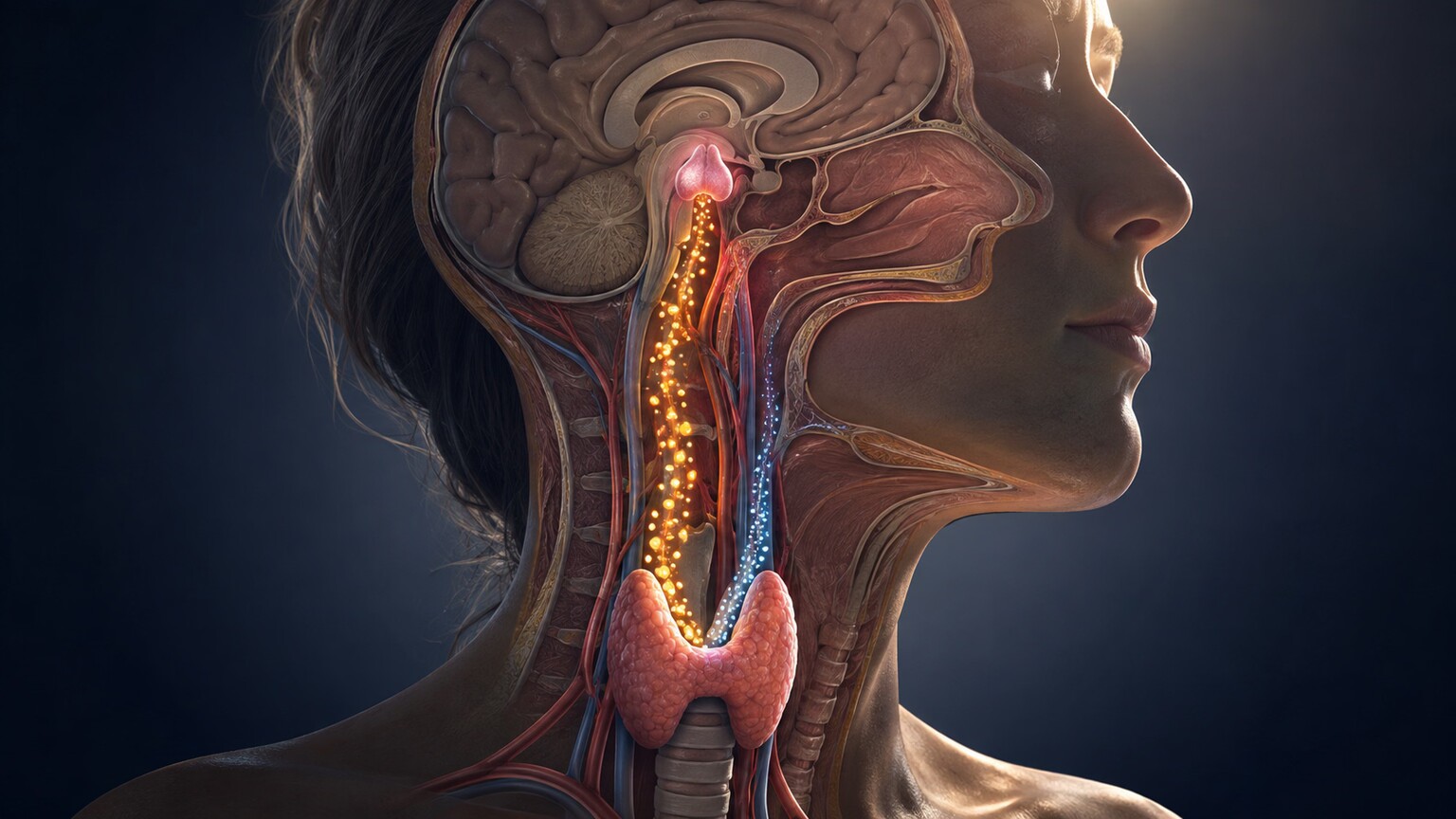
Figure 1. The pituitary gland raises TSH output in direct response to even small declines in thyroid hormone, which is why TSH rises before free T4 ever drops out of range.
What "Subclinical" Actually Means
Subclinical hypothyroidism has a precise laboratory definition: a TSH level above the normal reference range, paired with a free T4 level that's still within normal limits. That combination is what separates it from overt (full-blown) hypothyroidism, where both TSH is high and free T4 has actually dropped below normal, confirming the thyroid genuinely isn't producing enough hormone to meet the body's needs. The word "subclinical" doesn't mean "not real" — it means the change has been caught at the biochemical level, through blood testing, before it's progressed to the point of a confirmed hormone deficiency. Think of it as an early-warning signal rather than a diagnosis of thyroid failure: your body's own feedback system has detected a subtle shift and is actively compensating for it, successfully, at least for the moment.
Reference ranges do add some real nuance here. Most labs set the upper limit of normal TSH somewhere between 4.0 and 4.5 mIU/L, though some endocrinology bodies have argued this cutoff should be lower, particularly for younger adults, since population studies suggest TSH naturally drifts upward with age in a way that may not always reflect true thyroid dysfunction in older individuals. Because of this, a TSH of 5.5 in a 30-year-old and a TSH of 5.5 in an 80-year-old aren't necessarily treated as equivalent findings by every clinician — age, symptoms, and the overall clinical picture all factor into how seriously a given number is taken.
Clinicians further divide subclinical hypothyroidism into two rough categories based on how high the TSH actually is, since the two behave differently in research: mild subclinical hypothyroidism, generally TSH between the upper limit of normal and 10 mIU/L, and more significant subclinical hypothyroidism, TSH above 10 mIU/L. This distinction matters a great deal in practice — the mild category is where most of the genuine debate about treatment lives, since evidence for meaningful benefit from treatment is weakest here, while the TSH-above-10 category has more consistent evidence linking it to real symptomatic and cardiovascular benefit from treatment, which is why it's generally treated more readily regardless of symptoms. Roughly speaking, most people who are told they have "borderline" or "mildly elevated" TSH on a routine panel fall into that first, more ambiguous category, which is exactly why so much of this article is dedicated to explaining the nuance rather than giving a single blanket answer.
How Common Is This, and Who Gets It Most?
Subclinical hypothyroidism is genuinely common — population studies estimate it affects somewhere between 4% and 10% of adults, making it one of the more frequently encountered abnormal findings on routine bloodwork. It isn't evenly distributed across the population, though. It shows up substantially more often in women than in men, at a ratio of roughly two or three to one, which tracks with the broader pattern that autoimmune thyroid disease in general disproportionately affects women, likely related to differences in immune system regulation influenced by sex hormones. Prevalence also rises steadily with age, climbing from a relatively low baseline in younger adults to affecting a meaningfully larger share of people over 65, and rising further still in people over 80.
Certain groups carry an even higher baseline risk and are often specifically screened for thyroid dysfunction even without symptoms: people with a personal or family history of autoimmune thyroid disease or other autoimmune conditions (such as type 1 diabetes, celiac disease, or vitiligo, which cluster together more than chance would predict), people with Down syndrome (who have a substantially elevated rate of thyroid dysfunction throughout life), women in the postpartum period (thyroid function can swing in either direction in the months after childbirth), and anyone with a visibly enlarged thyroid gland or a history of head or neck radiation exposure. Recognizing these higher-risk groups matters clinically, since it shifts the calculus toward earlier, more proactive testing rather than waiting for symptoms to prompt bloodwork in the first place.
Family history in particular deserves a bit more attention than it often gets in casual conversation, since autoimmune thyroid disease has a genuinely strong genetic component — having a parent or sibling with Hashimoto's thyroiditis, Graves' disease, or another autoimmune thyroid condition meaningfully raises the odds of developing a similar pattern, even though the exact combination of genetic and environmental factors that ultimately trigger the disease in any one person isn't fully understood. Mentioning a family history of thyroid disease to a provider, even in the absence of any symptoms, is a reasonable and often underused piece of context that can shape how seriously a borderline lab result is taken and how proactively future testing is scheduled.
Why TSH Moves Before T4 Does — The Feedback Loop Explained
To understand why TSH is often the first number to shift, it helps to picture the relationship between your pituitary gland and your thyroid as a thermostat system. Your thyroid produces hormone (mainly T4, which gets converted to the more active T3 in tissues throughout the body) that regulates your metabolism — essentially, how fast your body's cells burn energy. Your pituitary gland, sitting at the base of the brain, constantly monitors how much thyroid hormone is circulating and releases TSH (thyroid-stimulating hormone) to tell the thyroid to make more when levels start to dip, similar to how a thermostat kicks the heat on when a room starts to cool.
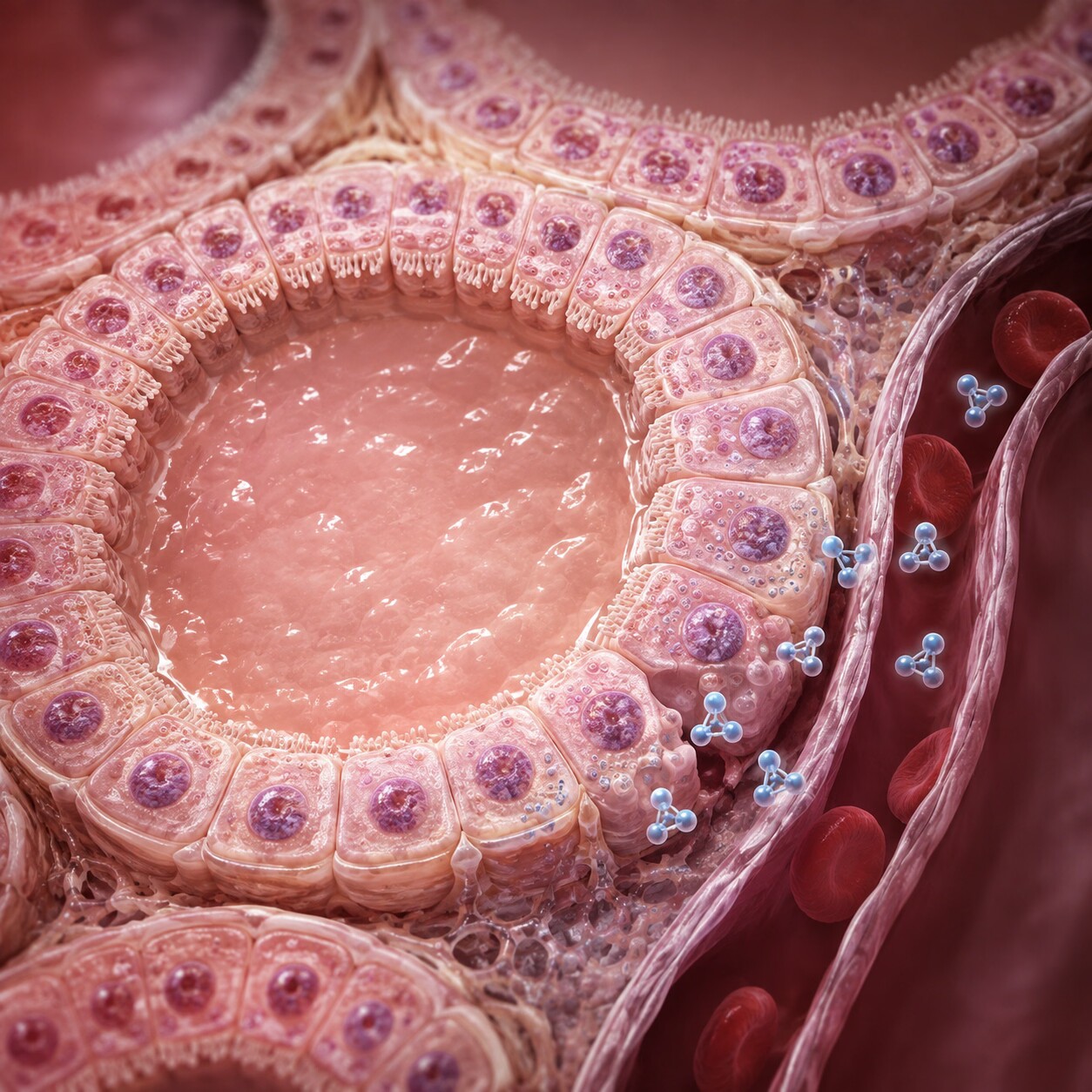
Figure 2. Individual thyroid follicular cells can maintain nearly normal T4 output even under early strain, which is why free T4 often stays technically normal despite a rising TSH.
The key detail that explains subclinical hypothyroidism is that this feedback relationship isn't linear — it's what's called log-linear, meaning TSH responds with dramatic sensitivity to even small changes in thyroid hormone. A modest, barely measurable dip in actual thyroid output, one that free T4 testing alone might not even flag as abnormal, can trigger a disproportionately large rise in TSH. In effect, TSH acts as an extremely sensitive early alarm system, amplifying a small underlying signal into a clearly visible lab abnormality long before free T4 itself drops out of its own normal range. This is exactly why TSH is considered the single most sensitive screening test for thyroid function, and why a subtly failing thyroid tends to show up first as "TSH creeping upward" rather than "T4 dropping downward" — by the time free T4 does fall below normal, the underlying thyroid problem has usually been present and progressing for some time already.
A useful analogy is a car's engine warning light paired with its actual temperature gauge. The warning light (TSH) is built to be maximally sensitive, flipping on at the earliest hint of a problem, well before the temperature gauge (T4) shows a reading that's actually dangerous. Seeing the warning light doesn't necessarily mean the engine is failing right now — it means something has shifted enough that the system's most sensitive detector noticed, even while every other more direct measurement, for the moment, still reads normal. That's a genuinely useful early signal, and it's exactly what makes TSH such a valuable screening tool, but it also explains why a mildly elevated TSH on its own, without any change in the more direct measurement of T4, doesn't automatically mean urgent action is required — it means it's worth paying closer attention and figuring out what's actually driving the signal.
What Causes This Pattern
By far the most common underlying cause of subclinical hypothyroidism in the general population is autoimmune thyroid disease, most often Hashimoto's thyroiditis, a condition where the immune system mistakenly identifies thyroid tissue as a threat and gradually attacks it. This autoimmune attack doesn't happen all at once — it's a slow, chronic process, which is exactly why the earliest detectable sign is often years of a mildly elevated TSH long before the thyroid's hormone output actually falls low enough to cause overt hypothyroidism.

Figure 3. In Hashimoto's thyroiditis, immune cells gradually infiltrate and damage thyroid tissue over years, slowly reducing the gland's hormone-producing capacity.
Beyond autoimmune disease, several other factors can produce this same lab pattern. Iodine intake matters significantly, since the thyroid needs iodine to manufacture hormone — both too little iodine and, somewhat counterintuitively, too much iodine (from supplements, certain contrast dyes used in imaging, or the heart medication amiodarone) can disrupt normal thyroid function and nudge TSH upward. Certain other medications, including lithium, can also interfere with thyroid hormone production. Prior thyroid surgery or radioactive iodine treatment for a previous thyroid condition can leave someone with reduced thyroid tissue, gradually revealing itself as a slowly rising TSH over subsequent years. Less commonly, a single isolated high TSH reading can simply reflect normal biological variability, a recent illness, or a lab assay quirk (biotin supplements, in particular, are well known to interfere with certain thyroid test methods and produce a falsely abnormal result) rather than any genuine, ongoing thyroid problem at all — which is exactly why a single elevated TSH is rarely treated as a final answer without being checked again.
It's also worth knowing about a handful of situations that can produce a mildly elevated TSH without reflecting true, ongoing thyroid disease at all, since ruling these out is part of a thorough workup. Recovering from a significant illness or major surgery can temporarily push TSH upward as part of the body's broader hormonal response to physical stress, a pattern that typically resolves on its own within weeks once recovery is complete. A rare condition called central hypothyroidism, where the problem originates in the pituitary gland itself rather than the thyroid, can occasionally produce a confusing lab picture that doesn't follow the usual rules, though this is uncommon and usually accompanied by other pituitary hormone abnormalities that point toward the correct diagnosis. And, as mentioned above, certain supplements — biotin being the most well-documented — can interfere with the chemistry of some thyroid test methods and produce a result that doesn't reflect a person's actual thyroid status at all, which is why providers often ask about supplement use, particularly high-dose biotin taken for hair, skin, or nail health, before interpreting an unexpected thyroid result.
Already have a TSH number from a recent test, but not sure if it's actually good or bad for you? Just plug it in and see instantly.
🧮 Try the Free CalculatorDo You Actually Have Symptoms?
One of the more genuinely confusing aspects of subclinical hypothyroidism is that a meaningful number of people with this exact lab pattern feel completely fine, while others notice subtle, easy-to-dismiss changes that only make sense in hindsight once a lab result explains them. When symptoms are present, they tend to be mild versions of classic hypothyroid symptoms rather than the more dramatic presentation seen with overt hypothyroidism: low-grade fatigue that doesn't quite resolve with rest, feeling cold more easily than usual, mild, gradual weight gain, dry skin, slightly thinning hair, occasional constipation, or a subtle low mood or mental fog that's easy to attribute to stress, poor sleep, or simply getting older.

Figure 4. Subclinical hypothyroidism symptoms, when present at all, tend to be mild and nonspecific — low energy, feeling cold, or subtle mental fog easily mistaken for ordinary tiredness.
This mismatch between lab findings and how someone actually feels is part of why subclinical hypothyroidism is such a genuinely debated clinical topic. Some studies have found people with this pattern report modestly more fatigue and mood symptoms than people with normal thyroid function, especially at the higher end of the mildly elevated TSH range; others have found little to no difference in how people report feeling, especially at the lower end of the range (TSH between 4.5 and 7 or so). Because the symptoms possible with mild hypothyroidism overlap heavily with symptoms common to many other very ordinary causes — poor sleep, stress, aging, iron deficiency, depression — it's genuinely difficult, on symptoms alone, to know whether a mildly elevated TSH is the cause of how someone feels or simply a coincidental finding picked up on unrelated bloodwork.
One practical approach some providers use to help untangle this uncertainty is a time-limited treatment trial: starting levothyroxine for a defined period, often three to six months, specifically to see whether genuinely bothersome symptoms actually improve, then reassessing. If symptoms clearly improve and track with normalized lab values, that's meaningful evidence the thyroid was indeed contributing to how the person felt, and treatment continues. If nothing changes despite the TSH normalizing on treatment, that's equally useful information — it suggests the original symptoms had another cause entirely, and continuing thyroid medication indefinitely wouldn't address the actual problem. This kind of structured trial, with a clear endpoint and reassessment built in from the start, tends to produce more useful, less ambiguous information than starting treatment indefinitely on the assumption that a mildly elevated TSH must be the explanation for everything a person is feeling.
Will This Progress to Full Hypothyroidism?
This is usually the question people care about most, and the honest answer is: it depends heavily on what's driving the elevated TSH in the first place, and how high the number actually is. Research following people with subclinical hypothyroidism over time has found that roughly 2% to 5% per year progress to overt hypothyroidism (meaning free T4 eventually drops below normal too), but that overall rate hides enormous variation between different individuals. The single strongest predictor of progression is the presence of thyroid peroxidase (TPO) antibodies — a blood marker of the same autoimmune process behind Hashimoto's thyroiditis. People with a mildly elevated TSH and positive TPO antibodies progress to overt hypothyroidism at a considerably higher rate, sometimes several times higher, than people with the same TSH level but no detectable antibodies, since a positive antibody result confirms an active, ongoing autoimmune process is actually driving the numbers rather than some more transient or incidental cause.
The starting TSH level itself also matters for predicting the trajectory: someone with a TSH persistently in the 8 to 10 mIU/L range is meaningfully more likely to progress toward overt hypothyroidism than someone sitting steadily around 5 mIU/L, since a higher number generally reflects a more significant underlying strain on the thyroid gland's remaining hormone-producing capacity. This is exactly why providers typically want to know both numbers — the TSH level itself and whether TPO antibodies are present — before making any real prediction about what a person's thyroid function is likely to do over the following years, rather than treating "mildly elevated TSH" as a single, uniform category that behaves the same way in everyone who has it.
It's worth being clear that "progression" isn't an inevitability even in higher-risk individuals — it's a probability that plays out over years, not a countdown clock. Someone with both a TSH of 9 and positive TPO antibodies has a meaningfully elevated likelihood of eventually needing treatment compared to someone with normal antibodies, but that doesn't mean it will definitely happen, or that it will happen on any predictable timeline for a given individual. This is exactly why ongoing monitoring, rather than a one-time risk calculation, remains the standard approach: repeat testing over time captures the actual trajectory a person's thyroid function is taking, which is a far more reliable guide to what's actually happening than any single risk estimate calculated from population-level statistics.
To Treat or Not to Treat — the Real Clinical Debate
This is where subclinical hypothyroidism becomes genuinely contentious, even among endocrinologists. Levothyroxine, the standard synthetic thyroid hormone replacement used to treat hypothyroidism, is inexpensive, generally well tolerated, and clearly beneficial for overt hypothyroidism — but its benefit in subclinical hypothyroidism, particularly at the milder end of the TSH range, is far less consistently established by research. Several large clinical trials have found that starting levothyroxine in people with mildly elevated TSH (especially TSH under 7 mIU/L) doesn't reliably improve symptoms, quality of life, or measurable health outcomes compared to simply monitoring, which has led many current guidelines to recommend against routine treatment at this milder end of the range, particularly in adults without symptoms and without other risk factors.

Figure 5. Whether to start levothyroxine for a mildly elevated TSH depends on the exact number, symptoms, TPO antibody status, and individual factors like age and pregnancy plans.
That said, several specific situations tend to shift the balance toward treatment even at TSH levels many providers would otherwise simply monitor: a TSH persistently above 10 mIU/L (where the evidence for benefit is considerably stronger and more consistent), positive TPO antibodies combined with a rising TSH trend, a person actively trying to conceive or already pregnant (thyroid hormone needs shift significantly during pregnancy and even mild deficiency has been linked to pregnancy complications), noticeable symptoms that genuinely improve on a treatment trial, or an enlarged thyroid gland (goiter) on physical exam. On the other side of the equation, treatment isn't without downsides worth weighing: too much levothyroxine can push TSH too low and cause its own set of problems, including an increased risk of atrial fibrillation (an irregular heart rhythm) and accelerated bone loss, particularly in older adults — which is part of why "just start treatment to be safe" isn't automatically the lower-risk choice it might intuitively seem to be, especially in someone over 65 with a milder TSH elevation and no symptoms.
Cardiovascular risk is one of the more heavily studied angles in this debate, since thyroid hormone has direct effects on heart function and blood vessel health. Some research has linked subclinical hypothyroidism, particularly at the higher end of the range (TSH above 10), with modestly elevated cholesterol levels and a somewhat increased risk of heart disease over time, which is part of the rationale for treating at that higher threshold even without symptoms. At the milder end of the range, this cardiovascular signal becomes much less consistent across studies, and several large trials specifically looking at whether treating mild subclinical hypothyroidism reduces heart disease risk or death from any cause have failed to show a clear benefit — a genuinely important, if somewhat unsatisfying, finding that has directly shaped current guidelines away from routine treatment at the milder end of the spectrum.
Major endocrine society guidelines have converged on a broadly similar framework as a result of this evidence: treat consistently for TSH above 10 mIU/L; individualize the decision for TSH between the upper limit of normal and 10, weighing symptoms, TPO antibody status, age, cardiovascular risk factors, and patient preference; and reserve the most conservative watch-and-wait approach for older adults with milder elevations and no symptoms, given their higher vulnerability to treatment-related side effects. This individualized framework is exactly why two people with what looks like the same lab result on paper can walk away from similar appointments with genuinely different, and equally reasonable, treatment plans — the number alone was never meant to be the whole story.
Special Situations: Pregnancy and Older Adults
Pregnancy is the clearest exception to the generally conservative, watch-and-wait approach used for milder cases in the general population. Thyroid hormone plays a critical role in early fetal brain development, and the developing baby depends entirely on the parent's thyroid hormone supply during the first trimester, before its own thyroid gland is fully functional. Because of this, most obstetric and endocrine guidelines recommend a notably lower threshold for treating an elevated TSH during pregnancy than would apply outside of pregnancy, and often recommend treatment even at TSH levels that would typically just be monitored in a non-pregnant adult, particularly when TPO antibodies are also present.

Figure 6. Thyroid hormone needs shift substantially during pregnancy, which is why the threshold for treating a mildly elevated TSH is lower during prenatal care than it is otherwise.
Older adults represent almost the opposite situation. Population studies have found that mild TSH elevation becomes progressively more common with age, and some research suggests that a mildly elevated TSH in adults over 70 or 80 may not carry the same risks — and might even be a relatively benign, adaptive finding — compared to the same TSH level in a younger adult. Combined with older adults' higher sensitivity to the cardiac and bone risks of over-treatment, many geriatric-focused guidelines now recommend a distinctly more conservative, watch-and-wait approach in this age group, reserving treatment for a higher TSH threshold, clear symptoms, or a TSH that continues climbing over serial testing, rather than treating an age-related mild elevation as automatically abnormal.
Children and adolescents represent a third distinct population worth a brief mention, since growing bodies depend on adequate thyroid hormone for normal growth and, in early childhood, brain development. Pediatric guidelines generally recommend closer attention to mildly elevated TSH in children than the more conservative approach often taken in older adults, particularly when growth patterns, weight, or school performance raise any concern, since the stakes of under-treating a genuinely underactive thyroid during a critical developmental window are considerably higher than they are in a fully developed adult. That said, mild, transient TSH elevations are also fairly common in children, especially with obesity or during puberty, and not every elevated reading in a child indicates a condition requiring lifelong medication — a pediatric endocrinologist is typically best positioned to sort out which pattern is actually present.
How It's Monitored Over Time
Because a single TSH reading can be misleading — affected by the time of day it was drawn (TSH naturally fluctuates somewhat over 24 hours), recent illness, certain medications, or simple lab variability — the standard first step after finding a mildly elevated TSH is almost always to repeat the test, typically several weeks to a few months later, before drawing any firm conclusions. A meaningful number of initially elevated readings normalize on repeat testing without any treatment at all, especially when the original result was only modestly above the upper limit of normal.

Figure 7. A single mildly elevated TSH is almost always confirmed with a repeat test weeks to months later before any treatment decision is made.
If the elevation is confirmed on repeat testing and treatment isn't started, ongoing monitoring typically means rechecking TSH every six to twelve months, along with periodic reassessment for new or worsening symptoms and, if not already checked, TPO antibody testing to better estimate the likelihood of future progression. If treatment is started, the general approach is to begin with a relatively low levothyroxine dose and recheck TSH about six to eight weeks later, adjusting the dose gradually based on that result, since it takes roughly that long for TSH to fully re-equilibrate after any change in thyroid hormone dosing — checking too early, before that new steady state is reached, can lead to a dose adjustment based on a number that hasn't finished settling yet.
A few practical details make ongoing monitoring more reliable and easier to interpret over time. Having blood drawn at a consistent time of day, ideally in the morning and before taking a levothyroxine dose if already on treatment, helps minimize the natural daily fluctuation in TSH and keeps serial results genuinely comparable to one another. Taking levothyroxine consistently on an empty stomach, at the same time each day, and separated from calcium, iron supplements, and certain other medications that can interfere with its absorption, also helps ensure that a follow-up TSH accurately reflects the prescribed dose rather than inconsistent absorption. And switching between different levothyroxine brands or manufacturers, while generally considered safe, can occasionally produce small shifts in TSH for some individuals, which is one more reason an unexpected change in an otherwise stable TSH is worth reviewing against any recent changes in medication, brand, or routine before assuming the underlying thyroid condition itself has changed.
Keeping a simple personal record of TSH results over time, including the date, the lab or provider, and whether a dose changed around that time, tends to make follow-up appointments considerably more productive, since it lets both patient and provider see the actual trend at a glance rather than reconstructing a history from memory or scattered records across different portals. This is a small habit, but for a condition that's fundamentally about watching a slow trend rather than reacting to a single number, having that trend genuinely visible tends to make the whole process feel less like a series of disconnected, anxiety-inducing test results and more like what it actually is: an ongoing, manageable piece of routine healthcare.
Frequently Asked Questions
Is a TSH of 5 or 6 something I should be worried about?
Generally, no cause for immediate alarm. A TSH in this range, especially with a normal free T4, often gets rechecked before any decision is made, and a meaningful number of people in this range never progress to needing treatment, particularly if TPO antibodies are negative. It's worth discussing with a provider, but it isn't a medical emergency.
Do I need TPO antibody testing if my TSH is only mildly elevated?
It's often genuinely useful, since a positive result is the strongest available predictor of whether a mildly elevated TSH is likely to progress toward overt hypothyroidism over time. Many providers check it once at the time subclinical hypothyroidism is first confirmed, specifically to help guide how closely the situation should be monitored going forward.
If I start levothyroxine, will I need to take it forever?
Usually, yes, if the underlying cause is autoimmune thyroid disease, since that process doesn't reverse and the thyroid's reduced capacity tends to persist or slowly worsen over time. In situations caused by a temporary factor, such as a resolved illness or a medication that's since been stopped, thyroid function can sometimes recover, though this should only be adjusted under a provider's guidance with repeat testing.
Can subclinical hypothyroidism cause weight gain on its own?
It can contribute modestly, but it rarely causes significant weight gain by itself, since actual thyroid hormone levels are still normal at this stage. Meaningful weight changes are more strongly associated with overt hypothyroidism, where thyroid hormone has genuinely dropped below normal. Other contributing factors are usually worth considering alongside a mildly elevated TSH.
Should I get an ultrasound of my thyroid if my TSH is mildly elevated?
Not automatically. An ultrasound is typically reserved for when a provider feels an enlarged or irregular thyroid on physical exam, or when there's a specific concern about nodules, rather than being a routine step for a mildly elevated TSH alone. A mildly high TSH by itself, without a palpable abnormality, usually doesn't require imaging.
Can diet or supplements fix a mildly elevated TSH?
Only in specific, identifiable situations, such as correcting a genuine iodine or selenium deficiency where one is actually present, which should be confirmed with testing rather than assumed. For the far more common autoimmune cause, no diet or supplement regimen has been shown to reverse the underlying process, and self-directed high-dose iodine or biotin supplementation can actually interfere with thyroid function or thyroid test results.
Conclusion
A mildly elevated TSH with normal T4 is one of the more common, and more genuinely nuanced, findings in everyday lab testing — it's your pituitary's early-warning system doing exactly what it's designed to do, flagging a subtle shift in thyroid function long before it becomes a clear-cut hormone deficiency. Whether that finding needs active treatment or simply ongoing monitoring depends on a combination of factors that go well beyond the single number itself: how high the TSH actually is, whether TPO antibodies are present, whether real symptoms exist, and specific circumstances like pregnancy, childhood, or advanced age. None of that nuance is a reason to dismiss the result — it's the reason a repeat test, a broader thyroid panel, and a conversation with a provider who can weigh your specific situation are worth the effort, rather than either ignoring a mildly high TSH or reaching immediately for medication before the full picture is actually clear. A single number rarely tells the whole story on its own, and with a condition this common, taking the time to understand your own specific pattern is almost always worth more than a quick, one-size-fits-all verdict.
Still Not Sure What Your Results Mean?
Upload your labs and get a complete, visual, plain-language interpretation of every biomarker — delivered to your inbox in under 15 minutes.
Get My ReportThis article is for educational purposes only and does not constitute medical advice. Always consult your healthcare provider regarding your specific lab results.