
Understanding How Long Substances Stay Detectable in Urine
"How long does it stay in your system" is one of the most searched, and most inconsistently answered, questions in all of toxicology — and the confusion is understandable, because the honest answer depends on a genuinely complicated interaction between the specific substance involved, how much of it was used, how often, and a handful of individual biological factors unique to each person. There's no single universal number, but there is a coherent, learnable set of principles that explains why detection windows range from a matter of hours for some substances to well over a month for others. This article walks through the core biological concept behind every detection window, why single use and regular, chronic use of the exact same substance produce dramatically different windows, specific detection windows for alcohol, cannabis, opioids, benzodiazepines, and stimulants, the individual factors that shift these windows from person to person, and why urine, blood, saliva, and hair testing each reveal a completely different window into the same underlying history.
The Core Concept: A Declining Curve, Not a Fixed Countdown
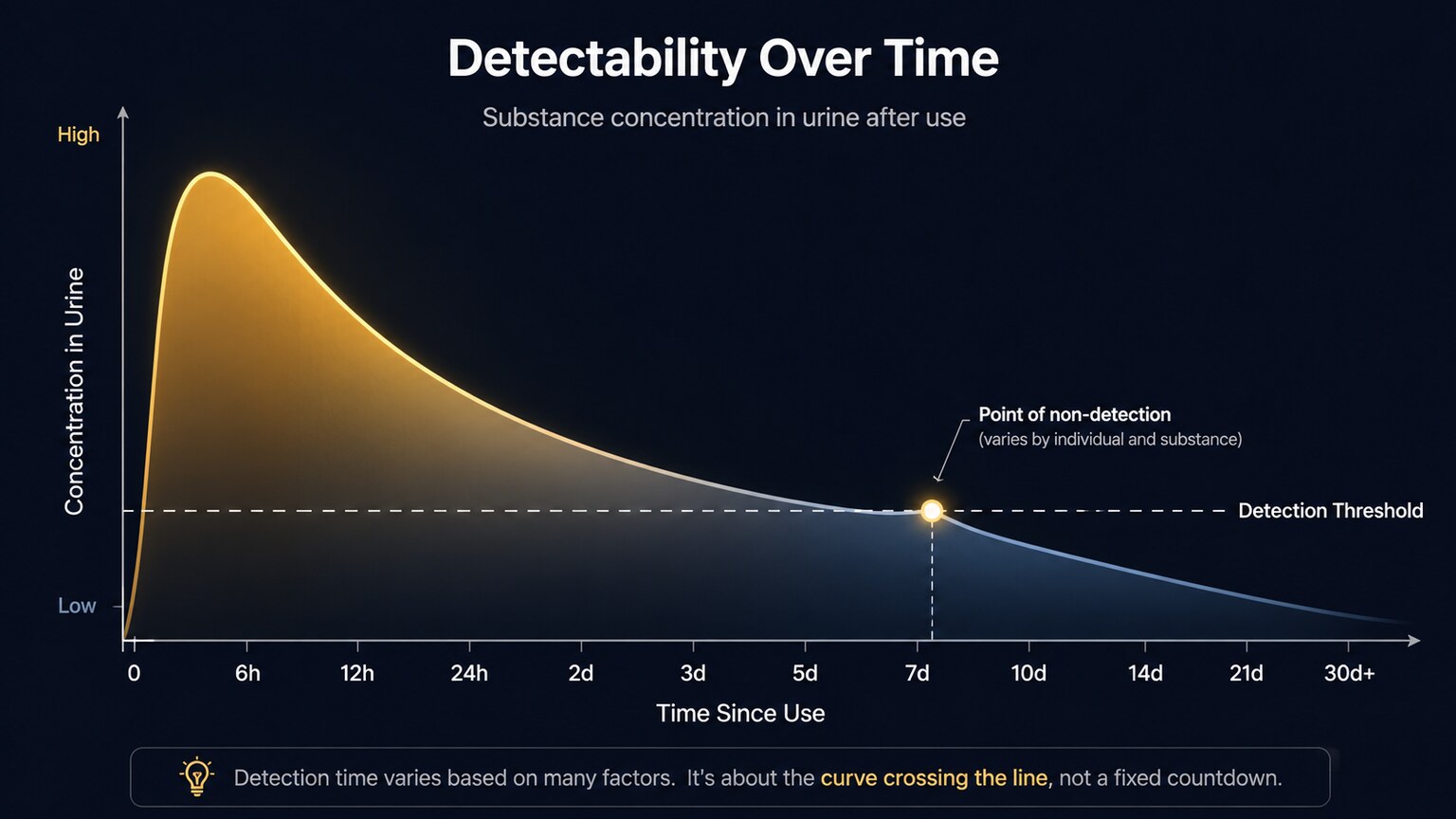
Figure 1. A substance's concentration in the body doesn't disappear at a fixed moment — it declines along a curve, and a test turns negative the instant that curve drops below the threshold the test is capable of detecting.
It's easy to imagine a substance simply "leaving the body" at some fixed point in time, but the actual biology works differently. After use, a substance and the byproducts your body creates while breaking it down (called metabolites) reach a peak concentration and then decline steadily as your liver, kidneys, and other systems process and eliminate them. This decline follows a predictable curve, typically dropping faster at first and more gradually as concentration gets lower, governed by a value called the elimination half-life — the time it takes for the concentration to drop by half.
A drug test doesn't detect "presence versus absence" in any absolute sense; it detects whether concentration is currently above or below a specific threshold the test is built to measure. This is exactly why "how long does it stay detectable" is really a question about how long it takes that declining curve to cross below a specific line — a line that itself varies depending on which test is used and which sample type is tested, both covered in detail later in this article.
Why Single Use and Regular Use Produce Dramatically Different Windows
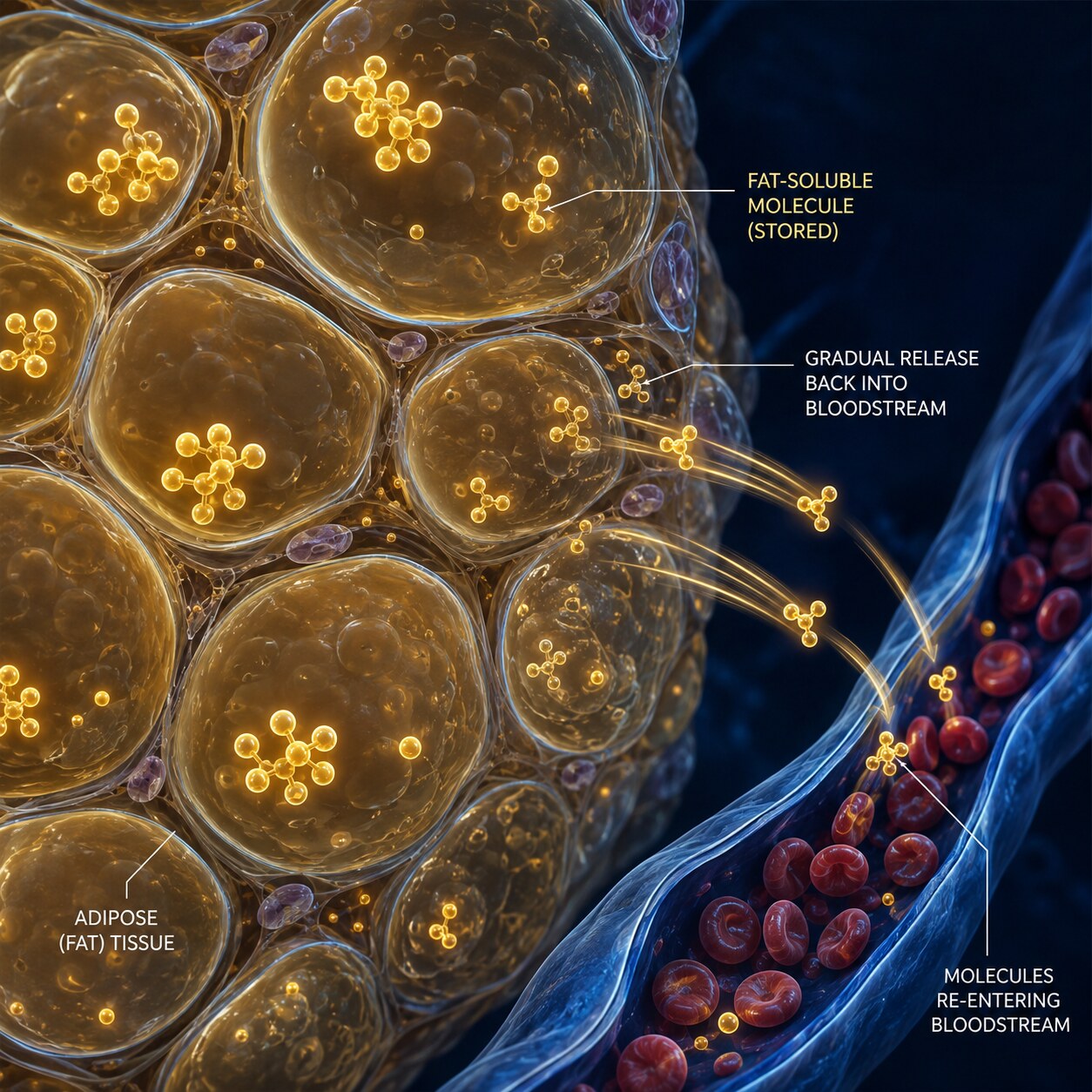
Figure 2. Fat-soluble compounds accumulate in fatty tissue with repeated use, then slowly re-release into the bloodstream over subsequent weeks — the specific reason chronic use produces a far longer detection window than a single instance.
One of the single biggest factors shaping any detection window has nothing to do with the substance's identity and everything to do with usage pattern. Some substances are fat-soluble, meaning they dissolve readily into fatty tissue throughout the body rather than staying dissolved in blood or water-based tissue. With a single use, only a modest amount accumulates in fat, and it's cleared relatively quickly as blood concentration declines and pulls the small stored reserve back out along with it.
With regular, repeated use, however, each new dose adds to an already-accumulating reservoir stored in fatty tissue faster than the body clears the existing supply, building up a genuine, growing reserve over weeks or months of continued use. Once use finally stops, that accumulated reserve then releases back into the bloodstream slowly and gradually over an extended period, extending the total detectable window considerably longer than a single, isolated use of that exact same substance would ever realistically produce on its own — this single mechanism explains more of the real-world variation in "how long does it stay detectable" than almost any other single factor, and it's the specific reason chronic, heavy cannabis users can test positive for weeks after stopping while an occasional, single-use consumer clears the same substance within days.
Curious what your own lab results actually mean for your specific situation? Upload your results and get a complete, plain-language breakdown in under 15 minutes.
Analyze My ResultsWhy the Same Substance Can Be Tested Multiple Different Ways
Before walking through specific substance categories individually, it's worth understanding that a single substance is sometimes tested through more than one distinct method, each targeting a different molecule and therefore producing a different detection window, even though both tests are nominally checking for "the same thing." Alcohol testing offers the clearest example already touched on briefly above: standard ethanol testing and EtG metabolite testing genuinely target different molecules with genuinely different elimination timelines, despite both being described casually as "alcohol tests."
This pattern repeats, to varying degrees, across several substance categories covered in this article, and it's precisely why two seemingly contradictory pieces of information about the same substance's detection window can both be entirely accurate — they may simply be describing two different tests targeting two different molecules within the same overall category, rather than representing any genuine disagreement about the underlying biology itself. Being aware that this distinction exists is genuinely useful context before assuming any single detection-window number applies universally across every possible testing method for a given substance.
Alcohol: The Shortest Common Detection Window
Standard urine alcohol testing detects ethanol itself only for a genuinely relatively short window of time, typically falling somewhere in the range of 12 to 24 hours after the last drink was actually consumed, since alcohol is a water-soluble compound and is metabolized fairly quickly and efficiently by the liver under normal circumstances. A newer, considerably more sensitive test instead measures a specific alcohol metabolite called ethyl glucuronide, or EtG for short, which meaningfully extends overall detectability much further out — often somewhere in the range of 48 to 80 hours, and in certain heavy-drinking scenarios stretching even longer than that — making it the specifically preferred test of choice in situations genuinely requiring strict, extended alcohol abstinence monitoring, such as certain court-ordered or formal workplace monitoring programs.
This genuinely meaningful gap between standard ethanol testing and separate EtG metabolite testing is an important distinction well worth understanding clearly, since the exact same person's actual drinking history can realistically produce a negative result on one specific test type while simultaneously producing a positive result on the other, depending entirely on which specific test method was actually ordered and precisely how many hours had already passed since that person's last drink.
Understanding Elimination Half-Life a Bit More Precisely
It's worth spending a moment on the specific concept of elimination half-life, since it's the single mathematical idea underlying every detection window described throughout this article. A half-life is the amount of time it takes for the concentration of a substance to drop to exactly half of its previous value, and this process repeats consistently: after one half-life, roughly 50% remains; after two half-lives, roughly 25% remains; after three, roughly 12.5%; and so on, in a predictable, repeating pattern that approaches zero without ever technically reaching it in a purely mathematical sense.
In practical terms, a substance is generally considered to be substantially cleared from the body after roughly four to five half-lives have elapsed, at which point the remaining concentration has typically dropped low enough to fall below most standard testing cutoffs. This is precisely why substances with a short half-life (measured in hours) produce short detection windows measured in days, while substances with a longer half-life, or substances that continue slowly releasing from fat tissue as described earlier in this article, produce dramatically longer windows despite following the exact same underlying mathematical principle.
Cannabis (THC): Why It Produces the Longest Realistic Window
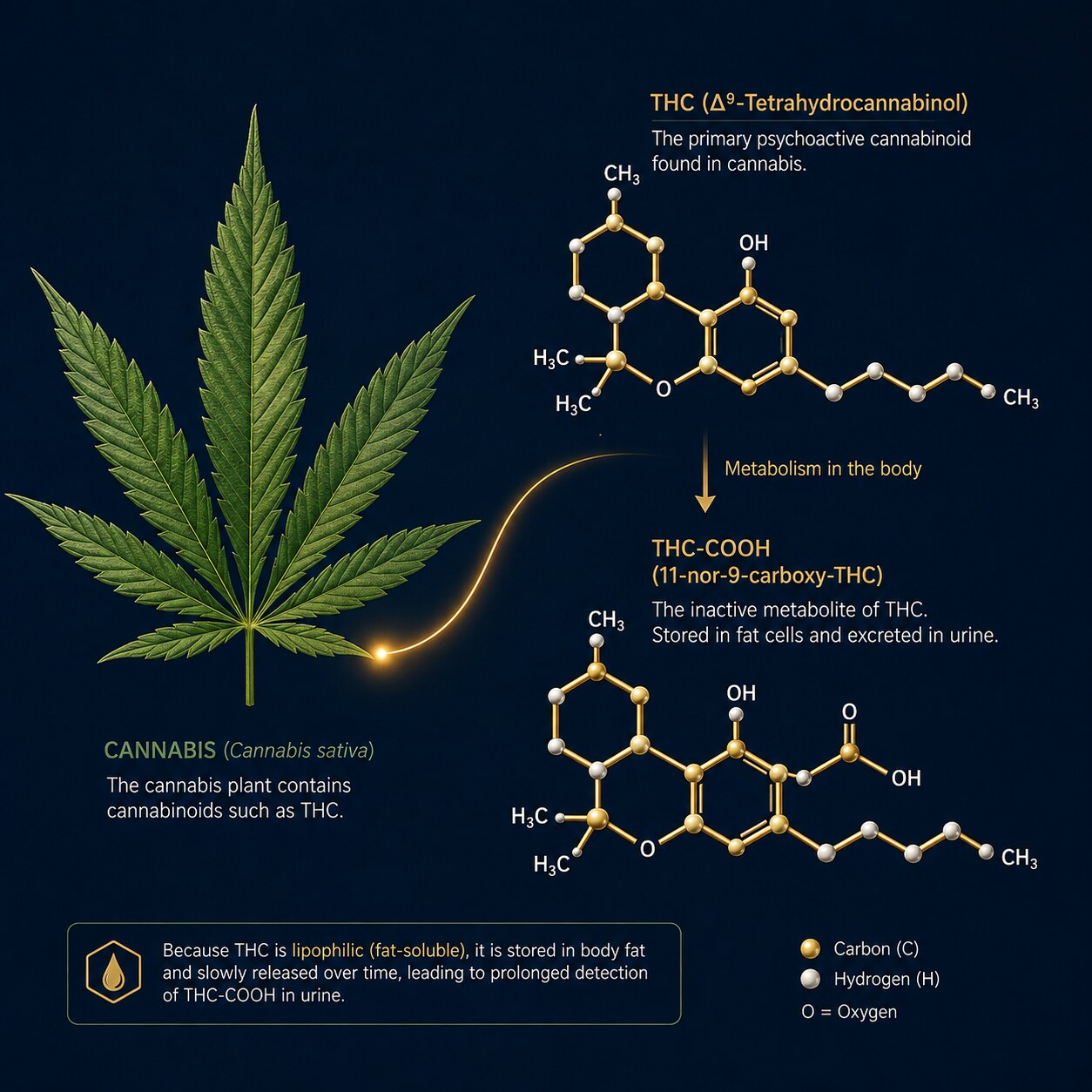
Figure 3. THC and its primary metabolite are highly fat-soluble, which is why cannabis produces by far the longest realistic urine detection window of any commonly tested substance, especially with regular use.
Cannabis stands as the clearest, most illustrative real-world example of the fat-solubility principle already described earlier in this article, since THC and its primary detected metabolite are especially, notably fat-soluble when compared against most other commonly tested substance categories covered throughout this piece. For a single, genuinely isolated use, urine detection typically runs somewhere within the range of roughly 3 to 4 days total. For moderate, genuinely regular use occurring several times per week, that same window commonly extends out to roughly 1 to 2 full weeks. For heavy, genuinely daily, long-term use sustained over an extended period, published clinical research has actually documented detection windows extending out to a full 30 days or, in some especially heavy, particularly long-term cases, considerably longer still than that.
This exceptionally, genuinely wide overall range — anywhere from just a few days up to well over a full month depending entirely on the exact usage pattern involved — is exactly, precisely why cannabis specifically generates so much of the popular confusion and conflicting anecdotal claims commonly seen around detection windows; two entirely different people describing genuinely different personal experiences with "how long weed actually stays in your system" may both still be entirely correct at the same time, simply describing two genuinely different points sitting along that exact same single-use-to-chronic-use spectrum discussed throughout this article.
Sweat and Environmental Exposure: Two Less Common but Real Testing Contexts
Beyond the four specimen types already covered in detail, two additional, less commonly encountered testing contexts are worth briefly mentioning for completeness. Sweat patch testing, used in certain probationary or structured monitoring programs, involves a specialized, tamper-evident adhesive patch worn continuously against the skin for an extended period, typically somewhere in the range of one to two full weeks at a stretch, that steadily collects trace amounts of substances excreted through sweat over that entire continuous wear period, providing a genuinely continuous monitoring window across many consecutive days rather than a single, isolated point-in-time snapshot the way urine, blood, and saliva testing methods all inherently do instead.
Environmental or passive exposure represents a separate, genuinely distinct concern worth understanding here, particularly for hair testing specifically, since hair can theoretically pick up small amounts of trace external contamination from ambient smoke or airborne particles present in the surrounding environment, not solely from substances that were actually, intentionally consumed internally by the specific person being tested at the time. Reputable, properly accredited hair-testing laboratories address this specific, well-documented concern through a required, standardized washing and decontamination step performed on every hair sample before formal laboratory analysis even begins, specifically designed to thoroughly remove external surface contamination while carefully preserving whatever was genuinely incorporated into the hair shaft internally from the bloodstream during the actual growth process itself — an important, mandatory quality-control step that meaningfully distinguishes a properly validated laboratory result from a potentially misleading, contaminated one.
Why Metabolites, Not the Original Substance, Are Often What Gets Tested
It's worth clarifying a detail that often goes unexplained: for many substances, standard drug testing doesn't actually target the original compound that was consumed at all, but rather one or more of the specific metabolites the body produces while breaking that compound down. Cocaine testing, as covered earlier, targets benzoylecgonine rather than cocaine itself; THC testing typically targets a specific inactive metabolite called THC-COOH rather than the psychoactive THC molecule directly; and alcohol testing increasingly relies on EtG, a metabolite, rather than ethanol itself for extended-window applications.
This distinction matters for understanding detection windows specifically because a metabolite's own elimination half-life doesn't have to match the original substance's half-life at all — sometimes it's shorter, sometimes considerably longer, and the specific relationship between the two is exactly what determines whether a given test window extends beyond, or stays roughly aligned with, how long the original substance's actual effects last in the body. This is also precisely why detection windows and duration of impairment are two genuinely separate concepts, a distinction covered directly in the FAQ section later in this article: a metabolite can remain measurable in urine long after the parent compound, and any impairing effect it originally produced, have both been fully cleared from the body.
Opioids: A Short Window With Real Practical Consequences
Most commonly used opioids, including a range of prescription painkillers as well as heroin specifically, are cleared from the body relatively quickly overall, typically remaining detectable in urine for only roughly 2 to 4 days after the last actual use, though the precise window depends somewhat on exactly which specific opioid compound is actually involved in a given case. This genuinely short window carries real, practical significance in a variety of clinical and structured monitoring contexts: someone using opioids in a problematic, concerning way can potentially, deliberately time their last use specifically to fall just outside a scheduled testing window, which is precisely one of several important reasons random, unscheduled testing is generally considered considerably more clinically useful and reliable than testing conducted on a predictable, known schedule for genuine monitoring purposes.
Different individual opioids within this broad overall category do genuinely vary somewhat in their own specific detection windows — certain longer-acting formulations specifically designed for extended, sustained pain relief throughout the day tend to remain detectable somewhat longer than their shorter-acting counterparts do, reflecting real, meaningful differences in exactly how each specific formulation is chemically processed and eliminated by the body over time.
Benzodiazepines: Why Some Last Days and Others Weeks
Benzodiazepines, a class of medications genuinely commonly prescribed for both anxiety and sleep-related conditions, show one of the very widest overall ranges of detection windows within any single drug category discussed in this article, precisely because this particular category includes both short-acting and considerably longer-acting formulations, each carrying its own genuinely different elimination profile entirely. Shorter-acting benzodiazepines typically clear within roughly 3 days, while longer-acting formulations, along with their own active metabolites, can remain detectable for several weeks in some cases — a considerably wider spread within one category than most people expect.
This unusually wide internal variation within one single category is exactly why a specific benzodiazepine's precise identity matters so enormously when it comes to correctly interpreting any given result, and why a generic "benzodiazepines" panel result alone, without any further specification of exactly which particular compound was actually detected, ultimately tells you considerably less useful information than knowing the specific formulation genuinely involved in that result.
Nicotine: A Widely Used Substance With Its Own Distinct Pattern
Though not typically included on standard illicit-substance panels, nicotine and its primary metabolite, cotinine, follow their own well-documented detection pattern worth mentioning given how commonly nicotine is used and tested for in specific contexts, such as life insurance screening or certain workplace wellness programs. Cotinine has a considerably longer half-life than nicotine itself, meaning urine testing for cotinine specifically can detect regular tobacco or nicotine product use for roughly 3 to 4 days after last use in occasional users, extending to a couple of weeks or more in regular, heavy users, following the same general single-use-versus-chronic-use pattern already established for other substances throughout this article.
Specialized, more sensitive testing methods can occasionally detect nicotine exposure for considerably longer in some heavy, long-term users, though standard cotinine testing at typical clinical cutoffs generally aligns closely with the multi-day-to-multi-week range already described above for most everyday use patterns. This example reinforces a theme already well established throughout this article: even a substance as widely, legally used as nicotine follows the exact same underlying half-life and fat-versus-water-solubility principles as every other substance already discussed.
Cocaine and Stimulants: Fast Metabolism, Genuinely Short Window
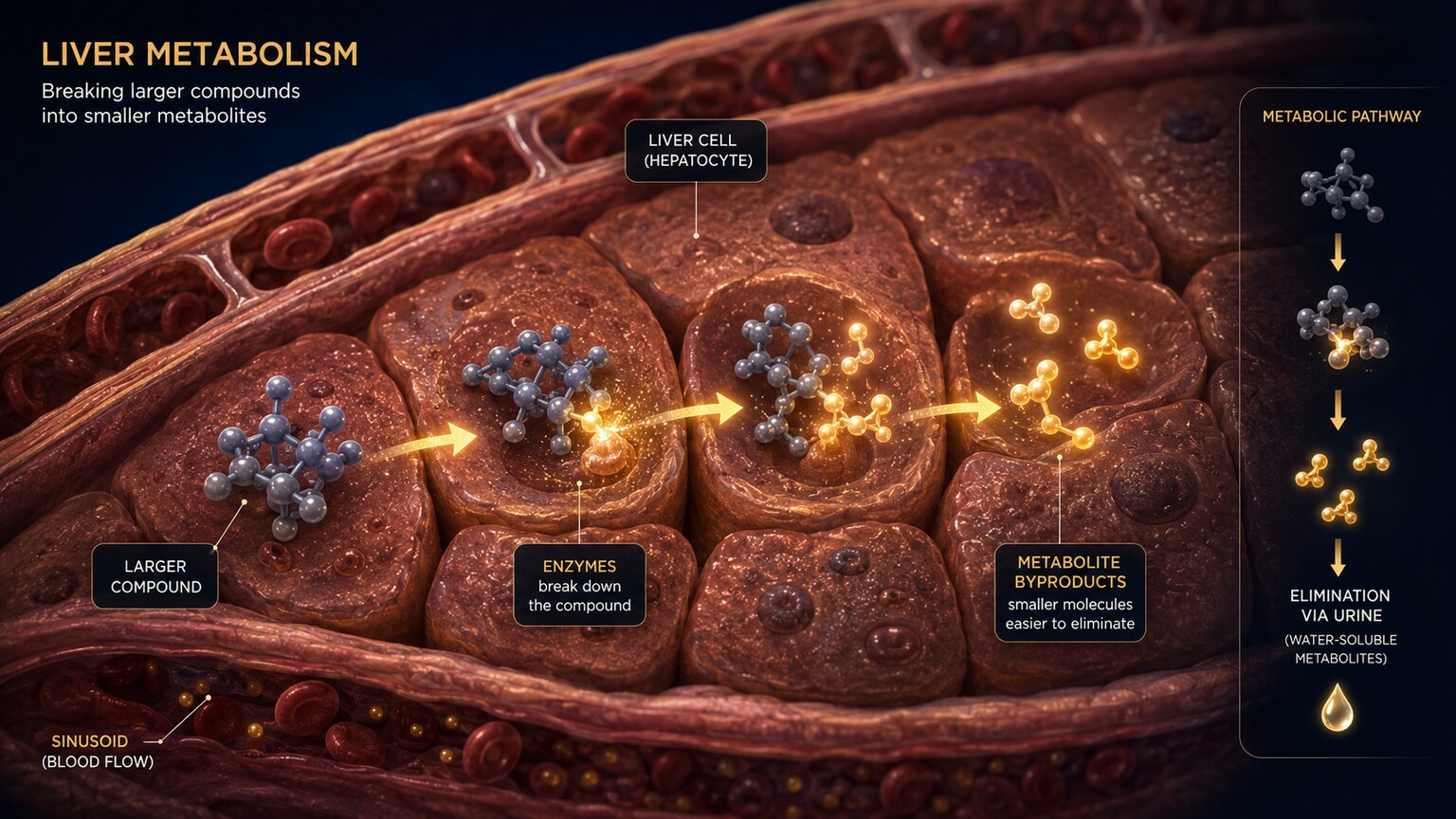
Figure 4. Cocaine's primary detected metabolite, benzoylecgonine, is water-soluble and rapidly cleared by the liver and kidneys, producing one of the shortest realistic detection windows among commonly tested substance categories.
Cocaine itself actually clears from the body extremely quickly on its own, but standard laboratory testing actually targets its primary detected metabolite instead, benzoylecgonine specifically, which is water-soluble in nature and consequently cleared relatively fast as well — typical urine detection generally runs roughly 2 to 4 days for occasional, isolated use, extending somewhat further out, generally up to about 10 to 14 days, with genuinely sustained, heavy, or prolonged use over an extended period. Amphetamines and methamphetamine both follow a broadly similar, comparable overall pattern to cocaine, typically remaining detectable for roughly 2 to 5 days after use in most cases, since these particular substances are likewise genuinely water-soluble in nature rather than fat-soluble the way cannabis is.
This particular category nicely illustrates the fat-versus-water-solubility principle from the exact opposite direction compared to cannabis discussed earlier: because these specific substances and their resulting metabolites simply don't meaningfully accumulate within fatty tissue the way THC characteristically does, even fairly heavy, genuinely sustained use over time doesn't extend the overall detection window nearly as dramatically as sustained, regular cannabis use consistently does, despite both scenarios involving genuinely regular, repeated consumption over a comparable period.
Why Detection Windows Are Population Averages, Not Individual Guarantees
Every specific number range covered throughout this article — 3 to 4 days, 2 to 5 days, 30 days or more — represents a summary of published research studying groups of people under controlled or observed conditions, not a personalized prediction calculated specifically for any one individual. Published research on detection windows typically involves study participants whose exact dose, exact usage frequency, and individual physiology are documented and controlled to varying degrees, and the resulting range reflects the genuine spread of outcomes actually observed across that specific study population.
Real-world usage introduces considerably more variability than a controlled study population typically captures, since actual dose, product potency, frequency, and individual physiology all vary far more widely in everyday life than in a structured research setting. This is precisely why the specific ranges given throughout this article are presented as general, evidence-based guidance rather than as precise individual predictions — a genuinely useful, realistic framework for understanding why detection windows vary as much as they do, rather than a tool capable of calculating an exact personal number with real confidence.
Individual Factors That Shift These Windows From Person to Person

Figure 5. Hydration status, body composition, metabolic rate, and kidney and liver function all shift a substance's exact detection window somewhat from one individual to another, even for an identical dose.
Beyond the substance itself and the usage pattern, several genuinely individual factors shift these general ranges somewhat for any specific person. Hydration status affects urine concentration in a fairly direct, measurable way — a genuinely well-hydrated person naturally produces considerably more dilute urine overall, which can, in a borderline case, push an already-declining concentration below a specific test's cutoff line somewhat sooner than a more concentrated, less-diluted sample would show on that exact same day. Body composition matters particularly for fat-soluble substances like cannabis specifically, since a person carrying a genuinely higher proportion of overall body fat simply has considerably more available tissue for the substance to accumulate within over time, potentially extending that gradual release-back-into-bloodstream phase somewhat longer than it would in a person with less available fat tissue overall.
Metabolic rate, along with overall kidney function and liver function, all directly and meaningfully affect how quickly a given substance and its associated metabolites are actually processed and eliminated from the body in the first place, meaning two entirely different people of genuinely similar size, weight, and usage pattern can still show meaningfully different individual detection windows based purely on real, underlying differences in their own personal physiology. Age also plays its own genuinely documented role in this overall picture, since both kidney and liver function naturally, gradually decline somewhat over the entire course of normal, healthy aging, generally extending overall elimination times modestly in older individuals when compared directly against younger individuals under otherwise genuinely similar circumstances and dosing.
How Kidney and Liver Function Specifically Shape Elimination
It's worth understanding a bit more precisely why kidney and liver function matter so directly to detection windows, since these two organs handle nearly the entire elimination process between them. The liver is responsible for metabolizing most substances — breaking down the original compound into the specific metabolites that testing actually detects, as covered earlier in this article — through a series of enzyme-driven chemical reactions. The efficiency of these liver enzymes varies somewhat between individuals due to genuine genetic differences, meaning two people processing an identical dose can produce metabolites at somewhat different rates purely based on their own individual enzyme activity.
The kidneys, meanwhile, handle the actual physical removal of these metabolites from the bloodstream into urine, filtering blood continuously and concentrating waste products, metabolites included, into the urine that's eventually collected for testing. Any condition meaningfully affecting kidney filtration efficiency — significant dehydration, certain underlying kidney conditions, or simply the natural, gradual decline in kidney function that occurs progressively with normal aging — can measurably slow down this entire removal process, generally extending detection windows somewhat compared to someone with optimally, fully functioning kidneys processing an identical dose under otherwise genuinely similar conditions.
Urine, Blood, Saliva, and Hair: Four Different Windows Into the Same History
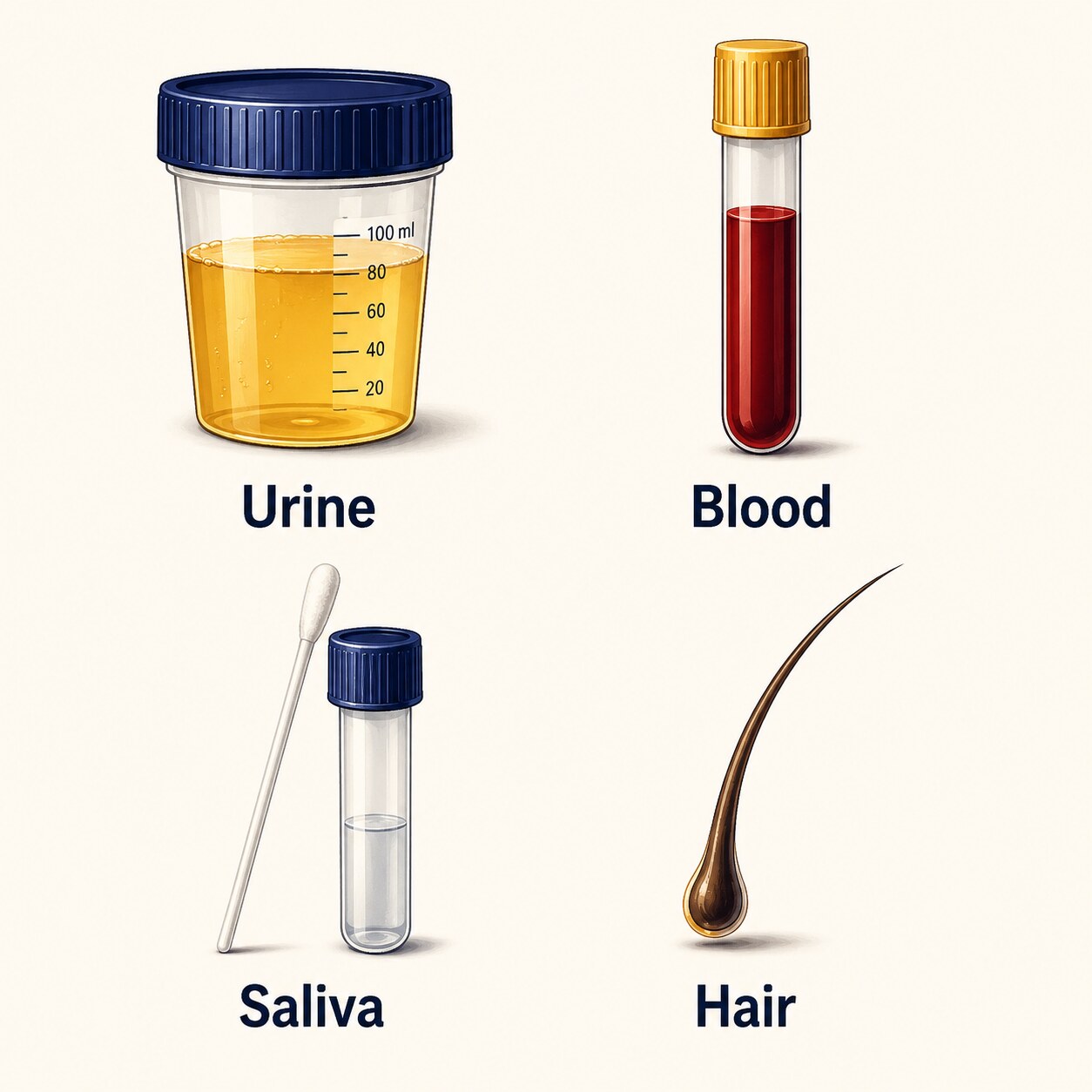
Figure 6. Urine, blood, saliva, and hair each capture a genuinely different window of time — from the past few hours to the past several months — since each specimen type reflects an entirely different physiological compartment.
Everything discussed so far in this article concerns urine testing specifically, but it's worth understanding how dramatically the detection window shifts when a different specimen type is used, since each sample type reflects a genuinely different physiological compartment. Blood testing offers the shortest window of all four specimen types, typically only a matter of hours up to a couple of days at most, but it most closely and directly reflects genuinely current impairment at the time of the draw, which is precisely why blood testing is often specifically preferred in situations where recent, active use is exactly the question being asked, such as immediately following a workplace accident or a traffic incident.
Saliva testing offers a broadly similarly short detection window, generally comparable to or even slightly shorter than blood testing in most cases, making it genuinely useful for reliably detecting recent use through a considerably less invasive, less clinically involved collection method than an actual blood draw would require. Hair testing sits at the completely opposite extreme entirely: as each strand of hair grows steadily outward from the follicle, it incorporates trace amounts of whatever substances happen to be circulating in the bloodstream at that exact moment of growth, essentially permanently locking that specific history into the physical hair shaft itself — meaning a standard hair test can reveal a genuinely detailed usage history spanning approximately the past 90 days of growth, a dramatically longer window than any other specimen type discussed in this article, though it notably cannot detect very recent use occurring within roughly the past several days to a week, since that most recent portion of hair simply hasn't yet grown out far enough beyond the scalp to be physically collected and sampled at the time of testing.
What This Means for Anyone Trying to Interpret a Real Result
If you're reading this article because you're trying to make sense of an actual result — your own, or one you're helping someone else understand — a few practical takeaways from everything covered so far are worth applying directly. First, identify exactly which substance and which specific metabolite was actually tested, since the general category name alone (like "benzodiazepines" or "opioids") often obscures meaningful internal variation covered earlier in this article. Second, consider usage pattern honestly: a single, isolated use and months of regular, sustained use of the identical substance can realistically produce results that differ by a factor of ten or more in detection window length.
Third, remember that a positive result confirms a substance was present above a specific cutoff at some point within the detection window, not necessarily active impairment at the moment of testing, an important distinction already covered in this article's FAQ section. And finally, when precision genuinely matters — a medical, legal, or employment context where an accurate, individualized understanding of detection timing carries real consequences — a knowledgeable provider or toxicologist familiar with the specific substance, testing method, and your own relevant history can offer considerably more precise, individualized guidance than any general reference article, including this one, ever reasonably could.
A Practical Reference: Comparing Windows Side by Side
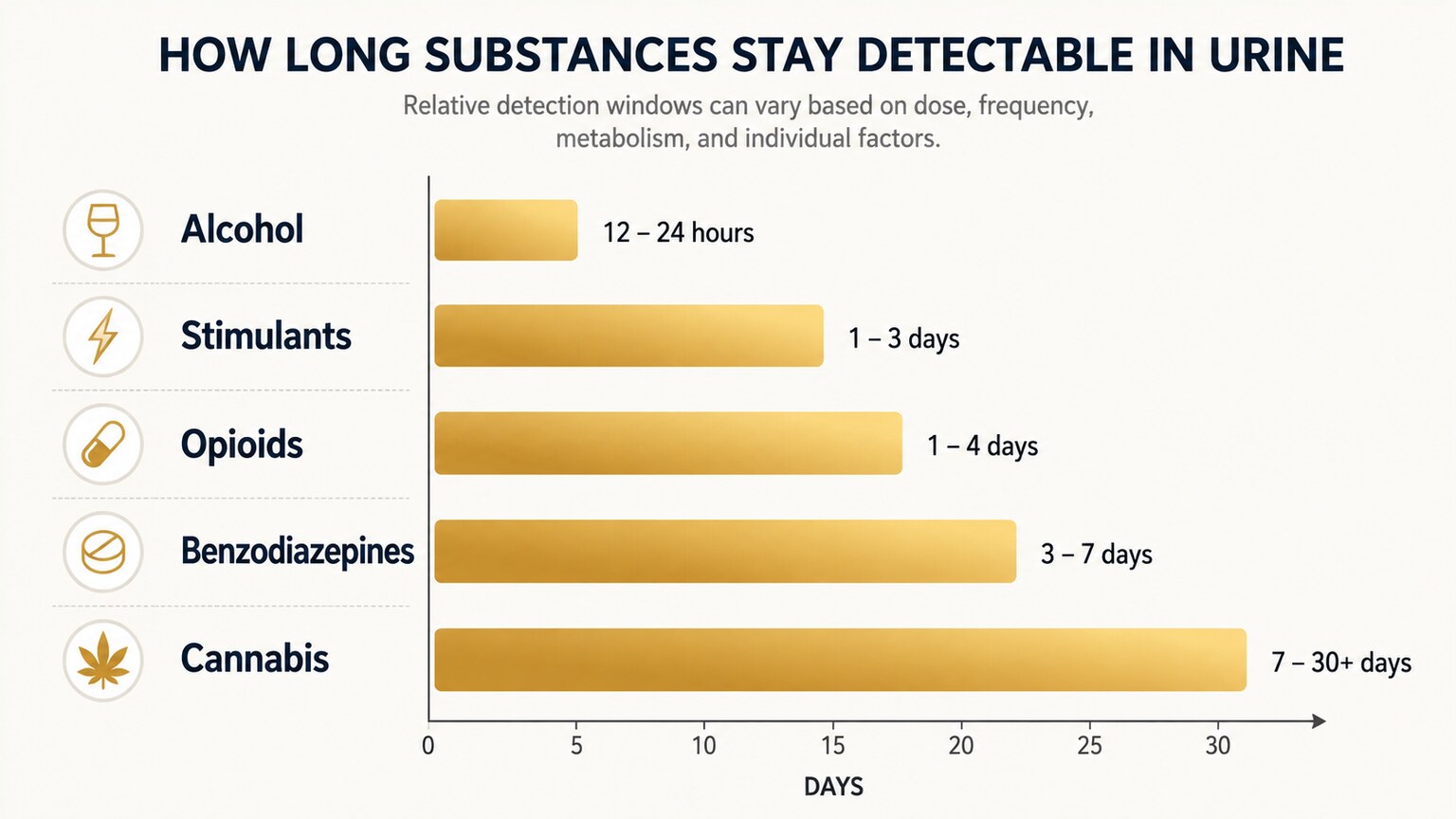
Figure 7. Approximate urine detection windows differ enormously across substance categories, ranging from roughly a day for alcohol to over a month for chronic, heavy cannabis use.
Pulling everything from this article together into one comparative view helps make the enormous range of variation concrete. Alcohol (standard ethanol testing) sits at the shortest end, typically clearing within about a day. Cocaine and amphetamines follow a similar short pattern for occasional use, generally 2 to 5 days, extending somewhat with heavy sustained use. Opioids fall in a broadly comparable range, typically 2 to 4 days. Benzodiazepines show the widest internal spread of any single category, ranging from about 3 days for shorter-acting formulations to several weeks for longer-acting ones. Cannabis sits at the extreme long end, ranging from 3 to 4 days for a single use all the way to 30 days or more for chronic, heavy use.
Every one of these ranges represents a general pattern drawn from published research, not a guaranteed number for any specific individual, since the personal factors covered earlier in this article — hydration, body composition, metabolism, and organ function — can meaningfully shift any given person's actual result within, and occasionally somewhat beyond, these general ranges.
Common Misconceptions Worth Addressing Directly
A handful of persistent misconceptions tend to make detection windows feel considerably more mysterious or arbitrary than the underlying biology actually is, and directly addressing them helps consolidate everything covered in this article. The first misconception treats a single "days to weeks" range found online as a precise, universally applicable number, when in reality, as this article has explained in detail, that range represents a summary of population-level research rather than a personalized calculation — the honest, evidence-based answer for any specific individual situation genuinely depends on usage pattern, individual physiology, and which specific test is being used.
A second common misconception assumes that a longer detection window automatically means a more dangerous or more impairing substance, when in reality detection window length reflects a substance's specific chemistry (fat-solubility, half-life) far more than its actual risk profile or how long it continues producing impairing effects — cannabis's notably long window, for instance, reflects THC's fat-solubility, not a uniquely dangerous pharmacological profile compared to substances with much shorter windows. A third misconception assumes that a negative result definitively proves complete abstinence over an extended prior period, when in reality a negative result only confirms that concentration has already dropped below the specific cutoff being used at the specific moment of testing, a distinction covered from a different angle in a related article on cutoff levels linked at the end of this one.
Frequently Asked Questions
Why do online detection window calculators give such different answers?
Most online calculators use simplified, generalized averages that don't account for the specific usage pattern, individual physiology, and exact test cutoff involved in your own situation, which is exactly why real-world results can differ meaningfully from a generic online estimate.
Does drinking extra water shorten a detection window?
It can dilute urine concentration somewhat, potentially pushing a borderline result below a cutoff slightly sooner, but it doesn't meaningfully accelerate the underlying elimination process itself, and excessively diluted samples can trigger a specimen validity flag on some tests.
Is the detection window the same as how long impairment lasts?
No. Impairment typically resolves considerably faster than detectability, since a substance and its metabolites often remain measurable in urine long after any actual impairing effect has completely worn off.
Why does chronic use extend the window so much more for some substances than others?
It depends on whether the substance is fat-soluble or water-soluble. Fat-soluble substances like THC accumulate in tissue with repeated use, while water-soluble substances are cleared relatively consistently regardless of how often they're used.
Does exercise speed up how quickly a substance clears?
For fat-soluble substances specifically, intense exercise can theoretically mobilize stored fat and temporarily release additional amounts into the bloodstream, though the overall effect on total detection window length is generally modest rather than a reliable way to significantly shorten it.
Can two people who used the exact same amount test differently?
Yes. Individual differences in metabolism, kidney and liver function, body composition, and hydration status can all produce genuinely different detection windows even when dose and timing are identical between two people.
Conclusion
There's no single answer to "how long does it stay in your system," but there is a genuinely coherent set of principles that explains the wide range of real-world answers: the substance's specific elimination half-life, whether it's fat-soluble or water-soluble, how frequently it was used, individual factors like hydration and metabolism, and which specimen type is actually being tested all combine to determine any specific detection window. Understanding these underlying mechanisms replaces a confusing patchwork of conflicting online estimates with a genuinely useful framework for interpreting why detection windows vary as much as they do.
This same underlying framework — a declining concentration curve compared against a specific threshold, shaped by individual physiology and usage pattern — extends usefully beyond drug testing specifically to nearly any situation involving a substance's presence being measured in the body over time. Approaching an unfamiliar detection-window question with this mechanistic understanding, rather than searching for one single universal number, is what actually explains why two seemingly contradictory answers about the same substance can both be entirely correct, simply describing two different points along the same underlying biological process.
Still Not Sure What Your Results Mean?
Upload your labs and get a complete, visual, plain-language interpretation of every biomarker — delivered to your inbox in under 15 minutes.
Get My ReportThis article is for educational purposes only and does not constitute medical advice. Always consult your healthcare provider regarding your specific lab results.