
What Is the Difference Between a Panel and a Single-Substance Test?
A drug panel and a single-substance test are built to answer two genuinely different questions, even though both involve the same basic idea of testing a urine, blood, or saliva sample for a chemical. A panel is designed to cast a wide net, screening for several completely unrelated drug classes at once — cannabis, cocaine, opiates, amphetamines, and more, depending on how many "panels" it covers — using one sample and one collection visit. A single-substance test does the opposite on purpose: it looks for exactly one specific compound, at a much higher level of sensitivity or precision than a broad panel ever attempts, because the situation calls for a narrow, targeted answer rather than a broad screen. Understanding which kind of test actually fits a given situation — a pre-employment screen, a pain-management monitoring visit, or an emergency room evaluating a possible overdose — explains a lot of otherwise confusing decisions doctors, employers, and labs make about which test to order in the first place.
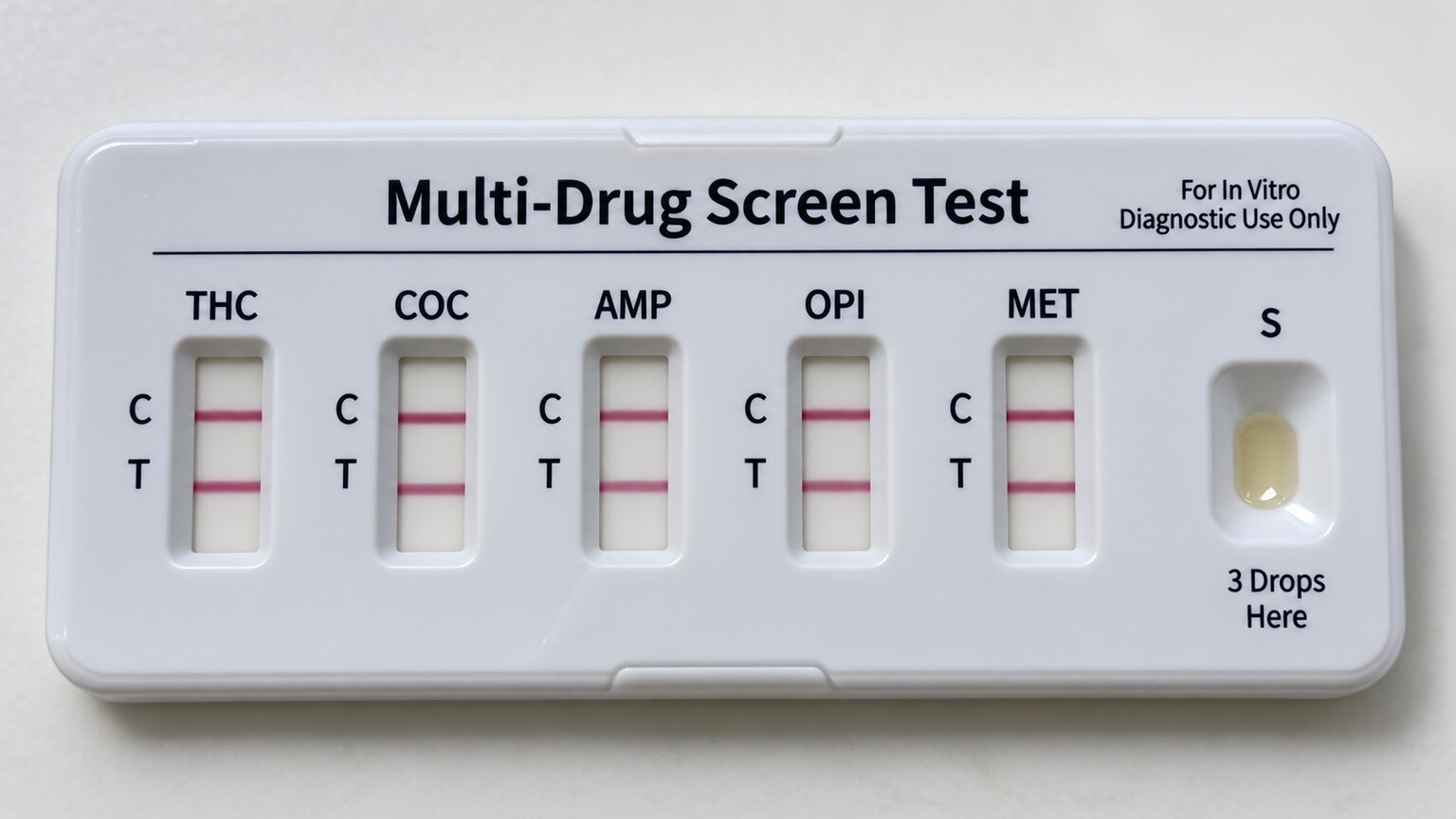
Figure 1. A panel test runs several independent antibody-based screens side by side on the same sample, each lane checking for a completely different drug class at once.
What a Panel Test Actually Screens For
A drug panel isn't one test — it's several individual immunoassay tests bundled together and run on the same sample at the same time. Each drug class gets its own dedicated reagent lane, each one containing antibodies specifically designed to bind to that particular class of drug metabolite, and each lane produces its own independent line or color change indicating whether that specific class came back above or below its cutoff concentration. When a report says "5-panel negative," it actually means five separate individual screens, each checking for a chemically unrelated substance, all came back negative on the same collection.
This bundled structure exists purely for efficiency. A single collection visit, a single specimen validity check, and a single set of paperwork can answer five, ten, or even twelve separate drug-class questions at once, rather than requiring a separate collection, a separate specimen validity check, and separate documentation for each individual substance. For an employer or a court needing a broad, general answer to "is this person using anything from a defined list of concerning substances," a panel is by far the more practical and cost-effective approach.
It also helps to understand precisely what "drug class" means in this context, since it's a slightly different idea than testing for one specific chemical. Most panel lanes don't detect one exact molecule — they detect a family of related metabolites that share enough chemical structure to bind the same antibody, which is exactly why a single "opiate" lane can flag both morphine and codeine, two related but distinct compounds, using one shared reagent. This family-based detection approach is what makes a panel efficient in the first place, since a single lane can cover a meaningful range of related substances within that drug class rather than needing a separate lane for every individual chemical variant — but, as later sections of this article cover in detail, that same shared-antibody efficiency is also exactly why panels can miss substances that fall just outside a given family's chemical resemblance.
The Standard 5-Panel and Why These Five Substances
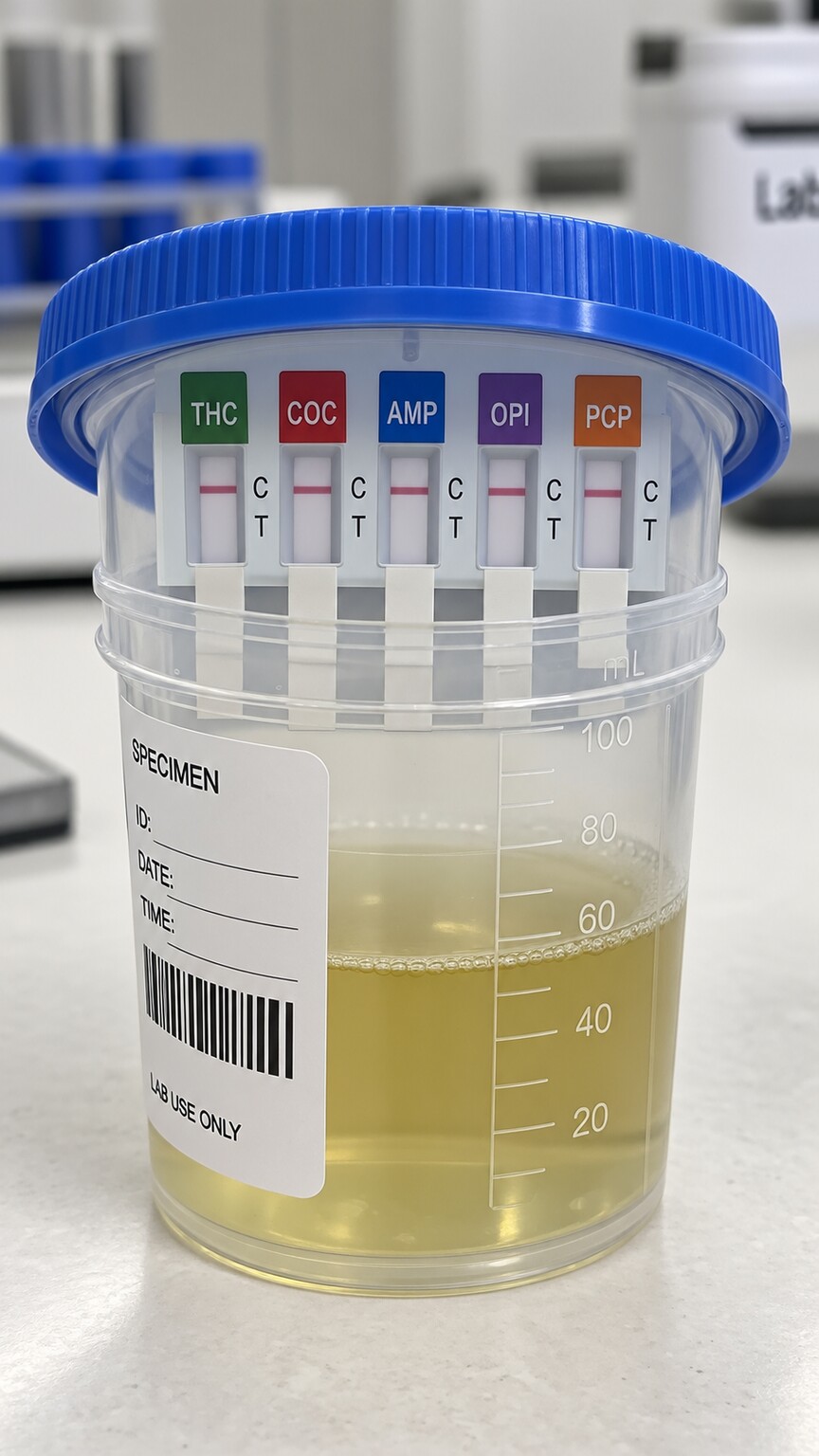
Figure 2. The federal SAMHSA-5 panel — THC, cocaine, opiates, amphetamines, and PCP — was originally built around the substances that were both commonly misused and reasonably easy to detect with 1980s-era immunoassay technology.
The most widely used baseline panel in the United States traces back to federal workplace testing guidelines first established by the Substance Abuse and Mental Health Services Administration, commonly called the SAMHSA-5: marijuana (THC), cocaine, opiates, amphetamines, and phencyclidine (PCP). These five were chosen specifically because they represented the substances of greatest concern for safety-sensitive federal transportation and government jobs at the time the guidelines were written, and because reliable, affordable immunoassay technology existed to detect each of them consistently across different labs nationwide.
It's worth understanding that this specific five-substance list is now, in a real sense, a product of its era rather than a comprehensive modern accounting of every commonly misused substance. It predates the more recent rise of synthetic opioids, prescription opioid misuse at the scale seen today, and several classes of substances that either didn't exist or weren't a major public health concern when the panel was first standardized. This history is directly relevant to understanding why single-substance testing has become increasingly important as a companion to, rather than a replacement for, the standard panel — a point covered in detail later in this article.
Federal transportation and safety-sensitive workplace testing programs, which are legally required to follow SAMHSA guidelines specifically, have been slower to formally expand this list than private employers and clinical settings have, partly because any change to a federally mandated panel requires a formal regulatory rulemaking process rather than a simple internal policy update. This regulatory lag is itself a genuinely useful thing to understand: a federally regulated pre-employment drug test for a truck driver or airline pilot, by law, still centers on the original five-substance framework (with some additions over the decades, including a 2018 rule adding certain semi-synthetic opioids), while a private employer or a treatment program, free from that same federal mandate, can move faster to add dedicated substances like fentanyl to their own testing protocol as soon as they identify the need — which is part of why fentanyl-specific testing has spread more quickly in some sectors than others.
Curious what your own lab results are actually telling you? Upload your results and get a complete, plain-language breakdown in under 15 minutes.
Analyze My ResultsExpanded Panels: What Gets Added at 10 or 12
Many employers, clinical settings, and legal contexts use an expanded panel that builds on the original five by adding several more drug classes: benzodiazepines, barbiturates, methadone, propoxyphene, and methaqualone are common additions that bring a panel up to 10 substances, while a 12-panel often adds MDMA (ecstasy) and oxycodone specifically, since standard opiate immunoassays don't reliably detect semi-synthetic opioids like oxycodone at typical cutoff levels.
That last detail is worth pausing on, because it's a genuinely common source of confusion: a standard opiate screen is built primarily around detecting morphine and codeine metabolites, and it does not reliably catch every opioid a person might reasonably be taking or using. Oxycodone, in particular, has a different enough chemical structure that a standard opiate immunoassay frequently misses it entirely at typical concentrations, which is exactly why a dedicated oxycodone-specific reagent had to be added as its own separate lane on expanded panels rather than being assumed to fall under the general "opiate" category. This same underlying issue — a broad screen missing something related but chemically distinct — is the exact problem that single-substance testing exists to solve more completely, which the rest of this article covers directly.
The decision to run a 5-panel versus a 10- or 12-panel typically comes down to who's ordering the test and why, rather than any universal rule about which is "correct." Federally regulated safety-sensitive positions generally stick close to the original federal framework since it's the legally defined standard for that specific context. Private employers, especially in industries dealing with a broader range of prescription medication misuse concerns, often opt for the expanded panel specifically to capture benzodiazepines and additional opioids the base panel wouldn't catch. Clinical and addiction-medicine settings frequently choose an even more customized combination, sometimes built around a specific patient's known prescriptions and known risk factors rather than any single fixed standard panel size at all, which is a natural bridge into the next section's discussion of single-substance testing built around one particular patient's specific situation.
What a Single-Substance Test Is, and Why Someone Would Order One
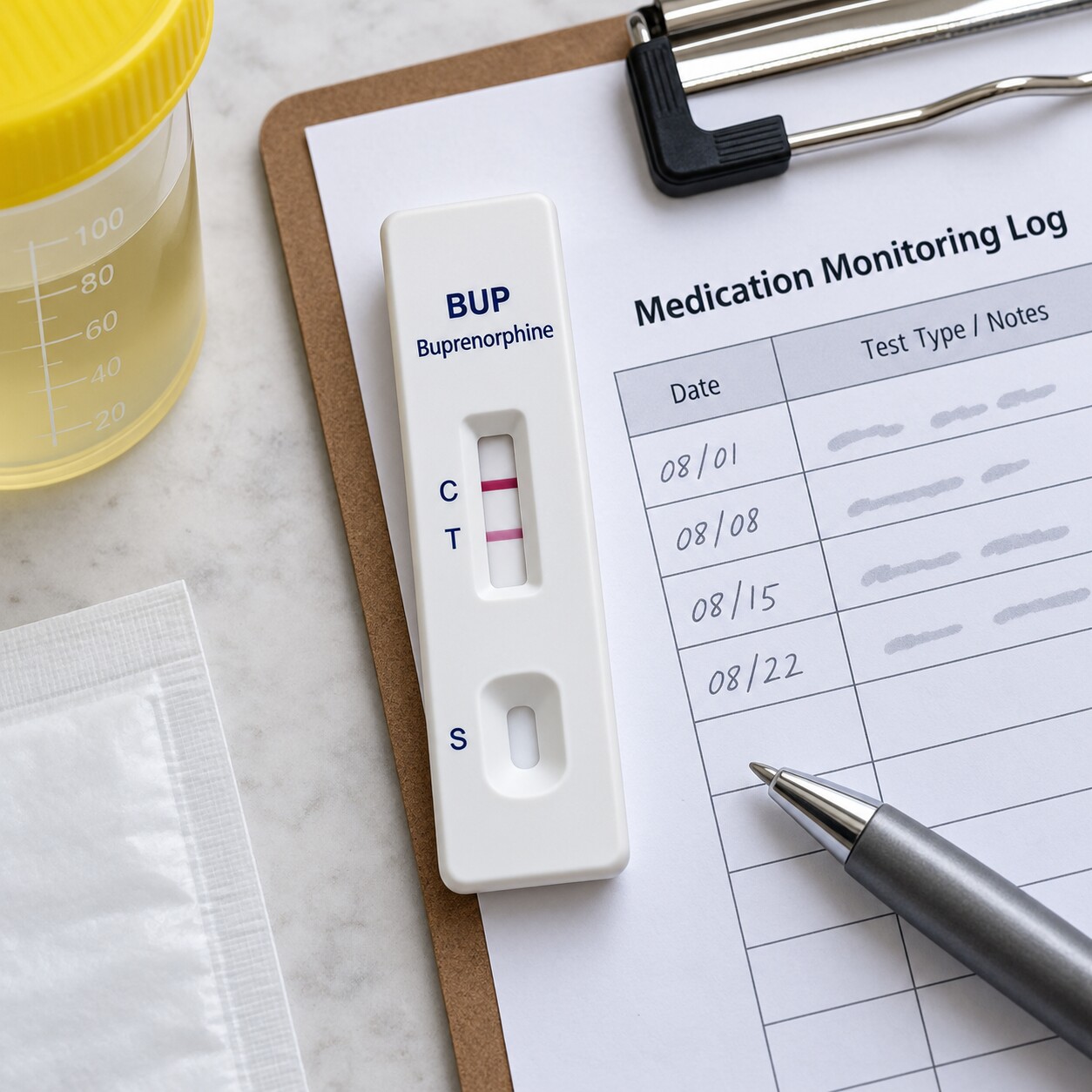
Figure 3. A single-substance test uses one dedicated, highly specific reagent for exactly one compound — often more sensitive and precise for that one target than a general panel's lane for the same drug class would be.
A single-substance test is built the opposite way: instead of one lane per drug class spread across a broad screen, the entire test is dedicated to detecting and often precisely quantifying one specific compound. This narrower focus allows for a more sensitive, more specific reagent tuned exactly to that one target, sometimes reporting an actual measured concentration rather than just a positive or negative flag, which is often exactly what the ordering situation requires.
There are two genuinely different reasons a single-substance test gets ordered, and understanding the distinction between them is central to understanding this entire topic. The first is a targeted follow-up: a broad panel flags a presumptive positive in one specific class, and a single-substance confirmatory test — typically using a far more precise method like gas chromatography-mass spectrometry (GC-MS) or liquid chromatography-mass spectrometry (LC-MS) — is run specifically on that one substance to verify the screening result with much greater certainty, a companion process covered in more depth in a related article on this site about cutoff levels and confirmatory testing. The second reason, covered in the next section, is entirely different in purpose: confirming that a specific substance is present, not absent.
It's worth understanding a bit more about why GC-MS and LC-MS achieve that higher precision, since the underlying reason connects directly back to the "family of related metabolites" limitation described earlier. An immunoassay screen works by an antibody binding to any molecule that resembles its target closely enough, which is efficient but inherently a little imprecise, since a close-enough chemical cousin can sometimes trigger the same reaction as the actual target substance — a phenomenon called cross-reactivity, which is exactly what produces some of the false-positive scenarios covered in a companion article on this site. Mass spectrometry works on a fundamentally different principle: it doesn't rely on approximate chemical resemblance at all, but instead breaks a molecule apart and measures the exact mass and fragmentation pattern of the pieces, comparing that unique fingerprint against a reference library to identify the precise compound present. This is why a confirmatory test is considered dramatically more specific than a screening immunoassay — it isn't just a more sensitive version of the same basic method, it's a genuinely different kind of measurement entirely.
Confirming Presence Instead of Absence: Addiction-Treatment Monitoring
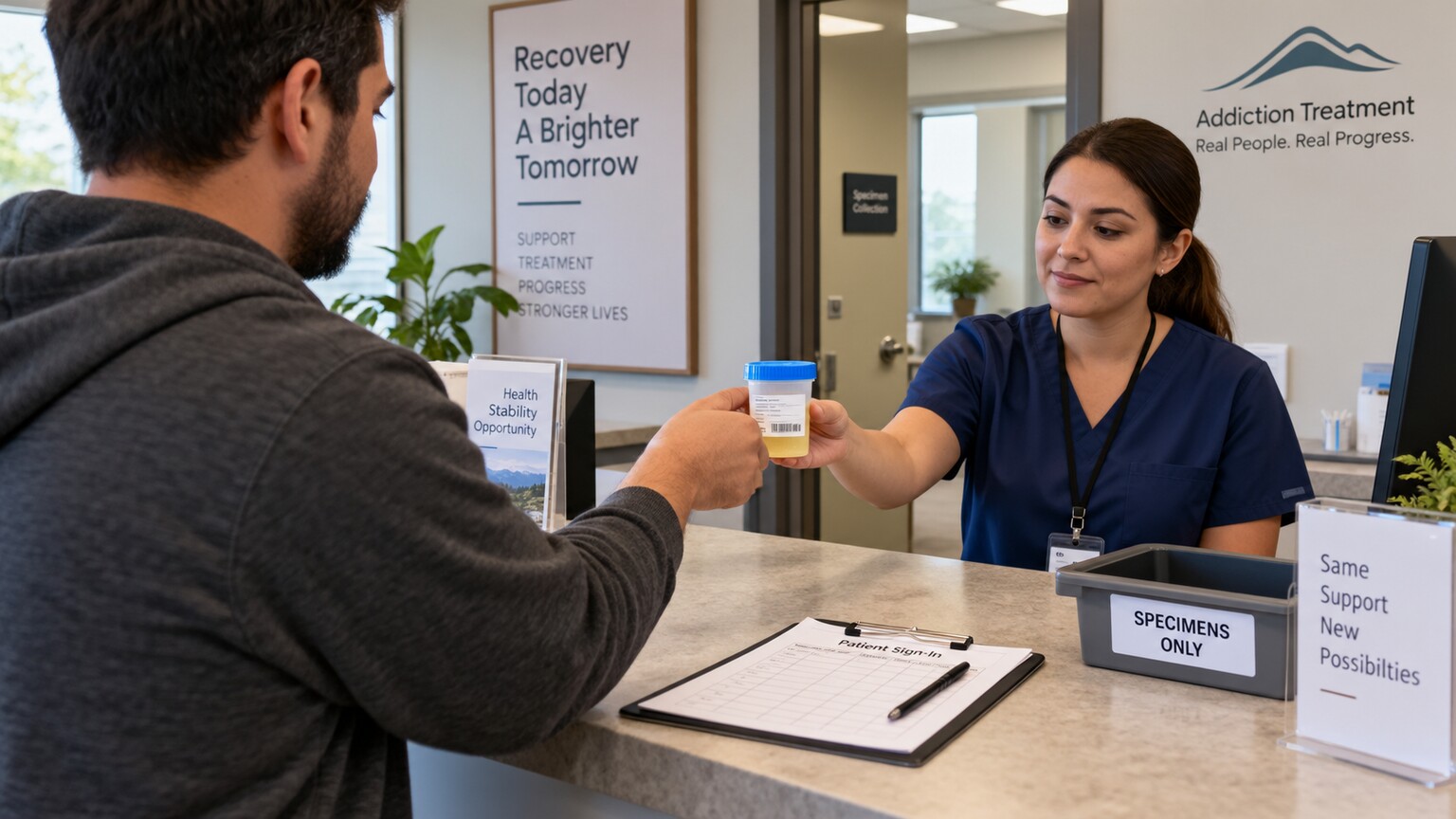
Figure 4. In addiction-treatment monitoring, a single-substance test for buprenorphine or methadone confirms a patient is taking their prescribed medication as directed, inverting the usual logic of drug testing.
Most people's mental model of drug testing is built entirely around one scenario: proving a substance is absent. Addiction-treatment monitoring flips that logic on its head. A patient in medication-assisted treatment for opioid use disorder, prescribed buprenorphine or methadone as part of their treatment plan, is regularly tested specifically to confirm that substance is present in their system, at an expected concentration consistent with taking it as prescribed — not to catch them using something they shouldn't be, but to verify they're actually taking the medication that's helping keep them stable, rather than diverting it (selling or giving it away) while telling their care team they're taking it themselves.
This is precisely the kind of situation where a broad panel is the wrong tool, and a single-substance test is exactly right. A standard opiate panel lane isn't built to reliably detect buprenorphine at all, since it's chemically distinct enough from morphine and codeine to often escape a general opiate immunoassay entirely — the same underlying issue covered earlier with oxycodone. A dedicated buprenorphine-specific test, run at every monitoring visit, gives the treatment team a direct, reliable answer to the one specific question that actually matters in this context: is the prescribed medication genuinely present at the level it should be. Many addiction-treatment programs pair this single-substance compliance test with a separate, standard panel checking for other substances of concern, running both side by side on the same visit — a clean illustration of how a panel and a single-substance test aren't competing tools, but often complementary ones answering two different questions from the exact same appointment.
This same presence-confirming logic extends to methadone maintenance programs, which have used a similar dual-testing structure for considerably longer than buprenorphine treatment has existed, since methadone maintenance as a treatment approach predates buprenorphine's approval by several decades. A methadone clinic verifying a patient is taking their dose as prescribed, rather than diverting it, faces essentially the same detection challenge: methadone is chemically distinct from morphine and codeine and isn't reliably caught by a standard opiate panel lane, so clinics have long relied on a dedicated methadone-specific immunoassay run as its own separate test, run alongside a broader panel checking for other substances that might indicate a relapse or a new substance-use concern developing alongside treatment. Missing a dose entirely, in this monitoring context, is just as clinically informative as detecting an unauthorized substance would be — both point toward something the treatment team needs to address, just from opposite directions.
Why Fentanyl Needed Its Own Dedicated Test
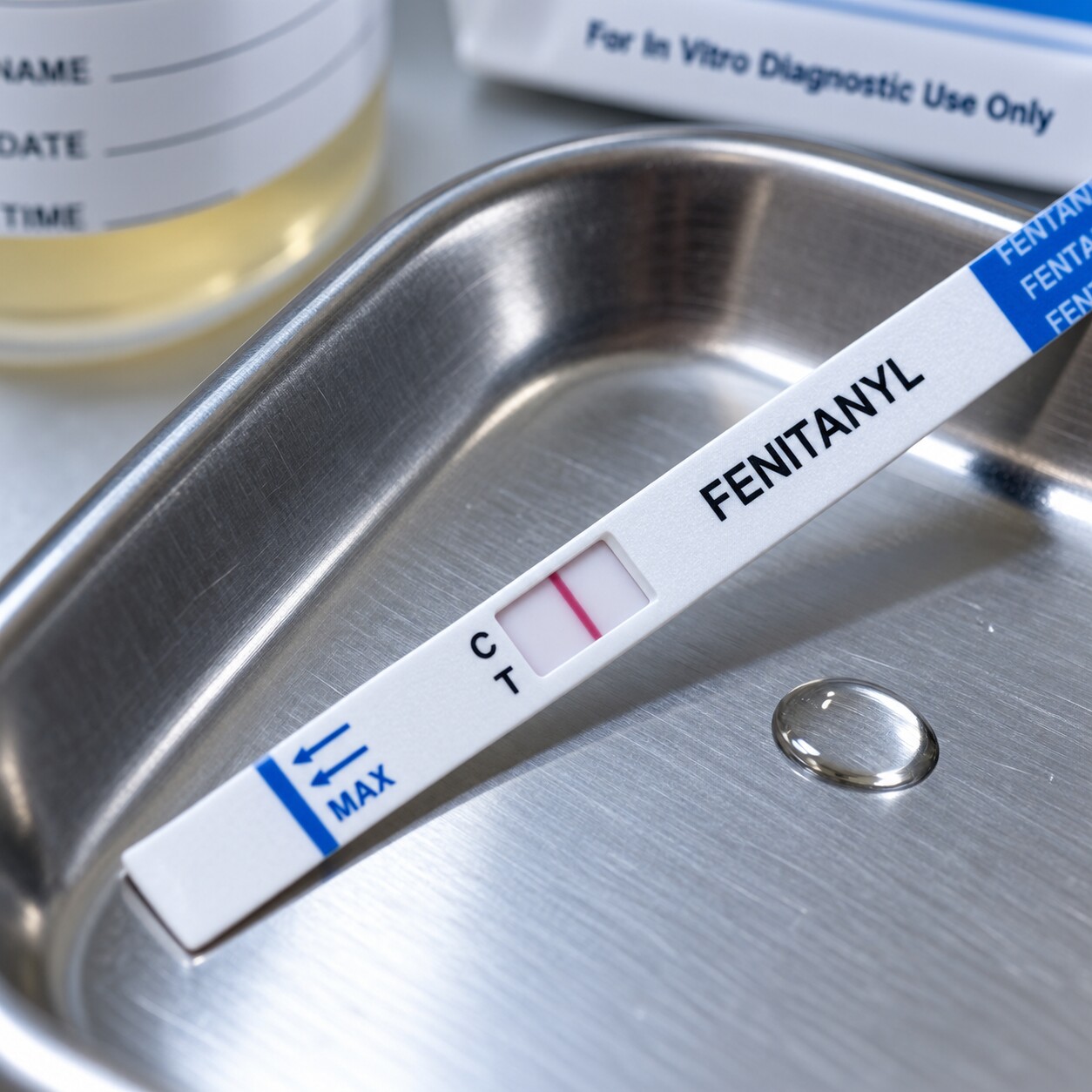
Figure 5. Fentanyl is chemically distinct enough from morphine and codeine that it doesn't reliably trigger a standard opiate panel line, which is why a growing number of testing programs now add a dedicated fentanyl-specific screen.
Fentanyl is, today, one of the single most important examples of why single-substance testing has become genuinely necessary rather than a niche add-on. Fentanyl is a fully synthetic opioid, structurally quite different from morphine, codeine, and the other naturally derived or semi-synthetic opioids a standard opiate panel is built around, and this structural difference means fentanyl frequently goes entirely undetected by a standard opiate immunoassay, even at levels well above what would clearly indicate significant use. This gap has real, serious consequences: given how often fentanyl is now mixed into other street drugs, often without the buyer's knowledge, a standard panel showing "opiate negative" tells almost nothing about whether fentanyl specifically is present.
In direct response to this gap, a dedicated fentanyl immunoassay strip is now commonly added as its own separate test alongside a standard panel, particularly in emergency medicine, addiction treatment, and increasingly in workplace and correctional testing programs that have recognized the blind spot. This single addition illustrates the core theme of this entire article in the clearest possible way: a panel's breadth is also its limitation, and the substances that most urgently need dedicated attention are often exactly the ones a broad, older panel was never built to catch in the first place.
The scale of this specific gap is worth appreciating directly, since it's part of why fentanyl-specific testing has expanded so quickly across so many different settings in a relatively short period of time. Public health data has consistently shown fentanyl and its analogs playing a role in the substantial majority of opioid-involved overdose deaths in recent years, a shift that occurred largely after the standard opiate panel had already been in widespread use for decades. This timeline mismatch — a testing standard fixed in an earlier era, and the substance driving the most urgent current public health concern falling outside that standard's original design — is precisely why standalone fentanyl testing moved, in a comparatively short window, from a specialized addition seen mainly in a handful of forward-thinking programs to something now considered close to a baseline expectation in emergency medicine and many addiction-treatment settings specifically.
Other Substances Standard Panels Still Miss
Fentanyl isn't the only gap. Kratom, a plant-derived substance with opioid-like effects that has grown considerably in popularity, isn't detected by any standard opiate or opioid panel lane at all, since its active compounds are chemically unrelated to the opioid alkaloids those panels are built around — testing for it requires its own specific, dedicated assay, one considerably less commonly available than a standard opiate screen. Newer synthetic cannabinoids, sometimes sold under names unrelated to their actual chemical structure, frequently escape a standard THC panel for a similar reason: the antibodies used in a standard cannabinoid immunoassay are tuned to detect natural THC metabolites specifically, not the structurally different synthetic compounds sometimes found in products marketed as legal alternatives.
Gabapentin, a medication increasingly misused in combination with opioids to intensify their effect, is another substance that doesn't appear on any standard panel, despite growing clinical concern about this specific combination — testing for it requires a dedicated single-substance order, generally only requested when a clinician has a specific reason to suspect this particular pattern. The common thread across every example in this section is the same: a standard panel reflects a fixed, historically determined list of substances, and any drug that falls outside that specific list, no matter how clinically relevant it becomes, requires someone to specifically think to order a dedicated test for it rather than assuming a broad panel already has it covered.
Designer benzodiazepines round out this list as a particularly instructive example, since they illustrate how quickly a chemical landscape can shift ahead of a fixed testing standard. Standard benzodiazepine panel lanes are built around detecting the most common prescribed medications in that class and their typical metabolites, but a wave of novel, non-prescription benzodiazepine analogs, manufactured specifically to mimic the effects of prescription versions while differing just enough chemically to potentially escape standard detection, has emerged in recent years through the same illicit-manufacturing channels responsible for many fentanyl analogs. Specialized reference laboratories have developed dedicated panels specifically to catch this expanding list of novel compounds, but these tests remain considerably less universally available than a standard benzodiazepine screen, meaning a negative standard benzodiazepine result doesn't fully rule out one of these newer analogs the way it would for one of the more common prescribed medications the standard lane was actually built to catch.
Cost, Turnaround, and Sensitivity Tradeoffs
The practical tradeoffs between the two approaches are straightforward once the underlying purpose is clear. A panel is cost-efficient per substance covered, since bundling several immunoassay lanes together onto one specimen collection is considerably cheaper than ordering the equivalent number of individual single-substance tests separately, and turnaround for an initial screening panel is typically fast, often same-day. A single-substance test, particularly one run via GC-MS or LC-MS for maximum precision, costs more per substance tested and often takes longer to result, since it typically requires more specialized equipment and, in many labs, gets sent out to a reference laboratory rather than being run on-site.
What a single-substance test buys in exchange for that added cost and time is precision that a broad panel's lane for the same general drug class often can't match — a specific, sometimes quantitative answer about one compound, rather than a general "something in this broad category was present" flag. Choosing between the two approaches, in practice, comes down to matching the tool to the actual question being asked: broad and efficient when the goal is a general screen across many possibilities, narrow and precise when the goal is a specific, high-stakes answer about one particular substance.
Turnaround time deserves a slightly more detailed look, since it can genuinely shape which test gets ordered in a time-sensitive situation. A basic immunoassay panel can often be resulted within minutes at the point of collection using a rapid test cup or cassette, or within a few hours if sent to an on-site lab, which is exactly why panels remain the default first step even in urgent settings like an emergency department. A send-out confirmatory or single-substance quantitative test, by contrast, commonly takes one to three business days to result, since it typically requires transport to a specialized reference laboratory equipped with mass spectrometry instrumentation that most individual hospitals and clinics don't maintain on-site. This turnaround gap is exactly why an emergency physician treating a suspected overdose relies on the rapid panel result to guide immediate treatment decisions in the moment, while a slower, more precise confirmatory or fentanyl-specific result arrives later to refine the clinical picture retrospectively rather than to inform the first, most urgent round of care.
Three Real Scenarios, Three Different Test Choices
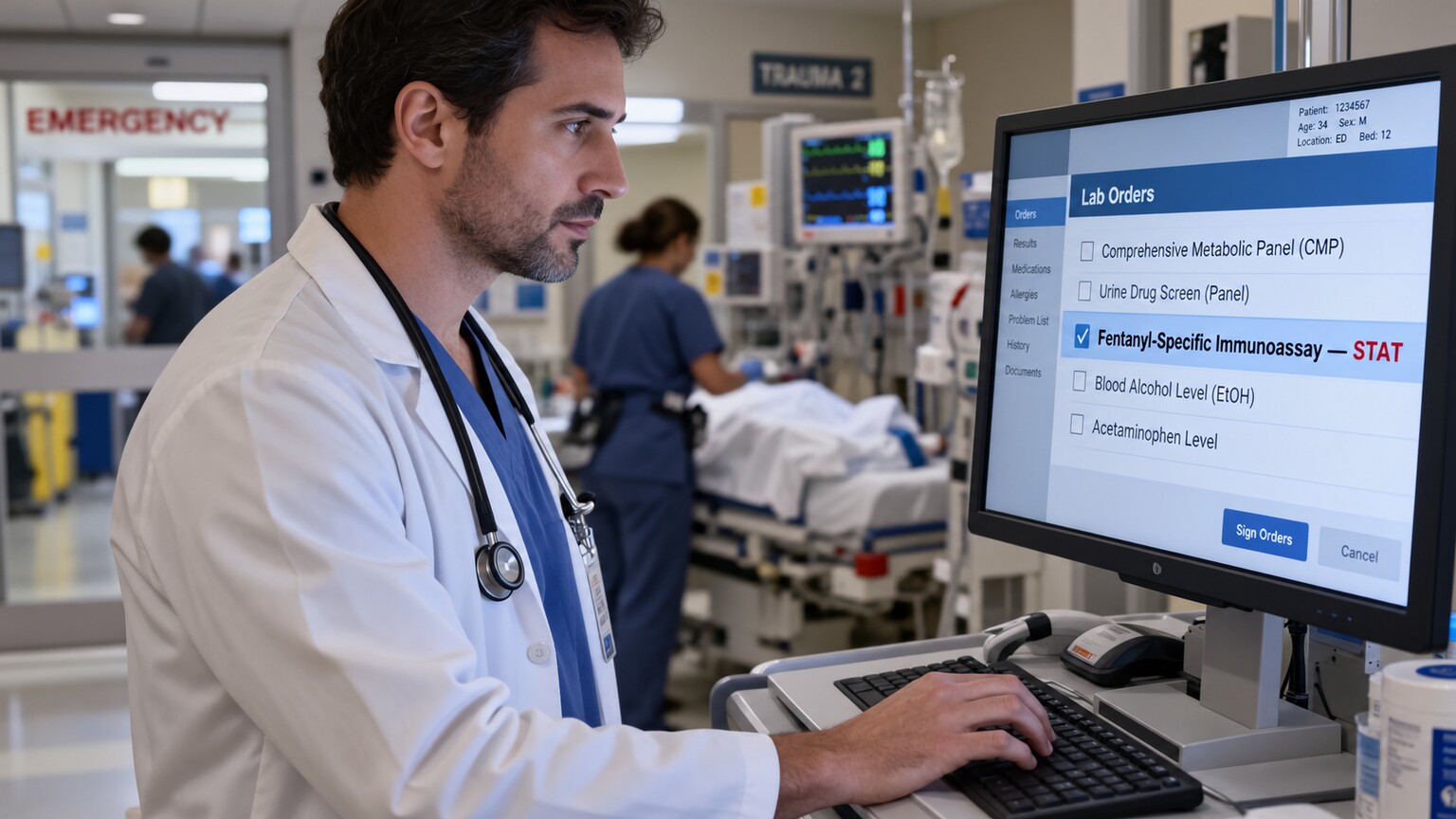
Figure 6. In a suspected overdose, an emergency physician often orders a dedicated fentanyl-specific test alongside a broad panel, since a negative standard opiate screen alone would not rule out fentanyl involvement.
A pre-employment screen for a transportation job is the clearest example of a panel-first situation: the employer needs a broad, defensible answer covering several categories of concern from a single, standardized process, and a 5-panel or expanded panel is exactly the right tool for that purpose, since no single substance is specifically suspected and the goal is general coverage. This same panel-first logic extends to routine, random workplace testing throughout someone's employment in a safety-sensitive role, not just the initial pre-employment screen, since the ongoing concern remains general rather than centered on any one specific substance.
An emergency room evaluating a patient with signs of opioid overdose represents the opposite case built around real, immediate stakes: a standard panel gets ordered as a baseline, but given how common fentanyl-involved overdoses have become and how unreliably a standard opiate lane detects it, a dedicated fentanyl-specific test is very often ordered alongside it, precisely because a negative standard opiate result in this specific clinical situation would not be reassuring on its own. The clinical team doesn't wait for that fentanyl-specific result before beginning treatment, since the rapid overall clinical picture and the fast-resulting panel already provide enough information to act immediately — the dedicated fentanyl test instead refines the diagnosis and informs decisions made over the following hours, such as how long to keep monitoring a patient given fentanyl's tendency to cause repeated, delayed respiratory depression compared to some other opioids.
An addiction-treatment clinic monitoring a patient on buprenorphine represents a third distinct pattern: a single-substance compliance test confirms the prescribed medication is present as expected, often paired with a broader panel checking for other substances of concern, with both tests answering genuinely different questions from the same visit rather than one simply being a more thorough version of the other.
A fourth scenario worth including specifically because it looks different from the first three: a family court or child-custody evaluation ordering a hair follicle test rather than urine, specifically because hair testing reflects a considerably longer window of substance use history (typically up to 90 days) than urine ever could, and the evaluation's central concern is a pattern of use over months, not a single recent incident. Even here, the same panel-versus-single-substance logic applies identically — a broad hair panel screens several drug classes over that extended window, while a specific concern about one particular substance flagged during that broader screen would still prompt the same kind of targeted, single-substance confirmatory follow-up described earlier in this article, just applied to a different sample type serving a different investigative timeframe.
Reading the Two Report Formats Side by Side
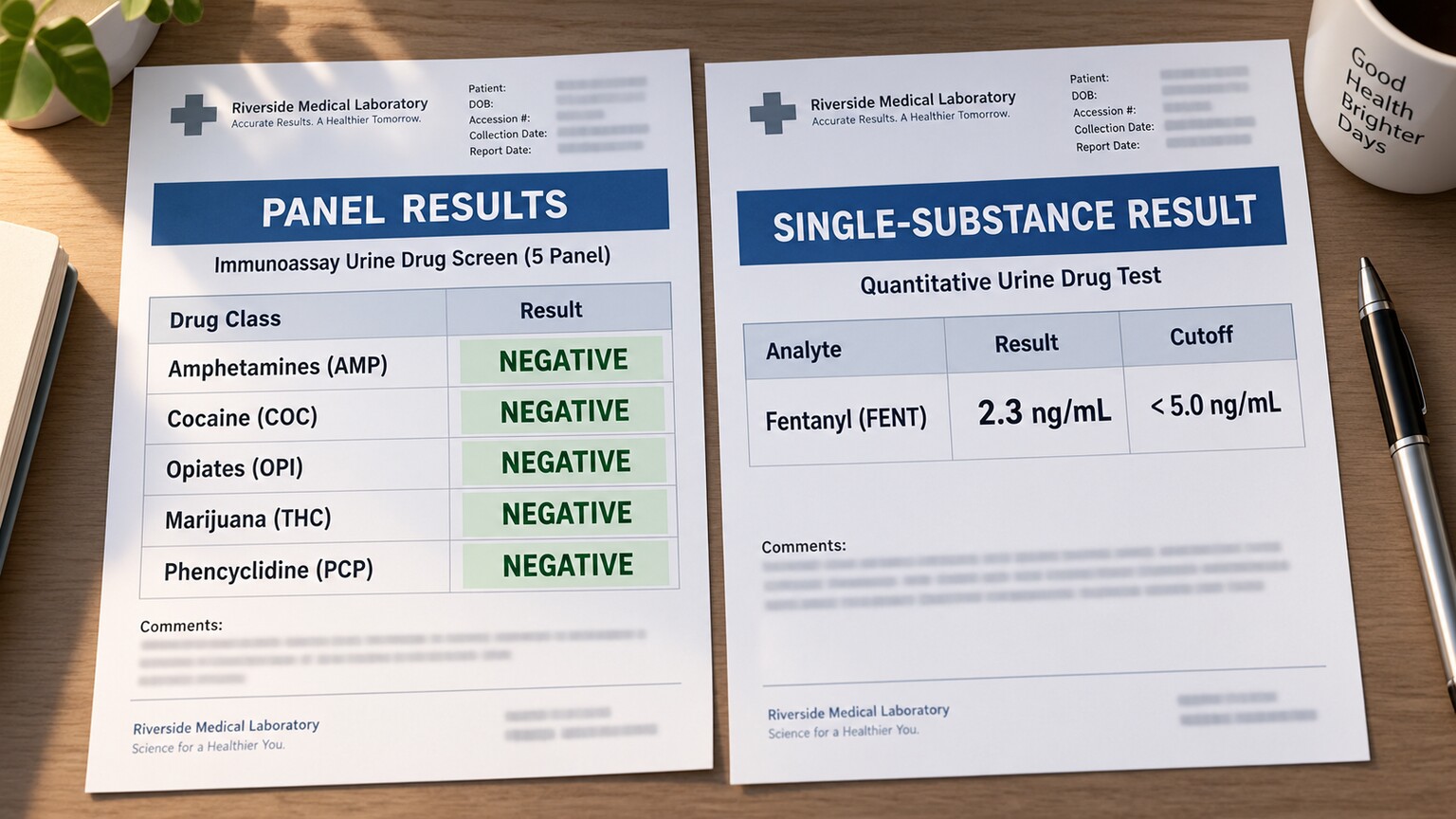
Figure 7. A panel report typically lists a simple positive or negative for each drug class tested, while a single-substance confirmatory or monitoring report often includes an actual measured concentration for that one compound.
The two test types don't just differ in what they look for — the paperwork that comes back looks meaningfully different too, and knowing what to expect from each helps make sense of a report when it actually arrives. A panel report is typically formatted as a simple list: one row per drug class, each marked positive or negative relative to its specific cutoff, with no further numeric detail provided beyond that binary call. This format matches the panel's purpose well, since the underlying question for each class is usually just "above or below the line," not "exactly how much."
A single-substance report, particularly one generated through a confirmatory GC-MS or LC-MS method or through ongoing addiction-treatment monitoring, usually includes an actual measured concentration, reported in nanograms per milliliter, alongside the substance's specific cutoff for comparison. This numeric detail matters in a way a simple positive or negative never could in these specific contexts: a treatment team monitoring buprenorphine compliance benefits from seeing whether a patient's level is roughly consistent with their prescribed dose over time, not just whether it's technically present, and a forensic or legal confirmatory test benefits from documenting the exact measured value precisely because that number itself, not just the pass-or-fail label, may become directly relevant to how the result gets used or challenged later. Learning to recognize which report format is actually in front of you — a simple panel checklist versus a detailed quantitative single-substance report — is a small but genuinely useful skill for making sense of any drug testing paperwork that crosses your desk, whether as a patient, a parent, or simply someone trying to understand a result.
Common Misconceptions Worth Addressing
A common misconception is assuming a broader panel is always simply "more thorough" and therefore always the better choice. As this article has covered, a panel's breadth comes with real, specific blind spots — fentanyl, kratom, synthetic cannabinoids, gabapentin, and other substances that fall outside its historically fixed list — meaning a panel alone can miss exactly the substance that matters most in a given clinical situation, no matter how many drug classes it nominally covers. A 12-panel is genuinely broader than a 5-panel, but "broader" and "complete" are not the same claim, and no fixed-list panel, however large, can be assumed to automatically include every substance relevant to a given person's specific situation.
A second misconception is assuming a single-substance test is only ever used to catch someone using something they shouldn't. As the addiction-treatment monitoring example demonstrates directly, a single-substance test is just as often used to confirm a substance is present as expected, serving a supportive, verification role in ongoing medical treatment rather than a purely accusatory one.
A third misconception worth addressing is assuming that once a testing program has added one or two dedicated single-substance tests, like fentanyl, it has effectively closed every gap a standard panel might have. In reality, the list of substances falling outside a standard panel's original design keeps shifting as new compounds emerge, meaning even a program that has proactively added fentanyl-specific testing can still have blind spots around kratom, novel synthetic cannabinoids, designer benzodiazepines, or whatever the next chemically distinct substance turns out to be. This is less a criticism of any specific testing program and more a structural reality of how drug testing technology works: a panel or an added single-substance test only ever covers what someone specifically thought to test for, and staying current requires the testing standard itself to be periodically revisited as the substances people are actually using continue to change.
Frequently Asked Questions
Does a standard 5-panel or 10-panel test detect fentanyl?
Not reliably. Fentanyl is structurally different enough from morphine and codeine that standard opiate immunoassays frequently miss it, which is why a dedicated fentanyl-specific test is increasingly ordered alongside a standard panel.
Why would someone need a single-substance test if they've already had a panel?
Two main reasons: confirming a presumptive positive from a panel with a more precise method, or confirming a specific substance is present as expected, such as verifying a prescribed addiction-treatment medication is being taken.
Is a single-substance test more accurate than a panel?
For the one substance it targets, generally yes, since it can use a more specific reagent or a precise confirmatory method rather than a general immunoassay lane shared across a broader drug class category.
Why doesn't a standard opiate panel catch oxycodone or buprenorphine?
Standard opiate immunoassays are built primarily around detecting morphine and codeine metabolites. Semi-synthetic and synthetic opioids like oxycodone and buprenorphine are chemically different enough that they often require their own dedicated reagent to be reliably detected.
Can a panel and a single-substance test be ordered together?
Yes, and this is common in addiction-treatment monitoring and emergency medicine, where a broad panel and a targeted single-substance test answer different, complementary questions from the same visit.
Conclusion
A panel and a single-substance test aren't a "better" and "worse" version of the same tool — they're built to answer genuinely different questions, and the right choice depends entirely on what question actually needs answering. A panel casts a wide, efficient net across a fixed, historically determined list of drug classes, which makes it the right tool for general screening but leaves real blind spots around anything outside that list, fentanyl and kratom being two of the clearest current examples. A single-substance test trades that breadth for precision, either confirming a screening result with more certainty or confirming that one specific substance is present exactly as expected, a role that has become especially important in addiction-treatment monitoring and modern emergency toxicology.
Understanding which purpose each tool actually serves is what turns a confusing lineup of test names and panel sizes into a set of choices that make complete, logical sense once the underlying question each one is trying to answer is clear.
If there's one practical habit worth carrying forward from everything covered here, it's asking a specific follow-up question whenever a drug test result — your own or someone else's — needs to be genuinely trusted for an important decision: exactly which substances did this particular test actually check for, and does that list include the one substance most relevant to the situation at hand? A panel's name and substance count only tell part of the story; knowing whether fentanyl, a specific prescribed medication, or another substance of genuine concern was actually included, rather than simply assumed to be covered, is what turns a lab report from a reassuring-looking document into information that's actually been verified against the question that mattered in the first place.
Still Not Sure What Your Results Mean?
Upload your labs and get a complete, visual, plain-language interpretation of every biomarker — delivered to your inbox in under 15 minutes.
Get My ReportThis article is for educational purposes only and does not constitute medical advice. Always consult your healthcare provider regarding your specific lab results.