
Why Do Drug Screening Cutoff Levels Matter?
A drug test doesn't work the way most people assume — as a simple detector that flags "any amount, anywhere, ever." Every drug screen is built around a specific numeric threshold called a cutoff level, and a result only comes back positive once the concentration in your sample climbs above that particular number. This isn't a technical afterthought or a loophole; it's a deliberate, carefully calculated design decision that shapes everything about how these tests behave, including how many false alarms they trigger, how long after use they stay positive, and how a lab distinguishes someone who genuinely used a substance from someone who was incidentally exposed to a trace amount of something similar. This article explains what a cutoff level actually is, why it's set where it's set, and why understanding this one concept changes how you should read almost any drug test result.
What a Cutoff Level Actually Is
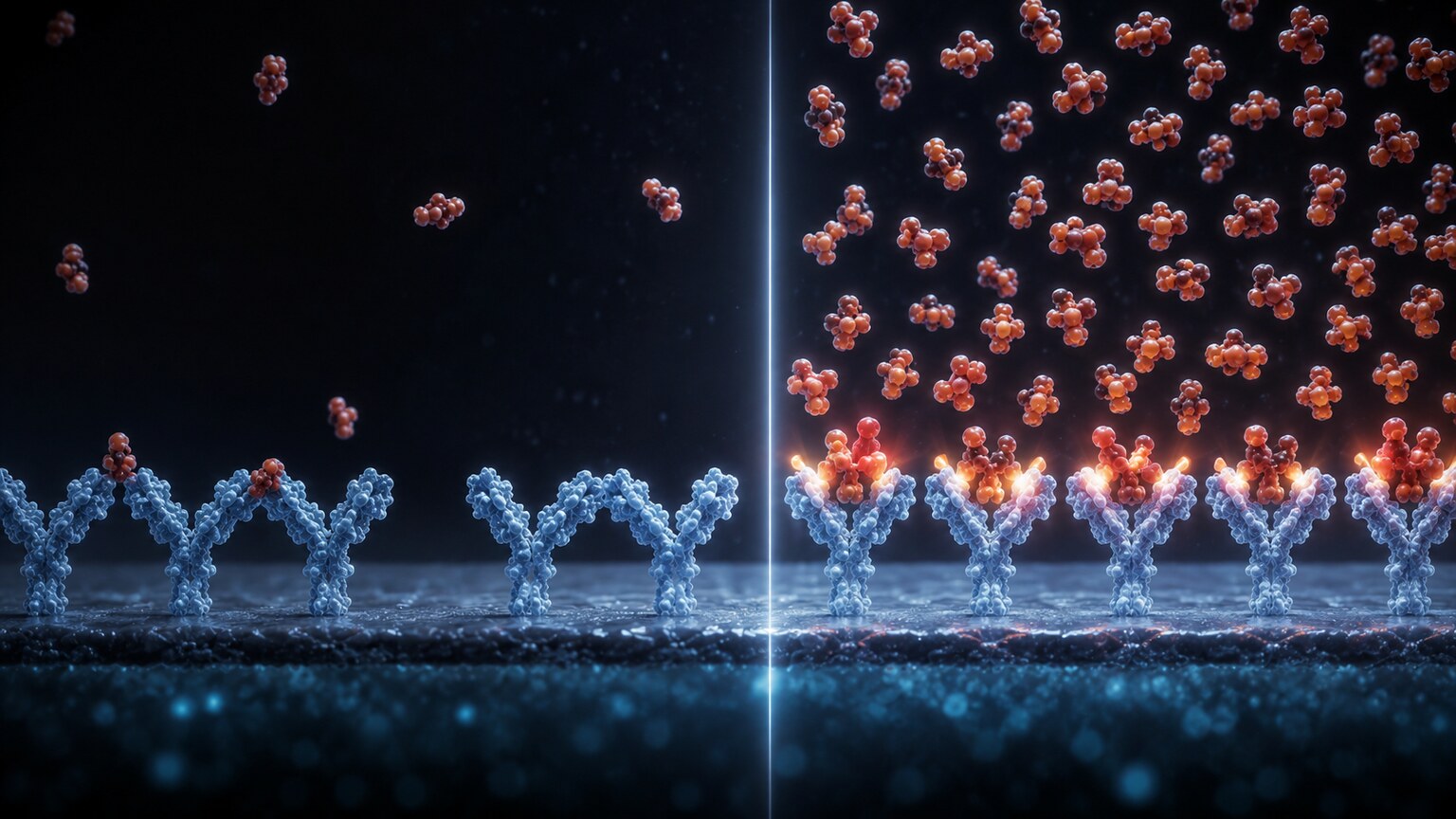
A cutoff level is a specific concentration, almost always expressed in nanograms per milliliter (ng/mL), that a lab or testing device uses as the dividing line between "negative" and "positive." Anything measured below that number is reported as negative, even if the substance is technically present in the sample in some smaller amount, and anything at or above it is reported as positive. This might sound like it's hiding information, but it's actually the opposite — it's what makes the test meaningful at all. Trace amounts of countless substances exist all around us and can end up in a biological sample through routes that have nothing to do with intentional drug use, and without a threshold filtering those trace amounts out, virtually every test result would come back positive for something, rendering the entire test useless as a tool for distinguishing genuine use from background noise.
How the Underlying Test Actually Detects a Threshold
Most initial drug screens use a method called immunoassay testing, which relies on antibodies specifically engineered to recognize and bind to a target substance or its metabolites, the breakdown products your body creates after processing a drug. When a urine or other sample is added to the test, these antibodies compete with the sample for binding sites on a treated surface or reagent — practically speaking, the more of the target substance present in the sample, the more it interferes with the antibody's normal binding pattern, and that interference produces a measurable signal, whether that's a color change, an electrical reading, or a light-based measurement depending on the exact technology involved. The cutoff level corresponds to the specific amount of signal change the device or lab has been calibrated to treat as meaningful rather than incidental. Below that signal threshold, the device reports negative; above it, positive. This is why immunoassay screens are described as qualitative or semi-quantitative rather than fully quantitative — they're built to answer "above or below this specific line," not to report an exact concentration the way a more detailed laboratory analysis would.
Curious what the rest of your lab results are telling you? Upload your results and get a complete, plain-language breakdown in under 15 minutes.
Analyze My ResultsWhy Cutoffs Exist: The Passive Exposure Problem
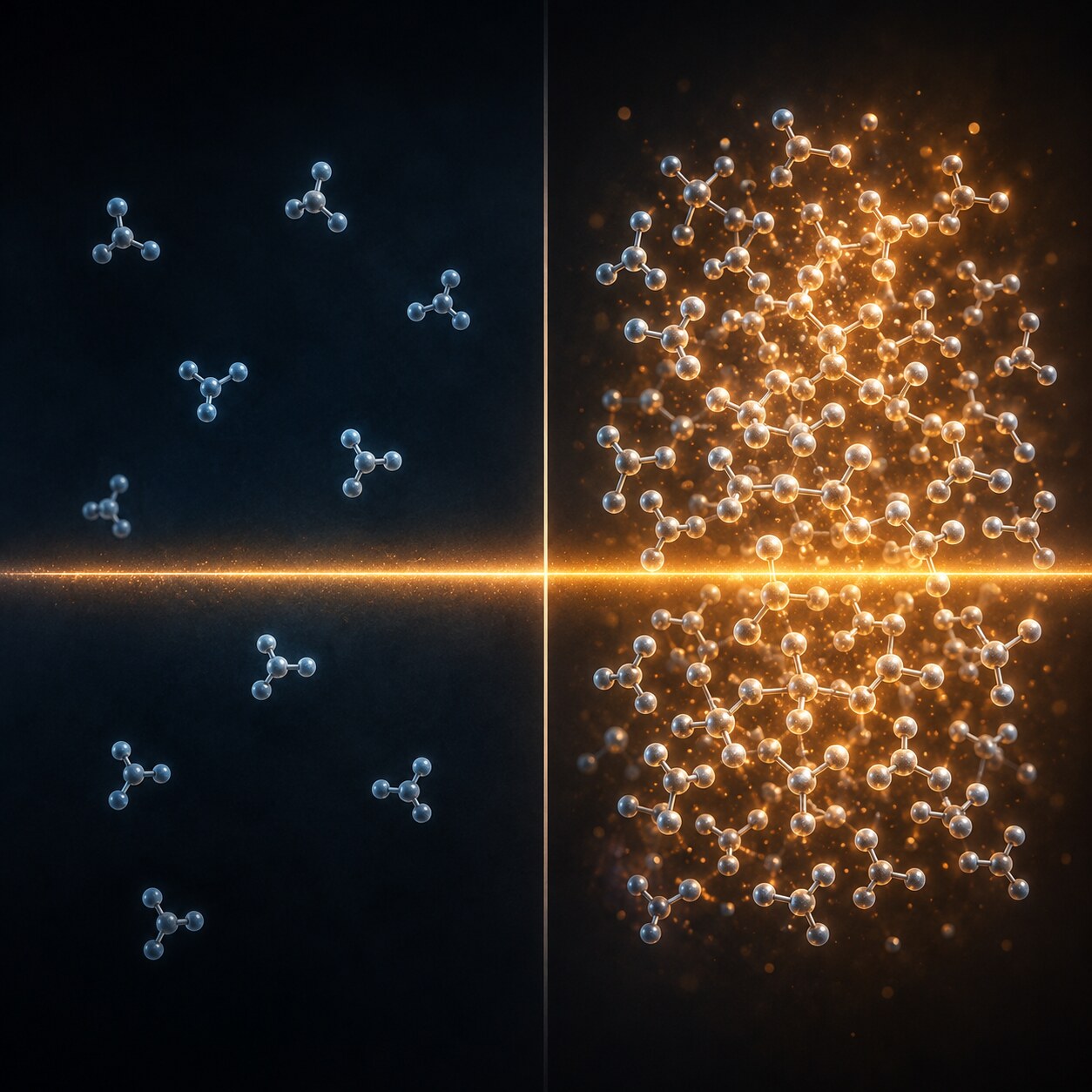
The single biggest reason cutoff levels exist is to filter out incidental, non-intentional exposure from genuine use, and few examples illustrate this better than poppy seeds. Poppy seeds, the kind found on bagels and in baked goods, naturally contain trace amounts of morphine and codeine, residue from the opium poppy plant they come from. Eating a poppy seed bagel can genuinely cause a temporary, measurable rise in opiate metabolites in urine — a well-documented phenomenon that federal testing agencies have studied directly. Early opiate testing cutoffs, set lower than they are today, occasionally flagged poppy seed consumption as a positive result, which caused real, well-publicized problems for people who had done nothing more than eat a bagel. In response, the federal opiate cutoff for urine testing was raised specifically to filter out this kind of incidental exposure while still catching genuine opiate use, which typically produces concentrations well above what a few poppy seed muffins could ever realistically generate. This single example is a genuinely clear illustration of how a cutoff level is not an arbitrary number — it's a calculated line drawn specifically to separate "this happened because of something innocent in daily life" from "this happened because someone used the substance."

Secondhand marijuana smoke presents a similar, though generally less dramatic, version of this same problem. Sitting in a closed room with heavy, ongoing cannabis smoke exposure can, in some documented cases, produce a low, measurable level of THC metabolite in a non-smoker's urine, though studies have generally found that realistic secondhand exposure rarely comes close to the standard cutoff used in most workplace and federal testing, except under fairly extreme, prolonged, poorly ventilated conditions. The cutoff for THC metabolite testing is set specifically with this scenario in mind, calibrated high enough that ordinary, incidental secondhand exposure essentially never triggers a positive result, while active use, even relatively light or occasional use, reliably does. Understanding this distinction matters enormously for anyone worried about a positive result from being around someone else's use rather than their own — the math genuinely doesn't work out the way people often fear, precisely because the cutoff was set with this exact concern already built into its calculation.
Who Actually Decides Where the Line Gets Drawn
Cutoff levels aren't set by individual labs making independent judgment calls — for federally regulated testing, including most workplace drug testing programs in safety-sensitive industries like transportation, they're established by federal agencies, primarily the Substance Abuse and Mental Health Services Administration (SAMHSA), which publishes detailed, specific cutoff values for each substance and each stage of testing. These values are periodically reviewed and adjusted based on emerging research, exactly the kind of process that led to the opiate cutoff change described above. Different substances get different cutoff values entirely, reflecting how much of each substance or its metabolites the body typically produces and excretes, and how much background exposure realistically exists in the general population for that specific substance. Non-federally-regulated testing, including many private employer programs and clinical toxicology screens ordered by a physician, often follows these same SAMHSA-established cutoffs as an industry standard, even when not legally required to, simply because those values represent a well-researched, defensible baseline that's been extensively validated over decades of use.
The Two-Tier System: Screening Versus Confirmation
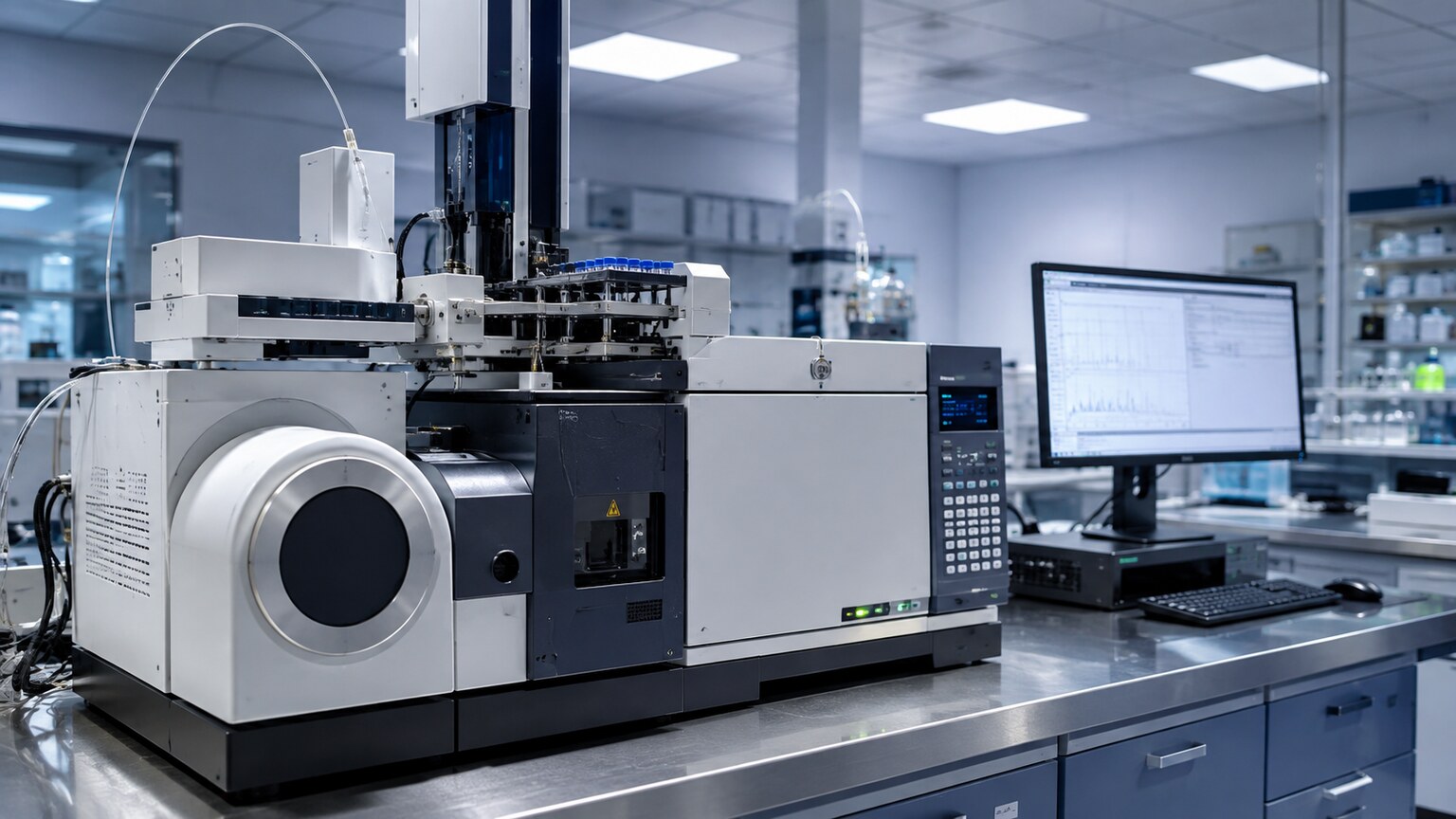
Nearly every serious drug testing program, particularly anything with real consequences attached, like employment or legal proceedings, uses a two-tier approach rather than relying on the initial immunoassay screen alone. A positive screening result triggers a second, entirely different kind of test on the same sample, using a technique called gas chromatography-mass spectrometry (GC-MS) or liquid chromatography-mass spectrometry (LC-MS), depending on the substance. These confirmatory methods work completely differently from immunoassay screening: rather than relying on an antibody's binding behavior, they physically separate the components of a sample and identify each one based on its precise molecular weight and structure, offering a level of specificity that essentially eliminates the false-positive risk inherent to antibody-based screening. Confirmatory testing typically uses its own cutoff level, often set lower than the initial screening cutoff, specifically because it can reliably and specifically identify the exact substance in question rather than just detecting a chemical family that might include several related but distinct compounds. This two-tier structure is exactly why a "presumptive positive" from an initial screen is treated differently from a "confirmed positive" after GC-MS or LC-MS — the second test is what actually proves, with a very high degree of certainty, that the specific substance in question is genuinely present above a scientifically defensible threshold.
Specimen Validity: How Cutoffs Interact With Attempts to Beat a Test
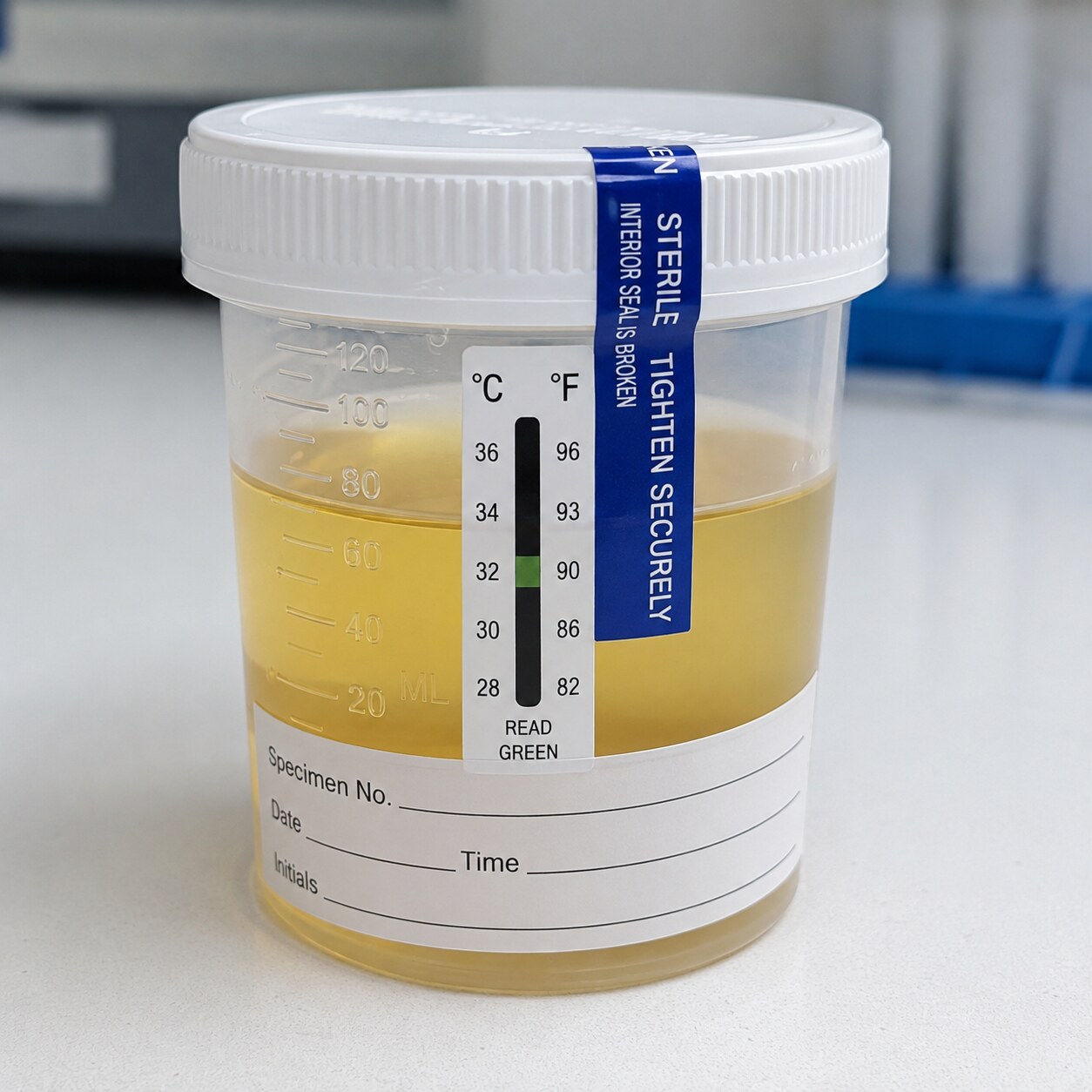
Because a cutoff level is a concentration, not an absolute amount, it can be manipulated by simply diluting a sample — drinking large amounts of water before a test lowers the concentration of everything in urine, including drug metabolites, potentially pushing a genuinely positive result below the cutoff line without actually eliminating the substance from the body. Testing labs are well aware of this and routinely check specimen validity alongside the drug panel itself, measuring creatinine levels and specific gravity, both of which indicate how concentrated or diluted a urine sample genuinely is. A sample with unusually low creatinine and low specific gravity gets flagged as "dilute," and depending on the testing program's specific policy, a dilute negative may be treated as inconclusive, requiring a repeat test under more controlled conditions, sometimes with direct observation, precisely because the original result can't be trusted as a genuine reflection of the person's normal drug use status. Temperature strips built into collection cups serve a related purpose, verifying that a freshly provided sample is at body temperature and hasn't been substituted with someone else's urine or a synthetic alternative smuggled in ahead of time — a low or high reading outside the expected range triggers the same kind of scrutiny as a diluted sample.
Adulteration goes a step further than dilution, involving an attempt to directly chemically interfere with the test itself rather than simply lowering concentration, and specimen validity testing screens for this too. Certain over-the-counter and homemade additives have historically been marketed as ways to defeat drug tests by introducing oxidizing agents, unusual pH levels, or other chemicals directly into a urine sample after collection, aiming to disrupt the antibody reaction the screening test depends on. Modern specimen validity panels check pH, the presence of oxidizing agents, and other chemical markers specifically to catch this kind of interference, flagging a sample as adulterated if it falls outside expected normal ranges for genuine, unaltered human urine. An adulterated result is typically treated even more seriously than a diluted one in most testing programs, since it suggests a deliberate attempt to defeat the test rather than an innocent, if suspicious, pattern of behavior like drinking extra water beforehand. Together, dilution and adulteration checks form a genuinely important companion system to the cutoff level itself — the cutoff defines what counts as positive, while specimen validity testing helps confirm that the sample being measured against that cutoff is a trustworthy, unaltered representation of what's actually in the person's body.
Why a "Negative" Result Doesn't Always Mean Zero
One of the most commonly misunderstood aspects of cutoff-based testing is what a negative result actually certifies. A negative doesn't mean a substance is completely, chemically absent from the sample — it means the concentration measured fell below the specific cutoff threshold being used. This distinction has genuine, practical consequences. Someone who used a substance days earlier, after most of it has already been metabolized and cleared, might test negative even though a small, sub-cutoff amount remains detectable by a more sensitive method. This is also why detection windows — how long after use a substance remains detectable — aren't a single fixed number for any given drug; they depend directly on which cutoff level is being applied, since a lower cutoff extends the window during which a still-declining concentration remains detectable, while a higher cutoff shortens it. Two different testing programs using different cutoff levels for the exact same substance can produce genuinely different results from samples collected at the exact same time from the exact same person, which is worth knowing if you're ever comparing results across different types of tests or providers.
Reading an Actual Test Report
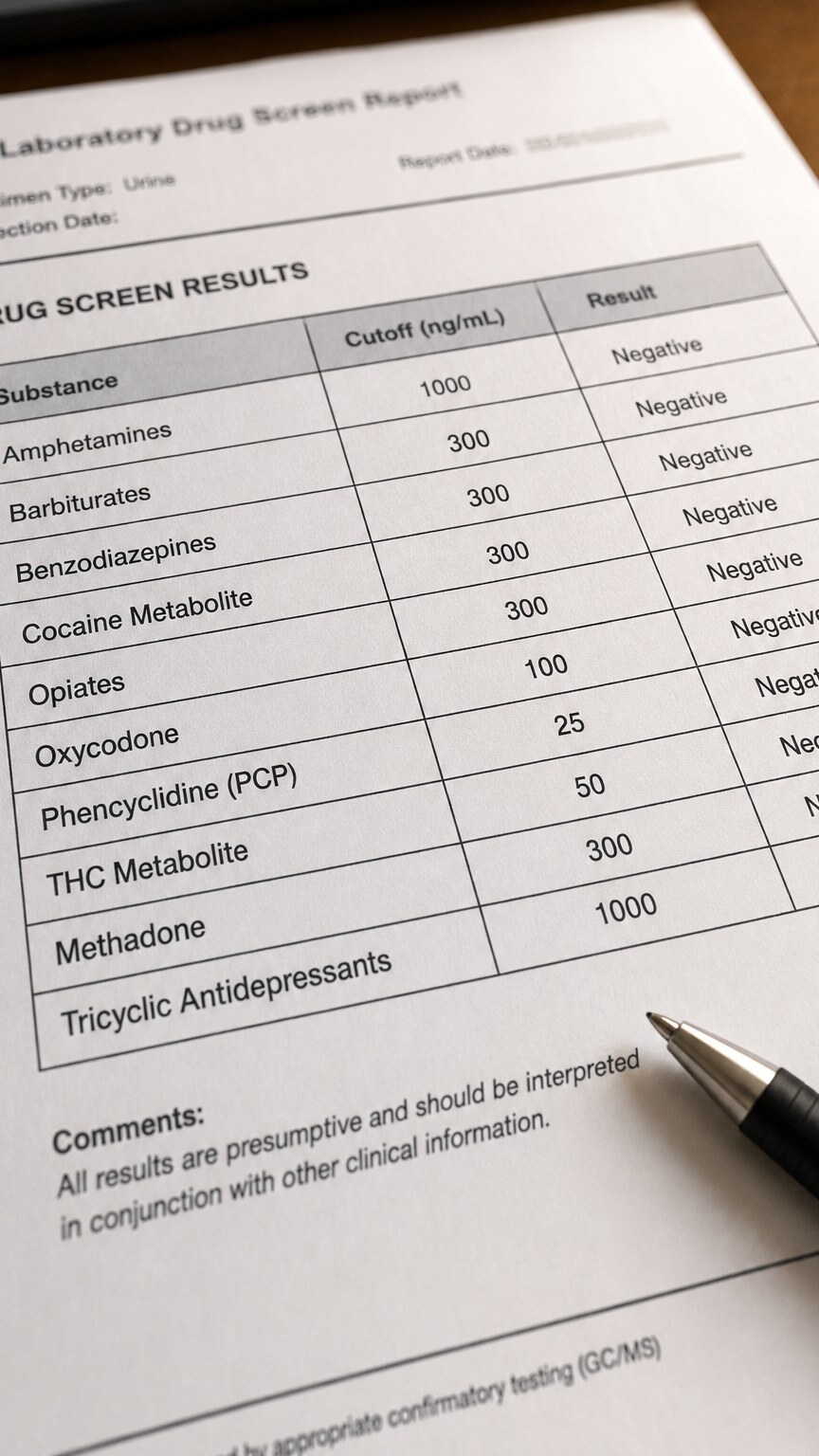
A properly formatted laboratory drug test report typically lists each substance tested alongside the specific cutoff value used for that substance, often followed by the actual measured concentration if the result came back positive, allowing anyone reading the report to see not just "positive" or "negative" but precisely how far above or below the threshold the sample actually measured. A result that reads, for example, "positive, 65 ng/mL, cutoff 50 ng/mL" tells a genuinely different story than one reading "positive, 890 ng/mL, cutoff 50 ng/mL," even though both are technically positive results — the first sits just barely over the line, while the second reflects a concentration many times higher, generally consistent with more substantial or more recent use. This level of detail is exactly why medical review officers, specially trained physicians who review positive workplace drug test results before they're reported to an employer, look at the actual measured concentration rather than just the positive/negative flag, since it provides meaningful context for distinguishing a borderline result that might warrant further discussion from one that leaves little ambiguity.
For anyone reviewing their own report outside a workplace context, this same numeric detail is worth paying attention to. A clinical toxicology screen ordered by a physician, for instance during an emergency room evaluation or as part of a pain management program monitoring prescribed medication compliance, follows the same underlying structure — a cutoff, a measured concentration if positive, and often a note about whether confirmatory testing was performed. Seeing the actual number alongside the cutoff, rather than just a bolded "positive" or "negative," gives a meaningfully fuller picture of what the test found, and it's a completely reasonable thing to ask a doctor or lab to walk through if a report isn't formatted clearly enough to show that detail on its own.
What Happens After a Confirmed Positive Result
In regulated workplace testing, a confirmed positive result doesn't go directly to an employer the moment the lab produces it — it first passes through a medical review officer, a licensed physician with specific training in interpreting drug test results, who reviews the confirmed positive alongside the tested individual's own account before anything is officially reported. This step exists precisely because a confirmed positive, while far more reliable than an initial screen, still doesn't automatically prove illicit or unauthorized use on its own. The medical review officer contacts the individual directly, gives them an opportunity to provide a legitimate medical explanation, such as a valid prescription for a medication that would explain the result, and reviews any supporting documentation before making a final determination. Only after this review is a result reported to an employer as either verified positive or, if a legitimate explanation is confirmed, as negative. This human review layer is a critical part of why the cutoff-and-confirmation system described throughout this article isn't just a mechanical pass/fail process — it's designed with a real opportunity for context and explanation built into the final step, specifically because false assumptions about what a number means can have serious real-world consequences for the person being tested.
Prescription medications are, by a wide margin, the most common legitimate explanation a medical review officer encounters, and understanding this role helps explain why simply having a prescription matters so much practically. Someone taking a prescribed opioid pain medication, a prescribed stimulant for ADHD, or a prescribed benzodiazepine for an anxiety disorder can absolutely produce a positive result on the relevant screening panel, since the test itself has no way of distinguishing a legitimately prescribed dose from unauthorized use — both involve the same substance entering the same body through the same metabolic pathways. This is exactly why keeping documentation of current prescriptions, and being prepared to provide that information if asked, is genuinely practical advice rather than a formality, since it's the specific detail that allows a medical review officer to correctly close out an otherwise-positive result as verified and appropriate rather than a problem requiring further action.
Cross-Reactivity: When a Screen Flags the Wrong Thing Entirely
Beyond the cutoff level itself, immunoassay screening carries a related limitation worth understanding: cross-reactivity, where an antibody designed to detect one specific substance also weakly binds to a different, structurally similar compound, occasionally producing a positive screen for something the person never actually used. Certain cold and allergy medications containing pseudoephedrine have historically cross-reacted with amphetamine screens, some antidepressants and antipsychotics have cross-reacted with PCP or benzodiazepine panels, and even some over-the-counter pain relievers have occasionally triggered cross-reactivity on specific test platforms, depending on the exact antibody formulation a manufacturer uses. This is a separate phenomenon from the cutoff concept discussed throughout this article, but the two interact in an important way: a cross-reactive false positive still has to clear the cutoff threshold to register at all, and confirmatory GC-MS or LC-MS testing afterward resolves the ambiguity definitively, since those methods identify the exact molecular structure present rather than relying on an antibody's imperfect binding behavior. This is yet another reason confirmatory testing exists as a required second step for anything with real consequences attached — cross-reactivity is a genuine, documented limitation of the faster, cheaper screening technology, and the confirmatory tier is specifically what catches and corrects for it.
Why the Specific Cutoff Number Genuinely Changes Real-World Outcomes
Because so much rides on which side of a threshold a measured concentration falls, the exact cutoff value chosen for a given testing program has real, tangible consequences beyond the laboratory. A lower cutoff catches more true positives, including lighter or less recent use, but also increases the risk of catching more borderline or incidental exposures. A higher cutoff reduces false positives from incidental exposure but may miss lighter use or use that occurred further in the past, once metabolite concentrations have declined closer to baseline. This tradeoff is exactly why different contexts genuinely use different cutoffs for the same substance — a safety-sensitive federal workplace program prioritizing near-zero tolerance for any active impairment risk might use a different cutoff than a substance-abuse treatment program primarily trying to track a patient's ongoing recovery progress over time, where the clinical goal and the acceptable tradeoff between sensitivity and specificity look genuinely different. Neither approach is inherently right or wrong — they reflect different priorities, and the cutoff level is the specific numeric lever used to tune the test toward whichever priority matters most in that particular context.
These tradeoffs have played out in real, documented policy debates over the years, offering a useful window into how seriously agencies take this balancing act. When SAMHSA lowered certain amphetamine cutoffs in the early 2010s to help distinguish genuine methamphetamine use from legitimate prescription amphetamine medications used for conditions like ADHD, the change reflected years of accumulated data on how those two situations actually present differently in testing. Similarly, ongoing discussions around marijuana testing cutoffs, particularly as legal status shifts across different states, continue to weigh the same fundamental question this article has focused on throughout: how to distinguish recent, potentially impairing use from residual, non-impairing presence of metabolites that can linger for weeks in regular users, especially given cannabis's fat-soluble storage behavior described earlier. These aren't quick or casual decisions — they typically involve extensive review of pharmacological research, real-world testing data, and input from toxicology experts before any official cutoff value is formally adjusted.
Different Cutoffs for Different Substances, and Why That Makes Sense
It's tempting to assume every substance on a drug panel shares one universal cutoff value, but that's genuinely not how these thresholds are set — each substance has its own specific number, reflecting real differences in how the body produces, stores, and excretes it. Marijuana metabolites, for instance, are fat-soluble and can linger in the body's fat stores for a comparatively long time after use, gradually releasing back into urine over days or weeks in heavier users, which factors into how its cutoff is calibrated relative to detection window expectations. Amphetamines and opiates, by contrast, are typically water-soluble and clear from the body considerably faster, producing a shorter, sharper detection window that's reflected in a differently calibrated cutoff. Benzodiazepines present their own complexity, since this drug class includes numerous individual medications that metabolize differently and that immunoassay antibodies don't all detect with equal sensitivity, sometimes requiring a cutoff calibrated around the specific metabolite the screening antibody was designed to target most reliably. This substance-by-substance customization is exactly why a single "standard cutoff" doesn't exist across an entire drug panel — each number reflects a genuinely separate scientific calculation specific to that substance's real-world behavior in the human body.
How Detection Windows Actually Interact With the Cutoff
It helps to picture what's physically happening inside the body after a single instance of use, since it directly explains why the cutoff number shapes the detection window rather than the two being separate, unrelated facts. Immediately after use, a substance and its metabolites peak in concentration and then begin a gradual decline as the body processes and eliminates them, a decline that isn't linear — it typically follows a curve that drops relatively quickly at first and then more slowly as concentration decreases, governed by each substance's specific elimination half-life. A test result is positive for as long as that declining curve stays above the cutoff line, and negative from the moment it crosses below it. This is precisely why the same single use of the same substance can show a longer detection window under a testing program using a lower cutoff, and a shorter one under a program using a higher cutoff — the underlying biological decline curve is identical in both cases; only the threshold being compared against it changes. Anyone who has heard conflicting claims about "how long marijuana stays in your system" is often really hearing the results of this same curve being measured against different cutoff lines by different sources, not a genuine disagreement about the underlying biology.
Frequently Asked Questions
Can eating poppy seeds really cause a positive drug test?
It's genuinely possible with older, lower cutoff levels, which is exactly why federal opiate testing cutoffs were raised specifically to filter out this kind of incidental exposure while still reliably catching actual opiate use.
What's the difference between a screening test and a confirmatory test?
A screening test uses antibody-based immunoassay technology to quickly flag potential positives above a cutoff. A confirmatory test, using GC-MS or LC-MS, identifies the exact substance with much higher specificity and is used to verify any presumptive positive screening result.
Does a negative drug test mean the substance is completely absent from my body?
Not necessarily. A negative result means the measured concentration fell below the specific cutoff level used, not that the substance is entirely absent. Small, sub-cutoff amounts can still be present and detectable by more sensitive methods.
Can drinking a lot of water before a test help pass it?
Diluting a sample can lower measured concentrations below a cutoff, but labs routinely check creatinine and specific gravity to detect dilution, and an unusually dilute sample is often flagged and may require a repeat test.
Why do different testing programs use different cutoff levels for the same substance?
Different contexts prioritize different tradeoffs between catching more true positives and avoiding false positives from incidental exposure. Federal safety-sensitive programs and clinical treatment monitoring, for example, may reasonably choose different cutoffs to fit their specific goals.
Conclusion
A drug screening cutoff level is far from an arbitrary technical detail — it's the deliberately calculated line that makes an entire testing system meaningful, filtering out the trace, incidental exposures of everyday life from genuine, intentional use. Understanding how that line gets drawn, who draws it, and why it sits where it does explains nearly everything confusing about how these tests behave: why a poppy seed bagel almost never causes a real problem anymore, why negative doesn't always mean zero, and why the same sample can produce different results depending on which specific test and which specific threshold is being applied. The number itself matters just as much as the positive or negative label sitting next to it.
Still Not Sure What Your Results Mean?
Upload your labs and get a complete, visual, plain-language interpretation of every biomarker — delivered to your inbox in under 15 minutes.
Get My ReportThis article is for educational purposes only and does not constitute medical advice. Always consult your healthcare provider regarding your specific lab results.