
Understanding How Heavy Metal Testing Is Performed
Not all heavy metal tests are genuinely created equal, and not all of them are even considered scientifically valid by mainstream toxicology today, which makes this one of the more genuinely important topics to understand clearly before anyone ever orders one, whether out of personal curiosity, a specific occupational requirement, or a doctor's genuine clinical concern. A blood sample, a urine sample, and a strand of hair can each be used to test for the exact same metal — lead, mercury, arsenic, or cadmium — and yet produce meaningfully different, sometimes genuinely contradictory-seeming information about a person's actual exposure, simply because each of these body compartments stores and clears metals on completely different timelines governed by entirely different underlying biology. Making matters considerably more complicated, one specific and commercially popular variant of urine testing, involving a chelating drug deliberately given before the sample is even collected, has been formally rejected by the American College of Medical Toxicology and separately flagged by the FDA as a practice linked to disproven scientific concepts, despite remaining widely commercially available through a range of testing labs and practitioners to this day. This article walks carefully through exactly how heavy metal testing actually works at a genuine technical level, what each sample type honestly can and cannot tell a doctor, the underlying analytical technology doing the actual measuring behind the scenes in a modern laboratory, how the four most commonly tested toxic metals differ from one another in how they move through and damage the body, and why one particular, widely marketed testing approach has drawn such sustained, well-documented criticism from toxicology professionals over the years.

The Technology Doing the Actual Measuring: ICP-MS
Before getting into the specific differences between blood, urine, and hair as sample types, it genuinely helps to understand the instrument actually responsible for detecting heavy metals once a sample physically reaches the laboratory, since this same core technology underlies nearly every legitimate testing method described throughout this entire article. The current recognized gold standard is a technique called inductively coupled plasma mass spectrometry, commonly shortened to ICP-MS in clinical and laboratory settings, and it works through a genuinely elegant, well-understood physical process refined over decades of analytical chemistry research. A liquid sample — whole blood, urine, or a properly dissolved and digested hair sample — is injected into an argon plasma torch, a stream of ionized gas heated to an extraordinary roughly 6,000 to 10,000 kelvin, hot enough to comfortably strip electrons from virtually any element present in the sample and convert that sample into a fine stream of individually charged ions moving toward the instrument's detection system. Those newly formed ions are then funneled through a series of focusing lenses into a mass spectrometer, which sorts and precisely counts them based on their exact mass-to-charge ratio, allowing the instrument to identify exactly which elements are present in the sample and in what specific concentration, down to parts-per-trillion sensitivity in some of the most sensitive configurations available today. ICP-MS can reliably detect dozens of different individual elements from a single small sample run simultaneously in just one analytical pass, offers a genuinely fast, practical turnaround of roughly two to five full business days for most commercial reference laboratories handling this kind of specialized testing, and represents a dramatic, well-documented sensitivity improvement over older analytical techniques like atomic absorption spectroscopy, which is a meaningful part of why ICP-MS has become the dominant, essentially universal method used across nearly all reputable heavy metal testing performed today, regardless of which specific body sample is actually being submitted for analysis.
Whole Blood Testing: The Standard First Step for Most Metals

For most clinically relevant heavy metals, testing starts with a whole blood sample drawn into a specific royal blue-top tube containing EDTA as an anticoagulant, a tube type chosen specifically because its manufacturing process avoids introducing the kind of trace metal contamination that some standard, more commonly used tube types can inadvertently introduce into an otherwise clean sample. A typical single collection requires around 7 mL of whole blood, and critically, the sample is analyzed intact, without separating out the red blood cells the way many other routine blood tests do, because several key heavy metals, mercury in particular, concentrate heavily inside red blood cells themselves rather than remaining freely dissolved in the surrounding plasma fluid component the way many other commonly measured substances typically do instead. This distinction matters enormously for accurate testing: mercury concentration in plasma runs at roughly one-twentieth the level found in red blood cells, meaning a plasma-only test result would dramatically and misleadingly understate a person's actual real-world mercury exposure, which is precisely why whole blood, rather than serum or plasma specifically, is the universally recommended specimen type for mercury testing in particular. Whole blood testing is considered particularly useful and clinically appropriate for identifying recent and cumulative exposure to arsenic, cadmium, mercury, and lead all at once, making it the standard, well-established, first-line diagnostic test doctors reach for whenever there's a genuine, specific clinical reason to actually suspect heavy metal exposure, whether that specific reason involves occupational contact, contaminated drinking water, certain traditional or imported remedies, or one specific known exposure incident that already has a genuinely clear, well-documented timeline attached to it.
Curious what your own toxicology or heavy metal panel actually shows? Upload your labs and get a complete, plain-language breakdown in under 15 minutes.
Analyze My ResultsWhy Blood Alone Doesn't Tell the Whole Story: The Half-Life Problem
One of the most important and genuinely least intuitive concepts in heavy metal testing overall is that different body compartments hold onto metals for wildly different lengths of time, and blood, despite functioning as the standard first-line test in most clinical situations, actually reflects the shortest and most limited window of exposure of nearly any relevant tissue compartment in the body. Lead offers the clearest, most well-documented illustration of this particular problem: the half-life of lead in blood is only about 28 to 36 days, meaning a blood lead test primarily reflects relatively recent exposure occurring within the past several weeks rather than genuinely capturing a person's full lifetime accumulated burden. Yet more than 95% of the total lead actually stored in an adult body sits not in the blood at all, but rather in bone tissue, where it has an average half-life of 15 to 20 years, decades longer than its comparatively brief presence in circulating blood, and where it effectively competes with calcium for the same structural storage sites within bone mineral. This creates a genuinely important, practically significant interpretive gap that clinicians have to keep in mind: someone with substantial lead exposure that occurred years in the past, now largely sequestered away in bone rather than circulating freely, could show a completely normal, reassuring-looking blood lead level today, even though a meaningful reservoir of lead still remains stored deep within their skeleton, fully capable of slowly re-releasing back into the bloodstream over time through ordinary, everyday bone remodeling and resorption processes, processes that notably accelerate under conditions like normal aging, pregnancy, breastfeeding, and osteoporosis, each of which increases the rate at which bone tissue is broken down and rebuilt. This is exactly why a single blood test, while genuinely useful and entirely appropriate as an initial first step, is understood clearly by toxicologists to represent only a snapshot of recent exposure rather than anything resembling a complete, comprehensive, lifetime accounting of a person's true total heavy metal burden.
Urine Testing: A Different Window Into Exposure

Urine testing offers a genuinely different, complementary perspective on exposure compared to blood testing, since it specifically measures what the kidneys are actively filtering out and excreting rather than what happens to be currently circulating in the bloodstream at the exact moment of collection, and different metals lend themselves to this particular approach to genuinely very different degrees depending on their individual clearance patterns. Arsenic is a particularly good, well-studied example of a metal where urine testing genuinely outperforms blood testing as a direct diagnostic tool: arsenic clears from blood extremely rapidly, disappearing into other body compartments, largely the phosphate pool, within roughly four hours of absorption, making blood a genuinely poor, unreliable specimen choice for detecting arsenic exposure that happened even a single day earlier, while urine continues to reliably reflect ongoing arsenic excretion for a meaningfully longer window of time afterward, making it genuinely the far more informative, clinically useful sample type for this one specific metal. Standard, unprovoked urine testing typically involves either a single spot sample collected at a convenient point during the day or a full, carefully timed 24-hour collection, with the more involved 24-hour approach specifically designed to average out the natural hour-to-hour fluctuations in urine concentration that a single spot sample simply can't account for on its own, ultimately giving a considerably more representative, statistically reliable picture of a person's actual daily excretion rate for whatever specific metal happens to be under active investigation. This standard, baseline form of urine testing — collected without any chelating medication administered beforehand — is well accepted throughout mainstream toxicology and used routinely in clinical practice, particularly for arsenic and cadmium exposure assessment specifically, standing in genuinely sharp, deliberate contrast to a very different and far more scientifically controversial variant of urine testing discussed in careful detail next.
The Controversy: Provoked Urine Testing and Chelation Challenge

Provoked urine testing, sometimes referred to as a chelation challenge test, involves deliberately giving a patient a chelating agent — most commonly a drug called DMSA — before collecting a urine sample, with the stated goal of "mobilizing" heavy metals supposedly stored deep in tissue and forcing them out into the urine, where they can then supposedly be measured and quantified as concrete evidence of the body's overall total toxic burden. On its surface, this genuinely sounds like a reasonable, even clever extension of the basic biology already described earlier in this article — if metals really are hiding away in tissue compartments that a standard test simply can't see into, why not use a drug specifically designed to pull them back out first before testing? The real problem, according to a substantial and remarkably consistent body of published peer-reviewed research along with formal professional consensus, is that this particular approach simply doesn't work the way it's commonly marketed to work. Nearly everyone tested this way shows a genuinely measurable rise in urinary metal excretion after taking a chelating agent, regardless of their actual documented exposure history, presenting symptoms, or any underlying health conditions they may have, because the chelator is indiscriminately pulling out metals that already exist at genuinely normal, entirely non-toxic background levels in essentially every human body on Earth, rather than specifically and selectively identifying some kind of pathological, disease-causing excess unique to that individual. Compounding this already serious underlying problem even further still, there are simply no established, properly validated reference ranges for what a "normal" provoked urine result should even reasonably look like in a genuinely healthy person, meaning labs offering this particular test are frequently, and quite problematically, comparing a chelator-boosted result directly against reference ranges that were originally generated for ordinary, unprovoked urine samples entirely — a genuinely inappropriate, apples-to-oranges comparison that reliably and predictably produces falsely elevated-looking results in patient after patient.
The response from mainstream toxicology to this specific practice has been unusually direct, forceful, and genuinely unified across multiple independent organizations. The American College of Medical Toxicology issued a formal, published position statement specifically and explicitly opposing the clinical use of post-chelator-challenge urinary metal testing, and a separate prospective study following an actual cohort of patients referred for genuine medical toxicology evaluation found that chelator-provoked urine testing results consistently failed to predict genuine, confirmed heavy metal toxicity in those same patients. The FDA has separately and independently classified provoked heavy metal testing as a practice specifically linked to treatments based on disproven scientific concepts, explicitly warning that false-positive results generated from this particular kind of testing can lead patients toward pursuing inappropriate, scientifically unproven, and potentially genuinely dangerous chelation therapy, a treatment that itself carries real, documented medical risks, including disrupting the body's normal levels of essential minerals like zinc and calcium when used without any genuine underlying medical indication actually present. This is a genuinely important distinction worth understanding clearly for anyone encountering heavy metal testing in any context: standard, unprovoked blood and urine testing remain well-validated, clinically appropriate diagnostic tools with real scientific backing, while provoked or chelation-challenge urine testing specifically is considered scientifically invalid by essentially every major organization directly responsible for setting toxicology practice standards across the United States today.
Hair Testing: A Longer-Term Window With Real Limitations of Its Own
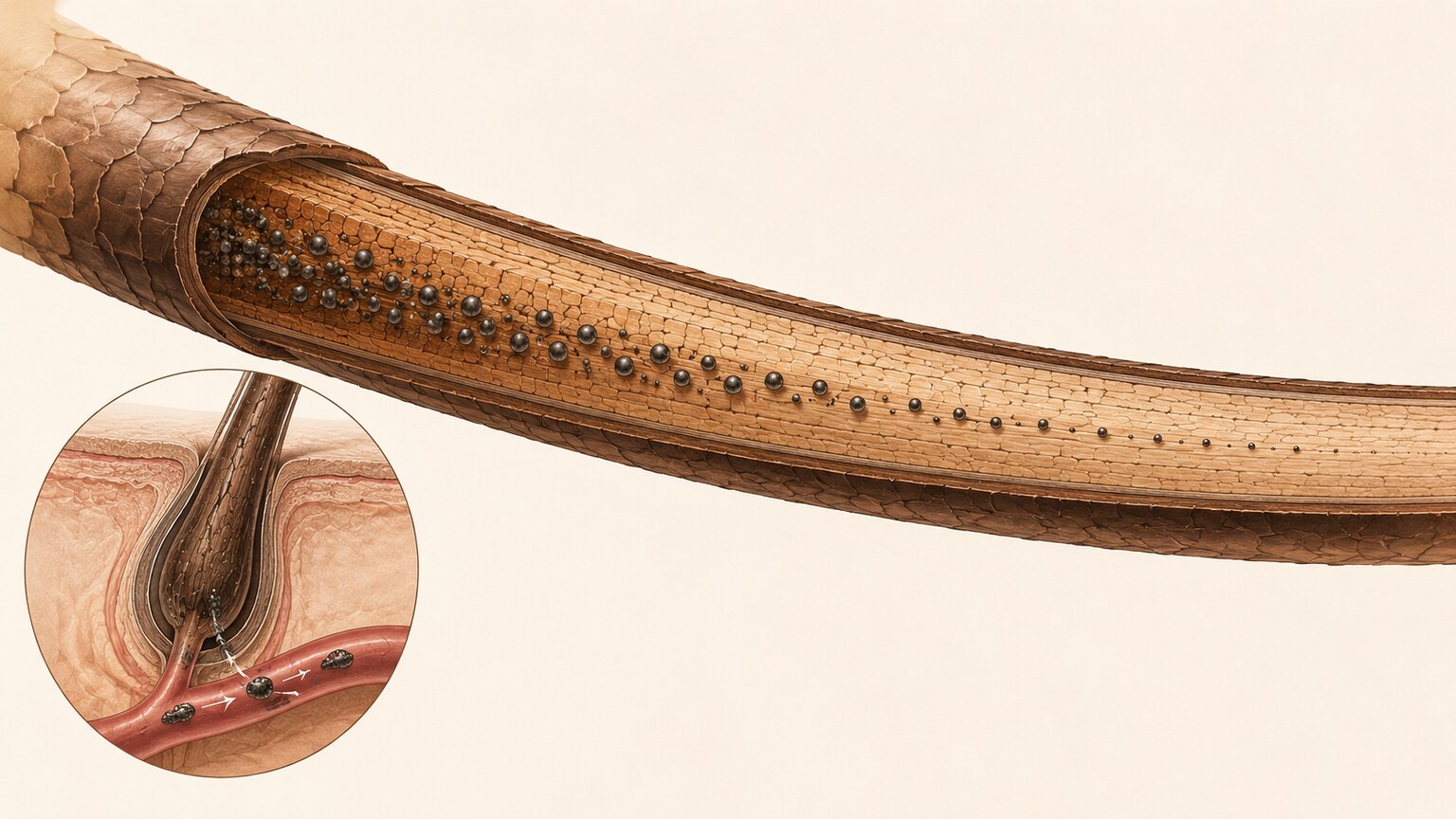
Hair testing occupies a genuinely more nuanced, in-between position within this overall landscape than either standard blood and urine testing sit comfortably on one side, or provoked urine testing sits clearly discredited on the other. As hair physically grows outward from the follicle, circulating metals present in the bloodstream get incorporated directly into the growing strand itself over time, meaning a sufficiently long segment of hair can function somewhat similarly to hair cortisol testing described in other contexts, offering a rough, reasonably reliable timeline of exposure stretching back over recent months rather than capturing only a single momentary snapshot the way a blood or urine sample necessarily does. Modern peer-reviewed research has found genuinely reasonable reliability, generally cited in the range of 78% to 94% agreement, specifically when hair testing is used to assess chronic, ongoing heavy metal exposure over time rather than a single acute event, and it's genuinely a method with real, substantive institutional backing behind it: both the CDC and the Agency for Toxic Substances and Disease Registry use hair as a formally validated biomonitoring tissue specifically for toxic metal screening purposes, covering lead, mercury, cadmium, and arsenic among the metals tracked this way. That said, hair testing does carry genuinely important, well-documented limitations that keep it from ever functioning as a complete, standalone diagnostic tool on its own. External contamination is a real, well-documented, practically significant problem — hair dye, certain shampoos and styling products, and ordinary environmental exposure to metal-containing dust or water can all deposit metals directly onto the outside surface of a hair strand without any of that metal ever having been genuinely absorbed into the body internally at all, and standard hair-washing protocols used routinely before laboratory analysis can't always fully or reliably distinguish this kind of external surface contamination from genuine internal incorporation actually happening down at the follicle level. Inter-laboratory variability has also historically been a well-documented concern in this specific field, though modern ICP-MS testing performed under proper CLIA, CAP, or ISO laboratory certification standards has substantially narrowed that historical gap compared to older, less standardized testing methods, even if it hasn't managed to eliminate the underlying concern entirely. The overall clinical consensus among toxicologists, taking all of these various factors into account together, treats hair testing as a reasonable, genuinely legitimate screening tool specifically for chronic exposure trends, particularly useful for tracking a single value over time within the same individual person, but explicitly and deliberately not adequate as a single, standalone method for diagnosing any specific acute disease state or acute toxicity entirely on its own.
Why Different Metals Behave So Differently in the Body
Part of what makes heavy metal testing genuinely complex, rather than functioning as a single uniform process applied identically to every metal regardless of its specific properties, is that lead, mercury, arsenic, and cadmium each move through the body via genuinely different absorption routes, accumulate preferentially in different target tissues, and ultimately cause harm through different underlying biological mechanisms entirely — real differences that directly and meaningfully shape which sample type and which overall testing strategy actually makes practical sense for each individual metal. Lead is absorbed primarily through ordinary ingestion and inhalation, distributes initially throughout the bloodstream, and then settles overwhelmingly into bone tissue over time, actively competing with calcium for the exact same structural storage sites in a way that allows it to persist there for decades once deposited, later causing measurable damage to the nervous system, kidneys, and blood-forming tissue in bone marrow through mechanisms that include oxidative stress and direct interference with calcium-dependent cellular signaling processes occurring throughout the body. Mercury behaves quite differently depending specifically on which chemical form is involved: methylmercury, the organic form found concentrated in certain species of fish, is efficiently absorbed through the digestive tract and crosses relatively easily into the nervous system, producing sensory neuropathy, noticeable coordination problems, and in genuinely severe cases even vision impairment, while inorganic mercury exposure, more commonly associated with certain industrial settings or dental amalgam specifically, tends to produce a rather different set of symptoms centered more heavily around kidney damage and oral tissue inflammation instead. Arsenic, absorbed primarily through contaminated drinking water sources and certain specific food sources, is processed relatively rapidly by the liver and kidneys and is associated over the course of long-term, sustained exposure with distinct skin changes, a measurably elevated risk of several genuinely distinct cancer types, and documented liver damage, while cadmium, absorbed mainly through ordinary diet in non-smokers and through inhalation specifically in smokers and certain occupational settings, is particularly well known and well documented for causing permanent, essentially irreversible kidney damage over time, since the body has genuinely very limited ability to actually excrete cadmium once it's been absorbed, allowing it to accumulate steadily and continuously over the full course of a person's lifetime. Across all four of these commonly tested metals, researchers have consistently identified several shared underlying mechanisms of cellular damage, including oxidative stress, disruption of normal mitochondrial function, and in the specific case of cadmium and arsenic, direct interference with the body's own DNA repair processes, which together form a meaningful part of why chronic, cumulative exposure to these particular metals carries a well-documented association with increased long-term cancer risk on top of each metal's other, more organ-specific effects described above.
Chelation Therapy Itself: A Legitimate Treatment, Used Appropriately
It's genuinely worth drawing a clear, careful distinction between the provoked testing controversy described in detail earlier and chelation therapy itself as an actual, legitimate medical treatment, since the specific drug involved is often the exact same medication in both cases, but the appropriate clinical context for actually using it responsibly is genuinely quite different depending on the situation. Chelating agents like DMSA are legitimate, FDA-approved medications used to treat confirmed, medically documented heavy metal poisoning — meaning a case where a standard, unprovoked blood or urine test has already demonstrated a genuinely elevated metal level, ideally corroborated by a clear exposure history and, where relevant, clinical symptoms consistent with that specific metal's known toxicity profile. In this genuinely legitimate clinical context, the chelating agent binds directly to circulating metal ions in the bloodstream and actively facilitates their excretion out of the body, genuinely helping to meaningfully reduce a confirmed toxic body burden under appropriate, ongoing medical supervision, with the patient's kidney function and essential mineral levels carefully monitored throughout the entire course of treatment given that chelation isn't perfectly selective in what it binds to and can meaningfully affect beneficial, necessary minerals like zinc and calcium right alongside the intended target toxic metal. The actual problem specific to provoked testing isn't the chelating drug itself, which genuinely does have a well-established, legitimate clinical role in toxicology practice when used correctly and appropriately — it's specifically the practice of using that same exact drug before any real diagnosis has actually been established through proper testing, interpreting the resulting artificially elevated urine result against clearly inappropriate reference ranges, and then using that fundamentally flawed result to justify starting a full course of chelation therapy in someone who may never have genuinely had any real toxic exposure to begin with in the first place. This important distinction between diagnosis-first, genuinely evidence-based chelation and provocation-based, diagnosis-by-treatment chelation is exactly the underlying concern sitting at the very center of the American College of Medical Toxicology's formal position statement discussed at length earlier in this article.
Collection Requirements and Why Pre-Test Instructions Actually Matter
Because ICP-MS testing is sensitive enough to reliably detect trace metal contamination originating from genuinely unexpected, easily overlooked sources, proper sample collection matters considerably more for heavy metal testing specifically than it does for many other, more routine blood panels ordered every day. Patients are typically instructed to avoid seafood and red wine for roughly 72 hours before any blood draw intended to test for arsenic or mercury specifically, since certain seafood naturally contains a genuinely non-toxic, harmless organic form of arsenic that can nonetheless temporarily and quite dramatically elevate a total arsenic result on testing without reflecting any actual toxic exposure whatsoever, creating a real, well-documented risk of a falsely alarming result if this specific dietary factor isn't properly accounted for beforehand. Collection tubes themselves are also chosen quite specifically to avoid introducing any contamination of their own — the royal blue-top EDTA tube used for blood metal testing is manufactured using genuinely trace-metal-free materials specifically for this exact purpose, unlike some standard, more common tube types whose rubber stoppers or interior coatings can themselves quietly introduce trace zinc, aluminum, or other metals directly into an otherwise clean sample and meaningfully skew the final results. For urine collection specifically, patients are typically given a similarly trace-metal-free collection container along with specific instructions about avoiding certain hygiene products immediately beforehand, since even ordinary skin care products can occasionally introduce measurable trace metal contamination given just how extraordinarily sensitive the underlying detection instrument actually is at picking up even minuscule quantities.
How Results Actually Get Interpreted Once They Come Back
Interpreting a heavy metal result properly requires considerably more context than simply checking whether a given number falls inside or outside a printed reference range on a lab report, since the appropriate reference range itself depends heavily on exactly which specimen type was used for testing and, for certain metals specifically, on a person's age and current reproductive status as well. For lead specifically, reference values have been progressively and deliberately lowered over time as ongoing research has continued to find measurable, real health effects at levels once considered entirely acceptable — the CDC's blood lead reference value for children was lowered to 3.5 micrograms per deciliter in recent years specifically to catch elevated exposure earlier in a child's development, while the separate adult occupational reference threshold was independently lowered from 10 down to 5 micrograms per deciliter, together reflecting a broader, ongoing scientific consensus that essentially no measurable blood lead level is genuinely considered fully free of some degree of potential health risk, particularly in young, still-developing children. Because blood lead specifically reflects mostly recent exposure rather than a person's true lifetime accumulated burden, doctors interpreting a result will often deliberately consider trends observed across repeat testing performed over time, rather than relying on any single isolated value taken in complete isolation, and will carefully factor in a person's specific documented exposure history, occupation, age, and any clinically relevant symptoms alongside the raw laboratory number itself before drawing any firm conclusions. For metals like mercury specifically, results are also genuinely interpreted quite differently depending on the exact chemical form of exposure involved — organic methylmercury absorbed through ordinary fish consumption behaves very differently inside the body, and carries a meaningfully different overall risk profile, than inorganic mercury exposure originating from a broken thermometer or a specific industrial workplace setting, which is a meaningful part of why a thorough, carefully taken clinical history gathered alongside the test result genuinely matters just as much as the raw laboratory number itself when forming an accurate overall picture.
Who Actually Needs This Kind of Testing
Heavy metal testing is generally and deliberately reserved for situations with a genuine, specific reason to actually suspect meaningful exposure, rather than being broadly recommended as a routine screening test applied to the general population without any particular identified risk factor present beforehand. Occupational exposure represents one of the single most common, well-established legitimate indications for pursuing this kind of testing — workers employed in industries like battery manufacturing, metal smelting, certain construction and renovation work specifically involving older lead-based paint, and specific mining operations all face genuinely elevated exposure risk as a normal part of their job, and are often tested on a routine, recurring basis as a formal part of standard occupational health monitoring programs required under workplace safety regulations. Children living in older housing with a known or reasonably suspected history of lead-based paint, particularly during any renovation work capable of releasing lead-contaminated dust directly into the surrounding air, represent another well-established, genuinely evidence-based indication for testing, given just how much more vulnerable a young child's still-developing nervous system is to lead's documented neurotoxic effects compared to a fully mature, already-developed adult brain. Specific dietary or environmental exposures — certain imported ceremonial or traditional remedies historically found through testing to contain surprisingly high lead content, private well water drawn from regions with documented naturally occurring arsenic contamination in the local groundwater, or one specific known incident like a household mercury thermometer breaking — also represent entirely legitimate, evidence-based reasons to pursue testing without hesitation. Testing prompted purely and solely by a broad, genuinely non-specific list of symptoms alone, without any actual documented exposure history or clearly identifiable risk factor established first, is generally and consistently discouraged by mainstream toxicology, since pursuing testing this way dramatically increases the real odds of encountering a borderline or genuinely ambiguous result that becomes difficult to meaningfully interpret without any clear starting hypothesis in hand about which specific exposure might actually be responsible for it in the first place.
Frequently Asked Questions
What technology is actually used to measure heavy metals in a lab?
The current gold standard is inductively coupled plasma mass spectrometry (ICP-MS), which vaporizes a sample into charged ions using superheated argon plasma and then sorts and counts them by mass, achieving extremely high sensitivity.
Why is whole blood used instead of plasma or serum for mercury testing?
Mercury concentrates heavily inside red blood cells, and plasma alone contains roughly one-twentieth the mercury concentration found in whole blood, which is why whole blood is the recommended specimen for accurate mercury results.
Why can a blood lead test look normal even after significant past lead exposure?
Lead has a blood half-life of only about a month, but more than 95% of the body's total lead burden is stored in bone with a half-life of 15 to 20 years, meaning blood reflects mostly recent exposure, not lifetime accumulation.
Is provoked or chelation-challenge urine testing considered medically valid?
No. The American College of Medical Toxicology and the FDA have both formally opposed this practice, since nearly everyone shows elevated urinary metals after a chelating agent, regardless of actual exposure, and no valid reference ranges exist for interpreting it.
Is hair testing for heavy metals reliable?
It shows reasonable reliability, around 78% to 94%, specifically for tracking chronic exposure trends over time, and is used by the CDC for biomonitoring, but it's not considered adequate as a single standalone diagnostic test on its own.
Is chelation therapy itself a legitimate medical treatment?
Yes, when used to treat confirmed heavy metal poisoning already established through standard, unprovoked testing. The concern is specifically with using it to provoke a diagnosis before toxicity has actually been confirmed.
Do all heavy metals behave the same way once absorbed into the body?
No. Lead accumulates mainly in bone, mercury's effects depend heavily on its chemical form, arsenic is processed quickly by the liver and kidneys, and cadmium accumulates steadily since the body excretes it very slowly.
Conclusion
Heavy metal testing isn't a single, uniform procedure — it's a genuinely varied set of distinct methods, each measuring a different biological compartment on a fundamentally different timescale, and each carrying its own specific strengths and real limitations that meaningfully shape how any given result should ultimately be interpreted by a clinician. Whole blood testing captures recent exposure and remains the standard, evidence-based starting point for most commonly tested metals, urine testing offers a genuinely useful complementary window for metals like arsenic that clear the bloodstream unusually quickly, and hair testing provides a longer-term exposure trend when used appropriately, in the right clinical context, and interpreted carefully alongside other corroborating findings rather than relied upon in complete isolation. Provoked urine testing following a deliberately administered chelating agent stands apart from all of these legitimate methods as an approach specifically and formally rejected by the major mainstream toxicology organizations responsible for setting practice standards, given its well-documented, consistent tendency to produce falsely elevated results in essentially everyone tested this way, regardless of that person's actual real-world exposure history. The four most commonly tested toxic metals — lead, mercury, arsenic, and cadmium — each follow their own distinct path through the body, accumulate in different tissues, and cause harm through different underlying biological mechanisms, which is exactly why no single testing approach or single sample type could ever reasonably be expected to serve every situation equally well. Understanding these real, evidence-based differences turns an otherwise unfamiliar and potentially confusing area of laboratory testing into something genuinely navigable, and makes it considerably easier for anyone encountering this kind of testing to recognize which specific approach a given clinical situation actually calls for, and just as importantly, which approach it doesn't.
Still Not Sure What Your Results Mean?
Upload your labs and get a complete, visual, plain-language interpretation of every biomarker — delivered to your inbox in under 15 minutes.
Get My ReportThis article is for educational purposes only and does not constitute medical advice. Always consult your healthcare provider regarding your specific lab results.