
What Is Considered a Safe Blood Lead Level?
Here's the honest, admittedly slightly frustrating answer up front: there is genuinely no blood lead level that today's toxicologists consider truly, completely safe. Lead is a well-documented neurotoxin with no known beneficial biological function anywhere in the human body, and research has repeatedly failed to find a threshold below which it causes zero harm, especially to a developing brain. And yet, when you get a lead test back, you'll still see a specific number on the page, and doctors, health departments, and employers all use specific numeric cutoffs to decide who needs a phone call, who needs monitoring, and who needs the source of exposure found and removed immediately. Those two facts — "there's no safe level" and "here's the number that triggers action" — aren't actually a contradiction, but understanding why they coexist requires knowing where these numbers actually come from, how they're set, and how they differ depending on your age, whether you're pregnant, and whether the exposure happened at home or on the job.
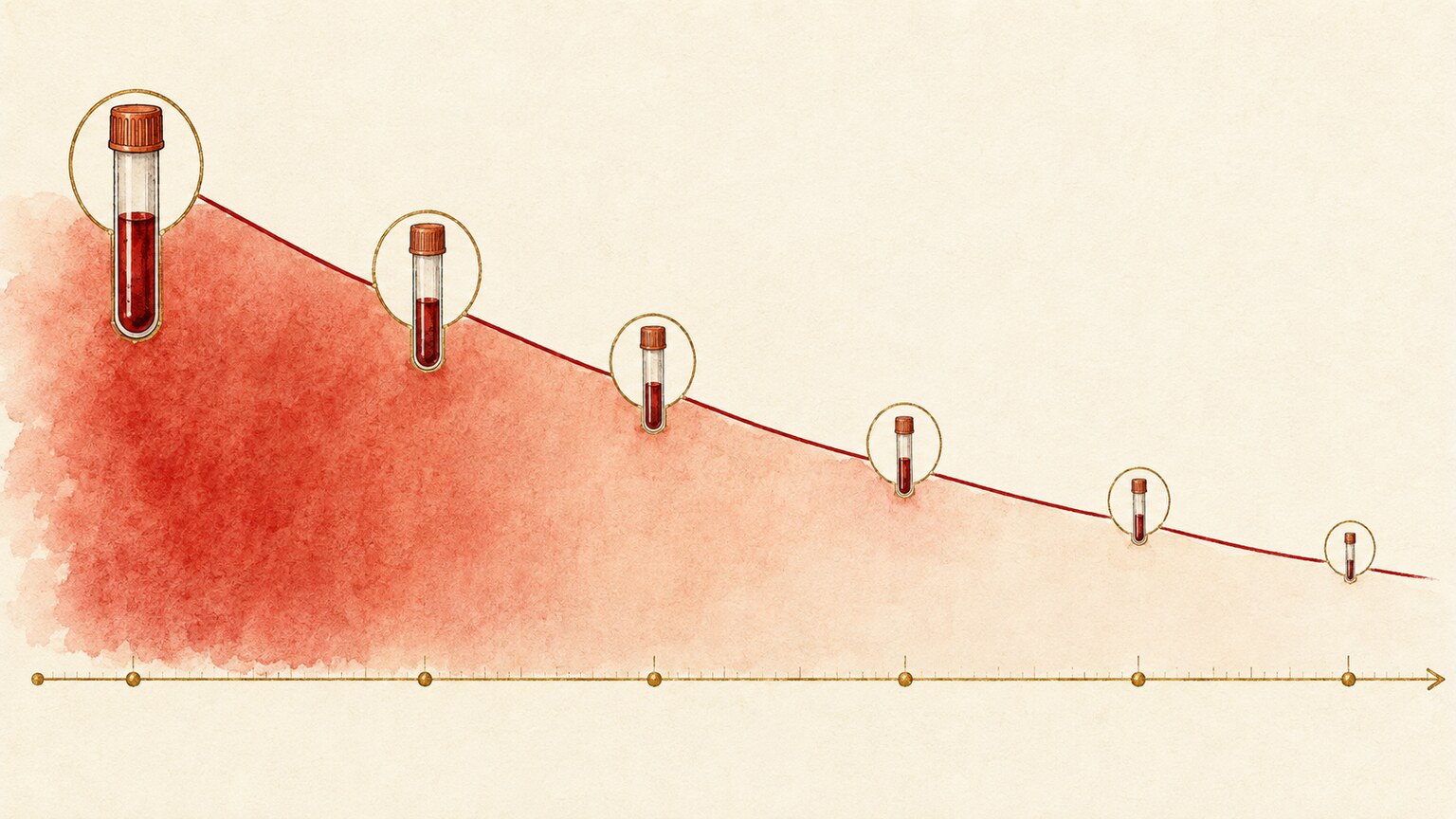
Figure 1. The CDC's blood lead reference value has been revised downward repeatedly since the 1960s, from 60 micrograms per deciliter to today's 3.5 µg/dL, as research kept finding harm at levels once considered acceptable.
Curious what the rest of your metals panel or blood work is actually telling you? Upload your results and get a complete, plain-language breakdown in under 15 minutes.
Analyze My ResultsWhere the "No Safe Level" Conclusion Actually Comes From
The claim that lead has no safe level isn't a cautious overstatement, nor is it a rounding-up of uncertainty into an overly cautious blanket statement — it's the direct, specific conclusion of a large and decades-long body of epidemiological research, and it's worth understanding what that research actually looked like before getting into how the specific numeric thresholds discussed later in this article are set. The most influential studies followed large cohorts of children over many years, measuring their blood lead levels in early childhood and then tracking cognitive outcomes — IQ scores, attention, academic performance — years later. What these studies found, repeatedly and across different countries and different research teams, was not a threshold effect where harm suddenly appears above some cutoff. Instead, they found something closer to a continuous, downward-sloping relationship: each additional increment of lead in a child's blood correlated with a small additional decrease in measured cognitive performance, and — critically — that relationship didn't flatten out or disappear as blood lead levels approached zero. Some of the most-cited research, including a widely referenced pooled analysis published in Environmental Health Perspectives, found that the steepest portion of the damage curve actually occurred at the lowest measured levels, meaning the first few micrograms of lead exposure may do proportionally more harm than the same increase at an already-elevated level. That finding is part of why public health agencies stopped looking for a "floor" below which lead could be declared harmless, and started treating the entire concept of a safety threshold as scientifically unsupported.
Why "No Safe Level" and "A Specific Number on Your Report" Aren't Actually Contradictory
It helps, before going any further, to separate two genuinely different questions that tend to get conflated in everyday conversation about lead testing: "at what level does lead stop causing any harm at all?" and "at what level should we take action right now, given real-world constraints?" The first question, based on decades of epidemiological research, doesn't have a clean answer — studies tracking large groups of children over time have found measurable associations between blood lead level and lowered IQ scores even in the single digits, with no clear floor where the curve flattens to zero effect. The second question is a completely different, more practical kind of question, and it's the one regulatory numbers actually answer: given limited public health resources, limited lab capacity, and the reality that some exposure sources (like old paint dust in the air) can never be brought to literally zero, where should the line be drawn so that people above it get help first? A reference value or action level isn't a scientific claim that everything below it is risk-free — it's a triage tool, and understanding that distinction is the single most important thing to take away from this entire topic.
The CDC's Blood Lead Reference Value — What 3.5 µg/dL Actually Means

Figure 2. The CDC's current blood lead reference value of 3.5 micrograms per deciliter marks the top 2.5% of measured levels among U.S. children, not a biological safety cutoff.
In the United States, the Centers for Disease Control and Prevention maintains what is officially called a blood lead reference value (BLRV), a specific term chosen deliberately to distinguish it from an older, retired concept called a "level of concern," currently set at 3.5 micrograms per deciliter (µg/dL) for children, updated in 2021 down from the previous reference value of 5 µg/dL that had stood since 2012. Here's the detail that surprises most people: this number isn't derived from a safety study at all. It's a statistical benchmark, calculated as the 97.5th percentile of blood lead levels measured in a nationally representative sample of U.S. children ages 1 through 5, through an ongoing government health survey called NHANES. In plain terms, it identifies the roughly 2.5% of children with the highest measured lead levels compared to their peers nationally — it flags who's unusually high relative to the current population, not who has crossed into a zone of biological danger. Because it's population-based, the reference value actually falls over time as national lead levels fall, which is exactly what happened between 2012 and 2021 as leaded gasoline and paint exposure continued declining nationally.
How the Reference Value Has Changed Since the 1960s — a History of the Number Only Ever Moving Down
Tracking how this specific number has moved, step by step, over the decades tells its own quietly revealing story about how slowly lead science has actually been accepted into formal public health policy. In the 1960s, a blood lead level below 60 µg/dL was considered unremarkable. By the 1970s, that "acceptable" ceiling had dropped to 30 µg/dL as evidence mounted of harm at lower levels than previously assumed. The 1980s brought it down again, to 25 µg/dL, and by 1991 the CDC's threshold fell all the way to 10 µg/dL — a number that stood, largely unchanged, for over two decades. Then in 2012, after a scientific advisory committee reviewed the accumulated evidence and concluded there was no safe threshold at all, the CDC shifted its entire framework away from a fixed "level of concern" toward the population-based reference-value approach used today, initially set at 5 µg/dL, then revised to the current 3.5 µg/dL in 2021. Every single one of these revisions moved in the same direction: down. No revision in the history of this number has ever concluded that a previously flagged level was actually fine after all — the pattern has been one of consistently discovering that harm occurs at levels once thought to be safe, never the reverse.

Figure 3. Lead ions closely mimic calcium at the molecular level, allowing them to interfere with calcium-dependent signaling at developing synapses — the mechanism thought to underlie lead's effect on learning and behavior.
Why Children Are Held to a Different, Stricter Standard Than Adults
The reference value discussed above applies specifically to children, and that's not an arbitrary editorial choice — it reflects real, measurable biological differences. A child's gastrointestinal tract absorbs a much larger share of ingested lead than an adult's does, roughly 40-50% of an oral dose in young children compared to closer to 10-15% in adults, largely because children's bodies mistake lead for calcium and iron, minerals they're often actively short on during growth spurts, and absorb it more eagerly as a result. Once inside the body, developing brains are considerably more vulnerable to lead's effects than mature ones, because lead disrupts processes — synapse formation, myelination, neurotransmitter regulation — that are actively under construction in early childhood and are largely finished, and therefore less disruptable, in an adult brain. This is also why children's exposure often comes from a different route entirely: normal hand-to-mouth behavior, crawling on floors where lead dust from old paint settles, and mouthing objects and painted surfaces, none of which are typical adult behaviors. For all of these reasons, a blood lead level that might raise only mild concern in an adult can represent a genuinely urgent finding in a toddler.
Adult Reference Ranges and Occupational Action Levels — a Completely Separate Set of Numbers
For adults, the entire framework shifts again in a way that surprises many people the first time they encounter it, and it splits further depending on whether the exposure in question is incidental and environmental in nature, or occupational and job-related. For the general adult population, most clinical labs report a reference range up to roughly 5-10 µg/dL, though — consistent with everything above — many toxicologists now consider any detectable, quantifiable level worth discussing with a physician rather than dismissing as automatically fine. Occupational exposure operates under an entirely different regulatory system: the Occupational Safety and Health Administration (OSHA) requires workers in lead-exposed industries (construction, battery manufacturing, radiator repair, firing ranges, certain smelting and recycling operations) to be removed from lead exposure, a process called medical removal protection, once their blood lead level reaches 50 µg/dL on a single test, or an average of 30 µg/dL across recent tests — numbers dramatically higher than the pediatric reference value, reflecting the field's slower-moving regulatory history and the practical reality that some occupational exposure has historically been treated as an accepted cost of certain jobs, a framework increasingly criticized as outdated by occupational health researchers.
Pregnancy — Why the Numbers Change Again

Figure 4. Lead stored in a pregnant person's bones can be released into the bloodstream during pregnancy and cross the placenta, which is why prenatal lead screening uses its own distinct action thresholds.
Pregnancy introduces a third, entirely separate set of considerations that sits apart from both the pediatric and occupational frameworks discussed above, because lead behaves in a genuinely unusual, physiologically distinct way inside a pregnant body. Roughly 90% of the lead an adult has ever absorbed over a lifetime is stored in bone, where it can sit largely inert for years. During pregnancy, increased bone turnover — the body breaking down and rebuilding bone tissue faster than usual to help meet the calcium demands of the developing fetus — can release some of that stored lead back into the bloodstream, meaning a pregnant person can show a rising blood lead level even without any new external exposure at all. That remobilized lead crosses the placenta relatively freely, reaching the fetus directly. Because of this, public health guidance recommends blood lead testing be considered for pregnant patients with specific risk factors (recent immigration from a region with less regulated lead exposure, occupational exposure, use of certain imported cosmetics or traditional remedies, or pica involving non-food items), and case management for pregnant patients typically begins at levels considerably lower than the occupational thresholds discussed above — closer to 5 µg/dL — precisely because of this direct route to a developing fetus.
Why Lead Reference Values Look So Different From Other Biomarker Ranges
If you've ever looked at a lab report for something like cholesterol, glucose, or thyroid hormone, you're used to reference ranges that work in a fundamentally different way than what's been described here — a "normal" range for glucose reflects an actual physiological sweet spot, a level the body is designed to maintain because both too high and too low cause problems. Lead reference values don't work like that at all, because lead isn't a nutrient or a hormone the body needs in any amount — it's a contaminant that happens to be common enough in the environment that essentially everyone carries a detectable trace of it. This distinction matters practically: for glucose, moving from the low end of "normal" to the high end of "normal" isn't inherently something to worry about, since both ends are compatible with normal function. For lead, moving from the low end of a lab's reported range to the high end represents a real, continuously increasing exposure burden, even while technically staying "within range" the entire way — which is exactly why so many toxicologists push back against treating a lead result the way a patient might instinctively treat a cholesterol or glucose result, glancing at whether it falls inside or outside the printed range and moving on without a second thought.
Why National Blood Lead Levels Have Fallen So Much — and Why the Reference Value Keeps Following Them Down
It's worth pausing here to walk through exactly why the reference value keeps dropping, since the specific mechanism behind that decline is itself part of the answer to what "safe" really means in this exact context. Understanding why the CDC's reference value keeps dropping requires understanding just how dramatically average blood lead levels have fallen across the U.S. population since the 1970s, because the reference value, as explained earlier, is a moving statistical benchmark tied directly to that national average. In the late 1970s, the average blood lead level among U.S. children was estimated at around 15 µg/dL — a level that today would be considered a genuine medical emergency in a single child, but was, at the time, simply the population norm. That collapse in average exposure tracks closely with two major regulatory actions: the phased removal of tetraethyl lead from gasoline, completed in the U.S. by 1996, and the 1978 federal ban on lead-based paint for residential use. Leaded gasoline in particular is now understood to have been an enormous, diffuse source of exposure, since combustion released lead directly into the air as fine particulate that settled onto soil, dust, and surfaces across entire cities, not just near specific point sources. Once these two major sources were eliminated, average population blood lead levels fell continuously for decades, and the reference value — recalculated periodically from that same shrinking population distribution — had no choice but to follow the decline downward. This history also explains why remaining elevated cases today cluster so heavily around older housing stock: paint applied before 1978 is essentially the last major concentrated source still actively present in the environment, decades after gasoline lead disappeared from the air.
How the Blood Test Itself Is Actually Performed
Understanding the mechanics of the test itself helps explain why some of the numbers discussed above have shifted over time, and why a result can sometimes need to be repeated before it's fully trusted. A blood lead test is a simple blood draw, typically from a vein in the arm for a venous sample, though children are sometimes first screened with a capillary (finger-prick) sample as a faster, less invasive first pass — with the important caveat that a capillary result showing an elevated level should always be confirmed with a venous draw, since capillary samples carry a meaningfully higher risk of contamination from lead dust on the skin's surface giving a falsely high reading. Once collected, the sample is analyzed in a certified laboratory using a technique called graphite furnace atomic absorption spectrometry or, increasingly common today, inductively coupled plasma mass spectrometry, both of which can reliably detect and precisely quantify lead at extremely low concentrations, well below one microgram per deciliter, which is part of why the reference values discussed throughout this article have been able to keep getting revised downward — the testing technology itself has become sensitive enough to reliably measure differences that older instruments simply couldn't distinguish from noise.
What Actually Happens After a Level Crosses a Threshold
Crossing a reference value or action level doesn't trigger a single uniform response, and it's worth emphasizing that this is intentional rather than inconsistent — what happens next depends heavily on which threshold was crossed and in whom. For a child crossing the CDC's 3.5 µg/dL reference value, typical next steps include a confirmatory venous test, an environmental investigation to identify the exposure source (often involving the local health department inspecting the home for lead paint or contaminated soil), nutritional counseling (since adequate iron and calcium intake reduces how much lead the gut absorbs), and developmental monitoring going forward. For an adult worker crossing OSHA's medical removal threshold, the response is more structurally defined: mandatory removal from the lead-exposed task, with wages and benefits protected during removal, until levels fall back below a specified return threshold. For a pregnant patient, response typically centers on identifying and eliminating the exposure source immediately and closer obstetric monitoring, since there's no way to accelerate clearing lead already mobilized from bone.

Figure 5. Once a child's blood lead level crosses the CDC reference value, a home environmental investigation — often using X-ray fluorescence testing of painted surfaces — is typically the next step in finding the exposure source.
What a Result That Falls Between the Reference Value and an Action Level Actually Means

Figure 6. Adequate dietary iron and calcium compete with lead for the same intestinal absorption pathways, which is why correcting deficiencies in either mineral measurably reduces how much ingested lead the gut takes up.
One of the most confusing positions to be in is landing in the gap between the CDC's pediatric reference value (3.5 µg/dL) and a formal occupational action level (30-50 µg/dL) — a wide numeric range that covers a lot of real-world results, and one where the "right" response genuinely depends on individual context rather than a single fixed rule. For a child in this range, most pediatric guidelines still recommend follow-up testing to confirm the trend, a basic conversation about likely exposure sources at home (paint condition, tap water, imported cookware or spices, a parent's occupation or hobbies), and reinforcement of iron- and calcium-rich diet, since adequate levels of both minerals measurably reduce how efficiently the gut absorbs lead. Repeat testing timing depends on how far above the reference value the result sits — a level just barely over 3.5 µg/dL is typically rechecked in a matter of months, while a level approaching double digits usually prompts faster follow-up and a more active environmental investigation. For an adult in this same numeric range without occupational exposure, the conversation usually centers on identifying and eliminating a specific, discrete source — old plumbing, a hobby involving lead solder or ammunition reloading, imported ceramics used for food storage — rather than broad dietary or medical intervention, since adult bodies handle a given lead burden differently than a child's does.
This dietary piece is often the first, most accessible intervention offered to families, precisely because it doesn't require locating and remediating an exposure source overnight — something that can take weeks even once identified. Iron deficiency in particular is common enough in young children that many pediatric guidelines now recommend checking iron status alongside a blood lead test, since correcting a concurrent iron deficiency does double duty: it addresses a separate, common childhood health issue on its own merits, and it meaningfully reduces the fraction of any lead the child continues to be exposed to that actually gets absorbed into the bloodstream rather than passing through harmlessly.
Long-Term Monitoring After an Elevated Result
A single elevated blood lead result is rarely, if ever, the actual end of the story — it's typically only the start of a monitoring period that can stretch across several months or, for genuinely higher results, multiple years. Follow-up testing schedules are generally tied directly to how high the initial result was: children with levels in the 3.5-9 µg/dL range are commonly retested within three months, while children above 45 µg/dL may be tested within 48 hours and referred urgently, since levels in that higher range carry real risk of acute symptoms and, at the very highest levels, medical treatments like chelation therapy that actively bind and help remove lead from the body become part of the conversation. Because blood lead reflects mostly recent exposure — again, that roughly one-month half-life in blood — a falling trend across repeat tests is generally a reassuring sign that the source has been identified and removed, while a level that plateaus or continues climbing despite an apparent intervention usually means the actual source hasn't been found yet, or that ongoing bone-lead remobilization (as discussed earlier regarding pregnancy) is sustaining the level from within rather than from new external exposure.
How the United States Compares to Other Countries
The specific numbers discussed throughout this article are not universal, fixed physical constants, and international comparison is genuinely useful context for understanding just how much of what gets called a "reference value" reflects local history, local regulation, and local population exposure, rather than any single, internationally agreed-upon biological cutoff.
The World Health Organization has stated plainly that there is no known safe blood lead concentration and has declined to endorse any single global reference value, instead urging member countries to work toward the lowest levels achievable given local resources. Some countries, including several in the European Union, have adopted intervention levels for children similar to or slightly below the current U.S. reference value, while others, particularly lower-income countries with less regulated lead battery recycling, leaded fuel use in aviation, or lead-glazed pottery traditions, report population blood lead levels many times higher than the current U.S. average — a reminder that "safe level" conversations happening in a U.S. clinical context sit inside a much larger global picture of unequal lead exposure.

Figure 7. Certain imported turmeric and spice powders have been found adulterated with lead chromate, added specifically to intensify color, making spices an underrecognized modern exposure source.
None of these modern sources require the kind of large-scale industrial contamination that defined the leaded-gasoline era to meaningfully raise a household's exposure — a single regularly used contaminated spice jar, one piece of decorative ceramic used for daily cooking, or one uncontained home renovation project can be enough to produce a measurably elevated blood lead result in an otherwise low-exposure household, which is exactly why an environmental investigation after an elevated result looks beyond the obvious, well-known culprits like flaking paint and asks about these less-obvious, everyday habits and possessions as well.
What Elevated Bone Lead Means Even Decades After Exposure Ends
Because so much of this article has focused on blood lead specifically, it's worth explaining directly why bone lead deserves separate attention, even though it isn't part of a standard lab report. As mentioned earlier, roughly 90% of the total lead an adult body has ever accumulated sits stored in the skeleton, primarily in the denser, slower-turnover parts of bone, where it can remain essentially locked in place for twenty to thirty years or more, well beyond the roughly month-long half-life of lead circulating in blood. This creates a genuinely counterintuitive situation: a person's blood lead level can look completely unremarkable decades after any meaningful external exposure occurred, while their bones still hold a substantial, slowly re-releasing reservoir. Bone lead can only be measured with a specialized, non-invasive technique called K-shell X-ray fluorescence, available at only a small number of research centers rather than as a routine clinical test, which is part of why it doesn't appear on ordinary lab reports and why most clinical decisions rely on blood lead levels as a practical, if imperfect, proxy for total body burden. Researchers studying older adults with historical childhood lead exposure — from the leaded-gasoline era discussed above — have found associations between higher measured bone lead and increased risk of conditions including hypertension and cognitive decline, suggesting that a person's exposure history, not just their most recent blood test, may carry lasting relevance well into later life.
Common Sources That Still Slip Past Most Households Today
Even with leaded gasoline and residential paint now largely eliminated as significant sources of exposure, several considerably less obvious pathways still routinely produce elevated results in otherwise low-risk households, and awareness of these is often more useful day-to-day than memorizing the exact numeric thresholds discussed throughout this article. Imported spices, particularly certain turmeric and other brightly colored spice powders sourced from regions with less regulated food safety oversight, have been repeatedly identified as a source of contamination, sometimes deliberately adulterated with lead chromate to enhance color. Traditional and folk remedies from several cultural traditions, along with certain imported cosmetics like some kohl and surma eyeliners, have also been documented sources, particularly relevant for households with recent immigration history. Older ceramic dishware, especially handmade or imported pieces with a lead-based glaze not intended for food contact, can leach lead into acidic foods like tomato sauce or citrus during cooking or storage. And renovation work on any home built before 1978 — sanding, scraping, or demolition of old painted surfaces without proper containment — remains one of the single most concentrated modern exposure events, since it aerosolizes decades of accumulated lead paint dust all at once, which is why lead-safe renovation practices are now a specific, regulated requirement for contractors working on pre-1978 housing.
Talking to a Healthcare Provider About a Lead Result
Bringing a specific, genuinely focused set of questions to a follow-up appointment tends to produce a far more useful, actionable conversation than simply asking a healthcare provider "is this bad?" and hoping for a satisfying answer. A genuinely productive conversation usually covers where this specific result falls relative to the current CDC reference value or the relevant occupational action level, given the specific circumstances; whether the pattern over time (rising, falling, or flat across repeat tests) changes the level of concern beyond what the single number alone suggests; what realistic next steps look like for identifying the likely exposure source, given the person's actual living situation, occupation, and habits; and, for a parent of a young child, what developmental monitoring, if any, is being recommended going forward given the specific level found. It's also worth directly asking whether iron and calcium status have been checked, since — as covered above — correcting a concurrent deficiency in either mineral is one of the few interventions a family can start immediately, well before an environmental investigation identifies and removes the actual exposure source.
Frequently Asked Questions
If there's no safe level, why does my lab report show a "normal" reference range at all?
Lab reference ranges are a practical necessity for reporting results, but "within range" for lead should be read as "below the level where standard triage action is currently recommended," not as "risk-free." Many toxicologists now recommend interpreting any detectable, quantifiable lead level as worth a conversation with a healthcare provider, rather than treating the reference range the way you would for a nutrient like potassium or glucose, where levels genuinely can be optimal.
Why is the children's threshold so much lower than the adult occupational threshold?
Two separate factors combine: children absorb a larger fraction of ingested lead than adults, and their developing brains are considerably more vulnerable to the neurological effects of a given blood lead level than a mature adult brain. The occupational threshold also reflects a different, older regulatory framework built around workplace risk tolerance rather than child neurodevelopment, which is why the two numbers differ by more than tenfold.
Does a blood lead level ever go back down to zero after exposure stops?
Blood lead levels typically fall gradually over a period of weeks to months once the underlying exposure source is fully identified and removed, since lead circulating in blood has a relatively short half-life of roughly one month. However, lead stored in bone has a half-life measured in decades and can slowly re-release into the bloodstream over a lifetime, particularly during high bone-turnover periods like pregnancy or osteoporosis, which is why a fully "zero" blood level is uncommon even long after an exposure has ended.
Is the blood lead reference value the same thing as a legal exposure limit?
No. The CDC's reference value is a clinical and public-health screening benchmark, not a law. Legal, enforceable exposure limits exist separately, mainly through OSHA for workplaces and EPA regulations for environmental lead in paint, water, and soil — and these legal limits are generally set far higher than the CDC's pediatric reference value, since they were built around different goals and different populations.
Can a blood lead test detect exposure that happened years ago?
Not reliably, and this is an important limitation to understand. Because blood lead reflects mostly recent exposure, a standard blood test largely misses lead that was absorbed years earlier and has since moved into long-term bone storage. A person with a significant childhood exposure history can show an unremarkable blood lead level as an adult even though a meaningful bone reservoir may still be present — detecting that reservoir requires specialized bone lead testing, not the standard blood draw used for routine screening.
Conclusion
After walking through the reference-value history, the age- and pregnancy-specific thresholds, the occupational framework, and the lasting relevance of bone-stored lead, the honest answer to "what's a safe blood lead level" really is "there isn't one" — but that answer alone isn't practically useful, which is exactly why regulators, clinicians, and public health agencies still rely on specific numeric thresholds to decide who gets prioritized for follow-up, environmental investigation, or medical removal from a workplace. Understanding that these numbers are triage tools rather than safety guarantees, that they differ meaningfully by age, pregnancy status, and occupational circumstance, that they've moved only downward across sixty years of accumulating evidence, and that even a currently low result doesn't rule out a meaningful historical exposure sitting quietly in bone, gives real context to a result that might otherwise look reassuringly "normal" on paper while still representing exposure worth a genuine conversation with a healthcare provider.
Still Not Sure What Your Results Mean?
Upload your labs and get a complete, visual, plain-language interpretation of every biomarker — delivered to your inbox in under 15 minutes.
Get My ReportThis article is for educational purposes only and does not constitute medical advice. Always consult your healthcare provider regarding your specific lab results.