
Can Intense Exercise Cause Temporary Protein in Urine?
Studies measuring urine protein immediately after strenuous exercise have found proteinuria in anywhere from 18% to 100% of participants, depending on the intensity of the activity and how the sample was collected — meaning it's entirely possible for a healthy person with completely normal kidneys to test positive for protein in their urine simply because they ran hard, lifted heavy, or pushed through an intense training session a few hours earlier. This phenomenon, known clinically as exercise-induced proteinuria, is well documented, genuinely common, and in the overwhelming majority of cases, completely harmless, tracing back to a well-understood set of temporary changes in how the kidneys filter blood under physical stress rather than to any actual damage. It catches a lot of otherwise health-conscious people off guard precisely because a positive protein reading on a urine test is the kind of result most people associate with kidney disease, diabetes, or high blood pressure — not with having gone for a hard run the day before. This article walks through exactly what happens inside your kidneys during intense exercise to cause this, why blood sometimes shows up in the same urine sample for closely related reasons, how hydration and training status each shape how pronounced the effect becomes, how doctors tell this benign pattern apart from proteinuria that actually does signal a problem, and what it means practically if you've seen this result on your own urinalysis.
What "Protein in Urine" Actually Means
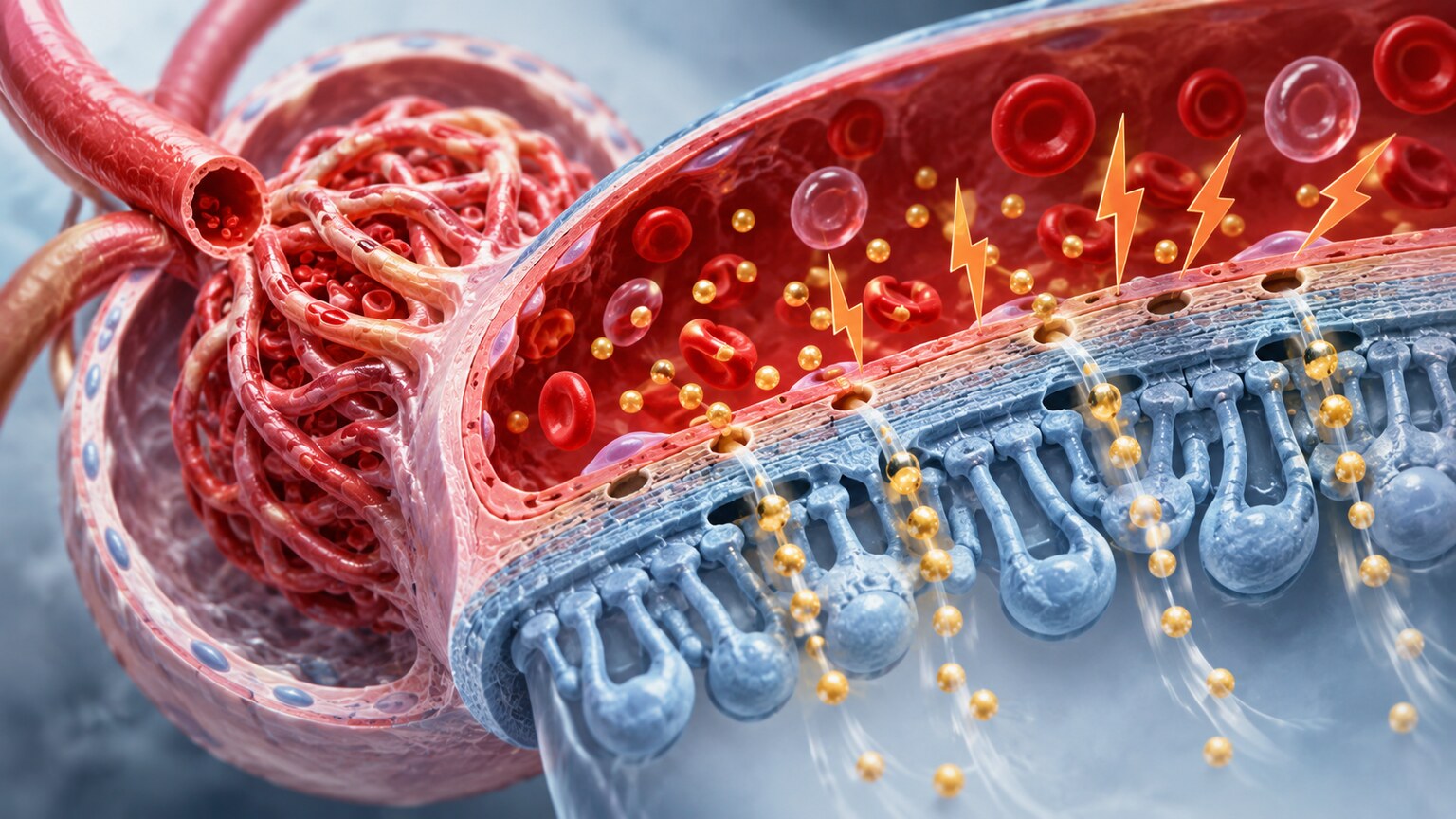
Your kidneys contain roughly a million tiny filtering units called nephrons, and at the heart of each one sits a glomerulus — a dense tangle of blood vessels wrapped in a specialized filtering membrane. Under normal circumstances, this membrane is extremely selective about what it lets pass out of the blood and into the urine: small molecules like water, salt, and waste products pass through freely, while larger molecules like most proteins are kept back in the bloodstream where they belong, held there partly by the physical size of the membrane's pores and partly by an electrical charge barrier that repels negatively charged proteins like albumin even when they're small enough to theoretically fit through. Any small amount of protein that does slip through this dual barrier gets reabsorbed by specialized cells lining the tubules further down the nephron before the urine ever leaves your body, essentially acting as a second line of defense behind the glomerulus. Under normal conditions, this two-stage system is so effective that healthy urine contains only a trace amount of protein — typically less than 150 milligrams over a full 24-hour period, an amount so small that a standard dipstick test reads it as negative. When that amount rises high enough to register as a positive result, it means either more protein is getting through the filtering membrane than usual, the tubules aren't reabsorbing it as effectively as usual, or both — and intense exercise, it turns out, can genuinely cause both of these things to happen at the same time, temporarily and reversibly.
The Two Mechanisms Behind Exercise-Induced Proteinuria
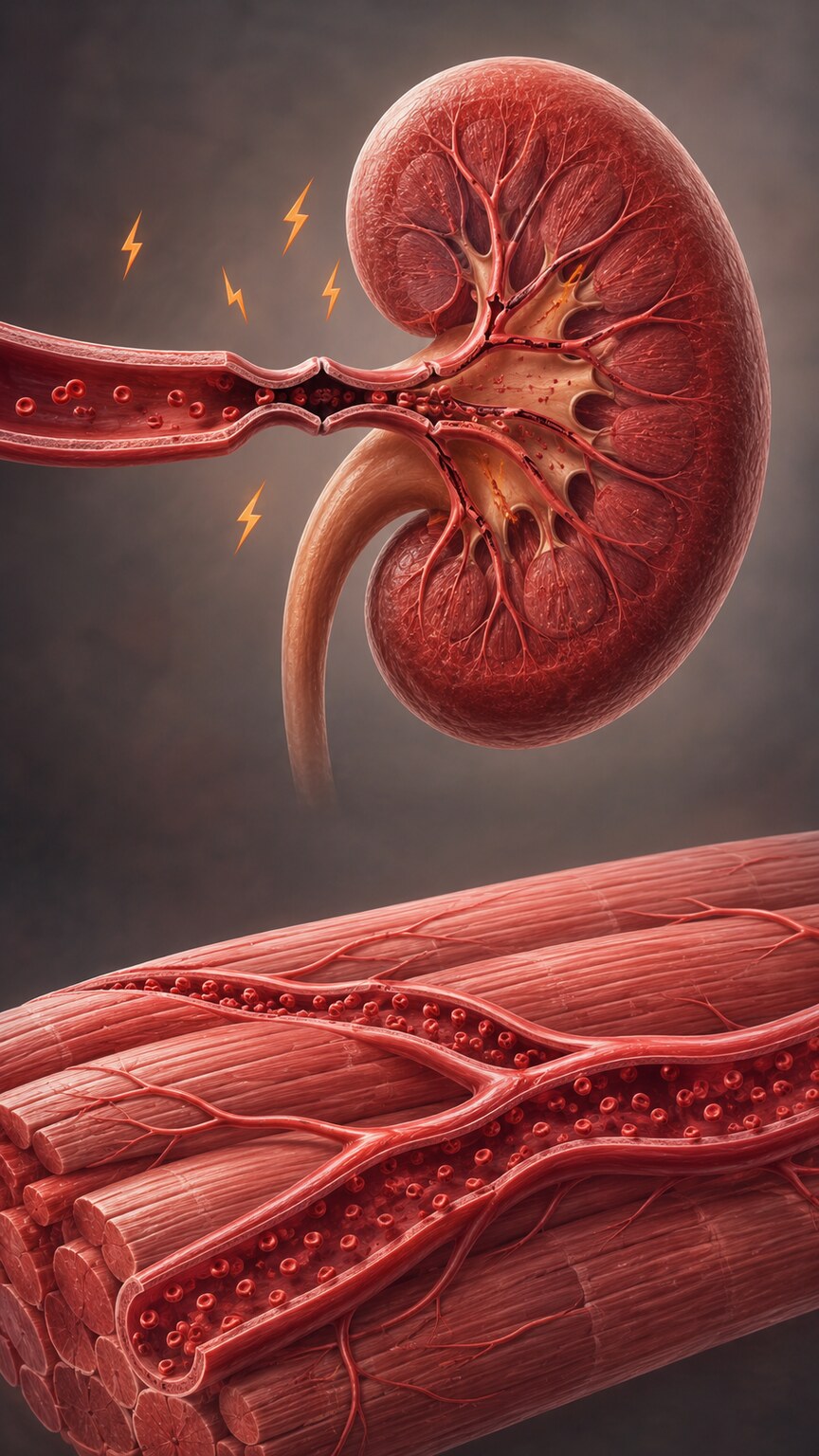
Research on exercise physiology has identified two overlapping mechanisms that explain why hard exercise pushes protein into the urine, working at two different points along the same nephron. The first is glomerular: intense physical exertion triggers a surge in sympathetic nervous system activity and circulating catecholamines, the same stress hormones responsible for the fight-or-flight response, and this surge measurably increases the permeability of the glomerular filtering membrane itself, temporarily loosening the size and charge barriers described earlier and allowing more albumin — the most abundant protein in blood — to pass through than it normally would. Researchers have also found that plasma angiotensin II, part of the same hormone system responsible for regulating blood pressure and kidney blood flow, rises significantly during exercise and appears to play a major role in this process by preferentially constricting the blood vessel leaving the glomerulus more than the one entering it, which raises pressure inside the filtering unit and pushes more protein through; medications that block this hormone system have been shown to significantly reduce exercise-induced proteinuria when tested experimentally, offering fairly direct evidence for how central this pathway really is. The second mechanism is tubular: strenuous exercise increases the filtration of small proteins, like beta-2 microglobulin, at a rate that overwhelms the tubules' normal capacity to reabsorb them, causing a temporary tubular dysfunction that adds to the protein already leaking through at the glomerular level, likely related to the same reduced oxygen delivery to nephron tissue that occurs when blood is redirected toward working muscle during exertion. Research has found that albumin from the glomerular pathway typically makes up the larger share of the total protein detected, but the tubular contribution is real and measurable too — meaning this is genuinely a two-front, whole-nephron phenomenon rather than a single isolated glitch in one part of the filtering system.
Curious whether a urinalysis result of your own reflects something temporary or something worth a closer look? Upload your labs and get a complete, plain-language breakdown in under 15 minutes.
Analyze My ResultsHow Intensity, Not Duration, Drives the Effect
One of the more counterintuitive findings in this area of research is that exercise-induced proteinuria tracks much more closely with how hard you exercised than with how long you exercised. Studies have found the effect is strictly related to exercise intensity rather than exercise duration, meaning a short but genuinely maximal effort — an all-out sprint session, a heavy strength-training workout pushed close to failure, or a hard interval session — can produce a more pronounced proteinuria than a much longer session performed at a comfortable, moderate pace, even though the longer session might intuitively seem like it should be more taxing on the body overall. This lines up neatly with the underlying mechanism: it's the surge of catecholamines and angiotensin II that drives the glomerular membrane changes, and that surge scales with exertion intensity relative to your own personal maximum capacity, not with the clock or with total distance covered. A person walking briskly for two hours is unlikely to show any meaningful proteinuria at all, while the same person doing ten minutes of genuinely maximal sprint intervals may show a clearly positive result, which is a useful mental model for understanding why this response doesn't correlate neatly with how tired a workout leaves you feeling in a general sense. Protein excretion during strenuous exercise can occasionally exceed 1.5 milligrams per minute, but even at that elevated rate, it seldom rises beyond roughly 1 to 2 grams over a full day — a level still generally considered benign in this specific context, though notably higher than what would be considered normal outside of a recent bout of intense activity, and a level that would prompt real concern and a full diagnostic workup if it appeared on a random, otherwise unremarkable day with no recent exercise involved at all.
Who Sees This, and How Common Is It Really
Exercise-induced proteinuria isn't a rare quirk affecting only elite athletes pushing extreme limits — it's remarkably common across a wide range of fitness levels and activity types, from weekend recreational runners to competitive strength athletes to people who simply pushed themselves harder than usual in a single workout. Prevalence estimates in research studies range from roughly 18% up to nearly 100% of participants testing positive after a bout of vigorous exercise, with the wide range explained by differences in exercise type, intensity, hydration status, and exactly when the urine sample was collected relative to the activity, since even a couple of hours' delay in sample collection can meaningfully change the result given how quickly the effect begins reversing. Distance runners in particular have been studied extensively: post-exercise urinary changes consistent with what researchers call "athletic pseudonephritis" — a benign pattern combining elevated urinary protein, occasional red blood cells, and cellular casts that mimics the appearance of actual kidney inflammation without representing real kidney damage — have been documented in a substantial share of endurance athletes, with incidence reported as high as 70% or more in ultra-marathon runners and around 45% in other professional endurance athletes. Similar patterns have been documented in swimmers, cyclists, and strength athletes performing near-maximal lifts, suggesting the response isn't specific to running or to any single type of exercise, but rather to the general physiological intensity of the effort regardless of what activity produced it. The takeaway isn't that something is wrong with these athletes' kidneys; it's that a hard enough physiological stress reliably produces this same benign pattern in a large share of people who experience it, healthy or not.
How Quickly It Resolves
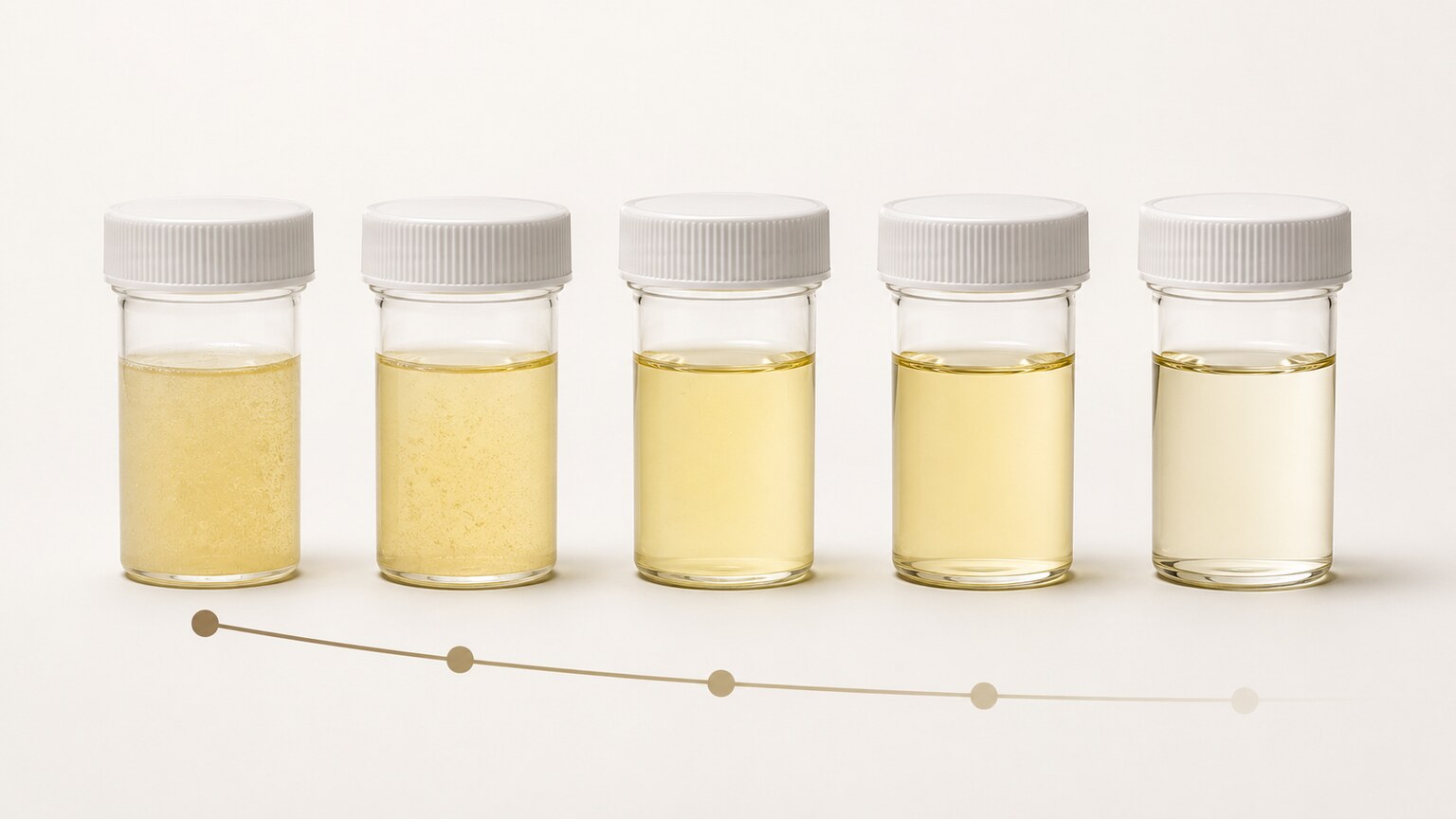
What makes exercise-induced proteinuria clinically reassuring, beyond how common it is, is how reliably and quickly it resolves once the activity stops. The changes to glomerular permeability and tubular reabsorption capacity described above are functional and reversible, not structural — nothing about the filtering membrane or tubule cells is actually damaged, they're just temporarily working differently under the influence of a hormonal surge that fades once the exertion ends and blood flow patterns return to their resting state. Research consistently finds that protein levels return to normal physiologic baseline within 24 to 48 hours after the triggering activity, and in many cases considerably sooner than that, often within just a few hours once catecholamine and angiotensin II levels settle back down. This rapid, predictable resolution is one of the single most useful pieces of information doctors use to distinguish this benign pattern from proteinuria caused by an actual kidney problem, which characteristically does not resolve on its own within a day or two of rest, no matter how much the affected person avoids physical activity in the meantime. In practical terms, this means the single best evidence that a given proteinuria episode was exercise-related isn't anything found in that first positive sample itself — it's simply watching it disappear on its own shortly afterward.
Why Blood Sometimes Shows Up Alongside the Protein
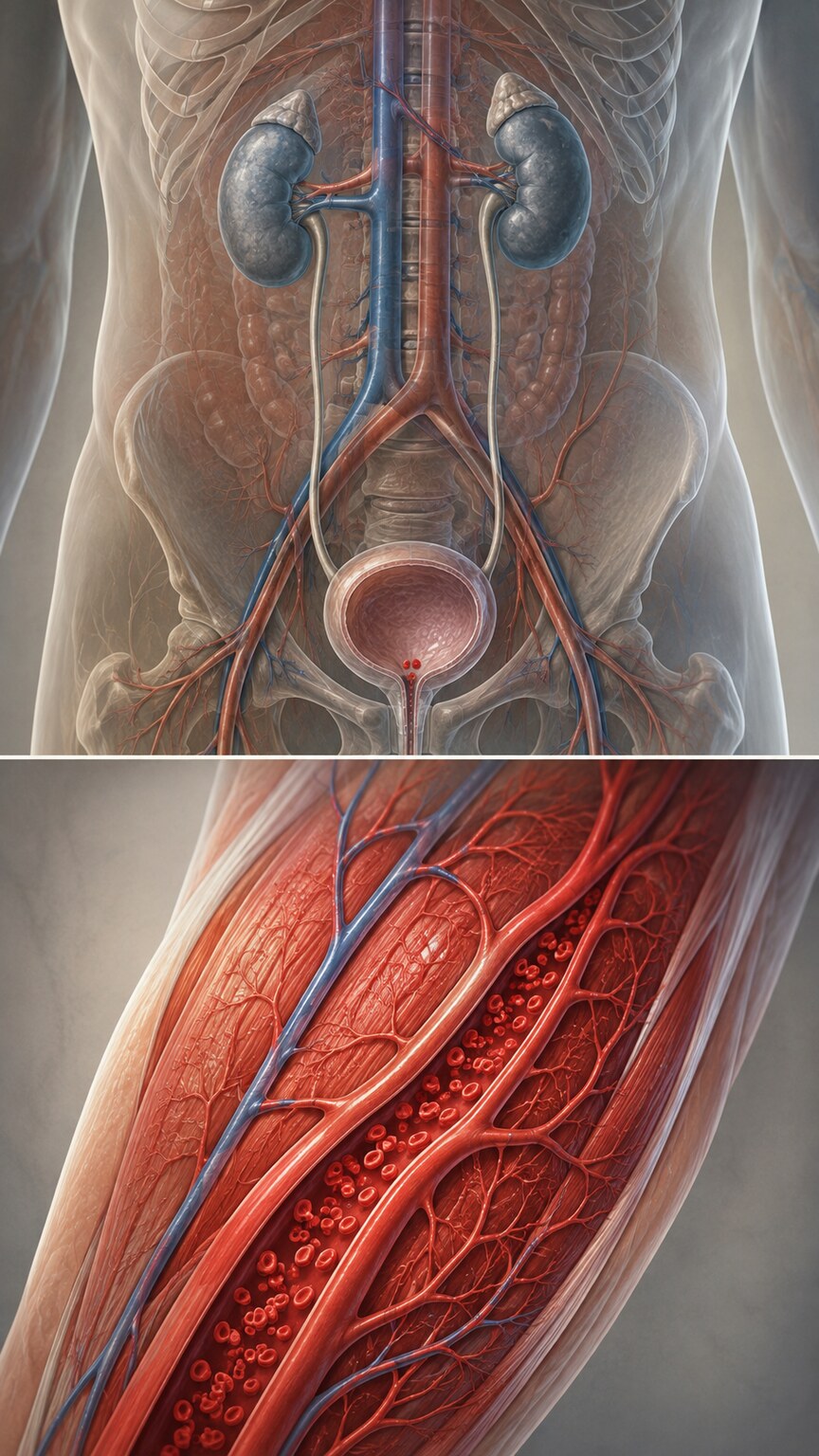
It's genuinely common for a urinalysis taken shortly after intense exercise to show small amounts of both protein and blood at the same time, and this isn't a coincidence — the two share overlapping causes. During strenuous exertion, your body redirects blood flow away from organs it doesn't urgently need and toward the muscles doing the work, which means blood vessels supplying the kidneys constrict measurably while vessels supplying active skeletal muscle dilate. This renal vasoconstriction reduces oxygen delivery to nephron tissue and increases filtration pressure at a specific point in the glomerulus, a combination that favors both increased protein and increased red blood cell passage into the urine through the same stressed filtering membrane described earlier in this article. Separately, researchers have identified physical trauma as a contributing factor in some cases, particularly in runners, where repeated impact against a bladder that's relatively empty during a long run has been linked to small amounts of bleeding at the bladder neck. One important complication worth knowing about: a positive "blood" result on a standard urine dipstick doesn't always mean actual red blood cells are present, since myoglobin, a muscle protein released during ordinary muscle breakdown from hard exercise, reacts identically to blood on the test strip's chemical pad. Confirming genuine hematuria specifically requires looking at the urine under a microscope to directly count red blood cells, since the dipstick alone can't tell the two apart, and this microscopic confirmation step is exactly why a positive "blood" reading after exercise shouldn't be assumed to mean actual bleeding until it's been checked this way. Like exercise-induced proteinuria, this exercise-related blood in the urine is typically benign and clears within roughly 72 hours, following the same reversible, non-structural pattern, and it's genuinely more common in runners specifically than in other athletes, likely reflecting the added contribution of repetitive bladder impact on top of the shared vascular mechanism.
How Doctors Tell This Apart From Something That Actually Needs Attention
Because a positive protein result on a urine dipstick can technically come from either a completely benign cause or a genuine kidney problem, doctors rely on a few practical strategies to sort out which one they're looking at, rather than treating every positive result as equally concerning. The single most useful tool is simply repeating the test under different conditions: a first-morning urine sample, collected after a full night of rest with no intervening exercise, that comes back completely negative for protein strongly supports a benign, exercise-related explanation for an earlier positive result, and this single follow-up test resolves the vast majority of these cases without any further workup being necessary. This same first-morning strategy is also the standard approach used to diagnose orthostatic proteinuria, a separate benign condition where protein appears in urine collected while upright during the day but disappears in urine produced overnight while lying flat, sometimes seen in younger, taller, thinner individuals and generally considered to carry the same excellent long-term outlook as exercise-induced proteinuria — for orthostatic proteinuria specifically, a first-morning urine protein-to-creatinine ratio below 0.20 milligrams per milligram of creatinine supports the benign diagnosis, while a persistently elevated ratio does not and warrants further evaluation. True pathological proteinuria, caused by actual glomerular or tubular disease from conditions like diabetic kidney disease, glomerulonephritis, or hypertension-related kidney damage, characteristically fails to clear on repeat testing regardless of timing or recent activity, tends to be accompanied by other abnormal findings like red blood cells or protein casts seen consistently rather than just after exertion, and is often associated with additional signs like elevated blood pressure, swelling in the legs or around the eyes, or a quantitatively much larger amount of protein than exercise alone typically produces.
What This Means If You See It on Your Own Results
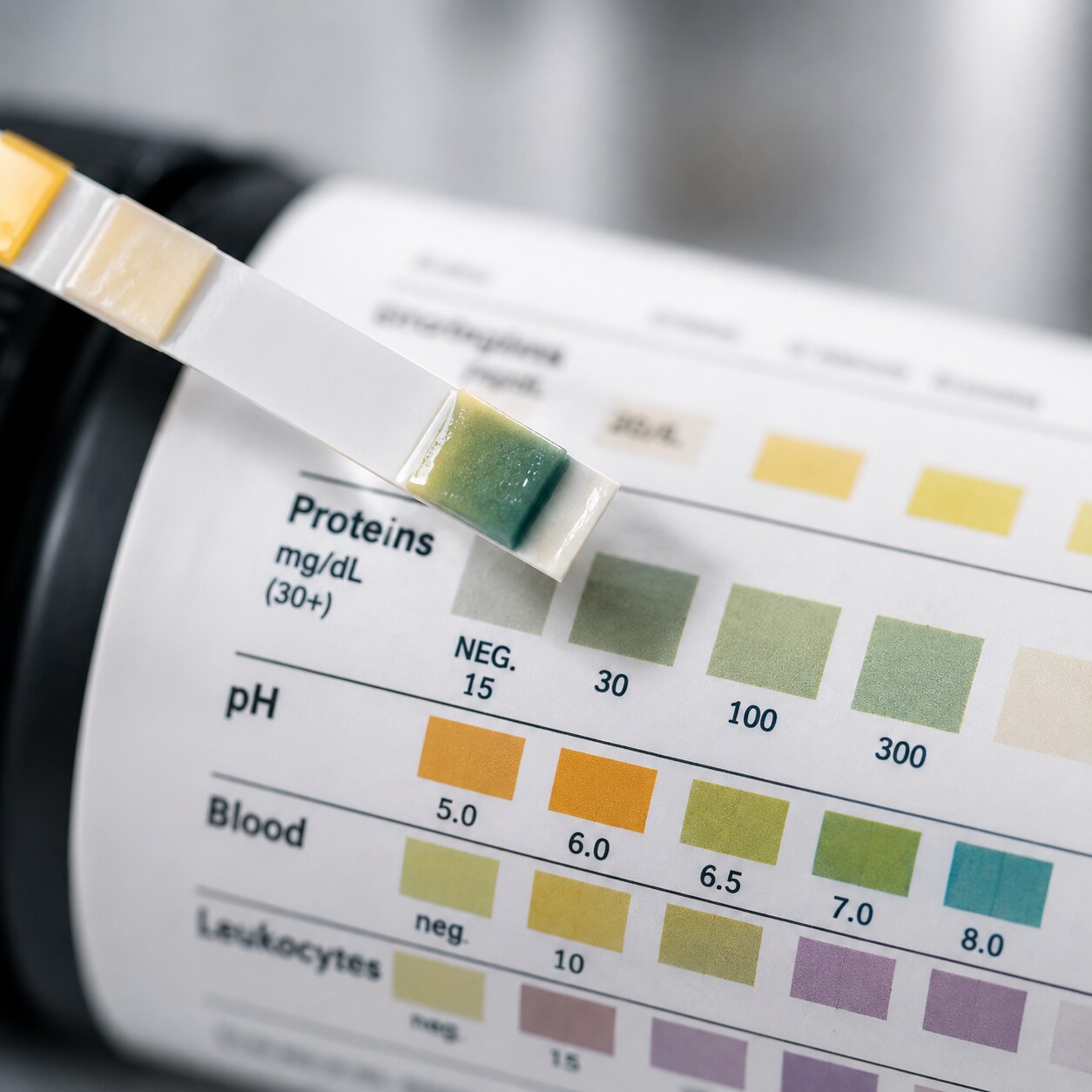
If a routine urinalysis comes back showing protein and you recall doing something physically demanding — a hard gym session, a race, a long hike, even a physically strenuous work shift — in the hours before the sample was collected, that timing detail is genuinely worth mentioning to whoever ordered the test, since it directly shapes how the result should be interpreted and can save an unnecessary round of additional testing. A single positive reading in that context, especially one at a mild-to-moderate level rather than a severely elevated one, is often followed up with a simple repeat test on a first-morning sample taken well after any exercise, rather than immediately triggering a broader kidney workup with imaging or specialist referrals. If that repeat sample comes back clean, the original result is generally considered explained and closed out, with no further action needed and nothing to track going forward. This pattern is common enough that many primary care providers and sports medicine specialists will proactively ask about recent exercise before ordering any follow-up testing at all, precisely because they encounter this scenario often enough to recognize it quickly. If protein continues showing up on repeat testing regardless of activity or timing, that's the point at which further evaluation — checking kidney function markers like creatinine and eGFR, blood pressure, and possibly a formal protein-to-creatinine ratio to quantify exactly how much protein is present — becomes the appropriate next step, since persistent proteinuria unrelated to exertion is not something exercise physiology can explain away, and genuinely does warrant a closer look at what else might be driving it.
Why Dehydration Makes the Effect Worse
Hydration status turns out to be a meaningful variable in how pronounced exercise-induced proteinuria becomes, independent of exercise intensity itself. Research on athletes competing in events with significant fluid loss, such as short-steep triathlons performed in hot conditions, has documented that dehydration can exacerbate exercise-induced proteinuria by increasing blood viscosity, further promoting the same renal vasoconstriction described earlier, and altering glomerular permeability beyond what exercise intensity alone would produce. This creates a compounding effect: the harder you push and the less fluid you have on board while doing it, the more pronounced the resulting proteinuria tends to be, since both factors act on the same underlying mechanism of reduced renal blood flow and altered filtration pressure, essentially stacking two separate stressors onto the exact same point in the nephron rather than acting through entirely independent pathways. This is part of why proper hydration during prolonged or intense exercise carries benefits beyond the well-known ones related to temperature regulation and cardiovascular strain — it also appears to genuinely soften the degree of temporary kidney filtration disruption that hard exercise otherwise produces on its own, giving athletes training or competing in hot, fluid-demanding conditions one more practical reason to prioritize staying ahead of their fluid losses rather than catching up after the fact.
Does Training Reduce This Effect Over Time?
A reasonable question is whether becoming fitter or more trained eventually makes this phenomenon go away. The research here is genuinely mixed rather than clearly reassuring in one direction. Studies comparing pre-training and post-training urine protein levels in response to the same exhaustive exercise test have found no significant difference between the two, meaning becoming better conditioned doesn't appear to meaningfully blunt the proteinuria response itself — a well-trained athlete pushing to a genuinely exhaustive effort still shows the same basic pattern as an untrained person doing the same relative effort. Interestingly, some research suggests physical training may offer a modest protective effect specifically against red blood cells crossing the glomerular basement membrane, even while the protein response remains essentially unchanged, hinting that the glomerular and hematuria-related mechanisms may not respond identically to conditioning even though they share overlapping causes. The practical takeaway is that seeing this pattern after a hard workout isn't a sign of being unfit, and it isn't something training will make disappear entirely — it's simply what a sufficiently intense physiological stress does to kidney filtration in essentially everyone, regardless of fitness level, meaning even highly conditioned competitive athletes should expect to see it after a genuinely maximal effort rather than assuming their training has made them immune to it.
Quantifying It: The Protein-to-Creatinine Ratio
When a doctor wants a more precise picture than a simple positive or negative dipstick reading, the tool of choice is a urine protein-to-creatinine ratio, calculated from a single spot urine sample rather than requiring a full 24-hour collection. Because creatinine is excreted at a relatively steady rate, comparing the amount of protein in a sample to the amount of creatinine in that same sample provides a reliable estimate of total daily protein excretion without the inconvenience of collecting every drop of urine for a full day. In the context of exercise, this ratio tends to run mildly to moderately elevated in the hours immediately following intense activity and then normalizes on a properly timed follow-up sample, giving doctors a quantitative way to track the same resolution pattern described earlier rather than relying only on a qualitative dipstick color change. This test becomes especially useful in cases where the initial dipstick result is ambiguous or when a doctor wants concrete, comparable numbers to confirm that a result really did return to baseline rather than relying on a rough visual read, and it's also the same test used to formally diagnose orthostatic proteinuria, giving it a dual role across several of the benign proteinuria categories discussed throughout this article.
Practical Tips If You Need a Clean Urine Sample
If you have an upcoming urinalysis scheduled as part of a physical exam, prenatal visit, or any other routine screening, it's reasonable to avoid strenuous exercise in the 24 to 48 hours beforehand simply to prevent a confusing, ultimately meaningless positive result from muddying an otherwise straightforward test. This isn't a strict medical necessity — a truly healthy person's exercise-induced proteinuria will resolve on its own regardless — but it removes an unnecessary variable and can save you the inconvenience of a follow-up test purely to confirm what a little scheduling foresight could have avoided. This same logic applies to other activities that can independently affect a urine sample, like significant caffeine intake, dehydration, or a recent high-protein meal, all of which are worth keeping in mind alongside exercise timing if you want the cleanest possible baseline reading. If avoiding exercise beforehand isn't practical — for instance, if the appointment falls immediately after a scheduled training session that can't easily be rearranged — simply mentioning recent physical activity to the person collecting or reviewing your sample accomplishes the same goal by giving appropriate context to an otherwise ambiguous result from the start, and most clinicians will factor that information directly into how they interpret what they see.
Frequently Asked Questions
Is protein in urine after exercise dangerous?
In the vast majority of cases, no. Exercise-induced proteinuria is a well-documented, benign, and reversible response to intense physical exertion, and it typically resolves on its own within 24 to 48 hours.
How common is exercise-induced proteinuria?
Very common. Studies report proteinuria in anywhere from 18% to nearly 100% of participants after vigorous exercise, depending on exercise type, intensity, and when the sample was collected.
Does exercise duration or intensity matter more for causing proteinuria?
Intensity matters far more than duration. A short but maximal effort tends to produce a more pronounced result than a much longer session performed at a comfortable pace.
How do doctors know if urine protein is from exercise and not a real kidney problem?
The most reliable method is repeating the test on a first-morning urine sample collected after rest with no recent exercise. A negative result on that retest strongly supports a benign, exercise-related explanation.
Should I avoid exercise before a scheduled urine test?
It's a reasonable precaution to avoid strenuous exercise for 24 to 48 hours before a routine urinalysis, simply to prevent an unnecessary, ultimately meaningless positive result from complicating an otherwise straightforward test.
Can blood show up in urine after exercise too?
Yes. Small amounts of blood often appear alongside protein after intense exercise due to shared mechanisms like renal vasoconstriction, and this is typically benign, clearing within about 72 hours.
Does being more physically fit reduce exercise-induced proteinuria?
Not clearly. Studies comparing trained and untrained individuals have found no significant difference in the proteinuria response to exhaustive exercise, meaning it isn't a sign of poor fitness.
Conclusion
Finding protein in your urine after an intense workout can be alarming if you don't know the underlying physiology, but the research on this topic is remarkably consistent and reassuring. Strenuous exercise genuinely does alter how your kidneys filter and reabsorb protein, through a well-documented combination of glomerular membrane changes driven by catecholamines and angiotensin II, temporary tubular reabsorption limits, and renal vasoconstriction that can bring small amounts of blood along with it, and it does so predictably enough that doctors have a simple, reliable way to confirm it: repeat the test after rest, and watch it disappear within a day or two. Hydration status can make the effect more or less pronounced, training doesn't appear to make it go away entirely, and a protein-to-creatinine ratio gives doctors a precise, quantitative way to track its resolution whenever a simple dipstick reading isn't detailed enough to settle the question on its own. Understanding this distinction turns a potentially worrying lab result into what it usually actually is — solid evidence that your body responded exactly the way a hard-working, healthy body is expected to under real physical stress, and a pattern that reliably clears on its own once you've had a chance to properly rest and rehydrate.
Still Not Sure What Your Results Mean?
Upload your labs and get a complete, visual, plain-language interpretation of every biomarker — delivered to your inbox in under 15 minutes.
Get My ReportThis article is for educational purposes only and does not constitute medical advice. Always consult your healthcare provider regarding your specific lab results.