
Glucose in Urine Doesn't Always Indicate Diabetes
A urinalysis result that comes back positive for glucose can be a genuinely frightening moment for many people, since most people immediately, almost reflexively, associate sugar showing up in urine with diabetes and little else besides that single possibility. But glucose actually showing up on a urine dipstick reflects a specific, well-understood mechanical process taking place within the kidneys themselves — one that can genuinely be triggered by several entirely distinct situations that have absolutely nothing to do with diabetes at all, ranging from a completely harmless, often inherited kidney quirk, to the normal, expected physiology of pregnancy, to a prescribed medication working exactly precisely as intended. This article walks through what a positive glucose dipstick result actually measures, the specific renal threshold your kidneys normally rely on to keep glucose out of urine entirely, five distinct non-diabetic reasons glucose can nonetheless appear there anyway, when a positive result genuinely does point toward diabetes, why urine testing has largely been replaced for actual diabetes monitoring, and how doctors actually go about distinguishing between all of these possibilities once a positive result comes back on a report.
What a Positive Glucose Dipstick Result Actually Measures
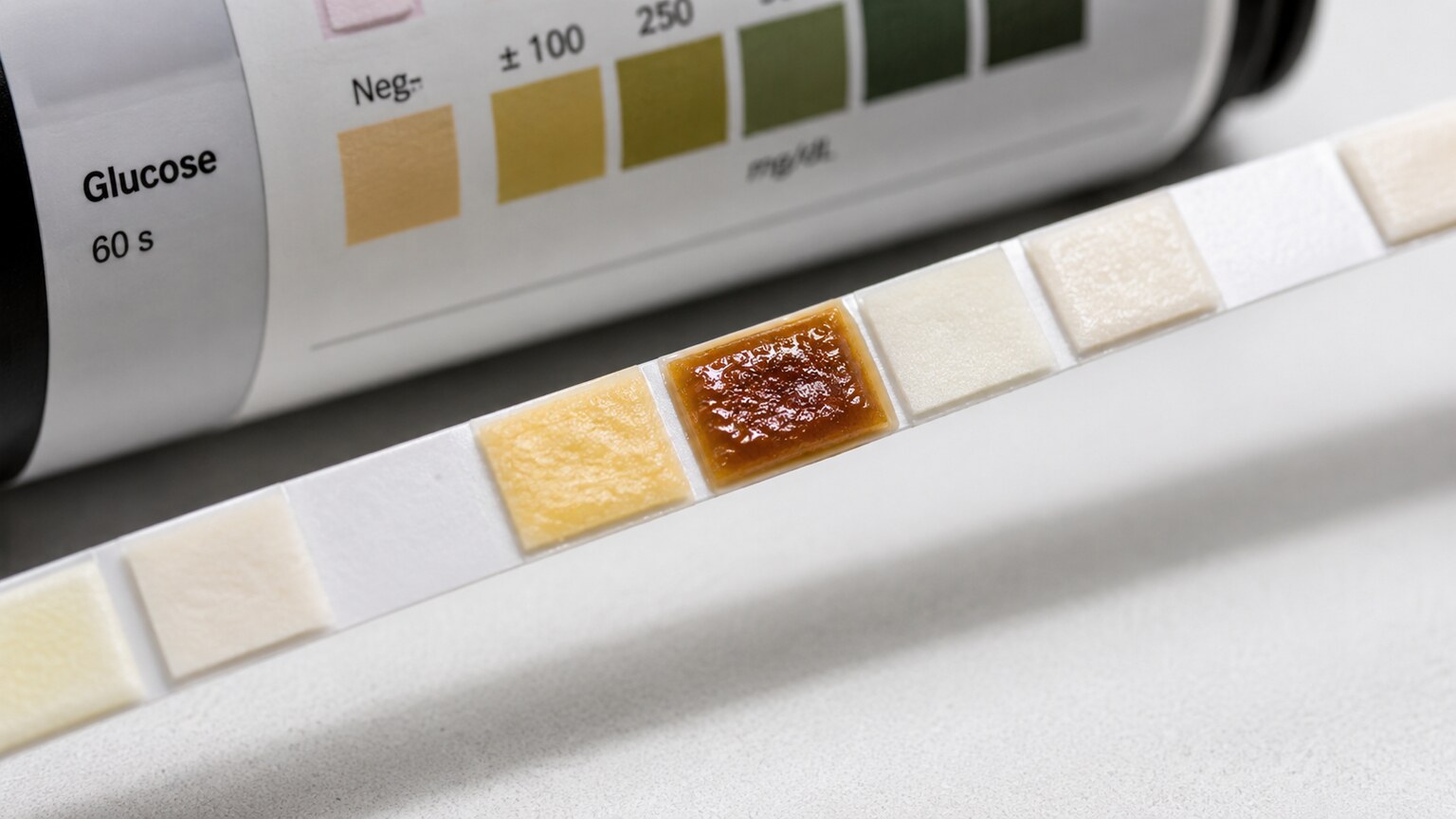
Figure 1. A urine dipstick detects glucose through a specific chemical reaction that changes the color of a small test pad, providing a semi-quantitative estimate rather than a precise, exact measurement.
A standard urine dipstick contains a small, specially coated pad treated with a specific enzyme, glucose oxidase, that reacts chemically and specifically with glucose molecules present within a given urine sample. When glucose is present, this reaction triggers a color change on the pad, and the resulting color that develops is then compared against a standardized reference chart to estimate the approximate concentration present — typically reported as a range (trace, 1+, 2+, 3+, 4+) rather than a single exact number, since a dipstick is fundamentally designed and intended as a rapid screening tool, not as a precise, quantitative laboratory measurement in the way a formal blood test would be.
It's genuinely worth being completely clear from the very outset about what this specific test is actually measuring: urine glucose, not blood glucose directly at all. These are related but genuinely distinct values, and the relationship between them — specifically, why glucose appears in urine at all — is the key to understanding every scenario covered in the rest of this article.
The Renal Threshold: Why Glucose Normally Doesn't Appear in Urine At All
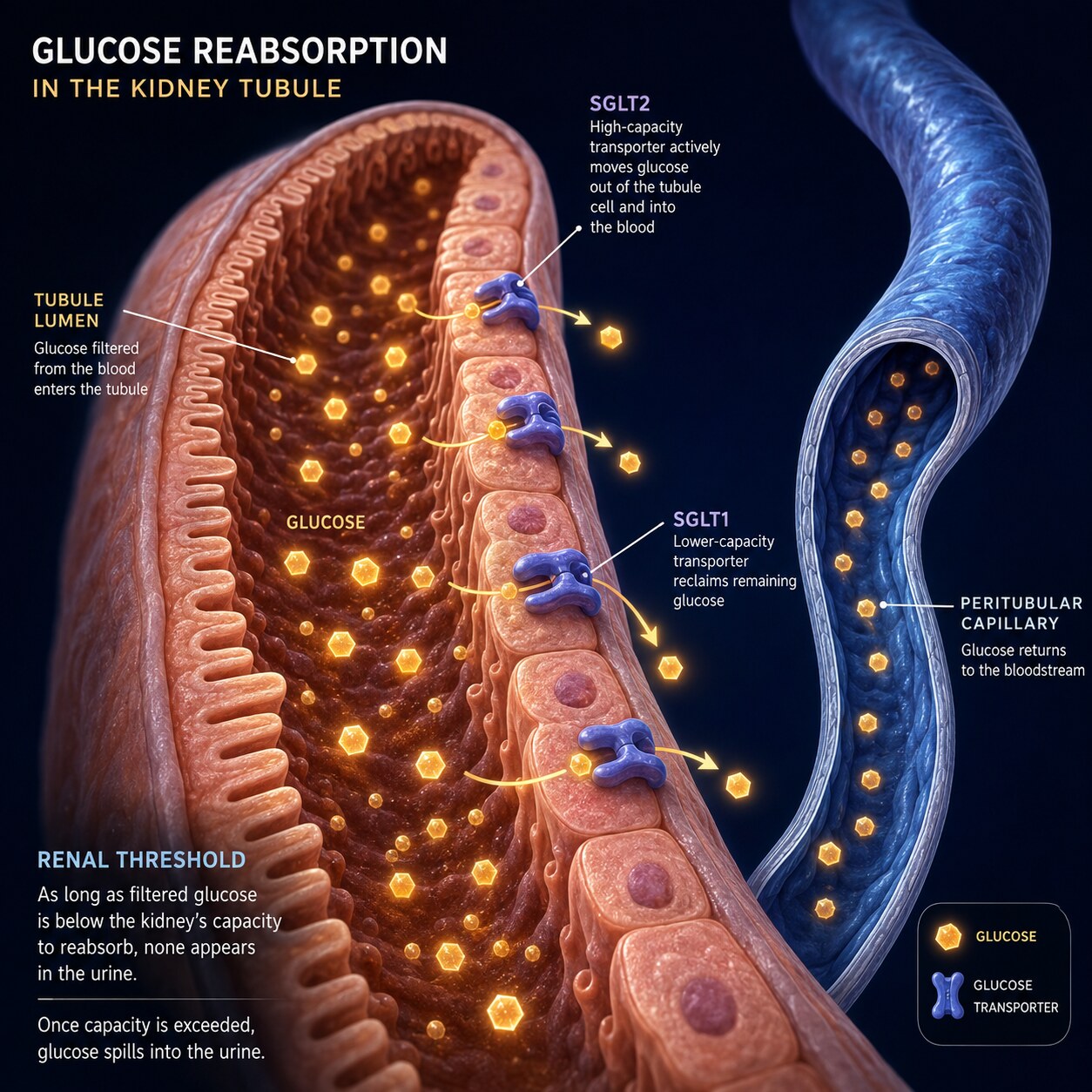
Figure 2. Specialized transporter proteins lining the kidney's filtering tubules actively pull filtered glucose back into the bloodstream, normally recovering essentially all of it before urine is finalized.
Your kidneys filter a genuinely large volume of blood continuously, around the clock, and that initial filtration process pulls glucose out of the blood along with everything else present, regardless of how much glucose actually happens to be there. Under entirely normal, healthy circumstances, none of that filtered glucose actually ends up in the final urine that ultimately leaves your body, because specialized transporter proteins lining the kidney's tubules actively, continuously reabsorb essentially all of it back into the bloodstream before that filtration process is fully complete — a highly efficient recovery system operating continuously in the background.
The specific transporter proteins responsible for this reabsorption process belong to a family called sodium-glucose cotransporters, and two particular members of that family, named SGLT2 and SGLT1, do the overwhelming majority of the actual work — SGLT2 handling roughly ninety percent of glucose reabsorption in the earliest segment of the kidney tubule, with SGLT1 picking up most of the remainder slightly further along. This specific division of labor between the two transporters is directly relevant later in this article, since it's precisely the SGLT2 transporter that a major class of diabetes medications is specifically designed to block.
This reabsorption system, however, has a maximum capacity, called the renal threshold for glucose. Below this threshold, roughly corresponding to a blood glucose level within the range most genuinely healthy people typically maintain day to day, the transporters keep up easily and comfortably, and no glucose escapes into urine at all under these normal conditions. Once blood glucose finally climbs high enough to exceed that specific threshold — which is precisely what actually happens in uncontrolled diabetes — the transporters become genuinely overwhelmed, and the excess glucose that simply can't be reabsorbed quickly enough spills over into the urine, producing a positive dipstick result. This threshold concept is genuinely the single most important idea for understanding everything else covered throughout the rest of this article, since every one of the non-diabetic causes of urine glucose covered below involves either an unusually, individually low threshold or a mechanism that bypasses the ordinary threshold system entirely, rather than involving any genuinely elevated blood sugar at all.
Reason 1: Renal Glycosuria — A Benign, Often Inherited Kidney Quirk
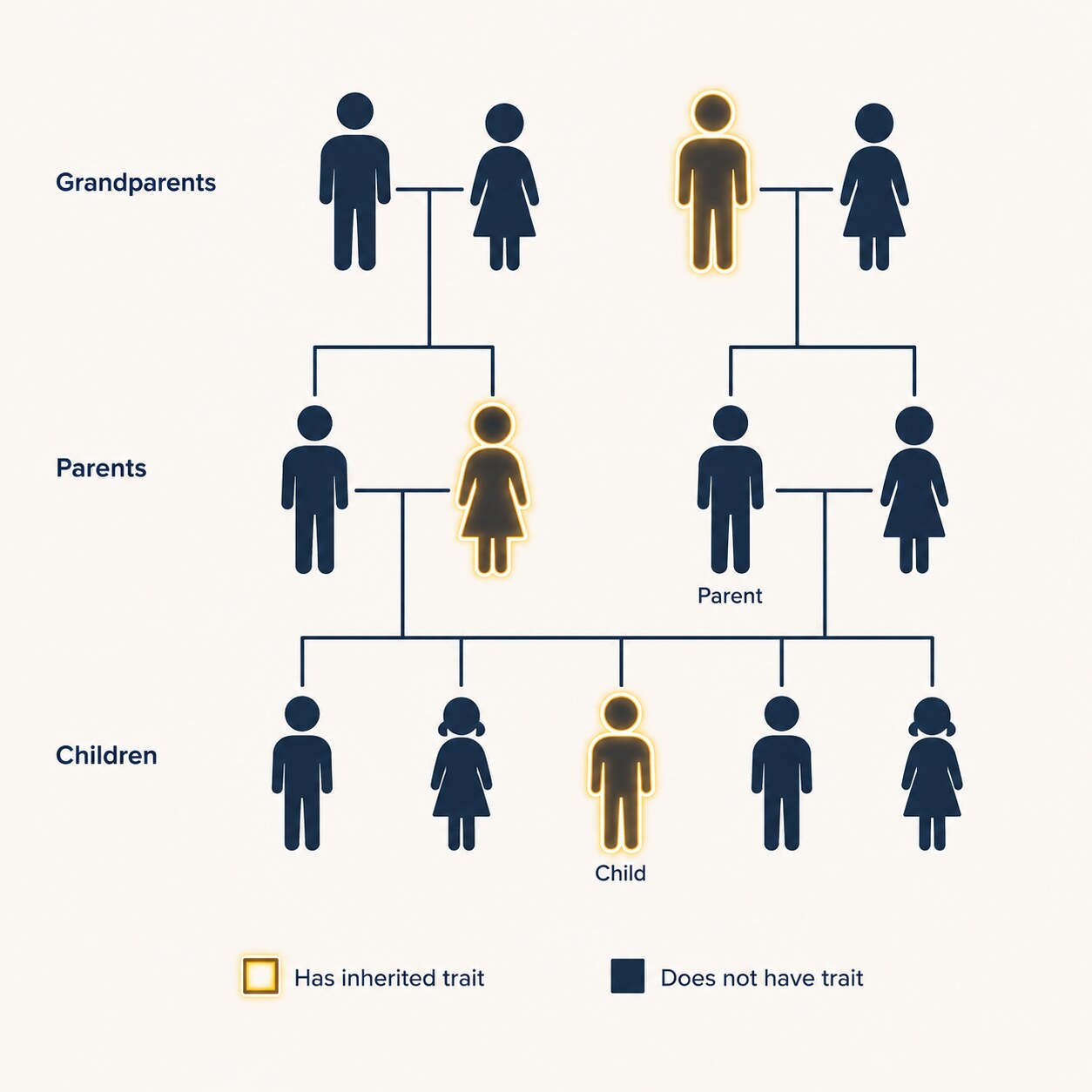
Figure 3. Renal glycosuria results from genetic variation in the specific transporter proteins responsible for reabsorbing glucose, producing a lower-than-average renal threshold that can run in families.
Some people are simply born with a lower renal threshold than average, due to genetic variation in the specific transporter proteins responsible for glucose reabsorption. This condition, called renal glycosuria (or familial renal glucosuria in its specifically inherited form), means glucose spills over into the urine at blood sugar levels that remain entirely, completely normal throughout, sometimes even sitting on the lower end of the normal range, purely because that particular kidney's own reabsorption capacity happens to be genetically set somewhat lower than the typical population average from birth onward.
Renal glycosuria is generally, and correctly, considered a harmless variant rather than any kind of disease process in its own right — the kidneys continue functioning entirely correctly in every other measurable respect, and the condition itself doesn't progress toward diabetes over time or cause any known long-term health consequence purely on its own, based on the current available evidence. It can genuinely run in families, following a recognizable, well-documented inheritance pattern in some specific cases, and it's typically identified precisely because someone with consistently normal blood glucose levels and no diabetes symptoms whatsoever keeps testing positive for urine glucose across repeated urinalysis testing, prompting further, more careful investigation that ultimately rules out diabetes entirely and lands instead on this specific, benign explanation.
Curious what your own urinalysis results actually mean for your specific situation? Upload your results and get a complete, plain-language breakdown in under 15 minutes.
Analyze My ResultsHow Common Renal Glycosuria Actually Is, and Why It's Often Missed
Renal glycosuria is genuinely uncommon in the broader population, but it's likely underdiagnosed relative to its true prevalence, simply because most people who carry a mildly lowered renal threshold never have a specific reason to undergo the repeated testing that would reveal the pattern. A single positive urine glucose finding, encountered in isolation on an otherwise unremarkable routine panel, is often initially assumed to be a laboratory error or a one-time fluke rather than something warranting a full diagnostic workup, meaning many people who genuinely carry a lower-than-average renal threshold may go years, or even decades, without ever receiving a specific, confirmed explanation for occasional positive findings noticed only incidentally during otherwise routine urinalysis testing.
The condition exists along a spectrum of severity, from a very mild threshold reduction that only occasionally produces a trace positive result, to a more pronounced reduction that consistently shows glucose on nearly every urine sample regardless of diet or timing. Distinguishing where along this spectrum a given person actually falls typically requires several separate, repeated urine tests conducted over time, alongside confirmed normal blood glucose values measured across those same testing occasions, since a single test result, whatever it happens to show on that particular day, isn't sufficient on its own to properly characterize a pattern that's inherently about consistency over time rather than any single isolated data point.
Reason 2: Pregnancy and a Temporarily Lower Threshold
Pregnancy produces several genuine physiological changes that can cause glucose to appear in urine even with completely normal blood sugar. The kidneys filter blood at a notably higher rate during pregnancy, and this increased filtration rate can, in some pregnant women though genuinely not all, temporarily outpace the reabsorption system's normal working capacity, effectively lowering the practical renal threshold specifically during the pregnancy itself, even though absolutely nothing is actually wrong with the underlying transporter proteins themselves at any point throughout this entire process.
Because of this well-documented pattern, a positive urine glucose finding during a routine prenatal visit doesn't automatically signal gestational diabetes — it's a genuinely common, often benign finding related to pregnancy's own physiology. That said, pregnancy is also a time when gestational diabetes is a real, actively screened-for possibility, which is exactly why a positive urine glucose finding during pregnancy typically prompts a dedicated blood-based screening test (an oral glucose tolerance test) rather than either dismissing the finding entirely or assuming diabetes outright — the urine finding alone genuinely can't distinguish between the two explanations, and the more definitive blood-based test is what actually settles the question.
Why Pregnancy Changes Kidney Filtration So Significantly
It's worth understanding a bit more of the underlying physiology behind why pregnancy affects kidney filtration so noticeably, since the mechanism is genuinely distinct from every other reason covered in this article. During pregnancy, blood volume expands substantially, cardiac output increases to support the growing fetus and placenta, and blood flow to the kidneys rises considerably as a direct result of these broader circulatory changes — collectively increasing the glomerular filtration rate, the actual speed at which blood is filtered through the kidneys, often by a meaningful percentage compared to typical pre-pregnancy levels.
This faster filtration rate means a considerably larger volume of glucose-containing filtrate passes through the kidney's tubules per unit of time than would be typical outside of pregnancy, and even though the actual reabsorption transporters themselves continue functioning entirely normally throughout pregnancy, they simply have measurably less time available to complete the full reabsorption process before that filtrate moves onward and ultimately exits the body as finished urine. This specific mechanism — normal transporters overwhelmed by an accelerated filtration rate, rather than defective transporters — is precisely why pregnancy-related glucosuria is generally considered a temporary, mechanical byproduct of pregnancy's broader circulatory adaptations rather than a sign that anything is functioning incorrectly.
Reason 3: SGLT2 Inhibitor Medications — Deliberately Causing Glucosuria

Figure 4. SGLT2 inhibitor medications, prescribed for diabetes and certain heart and kidney conditions, work by deliberately blocking glucose reabsorption in the kidneys — meaning a positive urine glucose result is the medication working exactly as designed.
Perhaps the most counterintuitive reason on this list involves a genuinely common class of medications called SGLT2 inhibitors, which are prescribed for type 2 diabetes and, increasingly, for certain heart failure and chronic kidney disease indications even in people without diabetes at all. These medications work by directly blocking the specific transporter proteins responsible for glucose reabsorption in the kidney, deliberately causing excess glucose to be excreted in urine as their actual mechanism of action, rather than as an unwanted side effect.
For someone taking one of these medications, a positive urine glucose result isn't a warning sign at all — it's direct, expected confirmation that the medication is doing exactly what it was prescribed to do. This is precisely why urine glucose testing becomes a largely uninformative screening tool for anyone on this specific medication class, since a positive result no longer distinguishes between well-controlled and poorly-controlled blood sugar the way it would in someone not taking the drug; blood-based testing becomes the only reliable way to actually monitor glucose control in this situation.
Why Doctors Deliberately Prescribe a Medication That Causes This "Positive" Result
It's worth explaining why deliberately causing glucose to spill into urine is actually a genuinely beneficial treatment strategy, since it might initially seem counterintuitive to intentionally produce a finding that, in any other context, would prompt concern. For someone with type 2 diabetes, deliberately forcing excess glucose out through urine provides a direct, genuinely insulin-independent way to meaningfully lower blood sugar, working through a completely different mechanism than most other diabetes medications, which typically work instead by increasing the body's own insulin production or by improving how effectively existing tissue responds to whatever insulin is already present in circulation.
Beyond blood sugar control specifically, SGLT2 inhibitors have also been found, through several large, well-conducted clinical trials, to provide genuine, independently measurable cardiovascular and kidney-protective benefits that appear to operate separately from their primary glucose-lowering effect entirely, which is exactly why these medications are now increasingly prescribed for certain heart failure and chronic kidney disease patients even in cases where diabetes isn't present at all as part of the clinical picture. For these non-diabetic patients specifically, a positive urine glucose finding on a routine test becomes an even more striking, memorable illustration of this article's central theme: the prescribed medication is deliberately producing a textbook-positive, historically diabetes-associated urine finding in a person who genuinely doesn't have diabetes whatsoever, purely and entirely as an expected, fully intended pharmacological effect rather than any kind of unwanted side effect worth worrying about.
Reason 4: A Temporary Post-Meal Spike in an Otherwise Healthy Person

Figure 5. A very large, sugar-heavy meal can briefly push blood glucose above the renal threshold even in someone without diabetes, producing a transient positive urine glucose result that resolves within hours.
Even in someone with completely normal, healthy glucose regulation, an unusually large meal loaded with rapidly absorbed sugar can, in some cases, push blood glucose briefly above the renal threshold before the body's insulin response has fully brought it back down. This produces a genuinely transient, short-lived positive urine glucose result, typically only detectable in a sample specifically collected within a couple of hours of that particular meal, and resolving completely and fully as blood glucose gradually normalizes over the following hours afterward, leaving no lasting trace on any subsequent test.
This is exactly why the specific timing of collection relative to a person's most recent meal matters so much when correctly interpreting any given urine glucose result, and why a single positive finding, especially one collected shortly after an unusually large or particularly sugary meal, generally and appropriately prompts a repeat test performed under more controlled, genuinely fasting conditions before any further clinical conclusion is drawn — a single transient spike in an otherwise healthy person carries a fundamentally different meaning than a consistently positive result found across multiple separate tests taken under normal conditions.
What Counts as an "Unusually Large" Meal for This Purpose
It's worth clarifying roughly what kind of eating pattern is actually capable of producing this transient, post-meal glucose-spike scenario, since a normal, everyday meal virtually never does. This typically requires a genuinely large quantity of rapidly absorbed sugar consumed in a fairly short window — a substantial dessert course on top of an already large meal, a very large volume of sugar-sweetened beverage consumed quickly, or a holiday-style eating occasion involving multiple sugar-heavy dishes in succession — rather than an ordinary meal containing a typical, moderate amount of carbohydrate.
Even then, this specific scenario remains relatively uncommon in someone with genuinely normal, healthy glucose regulation overall, since a properly functioning pancreas responds to rising blood sugar with a correspondingly rapid, well-timed insulin release specifically evolved to prevent blood glucose from ever climbing high enough to exceed the renal threshold in the first place, under all but the most extreme dietary circumstances. When this transient scenario does occur, it's often a useful early clue worth paying attention to rather than dismissing outright, since a glucose regulation system that's only marginally keeping pace, one requiring an unusually large meal to reveal any strain at all, can sometimes be an early, subtle sign worth discussing with a provider, particularly in someone with other risk factors for developing diabetes later on.
Reason 5: Broader Kidney Tubule Conditions Beyond Glucose Alone
Beyond the more common explanations already covered — the inherited or acquired reduction in a single transporter's capacity seen in renal glycosuria, or the temporary filtration-rate changes of pregnancy — a smaller, distinct group of conditions affects the kidney's tubules more broadly, impairing the reabsorption of several different substances all at once, glucose included, rather than glucose transport specifically. Fanconi syndrome, the most notable example, involves widespread dysfunction of the kidney tubule's reabsorption machinery, causing glucose, amino acids, phosphate, and other substances to all appear in urine together rather than glucose alone — a pattern that immediately points investigation toward this broader category of tubular disorder rather than toward diabetes or an isolated glucose-transport issue.
These broader tubular conditions can arise from genetic causes present from birth, certain medications known to affect tubular function as a documented side effect, or exposure to specific environmental toxins, and they're generally identified specifically because the urinalysis and follow-up bloodwork show this characteristic multi-substance pattern rather than an isolated glucose finding on its own — which is exactly why a comprehensive urinalysis panel, checking several substances at once rather than glucose in isolation, is such a genuinely valuable diagnostic tool whenever a positive glucose result doesn't cleanly fit any of the more common explanations already covered earlier in this article.
Fortunately, this particular category of explanation is considerably rarer overall than any of the other explanations already discussed in this article, meaning it's typically only actively pursued as a diagnostic possibility after the more common explanations — diabetes, pregnancy, relevant medications, renal glycosuria, and a recent large meal — have each already been reasonably ruled out through the straightforward follow-up steps described in the next section.
Type 1 Versus Type 2 Diabetes: Does the Distinction Matter Here?
It's worth briefly noting that the basic mechanism connecting elevated blood glucose to a positive urine glucose finding applies identically regardless of which type of diabetes is ultimately responsible. Type 1 diabetes, caused by a distinct autoimmune process that gradually destroys the insulin-producing cells located within the pancreas, and type 2 diabetes, characterized primarily by insulin resistance that develops slowly and gradually over an extended period of time, both ultimately produce the exact same downstream result once blood glucose eventually climbs high enough: the renal threshold gets exceeded, and glucose spills into urine through the identical physiological mechanism described at the start of this article.
This means a positive urine glucose finding, taken entirely on its own, genuinely cannot distinguish between these two fundamentally, mechanistically different underlying types of diabetes — that specific distinction instead requires separate, dedicated diagnostic testing (specific antibody tests, C-peptide levels, and a careful review of the overall clinical presentation, including the age of onset and precisely how rapidly symptoms initially developed) once diabetes itself has already been formally confirmed through appropriate blood testing. Urine glucose is, in this specific sense, best understood as a signal that blood sugar has exceeded a purely mechanical threshold somewhere along the way, not a diagnostic tool genuinely capable of characterizing which specific underlying disease process is actually driving that particular elevation in the first place.
When Glucose in Urine Does Point to Diabetes
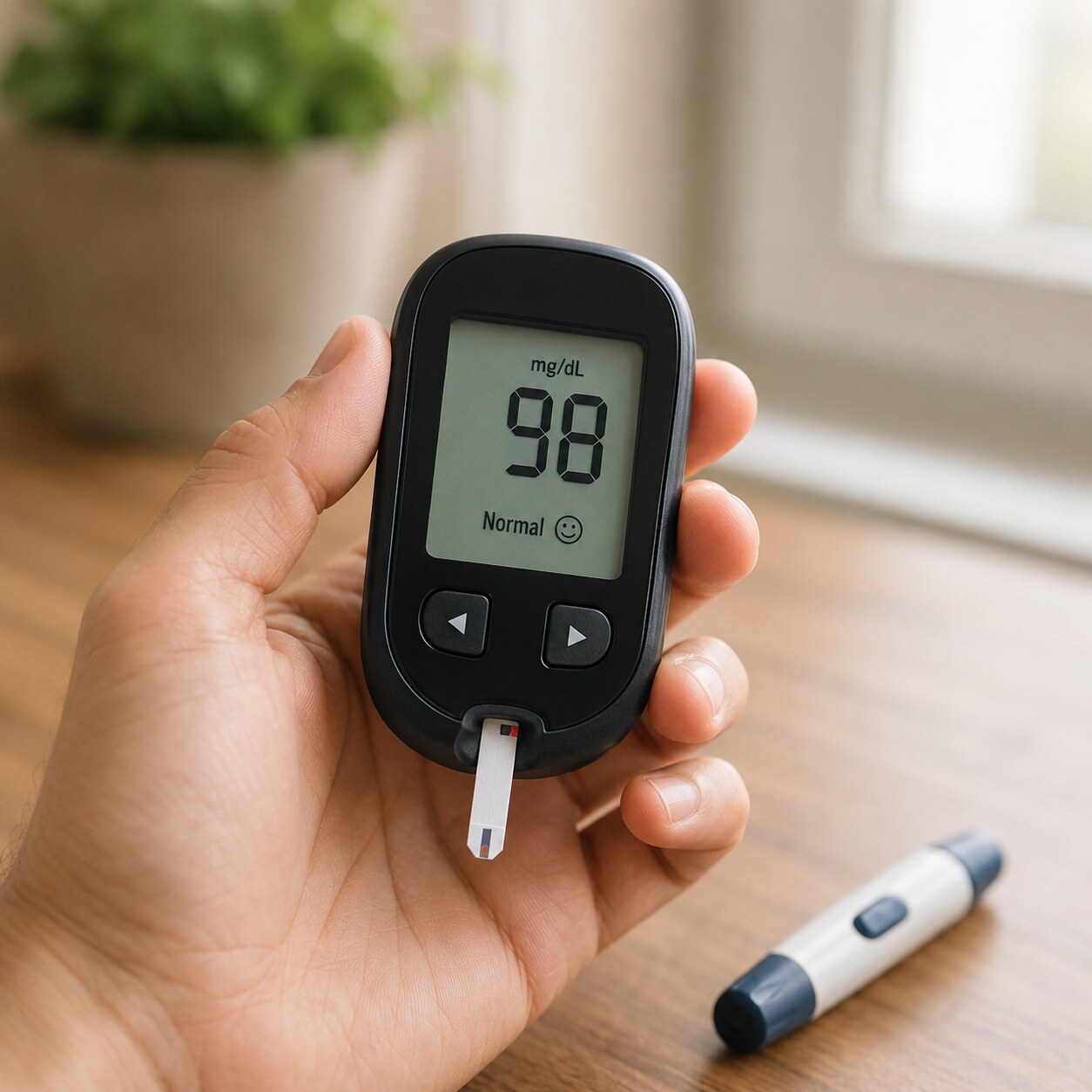
Figure 6. A blood-based glucose test remains the only way to confirm or rule out diabetes as the actual explanation behind a positive urine glucose finding — the urine result alone cannot make that distinction on its own.
With all of the above non-diabetic explanations covered, it's equally important to be clear that glucose in urine absolutely can, and very often does, indicate diabetes — it remains one of the classic, historically significant findings associated with uncontrolled blood sugar, and it shouldn't be dismissed reflexively just because alternative explanations exist. The distinguishing factor is genuinely straightforward once everything in this article is understood together: a positive urine glucose result paired with a separately confirmed elevated blood glucose reading, especially when it appears alongside classic diabetes symptoms like excessive thirst, unusually frequent urination, and otherwise unexplained fatigue, points strongly and reliably toward diabetes as the actual, correct explanation, since this combination is precisely the threshold-exceeding mechanism this article opened by describing in detail.
A urine glucose finding without any of the specific alternative explanations covered above — no pregnancy, no relevant medication, no known family history of renal glycosuria, no recent unusually large meal, and no other tubular-pattern findings on a broader panel — combined with a genuinely elevated blood glucose result, is exactly the pattern that appropriately prompts formal diabetes screening and diagnosis, since urine testing historically served as one of the very earliest tools available for detecting diabetes precisely because this underlying connection is real, direct, and well-established across more than a century of clinical use.
What This Means for Interpreting an Unexpected Result at Home
If you've come across a positive glucose result on your own urinalysis report and are trying to make sense of it before your next appointment, a few practical questions from this article can help you organize your own thinking productively. Start by considering timing: was the sample collected shortly after an unusually large or sugar-heavy meal, or under more typical, fasting-adjacent conditions? Next, consider medications: are you currently taking, or have you recently started, any medication in the SGLT2 inhibitor class, which your pharmacist or prescribing information can confirm if you're unsure of the specific drug class? If pregnancy is a possibility, that's worth noting specifically as well, since it changes how the finding should be interpreted.
Finally, consider family history: has anyone in your immediate family been told they have a similar, seemingly unexplained pattern of positive urine glucose findings with normal blood sugar, which might suggest the inherited renal glycosuria pattern described earlier in this article? None of these questions replace an actual conversation with a healthcare provider or a follow-up blood glucose test, but organizing your own relevant history along these specific lines beforehand makes that conversation considerably more efficient and productive, since you'll already have the key pieces of context a provider would otherwise need to ask about directly.
How Doctors Actually Distinguish Between These Possibilities
Given how many distinct explanations can produce the same positive urine dipstick finding, the practical follow-up process is what actually resolves the ambiguity. The first, most direct step is almost always a blood glucose test, since this single measurement immediately separates elevated-blood-sugar explanations (diabetes, and the transient post-meal scenario) from normal-blood-sugar explanations (renal glycosuria, pregnancy-related threshold changes, and medication effects). A normal blood glucose result alongside a positive urine finding essentially rules out diabetes as the cause and shifts the investigation toward the other possibilities covered in this article.
From there, carefully reviewing current medications (specifically checking for SGLT2 inhibitors by name), directly asking about pregnancy status where relevant, checking for any known family history of similar findings, and noting the exact timing of the urine collection relative to the most recent meal each help meaningfully narrow down which specific explanation from this article actually applies to the person's own particular situation. In genuinely unclear or persistent cases that don't neatly resolve through this initial round of questions, a broader urinalysis panel specifically checking for the multi-substance pattern associated with tubular disorders, or a repeat fasting urine test performed specifically to rule out the transient post-meal explanation, typically resolves whatever ambiguity remains after the first round of investigation. Throughout this entire process, the guiding principle stays consistent: a positive urine glucose result is a starting point for investigation, never an endpoint or a diagnosis in itself.
Why Urine Glucose Testing Has Largely Been Replaced for Diabetes Monitoring
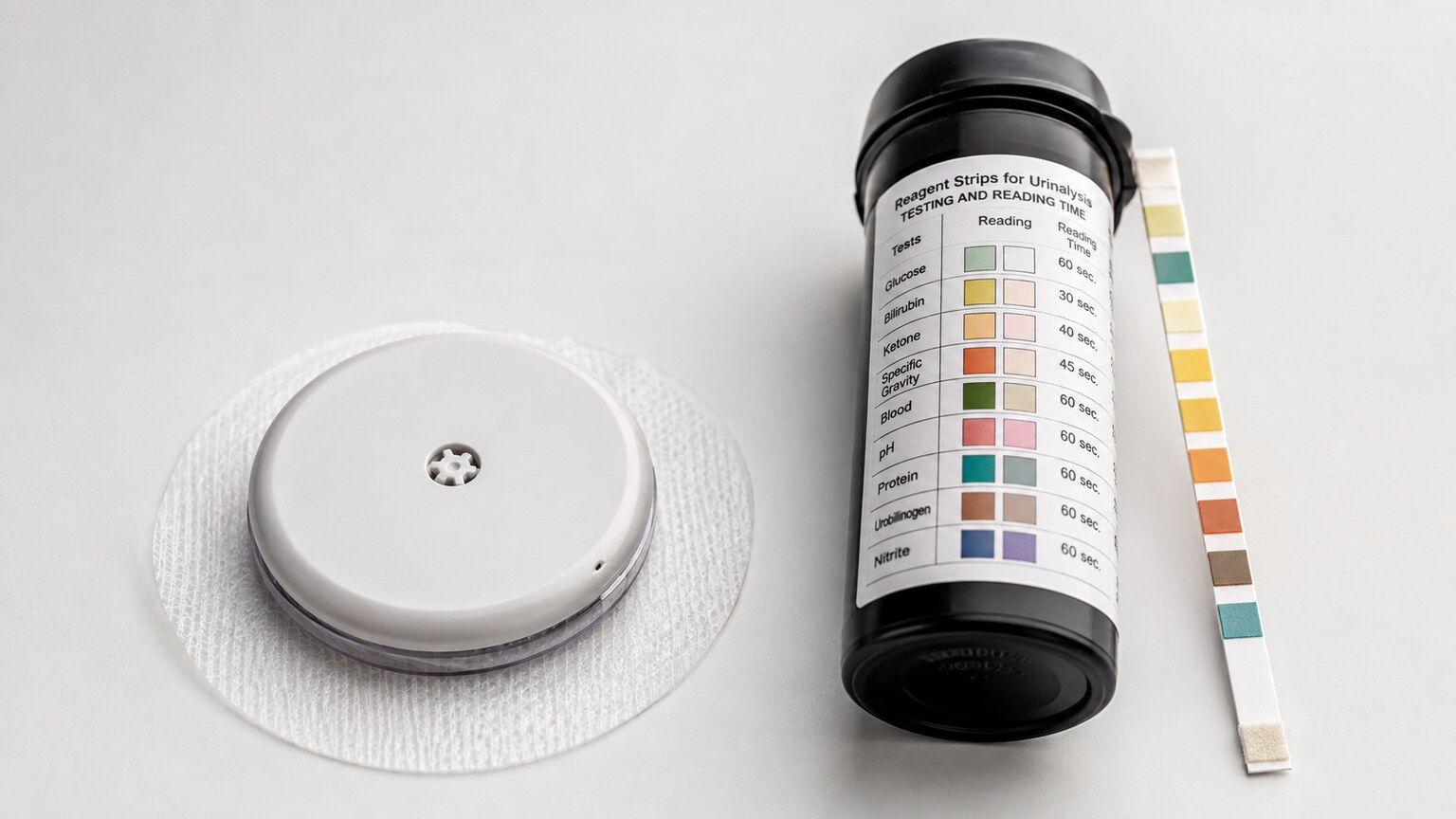
Figure 7. Modern blood-based glucose monitoring, including continuous glucose monitors, has largely replaced urine testing for diabetes management, since blood measurements are far more precise and immediate.
Historically speaking, urine glucose testing was genuinely one of the very earliest, most widely accessible tools available anywhere for detecting and monitoring diabetes, dating back well over a full century, long before modern, accurate blood glucose meters ever existed in any practical clinical form. Today, it has been almost entirely replaced by direct blood glucose testing for actual diabetes management, for reasons directly related to everything already covered throughout this article: urine testing only detects glucose after blood sugar has already exceeded the renal threshold, meaning it entirely, systematically misses a genuinely wide, clinically important range of elevated blood sugar levels sitting below that specific threshold value, and it fundamentally can't distinguish between the several genuinely different non-diabetic causes described above without additional, separate blood-based confirmation to clarify things further.
Modern blood glucose meters and continuous glucose monitors provide immediate, genuinely precise, real-time blood sugar values throughout the entire day, allowing for far more responsive, far more accurate day-to-day diabetes management than a urine test could ever offer, since a urine result only provides a delayed, indirect, threshold-based approximation reflecting glucose levels from some point in the past rather than the present moment. Urine glucose testing does still retain a genuinely useful role as a low-cost, non-invasive screening component within a broader urinalysis panel, particularly in settings and situations without immediate, ready access to blood testing, but it is no longer considered a primary, standalone monitoring tool for anyone already diagnosed with, or actively managing, diabetes on an ongoing basis. This transition reflects a broader pattern in laboratory medicine: as more precise, more immediate testing methods become widely available and affordable, older, indirect screening tools tend to shift into a supporting, complementary role rather than disappearing from clinical use entirely.
Common Misconceptions Worth Addressing Directly
A few persistent misconceptions tend to make a positive urine glucose result feel more alarming, or more diagnostically final, than it actually is, and directly addressing them helps clarify the full picture this article has built. The first misconception treats "trace" or "1+" glucose readings as automatically less meaningful than higher readings, when in reality the specific level of glucose detected doesn't reliably indicate which of the explanations covered in this article applies — a trace reading can reflect early diabetes just as a heavier reading can reflect something as simple as a recent large meal; the amount detected on the dipstick doesn't substitute for the follow-up process needed to actually identify the cause.
A second common misconception assumes that a single positive urine glucose test, by itself, is sufficient to diagnose diabetes without any further testing — in reality, formal diabetes diagnosis always requires specific blood-based criteria (fasting glucose, a glucose tolerance test, or a hemoglobin A1c measurement, depending on the clinical situation), never a urine finding in isolation, regardless of how convincing that urine result might seem on its own. A third misconception assumes that once a non-diabetic explanation like renal glycosuria has been identified, it rules out diabetes permanently and forever — a person with confirmed renal glycosuria can still separately develop diabetes later in life like anyone else, meaning an established benign explanation for past positive results doesn't exempt someone from normal, age-appropriate diabetes screening going forward.
Frequently Asked Questions
Can I have glucose in my urine with completely normal blood sugar?
Yes. Renal glycosuria, pregnancy-related threshold changes, and SGLT2 inhibitor medications can all produce a positive urine glucose result with entirely normal blood glucose, which is exactly why a follow-up blood test is the key step in interpreting any positive finding.
Is urine glucose testing still useful if I'm on an SGLT2 inhibitor?
Not for monitoring blood sugar control specifically, since the medication is designed to make this result positive regardless of how well-controlled blood glucose actually is. Blood-based testing is the appropriate monitoring method for anyone taking this medication class.
Does a positive glucose result during pregnancy mean I have gestational diabetes?
Not automatically. It's a common, often benign finding related to pregnancy's increased kidney filtration rate, though it typically prompts a dedicated gestational diabetes screening test to definitively rule the condition in or out.
Should renal glycosuria be treated?
Generally no. It's considered a benign variant that doesn't cause health problems on its own and doesn't require treatment, though confirming the diagnosis and ruling out diabetes with blood testing is still an important first step.
Can stress cause a temporary positive urine glucose result?
Significant physical stress, including illness, injury, or major surgery, can trigger a temporary rise in stress hormones that raise blood glucose enough to occasionally exceed the renal threshold, producing a transient positive finding unrelated to underlying diabetes.
Is urine glucose testing still included in a routine urinalysis?
Yes, most standard urinalysis panels still include a glucose test as part of the broader chemical panel, since it remains a useful, low-cost screening component even though it's no longer used as a primary diabetes monitoring tool.
Conclusion
A positive glucose result on a urine test genuinely can indicate diabetes, but it's far from the only explanation — a lower-than-average renal threshold, pregnancy's normal physiology, a medication working as intended, a temporary post-meal spike, or a broader kidney tubule condition can all produce the exact same finding without any connection to diabetes at all. Understanding the underlying renal threshold concept, and following the straightforward blood-glucose-based follow-up process doctors actually use, replaces the immediate assumption of diabetes with a clear, evidence-based path toward the real explanation behind your own specific result.
This same pattern — a single screening finding capable of arising from several genuinely distinct underlying causes, only properly distinguished through a specific, logical follow-up process — appears throughout laboratory medicine far beyond urine glucose alone. Approaching any unexpected urinalysis finding with this same mindset, understanding the underlying mechanism well enough to know what follow-up testing would actually clarify things, is a genuinely useful habit that extends well beyond this one specific finding to nearly any unfamiliar result a person might encounter on a routine lab report.
Still Not Sure What Your Results Mean?
Upload your labs and get a complete, visual, plain-language interpretation of every biomarker — delivered to your inbox in under 15 minutes.
Get My ReportThis article is for educational purposes only and does not constitute medical advice. Always consult your healthcare provider regarding your specific lab results.