
Why Is My Urine Nitrite Test Positive?
A positive nitrite result on your urinalysis almost always means one specific thing: bacteria have been living in your urine long enough to trigger a chemical reaction that shouldn't normally happen there — and in most cases, that points to a urinary tract infection (UTI). Nitrites aren't a substance your body produces on their own; they only appear when certain types of bacteria, most commonly E. coli, convert a compound your body already makes into nitrite while sitting in your bladder. A positive result is a genuinely useful clue, but it isn't the full story by itself. Some infection-causing bacteria never trigger this particular reaction, and a few unrelated factors — from how long your sample sat before testing to how recently you emptied your bladder — can occasionally shift the result in either direction.
Curious what the rest of your urinalysis is telling you? Upload your results and get a complete, plain-language breakdown in under 15 minutes.
Analyze My ResultsWhat Nitrites Are Doing in Your Urine in the First Place
Under normal circumstances, your urine should test negative for nitrites — they aren't part of what your kidneys filter out as a routine waste product. What your urine does normally contain is nitrate, a naturally occurring compound that comes largely from the vegetables you eat (leafy greens and beets are especially rich in it) and from your body's own metabolic processes. Nitrate on its own is harmless and passes through your kidneys into your urine essentially unchanged. The problem starts when certain bacteria get involved. Many of the species most likely to cause a urinary tract infection carry an enzyme called nitrate reductase, which does exactly what its name suggests: it chemically converts nitrate into nitrite. Since healthy urine doesn't normally contain enough of this enzyme-driven activity to produce a detectable amount of nitrite, finding any at all on your test strip is a signal that something in your urinary tract is behaving differently than it should.
The Bacteria Behind a Positive Result
Not every bacterium capable of causing a UTI can flip this test positive — it depends entirely on whether that particular species carries nitrate reductase. E. coli, which is responsible for roughly 80 to 90 percent of uncomplicated urinary tract infections, is a strong nitrate reductase producer, which is a big part of why a positive nitrite result is so often linked to E. coli specifically. Other common culprits, including Klebsiella, Proteus, and Enterobacter, generally share this same ability. On the other hand, some bacteria that are perfectly capable of causing an infection — Enterococcus and Staphylococcus saprophyticus among them — simply don't carry this enzyme, so they won't turn a nitrite test positive no matter how established the infection is. This is the single most important thing to understand about this particular result: it's a highly specific clue when it shows up, but its absence doesn't rule anything out.
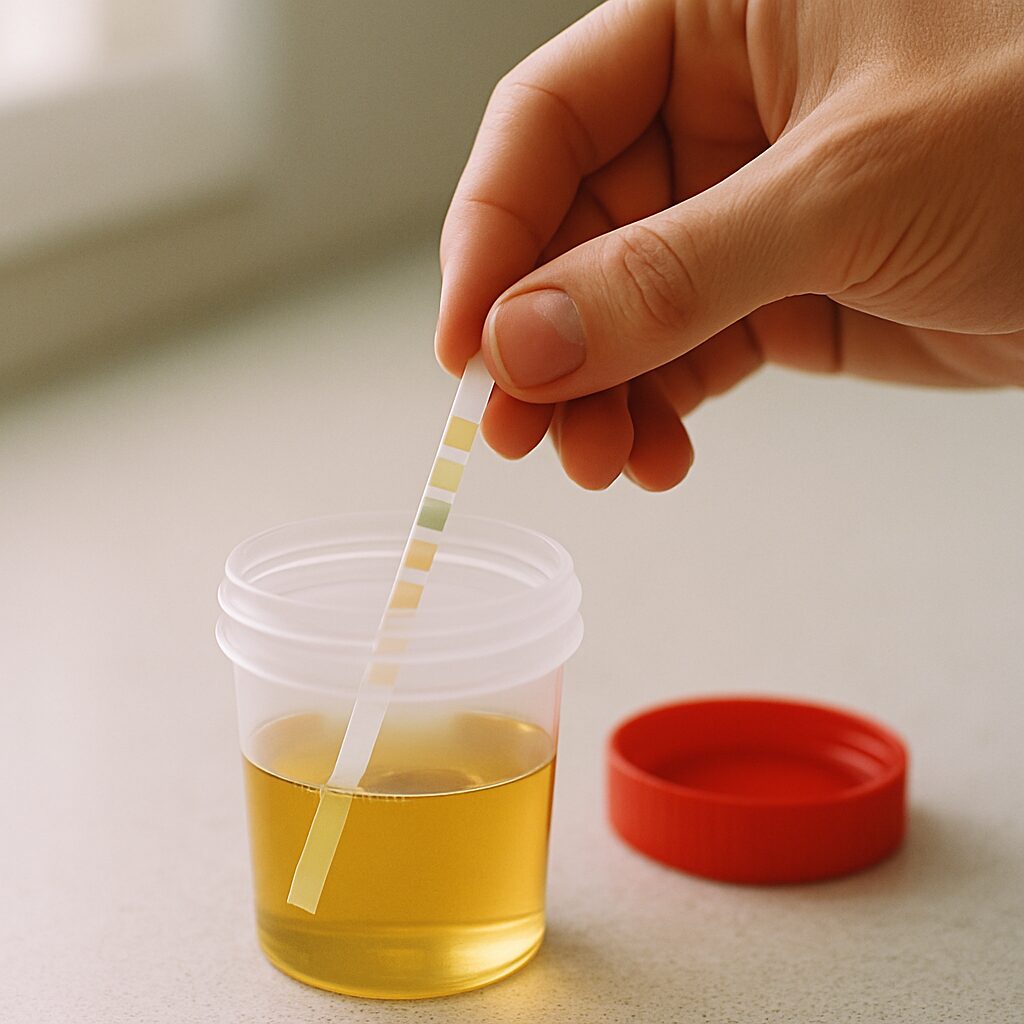
This is also why the nitrite result is almost never interpreted alone. Most standard urinalysis strips test for nitrites right alongside leukocyte esterase, a separate marker that reflects white blood cell activity — your immune system's response to infection or inflammation. When both come back positive, especially alongside symptoms like burning during urination, a frequent urge to go, or cloudy or strong-smelling urine, the combination is a fairly strong case for a UTI. When only one is positive, or neither lines up cleanly with how you're feeling, your provider will usually want more information before drawing a conclusion.
Why Timing Changes Everything
The nitrate-to-nitrite conversion isn't instantaneous — it takes time for bacteria to build up a concentration high enough to register on a test strip. Most research on this points to roughly four hours of urine sitting in the bladder as the point where nitrite becomes reliably detectable if bacteria are present. This is exactly why a first-morning urine sample, collected after a full night without urinating, tends to be the most sensitive sample for catching a true positive. If you've been urinating frequently throughout the day, or if you drank a large amount of water shortly before providing your sample, your bladder simply may not have held the urine long enough for detectable nitrite to form — even if bacteria are actively present. This is one of the more common, and most overlooked, reasons someone with real infection symptoms can still receive a negative nitrite result.
When a Positive Result Doesn't Mean You're Sick
It's entirely possible to have a positive nitrite result without feeling unwell at all. This situation, known as asymptomatic bacteriuria, means bacteria are present in the urine — sometimes in meaningful numbers — without producing any of the symptoms typically associated with a UTI. It's relatively common in older adults, people who use urinary catheters, and pregnant women, and how it's handled depends heavily on the situation. In most healthy, non-pregnant adults, asymptomatic bacteriuria usually isn't treated with antibiotics, since doing so doesn't reliably improve outcomes and contributes to antibiotic resistance over time. Pregnancy is the major exception: because untreated bacteria in the urine during pregnancy carries a meaningfully higher risk of progressing to a kidney infection or contributing to preterm labor, providers typically screen for it routinely and treat it even without symptoms. If you're pregnant and received a positive nitrite result, that context matters — bring it up with your provider even if you feel completely fine.
Could It Be a False Positive — or a False Negative?
Like most urine tests, this one isn't immune to interference. A false positive can happen if a sample sits at room temperature for too long before it's tested — bacteria from the skin or surrounding tissue that would otherwise be irrelevant can multiply in the container itself and produce nitrite that has nothing to do with what's actually happening inside your bladder. This is one of several reasons proper collection technique (a clean-catch, midstream sample) and prompt testing or refrigeration genuinely matter. False negatives are arguably more common and stem from a few different sources: bacteria that don't carry nitrate reductase, urine that hasn't sat in the bladder long enough, urine that's been diluted by drinking a lot of fluids right beforehand, and even high-dose vitamin C supplementation, which can chemically interfere with the strip's reagent and mask a true positive. None of these possibilities make the test unreliable — they just explain why it's treated as one useful piece of a bigger picture rather than a definitive yes-or-no answer on its own.
What Usually Happens Next
If your nitrite result comes back positive, your provider will typically look at the whole picture rather than acting on that one line alone. That means reviewing whether leukocyte esterase is also elevated, asking about symptoms like pain, urgency, or fever, and considering your personal history — recurrent UTIs, pregnancy, recent catheter use, or diabetes can all shift how a result is interpreted. In many straightforward cases with clear symptoms, a positive nitrite result is enough for a provider to start treatment right away. In less clear-cut cases, or when the stakes are higher — pregnancy, recurrent infections, or symptoms that don't quite fit — a urine culture is often ordered as a follow-up. A culture actually grows whatever bacteria are present in a lab setting, identifies the specific species, and can determine which antibiotics will work best, which the dipstick test alone simply can't do. Think of the nitrite result as a fast, useful first signal, and the culture as the more detailed confirmation when precision matters.
Frequently Asked Questions
Can a UTI be present even if my nitrite test is negative?
Yes. A negative nitrite result doesn't rule out infection. Some bacteria that commonly cause UTIs, including Enterococcus and Staphylococcus saprophyticus, don't produce the enzyme needed to create nitrite, so they'll never trigger a positive result regardless of how established the infection is. A negative result combined with clear symptoms is still worth discussing with your provider.
Does drinking more water affect a nitrite test result?
It can. Drinking a lot of fluid shortly before you provide a sample dilutes your urine and shortens how long urine has been sitting in your bladder, both of which reduce the chance of detecting nitrite even if bacteria are present. A first-morning sample, collected after several hours without urinating, tends to give the most reliable result.
Is a positive nitrite test alone enough to diagnose a UTI?
Usually not on its own. Providers typically weigh a positive nitrite result alongside leukocyte esterase levels, your reported symptoms, and sometimes a follow-up urine culture before confirming a diagnosis or starting treatment. It's a strong, specific clue rather than a standalone diagnosis.
Conclusion
A positive nitrite result is one of the more specific clues a routine urinalysis can offer — when it shows up, it's a genuine signal that bacteria, most likely E. coli or a related species, have been present in your urine long enough to leave a chemical trace. But because not every infection-causing bacterium triggers this particular reaction, and because timing, hydration, and sample handling can all influence the outcome, it's best understood as one piece of evidence rather than the final word. If you've received a positive result, the most useful next step is simply talking through your symptoms, your sample collection, and any relevant history with your provider, so the result can be read in proper context rather than in isolation.
Still Not Sure What Your Results Mean?
Upload your labs and get a complete, visual, plain-language interpretation of every biomarker — delivered to your inbox in under 15 minutes.
Get My ReportThis article is for educational purposes only and does not constitute medical advice. Always consult your healthcare provider regarding your specific lab results.