
Certain Foods and Supplements Can Change Your Urine Color
Roughly 10% to 14% of otherwise healthy adults will pass distinctly pink or red urine after eating beets, a phenomenon with its own clinical name, beeturia, that's been documented in medical literature for decades and remains almost entirely harmless despite how genuinely alarming it can look the first time it happens to someone who has no idea what's causing it. Urine color is one of the few pieces of health information genuinely visible to the naked eye every single day, checked informally by nearly everyone without any special equipment or training, and a surprising number of everyday foods, supplements, and medications can shift that color dramatically — sometimes to a genuinely startling degree, spanning nearly every color of the visible spectrum from bright red to neon yellow to deep blue-green — without reflecting anything wrong with the body at all. The real challenge, and the genuine reason this topic deserves careful explanation rather than a quick dismissal, is telling these benign, fully explainable color changes apart from the smaller subset of urine color changes that do warrant real medical attention, particularly the presence of actual blood, since both categories can produce a strikingly similar reddish or pink appearance to the naked eye that no amount of visual inspection alone can reliably distinguish. This article walks carefully through exactly why urine has color in the first place, the specific pigments in beets, B vitamins, rhubarb, certain medications, and a handful of other everyday items responsible for the most common color changes people actually encounter, one genuinely rare genetic condition worth knowing about specifically because it can mimic a benign cause, and the practical, evidence-based way doctors actually distinguish a dietary color change from a genuine medical finding using objective testing rather than guesswork.

Why Urine Has Color At All
Understanding this foundational baseline is genuinely the first step toward interpreting everything else described in the rest of this article correctly, since every other cause discussed here works by adding an additional pigment on top of, or alongside, this existing urochrome-based system rather than replacing it entirely.
Before getting into what actually changes urine color, it genuinely helps to understand what gives it a baseline color to begin with, since urine is never truly colorless in a healthy, adequately hydrated person, even though it can appear nearly clear at times and even though most people never stop to think about where that everyday color actually comes from. Normal urine gets its characteristic pale yellow to amber color from a pigment called urochrome, also known as urobilin, a natural byproduct produced when the body breaks down old, aging red blood cells that have reached the end of their functional lifespan, following essentially the same hemoglobin-to-bilirubin pathway responsible for bilirubin itself, a genuinely elegant piece of shared biochemistry connecting two seemingly unrelated lab values. Urochrome is produced at a fairly steady, predictable rate throughout the day under normal conditions, which means the actual shade of yellow observed in any given urine sample depends heavily on how concentrated or diluted that sample happens to be at the moment of collection — well-hydrated urine appears pale straw yellow because the same steady amount of urochrome gets diluted across a considerably larger volume of water, while dehydrated urine appears noticeably darker amber because that same quantity of urochrome is instead concentrated down into a much smaller volume of fluid. This baseline system is exactly why hydration status remains the single most common, most everyday explanation for ordinary urine color variation observed from one day to the next, and it's also precisely why doctors and nurses have long relied on urine color as a rough, genuinely useful informal bedside indicator of a patient's hydration status, often well before any formal laboratory testing is ever ordered or performed. Everything else discussed throughout the rest of this article involves a separate, additional pigment or compound being layered directly on top of this baseline urochrome color, sometimes overwhelming it entirely and producing shades far outside the ordinary pale-yellow-to-amber range most people are accustomed to seeing.
Beeturia: The Beet Pigment That Survives Digestion
Of all the specific causes covered in this article, beeturia is genuinely the single most well-known and frequently discussed example, and for good reason, since the underlying mechanism responsible for it turns out to be a genuinely instructive template for understanding nearly every other pigment-related cause described further on.
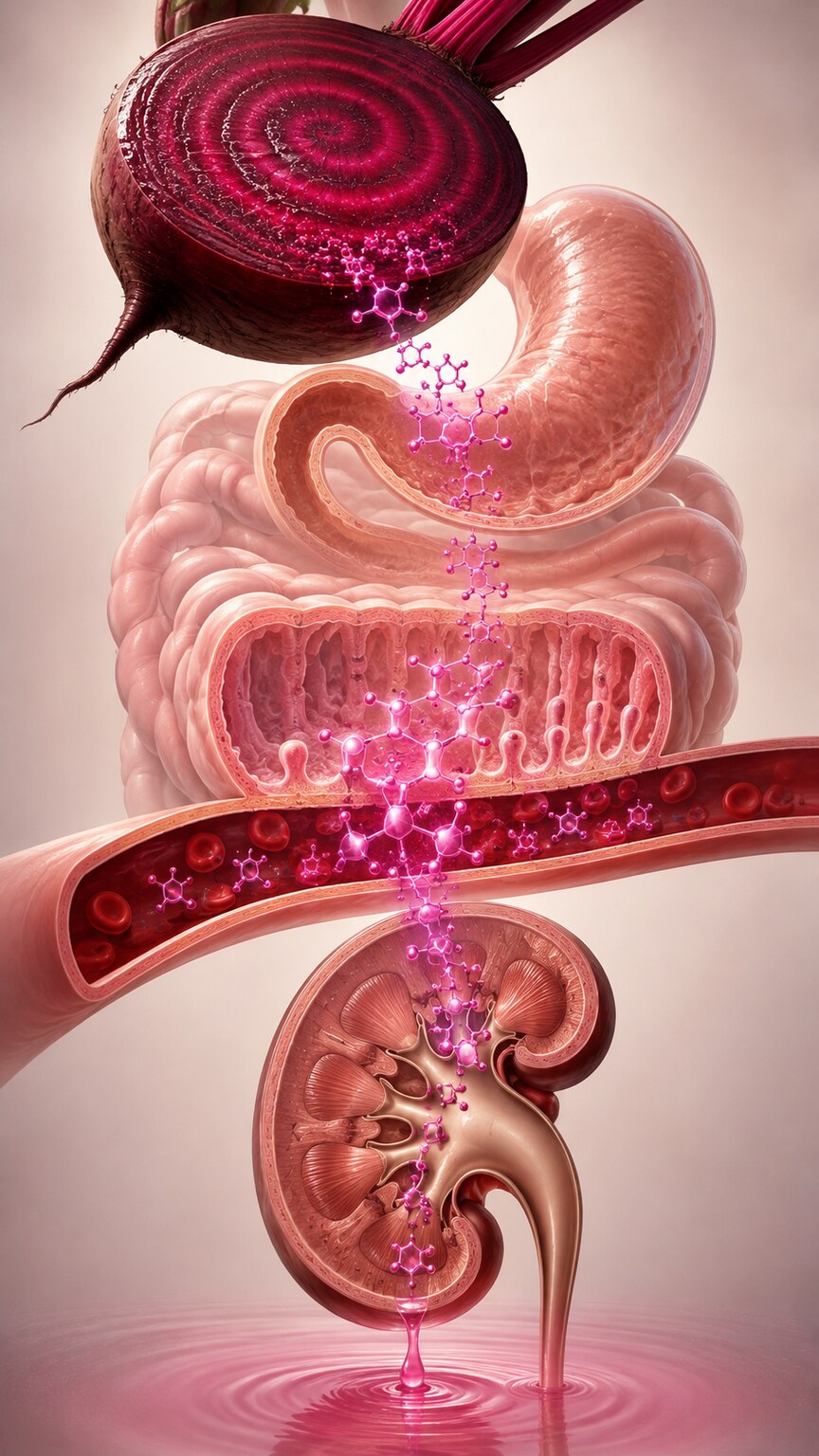
Beets contain a deep red-purple pigment called betanin, part of a broader family of plant compounds called betalains that also give beets their distinctive color in the garden and on the plate, and in most people, this pigment gets broken down completely during normal digestion before it ever has a chance to be absorbed into the bloodstream in its original, intact form. In roughly 10% to 14% of otherwise healthy adults, however, betanin manages to survive digestion largely intact, passes directly through the gut wall into the bloodstream, and eventually gets filtered back out by the kidneys, entering the urine and producing a color ranging anywhere from a faint, barely-there pink tint to a genuinely striking, almost alarming deep red, depending heavily on exactly how much beet was consumed and precisely how much pigment made it through the entire digestive process without being broken down along the way. This particular color change typically first appears somewhere between two and eight hours after eating beets and resolves entirely on its own within a day or two once all of the pigment has fully cleared the system through normal urinary excretion. Research has found that several distinct individual factors influence how likely any given person is to experience beeturia on a given occasion, including their baseline stomach acidity, the specific composition of their individual gut bacteria, and how quickly food generally moves through their digestive tract — lower stomach acid and notably faster intestinal transit time both tend to leave a greater share of betanin pigment intact and genuinely available for absorption into the bloodstream. Notably, beeturia has been found to be significantly more common in people with iron deficiency or various malabsorptive conditions affecting the digestive tract, and the reported rate climbs quite dramatically, to as high as 45%, specifically in people with pernicious anemia, a connection researchers believe relates directly to how a person's overall iron status meaningfully affects the gut's underlying ability to properly break down betanin before it ever gets the chance to be absorbed. Despite how genuinely alarming a bright red urine sample can look at first glance to someone encountering it for the very first time, beeturia itself is considered entirely benign from a medical standpoint and requires absolutely no treatment beyond simply waiting patiently for the pigment to fully clear on its own.
Wondering what your own urinalysis or lab results actually mean? Upload your labs and get a complete, plain-language breakdown in under 15 minutes.
Analyze My ResultsRiboflavin and B Vitamins: The Neon Yellow Effect
This particular color change is genuinely one of the most frequently reported, and most frequently misunderstood, urine color shifts people encounter after starting a new daily supplement routine.

Anyone who has ever taken a multivitamin or B-complex supplement and noticed their urine turn a startling, almost neon shade of yellow shortly afterward has personally encountered riboflavin, also known as vitamin B2, doing exactly what it's biologically supposed to do under those circumstances. Riboflavin is naturally, intensely yellow-orange in color even in its unaltered form, and it's also genuinely fluorescent, meaning it visibly glows under ultraviolet light in a way that's easy to demonstrate, a distinctive property that has absolutely nothing to do with any kind of malfunction and everything to do with the vitamin's own inherent, well-characterized chemistry. Because riboflavin is water-soluble, the body simply doesn't store meaningful amounts of it internally the way it does with fat-soluble vitamins like A, D, E, and K, which can accumulate in fatty tissue over time — instead, the body uses whatever small amount it genuinely needs for its essential role in cellular energy metabolism, and then simply excretes the remaining excess directly through the kidneys and out into urine without any further processing. Since most commercially available multivitamins and B-complex supplements are deliberately formulated with riboflavin doses considerably higher than the comparatively small amount the body will actually retain and put to use, a large share of that total dose predictably and reliably ends up excreted rather than absorbed, and because riboflavin's yellow pigment happens to be so intensely visible even in genuinely small quantities, the resulting urine color shift can appear dramatic and immediate even after just a single typical daily dose taken with breakfast. This particular effect is universally considered entirely harmless by every major medical authority, and is, if anything, a genuinely reassuring sign that the body is functioning exactly as expected, efficiently and appropriately clearing out a water-soluble nutrient it simply has no biological reason to hold onto in larger quantities than it actually needs.
Rhubarb, Fava Beans, Aloe, and Senna: The Dark Brown Cluster
Unlike beeturia or the riboflavin effect, this next cluster of causes doesn't share one single unifying pigment, but rather several distinct compounds that happen to converge on a broadly similar dark brown result once excreted through the kidneys.
A separate, distinct cluster of foods and substances is specifically associated with darker urine overall, ranging anywhere from a deep tea-like brown all the way to nearly black in more pronounced individual cases, and these particular causes tend to share either a specific plant pigment or a specific laxative-related mechanism responsible for producing the resulting color shift. Rhubarb and fava beans have both been well documented to produce noticeably dark brown urine in at least some people who consume them, related directly to specific compounds found naturally within these particular foods that get partially metabolized in the body and subsequently excreted through the kidneys, with the exact pigments involved varying somewhat in their precise chemistry between the two foods, but ultimately producing a broadly similar overall dark discoloration effect once excreted. Aloe, whether consumed directly as a juice or found as a listed ingredient in certain herbal supplements marketed for digestive health, has been separately associated with this same general kind of dark urine discoloration, and it genuinely shares this effect with a distinctly different category of substance entirely: laxatives specifically containing senna, a well-known plant-derived stimulant laxative ingredient found in many widely available over-the-counter constipation remedies sold in ordinary pharmacies. Senna-containing products are specifically and clearly documented to darken urine as a known, fully expected side effect of how the body naturally processes and excretes the active compounds found in senna, entirely separate from and unrelated to the medication's intended effect on bowel movements themselves. None of these particular dark-brown-urine causes are considered genuinely dangerous on their own when properly understood, though it's worth noting that authentically dark, cola-colored urine can occasionally overlap in appearance with some of the more concerning underlying causes discussed later in this article, which is exactly part of why surrounding context — specifically, whether a person recently ate one of these particular foods or recently took one of these specific supplements — matters so considerably for correctly and confidently interpreting any given color change observed.
Phenazopyridine and Orange Urine: When a Medication Does It Deliberately
This next cause is unique among everything covered so far, since the color change is a fully anticipated, well-documented consequence rather than an unintended surprise.
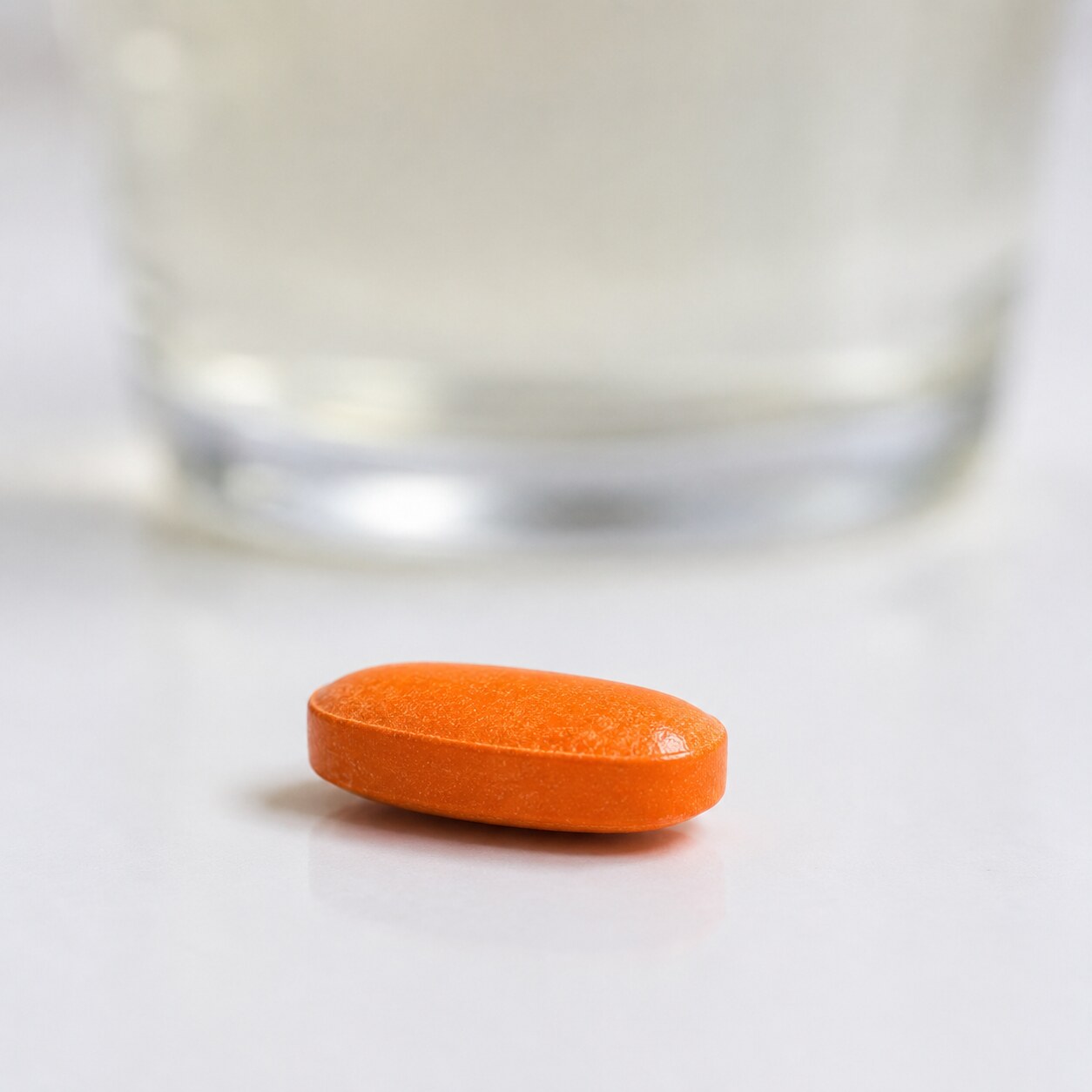
Not every urine color change discussed in this article happens to be an incidental, unintended side effect — phenazopyridine specifically, sold under recognizable brand names like Pyridium and commonly prescribed to relieve the sharp pain and burning sensation associated with urinary tract infections, reliably and predictably turns urine a genuinely vivid orange color as a direct, fully expected consequence of exactly how the drug itself is chemically structured and subsequently excreted from the body. This particular color change is so well known and so remarkably consistent from patient to patient that it's routinely mentioned proactively by pharmacists at the time of dispensing and printed directly on the medication's own packaging insert, specifically so that patients taking it aren't caught off guard or alarmed when the color change happens exactly as expected shortly after the first dose. Because phenazopyridine's distinctive orange pigment is so intensely colored even in relatively small concentrations, it can also temporarily interfere with certain other, unrelated urine test results run around the same time, including some standard dipstick readings, which is precisely part of why doctors and lab technicians typically want to know whether a patient has recently taken phenazopyridine before confidently interpreting an otherwise unrelated urinalysis result drawn during the same general timeframe. Beyond this one specific, well-known medication, a range of other prescription drugs, including certain commonly prescribed antibiotics like nitrofurantoin and metronidazole, are separately and independently documented to cause their own distinct, characteristic urine color changes as an expected, entirely harmless side effect of perfectly normal drug metabolism and excretion, following the exact same basic underlying principle shared by every other cause described throughout this article: the compound itself, or a colored metabolic byproduct created as the body works to break it down, ultimately ends up excreted through the kidneys and visibly tints the urine on its way out of the body.
Blue and Green Urine: A Genuinely Rare but Real Category
These particular colors sit at the far end of the spectrum discussed in this article, both in terms of rarity and in terms of how alarming they tend to look at first glance.
Among all the possible urine colors covered so far, blue and green stand out as genuinely the least common overall, and they tend to draw by far the most alarmed, urgent-sounding reactions from patients encountering them for the first time, yet they too almost always trace back cleanly to a specific, well-identified cause rather than anything genuinely mysterious or unexplained. Methylene blue, a water-soluble synthetic dye used medically as a diagnostic aid for assessing bowel wall integrity during certain procedures and separately as an active treatment for specific conditions like methemoglobinemia, is filtered directly by the kidneys during normal circulation and reliably tints urine blue or green on its way back out of the body, with the exact resulting shade depending partly on precisely how the dye chemically interacts with the urine's own baseline urochrome pigment already present — representing a genuine, real-time chemical blending of two distinct colors together rather than a single flat, uniform tint simply overlaying the sample. A meaningful number of other, entirely separate medications have been independently documented to produce a broadly similar green discoloration of their own, including propofol, a genuinely common anesthesia medication whose specific phenolic breakdown metabolites are directly responsible for the resulting color and whose overall intensity has been clearly shown in research to scale predictably with the administered dosage, along with cimetidine, amitriptyline, promethazine, and indomethacin, each producing the effect through its own distinct metabolic pathway inside the body. In every one of these documented cases, the resulting color change is considered entirely self-limiting and genuinely without any real pathological significance whatsoever, reliably resolving on its own once the responsible medication has fully cleared the body through normal metabolism, and it's specifically included here in this article because blue or green urine, perhaps more than any other single color discussed throughout this piece, tends to prompt genuinely urgent concern in the person experiencing it, despite the reality that it almost always has a perfectly benign, well-documented pharmacological explanation once that person's current medication list is actually properly reviewed by a clinician.
Porphyria: The Rare Genetic Exception Worth Knowing About
While the overwhelming majority of urine color changes discussed throughout this entire article are genuinely benign and clearly dietary or medication-related in origin, one genuine, admittedly rare genetic condition deserves specific mention precisely because it produces a color change that can superficially resemble some of the benign causes already carefully described above. Porphyria refers not to a single disease at all, but rather to a group of eight genuinely distinct inherited disorders, each one caused by a specific malfunction occurring at a different individual step within the body's normal, multi-stage process for synthesizing heme, the very same iron-containing molecule found sitting at the functional core of hemoglobin itself. When one of these eight distinct synthesis steps malfunctions due to an inherited genetic variant, intermediate compounds called porphyrins, or the precursor molecules that would normally go on to form them, begin accumulating within the body rather than being properly and completely converted all the way through to finished, functional heme as intended. In some specific forms of porphyria, these accumulated compounds ultimately get excreted through the kidneys and produce urine with a genuinely distinctive reddish-purple tint, one that can sometimes darken even further after the sample has been collected and exposed to ordinary light, due to a straightforward oxidation reaction that converts one porphyrin-related compound into a different, more deeply colored one over time. The name porphyria itself comes directly from the ancient Greek word specifically meaning purple, a deliberate linguistic nod to exactly this characteristic urine color change that has long been recognized throughout medical history as a genuine hallmark feature of the broader condition. Unlike essentially every other cause discussed throughout this article, porphyria represents a genuine, though admittedly quite rare, medical condition that requires proper clinical diagnosis and ongoing management by a specialist, which is precisely why persistent, unexplained purple or genuinely dark reddish urine with no clearly identifiable dietary trigger available, particularly when accompanied by abdominal pain, unexplained neurological symptoms, or notable skin sensitivity to sunlight, genuinely warrants a real, thorough medical workup rather than being casually and prematurely attributed to diet alone without proper investigation.
The Asparagus Confusion: Smell, Not Color
Asparagus genuinely deserves a specific mention here mainly to correct a common, persistent point of confusion, since it's one of the most widely known foods popularly associated with some kind of distinctive change in urine, but that particular change is overwhelmingly and almost entirely about smell rather than visible color. Asparagus contains specific sulfur-containing compounds that, once properly metabolized by the body, produce volatile sulfur byproducts directly responsible for the pungent, genuinely distinctive odor that many people notice in their urine shortly after eating it — a genuinely separate biological phenomenon entirely from any of the pigment-based color changes described throughout the rest of this article, and one that fundamentally involves smell receptors and volatile compounds rather than any visible pigment whatsoever. Interestingly, and somewhat surprisingly, not everyone actually produces this characteristic odor after eating asparagus, and not everyone who does genuinely produce it can actually smell it themselves, since both the underlying production of the specific odor compounds and the physical ability to detect them afterward both appear to have a genuine genetic component that varies meaningfully from one person to the next, making it a real point of individual biological variation rather than a universal experience. While asparagus doesn't meaningfully change urine's actual visible color the way beets or riboflavin clearly and reliably do, it's genuinely worth including in any complete, thorough discussion of "why does my urine seem different today" simply because it's so commonly, and quite understandably, lumped together with genuine color-changing foods in ordinary casual conversation, even though the underlying mechanism involved is entirely different in nature.
How Doctors Actually Tell Diet-Related Color From Real Blood
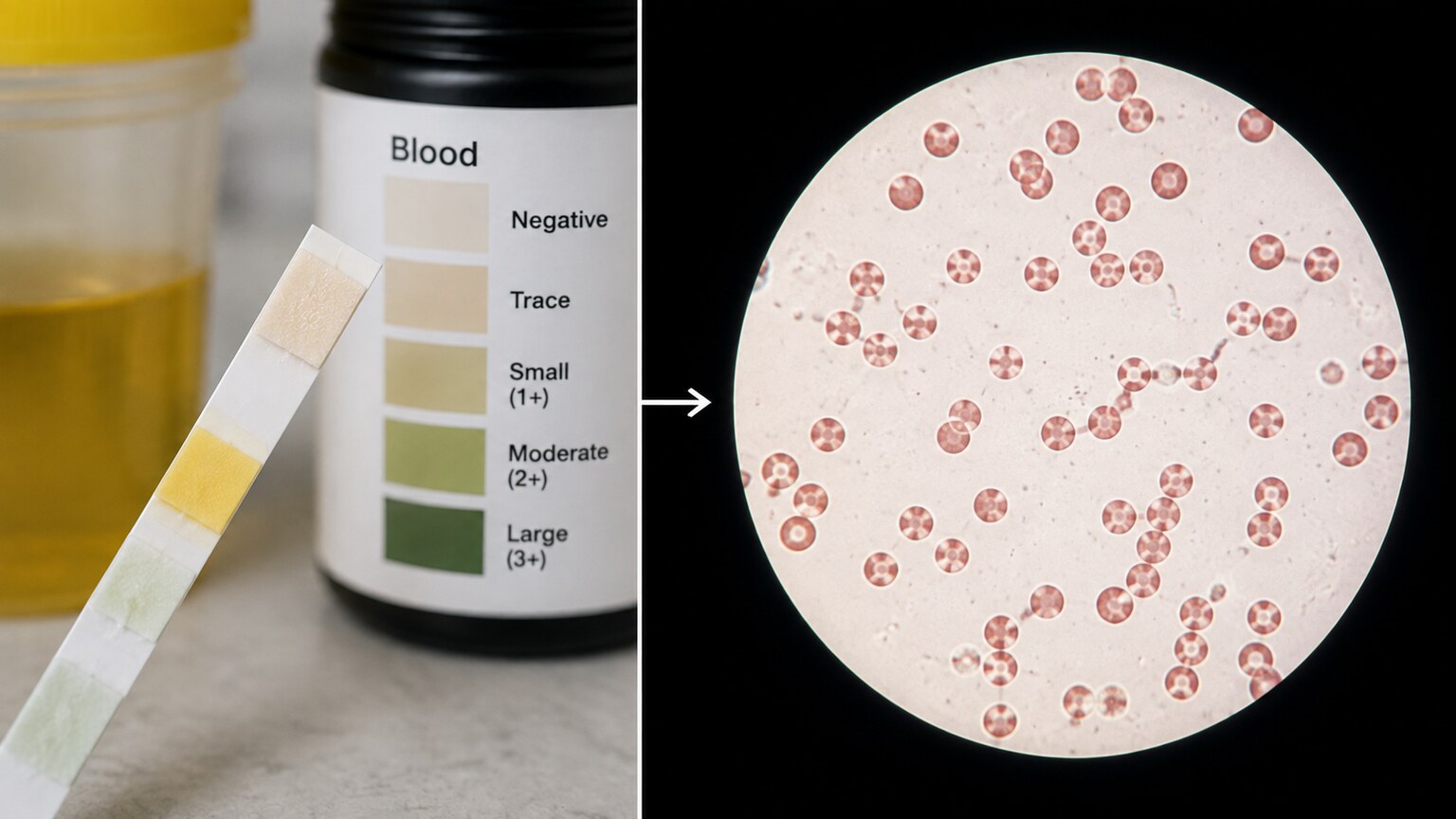
Because a genuinely dietary color change and true blood present in the urine, formally called hematuria, can both produce a strikingly similar pink, red, or reddish-brown appearance to the naked eye with no reliable way to tell them apart just by looking, doctors rely on objective, standardized testing rather than visual inspection alone to distinguish the two possibilities with real confidence. The first tool reached for is a standard urine dipstick test, a simple, inexpensive chemical test strip that reacts specifically and directly to hemoglobin, the oxygen-carrying protein found inside red blood cells, turning a distinct, easily read color if blood is genuinely present in the sample, regardless of whether any actual intact red blood cells happen to be visible under a microscope at that particular moment. This dipstick test is genuinely highly sensitive, correctly catching roughly 95% of authentic hematuria cases when blood is truly present, but it isn't quite perfectly specific in the other direction, carrying a real, documented false-positive rate that means it can occasionally react to substances other than true blood, including myoglobin released into the bloodstream during significant muscle breakdown, which is exactly part of why a positive dipstick result is typically followed up with direct microscopic examination of the urine sediment to physically count red blood cells and genuinely confirm the finding, rather than relying on the dipstick screening result entirely on its own. If a dipstick test comes back clearly negative for blood despite visibly red or pink urine sitting right in front of the patient, that specific combination strongly and reliably points toward a benign, pigment-based explanation like beeturia or a particular medication rather than any genuine bleeding process, since true hematuria will almost always reliably trigger a positive dipstick result when blood is actually present. This straightforward, well-established two-step approach — a quick, inexpensive chemical screen followed by microscopic confirmation whenever genuinely needed — is exactly how a doctor can confidently and quickly reassure a patient that their strikingly red urine following a beet salad is nothing at all to worry about, while still taking a genuinely unexplained case of red or pink urine paired with a positive blood test seriously enough to pursue further, appropriate investigation.
When a Color Change Genuinely Warrants a Doctor Visit
Despite how many urine color changes ultimately turn out to be completely benign once properly evaluated using the objective testing approach described above, a few genuinely specific patterns are worth taking seriously enough to prompt a real conversation with a doctor rather than simply assuming a convenient dietary explanation without ever actually confirming it. Color changes that appear suddenly with absolutely no identifiable dietary or medication trigger that a person can reasonably point back to, particularly if the change persists stubbornly for more than a day or two beyond what would normally be expected for a benign cause, genuinely deserve a proper, in-person medical evaluation rather than being casually and prematurely dismissed without investigation, since the complete absence of any obvious, readily available explanation removes the single most reassuring piece of surrounding context available for confidently ruling out something genuinely more concerning underneath the surface. Genuinely dark, cola-colored urine specifically, meaningfully distinct in both depth and tone from the considerably milder tea-colored tint typically associated with foods like rhubarb, can sometimes indicate a kidney-related source of internal bleeding or an underlying liver problem specifically involving bilirubin metabolism, both of which genuinely warrant prompt, timely medical attention rather than a passive wait-and-see approach taken at home without any professional input. Bright red urine that also contains genuinely visible blood clots floating within it is generally considered the single most urgent, time-sensitive presentation among all of the different color changes discussed throughout this entire article, since it typically indicates active, ongoing bleeding occurring somewhere along the urinary tract rather than pigment simply and passively passing through the system on its way out, and this specific, easily recognizable combination of findings should reliably prompt genuine, in-person medical evaluation without any significant delay whatsoever, ideally the same day it's first noticed. Finally, any urine color change accompanied by other, additional symptoms — genuine pain during urination, fever, flank pain, or unexplained, persistent fatigue — should be properly evaluated by a doctor regardless of whether a recent meal or supplement happens to offer a plausible-sounding alternative explanation on the surface, since these kinds of accompanying symptoms strongly and reliably suggest a genuine underlying medical process is at work, one that a simple dietary explanation alone genuinely wouldn't reasonably be expected to produce on its own regardless of what was eaten recently.
Practical Steps If You Notice an Unexplained Color Change
If a genuinely unusual urine color shows up unexpectedly without any obvious dietary or medication explanation readily coming to mind at first, a few simple, entirely practical steps can help meaningfully clarify the actual situation before deciding whether a doctor visit is truly necessary or whether the explanation is likely sitting somewhere in recent memory. First, take a moment to mentally retrace the last 24 to 48 hours specifically, rather than only thinking back to the most recent meal, since several of the color changes discussed throughout this entire article, particularly beeturia and the effects of rhubarb or senna, can genuinely appear with a meaningful delay of several hours after the actual food or supplement was originally consumed, making the underlying connection genuinely easy to overlook entirely if only the single most recent meal is being considered as a possible cause. Second, carefully review any current medications and supplements being taken, including anything used only occasionally rather than daily, like an over-the-counter laxative product or a urinary discomfort remedy containing phenazopyridine, since these occasional-use products are exactly the kind of thing people tend to genuinely forget about when trying to piece together an explanation for an unexpected symptom that seemingly came out of nowhere. Third, if a home urine dipstick test happens to be available in the medicine cabinet, checking specifically for blood can provide immediate, genuinely useful reassurance one way or the other within just a couple of minutes, functioning essentially as a simplified, at-home version of the exact same first-line objective test a doctor's office would routinely reach for in this exact situation. If these straightforward steps genuinely don't turn up a plausible explanation after honest reflection, or if the color change persists stubbornly for longer than a day or two despite adequate hydration and no obvious trigger, that specific combination of factors is precisely the point at which pursuing a proper, timely medical evaluation becomes the clearly appropriate next step, rather than continuing to simply wait and watch indefinitely without any real answers.
Frequently Asked Questions
What causes pink or red urine after eating beets?
A red pigment in beets called betanin survives digestion in some people and gets excreted by the kidneys into urine. It's called beeturia, affects roughly 10% to 14% of healthy adults, and is entirely harmless.
Why does urine turn bright yellow after taking vitamin B supplements?
Riboflavin (vitamin B2) is naturally intense yellow and fluorescent. Since it's water-soluble, the body excretes what it doesn't need directly through urine, producing a vivid neon-yellow color that's completely normal.
Does asparagus change urine color?
Not meaningfully. Asparagus produces a distinctive smell in urine due to sulfur compounds, but it doesn't cause a genuine visible color change the way beets or riboflavin do.
How can I tell if red urine is from food or from actual blood?
A urine dipstick test specifically reacts to hemoglobin. If it comes back negative despite visibly red urine, that strongly points to a dietary or medication cause rather than genuine bleeding.
When should a urine color change actually be checked by a doctor?
When there's no identifiable dietary trigger, when the color persists beyond a day or two, when it's accompanied by pain or fever, or when visible clots are present, since these suggest a genuine underlying cause.
What causes blue or green urine?
Certain medications, including methylene blue and propofol, are filtered by the kidneys and directly tint urine blue or green. This is self-limiting and considered harmless once the medication clears the body.
Is purple or dark reddish urine always benign?
Usually, but not always. A rare group of genetic conditions called porphyria can cause purple-tinted urine due to accumulated porphyrin compounds, and unexplained cases without a dietary trigger warrant medical evaluation.
Does urine color say anything about hydration on its own?
Yes, in the absence of any of the pigment-based causes described in this article. Pale straw yellow generally reflects good hydration, while darker amber urine typically reflects more concentrated, less diluted urine.
Conclusion
Urine color changes are genuinely one of the most common, and simultaneously most commonly misunderstood, everyday health observations people encounter in their daily lives, and the overwhelming majority of them trace back cleanly to a specific, well-identified pigment originating from a food, a supplement, or a medication, rather than reflecting anything genuinely requiring medical concern once properly understood. Beeturia from beets, the neon-yellow effect reliably produced by riboflavin, dark brown urine caused by rhubarb, fava beans, aloe, or senna, the deliberate and expected orange tint produced by phenazopyridine, and the comparatively rarer blue-green tint associated with medications like methylene blue and propofol each follow their own distinct, well-documented, entirely benign underlying mechanism, even though a small number of genuine medical conditions like porphyria can occasionally produce a superficially similar color and deserve to be taken seriously when a clear dietary explanation genuinely isn't available. The key distinction that actually matters from a clinical standpoint isn't the specific color itself, however dramatic or unusual it might appear, but rather whether an objective, inexpensive test — a simple urine dipstick — reliably confirms or genuinely rules out the presence of real blood, since that one single piece of concrete information reliably separates a striking but ultimately harmless dietary color change from something that genuinely warrants further, more careful evaluation by a healthcare provider. Understanding this complete framework turns what might otherwise be a genuinely alarming-looking bathroom moment into something entirely explainable and reassuring in the vast majority of real-world cases people actually encounter.
Still Not Sure What Your Results Mean?
Upload your labs and get a complete, visual, plain-language interpretation of every biomarker — delivered to your inbox in under 15 minutes.
Get My ReportThis article is for educational purposes only and does not constitute medical advice. Always consult your healthcare provider regarding your specific symptoms or lab results.