
Dehydration Can Temporarily Raise Your Calcium Reading
If your calcium came back a little above the reference range and you can't figure out why, one of the most overlooked explanations has nothing to do with your bones, your kidneys, or your diet — it's simply how much water was in your body when the needle went in. Skipping water before a blood draw, whether from a busy morning, a fasting instruction, or just forgetting, concentrates your blood in a very specific, measurable way, and calcium happens to be one of the values most sensitive to that concentration effect. This isn't a rare quirk or a stretch of an explanation — it's a well-documented laboratory phenomenon with a name, a mechanism, and a formula doctors use specifically to see past it. This article walks through exactly why dehydration nudges this particular number upward, how doctors mathematically correct for it, and what you can actually do differently before your next blood draw so this doesn't happen again.

Curious what the rest of your bloodwork is telling you? Upload your results and get a complete, plain-language breakdown in under 15 minutes.
Analyze My ResultsWhat Your Calcium Test Is Actually Measuring
To understand why hydration status can move this number at all, it helps to know what a standard calcium test is really counting. Roughly 45% of the calcium circulating in your blood floats freely as what's called ionized calcium — the biologically active form your muscles, nerves, and heart actually use. Most of the rest, close to 40%, isn't free at all; it's bound tightly to albumin, the most abundant protein in your blood plasma, essentially riding along attached to it rather than circulating independently. A small remaining portion is loosely bound to other small molecules like phosphate and citrate. Here's the important part: the standard, most commonly ordered calcium test doesn't measure only the free, active portion — it measures total calcium, meaning both the free calcium and the calcium currently hitching a ride on albumin, added together. That detail is the entire key to understanding how dehydration can distort the result.
It helps to think of your blood as carrying calcium in two very different ways at once: a small, nimble, freely dissolved portion that can slip out of blood vessels and into tissues to do its actual job, and a much larger, bulkier portion essentially chaperoned by albumin molecules that are simply too big to leave the bloodstream easily. Calcium bound to albumin isn't doing any biological work at that moment — it's effectively being carried along for the ride, in transit, part of a reservoir rather than an active participant. A standard total calcium test can't easily tell these two populations apart in a single simple number; it just adds up everything present in the sample. That's a perfectly reasonable, efficient way to screen for calcium problems most of the time, since total and ionized calcium usually move together closely enough that the total number is a good-enough stand-in. The exception is precisely when something changes how much albumin is around to do the carrying — and a shrunken plasma volume from dehydration is one of the most common everyday ways that happens.
How Dehydration Fools the Test — Hemoconcentration Explained
Blood plasma is mostly water, and albumin — along with your other blood proteins and blood cells — is suspended within that water in a fairly consistent concentration under normal circumstances. When you're significantly dehydrated, your body doesn't proportionally reduce protein and calcium alongside water; it simply has less plasma water overall, while the total amount of albumin and calcium circulating stays roughly the same. The practical effect is exactly like reducing the water in a pot of soup without removing any of the other ingredients: everything that's left becomes more concentrated per cup, even though the actual amount of each ingredient in the pot hasn't changed. Lab medicine has a specific term for this phenomenon: hemoconcentration, describing exactly this — a relative concentration of blood components caused by a reduction in plasma volume rather than a real increase in the substances themselves. Since more albumin per unit of blood means more calcium riding along with that albumin per unit of blood, your total calcium reading climbs, even though the free, biologically active ionized calcium your body actually uses often hasn't changed at all.
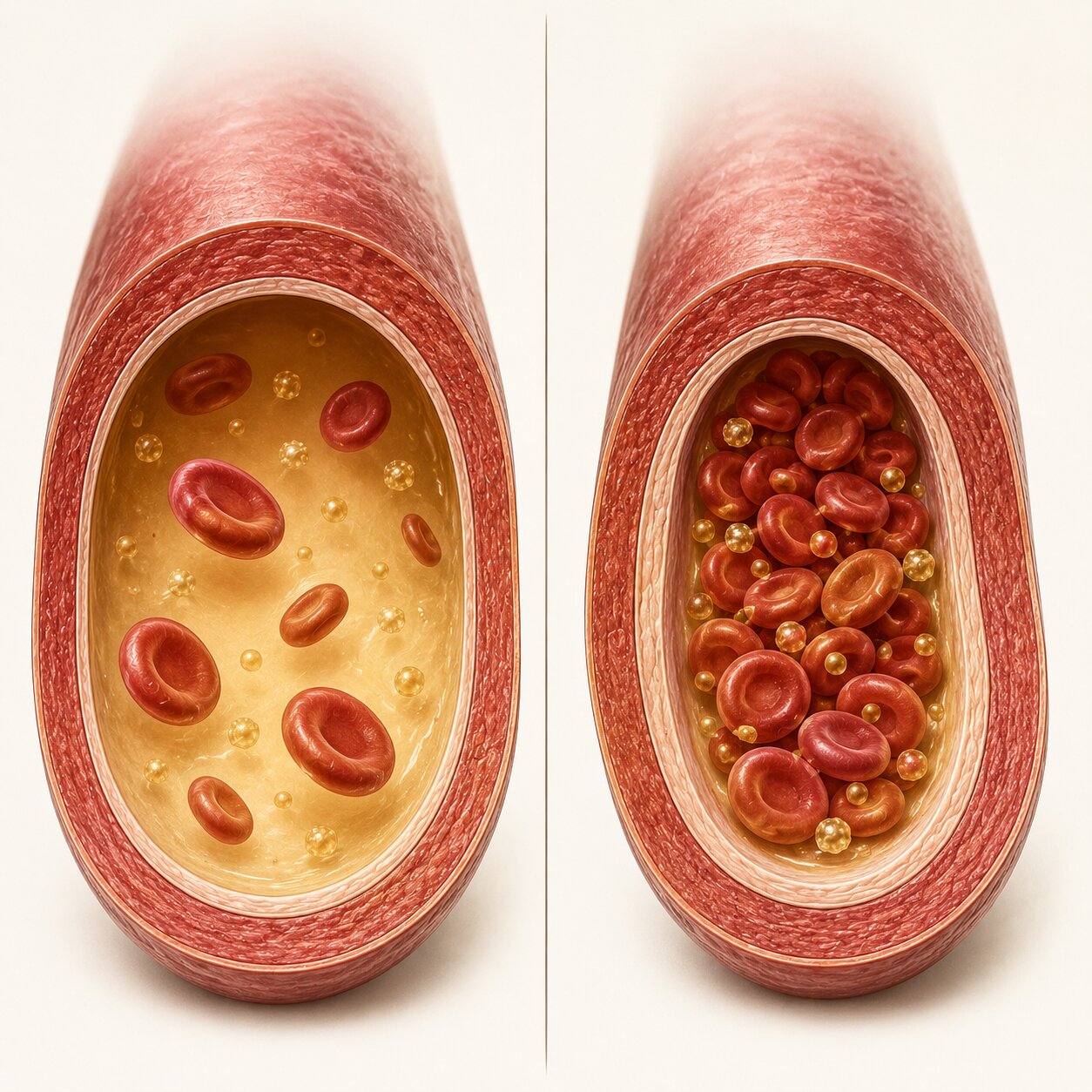
This is why the effect is described as temporary rather than a lasting change to your calcium status. Once you rehydrate — drinking normally over the following hours — your plasma volume returns to its usual level, the same amount of albumin and calcium gets diluted back down to its normal concentration, and a repeat test typically shows the number settling right back into range. Nothing about your body's actual calcium stores or regulation changed in the meantime; only the concentration of the sample changed, and once plasma volume normalizes, so does the reading.
This same soup analogy explains why other, unrelated values on the same blood panel often shift in the same direction at the same time, which is actually one of the more useful clues for spotting hemoconcentration on a lab report. Hemoglobin and hematocrit, the measurements of how concentrated your red blood cells are, along with total protein more broadly, tend to tick upward right alongside calcium and albumin when plasma volume is reduced, since all of these values share the same basic vulnerability to how much water is diluting them at the moment of the draw. A report showing several of these values sitting at the high end of normal together, rather than just an isolated calcium elevation on its own, paints a fairly convincing picture that concentration, not a genuine excess of any one substance, is the common thread running through the whole panel.
It's Not Just Water — Other Everyday Things That Concentrate Your Blood the Same Way
Dehydration is the most common everyday cause of hemoconcentration, but it isn't the only one, and knowing the others helps explain why a calcium result can look off even in someone who felt perfectly well-hydrated that morning. One frequently overlooked factor happens during the blood draw itself: the tourniquet, the elastic band wrapped around your upper arm to make your veins easier to find and access. Leaving a tourniquet in place for too long restricts blood flow out of the arm, causing fluid to shift out of the local blood vessels into surrounding tissue and concentrating whatever's left behind, including calcium and albumin, in a smaller, localized version of the exact same effect dehydration causes throughout your whole body. Research measuring this directly found that albumin and calcium levels rose significantly when a tourniquet was left on for six minutes compared to blood drawn without prolonged venous stasis, which is exactly why clinical laboratory standards specifically recommend a tourniquet be applied for no more than about one minute before a blood draw, and instruct staff to release and let circulation re-equilibrate for a couple of minutes if a vein proves difficult to find on the first attempt.
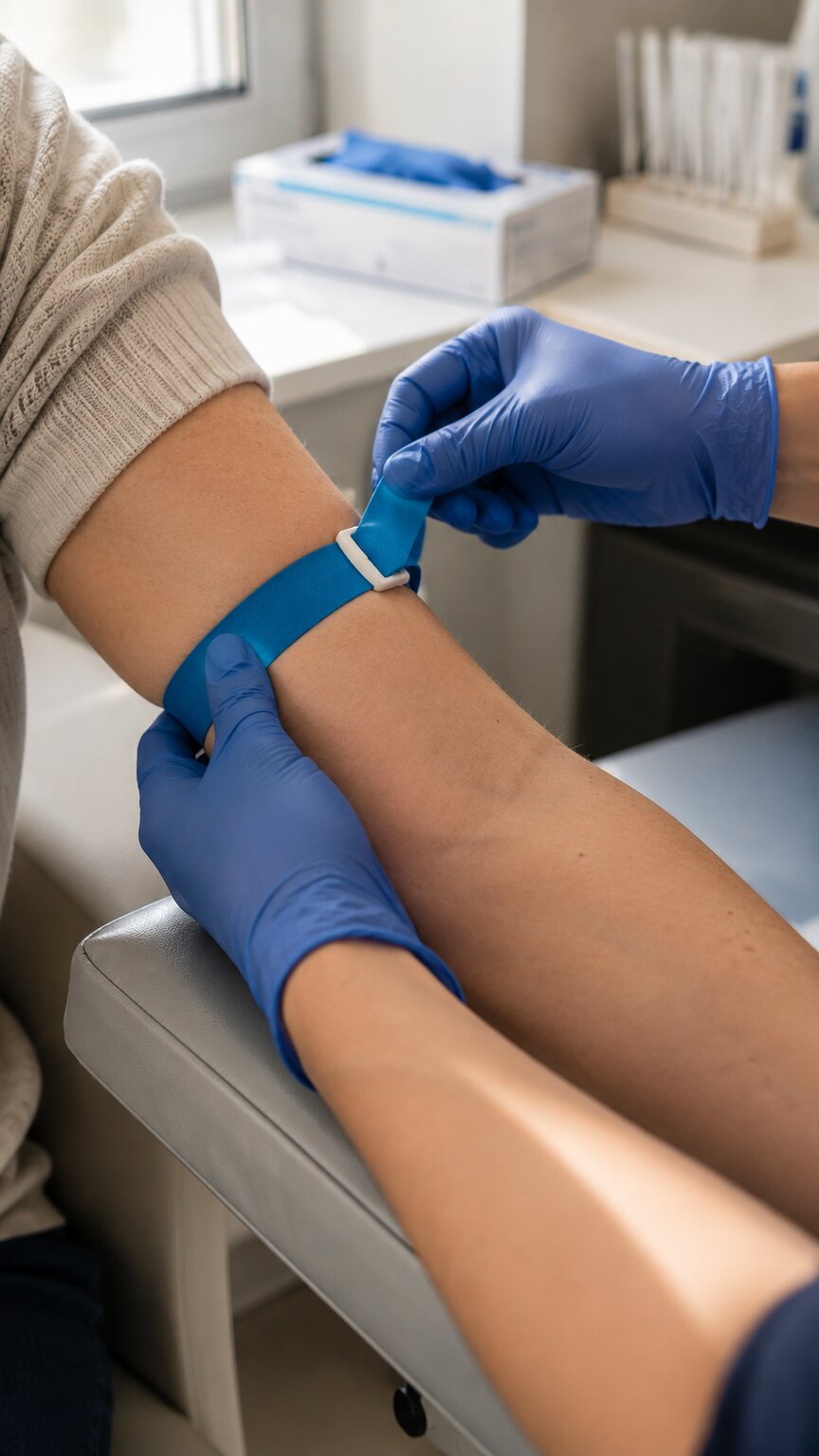
Vigorous exercise shortly before a blood draw produces a related, though shorter-lived, version of the same effect, temporarily shifting fluid out of the bloodstream and into working muscle tissue. Even simply standing upright for an extended period before a draw, compared to having been seated or lying down, can shift a small amount of plasma fluid out into your legs due to gravity, nudging concentration-dependent values like calcium and albumin very slightly upward. None of these factors are dangerous or something to worry about on their own — they're simply well-documented preanalytical variables, meaning factors that affect a lab result before the actual laboratory testing even begins, and good phlebotomy practice is specifically designed to minimize all of them.
There's also a seasonal and situational pattern worth knowing about, since it explains why the same person can get genuinely different calcium readings at different times of year without anything about their health having changed. Summer heat, air travel, illness involving vomiting or diarrhea in the days before a scheduled draw, and even a bad night's sleep that leaves someone reaching for coffee instead of water in the morning can all nudge hydration status in the same direction. None of these are exotic scenarios — they're the ordinary texture of daily life — which is exactly why hemoconcentration is considered one of the single most common preanalytical influences on a routine metabolic panel, rather than a rare edge case a lab technician might encounter once in a career.
The Corrected Calcium Formula — How Doctors See Past It
Because this albumin-dependent effect is so well understood, doctors and labs have a standard mathematical tool to compensate for it: the albumin-corrected calcium formula. Since roughly 0.8 mg/dL of measured total calcium corresponds to each 1.0 g/dL that albumin sits above a normal reference point of about 4.0 g/dL, a doctor can subtract that estimated albumin-driven contribution back out of your total calcium result to estimate what the number would likely have been at a normal albumin concentration. In practice, this means that if your albumin came back elevated — whether from dehydration, a prolonged tourniquet, or simply a naturally higher baseline for you — your doctor can look at your corrected calcium value alongside the raw total calcium value, and a corrected number that lands comfortably within the normal range is a strong signal that the raw elevation was concentration-related rather than a genuine excess of calcium in your body.
Why the Correction Formula Isn't Perfect
It's worth understanding that this formula is a well-supported estimate, not an exact substitute for direct measurement, and clinicians are generally taught not to lean on it as an absolute answer in every situation. It was developed and validated primarily using population-level data, so it works well as a general rule but can be less precise for any single individual, particularly when someone has unusual protein levels, significant shifts in blood pH, or other lab abnormalities happening at the same time. For this reason, when a calcium result is significantly abnormal, when the corrected value still looks borderline or unclear, or when a major clinical decision hinges on the answer, many clinicians will instead order a direct ionized calcium test — a specialized measurement that reads the free, biologically active calcium itself, sidestepping the albumin-estimation math entirely rather than trying to calculate around it. Ionized calcium testing requires more careful sample handling and isn't run as routinely as total calcium, which is part of why total calcium, paired with the correction formula when needed, remains the everyday standard despite this limitation.
In fact, the limitations go a bit further than most people realize, and it's a genuinely active topic of discussion among laboratory medicine specialists rather than settled science. One large population study comparing over 22,000 patients found that, surprisingly, plain uncorrected total calcium actually correlated with directly measured ionized calcium about as well as, or in some analyses better than, the standard correction formula did. Research specifically looking at critically ill hospital patients has gone further, finding that albumin-corrected calcium offered no real diagnostic advantage over the raw, uncorrected number in that setting, and in a study of older adults, corrected calcium failed to catch roughly 28% of cases where a person's ionized calcium was truly low. None of this means the formula is useless — for a generally healthy person with a mildly elevated total calcium and a plausible dehydration story, it remains a reasonable, well-established first tool. It does mean that in more complex situations, a doctor leaning primarily on clinical judgment and, when it truly matters, a direct ionized calcium measurement, rather than treating the corrected number as gospel, is the more careful and increasingly recommended approach.
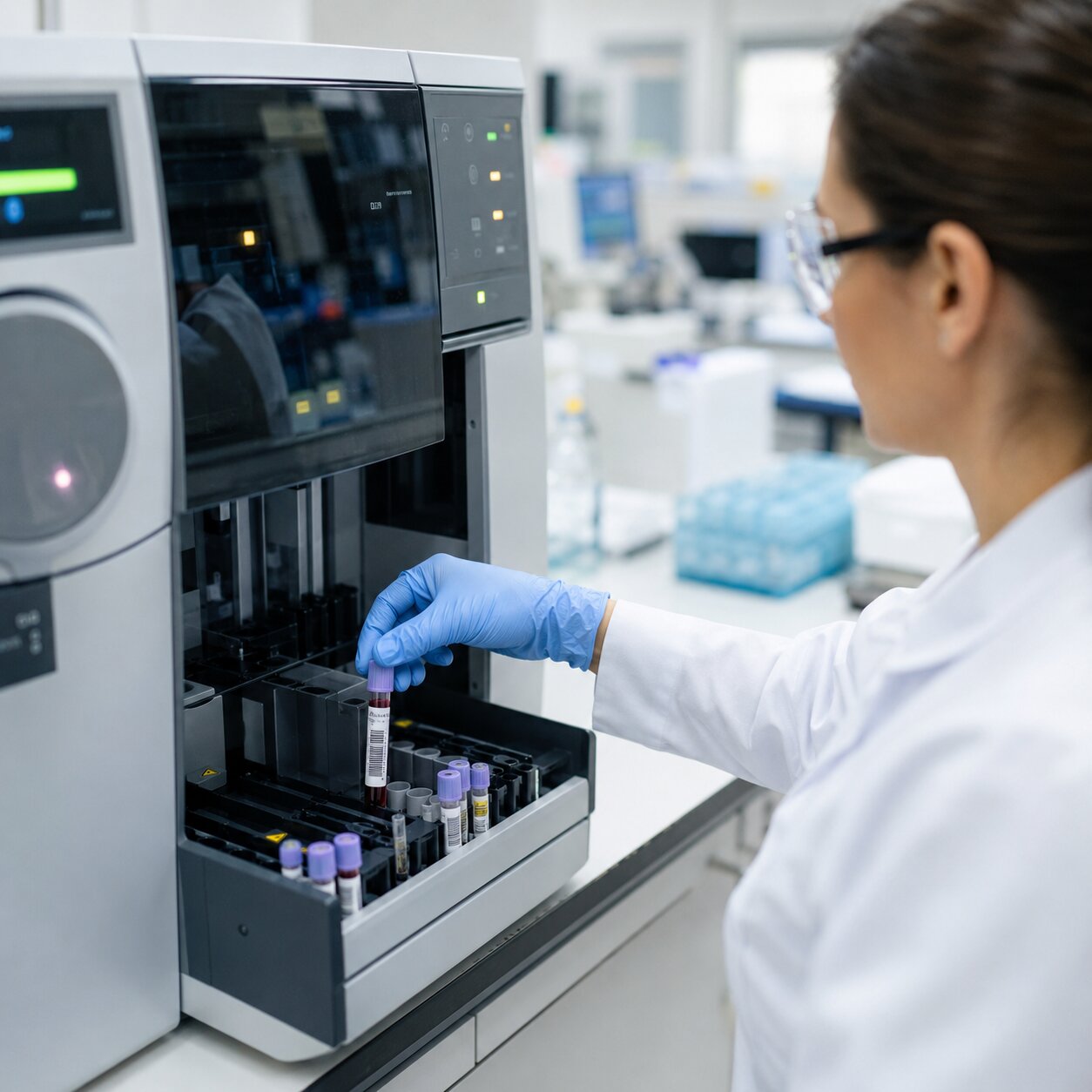
This is also why the specific lab equipment and method used to measure calcium rarely matters much to the story here — the automated chemistry analyzers that process a standard metabolic panel are measuring total calcium accurately and consistently. The distortion isn't a measurement error happening inside the machine at all; it's already baked into the sample itself by the time it arrives at the lab, which is exactly why fixing it starts with how the sample was collected, not with anything that happens after it reaches the analyzer.
Where Dehydration Fits Among the Real Causes of High Calcium
It's worth being clear about something important: dehydration doesn't cause genuine hypercalcemia, meaning a true excess of calcium in your body — it only distorts how much calcium appears to be present in a given sample. Actual, sustained high calcium usually traces back to one of a shorter list of real medical causes, most commonly an overactive parathyroid gland producing too much of the hormone that regulates calcium release from bone, certain cancers that produce calcium-mobilizing substances, excessive vitamin D or calcium supplementation, or prolonged immobility that gradually releases calcium from bone. What separates dehydration from all of these is the pattern it produces: a mild-to-moderate elevation that tracks closely with an equally elevated albumin, that shows up in someone with a plausible reason to have been under-hydrated, and that resolves on a repeat test once fluid intake is normal again. A true underlying cause, by contrast, tends to persist or worsen on repeat testing regardless of how much water someone drinks beforehand, which is exactly the kind of pattern that shifts a workup away from "probably just hydration" and toward investigating one of these other explanations directly.
It's a useful mental model to keep the two categories clearly separate in your head: dehydration is a preanalytical issue, meaning it affects how the sample looked at the moment it was collected, while the other causes listed above are genuine physiological issues, meaning something in your body is actually producing, absorbing, or releasing more calcium than normal. A preanalytical issue is fixed by changing how the next sample is collected. A physiological issue is fixed, or at least managed, by treating whatever's actually driving it. Confusing the two — either assuming a real problem is "just dehydration" without checking, or chasing an extensive workup for a number that a glass of water would have explained — is exactly what the careful, methodical, repeat-testing approach described throughout this entire article is specifically designed to prevent.
Who's More Likely to Run Into This Effect
Some people are simply more prone to showing up for a blood draw under-hydrated than others, and recognizing that pattern in your own life can be useful. Older adults are a notable group here — the natural sense of thirst tends to become less reliable with age, meaning many older people are mildly dehydrated without feeling thirsty enough to notice or correct it, which is part of why hydration-related lab quirks show up disproportionately often in this age group. People who exercise intensely in the morning before a scheduled blood draw, outdoor workers or anyone spending extended time in hot weather shortly beforehand, and people who intentionally restrict fluids alongside food before a fasting panel — sometimes out of an understandable but mistaken belief that water itself needs to be avoided too — all fall into this same higher-likelihood category. None of this is really about doing anything wrong; it's simply useful self-knowledge, since recognizing you fall into one of these patterns is often the fastest route to understanding an unexpected result without needing extensive additional testing.
How to Tell If Dehydration Is the Real Explanation for Your Result
A few practical clues can help you and your doctor gauge how likely dehydration is to be the actual story behind an elevated calcium reading. First, look at your albumin value on the same lab report — if it's also elevated or sitting at the high end of normal, that pattern fits neatly with hemoconcentration, since both values move together for the exact same reason. Second, think honestly back through that morning: did you fast for several hours without drinking water beforehand, exercise beforehand, or have a difficult blood draw that took multiple attempts or a long tourniquet application? Third, and most conclusively, consider how you felt physically — noticeably dark urine, thirst, a dry mouth, or a headache that morning are all everyday signs your body was already running low on fluid before you ever sat down for the draw. None of these clues are proof on their own, but together they help build the case for why a repeat test, done after a normal amount of water beforehand, is often the simplest and most direct way to confirm whether hydration was the actual explanation.
Timing between the two tests matters too. A repeat draw done the very next day, after a genuinely normal amount of water the evening before and morning of, is usually sufficient to show whether the number settles, since plasma volume typically normalizes within hours of adequate rehydration rather than requiring days. If a repeat test still shows an elevated calcium despite a clearly better hydration story the second time around, that's meaningful information in its own right — it shifts the conversation away from hydration and toward the other, less common causes of genuinely elevated calcium, which is precisely the kind of methodical, step-by-step process that keeps a benign explanation from being either dismissed too quickly or assumed without ever actually being checked.
What to Do Before Your Next Blood Draw
If your calcium came back mildly elevated and dehydration seems like a plausible explanation, the fix for your next test is refreshingly simple and doesn't conflict with most standard fasting instructions. Fasting for a blood test almost always means avoiding food, not avoiding water — plain water doesn't meaningfully affect blood glucose, lipids, or most other fasting-sensitive values, so drinking a normal amount in the hours before your appointment is typically both allowed and genuinely helpful. Aim to be normally hydrated rather than doing anything extreme in either direction: a couple of glasses of water in the hours beforehand is generally enough, since the goal is simply avoiding the concentrated, under-hydrated state that skews the reading, not artificially diluting your blood with an excessive amount right before the draw.
Timing matters more than volume here. Drinking a large amount of water in the final few minutes before your appointment doesn't give your body enough time to actually redistribute that fluid into your bloodstream and restore normal plasma volume — it mostly just sits in your stomach. Spreading normal water intake across the couple of hours before your draw, the same way you'd naturally drink water across an ordinary morning, gives your body the time it actually needs to reach a genuinely well-hydrated baseline by the time you sit down for the test. If your appointment is early enough that you'll be arriving essentially straight from waking up, having a full glass of water shortly after you get up, rather than skipping straight to coffee, is a simple habit that directly addresses the exact mechanism this entire article has been describing.
If you already know you tend to run on the drier side, either from personal experience with past blood draws or simply from not being a big water-drinker generally, it's also worth building in a little extra buffer time. Arriving 15 to 20 minutes early and using that time to drink water calmly, rather than rushing in at the last minute half-dehydrated from a stressful morning commute, is a small, practical habit that removes one more variable from the picture before your blood is even drawn.

It's also worth mentioning your typical morning routine to whoever draws your blood, particularly if you know a vein has historically been difficult to find, so extra care can be taken to keep tourniquet time short. And if a first calcium result comes back elevated with no other clear explanation, simply asking your doctor whether a repeat test, done after normal hydration, would be a reasonable next step is a perfectly appropriate question — it's a fast, low-cost way to rule out one of the most common and most easily fixed sources of a misleading number.
Frequently Asked Questions
How much can dehydration actually raise a calcium reading?
It varies with how significant the dehydration is, but even a modest reduction in plasma volume can push albumin, and the calcium riding along with it, into the high-normal or mildly elevated range. Severe dehydration can produce a more noticeable rise, which is one reason doctors often check albumin alongside calcium to judge how much of an elevated reading might be concentration-related.
Does drinking water before a fasting blood test break my fast?
No. Standard fasting instructions for blood tests are about food, not water. Plain water doesn't meaningfully affect glucose, lipid, or most other fasting-sensitive results, and staying normally hydrated is generally encouraged rather than avoided before a blood draw.
Should I ask for an ionized calcium test instead of total calcium?
Not necessarily as a default. Total calcium combined with the albumin-corrected formula works well for most everyday situations. Ionized calcium becomes more useful when a result stays unclear after correction, when albumin or pH levels are significantly abnormal, or when a specific clinical decision genuinely depends on the precise free-calcium value.
If my albumin is normal, can dehydration still explain a high calcium result?
It's less likely, though not impossible, since the albumin-driven mechanism described in this article is the primary way dehydration affects total calcium. A normal albumin alongside a clearly elevated calcium points a doctor toward other causes and usually prompts a broader workup rather than attributing it to hydration status alone.
What other lab values might also look off if I was dehydrated during my draw?
Hemoglobin, hematocrit, and total protein are the most common ones, since all of them are concentration-sensitive in the same way as calcium and albumin. Seeing several of these sitting at the high end of normal together, rather than just one isolated value, supports hemoconcentration as the explanation.
Is it ever dangerous to have your calcium look high just from dehydration?
The apparent elevation itself isn't dangerous, since your true, biologically active ionized calcium usually hasn't actually changed. That said, significant dehydration is worth addressing for its own sake regardless of what it does to a calcium reading, and severe dehydration can occasionally cause other genuine problems separate from this specific lab effect.
Conclusion
An elevated calcium reading doesn't automatically mean something is wrong with how your body manages calcium — sometimes it simply means your blood was more concentrated than usual at the exact moment the sample was drawn, whether from skipping water that morning, a longer-than-ideal tourniquet application, or a combination of ordinary, easily explained factors. The albumin-corrected calcium formula exists specifically to help separate that concentration effect from a genuine calcium excess, and a same-day albumin check, a look back at how hydrated you actually were, and a simple repeat test after normal water intake are usually all it takes to find out which explanation actually fits. If dehydration genuinely turns out to be the real answer, the fix could not possibly be simpler: show up to your next blood draw having had a normal amount of water, and let the number tell its real story.
And if you're the kind of person who likes to understand the "why" behind a lab result rather than just the "what," this is a genuinely good example of how much context matters in reading any blood test. The number on the page is never the whole story — how it was collected, what else was happening in your body that morning, and what other values sit alongside it on the same report all shape what that number actually means. Calcium and dehydration happen to be one of the clearest, best-studied examples of that principle in everyday lab medicine, but it's a genuinely useful lesson worth carrying into how you read every single result on your panel going forward, not just this one particular number.
Still Not Sure What Your Results Mean?
Upload your labs and get a complete, visual, plain-language interpretation of every biomarker — delivered to your inbox in under 15 minutes.
Get My ReportThis article is for educational purposes only and does not constitute medical advice. Always consult your healthcare provider regarding your specific lab results.