
What Does a High Calcium Level Mean?
A high calcium level, medically called hypercalcemia, means there's more calcium circulating in your blood than your body's tightly controlled system is supposed to allow — and in the vast majority of cases, that happens for one of a small handful of reasons. In someone getting routine outpatient bloodwork with no other symptoms, the most likely explanation by far is a small, overactive gland in the neck called a parathyroid gland quietly producing too much of the hormone that pulls calcium out of bone. In someone already hospitalized or being treated for cancer, the more likely cause is the cancer itself, releasing a hormone-like signal that does something similar. Beyond those two leading causes, a high reading can also come from taking too much vitamin D or calcium in supplement form, from simple dehydration concentrating your blood enough to nudge the number up without any real excess of calcium at all, or less commonly from certain medications, prolonged bed rest, or an inflammatory condition called sarcoidosis. This article walks through what calcium is actually doing in your bloodstream, each of these causes in plain language, what symptoms a genuinely high level can produce, and how doctors go about narrowing down which one applies to you.
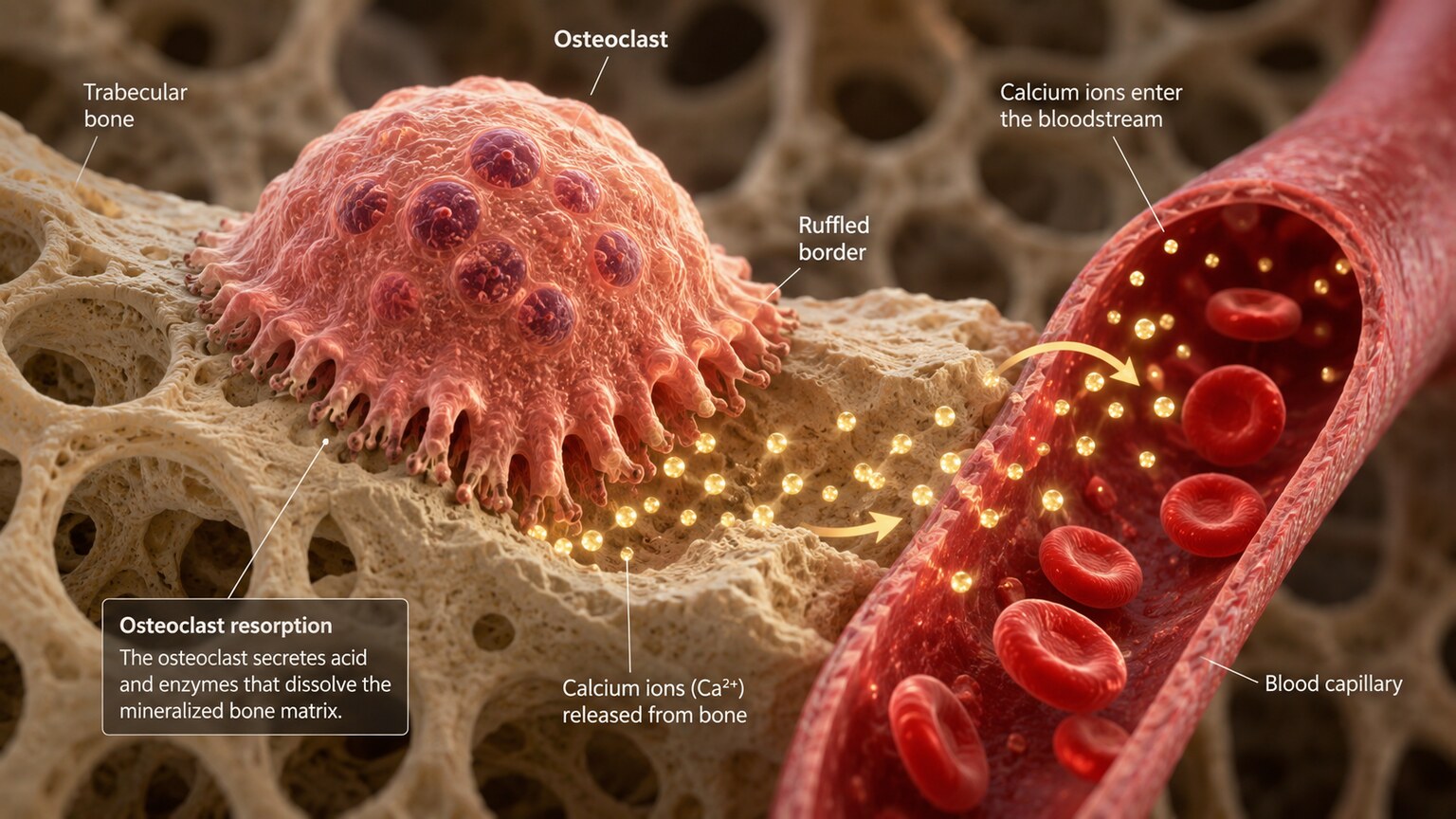
Figure 1. Osteoclasts continuously dissolve small amounts of bone tissue, releasing calcium into the bloodstream as part of the body's normal, ongoing bone-remodeling process.
What Calcium Is Actually Doing in Your Blood
It helps to start with a fact that surprises a lot of people: at any given moment, only about 1% of the calcium in your entire body is actually in your bloodstream. The other 99% is locked away in your bones and teeth, functioning as both structural material and a kind of long-term savings account. The small amount circulating in blood, though, does an outsized amount of work — it's required for your heart to beat with a normal rhythm, for your muscles (including the ones that let you breathe) to contract properly, for your nerves to fire signals correctly, and for your blood to clot when you're injured. Because so much depends on this number staying within a narrow window, your body regulates it with a feedback system that's almost obsessively precise, similar to a thermostat that won't tolerate more than a degree or two of drift.
The main controller in that system is a hormone called parathyroid hormone, or PTH, produced by four tiny glands — each roughly the size of a grain of rice — sitting on the back surface of your thyroid gland in your neck. When blood calcium starts to dip even slightly, these parathyroid glands sense it within minutes and release more PTH, which does three things almost simultaneously: it signals bone-dissolving cells called osteoclasts to release stored calcium from bone into the blood, it tells your kidneys to reabsorb more calcium instead of letting it pass into urine, and it activates vitamin D into its usable form so your gut absorbs more calcium from food. When blood calcium rises too high, this whole system is supposed to throttle back — PTH production drops, bone resorption slows, and the kidneys let more calcium spill into urine to bring the level back down. A high calcium result almost always means one part of this feedback loop has stopped listening to the rest of it, continuing to push calcium into the blood even after the level is already higher than it should be.
It helps to picture the parathyroid glands as a thermostat wired directly to a set of calcium-sensing receptors on their own cell surfaces — proteins that continuously "taste" the calcium concentration in the blood flowing past them and adjust PTH output up or down within seconds of detecting a change. This receptor is the actual physical component that gets bypassed or overridden in most of the causes described later in this article: a parathyroid adenoma effectively disconnects a gland from that feedback wiring so it keeps producing PTH regardless of what the receptor is sensing, while the rare genetic condition covered further down changes what the receptor considers "normal" in the first place, resetting the whole thermostat to a permanently higher setpoint. Understanding that this system runs on a genuine biological sensor, not just a general hormonal trend, makes it much easier to see why a single lab value can point so precisely toward one specific malfunction once a doctor knows where to look.
Already have a calcium number from a recent test, but not sure if it's actually good or bad for you? Just plug it in and see instantly.
🧮 Try the Free CalculatorCause 1: Primary Hyperparathyroidism — the Most Common Outpatient Cause

Figure 2. A physical exam of the neck rarely detects a parathyroid adenoma directly, since the glands are too small to feel, which is why bloodwork and imaging carry most of the diagnostic weight.
If you're an otherwise healthy adult who got a routine metabolic panel done and calcium came back high with no other symptoms, primary hyperparathyroidism is statistically the most likely explanation, particularly in women over 50, where it's especially common. This condition happens when one of the four parathyroid glands develops a small, usually benign growth called an adenoma that produces PTH on its own, independent of what the blood calcium level actually needs. Because the gland isn't listening to the feedback system anymore, it keeps churning out PTH even as calcium climbs well above where it should stop, creating a self-sustaining cycle: more PTH pulls more calcium from bone and keeps the kidneys holding onto more of it, and the elevated calcium itself does nothing to slow the rogue gland down.
In most cases, only one of the four glands is affected, and the other three continue functioning normally, sensing the elevated calcium and doing exactly what they're supposed to — going quiet. This is actually a useful diagnostic detail: a blood test showing high calcium alongside a PTH level that's inappropriately normal or high (rather than suppressed, which is what you'd expect if the parathyroid glands were behaving correctly) is close to a smoking gun for this diagnosis. Many people with mild primary hyperparathyroidism have no symptoms at all and are only found because calcium happened to be checked as part of an unrelated routine panel — which is exactly why this condition is now diagnosed far more often than it was a few decades ago, before automated blood panels made checking calcium a routine, low-effort addition to standard bloodwork.
Less commonly, all four parathyroid glands can be involved at once, a pattern called four-gland hyperplasia rather than a single adenoma. This version is more often seen as part of an inherited syndrome affecting multiple hormone-producing glands throughout the body, and it changes the surgical approach considerably, since removing just one overactive gland wouldn't resolve the problem if the other three are contributing as well. It's also worth knowing that primary hyperparathyroidism can sometimes coexist with a low vitamin D level, and the two can interact in a way that makes symptoms and lab patterns slightly less textbook than the simple version described above — another reason a full panel, rather than calcium in isolation, usually gives a clearer picture.
Cause 2: Cancer-Related Hypercalcemia — the Most Common Cause in Hospitalized Patients
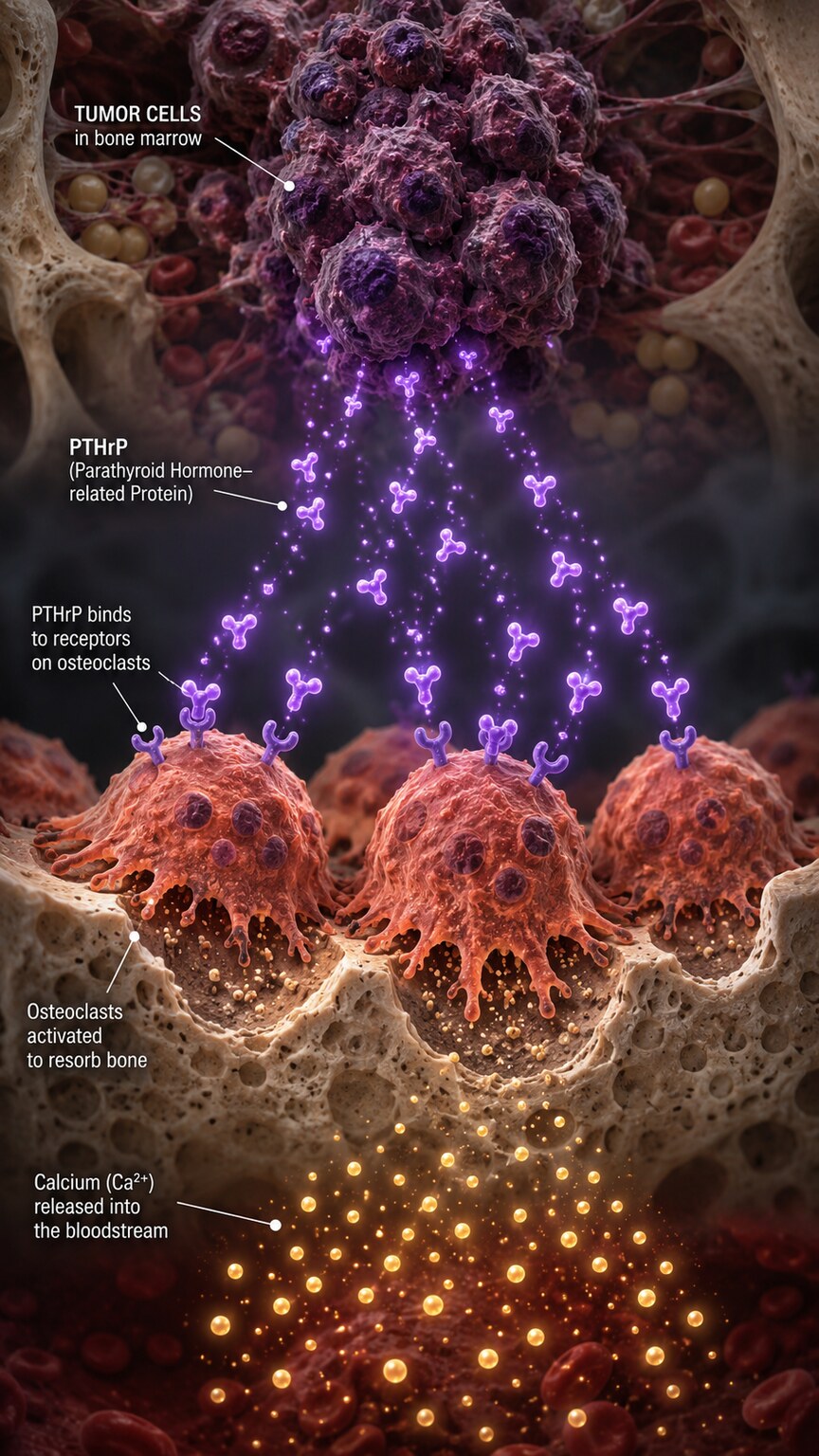
Figure 3. Some tumors secrete PTHrP, a protein that mimics parathyroid hormone closely enough to activate the same bone-resorption pathway, driving calcium into the blood independent of the parathyroid glands themselves.
While primary hyperparathyroidism dominates among outpatients, the picture flips for people already hospitalized: cancer is the more common cause of a significantly elevated calcium level in that setting, and it happens through two distinct mechanisms. The first, and most common, involves certain tumors — particularly some lung and breast cancers, along with certain other solid tumors — producing a protein called PTHrP (parathyroid hormone-related protein). PTHrP is structurally similar enough to actual PTH that it binds to the same receptors on bone and kidney cells, triggering the same calcium-releasing effects even though it isn't coming from the parathyroid glands at all. In this scenario, blood tests typically show high calcium with a genuinely low PTH level, since the real parathyroid glands are correctly sensing the already-elevated calcium and shutting down — it's the impostor hormone doing the damage instead.
The second mechanism is more direct: cancers that have spread to bone, a process called bone metastasis, physically invade and destroy bone tissue in the area of the tumor deposit, releasing large amounts of stored calcium straight into nearby blood vessels. Multiple myeloma, a cancer of plasma cells in bone marrow, and cancers that commonly metastasize to bone such as certain breast and lung cancers, are frequently associated with this pattern. Because cancer-related hypercalcemia tends to develop in people who are already sick and often reaches higher, more symptomatic levels than the slow, mild elevation typical of primary hyperparathyroidism, it's usually treated as more urgent — both because of how high the calcium itself can climb and because it's often a signal that the underlying cancer needs more aggressive attention.
A less common third mechanism worth knowing about involves certain blood cancers, particularly some lymphomas, which can independently activate vitamin D in a manner similar to what's seen in sarcoidosis, boosting intestinal calcium absorption rather than acting through PTHrP or direct bone invasion. Regardless of which mechanism is at play, cancer-related hypercalcemia is generally considered a marker of more advanced disease, and its presence often prompts a broader reassessment of the cancer's stage and treatment plan — which is part of why an unexplained high calcium level in someone with a cancer history, or in an older adult with unexplained weight loss and no clear cause for elevated calcium otherwise, is taken seriously enough to warrant a thorough workup rather than being dismissed as incidental.
Cause 3: Too Much Vitamin D or Calcium From Supplements

Figure 4. High-dose vitamin D supplementation increases how much calcium the intestines absorb from food, and sustained excess intake can outpace the body's ability to regulate blood calcium normally.
Vitamin D's main job in this whole system is controlling how much calcium your intestines pull out of the food you eat. In appropriate amounts, this is exactly what you want — it's why vitamin D and calcium are so often recommended together for bone health. But vitamin D is fat-soluble, meaning your body stores extra amounts in fat tissue rather than simply excreting what it doesn't need the way it does with water-soluble vitamins like vitamin C. Taken in excessive doses over weeks or months — most commonly from high-dose over-the-counter supplements rather than from diet or sunlight, since it's essentially impossible to overdose on vitamin D through food or sun exposure alone — this stored excess can drive intestinal calcium absorption high enough to meaningfully raise blood calcium, a condition called vitamin D toxicity.
This is genuinely uncommon at the doses found in a standard daily multivitamin, which typically provide 400 to 1,000 international units, well below the level associated with toxicity. It becomes a realistic concern mainly with prolonged use of high-dose prescription or over-the-counter supplements — sometimes 10,000 international units a day or more, taken for months on the belief that more is simply better for bone or immune health — or in the rare case of a manufacturing or dosing error. Because fat-soluble vitamin D can take weeks to clear once stored levels build up, both the vitamin D level itself and the resulting high calcium can take a similarly long stretch to fully normalize after stopping the supplement, even though the excess intake has already ended — a detail that sometimes confuses people who expect an immediate drop on their very next test.
Calcium supplements taken in very high doses can contribute in a more direct way, especially when combined with other sources like calcium-fortified foods and antacids containing calcium carbonate, a combination sometimes called milk-alkali syndrome when it occurs alongside enough alkali (from the antacid) to also impair the kidneys' ability to excrete the excess calcium. This cause tends to be relatively easy to identify once a doctor asks specifically about supplement use, since the timeline of high-dose supplementation usually lines up clearly with when the elevated calcium first appeared — and the level typically starts trending back down within weeks once the supplement is stopped.
Cause 4: Dehydration — When the Number Rises but Calcium Itself Hasn't

Figure 5. Dehydration concentrates the protein-bound fraction of blood calcium, which is why a standard total calcium test can read falsely high without any true excess of calcium in the body.
This cause is worth understanding well, because it's the one most likely to cause unnecessary alarm. Roughly 40% of the calcium in your blood travels attached to a protein called albumin, and the rest floats freely as what's called ionized calcium — the biologically active form your cells actually use. A standard calcium blood test measures total calcium, meaning both the albumin-bound and free portions combined. When you're significantly dehydrated, the water (plasma) portion of your blood shrinks while the proteins and cells in it stay the same in absolute amount, effectively concentrating everything, including albumin and the calcium riding along with it. The result is a total calcium reading that can look elevated even though the actual amount of active, free calcium in your body hasn't changed at all.
This is exactly why doctors will often calculate what's called a corrected calcium level, using a formula that adjusts the raw number based on your albumin level, or order a direct ionized calcium test, which measures only the biologically active fraction and isn't affected by hydration status the same way. A high total calcium paired with a normal corrected or ionized calcium, especially in someone who's been sick, sweating heavily, or simply not drinking enough water, points strongly toward dehydration as a false alarm rather than a true metabolic problem — and it's usually resolved simply by rehydrating and repeating the test.
This same albumin-related quirk can work in the opposite, less-appreciated direction too: someone with genuinely low albumin, from liver disease, malnutrition, or a chronic illness, can have a falsely low-looking total calcium that's actually masking a normal or even elevated ionized calcium underneath, which is one more reason clinicians lean on the corrected or ionized number rather than the raw total whenever albumin is anything other than solidly normal. It's a useful pattern to remember any time a lab result and how someone actually feels don't seem to line up — the number itself is only half the story until it's been interpreted through the lens of what else is going on in the blood at the same moment it was drawn.
Other, Less Common Causes
A handful of additional causes round out the list, each significant enough that a thorough doctor will keep them in mind even though none is as common as the four above. Certain medications, most notably thiazide diuretics (commonly used for blood pressure) and lithium (used for bipolar disorder), can raise calcium by increasing how much the kidneys reabsorb or by directly affecting the parathyroid glands. Thiazides in particular are a common enough culprit that a doctor evaluating a new high calcium result will often ask about blood pressure medications before assuming anything more serious is happening, and simply switching to a different class of blood pressure medication can sometimes resolve the issue on its own within weeks. Prolonged immobilization — extended bed rest after a major injury or surgery, for instance — can raise calcium because bone tissue is constantly being built up and broken down, and without the mechanical stress of movement to stimulate new bone formation, the breakdown side of that balance temporarily wins, releasing more calcium than usual into the blood. This pattern is seen most often in younger patients recovering from major trauma, such as a spinal cord injury, whose bone turnover rate is naturally higher to begin with.
Granulomatous diseases, most notably sarcoidosis (and, less commonly, tuberculosis and certain fungal infections), cause certain immune cells within the small clusters of inflammatory tissue called granulomas to independently activate vitamin D, similarly to what excess supplementation does, increasing intestinal calcium absorption in a way that isn't controlled by the usual feedback loop. This cause is often accompanied by other clues — a chest X-ray showing lymph node changes typical of sarcoidosis, or skin and eye findings associated with the condition — that help point a doctor toward the right diagnosis rather than leaving calcium as an isolated, unexplained finding. A rare inherited condition called familial hypocalciuric hypercalcemia involves a genetic mutation in the body's calcium-sensing mechanism itself — essentially, the parathyroid glands and kidneys are permanently reading blood calcium as slightly lower than it actually is, so they maintain a slightly elevated baseline for life. This causes lifelong, generally harmless mild elevation that's often discovered incidentally, sometimes when testing family members after one relative is diagnosed, and unlike primary hyperparathyroidism, it doesn't require treatment once correctly identified — which is exactly why distinguishing the two conditions accurately matters so much.
Symptoms: "Stones, Bones, Groans, and Psychiatric Overtones"
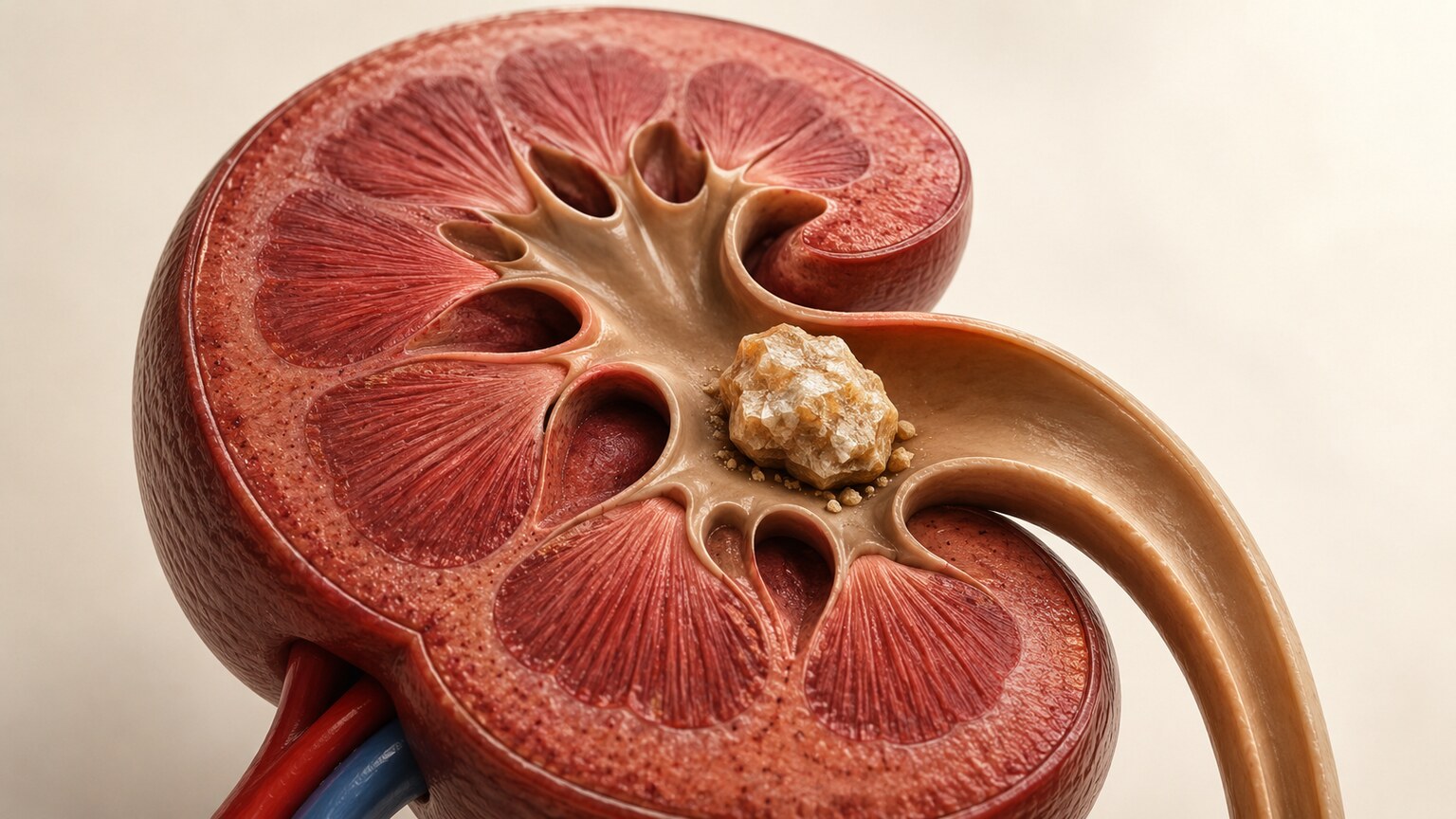
Figure 6. Excess calcium filtered by the kidneys can crystallize into calcium oxalate or calcium phosphate stones, one of the classic complications of chronic hypercalcemia.
Medical students have long memorized the symptoms of hypercalcemia with the mnemonic "stones, bones, groans, and psychiatric overtones," and it holds up well as a practical summary. "Stones" refers to kidney stones — excess calcium filtered by the kidneys can crystallize, most often as calcium oxalate stones, producing the sudden, severe flank pain kidney stones are known for. "Bones" refers to bone pain and, over the long term, weakening of bone structure itself, since the calcium raising your blood level in conditions like primary hyperparathyroidism is quite literally being pulled out of your skeleton. "Groans" is shorthand for gastrointestinal symptoms — nausea, constipation, abdominal pain, and loss of appetite, since calcium affects the smooth muscle contractions that move food through your digestive tract. "Psychiatric overtones" covers the surprisingly wide range of mental and neurological effects: fatigue, difficulty concentrating, depression, irritability, and in more severe or rapidly developing cases, confusion.
It's worth emphasizing that most people with mildly elevated calcium — particularly from early or mild primary hyperparathyroidism — have no symptoms at all, or symptoms subtle enough that they get attributed to something else entirely, like normal aging or stress. Symptoms become more likely and more severe as the level climbs higher and as it happens more quickly; a calcium level that's crept up slowly over years tends to produce far fewer symptoms than the same number reached suddenly over days, since the body has more time to partially adapt to a gradual change. This is part of why two people can have nearly identical lab numbers and describe completely different experiences — one feeling essentially fine, the other struggling with real fatigue and brain fog — and why doctors weigh the trajectory and speed of a rise, not just the raw number, when deciding how urgently to act.
At the more severe end, especially with rapidly rising cancer-related hypercalcemia, calcium's effect on the heart's electrical system becomes a real concern — it can shorten a portion of the heart's electrical cycle visible on an EKG and, at very high levels, contribute to dangerous heart rhythm disturbances. Severe hypercalcemia can also impair the kidneys' ability to concentrate urine, leading to excessive urination and a cycle where the resulting dehydration further worsens the calcium level, sometimes creating a spiral that lands a person in the hospital simply from unrelenting thirst, urination, and progressive confusion — one of the clearer signs that hypercalcemia has crossed from a lab curiosity into an urgent medical situation.
How Doctors Confirm and Narrow Down the Cause
The first step after any elevated calcium result is usually simply repeating the test, since lab errors, brief dehydration, or a recent large calcium-containing meal can all cause a one-off elevated reading that doesn't reflect a real ongoing problem. If it's confirmed on a second test, the next step is almost always checking albumin to calculate a corrected calcium level, and often ordering a direct ionized calcium measurement, ruling out the dehydration and protein-binding effects described above. From there, a PTH blood test is the single most useful next step, since it splits the remaining possibilities into two broad camps: an inappropriately normal or high PTH points toward primary hyperparathyroidism, while a suppressed PTH shifts the investigation toward PTHrP-secreting cancers, vitamin D excess, granulomatous disease, or one of the other less common causes, prompting additional targeted tests like a vitamin D level, a 24-hour urine calcium collection, or imaging.
When primary hyperparathyroidism is suspected, imaging such as a sestamibi scan (which uses a mildly radioactive tracer that concentrates specifically in overactive parathyroid tissue) or a neck ultrasound can often pinpoint exactly which of the four glands is the culprit, which matters enormously if surgery ends up being the recommended treatment, since it allows a surgeon to remove only the single affected gland rather than exploring all four. A 24-hour urine calcium collection is particularly useful for distinguishing primary hyperparathyroidism from the rare genetic condition familial hypocalciuric hypercalcemia mentioned earlier, since the two can otherwise look similar on standard bloodwork but require completely different management — one needs treatment, the other typically doesn't.
If PTH comes back suppressed rather than elevated, the workup shifts direction entirely. A PTHrP level can be checked directly if cancer is suspected, and a vitamin D panel — usually including both the storage form (25-hydroxyvitamin D) and, when granulomatous disease is a concern, the active form (1,25-dihydroxyvitamin D) — helps distinguish ordinary vitamin D excess from the kind of unregulated activation seen in sarcoidosis, since the two can look different on this more detailed panel even though both ultimately raise calcium the same way. Depending on what the history and initial results suggest, this stage of the workup might also include imaging of the chest to look for cancer or sarcoidosis-related changes, or additional blood tests to evaluate kidney and bone health, both of which can be affected by sustained hypercalcemia regardless of its original cause. Throughout this whole process, your own reported history — every medication, every supplement, every recent illness or period of reduced mobility — genuinely changes which tests get ordered next, which is why a seemingly repetitive round of questions from your doctor is doing real diagnostic work rather than just paperwork.
How High Is Too High? Understanding Severity
Not every elevated calcium level carries the same weight, and doctors generally think about severity in three broad tiers, though exact cutoffs vary slightly between labs and clinical guidelines. Mildly elevated calcium, roughly in the range just above the normal upper limit up to about 12 mg/dL, is the tier most primary hyperparathyroidism falls into, and it's often symptom-free or produces only subtle effects like mild fatigue or constipation. Moderately elevated calcium, roughly 12 to 14 mg/dL, is more likely to produce noticeable symptoms and warrants more active evaluation and often treatment. Severely elevated calcium, generally above 14 mg/dL, is considered a hypercalcemic crisis — a genuine medical emergency that can affect heart rhythm and consciousness and requires prompt hospital treatment, most often seen with aggressive cancer-related hypercalcemia rather than the slower-developing primary hyperparathyroidism. If your own result falls into the moderate or severe range, or if you're experiencing symptoms alongside it, that's a conversation to have with your doctor promptly rather than waiting for a routine follow-up appointment.
Speed of onset matters just as much as the absolute number when a clinician is deciding how worried to be. A calcium level of 11.8 mg/dL that's been essentially unchanged for three years of annual physicals reads very differently than the same 11.8 mg/dL discovered in someone who had a normal result just two months earlier — the second scenario suggests something acute is actively driving the number up right now, and it tends to prompt a faster, more urgent workup even though the raw lab value looks identical on paper to the first, stable case.
How High Calcium Is Actually Treated
Treatment for hypercalcemia depends almost entirely on the underlying cause and how high the level actually is, rather than following one universal protocol. For mild, asymptomatic primary hyperparathyroidism, the most common approach is simply monitoring — periodic blood tests, a bone density scan to watch for early bone loss, and kidney function checks, with surgery held in reserve unless the level rises, symptoms develop, or bone or kidney involvement appears. When surgery is recommended, it's a parathyroidectomy, and in the common case where imaging has already identified a single overactive gland, this can often be done as a minimally invasive outpatient procedure removing just that one gland, with the remaining three left intact to continue regulating calcium normally. Cure rates for this kind of targeted surgery, when performed by an experienced endocrine surgeon, are consistently high.
For moderate to severe hypercalcemia, particularly the kind seen with cancer-related causes, the first priority is almost always intravenous fluids, since even before addressing the underlying cause, aggressive hydration helps the kidneys flush out excess calcium and corrects the dehydration that so often compounds the problem. Medications called bisphosphonates, which work by directly blocking the osteoclasts responsible for releasing calcium from bone, are frequently added for more significant elevations and can bring levels down meaningfully within a few days, though their full effect may take slightly longer to peak. Calcitonin, a hormone that opposes PTH's effects, can be used for a faster but shorter-lived reduction, often bridging the gap while a bisphosphonate takes fuller effect. In hypercalcemia driven by excess vitamin D activity — whether from supplementation or from a granulomatous condition like sarcoidosis — corticosteroids can help by reducing the conversion of vitamin D into its active form. For the rarest, most severe hypercalcemic crises, dialysis can be used to remove calcium directly from the blood when other measures aren't working fast enough. Across nearly all of these approaches, the underlying cause still needs its own dedicated treatment — lowering the calcium number is necessary, but it isn't the same as resolving the parathyroid adenoma, cancer, or other condition actually driving it.
Frequently Asked Questions
Does a high calcium level always mean cancer?
No. Primary hyperparathyroidism, not cancer, is the most common cause of high calcium found in routine outpatient bloodwork, and it's typically a benign, very treatable condition. Cancer-related hypercalcemia is more common specifically among people already hospitalized or being treated for a known cancer, and it usually comes with other signs of illness rather than showing up as an isolated finding in an otherwise healthy person.
Can dehydration alone cause a genuinely dangerous calcium level?
By itself, dehydration typically produces only a mild, falsely elevated total calcium reading due to blood concentration, not a true dangerous excess of active calcium. A corrected calcium calculation or ionized calcium test usually confirms this and normalizes once you're properly rehydrated. Severe, dangerous hypercalcemia almost always involves one of the underlying causes described above, not dehydration on its own.
If I have primary hyperparathyroidism, do I automatically need surgery?
Not necessarily. Many people with mild, asymptomatic primary hyperparathyroidism are safely monitored over time rather than operated on immediately. Surgery to remove the affected gland is generally recommended when calcium is significantly elevated, when there's evidence of bone loss or kidney involvement, or in younger patients, since guidelines weigh the cumulative risk of untreated disease over a longer remaining lifespan.
Should I stop taking my vitamin D or calcium supplement if my level comes back high?
Don't stop or change any supplement on your own before talking with your doctor, since the right next step depends on identifying the actual cause first — abruptly stopping a supplement you actually need for an unrelated reason isn't the goal. Bring your specific supplement doses to your appointment; this history is often the fastest way to confirm or rule out supplementation as the cause.
How soon should a repeat calcium test be done after an initial high result?
This depends on the level and your symptoms, but a repeat test within a few weeks is typical for a mild, incidental finding with no symptoms. If the level is moderately or severely elevated, or if you have symptoms like significant fatigue, confusion, or abdominal pain, your doctor may want to repeat it much sooner, sometimes the same day, rather than waiting.
Conclusion
A high calcium result is your body signaling that its usually precise system for managing this one mineral has been pushed off balance by something specific — most often an overactive parathyroid gland, followed by cancer-related causes, supplement excess, or simple dehydration creating a false alarm. None of these possibilities are things you can sort out from the number alone; the pattern of your PTH level, your symptoms, your supplement history, and how the level behaves on a repeat test are what actually points to the answer. If your own calcium came back elevated, the most useful thing you can do is bring your full history — supplements, medications, hydration, and any symptoms you've noticed — into the conversation with whoever ordered the test, since that context is usually what turns one confusing number into a clear next step. For most people, especially those found through routine screening rather than because of symptoms, the eventual answer turns out to be a manageable, well-understood condition rather than the frightening unknown a high number on a page can make it feel like in the moment.
Still Not Sure What Your Results Mean?
Upload your labs and get a complete, visual, plain-language interpretation of every biomarker — delivered to your inbox in under 15 minutes.
Get My ReportThis article is for educational purposes only and does not constitute medical advice. Always consult your healthcare provider regarding your specific lab results.