
High Ferritin Doesn't Always Mean Excess Iron
If your lab report just came back with a high ferritin result, your first instinct is probably to assume your body is loaded with too much iron. That's a reasonable guess — but it's frequently the wrong one. Ferritin isn't just an "iron gauge." It's a storage protein that also spikes whenever your body is dealing with inflammation, infection, liver stress, heavy alcohol use, or even certain cancers, completely independent of how much iron you actually have on board. In clinical terms, ferritin behaves as what's called an "acute phase reactant" — a molecule that rises as part of the body's general alarm response, the same category of marker as CRP, the inflammation test many people are more familiar with. That means a high ferritin result, on its own, is closer to a smoke detector going off than a fire report: it tells you something is happening, but not necessarily what. Figuring out whether your high ferritin reflects true iron overload or something else entirely requires looking at it alongside a handful of other numbers — and that's exactly what this article walks through, step by step, in plain language.
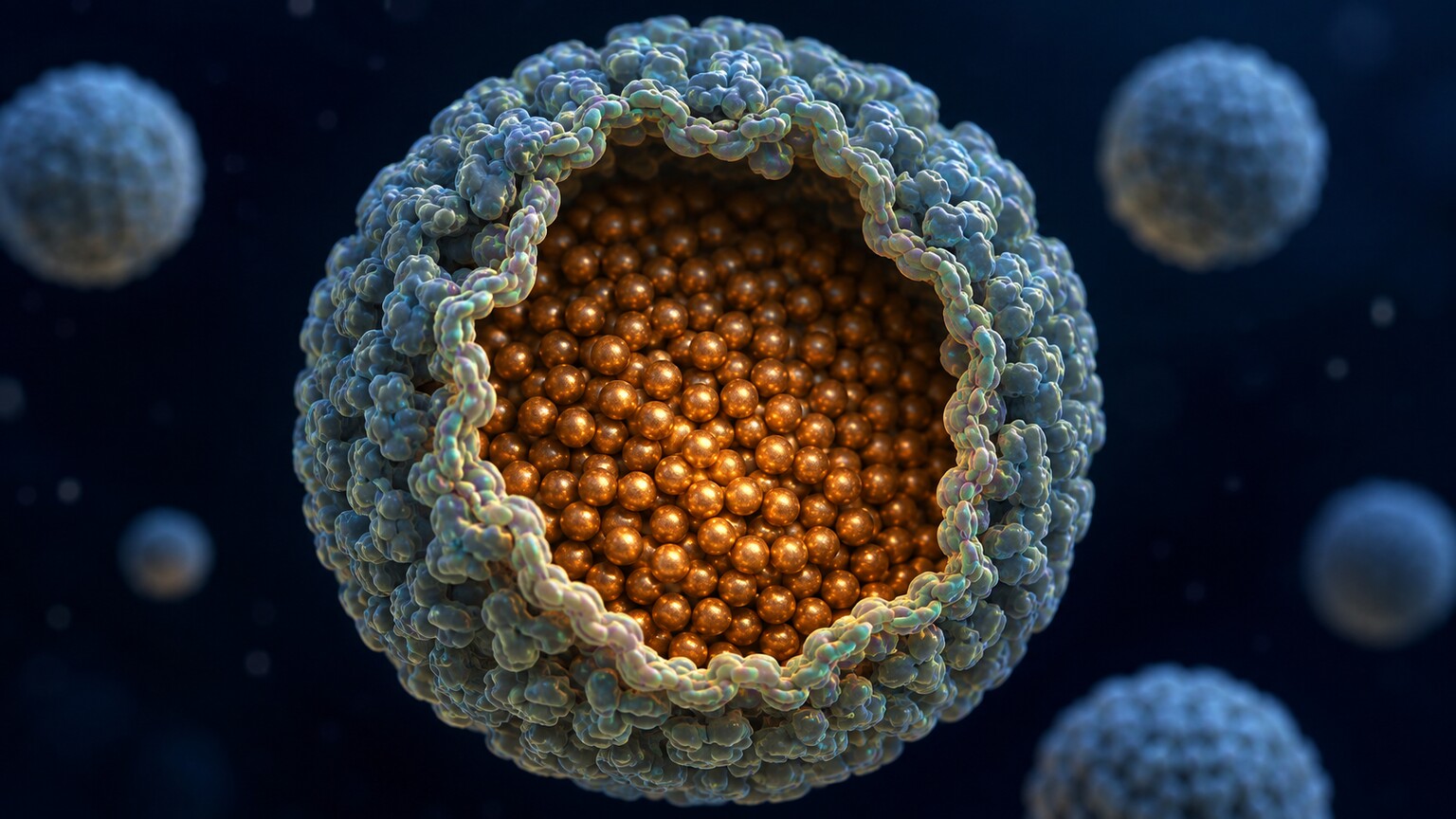
Figure 1. Ferritin is a hollow protein shell that can store thousands of iron atoms inside a single molecule, keeping free iron safely locked away from the bloodstream.
What Ferritin Actually Is — and Why It's Not a Direct Iron Meter
To understand why a high ferritin number can be misleading, it helps to know what the molecule is actually doing inside your body. Ferritin is a spherical, hollow protein — picture a microscopic cage built from 24 protein subunits assembled into a nearly perfect ball — and its job is to store iron safely inside that cage so it doesn't float around freely in your tissues. Free iron is chemically reactive and, left unchecked, can generate damaging molecules called free radicals through a process called the Fenton reaction. Ferritin exists specifically to prevent that: it locks iron away, holding as many as 4,500 iron atoms inside a single molecule, and releases it in a controlled way when your cells need it to make new red blood cells or run iron-dependent enzymes.
Because most of the ferritin your body makes stays inside cells — mainly in the liver, spleen, and bone marrow, where iron is stored in bulk — only a small fraction leaks into the bloodstream, which is what a standard blood test measures. For decades, doctors have used that circulating ferritin level as a convenient proxy for total body iron stores, and in a person with no other health issues going on, it's a genuinely useful one: low ferritin in an otherwise healthy adult is one of the most reliable signs of iron deficiency there is. The complication is the word "otherwise healthy." Ferritin production isn't controlled by iron status alone — it's also switched on by inflammatory signals, which is where the acute phase reactant behavior comes in and where the story gets more complicated than "high ferritin equals too much iron."
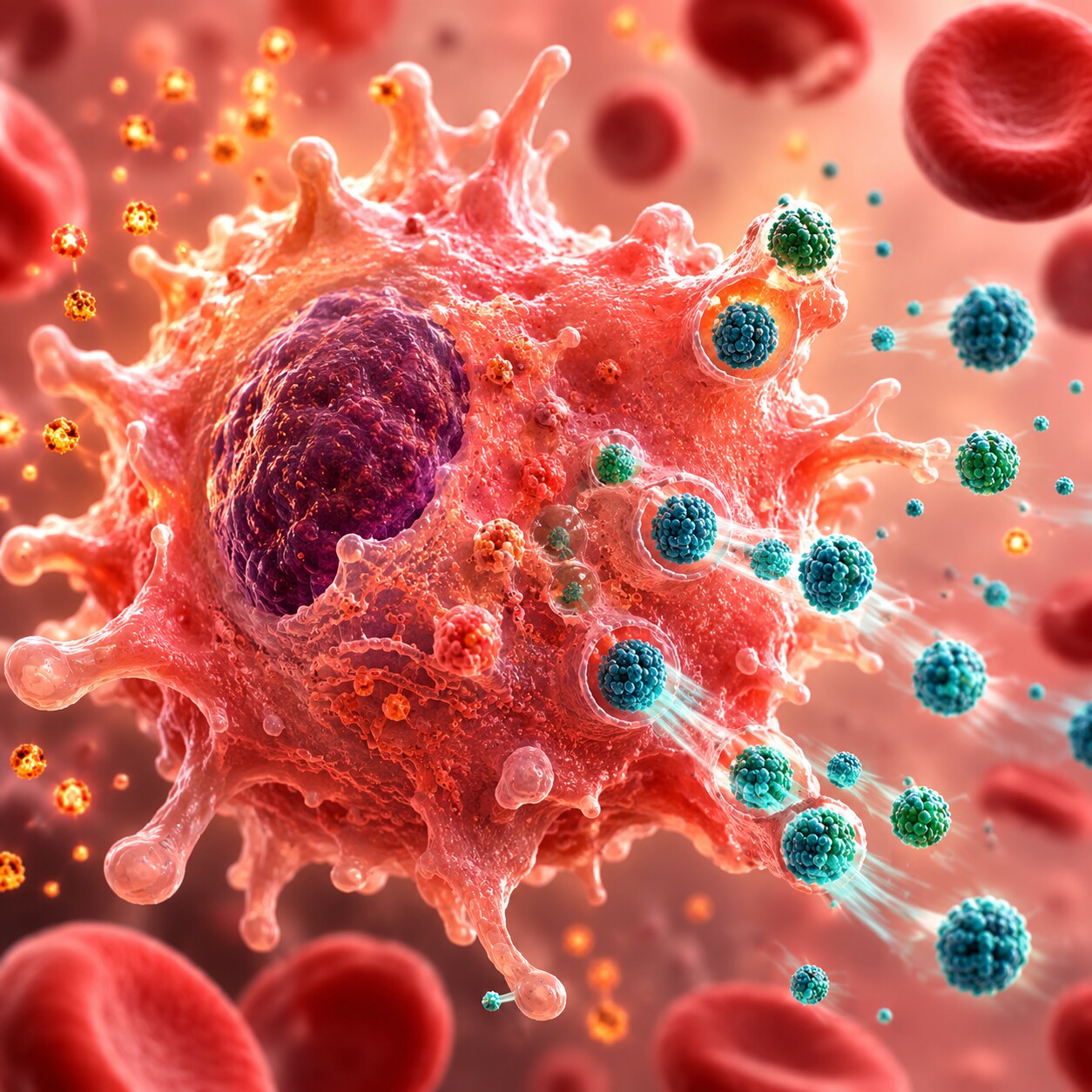
Figure 2. Macrophages — immune cells that respond to infection and tissue damage — ramp up ferritin production as part of the body's inflammatory alarm response, independent of iron status.
Ferritin as an "Acute Phase Reactant": The Core Confounder
The single most important concept in this entire topic is the acute phase reactant behavior, so it's worth spending real time on it before anything else. When your immune system detects an infection, an injury, or ongoing tissue inflammation, it releases signaling molecules called cytokines — interleukin-6 (IL-6) is a key one here — that travel through the bloodstream and instruct the liver and immune cells to ramp up production of certain proteins. This is the same system that produces the classic "fever response": fatigue, low-grade temperature elevation, and a cluster of blood markers that rise together during illness. Ferritin is one of those markers. So is C-reactive protein (CRP), which many people already recognize from cardiovascular risk panels or infection workups.
What makes this biologically sensible, even though it's clinically confusing, is that elevated ferritin during inflammation likely isn't just a side effect — many researchers believe it's a protective mechanism. Bacteria need iron to grow, and by pulling circulating iron into storage (raising ferritin while often lowering serum iron at the same time, a pattern sometimes called "anemia of inflammation"), the body may be starving invading pathogens of a nutrient they need to multiply. Whether or not that's the full explanation, the practical result is the same: a bout of the flu, a urinary tract infection, a flare of rheumatoid arthritis, an autoimmune condition like lupus, or even recovering from recent surgery can all push ferritin well above the normal reference range without a single extra milligram of iron actually being stored anywhere in the body. This is precisely why a high ferritin result needs context before it means anything — the same number can point to two completely different underlying situations depending on what else is going on.
Curious what the rest of your iron panel is really telling you? Upload your results and get a complete, plain-language breakdown in under 15 minutes.
Analyze My ResultsLiver Stress: A Second Major Reason Ferritin Rises Without Iron Overload
The liver stores a large share of the body's ferritin, and it's also where ferritin is made. When liver cells (hepatocytes) are damaged or under metabolic stress, they can leak stored ferritin directly into the bloodstream — a process closer to a bruise leaking fluid than a controlled storage response. This means liver conditions can raise blood ferritin dramatically even in people whose total-body iron is completely normal. Non-alcoholic fatty liver disease (NAFLD), now more often called metabolic dysfunction-associated steatotic liver disease (MASLD), is an especially common driver of this pattern in the general population, since it's closely tied to obesity, insulin resistance, and type 2 diabetes — all conditions that are far more common than true hereditary iron overload. Elevated ferritin is found in a substantial share of people with fatty liver disease, and in many of these cases, a follow-up test called transferrin saturation (explained in detail further down) comes back normal, which is the clue that points away from an iron problem and toward the liver itself as the source.
Viral hepatitis (particularly hepatitis C), alcohol-related liver disease, and any other cause of active liver cell injury can produce the same effect. This is one of the reasons doctors often order liver enzyme tests — ALT and AST — alongside a ferritin result, since elevated liver enzymes combined with high ferritin point much more strongly toward a liver-driven explanation than toward genuine iron accumulation.
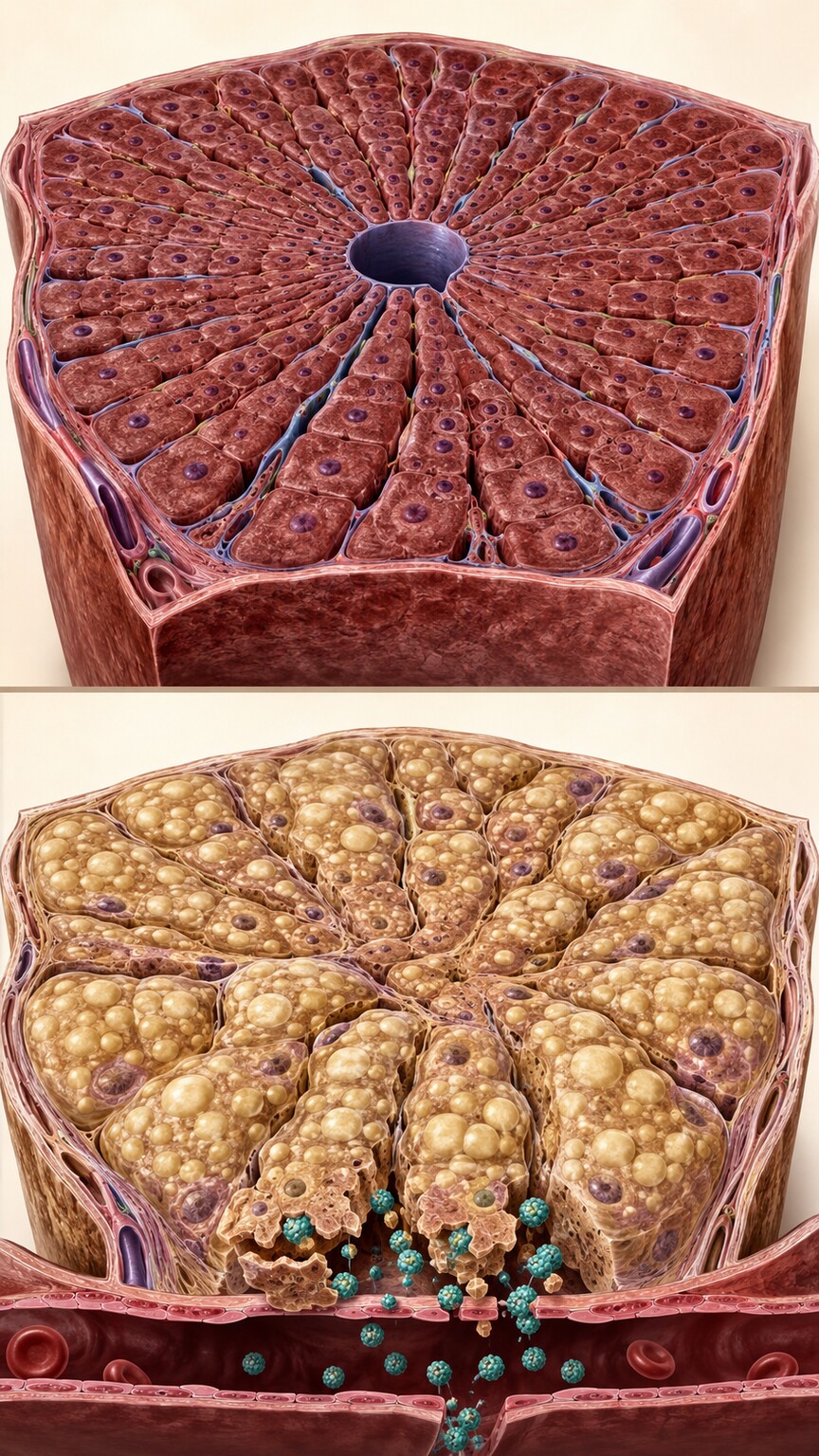
Figure 3. In fatty liver disease, stressed hepatocytes accumulate fat droplets and leak stored ferritin into the bloodstream, raising blood ferritin without true iron overload.
It's worth pausing on just how common this specific scenario has become. Fatty liver disease now affects roughly a quarter of adults in the United States, making it, by a wide margin, a more statistically likely explanation for an unexpected high-ferritin result than hereditary hemochromatosis, which affects a much smaller share of the population even among those of Northern European ancestry, where the responsible gene mutations are most concentrated. That doesn't mean hemochromatosis should be ignored — it absolutely needs to be ruled out properly, which the sections below cover — but it does mean the statistically reasonable first thought, especially in someone with risk factors like excess weight, elevated blood sugar, or high triglycerides, should be the liver and metabolic picture, not an assumption of iron overload.
Alcohol deserves its own mention here too, separate from the fatty liver changes it can cause. Regular heavy alcohol intake directly raises ferritin through liver cell stress and inflammation, and it does so at a scale large enough that clinicians specifically ask about drinking habits when interpreting an unexpectedly high ferritin result. A few days of abstaining from alcohol before repeat testing is sometimes enough, on its own, to bring a borderline-high ferritin back down into a more reassuring range — a useful, low-cost way to gather information before pursuing more invasive testing.
Infections, Autoimmune Disease, and Other Inflammatory Triggers
Beyond liver-specific causes, a wide range of active infections and inflammatory conditions can push ferritin upward through the acute phase reactant mechanism described earlier. Common culprits include active bacterial or viral infections of almost any kind, autoimmune and rheumatologic conditions such as rheumatoid arthritis, lupus, and adult-onset Still's disease (a condition in which ferritin can climb to extraordinarily high levels and is actually used as part of the diagnostic criteria), and certain cancers, particularly lymphomas and leukemias, where ferritin can serve as a nonspecific marker of disease activity. In the hospital setting, extremely high ferritin levels — often in the thousands — are recognized as a red flag for a serious hyperinflammatory condition called hemophagocytic lymphohistiocytosis (HLH), a reminder that at the far extreme end of the range, ferritin is being used as a marker of immune system chaos, not iron content.
For most people reading a slightly-to-moderately elevated ferritin result on a routine panel, these severe conditions are not the likely explanation — but the broader point stands: recent illness, an ongoing autoimmune flare, or an infection your body is actively fighting can all be enough to move the number, and a doctor evaluating a high ferritin result will typically ask about recent symptoms like fever, joint pain, or unexplained weight loss as part of figuring out whether inflammation, rather than iron, is driving the result.
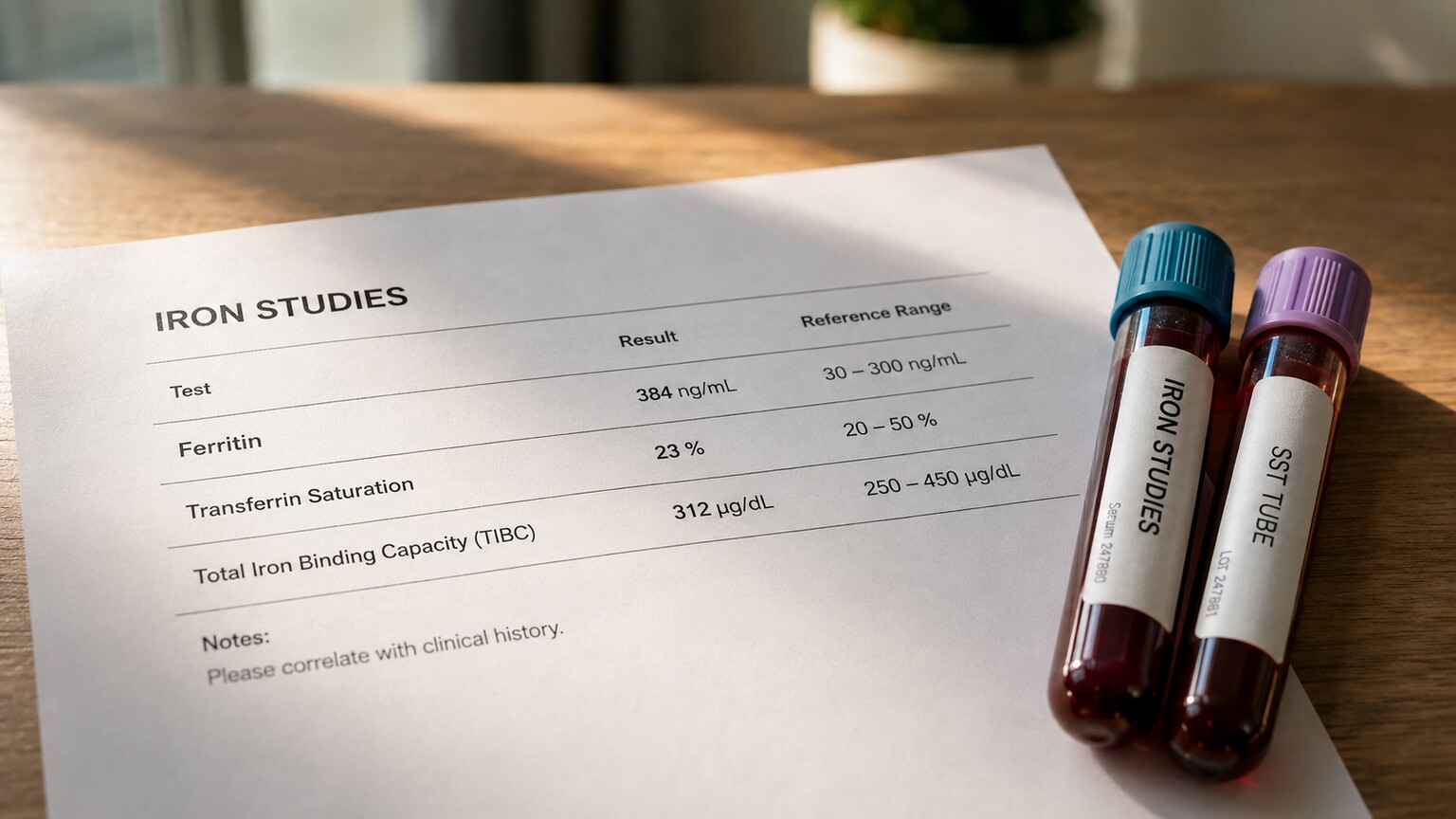
Figure 4. Transferrin saturation and total iron binding capacity, read together with ferritin, are what actually distinguish true iron overload from an inflammation-driven elevation.
Why Reference Ranges for Ferritin Are Wider Than You'd Expect
One detail that trips up a lot of people reading their own results for the first time is just how wide the "normal" range for ferritin actually is compared to other common lab tests. Depending on the laboratory, a normal ferritin range for adult men might run from roughly 20 to 250 nanograms per milliliter, while the range for adult women is typically lower and narrower, often somewhere around 10 to 120 nanograms per milliliter. That's not a typo or inconsistency between labs — it reflects a real biological difference. Men generally carry higher baseline iron stores than women of reproductive age, largely because women lose iron monthly through menstruation, which keeps average ferritin lower and helps explain why iron deficiency is more common in women even outside of pregnancy. After menopause, female ferritin ranges tend to shift upward and start to resemble male ranges more closely, since that monthly iron loss stops.
This wide range exists precisely because ferritin needs to accommodate healthy variation in iron storage on top of the acute phase reactant behavior discussed above — two sources of legitimate variability layered on top of each other. It's part of why a single ferritin value sitting just above the upper end of a lab's reference range often isn't treated as an emergency by a physician the way, say, a critically high blood glucose or potassium result would be. Context, trend over time, and the accompanying transferrin saturation carry more diagnostic weight than where a single number happens to land relative to a fairly wide reference band. Age matters too: ferritin naturally tends to rise somewhat with age in both sexes, partly reflecting the same low-grade inflammatory changes ("inflammaging") that accompany normal aging, which is one more reason a mildly elevated ferritin in an older adult is interpreted differently than the same number in someone in their twenties.
How This Plays Out in Real Life: Two Common Scenarios
Concrete examples make this framework easier to hold onto than abstract rules alone, so it helps to walk through two realistic scenarios that land on the exact same ferritin number for very different reasons.
Scenario one: A 45-year-old man with a body mass index in the overweight range, borderline high triglycerides, and mildly elevated blood sugar gets a routine wellness panel. His ferritin comes back at 380 ng/mL — clearly above the upper end of a typical male reference range. His transferrin saturation, ordered in the same panel, comes back at 32%, comfortably within the normal range. His ALT is mildly elevated. Put together, this pattern points strongly toward metabolic dysfunction-associated fatty liver disease as the driver of his ferritin, not iron overload — his liver is under metabolic stress and leaking stored ferritin, while his iron transport system (reflected by transferrin saturation) is functioning normally. The appropriate next step here is typically weight management, addressing insulin resistance, and possibly a liver ultrasound — not iron restriction and not phlebotomy.
Scenario two: A different 45-year-old man, lean, physically active, with no metabolic risk factors, also gets a ferritin of 380 ng/mL on a routine panel — but his transferrin saturation comes back at 68%, well above the 45% threshold that raises concern for iron overload. His liver enzymes are also mildly elevated, but in this case that's more consistent with early iron-related liver stress than with fatty liver disease. This pattern — high ferritin plus high transferrin saturation, without the metabolic risk factors that would point toward fatty liver — is exactly the combination that prompts a doctor to order HFE genetic testing to evaluate for hereditary hemochromatosis. Two men, identical ferritin numbers, completely different underlying stories and completely different next steps — which is the whole point of never reading ferritin in isolation.
The Test That Actually Tells the Difference: Transferrin Saturation
If ferritin alone can't reliably distinguish iron overload from inflammation, what can? The answer clinicians rely on most is transferrin saturation (often abbreviated TSAT), and understanding it is the single most useful thing you can take away from this article. Transferrin is a different protein — one whose job is to actively transport iron through the bloodstream, rather than store it. Transferrin saturation measures what percentage of your transferrin's available binding sites are currently carrying iron. Think of transferrin as a fleet of delivery trucks and iron as cargo: transferrin saturation tells you what percentage of the trucks on the road right now are actually loaded, not how much cargo is sitting in the warehouse.
This distinction matters enormously because transferrin saturation behaves very differently from ferritin during inflammation. In inflammatory states, the body often actively withholds iron from circulation as part of the same protective response discussed earlier — so transferrin saturation frequently stays normal, or even drops, even while ferritin is climbing. In true iron overload conditions like hereditary hemochromatosis, by contrast, transferrin saturation rises early and dramatically, often exceeding 45% and sometimes climbing above 70-80% in more advanced cases, generally before ferritin itself becomes markedly elevated. This gives doctors a genuinely powerful pattern to work with: high ferritin plus high transferrin saturation is the combination that points toward real iron overload, while high ferritin plus normal transferrin saturation points much more strongly toward inflammation, liver stress, or another non-iron cause. Total iron binding capacity (TIBC), a closely related measurement, is often ordered in the same panel and tends to run low in inflammatory states and normal-to-low in iron overload, adding another layer of confirmation to the same picture.
Hereditary Hemochromatosis: When High Ferritin Genuinely Does Mean Too Much Iron
None of this is meant to suggest that high ferritin should be dismissed as "probably nothing" — genuine iron overload is a real and important condition to catch, and hereditary hemochromatosis is its most common cause. This is a genetic condition, most often caused by mutations in a gene called HFE, that causes the intestines to absorb more iron from food than the body needs, day after day, for years or decades, gradually building up iron stores in the liver, heart, pancreas, and joints. Left undiagnosed, that slow accumulation can eventually cause serious organ damage: cirrhosis of the liver, diabetes (sometimes historically called "bronze diabetes" for the skin discoloration that can accompany it), heart rhythm problems, and joint pain, particularly in the second and third knuckles of the hand — a pattern specific enough that it's sometimes the detail that first prompts a doctor to consider hemochromatosis in someone with unexplained joint symptoms.
The reassuring part of this condition is that it's very treatable once identified, typically managed with regular therapeutic phlebotomy — essentially scheduled blood donation — which removes iron-rich red blood cells and prompts the body to draw down its excess stores over time. Because it's genetic, hemochromatosis is confirmed with a blood test looking directly for the HFE gene mutations (most commonly a mutation called C282Y), rather than through ferritin or transferrin saturation alone, though those two tests are almost always what prompts the genetic workup in the first place. It's also worth knowing that hemochromatosis has variable "penetrance" — meaning a meaningful number of people who carry the genetic mutations never go on to develop significant iron overload or symptoms at all, which is one more reason genetic confirmation, rather than assumption from ferritin alone, is the standard of care before starting treatment.

Figure 5. Joint pain concentrated in the second and third knuckles is a recognizable early clue of iron accumulation in hereditary hemochromatosis.
Genetic testing for the HFE gene is generally reserved for people whose ferritin and transferrin saturation results together already suggest true iron overload, rather than being ordered as a first-line screening test for everyone with a mildly elevated ferritin — a distinction that reinforces, once again, why interpreting ferritin in isolation isn't the right approach. A doctor building this picture is essentially working through a short decision tree: is transferrin saturation elevated too? Is there a family history of hemochromatosis, unexplained liver disease, diabetes, or early heart problems? Are liver enzymes elevated, suggesting the liver itself as the driver instead? Answering those questions, rather than reacting to the ferritin number by itself, is what actually determines the next step.
Other Less Common but Important Causes of High Ferritin
A handful of additional situations round out the list of reasons ferritin can be elevated without dietary or genetic iron overload. Metabolic syndrome and type 2 diabetes are independently associated with elevated ferritin even in the absence of frank fatty liver disease, likely through the same low-grade chronic inflammation that characterizes those conditions. Certain rarer inherited conditions, distinct from classic HFE-related hemochromatosis, can also raise both ferritin and iron stores through different genetic mechanisms. Repeated blood transfusions — relevant for people managing chronic conditions like thalassemia or certain forms of anemia that require ongoing transfusion support — introduce iron directly and can lead to a form of iron overload sometimes called transfusional hemosiderosis, which is managed differently from dietary or genetic overload and typically requires medications called iron chelators rather than phlebotomy, since frequent transfusion recipients often can't tolerate having blood removed the way phlebotomy requires.
Even something as simple as recent heavy alcohol intake the night before a blood draw, an unusually intense workout, or an underlying but currently unnoticed viral illness can nudge a single ferritin reading upward temporarily. This is part of why doctors are often unimpressed by a single, mildly elevated ferritin result and will frequently recommend simply repeating the test in a few weeks, ideally after resolving any obvious short-term trigger, before pursuing a more extensive workup — a genuinely reasonable and evidence-based first step rather than a brush-off.
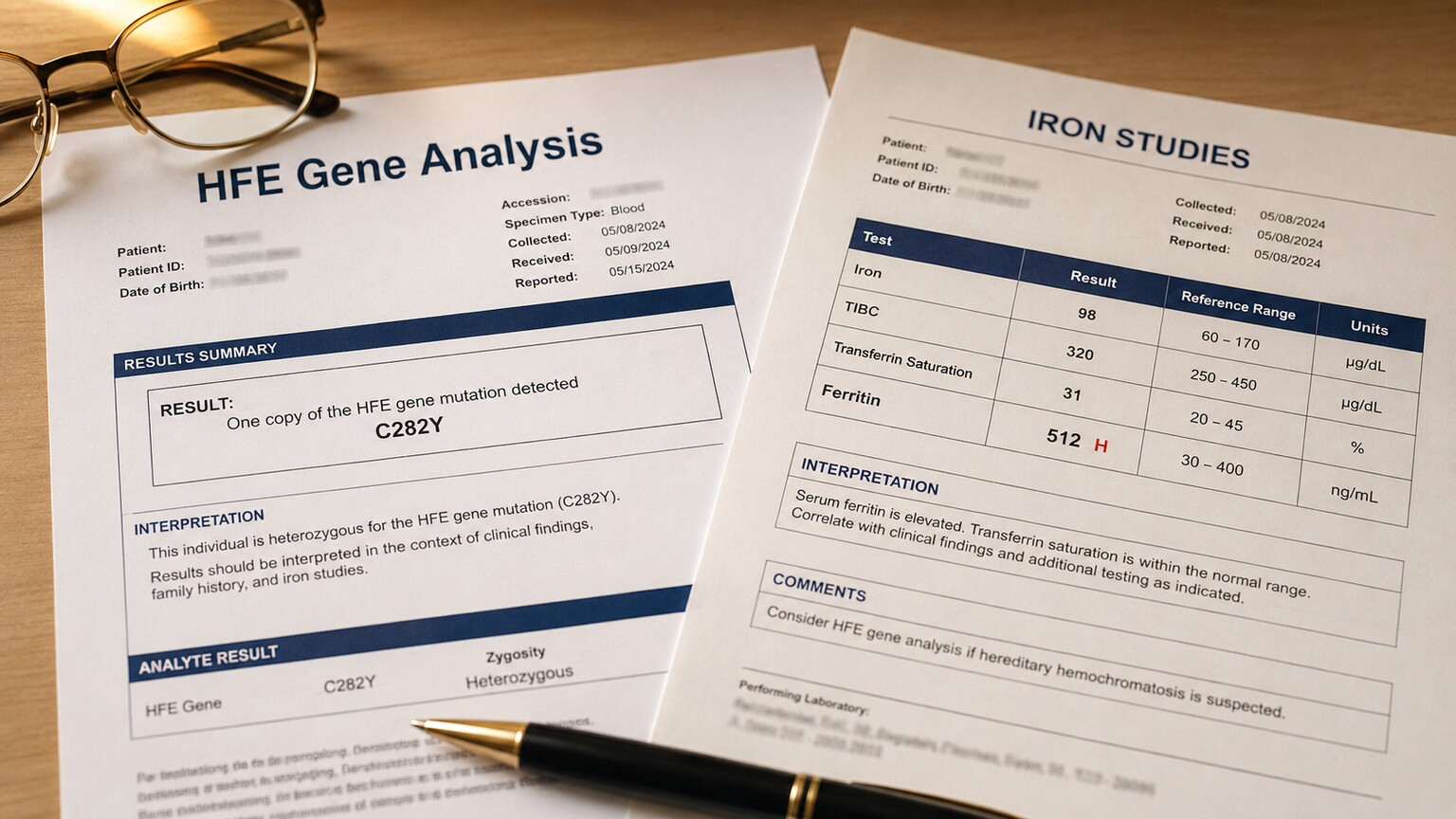
Figure 6. Genetic testing for HFE gene mutations, ordered after ferritin and transferrin saturation already suggest iron overload, is what confirms a diagnosis of hereditary hemochromatosis.
Ferritin Versus a Full Iron Panel: Why They're Not the Same Test
It's easy to assume that "ferritin" and "iron levels" are interchangeable phrases for the same thing, but they measure genuinely different pieces of the picture, and knowing the difference makes the rest of this article easier to apply to your own results. Serum iron measures the amount of iron currently circulating freely in the bloodstream at the moment of the blood draw — a number that naturally fluctuates throughout the day and is heavily influenced by recent meals, making it a fairly noisy, moment-in-time snapshot on its own. Transferrin and transferrin saturation, covered in detail below, describe the transport system carrying that iron around. TIBC is essentially a measure of how much transferrin is available to carry iron in the first place. Ferritin, as already established, reflects storage — but with the important asterisk that it's also an inflammation marker.
A "complete iron panel," when a doctor orders one, typically bundles several of these together — commonly serum iron, TIBC, transferrin saturation, and ferritin — specifically because no single one of them, read alone, is reliable enough to build a diagnosis on. Iron deficiency anemia, for example, classically shows low ferritin, low serum iron, low transferrin saturation, and high TIBC, all moving in a consistent direction together. Iron overload from hemochromatosis shows the opposite pattern for transferrin saturation and TIBC, alongside high ferritin. Inflammation-driven high ferritin, by contrast, often shows high ferritin sitting awkwardly next to a normal or even low serum iron and a normal transferrin saturation — a pattern that doesn't fit neatly into either the classic deficiency or classic overload picture, which is itself a useful diagnostic clue rather than a confusing anomaly. Recognizing which of these patterns your own results form, rather than fixating on ferritin as a single isolated data point, is the mental shift that makes lab reports genuinely readable instead of alarming.
Symptoms That Are Sometimes Linked to High Ferritin — and Why They're Not Reliable on Their Own
Because both the inflammatory causes and the true iron-overload causes of high ferritin can eventually produce noticeable symptoms, it's tempting to try to use how you feel as a shortcut to figuring out which one applies to you. In practice, this rarely works cleanly, and it's worth understanding why. Fatigue, one of the most commonly reported symptoms associated with high ferritin, is also one of the least specific symptoms in all of medicine — it shows up in iron overload, in fatty liver disease, in chronic inflammation, in simple poor sleep, and in dozens of unrelated conditions, which means fatigue alone can't distinguish between any of the causes discussed in this article. Joint pain, particularly when it's concentrated in the knuckles as described earlier, is a somewhat more specific clue pointing toward hemochromatosis specifically, but plenty of people with confirmed hereditary iron overload have no joint symptoms at all, especially in earlier stages before significant iron has accumulated — which is exactly why hemochromatosis has historically been under-diagnosed for years or decades in some people, since it can progress quietly with few outward signs until organ damage is already underway.
Abdominal discomfort in the upper right side of the abdomen, where the liver sits, can occur with either significant fatty liver disease or with iron accumulating in the liver from hemochromatosis, again failing to distinguish cleanly between the two. This overlapping, nonspecific symptom picture is precisely why lab testing — rather than symptoms alone — carries so much of the diagnostic weight in this particular area of medicine, and it's also why routine bloodwork sometimes catches these conditions in people who felt completely fine going into their appointment, simply because the ferritin number showed up on a panel ordered for an entirely unrelated reason.
What a High Ferritin Result Actually Means for You, Step by Step
Pulling all of this together, here's the practical sequence a high ferritin result typically goes through before it means anything definitive. First, context: was there a recent infection, injury, surgery, or illness that could explain a temporary spike? Second, transferrin saturation and TIBC: these are the tests that separate "this is inflammation" from "this could be real iron overload," and they're often ordered in the same panel as a repeat ferritin if the first result was unexpected. Third, liver function: ALT, AST, and sometimes an imaging study like an ultrasound help determine whether fatty liver disease, alcohol-related liver stress, or another liver condition is a more likely explanation than iron itself. Fourth, and only if the picture up to this point still points toward genuine overload, HFE genetic testing confirms or rules out hereditary hemochromatosis specifically.
None of these steps require you to have any prior lab knowledge to understand what's happening — the underlying logic is simply: one number rarely tells the whole story, and ferritin is a particularly clear example of why. A single high result is a starting point for a conversation with a healthcare provider, not a diagnosis in itself, and in the large majority of cases where ferritin turns out to be elevated for a reason other than iron overload, identifying and addressing that underlying cause (treating an infection, managing fatty liver disease through weight and metabolic changes, cutting back on alcohol) is what actually resolves the number over time.
Living With a High Ferritin Result While You Wait for Answers
Getting a high ferritin result and being told "let's repeat it in a few weeks" or "let's check a few more markers first" can feel unsatisfying when you're used to lab results giving you a clear yes-or-no answer. It helps to remember that this waiting period is itself part of good, careful medicine rather than a delay or an oversight. Because so many temporary and reversible factors can push ferritin upward — a recent cold, a few nights of heavier-than-usual drinking, an intense training block, a minor injury — repeating the test after those factors have settled is often the fastest way to find out whether the elevation is a real, persistent signal or a passing blip. In the meantime, there's rarely anything urgent to do differently: continuing a normal, balanced diet, avoiding unnecessary iron supplementation unless a doctor has specifically recommended it, moderating alcohol intake, and keeping any follow-up appointments are the practical, low-anxiety steps that actually move the process forward.
If the workup does eventually point toward a specific cause — fatty liver disease, an autoimmune condition, or hereditary hemochromatosis — each of those has a well-established, manageable treatment path, which is worth holding onto if the process of getting there feels slow. Fatty liver disease responds to the same lifestyle changes (gradual weight loss, improved blood sugar control, reduced alcohol intake) that are already recommended for overall metabolic health. Autoimmune and inflammatory causes are managed by treating the underlying condition directly, at which point ferritin typically falls as a byproduct of that treatment working. And hereditary hemochromatosis, once confirmed, is one of the more straightforward genetic conditions to manage long-term, since therapeutic phlebotomy is a low-tech, low-cost, and highly effective treatment that most people tolerate well and that meaningfully reduces the risk of the organ damage untreated iron overload can eventually cause.
Frequently Asked Questions
If my ferritin is high, should I stop taking iron supplements or avoid iron-rich foods?
Not automatically. Since a large share of high ferritin results are driven by inflammation or liver stress rather than true iron overload, restricting dietary iron without confirming the cause can be unnecessary and, in someone who actually has an iron deficiency alongside an unrelated inflammatory trigger, potentially counterproductive. This decision should be based on transferrin saturation and the fuller picture, not the ferritin number alone — a conversation worth having directly with a healthcare provider.
How high does ferritin need to be before it's concerning for iron overload?
There's no single universal cutoff, since normal reference ranges vary somewhat between labs and by sex, but very high, persistently elevated ferritin — particularly combined with an elevated transferrin saturation above roughly 45% — is what raises genuine concern for iron overload. Mild or moderate elevations, especially isolated ones without a high transferrin saturation, are statistically much more likely to reflect inflammation or liver-related causes.
Can high ferritin and iron deficiency happen in the same person at the same time?
Yes, and this is one of the more counterintuitive scenarios in lab medicine. Someone with true iron deficiency and an active inflammatory condition or infection can have a ferritin level that looks falsely normal or even elevated, because the inflammatory rise in ferritin is masking the drop that iron deficiency alone would otherwise cause. This is exactly why doctors interpret ferritin alongside transferrin saturation, CRP, and the full iron panel rather than in isolation.
Does a CRP test get ordered alongside ferritin, and why does that help?
Often, yes. Because both ferritin and CRP rise together during inflammation, a normal CRP alongside a high ferritin makes an inflammatory cause less likely and shifts suspicion toward liver-related or genuine iron-overload explanations, while an elevated CRP alongside high ferritin supports inflammation as the driver. It's a simple, inexpensive way to add confidence to the interpretation without ordering more invasive testing right away.
If repeat testing shows my ferritin is still high, what happens next?
If a repeat ferritin stays elevated after ruling out obvious short-term triggers, the typical next steps are transferrin saturation and TIBC (if not already done), liver enzymes, and a review of alcohol intake, medications, and any chronic conditions. Depending on that pattern, a doctor may order HFE genetic testing, a liver ultrasound, or simply schedule ongoing monitoring — the specific path depends entirely on what the accompanying tests show, not on the ferritin number by itself.
Conclusion
A high ferritin result is one of the clearest examples in laboratory medicine of why a single number, read in isolation, can point you in the wrong direction. Ferritin's dual role — as both an iron storage marker and an inflammation marker — means the same elevated result can reflect a recent infection, ongoing liver stress, an autoimmune flare, heavy alcohol use, or genuine hereditary iron overload, and distinguishing between those possibilities requires transferrin saturation, liver enzymes, clinical context, and sometimes genetic testing, not ferritin by itself. That doesn't make the result meaningless — quite the opposite, it's a legitimate signal worth following up on — but it does mean the right next step after a high ferritin result is rarely panic and almost never dietary iron restriction on its own. It's a conversation with a healthcare provider, armed with the fuller picture, about what's actually driving the number.
Still Not Sure What Your Results Mean?
Upload your labs and get a complete, visual, plain-language interpretation of every biomarker — delivered to your inbox in under 15 minutes.
Get My ReportThis article is for educational purposes only and does not constitute medical advice. Always consult your healthcare provider regarding your specific lab results.