
Why Is My CA 19-9 Level Above Normal?
If you're reading this because you just logged into a patient portal or opened a printed report and saw the letter "H" sitting next to your CA 19-9 result, take a breath first: an above-normal CA 19-9 is common, and in most people who get one, the eventual explanation has nothing to do with cancer. CA 19-9 (short for Carbohydrate Antigen 19-9) is a marker doctors watch closely, but the reference range it's measured against — typically anything under about 37 U/mL — is a statistical boundary, not a line that separates "healthy" from "sick." Dozens of things can push a result above that line: a gallstone quietly blocking a duct, an inflamed pancreas, a sluggish liver, poorly controlled blood sugar, a recent stomach bug, even a value that's simply drifted a few points past the cutoff for no dramatic reason at all. This article walks through exactly why the number ends up where it does, what actually produces CA 19-9 in the body, the full range of conditions known to raise it, and how doctors think through an elevated result step by step — so that the next time you see that "H," you understand what it can and can't tell you.
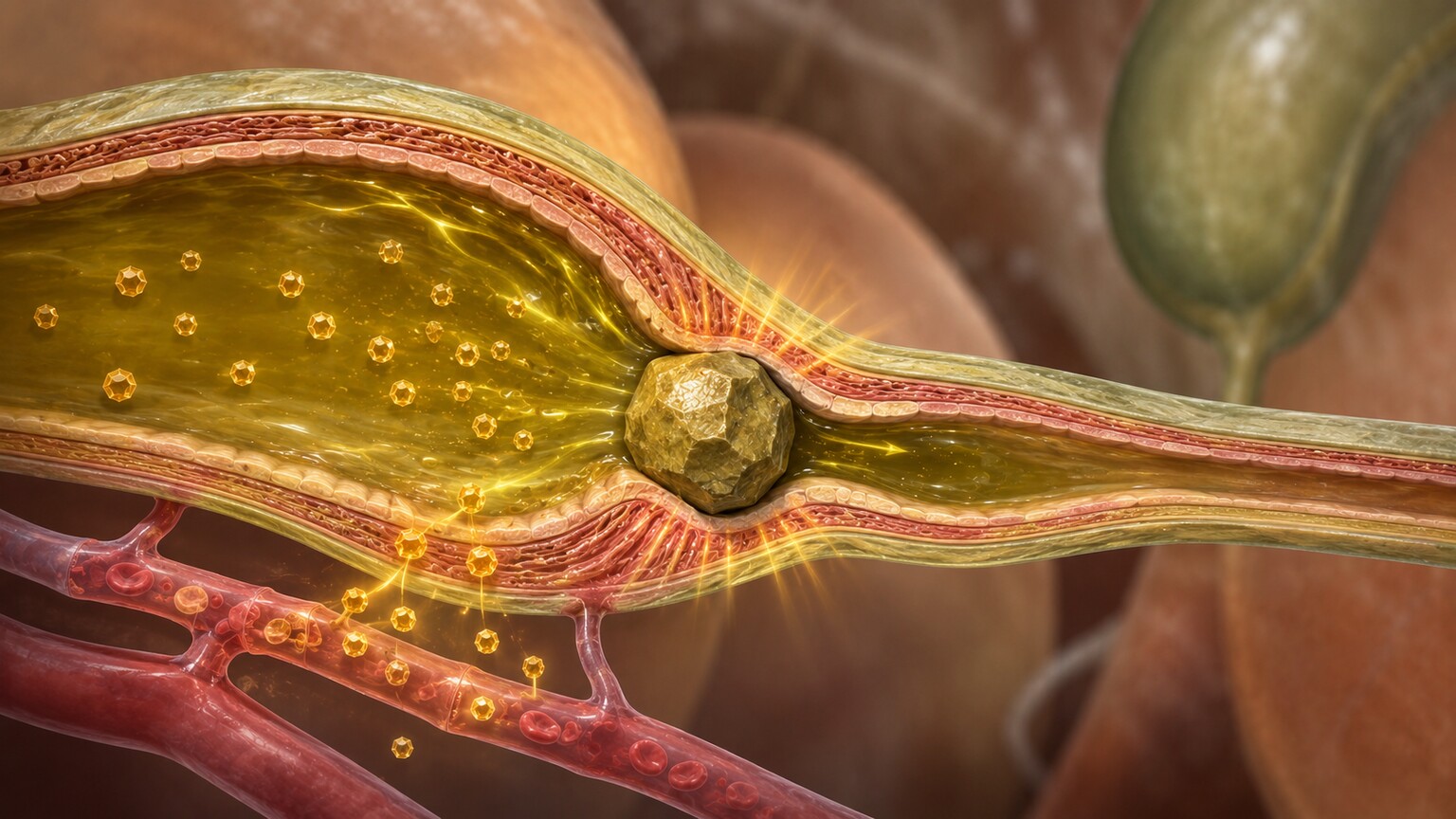
Figure 1. A gallstone lodged in the common bile duct creates backpressure that forces more CA 19-9 into the bloodstream than the ducts release under normal conditions.
What "Above Normal" Actually Means for This Test
Every lab value on your report is compared against a reference range built from a large sample of healthy people — the range where roughly 95% of that healthy population's results fall. For CA 19-9, most labs set the upper edge of that range at 37 U/mL, though the exact cutoff can shift a little depending on which testing method a specific lab uses. Once your result climbs past that number, the report flags it, usually with an "H" or in red text, simply because you've stepped outside the statistical zone where most healthy people sit. That flag is a prompt to look closer, not a diagnosis by itself.
It helps to picture the reference range less like a wall and more like the edge of a bell curve. A result of 40 U/mL is only barely outside the curve most people fall inside; a result of 4,000 U/mL is a different situation entirely, sitting far out on the tail where genuine disease becomes statistically far more likely. Both technically earn the same "H" flag on a printed report, which is exactly why the raw fact of being "above normal" tells you so much less than people initially assume — it's the starting point for a conversation with your doctor, not the end of one.
It's also worth knowing that the number itself isn't perfectly standardized across every lab in the country. Different laboratories sometimes use different testing platforms or assay kits to measure CA 19-9, and those platforms can produce slightly different results from the exact same blood sample, which is part of why the "37 U/mL" figure is best understood as a common convention rather than a fixed law of biology. This is also why doctors generally prefer to track a person's CA 19-9 over time using the same lab whenever possible — comparing results across two different assay methods can introduce enough variation on its own to make a stable trend look like it's shifting when it may not be.
Where CA 19-9 Actually Comes From
To understand why a level goes up, it helps to know what CA 19-9 actually is and where your body makes it in the first place. It's a type of glycoprotein — a molecule built from a protein backbone with sugar chains attached to it — technically known as the sialylated Lewis-a antigen. It's produced by the epithelial cells that line several different organs: the ducts of the pancreas, the bile ducts and gallbladder, the lining of the stomach, and parts of the intestinal tract. In small, ordinary amounts, these tissues constantly shed a trickle of CA 19-9 into the ducts they line, and a small amount of that normally makes its way into the bloodstream, which is why everyone has some baseline level rather than zero.
Because so many different tissues are capable of producing this same molecule, an elevated result doesn't automatically point to one specific organ the way a more narrowly produced marker might. Anything that irritates, inflames, obstructs, or damages any of these tissues — the pancreas, the bile ducts, the stomach lining, the intestines — has the potential to increase how much CA 19-9 spills into circulation. That single fact is the reason the list of possible explanations for an elevated result is genuinely long, and why doctors evaluate the whole clinical picture rather than reading the number in isolation.
Roughly 5% to 10% of people also carry a genetic trait — being "Lewis-negative" — that means their cells physically cannot produce CA 19-9 at all, no matter what's happening in their body. This doesn't apply to an elevated result (if anything, it explains why some people with real disease never show one), but it's worth knowing because it underscores that this marker was never built to work identically for everyone, in either direction.

Figure 2. A flagged CA 19-9 result appearing on a patient portal is often the very first thing a person sees, before any clinical context has been added to the number.
That moment of first seeing the flag, on its own, has zero clinical information attached to it — the portal doesn't know your history, your symptoms, or how this result compares to any prior draw, and neither does the number by itself. Everything from this point forward in this article is about supplying exactly the context that single moment is missing, starting with the explanation clinicians reach for most often.
The Most Common Reason: Something Slowing Down Bile Flow
Of all the explanations for an elevated CA 19-9, problems with bile flow are among the most frequent and, importantly, among the most treatable. Bile is the digestive fluid made by the liver and stored in the gallbladder, and it travels through a network of small tubes called bile ducts on its way into the intestine. Anything that narrows or blocks those ducts — a gallstone that's slipped out of the gallbladder, scar tissue from a prior surgery, a benign stricture, or inflammation of the duct lining itself — causes bile, and everything dissolved or suspended in it, including CA 19-9, to back up rather than drain normally.
That backup, known clinically as cholestasis, is one of the single most well-documented benign causes of a high CA 19-9 in the medical literature. Even a partial, low-grade blockage that doesn't cause obvious symptoms like jaundice can be enough to nudge a result above the reference range. And because the mechanism is purely mechanical — pressure building up behind an obstruction rather than a tumor actively manufacturing the antigen — levels caused this way can sometimes climb surprisingly high without indicating anything malignant at all. This is exactly why an elevated CA 19-9 so often prompts an ultrasound or other imaging of the gallbladder and bile ducts before anything else: it's frequently the fastest way to either find, or rule out, the most common explanation first.
Curious what your own lab results are really telling you? Upload them and get a complete, plain-language breakdown in under 15 minutes.
Analyze My ResultsAn Inflamed Pancreas Can Raise the Number Too
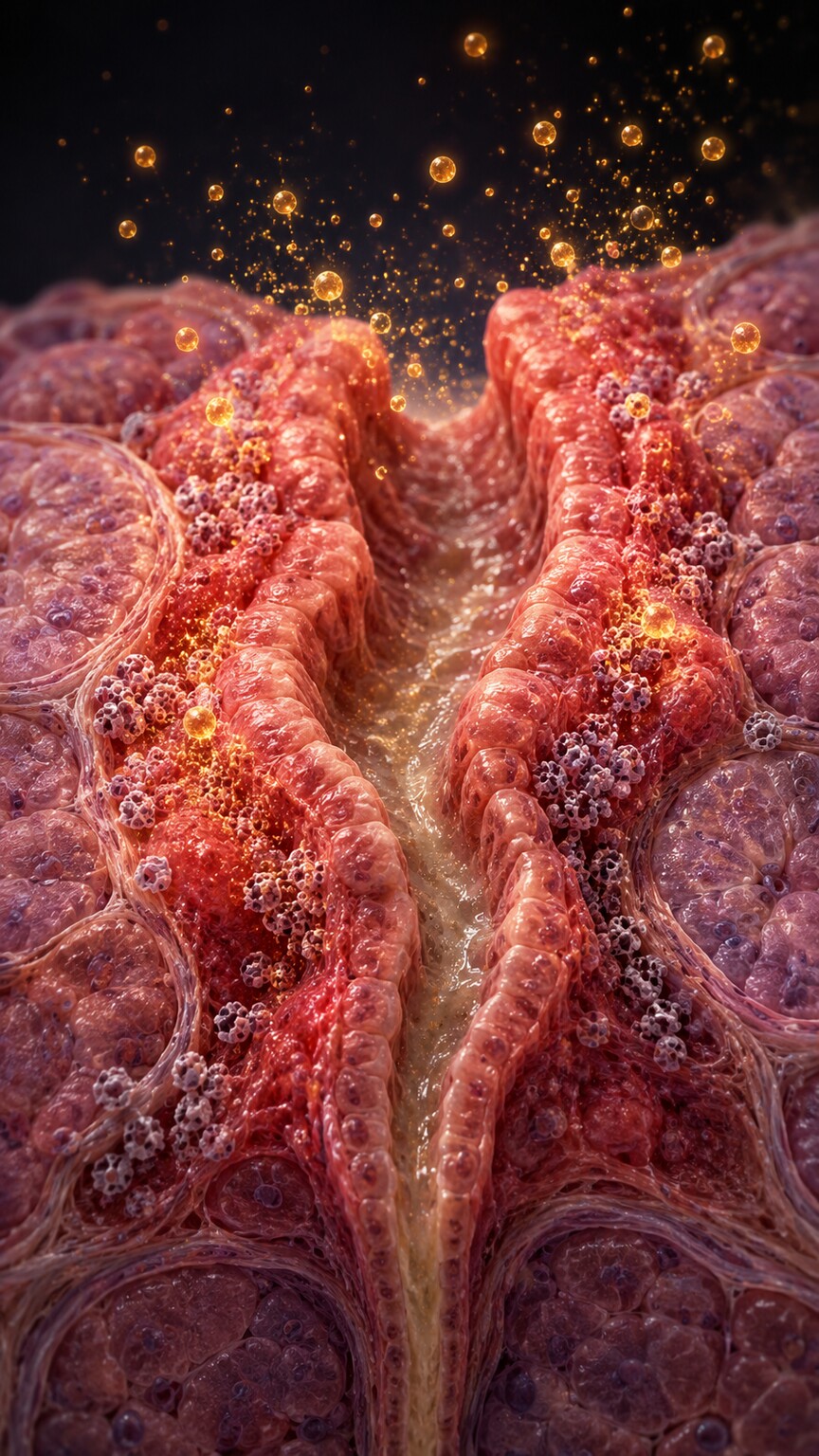
Figure 3. Inflamed, swollen pancreatic tissue during an episode of pancreatitis can temporarily push CA 19-9 production well above its usual baseline.
Pancreatitis — inflammation of the pancreas, whether it flares up suddenly (acute) or has been simmering for a long time (chronic) — is another well-established reason CA 19-9 can rise. When the pancreas is inflamed, the ducts running through it become irritated and sometimes narrowed, which both increases how much CA 19-9 the irritated tissue sheds and slows the normal drainage of pancreatic fluid, echoing the same "backup" mechanism seen with bile duct blockages. Someone recovering from a bout of acute pancreatitis, often triggered by gallstones or heavy alcohol use, can have a CA 19-9 result that's elevated for weeks afterward simply because the tissue is still healing and settling back into its normal rhythm.
Chronic pancreatitis complicates the picture a little more, since the pancreas in this condition is dealing with ongoing, low-grade inflammation and scarring rather than a single acute event. People with chronic pancreatitis can carry a persistently elevated CA 19-9 as their new baseline, which is part of why doctors managing this condition tend to interpret any single result in the context of a person's known history rather than treating every new elevated draw as a fresh red flag.
Liver Disease and a Slower-Clearing Bloodstream
The liver doesn't just make bile — it also plays a role in clearing various substances, including CA 19-9, out of the bloodstream over time. When the liver itself is under strain, whether from cirrhosis (long-term scarring), hepatitis (inflammation, often from a viral infection), or fatty liver disease, that clearance process can slow down, allowing CA 19-9 to accumulate to higher levels even without any new production. On top of that, liver disease frequently comes bundled with some degree of cholestasis, since a scarred or inflamed liver often doesn't manage bile flow as efficiently as a healthy one, layering a second contributing mechanism on top of the first.
This combination is one reason doctors evaluating an elevated CA 19-9 will often check liver function tests at the same time. A pattern where liver enzymes and bilirubin are also elevated alongside CA 19-9 points strongly toward the liver itself as the source of the signal, rather than something happening in the pancreas — a distinction that meaningfully changes what kind of imaging or follow-up gets ordered next.
People with cirrhosis specifically tend to show this pattern more often than people with milder, earlier forms of liver disease, since cirrhosis represents a more advanced stage where both bile flow and general clearance are more significantly affected. This doesn't mean everyone with fatty liver disease or mild hepatitis will see an elevated CA 19-9 — many won't — but it does mean liver health is worth reviewing as part of a complete picture, particularly in anyone with a known history of heavy alcohol use, viral hepatitis, or a prior fatty liver diagnosis.
Why CA 19-9 Isn't Used to Screen Healthy People
A natural question once you understand how many things can raise CA 19-9 is why it isn't simply used as a routine screening test the way cholesterol or blood sugar are checked at an annual physical. The answer comes down to how the test performs in people who have no symptoms and no known risk factors. Because pancreatic cancer and the other cancers associated with this marker are relatively uncommon in the general population, even a highly accurate test produces a meaningful number of false alarms when used to screen broadly — statistically, most people who test "positive" in a low-risk population would turn out not to have cancer at all, while some people who do have early cancer can still test normal, particularly if their tumor is small or if they happen to be Lewis-negative.
This is exactly why major medical organizations reserve CA 19-9 for people who already have a specific reason to be tested — a known pancreatic mass on imaging, unexplained symptoms suggestive of pancreatic or biliary disease, or monitoring during and after treatment for a confirmed cancer — rather than recommending it as a general screening tool for the public. Understanding this distinction helps explain why your doctor may not treat a routine, unexpected elevation with the same urgency a confirmed high-risk patient's result would receive: the test is doing a different job in each of those two situations, and the statistics behind it only really support the second one.
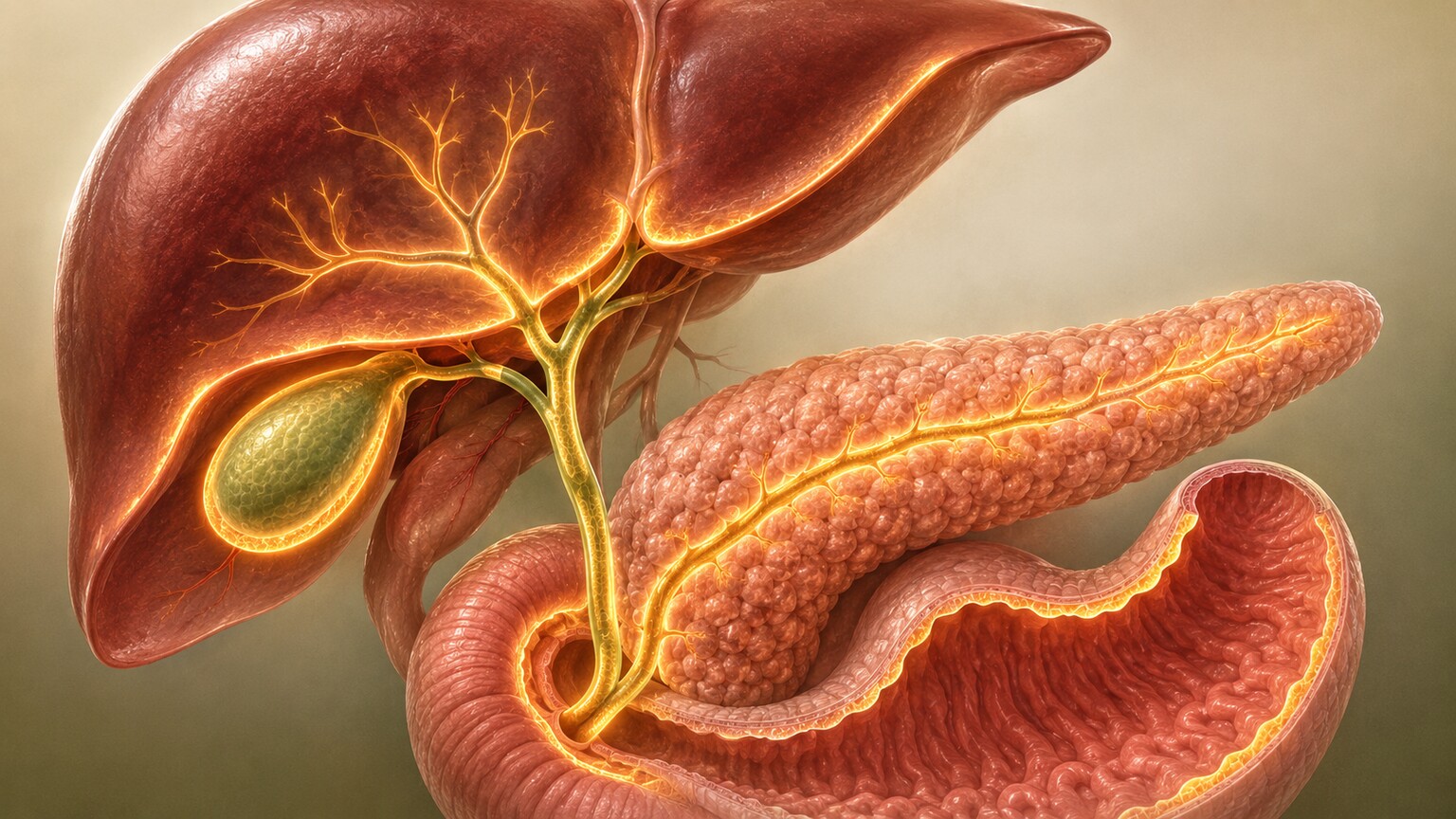
Figure 4. CA 19-9 is produced not only by the pancreas but by epithelial cells lining the bile ducts, gallbladder, stomach, and intestinal tract, which is part of why so many different conditions can raise it.
Blood Sugar, Diabetes, and a Less Obvious Connection
One of the less intuitive contributors to an elevated CA 19-9 is poorly controlled blood sugar. Research has repeatedly found that people with diabetes, particularly when their blood sugar has been running high for an extended stretch, tend to have modestly higher CA 19-9 levels than people with well-controlled glucose or no diabetes at all. The exact mechanism isn't fully settled, but it's thought to involve how elevated glucose affects the cells lining the pancreatic and biliary ducts, along with subtle, low-grade inflammatory changes that chronically high blood sugar produces throughout the digestive tract over time.
This connection matters practically because it means a routine diabetes-related blood sugar check is a reasonable, low-effort thing to review alongside an elevated CA 19-9, especially in someone with a known history of diabetes or prediabetes. It's rarely the sole explanation for a very high number, but in the mildly-to-moderately elevated range, it's common enough that many clinicians ask about blood sugar control as a matter of routine before assuming a more concerning cause.

Figure 5. Chronic, poorly controlled blood sugar has been associated with modestly elevated CA 19-9 readings even without any pancreatic or biliary disease present.
People managing type 2 diabetes for many years, especially with periods of elevated hemoglobin A1c, are the group in whom this connection shows up most consistently in published research. It's a good example of why a single elevated lab value benefits from being read next to the rest of a person's chart rather than in a vacuum — a CA 19-9 of 55 U/mL in someone with an A1c of 9.5% is being interpreted through a genuinely different lens than the same number in someone with tightly controlled blood sugar and no other risk factors.
Inflammatory and Digestive Conditions Elsewhere in the Gut
Because the stomach and intestinal lining also produce CA 19-9, conditions that inflame those tissues can raise the marker even when the pancreas and bile ducts are entirely uninvolved. Inflammatory bowel disease — Crohn's disease and ulcerative colitis — has been associated with elevated CA 19-9 in a meaningful share of patients, particularly during active flares when the intestinal lining is most inflamed. The same general principle applies to significant gastritis, an inflamed stomach lining, which can arise from infection, certain medications, or chronic irritation.
These digestive causes tend to track closely with symptoms — abdominal pain, changes in bowel habits, or a known flare of a pre-existing condition — which gives doctors a helpful clue when trying to sort out where an elevated result is coming from. A CA 19-9 that rises alongside a Crohn's flare and then settles back down once the flare is treated is behaving exactly the way this mechanism would predict, and that pattern over time is often more informative than the single number ever could be on its own.
Benign ovarian cysts and endometriosis have also been documented to raise CA 19-9 in some women, through a mechanism thought to involve irritation of tissue near the digestive tract's lower structures. This particular cause is worth mentioning specifically because it's easy to overlook when the focus of an evaluation naturally gravitates toward the pancreas and liver — a full picture of any relevant gynecologic history is a reasonable thing to bring up with your doctor if you fall into this category and no other explanation has turned up yet.
A Recent Illness Can Nudge the Number Temporarily
Not every elevated CA 19-9 traces back to a chronic condition. Because CA 19-9 production is sensitive to general inflammation, a recent infection, a bad stomach virus, or even a significant systemic illness unrelated to the digestive tract can cause a temporary, modest bump in the result — one that tends to resolve on its own within weeks as the underlying illness clears. This is one of the most reassuring possible explanations precisely because it requires no ongoing treatment beyond letting the body recover, and a repeat test drawn a month or so later, once you're feeling well again, often comes back comfortably inside the normal range.
This is also a good moment to mention smoking, which several studies have linked to modestly elevated CA 19-9 levels independent of any diagnosed digestive condition. The proposed explanation involves the chronic, low-grade irritation smoking causes throughout mucous membranes, including parts of the digestive tract that produce this marker. It's rarely dramatic on its own, but it's a real, reproducible effect worth mentioning to your doctor if it applies to you, since it can help explain a mildly elevated number that otherwise has no clear source.
Cancer Is a Possibility — Not the First Assumption
It would be dishonest to write about an elevated CA 19-9 without addressing the reason this marker gets checked in the first place: it's used, alongside imaging and clinical judgment, to help evaluate for pancreatic cancer and, less commonly, cancers of the bile ducts, gallbladder, stomach, or colon. That association is real, and it's the reason your doctor takes the result seriously enough to investigate rather than dismiss it. But it's important to understand where cancer actually sits in the list of explanations: given how common benign causes like gallstones, pancreatitis, liver disease, and diabetes are compared to pancreatic cancer in the general population, the majority of individual elevated results — particularly mild, first-time elevations — do not turn out to reflect malignancy once fully worked up.
What actually shifts the odds meaningfully toward cancer isn't the mere fact of being above 37 U/mL; it's a combination of factors together: how far above the cutoff the number sits, whether it keeps climbing on repeat testing rather than settling down, whether imaging shows a visible mass or suspicious finding, and whether the person has symptoms like unexplained weight loss, new-onset diabetes, persistent abdominal or back pain, or jaundice. A mildly elevated, isolated result in someone with no symptoms and a plausible benign explanation like a recent gallstone flare is a very different clinical picture from a markedly elevated, steadily rising result in someone losing weight with a visible pancreatic mass on a scan. Your doctor is trained to weigh all of that together, which is exactly why the number by itself was never designed to be the whole conversation.
Age and family history also factor into how a doctor weighs your specific result. Pancreatic cancer is uncommon before age 45 and becomes progressively more common with each subsequent decade, and a family history of pancreatic cancer, certain hereditary genetic syndromes, or a personal history of chronic pancreatitis can all shift how closely a given elevated result gets followed. None of these factors turn a mild elevation into a diagnosis on their own, but they're part of the same broader risk assessment your doctor is quietly running in the background every time a new lab result crosses their desk.
Why Your Doctor Usually Won't React to One Single Number
If your first elevated CA 19-9 doesn't trigger an immediate cascade of urgent tests, that's not your care team being dismissive — it reflects how genuinely common a temporary, explainable elevation is, and how much value a repeat measurement adds before drawing conclusions. A single result can be nudged by so many short-term factors — a recent illness, mild dehydration, a small dietary or alcohol-related trigger, lab-to-lab variation in the assay used — that clinicians generally prefer to see whether the number holds steady, climbs, or falls before deciding how aggressively to investigate further.
This is also why your doctor will usually ask a set of practical questions before ordering anything else: Have you had any recent stomach illness? Any known gallstones or liver issues? How has your blood sugar been running? Any new digestive symptoms, weight changes, or family history worth flagging? The answers to these questions often narrow the list of likely explanations dramatically before a single additional test is even ordered, which is part of why a thorough conversation with your doctor is genuinely one of the most useful next steps available to you.
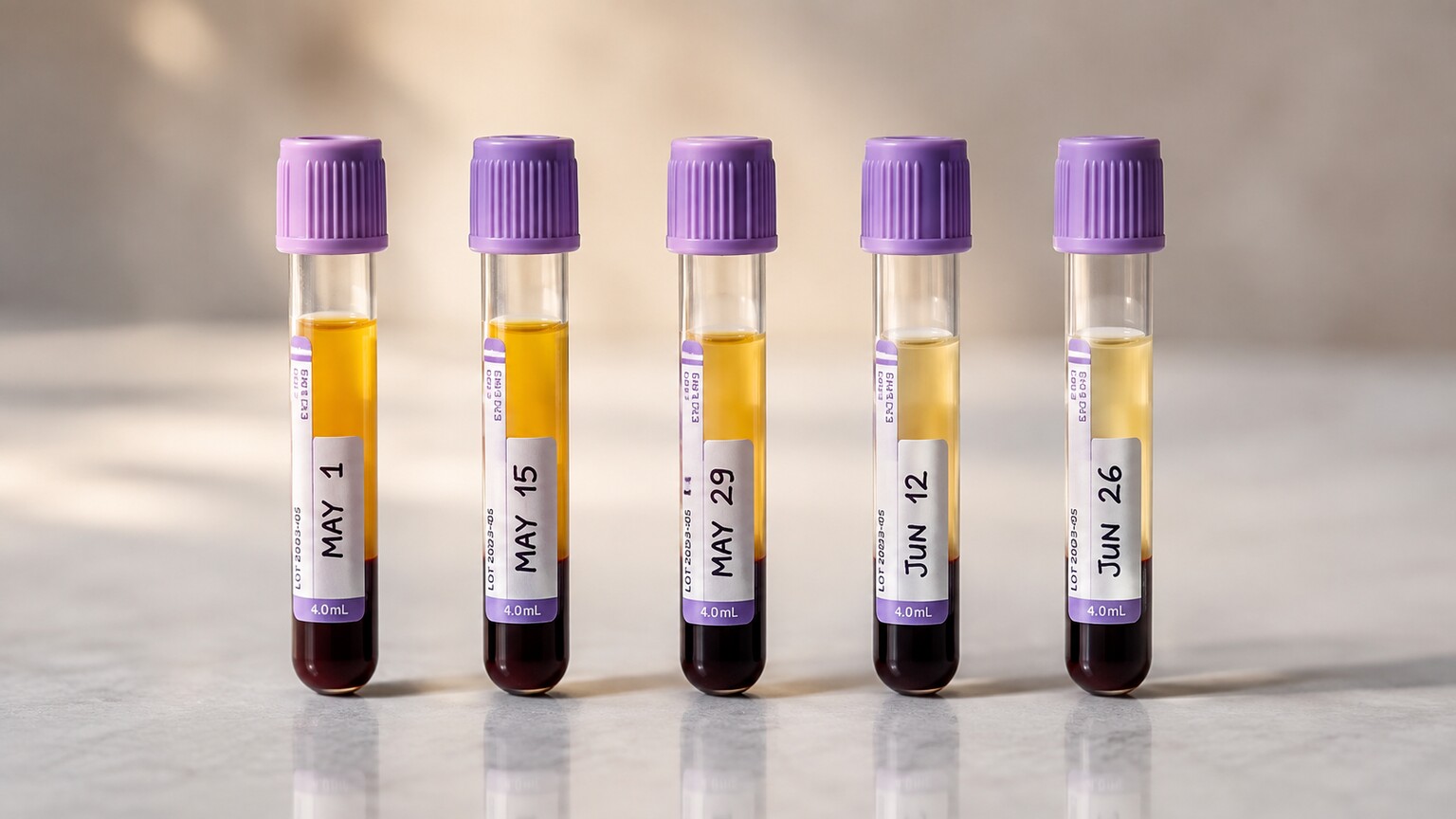
Figure 6. A single elevated result carries far less weight than a series of sequential draws, which is why doctors often ask for a repeat test before drawing further conclusions.
What Typically Happens Next
The exact path forward depends heavily on how high the number is and what else is going on, but a few steps show up in most workups of a first-time elevated CA 19-9. A repeat blood draw, often a few weeks later, checks whether the elevation is stable, rising, or resolving on its own. Basic liver function tests and a blood sugar or hemoglobin A1c check help rule in or out two of the most common contributors covered above. And in many cases, an abdominal ultrasound — a painless, non-invasive imaging test — is ordered specifically to look at the gallbladder, bile ducts, liver, and pancreas for anything structural, like a gallstone, duct dilation, or, less commonly, a mass.
If those initial steps turn up a clear, treatable explanation — a gallstone causing partial blockage, signs of pancreatitis, evidence of fatty liver disease — that's often where the workup for the elevated CA 19-9 specifically ends, since treating the underlying cause is expected to bring the number back down over time. If the picture remains unclear, if the number is significantly elevated, or if any symptoms raise additional concern, your doctor may recommend more detailed imaging, such as a CT or MRI scan, to look more closely at the pancreas and surrounding structures before deciding on any next steps beyond that.
Managing the Wait Between Tests
The period between an initial elevated result and a follow-up test or scan is, for most people, the hardest part of this entire process — harder, in a lot of ways, than whatever the eventual answer turns out to be. It's worth naming that directly, because it's a completely normal reaction to an abnormal number, and it doesn't mean you're overreacting. A few practical things can help during this window: writing down your specific questions as they occur to you so you don't lose track of them before your next appointment, avoiding the temptation to interpret unrelated everyday symptoms as new evidence one way or the other, and asking your doctor's office directly for a realistic timeline on when you'll have your next piece of information, so the waiting period has a concrete endpoint rather than feeling open-ended.
It's also reasonable to ask whether anything you're doing day to day — diet, alcohol, exercise — is expected to meaningfully affect a repeat result, since for most of the benign causes covered in this article, the honest answer is that the underlying cause matters far more than any lifestyle adjustment made in the days before a repeat draw. Knowing that can, for a lot of people, remove one more source of anxious second-guessing while they wait for their next result to come back.
What to Ask Your Doctor
A short, specific list of questions tends to get you further than a general "is this bad?" It's worth asking exactly how far above the reference range your result sits, and by how much, since your doctor's level of concern is genuinely shaped by that magnitude. Ask whether any of the common benign explanations covered in this article — gallstones, pancreatitis, liver disease, blood sugar, a recent illness — already fit your history, since your doctor may already have a leading suspicion based on what they know about you. And ask directly what the plan is if the repeat test or initial imaging comes back unclear, so you have a concrete sense of what happens next rather than an open-ended wait.
It's also entirely reasonable to ask what timeframe your doctor is working with — whether a repeat draw in two weeks versus two months changes anything about how they're interpreting your case, and what specific finding would move things from routine monitoring into a more urgent workup. Walking out of that conversation with a clear next step, rather than just a number, is usually the single most useful thing you can do with this information.
Finally, it's worth asking your doctor to put your result in writing, in plain language, either in an after-visit summary or a portal message — not just the raw number and reference range, but their actual interpretation of it given everything they know about you. Having that written down gives you something concrete to refer back to if new questions come up later, and it's a small request that most clinicians are glad to accommodate, since it also reduces the chance of a miscommunication about what was actually discussed.
Frequently Asked Questions
Is a CA 19-9 slightly above 37 U/mL something to worry about?
On its own, usually not. Results just above the reference range are common and are frequently explained by benign, temporary factors like a recent illness, mild gallbladder issues, or lab-to-lab variation. Your doctor will typically look at the broader picture, and often repeat the test, before drawing conclusions from a single mildly elevated result.
What are the most common non-cancer causes of a high CA 19-9?
Gallstones or other bile duct blockages, pancreatitis, liver disease such as cirrhosis or fatty liver, poorly controlled diabetes, inflammatory bowel disease, and recent infections or illnesses are among the most frequently documented benign causes.
Does an elevated CA 19-9 mean I need a CT scan right away?
Not necessarily. Many doctors start with a repeat blood draw, liver function tests, and a blood sugar check, along with a basic abdominal ultrasound. More advanced imaging like a CT or MRI is generally reserved for cases where the number is significantly elevated, keeps rising, or the initial workup doesn't explain it.
Can diabetes really raise CA 19-9 on its own?
Yes. Research has found that people with poorly controlled blood sugar, particularly those with a history of elevated hemoglobin A1c, tend to have modestly higher CA 19-9 levels even without any pancreatic or biliary disease present.
How long does it take for a benign cause to bring the number back down?
It varies by cause. A transient elevation from a recent illness often resolves within weeks. An elevation from a treated gallstone blockage or a resolving bout of pancreatitis typically improves over a similar timeframe once the underlying issue is addressed, though your doctor will usually confirm this with a follow-up test rather than assuming.
Should I get retested even if my doctor isn't concerned?
If your doctor has reviewed your history, symptoms, and the magnitude of your result and isn't recommending immediate further testing, that's a clinical judgment based on your specific picture. It's always reasonable to ask directly whether a repeat test at a future date is planned, so you know what to expect.
Can smoking alone explain an elevated result?
It can contribute to a modest elevation in some people, based on studies linking smoking to slightly higher CA 19-9 levels, but it's rarely the sole explanation for a significantly elevated number and is usually considered alongside other possibilities rather than instead of them.
Why isn't CA 19-9 just used to screen everyone for pancreatic cancer?
Because pancreatic cancer is relatively uncommon in the general population, using CA 19-9 to screen people with no symptoms or risk factors would produce too many false alarms to be useful. It performs far better as a tool for people who already have a specific clinical reason to be tested.
Does the specific lab I used affect how my result should be interpreted?
It can, to a degree. Different labs sometimes use different testing platforms, which can produce slightly different numbers from the same sample. For this reason, doctors generally prefer to track CA 19-9 trends using results from the same lab over time rather than comparing values drawn from different testing methods.
Conclusion
Seeing "above normal" next to your CA 19-9 result is understandably alarming, but the honest, research-backed picture is that this marker responds to a wide range of everyday, treatable conditions — gallstones, pancreatitis, liver disease, blood sugar control, inflammation elsewhere in the digestive tract, even a recent stomach bug — long before cancer becomes the most likely explanation. The reference range itself is a statistical starting line, not a verdict, and how far above it you sit, whether the number holds steady or moves on repeat testing, and what your imaging and broader health picture show all matter far more than the single flagged value on its own. The most productive next step isn't to search for worst-case scenarios online — it's a focused conversation with your doctor about your specific number, your specific history, and the specific plan for figuring out exactly what's behind it.
Whatever the eventual explanation turns out to be in your case, the process of getting there — a repeat draw, a look at your liver and blood sugar, an ultrasound if warranted — is well established, low-risk, and designed specifically to separate the common, treatable explanations from the rarer, more serious ones as efficiently as possible. That process exists precisely because a single number was never meant to carry the full weight of a diagnosis on its own.
Still Not Sure What Your Results Mean?
Upload your labs and get a complete, visual, plain-language interpretation of every biomarker — delivered to your inbox in under 15 minutes.
Get My ReportThis article is for educational purposes only and does not constitute medical advice. Always consult your healthcare provider regarding your specific lab results.