
Why Is My Rheumatoid Factor Elevated Without Joint Pain?
A positive rheumatoid factor (RF) result with no joint pain, swelling, or stiffness is a far more common and far less alarming situation than the name of the test alone would suggest. RF is a genuinely nonspecific antibody — a meaningful percentage of perfectly healthy people, especially as they get older, test positive for it without ever developing rheumatoid arthritis or any other autoimmune disease at all. Beyond simple aging, a positive RF without joint symptoms can trace back to chronic infections like hepatitis C, other autoimmune conditions that don't primarily affect the joints, certain liver and lung diseases, or nothing identifiable whatsoever. This article explains what RF actually is at a molecular level, just how common an incidental positive result really is, the specific conditions capable of producing one outside of rheumatoid arthritis, the companion antibody test that meaningfully clarifies an ambiguous result, and what actually determines whether an elevated RF without symptoms deserves closer, ongoing monitoring or can reasonably be set aside without further concern.

Figure 1. Rheumatoid factor is itself an antibody that targets the tail (Fc) portion of ordinary IgG antibodies, linking multiple antibodies together into small immune complexes that can circulate throughout the body.
What Rheumatoid Factor Actually Is — An Antibody Against Other Antibodies
Most antibodies your immune system produces are built to recognize something external — a virus, a bacterium, a specific protein on a pollen grain. Rheumatoid factor is unusual because it's an antibody that recognizes another antibody: specifically, RF binds to the Fc region, or tail portion, of immunoglobulin G (IgG), the most abundant antibody class circulating in your blood. When RF binds to an IgG molecule, it doesn't just sit there — it can link multiple IgG molecules together into small clusters called immune complexes, which then circulate through the bloodstream and, in rheumatoid arthritis specifically, tend to settle and accumulate within joint tissue, where they help drive the inflammatory cascade responsible for that disease's characteristic joint pain, swelling, and eventual damage.
The synovium, the thin membrane lining the inside of joints, is unusually well-suited to becoming a landing site for these circulating immune complexes, which helps explain why joints in particular, rather than other tissues throughout the body, bear the brunt of RF-driven inflammation specifically in rheumatoid arthritis. Once immune complexes settle into synovial tissue, they activate a cascade of local immune cells and inflammatory signaling molecules that, over time, thickens the synovium, damages nearby cartilage, and can eventually erode the underlying bone if the process continues unchecked — the well-known destructive joint pattern that gives rheumatoid arthritis its name and its reputation. But this entire downstream cascade depends on RF-containing immune complexes actually accumulating specifically within joint tissue at meaningful concentrations, which is precisely the step that doesn't happen in most of the alternative causes covered throughout the rest of this article — the antibody can be circulating in the blood, detectable on a standard lab test, without ever concentrating in the joints in a way that would produce the disease its name is most associated with.
This mechanism explains why RF was historically associated so strongly with rheumatoid arthritis in the first place — it's genuinely present in the large majority of people who have that disease, and testing for it became one of the earliest reliable laboratory tools available for supporting the diagnosis. But the same mechanism also explains why RF is fundamentally nonspecific: nothing about producing antibodies against your own IgG requires rheumatoid arthritis specifically to be present. Any situation involving prolonged immune system activation — chronic infection, a different autoimmune disease, or even certain patterns of normal immune aging — can independently prompt the immune system to start producing RF, entirely separate from whatever is actually driving rheumatoid arthritis in someone who genuinely has it.
RF itself actually comes in several molecular forms, referred to as isotypes, that standard clinical testing doesn't routinely distinguish between. Most labs measure IgM-type RF, since it's the form most consistently associated with rheumatoid arthritis and the easiest to detect reliably with standard assay methods, but IgA and IgG forms of RF also exist and can each behave somewhat differently depending on the underlying cause. Some research has found that IgA-type RF, for instance, may correlate more specifically with active rheumatoid arthritis disease severity than the IgM form typically reported on a standard panel, though this distinction hasn't yet made its way into routine clinical testing for most patients. Understanding that "rheumatoid factor" isn't really one single molecule but a family of related antibodies helps explain why the same broad test name can behave so differently depending on what's actually producing it in any given person.
How Common Is a Positive RF Without Any Disease at All?
The single most important fact to understand about an isolated positive RF result is just how often it occurs in people with no autoimmune disease whatsoever. Depending on the specific population studied and the exact cutoff a lab uses, somewhere around 5 percent of healthy adults test positive for RF at any given time, and that figure climbs meaningfully with age — some studies find that upward of 10 to 25 percent of healthy adults over 65 have a detectable, low-level positive RF, without any joint disease, any autoimmune condition, or any other identifiable explanation at all.
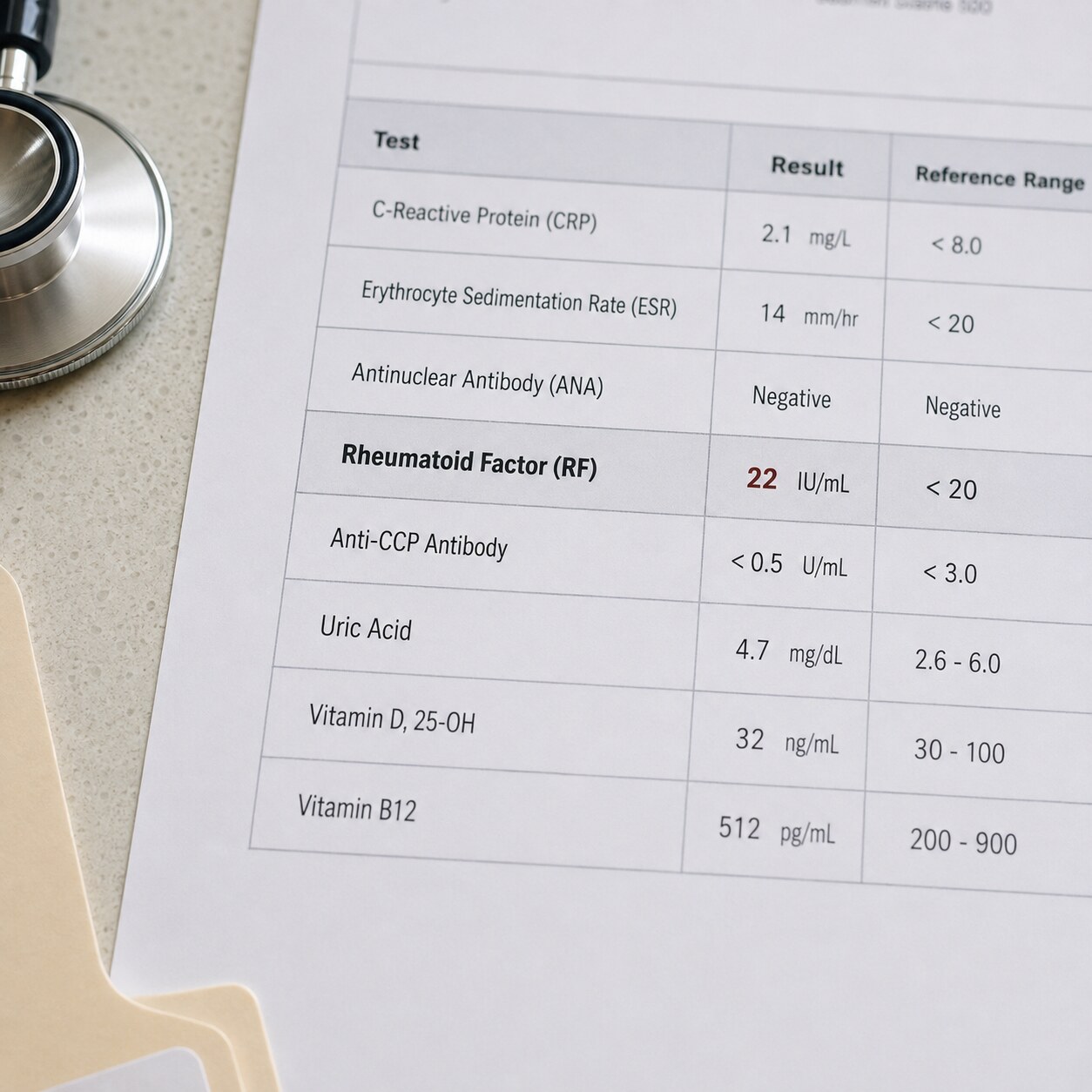
Figure 2. A rheumatoid factor result is reported as a titer, and low-level elevations just above the cutoff are common enough in healthy older adults that magnitude matters as much as the simple positive-or-negative result.
This is precisely why RF alone has never been considered sufficient to diagnose rheumatoid arthritis on its own, even in someone with joint symptoms — official classification criteria for the disease require it to be combined with actual clinical findings, and in someone with no joint symptoms whatsoever, a positive RF carries even less individual diagnostic weight. The magnitude of the result matters considerably here too: a result just barely above the cutoff for positive is a very different finding from one that's five or ten times higher than that cutoff, with higher titers generally correlating with a meaningfully greater likelihood that something clinically relevant is actually driving the result, whether that turns out to be rheumatoid arthritis eventually or one of the other conditions covered later in this article.
Why does RF positivity climb so steadily with age in people who never develop any related disease at all? The leading explanation involves a phenomenon researchers call immunosenescence — the gradual, largely unavoidable drift in immune system function that happens over a normal lifetime. As the immune system ages, it tends to produce a broader, somewhat less precisely regulated range of antibodies, including low levels of antibodies directed against the body's own proteins, of which RF is simply one recognizable example. This isn't a sign of disease in the way autoimmune activation would be; it's closer to ordinary biological wear, similar to how other lab values gradually drift with age even in people who remain otherwise completely healthy. This is exactly why age-related context matters so much when interpreting a positive RF: the same modestly elevated titer that would raise real concern in a healthy 25-year-old carries much less individual significance in an asymptomatic 75-year-old, purely because of how common this pattern becomes as a function of age alone.
Chronic Infections That Can Trigger a Positive RF
Sustained immune activation from a chronic infection is one of the better-documented non-rheumatoid causes of a positive RF, and hepatitis C stands out as one of the strongest, most consistently reported associations in this category. Chronic hepatitis C infection triggers ongoing, low-grade immune stimulation that frequently produces a positive RF, sometimes at meaningfully elevated titers, entirely independent of any joint involvement — this connection is well-documented enough that unexplained RF positivity, particularly alongside any abnormal liver enzyme results, is a recognized reason to specifically screen for hepatitis C even in someone with no digestive or liver-related symptoms at all.

Figure 3. Infective endocarditis, a bacterial infection of the heart valves, is one of several chronic infections capable of producing a persistently positive rheumatoid factor with no joint involvement at all.
Beyond hepatitis C, several other chronic or subacute infections carry a similar documented association. Infective endocarditis, a bacterial infection affecting the heart valves that can smolder for weeks before being diagnosed, frequently produces a positive RF as part of the immune system's sustained, ongoing response to the infection. Tuberculosis, particularly in its more chronic or extrapulmonary forms, and certain other prolonged bacterial and parasitic infections have documented associations as well. What connects all of these is the same underlying principle: sustained immune system activation, from essentially any persistent trigger, can prompt RF production as something of a nonspecific byproduct, entirely separate from anything happening in the joints. This is exactly why a detailed history focused on recent or ongoing infection symptoms — even vague ones like unexplained fevers, night sweats, or unintended weight loss — is a standard part of investigating an unexplained positive RF, since identifying and treating an underlying infection can resolve the RF elevation along with it.
The infective endocarditis connection is worth understanding a bit more specifically, since it illustrates the mechanism at work particularly clearly. Bacteria colonizing a heart valve form clumps called vegetations, and as the immune system continuously encounters bacterial antigens shed from these vegetations over an extended period — often weeks before the infection is even diagnosed, since early endocarditis can produce only vague, low-grade symptoms like fatigue and intermittent fevers — it mounts a correspondingly sustained antibody response, part of which includes RF production. This is significant enough clinically that a positive RF is actually included among the supporting laboratory criteria some clinicians use when endocarditis is suspected but not yet confirmed, alongside blood cultures and heart imaging, making it one of the more concrete, actionable examples of RF genuinely contributing useful diagnostic information outside of rheumatoid arthritis entirely.
It's worth noting that once any of these infections is successfully treated, RF often — though not always — falls back to a normal or near-normal level over the following weeks to months, mirroring the resolution of whatever triggered the sustained immune activation in the first place. This pattern of improvement after treatment is itself sometimes used as confirmatory evidence that the infection, rather than an independent autoimmune process, was genuinely responsible for the original positive result, particularly in situations where the initial cause wasn't entirely clear-cut.
Because so many of these infectious causes can be entirely silent or produce only vague, easy-to-dismiss symptoms in their early stages, a genuinely thorough history matters more here than it might for a more visibly symptomatic finding. Questions about recent travel to regions with higher rates of certain infections, any history of intravenous drug use or unsterile piercings and tattoos that could carry bloodborne infection risk, recent dental work that occasionally introduces bacteria capable of seeding a heart valve, and any exposure to tuberculosis, even decades in the past, all form part of a genuinely comprehensive infectious workup for an unexplained positive RF — questions that might otherwise seem unrelated to a routine blood test result but that, taken together, can meaningfully narrow down which of several plausible infectious explanations is actually the right one.
Already have a rheumatoid factor number from a recent test, but not sure if it's actually good or bad for you? Just plug it in and see instantly.
🧮 Try the Free CalculatorOther Autoimmune Diseases That Raise RF Besides Rheumatoid Arthritis
Several autoimmune conditions that don't primarily target the joints are still capable of producing a positive RF, sometimes at higher rates than rheumatoid arthritis itself. Sjögren's syndrome, a condition in which the immune system attacks the glands responsible for producing tears and saliva, is a particularly notable example — RF positivity is actually found in a substantial majority of people with Sjögren's syndrome, in some studies exceeding the rate seen in rheumatoid arthritis. Someone with Sjögren's syndrome and a positive RF, but without joint pain, might instead notice persistent dry eyes, a gritty or sandy sensation under the eyelids, and a dry mouth that makes swallowing dry foods or speaking for long periods uncomfortable — symptoms that have nothing to do with joints but everything to do with why RF turned up positive in the first place.

Figure 4. Sjögren's syndrome, which attacks the tear and saliva glands rather than the joints, produces a positive rheumatoid factor in the majority of affected people — often the actual explanation when joint pain is absent.
Lupus (systemic lupus erythematosus) and mixed connective tissue disease can each independently produce a positive RF as well, typically alongside their own more characteristic symptom patterns — a facial rash, extreme sun sensitivity, or unexplained fatigue and low blood counts in the case of lupus — that point a clinician toward the correct diagnosis even when joint pain isn't part of the initial picture. This is part of why an unexplained positive RF, particularly one accompanied by any symptoms at all, even ones that seem completely unrelated to joints, is generally evaluated as part of a broader review of systems rather than being narrowly interpreted as either "rheumatoid arthritis" or "nothing," since several genuinely different autoimmune conditions can produce this identical laboratory finding through their own distinct mechanisms.
Sjögren's syndrome specifically deserves a closer look given how often it turns out to be the actual answer in exactly this scenario — a positive RF with no joint pain. Because dry eyes and dry mouth develop gradually and are easy to attribute to ordinary aging, allergies, or simply not drinking enough water, many people live with mild Sjögren's syndrome for years before ever connecting these symptoms to an underlying autoimmune process, meaning the positive RF sometimes shows up on unrelated bloodwork well before anyone has put the full symptom picture together. Asking specifically and directly about dry eye and dry mouth symptoms — not just waiting for a patient to volunteer them, since many people don't think to mention gradually worsening dryness as a medical symptom at all — is consequently one of the more valuable, low-cost steps in working through an otherwise unexplained positive RF, and it's a good example of why a thorough symptom history matters as much as any additional blood test in this particular situation.
Confirming Sjögren's syndrome once it's suspected generally involves a separate, more specific set of antibody tests — most commonly ones called anti-Ro/SSA and anti-La/SSB — alongside, in some cases, a simple objective measurement of tear production or a small salivary gland biopsy when the diagnosis remains uncertain after blood testing alone. This more specific workup illustrates a pattern that recurs throughout this entire article: RF itself functions best as a starting clue that something in the broader autoimmune category deserves attention, while the actual diagnosis almost always depends on a more targeted set of tests chosen based on whatever additional symptoms and findings accompany that initial, nonspecific result.
Beyond Sjögren's and lupus, other, rarer autoimmune and inflammatory conditions round out this category as well, including certain forms of vasculitis (inflammation of blood vessels) and sarcoidosis, a condition involving small clusters of inflammatory cells that can form in various organs, most classically the lungs. Both are considerably less common than the causes already discussed, but both are recognized, documented causes of a positive RF in the medical literature, and both tend to eventually reveal themselves through their own characteristic symptom patterns — persistent cough and shortness of breath in the case of pulmonary sarcoidosis, or skin changes, kidney involvement, or nerve symptoms depending on which blood vessels are affected in the case of vasculitis — reinforcing, once again, that a careful, comprehensive symptom review does more diagnostic work here than the RF result by itself ever could.
Why Titer Level and Trend Matter More Than a Single Positive Result
Because a positive RF is so common in the general population and shows up across such a wide range of unrelated conditions, clinicians rely heavily on the actual titer level — how far above the cutoff the result sits — and, when available, how that titer behaves over repeat testing, rather than treating a single positive-or-negative result as meaningful on its own. A titer only modestly above the cutoff, especially in an older adult with no symptoms at all, carries a fairly low probability of representing any of the conditions discussed in this article and is often simply left alone or rechecked at a future visit rather than actively investigated. A titer that's substantially elevated — several times the upper limit of normal — or one that continues climbing on repeat testing carries meaningfully more weight and generally does prompt a more thorough evaluation, even in the complete absence of joint symptoms.
This titer-based approach reflects a broader statistical reality about RF testing: at low titers, false positives genuinely outnumber true positives in a population without symptoms, meaning most low-level positive results in asymptomatic people don't represent any of the conditions covered in this article at all. At higher titers, that ratio shifts meaningfully in the other direction, and the probability that something specific and identifiable is actually happening rises correspondingly — which is exactly why the size of the number, not just its presence, does most of the interpretive work once joint symptoms aren't already pointing toward an obvious explanation.
This statistical concept — how a test's predictive value shifts depending on how strongly positive a result is and how likely the underlying condition was to begin with — is sometimes referred to as pretest probability, and it applies to RF in a genuinely practical way. A high RF titer discovered in someone with a family history of rheumatoid arthritis and some subtle, easy-to-overlook joint stiffness carries meaningfully more diagnostic weight than the exact same titer found incidentally in someone with no family history and no symptoms at all whatsoever, even though the raw number on the lab report might be identical in both cases. This is precisely why an experienced clinician interpreting an RF result is never just reading the number off the page in isolation — they're weighing it against everything else already known about that specific person, which is also exactly why the same lab value can reasonably lead to two very different next steps in two different people.
It's worth knowing that RF results can be reported in two somewhat different ways depending on the specific lab and testing method used. Older, more traditional methods report a titer as a ratio, such as 1:80 or 1:160, representing how many times a blood sample could be diluted before RF was no longer detectable — higher ratios mean more RF was present. Newer, more common quantitative methods instead report a concentration directly, typically in units per milliliter, alongside a specific numeric cutoff for positivity. Both approaches are measuring essentially the same underlying quantity, but the two number formats aren't directly interchangeable, which is worth keeping in mind if comparing results from different labs or from tests performed years apart using different testing platforms.
The Test That Actually Improves Specificity — Anti-CCP Antibodies
Given how nonspecific RF can be on its own, a related but distinct test called anti-cyclic citrullinated peptide antibodies, or anti-CCP, has become an important complementary tool specifically because it's considerably more specific to rheumatoid arthritis than RF ever was. Anti-CCP antibodies target citrullinated proteins — proteins that have undergone a specific chemical modification particularly relevant to rheumatoid arthritis's underlying disease process — and a positive anti-CCP result is far less commonly found in the general population, in other autoimmune diseases, or in chronic infection compared to a positive RF.

Figure 5. Anti-CCP antibody testing, ordered alongside RF, is considerably more specific to rheumatoid arthritis and helps clarify an unexplained positive RF result without joint symptoms.
When someone has a positive RF but no joint symptoms, adding an anti-CCP test is one of the more useful next steps available, precisely because the two results together carry more diagnostic weight than either one alone. A positive RF paired with a negative anti-CCP leans the overall picture toward one of the non-rheumatoid explanations covered throughout this article — infection, another autoimmune condition, or simple incidental positivity — while a positive result on both tests together raises meaningfully more concern for rheumatoid arthritis specifically, even before joint symptoms have had a chance to develop, since anti-CCP antibodies have been shown in research studies to sometimes appear years before any clinical joint disease becomes apparent. This "both positive versus only RF positive" distinction is one of the more practically useful pieces of information available when working through an unexplained, asymptomatic RF elevation.
This years-long lead time between a positive anti-CCP and the actual onset of joint disease has become an active area of research interest in its own right, since it raises a genuinely interesting question: could early intervention, before any joint damage has occurred, meaningfully change the eventual course of rheumatoid arthritis in people identified this way? Several research studies have specifically followed antibody-positive but symptom-free individuals over time to better understand what proportion eventually develop clinical disease and what factors predict who does — work that has meaningfully shaped current thinking around how seriously to take a high-risk antibody profile even in someone who currently feels completely well. This research angle is part of why an asymptomatic double-positive result, RF and anti-CCP together, isn't simply filed away and forgotten, even though no medication is started on the basis of antibodies alone.
It's worth being clear, though, that even among people identified this way with both antibodies positive, a substantial share never go on to develop clinically apparent rheumatoid arthritis at all, at least not within the timeframes typically studied. This uncertainty is exactly why current medical practice hasn't shifted toward treating antibody-positive, symptom-free individuals as though they already have the disease — the research is genuinely informative for understanding risk and guiding monitoring intensity, but it hasn't yet reached the point of changing when actual treatment begins, which still depends on the appearance of real, clinically confirmed joint involvement rather than antibody status alone.
When an Elevated RF Without Joint Pain Is Actually Worth Monitoring Closely
Certain combinations of findings shift an isolated positive RF from a low-priority incidental result toward something worth actively tracking over time. A high titer, particularly one accompanied by a positive anti-CCP, warrants closer attention even in someone who currently feels completely fine, given the documented pattern of anti-CCP sometimes preceding joint symptoms by a considerable stretch of time. A strong family history of rheumatoid arthritis or other autoimmune disease adds further weight to that same concern, since genetic predisposition plays a real role in who eventually develops clinical disease after testing positive for these antibodies.

Figure 6. A physical joint exam, checked periodically alongside repeat antibody testing, is how a high-titer RF or positive anti-CCP without symptoms is actually monitored for early signs of rheumatoid arthritis over time.
Even subtle symptoms that fall short of classic joint pain — brief morning stiffness lasting only a few minutes, mild fatigue, or a vague sense of general unwellness — are worth mentioning specifically in this context, since early rheumatoid arthritis can sometimes announce itself through symptoms this understated well before more obvious joint swelling develops. For someone with a high-risk combination of findings but genuinely no symptoms at all, the appropriate response is generally periodic monitoring — a repeat joint exam and repeat antibody testing at reasonable intervals — rather than either dismissing the result entirely or treating it as an active diagnosis requiring immediate rheumatoid arthritis treatment, since medication for that disease isn't started based on antibody results alone, regardless of how convincing the laboratory picture looks in isolation.
Lifestyle factors also enter this monitoring conversation in a genuinely evidence-supported way, since certain modifiable habits have been specifically linked to a higher likelihood of antibody-positive individuals eventually developing clinical rheumatoid arthritis. Smoking is the most well-documented of these — it's independently associated with both a higher likelihood of developing RF and anti-CCP positivity in the first place and a higher likelihood of that positivity eventually progressing to clinical disease, making it one of the more directly actionable pieces of advice available to someone in this exact situation. Maintaining a healthy body weight and managing periodontal (gum) disease, which has its own documented association with rheumatoid arthritis risk through a mechanism involving the same citrullination process anti-CCP antibodies target, round out the handful of modifiable factors worth discussing with a provider for someone found to be at elevated risk through this kind of incidental antibody testing.
The periodontal disease connection deserves a brief additional note, since it's one of the more surprising and least intuitive links on this entire list. Certain bacteria commonly involved in gum disease produce an enzyme capable of citrullinating proteins — the same chemical modification anti-CCP antibodies are specifically built to recognize — meaning chronic gum inflammation may, in some people, directly contribute to generating the very antibodies this article has spent so much time discussing. This is part of a broader, still-developing area of research looking at how inflammation occurring at sites entirely outside the joints, including the mouth and the gut, may help trigger the earliest antibody-producing stages of rheumatoid arthritis well before any joint symptoms ever appear.
Frequently Asked Questions
Does a positive rheumatoid factor without joint pain mean I will eventually develop rheumatoid arthritis?
Not necessarily at all, and honestly, for most people in this exact situation, it genuinely doesn't. A low-titer positive RF without any joint symptoms is a fairly common finding, especially with advancing age, and the large majority of people in this situation never go on to develop rheumatoid arthritis at all. A high titer combined with a positive anti-CCP result carries meaningfully more predictive weight than either finding alone and generally warrants ongoing monitoring over time, rather than being dismissed outright or treated as an active diagnosis.
Can a viral infection cause a temporary positive RF that goes away on its own?
Yes, this genuinely happens fairly often. Various acute viral infections can transiently activate the immune system just enough to produce a temporary positive RF result that resolves entirely on its own as the underlying infection clears, quite distinct from the sustained, ongoing positivity typically seen with chronic infections like hepatitis C or a genuine autoimmune disease process. This is a significant part of why an unexpected positive result found on otherwise unremarkable bloodwork is often simply repeated again after some reasonable amount of time has passed.
Is anti-CCP testing always ordered alongside RF?
Not always, no, but it's genuinely commonly added whenever RF comes back positive and the surrounding clinical picture remains genuinely unclear, precisely since anti-CCP is considerably more specific to rheumatoid arthritis than RF ever was on its own. The combination of both results together reliably provides meaningfully more diagnostic information than either individual test ordered entirely in isolation.
Should I see a rheumatologist if my RF is positive but I have no symptoms?
It depends mainly on the titer level and whether other risk factors, like a positive anti-CCP or a strong family history, are also present. A mildly elevated RF with no other findings is often reasonable to simply monitor with a primary care provider, while a high titer or additional risk factors are more likely to warrant a rheumatology referral for a more thorough evaluation.
Can smoking really affect whether RF turns positive in the first place?
Yes, this connection is well documented. Smoking is independently associated with a higher likelihood of developing RF and anti-CCP positivity, and it's also linked to a higher likelihood of that positivity eventually progressing to clinical rheumatoid arthritis, making it one of the more concrete, modifiable factors relevant to this exact situation.
Does a negative anti-CCP result mean I definitely don't have rheumatoid arthritis?
Not with complete certainty, no, since a genuine subset of people who do have rheumatoid arthritis still test negative for anti-CCP as well as RF, a recognized pattern sometimes referred to as seronegative rheumatoid arthritis. That said, a negative anti-CCP result appearing alongside a positive RF does meaningfully lower the overall statistical likelihood of rheumatoid arthritis compared to a scenario where both antibodies come back positive together.
Conclusion
An elevated rheumatoid factor without joint pain is, more often than not, exactly what it appears to be at first glance — a nonspecific finding that reflects age, a resolved or ongoing infection, or an entirely different autoimmune condition rather than rheumatoid arthritis waiting to happen. What actually separates a low-priority incidental result from one genuinely worth tracking comes down to specifics: how high the titer sits, whether anti-CCP antibodies are also present, whether any subtle symptoms exist even if they don't look like classic joint pain, and whether the result changes over repeat testing. Understanding RF for what it biologically is — an antibody against other antibodies, produced by the immune system for a wide variety of reasons that have nothing to do with joints — turns an unexplained positive result from a source of quiet worry into a specific, well-understood finding with a clear, evidence-based path for figuring out what it actually means.
Perhaps the most useful reframe available for anyone facing this exact result is to stop treating "positive" and "negative" as the only two categories that matter. A positive RF exists on a genuine spectrum, from a barely-above-cutoff finding in an otherwise healthy older adult all the way to a markedly elevated, anti-CCP-positive result in someone with a strong family history — and where any individual result falls on that spectrum, not simply whether it crossed the line into positive territory at all, is what should actually shape the conversation that follows with a healthcare provider.
Still Not Sure What Your Results Mean?
Upload your labs and get a complete, visual, plain-language interpretation of every biomarker — delivered to your inbox in under 15 minutes.
Get My ReportThis article is for educational purposes only and does not constitute medical advice. Always consult your healthcare provider regarding your specific lab results.