
Understanding Ferritin as Both an Iron Marker and Inflammation Marker
Ferritin has a genuinely unusual double life that trips up a lot of people trying honestly to interpret their own results: it's simultaneously your body's primary iron-storage protein and one of the acute-phase reactants your liver ramps up production of during inflammation, infection, or illness, almost entirely independent of how much iron you actually have. A single ferritin number, sitting on a lab report, cannot tell you on its own which of these two jobs produced it — a high result could mean genuinely overloaded iron stores, or it could mean completely normal iron stores sitting inside a body that's currently fighting off a cold, recovering from surgery, or managing a chronic inflammatory condition. This dual identity isn't a flaw in the test; it's a fundamental, well-documented, genuinely biological feature of the molecule itself, and understanding both of these roles together at once — never simply picking one explanation and quietly ignoring the other — is what actually makes any given ferritin result interpretable in the first place.

Figure 1. Ferritin is a hollow, spherical protein shell capable of storing thousands of iron atoms inside its core, functioning as the body's primary iron-storage vault.
Already have a ferritin number from a recent test, but not sure if it's actually good or bad for you? Just plug it in and see instantly.
🧮 Try the Free CalculatorJob One: Ferritin as an Iron-Storage Vault
Ferritin's first, most fundamental, and most widely recognized role is structural in nature. Each individual ferritin molecule is a hollow, roughly spherical protein shell built from 24 smaller protein subunits assembled together in a precise structural arrangement, capable of holding as many as 4,500 individual iron atoms safely locked away inside its protected central cavity at any given time. This storage function matters enormously and genuinely because free iron floating unbound in cells or in the bloodstream is chemically reactive and genuinely dangerous — it readily participates in chemical reactions that generate damaging, unstable molecules called reactive oxygen species, fully capable of harming and degrading cell membranes, functional proteins, and even DNA itself over time. By packaging iron safely inside its shell, ferritin allows the body to keep a substantial iron reserve on hand without that iron causing ongoing cellular damage, releasing that stored iron in a carefully controlled, tightly regulated way only when specific tissues genuinely need it, most notably the bone marrow whenever it's actively manufacturing large numbers of new red blood cells.
The great majority of the body's total ferritin supply lives inside cells rather than in circulating blood, concentrated most heavily in the liver, the spleen, and the bone marrow, which together represent where the overwhelming bulk of the body's actual iron reserves are genuinely kept and maintained. A small amount leaks into the bloodstream in a rough, generally reliable proportion to how much ferritin — and therefore how much stored iron — exists inside those cells. This is exactly why a standard blood ferritin test works as well as it genuinely does for assessing overall iron status under ordinary, calm, non-inflamed conditions: the small circulating fraction reliably and genuinely tracks the much larger intracellular reserve reasonably well in the great majority of everyday cases, giving clinicians a practical, genuinely useful, minimally invasive window into total-body iron stores without ever needing to directly sample liver or bone marrow tissue through more invasive procedures.

Figure 2. The majority of the body's ferritin, and therefore its stored iron, resides inside liver, spleen, and bone marrow cells, with only a small fraction leaking into the bloodstream where a standard test measures it.
When true iron deficiency develops, this storage-tracking relationship is precisely why ferritin becomes such a valuable diagnostic tool: as the body's iron reserves genuinely deplete, cells contain progressively less ferritin, and the small circulating fraction drops correspondingly, making low ferritin one of the earliest, most sensitive blood signals of developing iron deficiency, often detectable before hemoglobin or red blood cell size have changed at all. This is the job most people associate with ferritin, and it's the job that gets the most attention in everyday conversations about "checking your iron" — but it's only half of the actual biological story.
How Ferritin Relates to Hemosiderin, Its Lesser-Known Storage Partner
Ferritin doesn't work entirely alone as the body's iron-storage system, and understanding its relationship to a related storage form called hemosiderin adds useful depth to the full picture. Hemosiderin is essentially a more compact, less accessible aggregate that forms when ferritin molecules break down and clump together, particularly in situations of chronic iron excess. While ferritin releases its stored iron in a relatively controlled, regulated way when tissues need it, hemosiderin is a comparatively inert, harder-to-mobilize storage form — iron locked away in hemosiderin isn't nearly as readily available for the body to draw on as iron still held within intact ferritin molecules.
In someone with chronic iron overload, an increasing proportion of stored iron shifts from the more dynamic ferritin form toward the more static hemosiderin form over time, particularly within tissues like the liver where excess iron tends to accumulate. This shift matters clinically because it's part of why chronic iron overload can cause lasting tissue damage even after the underlying cause is addressed: iron locked away in hemosiderin deposits can persist and continue contributing to oxidative tissue injury over a longer timescale than the more actively cycling ferritin-bound iron pool would on its own. A standard blood ferritin test doesn't directly measure hemosiderin, but understanding that this second, less accessible storage form exists helps explain why total-body iron burden and the ease of reversing it aren't always simply proportional to a single blood ferritin number.
Job Two: Ferritin as an Acute-Phase Inflammation Signal
Ferritin's second job has nothing to do with iron transport at all, at least not directly. Ferritin belongs to a category of proteins called positive acute-phase reactants — proteins whose production the liver deliberately ramps up during inflammation, infection, tissue injury, or illness, as part of a broader, coordinated immune and metabolic response. This surge in ferritin production during illness serves a genuine biological purpose distinct from its storage role: elevated ferritin during infection is thought to help sequester iron away from circulation, part of the body's broader "nutritional immunity" strategy of withholding iron from invading bacteria and other pathogens that also need iron to grow and multiply, discussed in more detail in the mechanism section below.

Figure 3. Inflammatory signaling molecules called cytokines, released during infection or tissue injury, directly instruct liver cells to increase ferritin production, independent of the body's actual iron status.
The scale of this inflammation-driven increase can be substantial. Ferritin can rise several-fold above a person's baseline within just a day or two of an acute inflammatory trigger, and this increase happens through completely different signaling than the iron-status-driven production discussed above — inflammatory messenger molecules called cytokines, particularly interleukin-6, directly instruct liver cells to increase ferritin synthesis as part of the acute-phase response, a signaling pathway that operates independently of, and can easily overwhelm, whatever signal the body's actual iron status would otherwise be sending.
How Common Is This Dual-Signal Confusion in Everyday Practice
It's worth appreciating just how frequently ferritin's dual nature actually comes into play in routine clinical practice, rather than treating it as a rare edge case. Estimates from published research vary depending on the specific population studied, but inflammation is common enough in the general population — from minor infections to widespread low-grade chronic conditions like obesity-related inflammation — that a meaningful proportion of all elevated ferritin results seen in everyday clinical practice are thought to be at least partly inflammation-driven rather than purely iron-related. This is part of why experienced clinicians rarely treat an isolated elevated ferritin as an automatic, standalone signal of iron overload requiring immediate further workup, and instead routinely build the CRP-and-iron-panel context described throughout this article into how they approach nearly every ferritin result that comes back outside the expected range.
Why This Dual Role Creates a Genuine Interpretive Problem
The practical consequence of ferritin's two independent jobs is that a single number can't, by itself, distinguish which job actually produced it. A high ferritin result could genuinely mean excess iron stores — from hereditary hemochromatosis, repeated blood transfusions, or chronic excessive iron intake — but it could just as easily mean a person with completely normal, unremarkable iron stores who happens to have an active infection, a flare of a chronic inflammatory condition like rheumatoid arthritis or inflammatory bowel disease, recent significant tissue injury or surgery, or even a common cold, at the exact moment their blood was drawn. Without additional context, these two scenarios — one representing a genuine iron-storage problem, the other representing a completely unrelated inflammatory state — are indistinguishable from the ferritin number alone.
This ambiguity cuts in the other direction too, and arguably causes more diagnostic difficulty there: someone who is genuinely iron-deficient but also has ongoing inflammation can show a ferritin level that reads as falsely reassuring, sometimes landing squarely within a normal reference range, because the inflammation-driven boost to ferritin production is masking the drop that true iron deficiency would otherwise cause. This specific failure mode — inflammation hiding a real iron deficiency behind a normal-looking ferritin — is one of the more clinically important traps in laboratory medicine, particularly relevant in people with chronic inflammatory diseases, who are simultaneously at elevated risk for both inflammation and iron deficiency, and whose ferritin results are consequently among the hardest to interpret using ferritin alone.
How Ferritin Behaves Differently From Other Iron Markers During Inflammation
It's worth directly contrasting ferritin's inflammation sensitivity against the other components of a standard iron panel, since not every iron-related marker responds to inflammation the same way, and this contrast is exactly what makes running the full panel together so useful. Serum iron, somewhat counterintuitively, tends to drop during acute inflammation rather than rise, as part of the same nutritional-immunity response discussed later in this article — inflammatory signaling reduces the release of iron from storage into circulation, temporarily lowering serum iron even when the body's actual iron reserves haven't changed. TIBC, reflecting how much transferrin the liver is producing, tends to drop modestly during inflammation as well, since transferrin itself is a negative acute-phase reactant whose production the liver deprioritizes during illness, the opposite direction from ferritin's positive acute-phase response.
This means that during active inflammation, a person's iron panel can show a genuinely confusing pattern to someone unfamiliar with these dynamics: low serum iron, low-to-normal TIBC, and elevated ferritin, occurring together even in someone with entirely normal underlying iron stores — a pattern that, read naively, might look like it's pointing toward iron deficiency (low serum iron) and iron overload (high ferritin) simultaneously. In reality, this specific combination is a well-recognized signature of inflammation itself acting on multiple iron-related markers at once, each through its own distinct mechanism, rather than reflecting any single coherent iron-status story. Recognizing this specific pattern is one of the more advanced but genuinely useful pieces of interpretation this article can offer: when several markers seem to contradict each other in exactly this particular way, inflammation — not a true iron-status problem — is very often the underlying explanation tying the whole confusing picture together.
Untangling the Two Signals: CRP and the Full Iron Panel
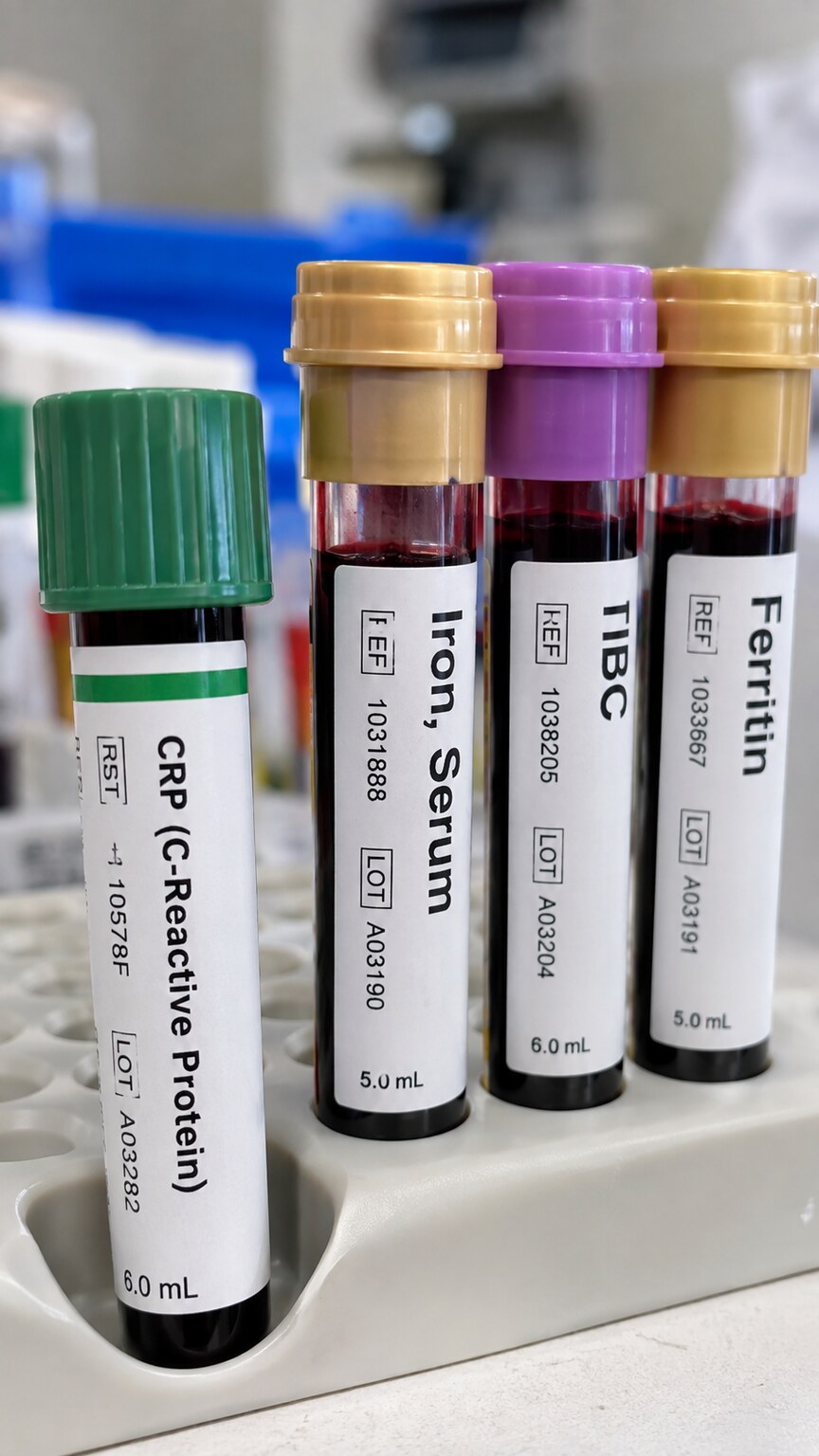
Figure 4. Ordering CRP alongside ferritin lets a clinician check whether active inflammation is present at the same time, providing crucial context for interpreting an ambiguous ferritin result.
Because of this ambiguity, ferritin is rarely, if ever, interpreted completely alone by a clinician who understands its dual nature. The most common and practical solution is ordering C-reactive protein (CRP) alongside ferritin, since CRP is itself a well-established, more direct acute-phase inflammation marker. If CRP comes back elevated alongside a high or borderline ferritin, that combination strongly suggests the ferritin elevation is being driven, at least partly, by active inflammation rather than a true iron-storage problem. If CRP is normal while ferritin remains elevated, a genuine iron-related cause becomes considerably more likely, prompting further workup for conditions like hemochromatosis rather than simply attributing the result to inflammation.
The second major tool is interpreting ferritin alongside the rest of a complete iron panel — serum iron, total iron-binding capacity (TIBC), and transferrin saturation — rather than in isolation. Because TIBC and transferrin saturation respond to true iron status through a different regulatory pathway than ferritin's inflammation-driven surges, a pattern showing low transferrin saturation and elevated TIBC alongside a normal or only mildly elevated ferritin can help reveal a real underlying iron deficiency that ferritin alone, distorted upward by concurrent inflammation, might otherwise have masked.
What a Combined High-Ferritin, High-CRP Result Actually Suggests

Figure 5. Ferritin can rise sharply within a day or two of an acute illness and typically takes one to several weeks to settle back toward a person's true baseline once the underlying inflammation resolves.
When both ferritin and CRP come back elevated together, the most likely explanation is exactly what it appears to be: active inflammation is currently pushing ferritin upward, at least in part, and the ferritin number in isolation shouldn't be treated as a reliable stand-alone measure of iron status until the inflammation resolves and both markers are rechecked. This doesn't mean iron overload is impossible in this scenario — someone can have both active inflammation and a genuine underlying iron-storage problem simultaneously — but it does mean a single snapshot during active inflammation isn't the moment to draw a confident conclusion about iron status either way. Clinicians in this situation often recommend rechecking both ferritin and CRP after the acute illness or flare has resolved, once CRP has returned to baseline, at which point a persistently elevated ferritin becomes considerably more meaningful as a genuine iron-related signal rather than a temporary inflammatory artifact.
Conversely, when ferritin is elevated but CRP is normal, inflammation becomes a much less likely explanation, and the elevated ferritin more plausibly reflects an actual iron-storage issue, prompting further evaluation — additional iron studies, and in some cases genetic testing for hereditary hemochromatosis, or an assessment for other recognized causes of elevated ferritin independent of both iron overload and inflammation, including certain liver conditions and some metabolic disorders where ferritin can rise through yet other, distinct mechanisms.
Ferritin in Chronic Disease: A Persistently Muddied Signal

Figure 6. Chronic inflammatory conditions such as rheumatoid arthritis maintain an ongoing background elevation in ferritin, making a single result far less informative about iron status than it would be in someone without persistent inflammation.
People living with chronic inflammatory or autoimmune conditions face a particularly persistent version of this interpretive challenge, since their baseline inflammatory state never fully resolves the way a short-term illness does. For someone with rheumatoid arthritis, inflammatory bowel disease, or a similar chronic condition, ferritin may run elevated essentially all the time, tracking the ongoing background inflammation rather than any single acute event — meaning that in this population, a normal reference range built from a general, non-inflamed population may simply not apply in the same way, and clinicians managing these patients often rely more heavily on trends over time and the broader iron panel than on any single ferritin value compared against a standard cutoff.
This is precisely the population in which anemia of chronic disease and true iron-deficiency anemia most often occur together or get confused for one another, since both can coexist and both can produce a similarly elevated or falsely normal ferritin against a backdrop of ongoing inflammation. Distinguishing between the two — a distinction that meaningfully changes treatment, since iron supplementation helps one and does little for the other — often requires exactly the combined-marker approach described throughout this article: CRP, the full iron panel together, and sometimes newer markers like soluble transferrin receptor, which is less affected by inflammation than ferritin and can help clarify the picture when standard markers remain ambiguous.
The Biological Logic Behind Ferritin's Dual Role
It's worth understanding why the body evolved this particular overlap rather than keeping iron storage and inflammation signaling as two entirely separate systems, since the connection isn't arbitrary. Nearly every disease-causing microorganism that infects humans also requires iron to grow and reproduce, and the body's broader strategy of "nutritional immunity" — actively restricting a pathogen's access to iron during infection — appears to be a genuine, ancient evolutionary defense mechanism. Ramping up ferritin production during inflammation serves this defensive purpose directly: more ferritin means more capacity to sequester iron safely away inside cells, keeping it out of circulation and out of reach of invading pathogens that would otherwise use it to multiply.
Seen through this lens, ferritin's rise during inflammation isn't simply an inconvenient side effect that muddies iron-status interpretation — it appears to be a deliberate, functional part of the body's active defense against infection, hijacking the same storage protein used for routine iron management and temporarily repurposing its production for an immune defense purpose. Understanding this dual evolutionary logic is what makes ferritin's behavior make sense as a coherent biological system, rather than looking like two unrelated coincidences sharing the same molecule.
How Ferritin's Two Roles Were Discovered
Ferritin's iron-storage function was identified and characterized well before its role as an inflammation marker was recognized, and understanding that historical sequence helps explain why so many people today still think of ferritin purely as an "iron test" without realizing its second job. Ferritin was first isolated and named in the 1930s, and research through the mid-twentieth century steadily built out the modern understanding of its iron-storage structure and function, cementing its reputation clinically as the go-to marker for assessing the body's iron reserves.
Its behavior as an acute-phase reactant was documented somewhat later, as researchers studying inflammatory and infectious disease began noticing that ferritin levels rose in clinical situations that had nothing obviously to do with iron status at all — critically ill patients, people with active infections, and those with chronic inflammatory diseases all showed elevated ferritin patterns that didn't track cleanly with independent measures of iron stores. Over subsequent decades, the specific cytokine-driven mechanism behind this inflammatory rise was worked out in more molecular detail, cementing ferritin's now well-established dual classification in laboratory medicine textbooks and clinical guidelines: both an iron-storage marker and a genuine acute-phase reactant, not one or the other.
Extremely High Ferritin: When the Number Itself Becomes a Red Flag
While moderate ferritin elevations are genuinely ambiguous between iron-related and inflammation-related causes, extremely high ferritin values — often cited in the range of several thousand ng/mL or higher, well beyond what typical infections or chronic inflammatory conditions alone tend to produce — point toward a smaller, more specific set of possibilities that clinicians take seriously as a distinct category. Hemophagocytic lymphohistiocytosis (HLH), a rare but life-threatening condition involving an overactive, dysregulated immune response, is classically associated with dramatically elevated ferritin, sometimes reaching tens of thousands of ng/mL, and extreme ferritin elevation is specifically included as one of the diagnostic criteria clinicians use when evaluating for this condition.
Adult-onset Still's disease, a rare inflammatory condition, and certain severe systemic infections or overwhelming inflammatory states (sometimes described under the broader umbrella term "cytokine storm") can likewise produce ferritin values far beyond what a routine cold or mild flare of a chronic condition would ever generate. This is a useful distinction to hold alongside everything else in this article: the everyday ambiguity between mild-to-moderate inflammation and true iron overload applies across a fairly wide middle range of elevated ferritin values, but truly extreme elevations shift the differential diagnosis toward a much narrower, more specific, and more urgent set of possibilities that a clinician would investigate immediately rather than simply attributing to a routine infection.
Which Situations Call for Extra Caution
Certain groups of people warrant particular caution when interpreting an isolated ferritin result, precisely because they're more likely to have active inflammation present at the same time their iron status is being assessed. People with chronic inflammatory or autoimmune conditions, including rheumatoid arthritis, lupus, and inflammatory bowel disease, frequently run some degree of ongoing background inflammation even outside of an acute flare, meaning their baseline ferritin may run higher than their true iron stores would otherwise suggest. Anyone recovering from a recent infection, surgery, or significant injury is in a similar position temporarily, since the acute-phase response driving ferritin upward can persist for days to weeks after the initial inflammatory trigger has resolved.
Chronic kidney disease patients represent another group where this interpretive caution matters significantly, since chronic kidney disease itself is associated with a persistent low-grade inflammatory state, complicating ferritin interpretation in a population where iron deficiency is also extremely common and clinically important to identify accurately, particularly for guiding decisions around iron supplementation in patients also being treated for anemia related to kidney disease.
Obesity is a less obvious but increasingly well-documented addition to this list, since adipose (fat) tissue itself is now understood to be metabolically active and capable of producing low-grade inflammatory signaling, meaning ferritin levels in people with obesity can run modestly higher on average than in people without excess adipose tissue, independent of any acute illness or classic inflammatory disease. This is a relatively newer area of research compared to the other populations discussed here, but it's a useful, concrete example of how broadly ferritin's inflammation sensitivity extends beyond the more obvious categories of infection and autoimmune disease that most people immediately associate with the word "inflammation."
Other Conditions That Elevate Ferritin Through Yet Other Mechanisms
Beyond straightforward iron overload and acute or chronic inflammation, a handful of other conditions raise ferritin through mechanisms distinct from both of the two main pathways covered throughout this article, adding further nuance to how the number should be read. Certain liver conditions, including alcohol-related liver disease and non-alcoholic fatty liver disease, are associated with elevated ferritin through a combination of factors that can include mild background inflammation, cell damage releasing intracellular ferritin directly into circulation, and in some cases a genuine component of altered iron handling — meaning ferritin elevation in the context of known or suspected liver disease often requires its own separate interpretive lens rather than being folded neatly into either the "iron overload" or "acute inflammation" category alone.
Certain cancers, particularly some lymphomas and leukemias, can also elevate ferritin, sometimes substantially, through mechanisms tied to the underlying disease process itself rather than either iron status or a typical infectious or autoimmune inflammatory trigger — part of why an unexplained, significantly elevated ferritin without a clear infectious, autoimmune, or iron-related explanation sometimes prompts a broader diagnostic workup beyond the CRP-and-iron-panel approach that resolves the vast majority of everyday elevated ferritin results. Metabolic syndrome and insulin resistance have also been associated with modestly elevated ferritin in some research, thought to relate to the low-grade chronic inflammation that often accompanies these metabolic conditions, adding yet another population where a mildly elevated ferritin doesn't necessarily point toward either classic iron overload or an obvious acute inflammatory trigger.
What Ferritin Testing Looks Like Alongside Long-Term Monitoring
For people managing a known chronic condition — whether that's hereditary hemochromatosis being actively treated, a chronic inflammatory disease, or ongoing management of iron-deficiency anemia — ferritin is rarely a single, one-time snapshot but rather a value tracked repeatedly over time, and understanding its dual nature becomes especially important for interpreting that trend correctly. In someone being treated for iron overload through regular therapeutic phlebotomy (periodic blood removal to reduce iron stores), a temporary uptick in ferritin during an unrelated minor illness shouldn't be mistaken for treatment failure or worsening iron overload — it's simply the expected inflammatory bump this entire article has described, and it typically settles back down once the illness resolves, with the underlying downward trend in iron stores continuing as expected.
Similarly, someone being treated for iron-deficiency anemia with iron supplementation needs their ferritin trend interpreted with an eye toward whether any concurrent inflammation might be present, since a ferritin that appears to be "responding well" to supplementation could, in some cases, actually be reflecting a coincidental inflammatory episode rather than genuine iron repletion — another reason clinicians managing these patients over time often continue checking CRP or otherwise accounting for inflammatory status alongside ferritin, rather than relying on ferritin trends completely in isolation, even once a treatment plan is already underway and presumably working.
A Practical Framework for Reading Your Own Ferritin Result
Bringing everything in this article together into something genuinely usable: when looking at a ferritin result, the first useful question isn't "is this high or low," but "was there anything else going on in my body around the time of this blood draw" — a recent illness, an infection, a flare of a known chronic condition, recent surgery, or significant physical stress. If the answer is yes, that context alone should lower confidence in reading the ferritin result as a clean, standalone reflection of iron status, regardless of which direction the number falls. The second useful question is whether CRP or another inflammatory marker was checked at the same time, and if so, what it showed — a normal CRP substantially increases confidence that the ferritin result is reflecting genuine iron status rather than inflammation, while an elevated CRP does the opposite.
The third and final piece is looking at ferritin in the context of the rest of an iron panel rather than alone, since serum iron, TIBC, and transferrin saturation each respond to iron status through pathways less directly hijacked by inflammation than ferritin's production is. A pattern where these other markers align with what ferritin suggests adds confidence to the interpretation; a pattern where they diverge — for instance, a high ferritin alongside a low transferrin saturation, an unusual combination — is exactly the kind of signal that should prompt a closer look with a healthcare provider rather than taking either number at face value on its own.
Frequently Asked Questions
If my ferritin is high, does that always mean I have too much iron?
No. A high ferritin can reflect true iron overload, but it can also reflect active inflammation, infection, or recent illness with completely normal underlying iron stores. Checking CRP alongside ferritin, and looking at the rest of an iron panel, helps distinguish between these possibilities.
Can I have iron deficiency even with a normal ferritin result?
Yes, particularly if inflammation is present at the same time. Inflammation can push ferritin up even as true iron stores are genuinely low, sometimes masking a real deficiency behind a ferritin result that looks reassuring on its own.
Why does my doctor order CRP along with my ferritin test?
CRP is a direct marker of active inflammation. Ordering it alongside ferritin helps a clinician determine whether an abnormal ferritin result is being driven by inflammation, by a genuine iron-related issue, or by some combination of both.
How long after being sick does ferritin usually take to return to baseline?
This varies depending on the severity and duration of the inflammatory trigger, but ferritin elevated by a short-term illness like a cold or minor infection often begins settling back toward baseline within roughly one to two weeks, while more significant or ongoing inflammatory conditions can keep it elevated for considerably longer.
Is an extremely high ferritin result always an emergency?
Not always, but very high values, particularly in the thousands of ng/mL, warrant prompt medical evaluation, since they can point toward a narrower set of more serious conditions beyond typical infection-related or iron-overload-related elevation. This is different from a mildly or moderately elevated result, which is far more commonly explained by routine inflammation or ordinary iron status.
Should I avoid getting my ferritin tested while I have a cold or minor illness?
It's not harmful to test during a minor illness, but it's worth mentioning to whoever is interpreting the result, since the illness may temporarily push ferritin upward independent of your actual iron status. If the result is being used specifically to assess iron status, retesting once you've recovered can give a clearer picture.
What to Bring Into a Conversation With a Healthcare Provider
If you're looking at your own ferritin result and trying to make sense of it, the most useful information to bring into a conversation with a healthcare provider isn't just the number itself, but the surrounding context: whether you were feeling unwell, recovering from anything, or managing a flare of a known condition around the time of the blood draw, and whether CRP or another inflammatory marker was checked at the same time. That context is exactly what turns an ambiguous, hard-to-interpret number into something a clinician can actually work with, rather than a data point sitting in isolation.
Conclusion
Ferritin genuinely does two unrelated jobs at once — storing iron safely and responding to inflammation as part of the body's immune defense — and neither job cancels the other out on a lab report; they simply add together into one combined number that can't be separated by the test itself. Recognizing this dual identity is what turns a confusing, seemingly contradictory ferritin result into something interpretable: a high result paired with active, confirmed inflammation points one clinical direction, a high result with no detectable inflammation points toward another, entirely different direction, and a deceptively normal-looking result in someone with known ongoing inflammation deserves a genuinely careful second look rather than simple, automatic reassurance. Ferritin was never designed or intended to be read alone in the first place, and understanding exactly why that is, in real biological detail, is the difference between a number that leaves you confused or unnecessarily alarmed and one that actually tells you something genuinely useful about what's happening inside your body.
Still Not Sure What Your Results Mean?
Upload your labs and get a complete, visual, plain-language interpretation of every biomarker — delivered to your inbox in under 15 minutes.
Get My ReportThis article is for educational purposes only and does not constitute medical advice. Always consult your healthcare provider regarding your specific lab results.