
Why Did My Doctor Check My Bilirubin Along With Liver Enzymes?
A standard "liver panel" never checks just one number, and that's not an accident of lab convenience — it's a deliberate design, because no single test on that panel can actually answer the question you probably assume it's answering: is my liver okay? ALT and AST, the two enzymes most people associate with liver testing, only tell you whether liver cells have been recently damaged. They say nothing at all about whether the liver, damaged or not, is actually managing to do its job. Bilirubin is the test that answers that second, entirely different question — it measures a genuine functional output, a waste product the liver is supposed to be actively clearing from your blood, rather than a sign of injury leaking out passively. Checking enzymes without bilirubin is like checking whether a factory's walls have any dents without ever checking whether the factory is actually shipping product. You need both questions answered to know what's really going on, which is exactly why these tests always travel together.
This distinction isn't a minor technicality buried in a lab manual somewhere — it's the actual reasoning a doctor is applying every time they glance down a liver panel, deciding within seconds whether a result reflects a recent, possibly self-resolving injury, a genuine functional problem, or both happening at once. Understanding that same reasoning is what turns your own report from a confusing list of unfamiliar abbreviations into something you can actually follow along with.
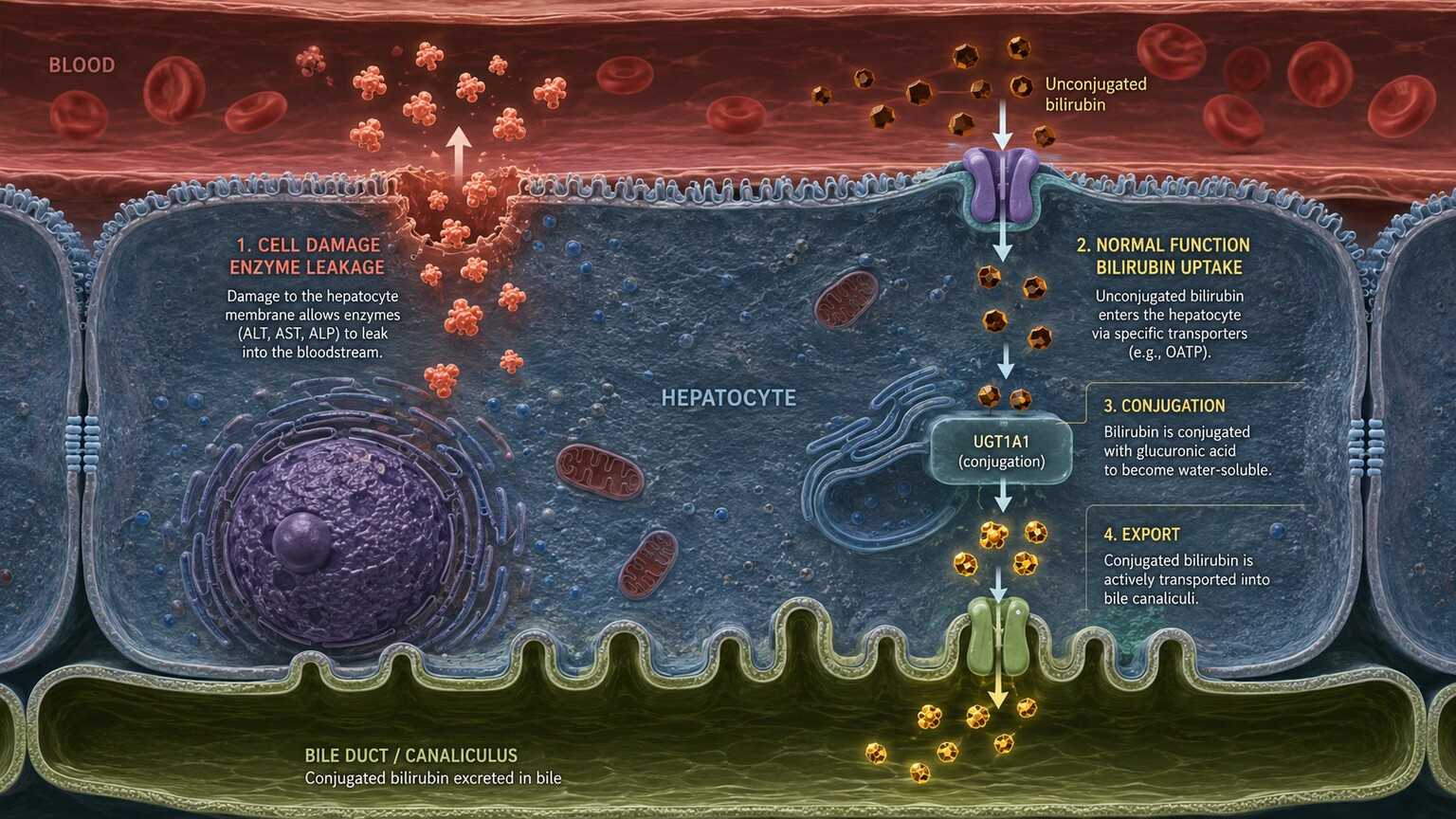
Figure 1. ALT and AST leak passively out of liver cells only when the cell membrane is damaged, while bilirubin reflects an entirely separate, active process — whether the liver is successfully processing and exporting waste, whether or not any cell damage is present.
What a "Liver Panel" Actually Bundles Together
When a lab report lists "liver function tests" or a "hepatic panel," it's really bundling together several genuinely different categories of measurement under one convenient heading, and understanding what each category is actually built to detect is the key to understanding why none of them can stand in for the others. ALT and AST are enzymes that normally live inside liver cells, doing routine metabolic work, and they only show up in meaningful amounts in your bloodstream when those cells have been damaged enough to leak their contents out — a passive process, entirely dependent on injury having occurred. Alkaline phosphatase (ALP) and gamma-glutamyl transferase (GGT) lean more toward reflecting problems with bile flow specifically, rather than general cell damage. Albumin and clotting factors reflect the liver's manufacturing capacity — its ability to build essential proteins the rest of your body depends on.
It's worth noting that the term "liver function tests" is actually a slightly misleading label that's stuck around in medical vocabulary despite not being fully accurate — most of the values commonly grouped under that heading, ALT and AST specifically, don't measure function at all, they measure injury, as this article keeps emphasizing. Some clinicians and researchers have pushed for the more precise label "liver chemistries" or "liver panel" instead, specifically to avoid the misleading implication that a normal ALT and AST means the liver is "functioning" normally, when what it actually confirms is only that no significant recent cell damage has occurred. This naming quirk is a small but genuinely useful thing to know, since it explains why so many people walk away from a "normal liver function test" result with more confidence about their liver's actual working capacity than the test, strictly speaking, ever provided.
Bilirubin sits in its own separate category entirely, and it's arguably the most conceptually different of the group: it isn't produced by the liver at all. It's a waste product created elsewhere in the body, mainly from the normal breakdown of old red blood cells, and the liver's only job with respect to bilirubin is to grab it out of the bloodstream, chemically modify it into a water-soluble form, and export it into bile so it can leave the body. A high bilirubin doesn't necessarily mean liver cells are damaged — it means this specific pickup-and-export process, somewhere along its several steps, isn't keeping pace, which is a meaningfully different kind of information than anything ALT or AST alone could tell you.
It helps to walk through bilirubin's actual journey to see just how many distinct steps exist between "red blood cell breaks down" and "waste product safely leaves the body," since a problem at any one of these steps can raise the number on your report for a completely different underlying reason. Old red blood cells, reaching roughly the end of their normal 120-day lifespan, get broken down primarily by the spleen, releasing hemoglobin, which is then converted into unconjugated (indirect) bilirubin — a form that isn't water-soluble and needs to travel through the bloodstream bound to a carrier protein called albumin just to get around. The liver then has to actively pull this bound bilirubin out of circulation, a step called uptake, before performing conjugation — attaching a small sugar molecule that converts it into the water-soluble, direct form capable of dissolving in bile rather than needing a carrier protein. Finally, the liver has to actively export this conjugated bilirubin into the bile duct system, where it eventually reaches the intestine and leaves the body. Four genuinely separate steps — production, uptake, conjugation, and export — and a problem specific to any single one of them can raise total bilirubin, which is exactly why simply knowing "bilirubin is high" is only the beginning of the diagnostic process, not the end of it.
Why Enzymes Alone Don't Answer the Question You Actually Care About

Figure 2. A liver enzyme elevation confirms cell-wall damage has occurred, similar to spotting a crack in a wall — but it says nothing about whether the cell's actual export function, a completely separate mechanism, is still working.
It's genuinely possible, and not even rare, for liver enzymes to look entirely normal while the liver's actual functional capacity is significantly impaired. Advanced cirrhosis is the clearest example: by the time scar tissue has replaced enough functioning liver tissue to cause real problems, there may be very few actively dying cells left to leak enzymes into the bloodstream in the first place, since much of the damage already happened and scarred over long ago. In this scenario, ALT and AST can sit comfortably within a normal range even as the liver's genuine capacity to process bilirubin, manufacture proteins, and clear toxins has been seriously compromised — a normal enzyme panel in this case would be dangerously reassuring on its own, actively hiding the real problem rather than revealing it.
The reverse mismatch happens too, and it's arguably even more common in everyday practice: enzymes can spike dramatically from an acute, self-limited cause — a brief viral illness, a strenuous workout, a new supplement — while the liver's actual functional capacity, including its ability to process bilirubin, remains completely intact throughout. A large ALT elevation with a normal bilirubin generally suggests real but recoverable cell injury, without any accompanying functional failure, which is a meaningfully less urgent picture than the same enzyme elevation accompanied by a rising bilirubin, which would suggest the injury is actually compromising the organ's ability to do its job rather than just showing evidence that some cells were recently hurt.
This is a genuinely important distinction because of how much reassurance people tend to draw from normal enzymes alone, without realizing the number's real limitations. A liver possesses enormous functional reserve — estimates suggest a person can lose a majority of their functioning liver tissue before the remaining tissue can no longer keep up with the body's basic needs, since healthy liver tissue is capable of compensating for a remarkable amount of loss elsewhere in the organ. This reserve capacity is exactly why relying on enzymes alone can create a false sense of security in slow, progressive liver conditions: the liver can be quietly losing functional tissue for years, compensating well enough that bilirubin, and even day-to-day symptoms, stay essentially normal the entire time, right up until the remaining functional reserve finally runs out and both enzymes and functional markers change relatively abruptly. Monitoring bilirubin alongside enzymes over time, rather than relying on either checked once, is part of how this kind of slow, silent progression gets caught earlier rather than only once reserve capacity has already been substantially used up.
Curious what your own liver panel or bilirubin result actually means? Upload your labs and get a complete, plain-language breakdown in under 15 minutes.
Analyze My ResultsBilirubin Is the "Does It Actually Work" Test
Because bilirubin reflects a genuine, ongoing functional process — uptake, chemical conjugation, and active export into bile — rather than a byproduct of cell injury, it's one of the small handful of values doctors treat as a real indicator of how well the liver is currently performing its job, not just whether it's been recently hurt. This distinction is formal enough that it shows up directly in how liver disease severity gets scored in clinical practice: bilirubin is one of the core components of the MELD score, used to assess how urgently someone with advanced liver disease needs a transplant, specifically because it reflects functional capacity in a way that enzyme levels, at that late stage of disease, often no longer can.
The MELD score, worth knowing about by name since it directly shapes how organs are allocated in the United States and several other countries, combines bilirubin with creatinine (a kidney function marker) and a measure of blood clotting called the INR into a single numeric score that predicts short-term mortality risk in advanced liver disease with real, validated accuracy. The fact that a functional marker like bilirubin, rather than an injury marker like ALT or AST, was chosen as one of this score's three core components is itself a strong statement about which kind of measurement actually matters most once liver disease has progressed to its more serious stages — by that point, everyone already knows damage has occurred; what matters clinically, and what actually determines transplant priority, is how much functional capacity genuinely remains.
This is also exactly why a rising bilirubin in someone already known to have liver disease is taken so seriously, even when their enzymes haven't moved much — it's one of the more reliable early signals that the liver's actual working capacity is beginning to fail, as opposed to simply confirming that damage occurred at some point in the past. Enzymes tell you something happened in the past or recently; bilirubin tells you whether the organ can still keep up with its most basic ongoing responsibility right now, in the present.
It's worth being clear that none of this means bilirubin is somehow "more important" than enzymes in some general, universal sense — the two simply answer different questions, and which one matters more in a given moment depends entirely on what's actually being investigated. Someone with a brief, mild ALT elevation and completely normal bilirubin genuinely doesn't need to worry much about functional capacity at all; the enzyme elevation alone, in that context, is the whole relevant story, with nothing else on the panel suggesting any reason for additional concern.
Albumin and clotting factors, mentioned briefly earlier, round out this same "does it actually work" category alongside bilirubin, each measuring a different piece of the liver's manufacturing responsibilities. Albumin is a protein the liver produces continuously to help regulate fluid balance and transport substances through the bloodstream, and a falling albumin level, in the absence of other explanations like malnutrition or kidney loss, can reflect declining synthetic capacity in a similar way to rising bilirubin. Clotting factors work the same way from a different angle — the liver manufactures nearly all the proteins responsible for normal blood clotting, and a prolonged prothrombin time (a measure of how long blood takes to clot) can be one of the earliest, most sensitive signals that synthetic function is beginning to falter, sometimes changing before bilirubin itself has moved meaningfully. Together, bilirubin, albumin, and clotting studies form a more complete functional picture than any one of them provides alone, which is why a more thorough liver workup often includes more than bilirubin by itself once real concern about functional capacity, rather than just injury, is on the table.
Why This Panel Gets Ordered Even When You Feel Completely Fine
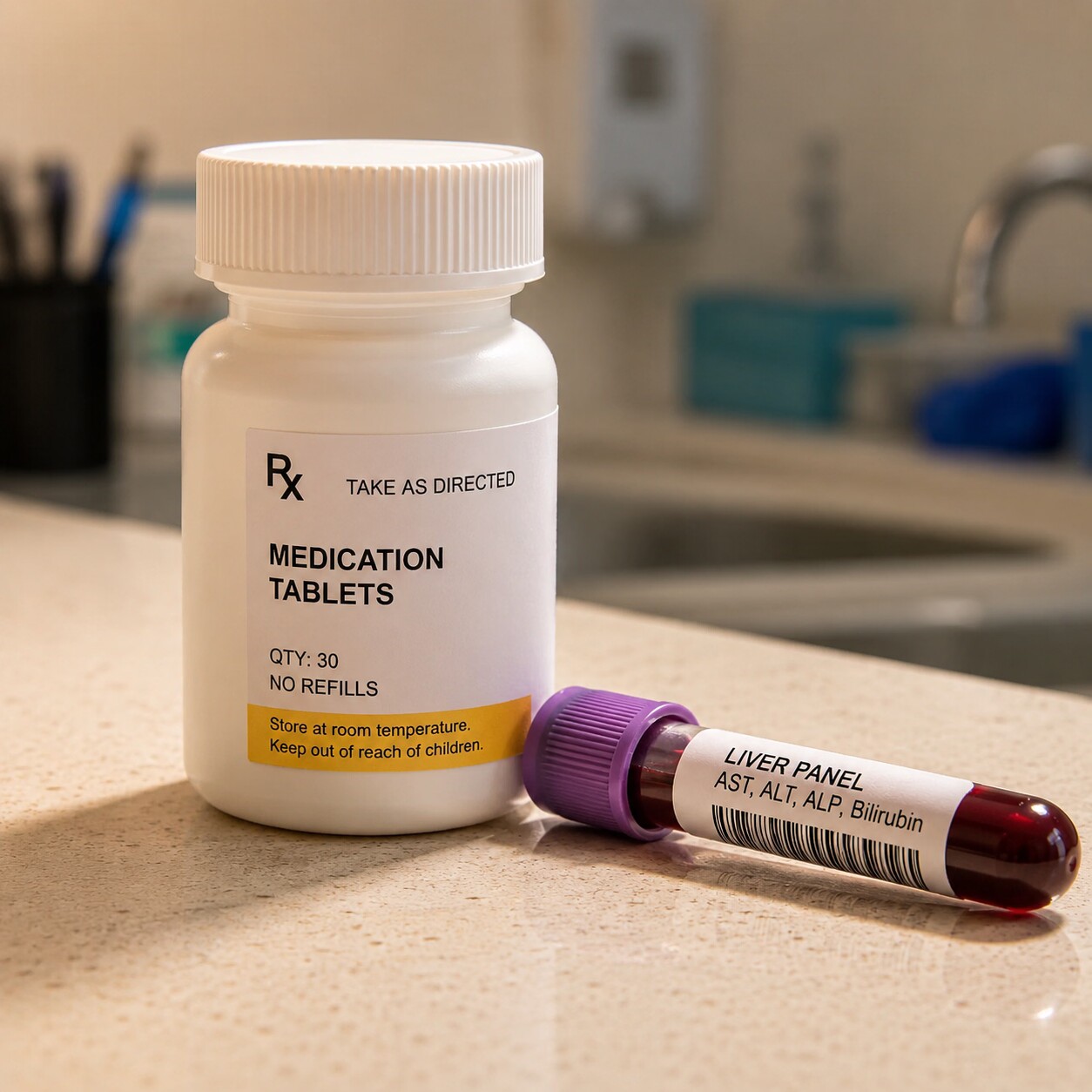
Figure 3. Starting certain long-term medications, from cholesterol drugs to tuberculosis treatment, routinely triggers baseline and follow-up liver panel testing specifically because both enzymes and bilirubin can shift for medication-related reasons that have nothing to do with symptoms.
A significant share of liver panels get ordered on people who feel entirely healthy, and understanding why helps explain why the panel is structured the way it is rather than testing just one value. Starting certain long-term medications — statins for cholesterol, methotrexate for autoimmune conditions, isoniazid or rifampin for tuberculosis, and many others — commonly triggers a baseline liver panel before the first dose and periodic follow-up panels afterward, specifically because these drugs carry a documented, monitored risk of affecting the liver in ways that wouldn't necessarily cause any noticeable symptoms until they'd already progressed further than anyone would want.
The specific monitoring schedule varies meaningfully by medication and by how that particular drug is known to affect the liver. Statins, for instance, typically call for a baseline check before starting and then only periodic follow-up if the baseline is normal and no symptoms develop, since serious statin-related liver injury turns out to be considerably rarer in practice than early guidelines assumed, and current recommendations have relaxed accordingly. Methotrexate, by contrast, generally calls for more frequent, ongoing monitoring throughout treatment, since it carries a more established, dose-related risk of causing liver fibrosis with prolonged use — a good illustration of why "how often should my liver be checked" doesn't have one universal answer, but instead depends specifically on which medication is involved and what that medication's own documented risk profile actually looks like.
Pre-surgical screening is another common, symptom-free reason, since anesthesia and many surgical medications are processed and cleared by the liver, and knowing baseline liver function ahead of time genuinely helps anesthesiologists and surgeons plan more safely. Routine annual physicals frequently include a liver panel as part of general screening, particularly for anyone with risk factors like regular alcohol use, obesity, or a family history of liver disease, since early liver damage is notoriously silent — the organ can absorb a remarkable amount of damage before producing any symptoms a person would actually notice, which is precisely the gap this kind of screening exists to catch.
Chemotherapy and certain other cancer treatments represent one of the more intensively monitored medication categories, since many chemotherapy drugs are themselves processed and cleared through the liver, and the liver's current functional status can directly affect both how a drug needs to be dosed and how much toxicity risk a patient is carrying at any given point in treatment. It's common for someone undergoing active chemotherapy to have a liver panel checked before every single treatment cycle, not because anything is expected to be wrong, but because catching a developing problem early, before it becomes symptomatic, can mean the difference between a simple dose adjustment and a serious complication. Pregnancy is a further symptom-free reason worth mentioning specifically, since certain pregnancy-related liver conditions, including a condition called intrahepatic cholestasis of pregnancy, can develop with few symptoms beyond itching and are specifically screened for through bilirubin and related liver values because of real risks to both parent and baby if left unaddressed.
Blood donation eligibility screening and life insurance medical exams are two further, often-overlooked symptom-free contexts where a liver panel commonly gets checked, each for slightly different practical reasons but both relying on the same underlying logic this article has been building throughout: a liver panel remains one of the most efficient, low-cost ways to catch a silently developing problem long before it would otherwise announce itself through any symptom a person could reasonably be expected to notice on their own.
What a Discordant Result Actually Tells a Doctor
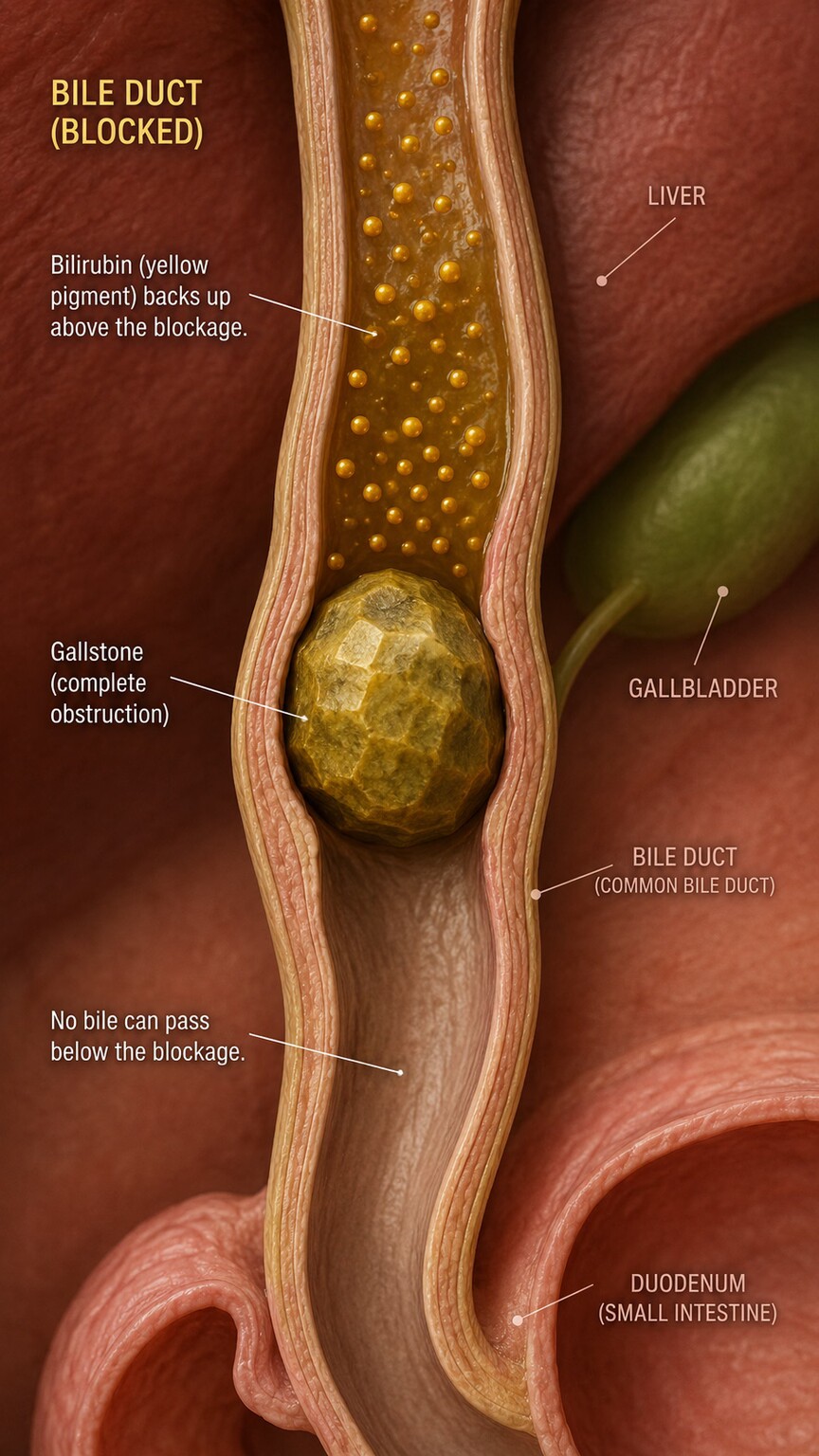
Figure 5. A physical blockage like a gallstone can raise bilirubin dramatically while liver cells themselves remain largely undamaged, producing exactly the enzyme-bilirubin mismatch this section describes.
Once you understand that enzymes and bilirubin are measuring genuinely different things, the value of checking both becomes clear in exactly the cases where they don't agree with each other — these mismatches, more than either value in isolation, are often what actually drives the next diagnostic step. Markedly elevated enzymes with a completely normal bilirubin generally points toward an acute, isolated injury pattern — something has recently damaged liver cells, but the organ's broader functional capacity remains intact, which is reassuring and often points toward a self-limited cause like a viral infection or a temporary toxin exposure.
Elevated bilirubin with only mildly elevated or even normal enzymes tells a different story, pointing away from active cell damage and toward either a red blood cell breakdown issue happening entirely outside the liver, a bile duct blockage physically preventing already-processed bilirubin from leaving the body, or an inherited condition like Gilbert's syndrome affecting the conjugation step specifically without any cell injury involved at all. Both enzymes and bilirubin rising together, and rising in a way that tracks each other over time, is generally the pattern most consistent with a genuine, ongoing hepatocellular process — active liver cell injury severe and sustained enough to also be compromising the organ's functional output, which is the combination that typically prompts the most urgent follow-up.
There's a fourth pattern worth naming specifically, since it's genuinely distinct from the three above and easy to misread if you're only thinking in terms of "everything up" versus "everything normal": elevated ALP and GGT together, with bilirubin only mildly affected and ALT/AST close to normal, points toward an early or partial bile-flow problem — something narrowing or partially obstructing bile flow without yet causing the more dramatic bilirubin backup a complete blockage would produce. This pattern often shows up before a gallstone has fully lodged in place, or in early-stage conditions that gradually narrow the bile ducts over time, which is exactly why ALP and GGT are included on a fuller panel rather than relying on bilirubin alone to flag every bile-flow issue — some of these problems announce themselves through the enzyme most specific to bile flow well before bilirubin itself has risen enough to be visually or numerically obvious.
How Doctors Read the Panel as One Combined Picture
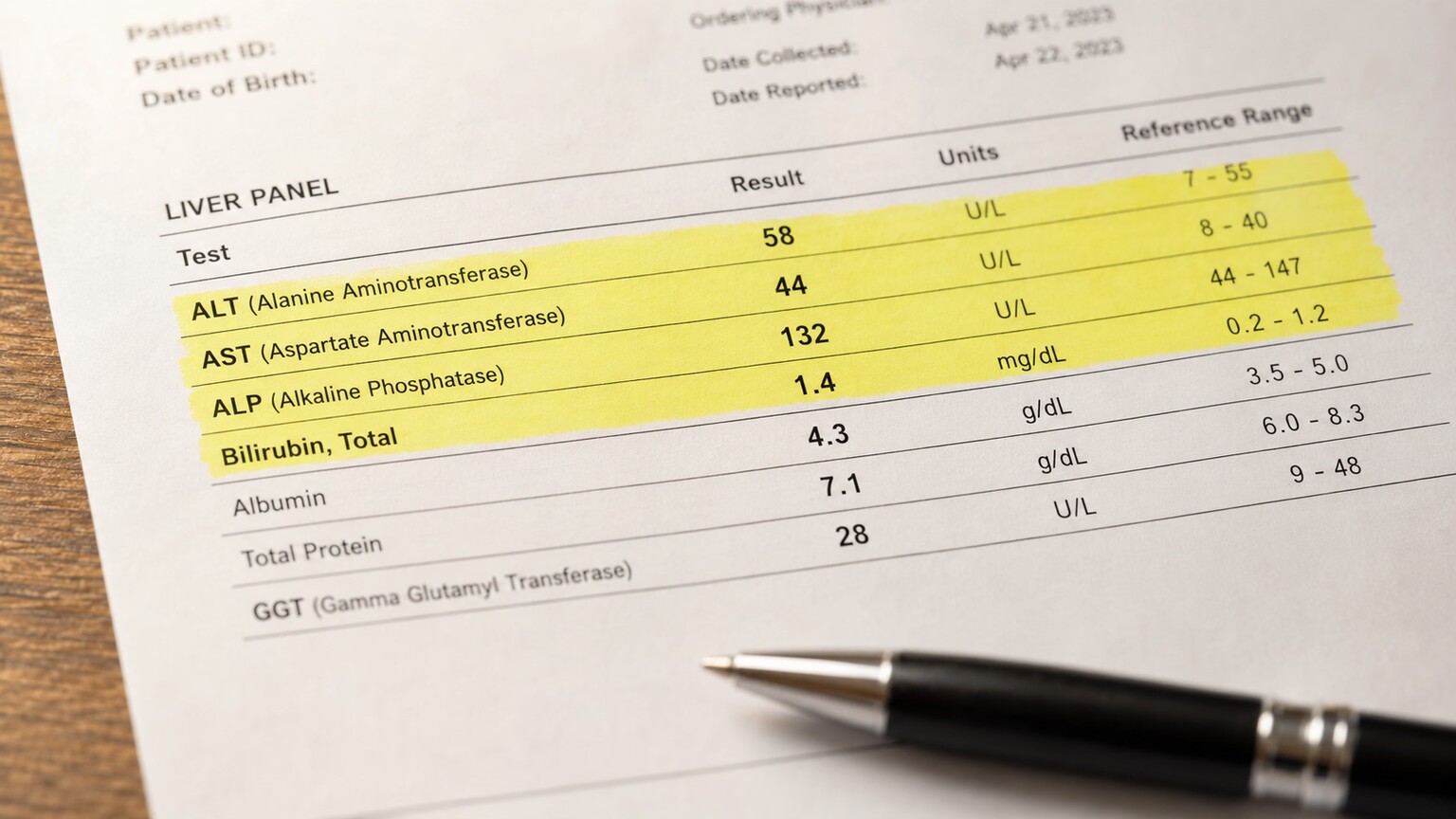
Figure 4. A doctor reading a liver panel rarely evaluates any single row in isolation — the relative pattern across all the values together, not any one number alone, is what actually narrows down the likely cause.
Beyond the basic enzyme-versus-bilirubin distinction, the ratio between ALT and AST specifically, and how ALP behaves relative to both, adds further resolution to the picture. A pattern where AST runs meaningfully higher than ALT, particularly at a ratio of two-to-one or greater, is classically associated with alcohol-related liver injury. A pattern where ALP rises disproportionately compared to ALT and AST, especially alongside a rising direct bilirubin fraction, points more specifically toward a bile-flow obstruction problem — a gallstone, a stricture, or a tumor physically blocking the bile duct system — rather than direct cell injury, prompting imaging like an ultrasound rather than further blood work as the logical next step.
ALT and AST individually also carry slightly different specificity worth knowing about. ALT is found in meaningfully higher concentrations in liver tissue specifically than in most other organs, making it a comparatively more liver-specific marker. AST, by contrast, is also abundant in heart muscle, skeletal muscle, red blood cells, and several other tissues, meaning an isolated AST elevation with a normal ALT can sometimes reflect something happening entirely outside the liver — a recent intense workout, a muscle injury, or even hemolysis, echoing the red-blood-cell-breakdown theme covered earlier in the bilirubin discussion. This is one more reason ALT and AST are always read as a pair rather than either checked in isolation — the relationship between the two carries information that neither value alone can provide.
This is exactly why a doctor reading your results isn't simply scanning down a list checking each number against its own individual reference range — they're reading the entire panel as one interconnected picture, where the relationship between values often carries more diagnostic information than any single value considered on its own. This is a genuinely useful thing to understand about your own results: a mildly abnormal single number on a panel like this one is far less concerning, and far less informative, than the same number considered alongside everything else on the same report.
Magnitude adds yet another layer clinicians weigh alongside pattern and ratio. ALT or AST running at two or three times the upper limit of normal is read very differently than the same enzymes running at ten or twenty times normal — the former is often consistent with mild, self-limited causes like a viral illness or medication effect, while the latter more strongly suggests a serious acute process, such as a major toxic exposure, a severe viral hepatitis, or in rare but critical cases, acute liver failure, which demands urgent evaluation rather than routine follow-up. Bilirubin follows a similar magnitude logic: a mildly elevated bilirubin sitting just above the upper end of normal carries far less urgency than one running at five or ten times that level, which typically prompts same-day imaging and specialist involvement rather than a routine follow-up appointment scheduled weeks out.
Trend over time is the final piece of this puzzle, and arguably the most clinically decisive one once a pattern has been identified. A single liver panel is a snapshot, but a repeat panel a few days or weeks later reveals direction — values that are falling toward normal after an acute trigger confirm a self-limited process resolving as expected, while values that continue climbing despite the presumed trigger having passed suggest something more is going on than the initial, more benign explanation accounted for. This is exactly why a doctor faced with an abnormal liver panel frequently orders a repeat draw within days to a couple of weeks, rather than treating the single result as the final word — the trajectory, not just the starting number, is often what actually determines the next step in the workup.
A Worked Example: Reading Three Different Panels From the Same Symptom
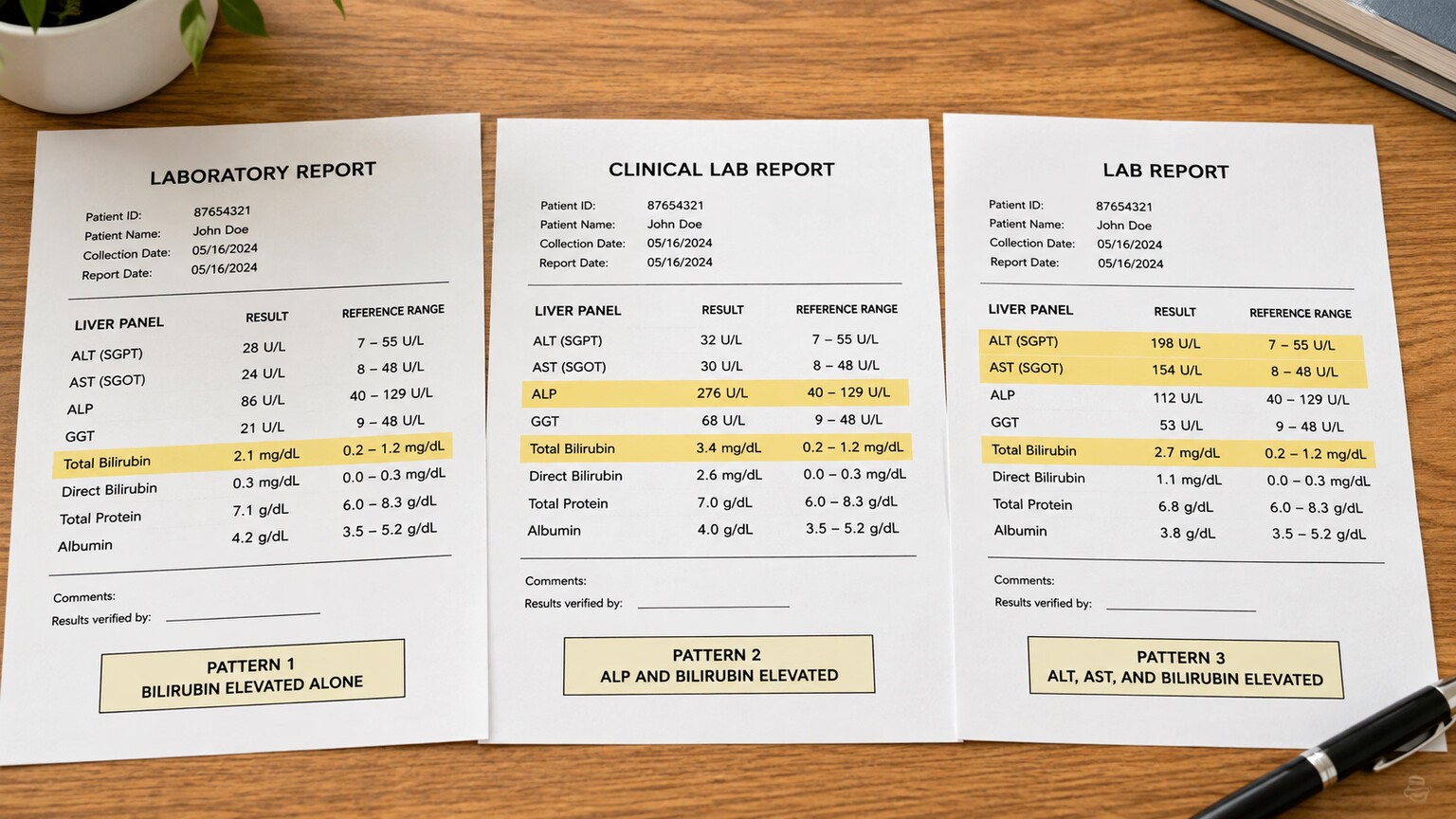
Figure 6. The same starting symptom — yellowing skin — can produce three genuinely different liver panel patterns, each pointing toward a distinct underlying cause.
Picture three separate people, all showing up with the same initial complaint: mild yellowing of the skin and eyes, a symptom called jaundice that happens whenever bilirubin backs up enough in the bloodstream to visibly discolor tissue. Without a liver panel, this single symptom alone tells a doctor almost nothing about which of several very different underlying processes is responsible. With the panel, three genuinely different pictures emerge. The first person's results show a markedly elevated indirect bilirubin with completely normal ALT, AST, and ALP — a pattern pointing toward hemolysis, red blood cells breaking down faster than normal somewhere entirely outside the liver, confirmed with a follow-up blood smear showing fragmented cells.
The second person's results show elevated direct bilirubin alongside a disproportionately elevated ALP, with ALT and AST only mildly up — the pattern described earlier pointing toward bile duct obstruction, which an ultrasound confirms as a gallstone lodged in the common bile duct. The third person's results show elevated bilirubin alongside dramatically elevated ALT and AST, both rising together over the following days — a pattern consistent with acute hepatocellular injury, ultimately diagnosed as viral hepatitis. Same starting symptom, same visible yellowing, three completely different diagnoses and three completely different treatment paths — none of which could have been meaningfully distinguished without the full panel, enzymes and bilirubin together, rather than either measured alone.
It's worth noting what would have happened in each of these three cases if only enzymes, without bilirubin, had been checked. The first person's completely normal ALT and AST would have offered no explanation at all for their visible jaundice, potentially delaying recognition that hemolysis, not liver disease, was the actual cause. The second person's only mildly elevated enzymes might have been dismissed as insignificant, missing the disproportionate ALP elevation that was the real clue pointing toward a physical obstruction requiring prompt intervention. Only the third person's presentation would have been reasonably well captured by enzymes alone — and even then, without bilirubin to track alongside the rising enzymes, there would have been no way to confirm whether the liver's actual functional capacity was being compromised by the ongoing injury or holding steady despite it. In every single case, bilirubin was doing genuine diagnostic work that enzymes alone could not have done, which is the exact point this entire article has been building toward.
Bringing These Ideas Into Your Next Conversation With Your Doctor
Armed with the framework this article has laid out, a follow-up appointment about an abnormal liver panel becomes a much more productive conversation. Instead of asking only "is this bad," you can ask something far more specific: which of these values are flagged, is the pattern pointing toward injury, function, bile flow, or some combination, and what's the plan for tracking the trend from here. That kind of question signals genuine engagement with your own results and tends to produce a more detailed, useful answer than a vaguer question would.
It's also worth asking directly whether any of the symptom-free, routine-monitoring reasons covered earlier in this article apply to your specific situation — a new medication, an upcoming procedure, or a known risk factor — since understanding why the panel was ordered in the first place often makes the individual numbers themselves considerably easier to interpret correctly.
Frequently Asked Questions
What's the actual difference between liver enzymes and bilirubin?
Liver enzymes (ALT, AST) leak out passively when liver cells are damaged, reflecting injury. Bilirubin reflects an active functional process — whether the liver is successfully clearing a waste product from the blood — which can be abnormal even when no cell damage has occurred, and vice versa.
Can liver enzymes be normal even with a serious liver problem?
Yes, particularly in advanced cirrhosis, where enough functioning liver tissue may already be replaced by scar tissue that few actively dying cells remain to leak enzymes, even though genuine functional capacity, including bilirubin processing, is significantly impaired.
Why would a liver panel be ordered if I have no symptoms?
Starting certain long-term medications, pre-surgical screening, and routine physicals for people with risk factors like regular alcohol use or a family history of liver disease are all common reasons, since early liver damage is often completely silent.
What does it mean if only my bilirubin is elevated, not my enzymes?
This pattern points away from active liver cell damage and toward causes like red blood cell breakdown happening outside the liver, a bile duct blockage, or an inherited condition like Gilbert's syndrome affecting bilirubin processing specifically.
Does the ratio between different liver panel values matter?
Yes. The relationship between AST and ALT, and how alkaline phosphatase behaves relative to both, adds diagnostic resolution beyond any single value — for example, AST running notably higher than ALT is classically associated with alcohol-related injury.
Why does my doctor sometimes order a repeat liver panel a few days later?
A single panel is a snapshot; a repeat draw reveals the trend. Values falling toward normal confirm a resolving, self-limited process, while values that keep rising suggest the initial explanation may not fully account for what's happening, prompting a closer look.
Are albumin and clotting tests part of this same "function" category as bilirubin?
Yes. Albumin and clotting factors, like bilirubin, reflect the liver's manufacturing and functional capacity rather than cell damage, and together they can provide a more complete functional picture than bilirubin considered entirely on its own.
Conclusion
Liver enzymes and bilirubin were never meant to answer the same question, which is exactly why a standard panel checks both rather than treating either one as sufficient on its own. Enzymes tell you whether cells have been damaged; bilirubin tells you whether the organ, damaged or not, is still successfully doing its job. Reading your own results with that distinction in mind — asking not just "is anything flagged" but "is this an injury signal, a function signal, or both moving together" — turns a page of individually confusing numbers into a genuinely coherent picture of what your liver is actually doing right now.
This same logic — that a single test rarely tells the whole story, and that the real diagnostic value often lives in how several different measurements relate to each other — extends well beyond the liver into nearly every panel you'll ever have drawn. Learning to ask "what is this specific number actually built to detect, and what is it blind to" is a habit worth carrying into how you read any lab report, not just this one, since it's usually the fastest route from a confusing page of numbers to a genuinely useful understanding of what's actually happening inside your body.
The next time a report lands in your inbox listing ALT, AST, ALP, and bilirubin side by side, you now have a real framework for reading it: which of these values are injury signals, which are function signals, and whether the pattern across all of them together tells a story of recent damage, ongoing functional strain, or genuinely nothing worth worrying about at all — three very different conclusions, all hiding in the same short list of abbreviations.
Still Not Sure What Your Results Mean?
Upload your labs and get a complete, visual, plain-language interpretation of every biomarker — delivered to your inbox in under 15 minutes.
Get My ReportThis article is for educational purposes only and does not constitute medical advice. Always consult your healthcare provider regarding your specific lab results.