
Why Are My Bicarbonate Levels Abnormal?
Bicarbonate is the body's primary chemical buffer, the substance most responsible for keeping blood pH locked within an extraordinarily narrow, life-sustaining range despite the constant flood of acid your metabolism produces every minute of every day. Two entirely different, otherwise unrelated organ systems manage bicarbonate together in constant coordination: the kidneys, which adjust it gradually over the course of hours to days by carefully controlling how much bicarbonate actually gets reabsorbed or excreted through urine, and the lungs, which influence the exact same underlying buffer system almost instantly, by controlling precisely how quickly carbon dioxide gets exhaled with every single breath taken. An abnormal bicarbonate result — usually reported on a routine metabolic panel simply as "CO2" or "total CO2" — genuinely means one of these two coordinated systems, or in some more complex cases both systems working simultaneously in opposite directions, has pushed the body's overall acid-base balance meaningfully away from its normal resting point, and figuring out precisely which system is actually responsible is the real, practical key to understanding what any given abnormal result actually means for that specific person.

Figure 1. Bicarbonate acts as a chemical sponge, binding excess hydrogen ions to neutralize acid and keep blood pH stable despite the ongoing acid production of everyday metabolism.
Already have a CO2 or bicarbonate number from a recent test, but not sure if it's actually good or bad for you? Just plug it in and see instantly.
🧮 Try the Free CalculatorA Brief History of How This System Was Discovered
Understanding how the body buffers its internal chemistry began taking real shape in the early twentieth century, when American biochemist Lawrence Henderson and Danish physician Karl Albert Hasselbalch independently developed the mathematical framework, published in stages between 1908 and 1917, describing how blood's acidity relates directly to the delicate balance between dissolved carbon dioxide and bicarbonate. Their combined work, now known universally as the Henderson-Hasselbalch equation, gave physicians their first genuinely quantitative way to understand blood's acid-base chemistry, transforming what had previously been a poorly understood physiological mystery into a solvable, calculable relationship clinicians could actually apply directly at the bedside.
Before this framework existed, physicians had long observed that certain illnesses produced characteristic changes in breathing pattern, and that certain metabolic conditions seemed connected to how a person breathed, but lacked the underlying chemical explanation tying these observations together into one coherent system. Henderson's foundational work on blood chemistry and physiological buffering provided much of the essential conceptual groundwork, while Hasselbalch's parallel contributions in Denmark helped transform those physiological insights into the precise mathematical formula still taught to medical students today, more than a century later. Together, their work remains the essential foundation for how clinicians interpret bicarbonate and CO2 results in the context of a person's overall acid-base balance, still directly relevant in intensive care units and everyday clinical practice worldwide.
What Bicarbonate Actually Does in the Body
Every single cell throughout the body continuously produces some amount of acid as an ordinary, unavoidable byproduct of its own everyday metabolism, and if that steadily accumulating acid weren't constantly and reliably neutralized, blood pH would quickly drift outside the extremely narrow, tightly protected range — roughly 7.35 to 7.45 — that essential cellular enzymes and structural proteins genuinely depend on in order to function correctly at all. Bicarbonate serves as the body's primary tool for managing this ongoing, unavoidable acid load: it functions as a chemical buffer, meaning it can readily absorb excess hydrogen ions (the specific chemical species that actually determines overall acidity) whenever the body is trending too acidic, and just as readily release hydrogen ions back whenever the body happens to be trending too alkaline instead, acting almost like a continuously working shock absorber that keeps overall blood chemistry genuinely stable despite constant metabolic activity actively pushing against it around the clock.
This buffering relationship is described mathematically by the Henderson-Hasselbalch equation, developed in the early twentieth century, which formalized exactly how blood pH depends on the ratio between dissolved carbon dioxide and bicarbonate. What matters practically is this: because bicarbonate and carbon dioxide are chemically linked, and because the lungs directly control how much carbon dioxide leaves the body with every breath, the lungs and kidneys end up jointly regulating the same overall buffering system through two completely different mechanisms operating on two completely different timescales.
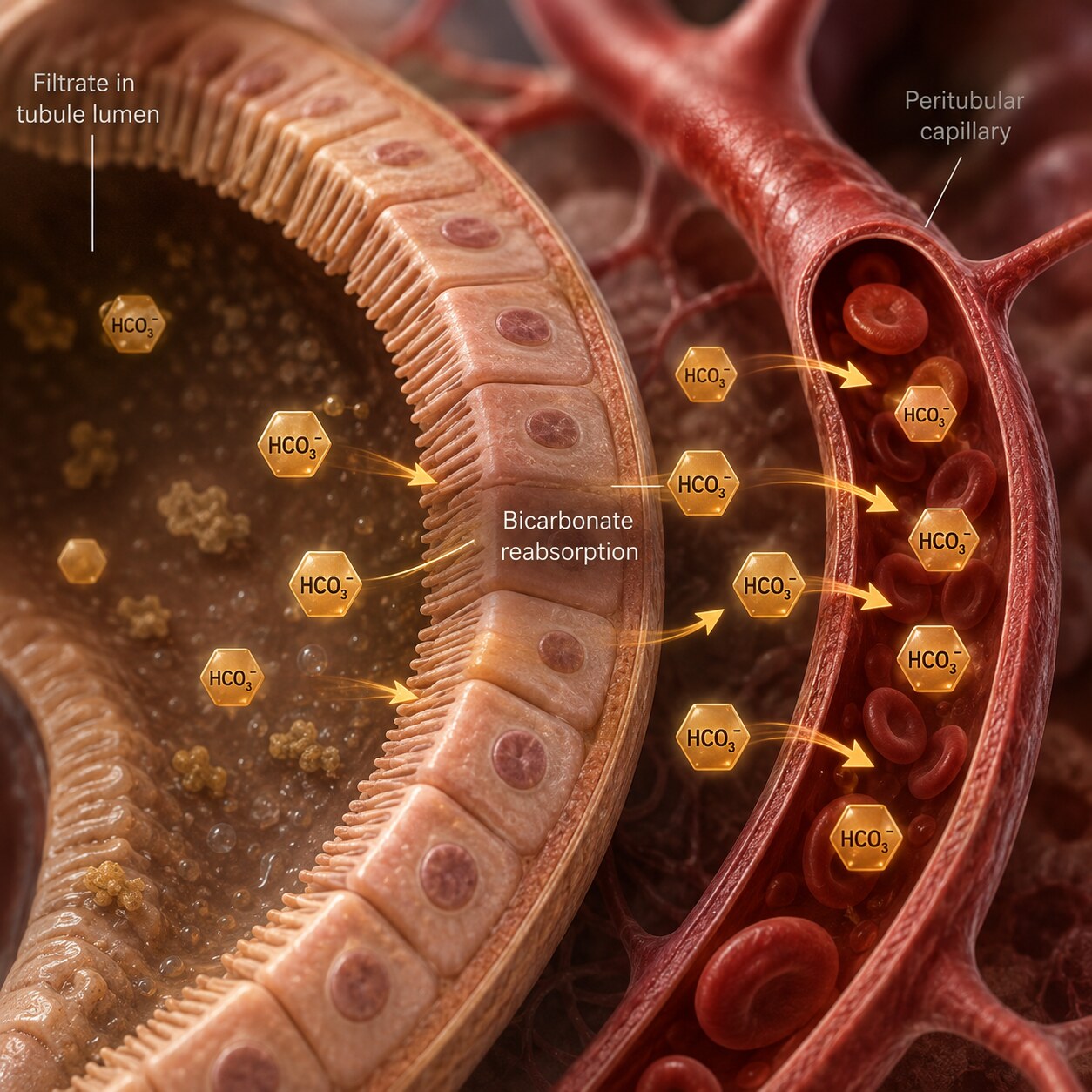
Figure 2. The kidneys adjust bicarbonate levels gradually, over hours to days, by controlling how much is reabsorbed back into the blood versus excreted in urine.
The kidneys handle the slower half of this partnership. Kidney tubule cells actively reabsorb filtered bicarbonate back into the bloodstream and generate new bicarbonate when the body needs more of it, a process that unfolds gradually, over the course of hours to days, as the kidneys respond to the body's ongoing acid-base needs. The lungs handle the fast half: because dissolved carbon dioxide converts into bicarbonate and hydrogen ions in a reversible chemical reaction, exhaling carbon dioxide faster or slower shifts that reaction almost immediately, meaning the lungs can influence the same underlying buffer system within minutes, simply by adjusting breathing rate and depth.
How Bicarbonate Is Actually Measured in the Lab
Modern automated chemistry analyzers measure total CO2 using an enzymatic method, in which an enzyme called phosphoenolpyruvate carboxylase reacts with the bicarbonate present in a blood sample, triggering a coupled chemical reaction that consumes a light-absorbing compound called NADH in direct proportion to how much bicarbonate is present. A spectrophotometer then precisely measures that resulting change in light absorption, calculating the final bicarbonate concentration within moments of the sample being loaded into the analyzer. This modern enzymatic approach has largely replaced older manual titration techniques and specialized gas-sensing electrodes that earlier generations of laboratory technicians once relied on for this same measurement.
It's worth noting that this standard metabolic-panel method measures total CO2 from venous blood drawn during a routine blood draw, which differs technically from the bicarbonate value calculated as part of an arterial blood gas test, drawn specifically from an artery and analyzed alongside directly measured pH and dissolved carbon dioxide gas. The two methods generally produce closely comparable bicarbonate values, but the arterial blood gas provides the additional, directly measured pH and gas values needed to distinguish a primary disturbance from a compensatory one, which is exactly why it becomes the preferred test once that specific distinction genuinely matters clinically, as discussed throughout this article.
Why High Bicarbonate Happens: Metabolic Alkalosis
When bicarbonate rises above normal because of a genuine change originating in the body's overall acid-base balance — rather than the lungs compensating for something else, discussed further below — the underlying condition is called metabolic alkalosis. Significant, repeated vomiting is genuinely one of the most common causes encountered clinically, since stomach acid is naturally quite rich in hydrogen ions, and losing large amounts of it through repeated episodes of vomiting directly removes real acid from the body altogether, leaving a relative bicarbonate excess behind as a direct consequence. Certain diuretic medications, particularly loop and thiazide diuretics commonly and widely used to manage high blood pressure or ongoing fluid retention, can independently produce a genuinely similar effect by directly increasing hydrogen ion loss through urine alongside their primary, intended fluid-reducing effect.

Figure 3. The lungs regulate the same buffering system almost instantly, adjusting how quickly carbon dioxide is exhaled to shift the chemical balance between carbon dioxide and bicarbonate within minutes.
Excessive intake of various alkaline substances, including unusually large amounts of common antacids or, in more extreme and less common cases, baking soda itself, can also directly and measurably raise bicarbonate simply by introducing more of it than the body can reasonably process and excrete quickly enough to keep pace with. In each and every one of these particular scenarios, the resulting elevated bicarbonate genuinely reflects a real, primary shift in the body's own underlying acid-base chemistry, clearly distinct from the compensatory elevation discussed in the very next section below, where bicarbonate instead rises specifically because the lungs happen to be struggling with something else entirely and unrelated.
Why Low Bicarbonate Happens: Metabolic Acidosis
When bicarbonate drops below normal due to a genuine underlying acid-base problem, the condition is called metabolic acidosis, and it has several well-recognized causes worth understanding individually. Significant, prolonged diarrhea is genuinely one of the most common causes encountered in everyday practice: intestinal fluid is naturally quite rich in bicarbonate, and losing large volumes of it through prolonged, ongoing diarrhea directly and substantially depletes the body's overall bicarbonate reserves — essentially the exact mirror-image mechanism to how prolonged vomiting instead depletes acid and correspondingly raises bicarbonate.

Figure 4. Prolonged vomiting removes stomach acid directly from the body, leaving relative bicarbonate excess behind and producing metabolic alkalosis.
Diabetic ketoacidosis, a serious complication of uncontrolled diabetes, produces metabolic acidosis through a different mechanism: when cells can't access glucose properly due to insufficient insulin, the body breaks down fat for energy instead, generating acidic byproducts called ketones that consume bicarbonate as the body attempts to buffer them. Chronic kidney disease can cause metabolic acidosis quite directly, since meaningfully damaged kidneys progressively lose some of their normal capacity to properly reabsorb and actively regenerate bicarbonate the way genuinely healthy kidneys otherwise would, and certain specific forms of kidney tubule dysfunction, formally called renal tubular acidosis, can independently impair this exact same bicarbonate-handling function even when overall kidney filtering capacity itself remains relatively well preserved otherwise. Lactic acidosis, arising from severe illness, significant tissue oxygen deprivation, or certain medications, and various forms of poisoning or accidental toxic ingestion round out the remaining more serious, less common causes of significantly and dangerously depleted bicarbonate.
When Bicarbonate Shifts to Compensate for the Lungs Instead
Here's where bicarbonate interpretation gets genuinely more nuanced: an abnormal bicarbonate level doesn't always mean the underlying problem started with bicarbonate or the kidneys at all. Because the kidneys and lungs jointly manage the same overall acid-base balance, when one organ system has a chronic problem, the other often shifts its own behavior specifically to compensate and minimize the resulting disruption to blood pH — meaning bicarbonate can move in a way that looks abnormal on paper while actually representing the body successfully working around an entirely different, unrelated problem.

Figure 5. In chronic lung conditions like COPD, the lungs retain excess carbon dioxide over time, prompting the kidneys to raise bicarbonate gradually as a compensatory response that helps protect blood pH.
The clearest example involves chronic lung disease. Conditions like chronic obstructive pulmonary disease (COPD) impair the lungs' ability to exhale carbon dioxide efficiently, causing it to build up in the blood — a state called respiratory acidosis. Over days to weeks, the kidneys respond by generating and retaining more bicarbonate than usual, specifically to buffer against that chronically elevated carbon dioxide and keep blood pH from drifting too far into dangerous territory. On a lab report, this shows up as an elevated bicarbonate — but rather than reflecting a primary metabolic alkalosis, it reflects the kidneys successfully compensating for an entirely separate, chronic lung problem. The reverse pattern occurs with chronic hyperventilation or certain conditions causing sustained rapid breathing: excess carbon dioxide loss through the lungs (respiratory alkalosis) prompts the kidneys to excrete more bicarbonate over time, compensating in the opposite direction.
Distinguishing a primary metabolic problem from a compensatory response almost always requires more than the bicarbonate value alone — typically involving an arterial blood gas test that directly measures blood pH and carbon dioxide levels alongside bicarbonate, allowing a clinician to determine which organ system's disturbance came first and which is simply responding to protect overall blood pH.
The Full Range of Acid-Base Disturbances, Named Clearly
It's worth stepping back and laying out the complete framework clinicians use to categorize acid-base problems, since the terms introduced piece by piece throughout this article fit together into a single, coherent system worth seeing all at once. There are exactly four basic categories of primary acid-base disturbance: metabolic acidosis (low bicarbonate from a genuine metabolic cause), metabolic alkalosis (high bicarbonate from a genuine metabolic cause), respiratory acidosis (elevated carbon dioxide from impaired lung function), and respiratory alkalosis (reduced carbon dioxide from excessive breathing). Each of these four primary disturbances can, and often does, trigger a compensatory response from the opposite organ system, exactly as described in the COPD and hyperventilation examples covered earlier.
This means a single lab abnormality — an elevated or depleted bicarbonate — can theoretically represent up to four different underlying stories: a primary metabolic problem, a compensatory kidney response to a primary lung problem, or, in more complex cases, a combination of two separate disturbances happening simultaneously (called a mixed acid-base disorder), where, for instance, someone with chronic lung disease develops a new, separate metabolic problem on top of their existing respiratory one. Untangling which specific scenario applies to a given person is precisely the clinical reasoning a full acid-base workup, including an arterial blood gas and careful review of a person's medical history and current symptoms, is designed to accomplish — reasoning that goes well beyond what the bicarbonate number alone could ever reveal in isolation.
What Normal Bicarbonate Ranges Actually Look Like
A typical adult reference range for bicarbonate (total CO2) on a standard metabolic panel runs roughly from 22 to 29 mEq/L, though exact cutoffs vary somewhat between laboratories depending on the specific analyzer and reference population used to establish that lab's normal range, similar to how reference ranges for other routine blood values can shift slightly from one laboratory to another. Values below this range are generally consistent with some degree of metabolic acidosis or a compensatory response to respiratory alkalosis, while values above it are generally consistent with metabolic alkalosis or compensation for respiratory acidosis, the two broad categories covered in detail throughout this article.
It's worth noting that reference ranges for bicarbonate can shift somewhat in certain physiological states, including pregnancy, where increased breathing rate driven by hormonal changes tends to produce mild, expected respiratory alkalosis and a corresponding mild compensatory reduction in bicarbonate — a normal pregnancy-related pattern rather than a sign of any underlying problem. This is one more example of why interpreting a bicarbonate value correctly benefits from knowing the fuller clinical context a number alone can't provide, a theme that has run consistently throughout this entire discussion of what bicarbonate actually measures and why it moves the way it does.
How the Body Decides How Much to Compensate
It's worth understanding that compensation, when it occurs, isn't an all-or-nothing switch — it follows fairly predictable, well-studied patterns that researchers have characterized through decades of clinical observation. When the lungs compensate for a primary metabolic problem (breathing faster or slower to shift carbon dioxide levels in the opposite direction of a metabolic disturbance), this respiratory compensation begins within minutes to hours, since it only requires a change in breathing pattern, which the body can adjust almost immediately. When the kidneys compensate for a primary respiratory problem, by contrast, that compensation takes considerably longer to develop — typically beginning within hours but not reaching its fullest extent for several days — since it requires the kidneys to actually change how much bicarbonate is generated and reabsorbed over an extended period, a slower biological process than simply changing breathing rate.
This difference in compensation speed is clinically important: a sudden, acute respiratory problem (a severe asthma attack, for instance) hasn't had time for the kidneys to compensate at all, meaning blood pH can shift more dramatically in that acute setting than it would in someone with the exact same degree of carbon dioxide elevation built up gradually over months, as in chronic COPD, where the kidneys have had ample time to fully compensate and largely normalize blood pH despite the ongoing elevated carbon dioxide. This is part of why the same underlying carbon dioxide level can represent a genuine medical emergency in one clinical context and a stable, chronic baseline in another — timing and the opportunity for compensation to develop matter just as much as the raw numbers themselves.
How Treatment Targets the Underlying Cause, Not the Number Itself
A genuinely important principle in managing an abnormal bicarbonate result is that treatment almost always targets the specific underlying cause rather than the bicarbonate number itself, since simply pushing bicarbonate back toward a normal range without addressing what's actually driving the abnormality rarely resolves the real problem and can, in some circumstances, do more harm than good. Someone with diabetic ketoacidosis needs insulin and fluid replacement to stop ketone production at its source, not just bicarbonate correction; someone with prolonged vomiting needs the underlying cause of the vomiting addressed and fluid and electrolyte losses replaced appropriately, not simply an acid infusion to force bicarbonate down.
Direct bicarbonate administration, when it is used clinically, is generally reserved for specific, severe scenarios — significant metabolic acidosis with dangerously low blood pH, certain kidney conditions, or particular medication overdoses where bicarbonate serves a specific therapeutic role beyond simple correction — rather than being used routinely to normalize a mildly or moderately abnormal result. This distinction, between treating the underlying disease process and simply chasing a number back into range, is a useful general principle that extends well beyond bicarbonate specifically to how abnormal lab values are approached in medicine more broadly.
Why Bicarbonate Is Almost Always Ordered as Part of a Panel
Bicarbonate is rarely, if ever, ordered as a completely standalone test, and understanding why reinforces much of what this article has already covered. Because bicarbonate's meaning depends so heavily on context — what sodium, potassium, and chloride are doing, whether the anion gap is elevated, and often what blood pH and carbon dioxide directly show on a blood gas — it's almost universally included as part of a basic or comprehensive metabolic panel rather than tested in isolation. This panel-based approach isn't simply a matter of laboratory convenience; it reflects the genuine physiological reality that bicarbonate operates within an interconnected system, and interpreting it correctly requires seeing how it relates to the values immediately surrounding it on the same report.
This is also why a clinician reviewing a metabolic panel with an abnormal bicarbonate value doesn't stop at that single number — they'll typically cross-reference it against sodium and chloride to calculate the anion gap discussed above, consider the person's symptoms and medical history for clues pointing toward a specific cause, and decide from there whether more targeted testing, like a blood gas, ketone testing, or kidney function assessment, is warranted to pin down the exact underlying mechanism at play.
How Bicarbonate Relates to the Anion Gap
Bicarbonate is also one of the three values, alongside sodium and chloride, used to calculate the anion gap — a separate but closely related calculation that helps narrow down the specific cause of metabolic acidosis once low bicarbonate has already been identified. A high anion gap pattern points toward acidosis caused by an accumulation of unmeasured acids, such as ketones in diabetic ketoacidosis or lactate in lactic acidosis, while a normal anion gap pattern points toward acidosis caused by direct bicarbonate loss, such as significant diarrhea or certain kidney tubule disorders. Because this calculation and its clinical significance are covered in detail in a dedicated article on this site, this piece focuses specifically on bicarbonate itself — but understanding that the two values are almost always interpreted together in practice is an important piece of the fuller clinical picture.
Chloride's Quiet Role in Balancing the Same Equation
Chloride, another electrolyte commonly reported on the same metabolic panel as bicarbonate, plays a quieter but genuinely important supporting role in this same acid-base story, and understanding its relationship to bicarbonate rounds out the fuller picture. Sodium, the body's dominant positively charged ion in blood, is balanced primarily by two negatively charged ions: chloride and bicarbonate together. Because the body works to keep the total charge balanced, chloride and bicarbonate tend to move in opposite directions relative to each other in several common acid-base scenarios — when bicarbonate is lost or consumed, chloride often rises correspondingly to help maintain that overall charge balance, a pattern sometimes described as hyperchloremic metabolic acidosis specifically when it occurs this way.
This reciprocal relationship is part of why chloride, alongside sodium and bicarbonate, feeds directly into the anion gap calculation discussed earlier, and why a clinician reviewing an abnormal bicarbonate result will typically glance at chloride's own value on the same panel as part of building a complete picture, rather than treating chloride as an unrelated, separate finding sitting elsewhere on the same report.
Diabetic Ketoacidosis: A Closer Look at How Ketones Consume Bicarbonate

Figure 6. In diabetic ketoacidosis, acidic ketone bodies generated from fat breakdown steadily consume the bloodstream's bicarbonate buffer, driving levels down as the body struggles to keep pace.
Diabetic ketoacidosis deserves a closer, more detailed look, since it's one of the more dramatic and clinically urgent examples of bicarbonate depletion, and understanding its mechanism illustrates the buffering concept introduced earlier in very concrete terms. When insulin is severely deficient, as happens in uncontrolled type 1 diabetes and sometimes type 2 diabetes under significant physical stress, cells can no longer take in glucose from the bloodstream effectively despite blood sugar being abundant, forcing the body to switch to breaking down fat for energy instead. This fat breakdown produces molecules called ketone bodies, which are useful as an alternative fuel source in moderation but become genuinely dangerous in large quantities specifically because they're chemically acidic.
As ketone bodies accumulate rapidly in the bloodstream, bicarbonate steps in to do exactly the buffering job described earlier in this article — binding and neutralizing the excess acid to protect blood pH. But when ketone production outpaces the body's ability to replenish bicarbonate, the buffer supply itself becomes progressively depleted, and bicarbonate levels on a blood test fall correspondingly low, often dramatically so in severe diabetic ketoacidosis. This specific mechanism — a buffer being actively consumed faster than it can be replenished — is a useful, concrete illustration of what "metabolic acidosis" actually means at a chemical level, rather than treating it as an abstract diagnostic label.
Renal Tubular Acidosis: When the Kidneys' Bicarbonate Handling Itself Fails
Kidney disease broadly impairs bicarbonate regulation as overall kidney function declines, but a more specific category of conditions, called renal tubular acidosis (RTA), deserves its own mention, since it represents the kidney's bicarbonate-handling machinery failing somewhat selectively, sometimes even while overall kidney filtering capacity remains relatively well preserved. In distal RTA, the kidney tubules can't adequately secrete acid into urine, causing acid to build up in the blood and bicarbonate to fall as it's consumed buffering that acid. In proximal RTA, the kidney tubules fail to reabsorb filtered bicarbonate efficiently, meaning bicarbonate is lost directly into urine rather than being reclaimed, producing a similar net effect on blood bicarbonate through a different specific mechanism.
These conditions can arise from genetic causes, certain autoimmune diseases, some medications, or as isolated abnormalities without an obvious underlying trigger, and diagnosing the specific type of RTA typically requires specialized testing beyond a standard metabolic panel, including urine pH and urine electrolyte measurements that help pinpoint exactly which part of the kidney's bicarbonate-handling system isn't working as expected. RTA is a useful, specific illustration of a broader theme running through this entire article: bicarbonate abnormalities aren't always about the amount of acid or base being produced or lost, but sometimes reflect a genuine, specific malfunction in the regulatory machinery itself.
Bicarbonate in Critically Ill and Hospitalized Patients
Bicarbonate takes on particular clinical importance in critically ill and hospitalized patients, where acid-base disturbances are common and often multifactorial, arising from several overlapping causes simultaneously rather than one single, clean explanation. Sepsis, a severe body-wide response to infection, frequently produces lactic acidosis as tissues become inadequately oxygenated; certain medications used in intensive care settings can independently shift acid-base balance; and patients on mechanical ventilation have their carbon dioxide levels directly controlled by ventilator settings rather than their own natural breathing pattern, adding yet another variable clinicians must account for when interpreting bicarbonate in this specific setting.
In these more complex clinical scenarios, bicarbonate is typically tracked serially — checked repeatedly over hours to days — rather than interpreted from a single value, since trends over time reveal whether a patient's underlying condition is improving, worsening, or stable far more reliably than any single snapshot could. This is part of why bicarbonate, alongside the rest of a metabolic panel, is among the most frequently repeated laboratory tests in intensive care settings, used almost like a continuous vital sign for overall metabolic stability rather than a one-time diagnostic checkpoint.
Frequently Asked Questions
Is "CO2" on my lab report the same thing as bicarbonate?
Essentially yes for practical purposes. The "CO2" or "total CO2" value on a standard metabolic panel mostly reflects bicarbonate, with only a small additional amount of dissolved carbon dioxide gas included, which is why the two terms are often used somewhat interchangeably in everyday conversation.
Can dehydration affect my bicarbonate result?
Significant dehydration can concentrate blood values generally, and severe fluid loss from vomiting or diarrhea specifically shifts bicarbonate through the acid or bicarbonate loss mechanisms described in this article, rather than through simple concentration effects alone.
Why would a doctor order a blood gas test in addition to a metabolic panel?
A blood gas test directly measures pH and carbon dioxide levels, which helps determine whether an abnormal bicarbonate reflects a primary metabolic problem or a compensatory response to a separate respiratory issue — a distinction the metabolic panel's bicarbonate value alone can't reliably make.
Can abnormal bicarbonate cause symptoms on its own?
Mild shifts often cause no noticeable symptoms. More significant abnormalities can contribute to fatigue, confusion, rapid or labored breathing, and in severe cases more serious complications, though symptoms typically relate to the broader underlying condition causing the bicarbonate shift rather than the bicarbonate number in isolation.
How quickly can bicarbonate levels change?
It depends on the cause. Acute losses from vomiting or diarrhea can shift bicarbonate within hours, while kidney-driven compensation for a chronic lung condition develops more gradually over several days, reflecting the different timescales the kidneys and lungs each operate on.
Is a mildly abnormal bicarbonate always something to worry about?
Not necessarily. A mildly elevated or reduced bicarbonate can reflect a stable, fully compensated chronic condition, a benign temporary fluctuation, or lab variability. Significant or newly abnormal results, especially paired with symptoms, warrant closer evaluation, while small, stable deviations are often simply monitored.
How to Talk to a Healthcare Provider About an Abnormal Bicarbonate Result
If a bicarbonate result comes back outside the normal range, the most useful information to bring into a follow-up conversation isn't just the number itself, but the surrounding context: any recent vomiting, diarrhea, or significant fluid losses, any known chronic lung condition, current medications including diuretics, and whether the result is a new finding or has been stable over previous tests. This context helps a clinician quickly narrow down whether the abnormality likely reflects a genuine, primary metabolic disturbance or a compensatory response to something else entirely, exactly the distinction this entire article has been built around.
It's also reasonable to ask directly whether the bicarbonate result was interpreted alongside the rest of the metabolic panel, including the anion gap, and whether further testing — an arterial blood gas, ketone testing, or a kidney function assessment — would help clarify an ambiguous or unexplained finding rather than leaving the single number to stand alone without that broader context.
What Research Continues to Refine About Acid-Base Regulation
While the core physiology behind bicarbonate regulation has been well established for over a century, research continues to refine the finer details of how this system behaves in specific clinical populations and conditions. Ongoing research into critical illness continues examining exactly how quickly and how completely different patient populations compensate for acid-base disturbances, informing more precise clinical guidelines for when intervention is genuinely warranted versus when the body's own compensatory mechanisms can be trusted to manage a disturbance on their own given enough time. Similarly, research into chronic kidney disease continues refining understanding of exactly when and how aggressively to address the metabolic acidosis that commonly develops as kidney function declines, since evidence suggests that even mild, previously under-treated chronic acidosis may carry longer-term consequences for bone and muscle health that weren't fully appreciated in older clinical practice.
This ongoing refinement is a useful reminder that even a topic with roots in a century-old mathematical equation continues to be an active area of genuine clinical research, not a settled, static piece of medical knowledge — a pattern true of much of the science covered throughout this article and across laboratory medicine more broadly.
Conclusion
Bicarbonate sits at the center of one of the body's most important balancing acts, jointly managed by the kidneys and lungs to keep blood pH stable despite constant metabolic acid production. An abnormal result can genuinely mean a real, primary metabolic problem — acid lost directly through vomiting, bicarbonate lost through prolonged diarrhea, acid actively generated by uncontrolled diabetes or underlying kidney dysfunction — or it can instead mean the kidneys are quietly, successfully compensating for a completely separate, entirely unrelated chronic lung condition happening elsewhere in the body. Telling these genuinely different possibilities apart is exactly why bicarbonate is almost never interpreted entirely alone in real clinical practice, and understanding this coordinated dual-organ system is precisely what turns an otherwise unfamiliar, easily overlooked "CO2" value sitting quietly on a routine lab report into something genuinely interpretable — a real, meaningful signal about how well two of the body's most essential regulatory systems are actually working together.
Still Not Sure What Your Results Mean?
Upload your labs and get a complete, visual, plain-language interpretation of every biomarker — delivered to your inbox in under 15 minutes.
Get My ReportThis article is for educational purposes only and does not constitute medical advice. Always consult your healthcare provider regarding your specific lab results.