
Understanding the Difference Between Colonization and Infection
Finding out that live bacteria are actually present and growing somewhere in or on your own body sounds, at first glance, like it should reasonably mean exactly one specific thing: infection. But in actual biological reality, your own body plays host to genuinely trillions of individual bacteria at every single moment of every single day of your life, with the overwhelming majority of them causing absolutely no harm whatsoever — a distinct clinical and biological state doctors specifically call colonization, and it's fundamentally, meaningfully different from true infection, even though both states involve the exact same underlying word "bacteria" and can even, in many cases, involve the exact same specific species of organism. Confusing these two genuinely distinct concepts remains one of the single most common sources of unnecessary patient worry, and occasionally entirely unnecessary antibiotic treatment as well, across the whole broad field of clinical microbiology and everyday primary care practice alike. This article walks through why this distinction so rarely gets explained clearly to patients in the first place, the core biological distinction between colonization and infection, where colonization is actually normal and genuinely expected across essentially the entire human body, why the identical organism can be a harmless resident in one location and a dangerous invader in another, colonization resistance and how existing bacteria actively protect against harmful newcomers, the immune system's role in keeping colonized bacteria contained, what specifically tips colonization into genuine infection, several real-world clinical examples including asymptomatic bacteriuria, chronic wound care, and MRSA colonization screening, why newborns require special consideration, why doctors deliberately avoid treating colonization with antibiotics, and how to recognize which category a specific lab finding actually falls into.
Why This Distinction Rarely Gets Explained Clearly to Patients
Before diving into the biology itself, it's worth acknowledging directly why this specific distinction so often leaves patients confused in the first place, since understanding the communication gap helps explain why this article exists at all. Clinical time during a typical appointment is genuinely limited, and a quick explanation like "the bacteria we found aren't actually a problem" can understandably feel dismissive or incomplete to a patient who was specifically told bacteria were detected on their test — without the deeper biological reasoning behind that statement, it can sound like a contradiction rather than a genuinely coherent, evidence-based conclusion.
Popular culture and everyday language compound this gap further, since "bacteria" and "germs" are, in casual conversation, treated almost interchangeably with "something bad that needs to be eliminated," a framing that simply doesn't match the actual biological reality covered throughout the rest of this article. Understanding the genuine, well-established distinction between colonization and infection — not as a technicality, but as a fundamental biological fact about how the human body and its resident bacteria actually coexist — closes that communication gap and makes a "no treatment needed" explanation feel like the complete, satisfying answer it actually is, rather than something that seems to be leaving a question unanswered.
The Core Distinction: Presence Versus Disease
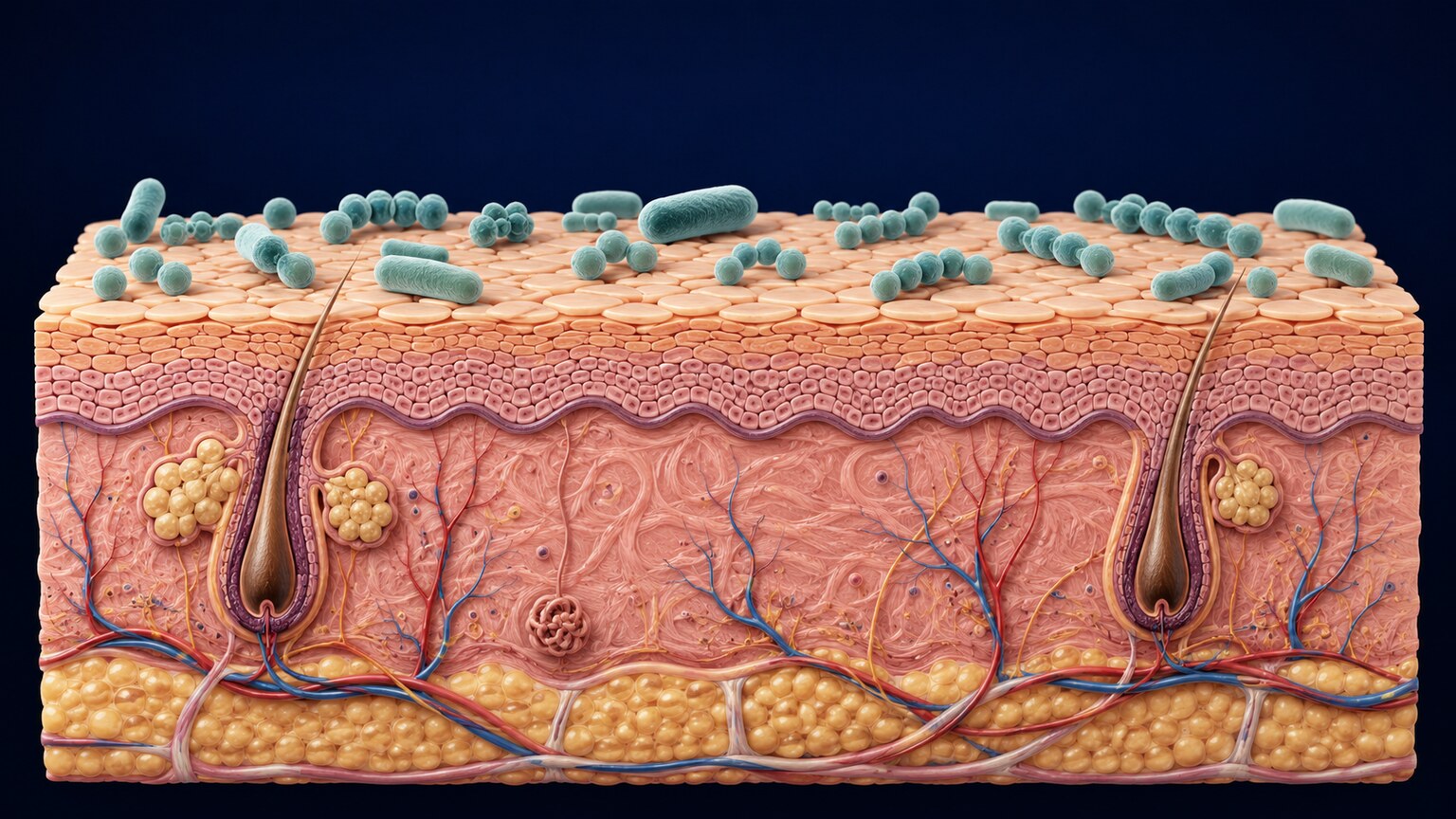
Figure 1. Colonization means bacteria are genuinely present and growing on or in the body without invading tissue or triggering illness — a normal, constant state rather than a medical problem requiring treatment.
Colonization means bacteria are genuinely present, alive, and actively growing on a body surface — skin, the lining of the nose, the gut, or elsewhere — without invading underlying tissue, without triggering a meaningful immune response, and without causing any symptom at all. Infection, by clear contrast, means those same bacteria — or sometimes an entirely different population of them altogether — have genuinely crossed a specific, meaningful line: actively invading tissue that's normally sterile, or actively causing measurable damage where they've established themselves, triggering real inflammation, and ultimately producing genuine, noticeable symptoms as a direct, causally connected result of that active process.
The critical, genuinely easily overlooked point at the heart of this entire article is that a laboratory test simply detecting bacteria — whether a swab, a standard culture, or a newer genetic test — cannot, entirely on its own, reliably distinguish between these two fundamentally different biological states. The same organism, identified through the same test, can represent completely harmless colonization in one person and a genuine, actively symptomatic infection in another, which is exactly why interpreting any positive bacterial finding always requires clinical context, not the lab result in isolation.
Where Colonization Is Actually Normal and Expected

Figure 2. Trillions of bacteria colonize the gut alone as part of the normal, healthy microbiome — a genuinely beneficial, expected relationship rather than a condition requiring any medical concern.
Far from being an abnormal finding, colonization is the default, constant state across most of the human body's exposed surfaces. The gut alone hosts trillions of bacteria across hundreds of distinct species, collectively called the gut microbiome, which perform genuinely beneficial functions — aiding digestion, producing certain vitamins, and actively competing against harmful organisms for space and resources, making it harder for a genuinely dangerous species to establish itself in the first place.
Skin, the nose and throat, and a range of other exposed body surfaces each carry their own distinct, genuinely characteristic colonizing bacterial populations, often specifically adapted to that particular local environment and generally providing a similar kind of beneficial, protective coexistence relationship as the one already described for the gut. A significant share of otherwise entirely healthy people, for instance, carry Staphylococcus aureus colonizing the inside of their nose without ever experiencing any symptom or genuine health consequence whatsoever, sometimes persisting quietly for their entire lives without any medical significance at all. This baseline reality — that a genuinely healthy human body is colonized by bacteria essentially everywhere it makes physical contact with the outside world — is precisely why finding bacteria present on a test result is never, by itself, sufficient evidence that something has actually gone wrong. Recognizing this baseline is the necessary starting point for correctly interpreting nearly any bacterial finding discussed throughout the rest of this article.
Colonization Resistance: How Existing Bacteria Actively Protect Against Newcomers
Beyond simply and passively occupying available space on a given surface, established colonizing bacteria actually provide a genuinely active, ongoing protective service that researchers call colonization resistance — a well-documented phenomenon where a healthy, well-established resident bacterial population makes it considerably harder for a new, potentially harmful organism to gain a foothold in the first place. This happens through several distinct, concrete biological mechanisms working together: existing resident bacteria compete directly and continuously for limited available nutrients and physical attachment sites, some resident species even produce their own natural antimicrobial compounds that directly and actively suppress competing bacterial species, and their sheer, ongoing presence also helps actively maintain a specific local environment (particular pH levels, particular oxygen conditions) that genuinely favors themselves over many other potentially harmful invading organisms trying to establish a foothold.
This particular concept carries genuine, real practical clinical relevance well beyond being merely an interesting academic curiosity alone. Antibiotic treatment, by simultaneously killing off broad swaths of the body's own normal colonizing bacteria right along with whatever specific infection it was actually prescribed to treat, can genuinely, meaningfully weaken this important protective colonization resistance considerably, which is a significant, well-documented part of why certain specific opportunistic infections — Clostridioides difficile being the best-documented example — occur specifically after antibiotic courses, once the normal, protective gut colonizers have been substantially depleted and a harmful organism finds considerably less competition establishing itself in that newly vacated space.
Why the Same Organism Can Be Harmless in One Location and Dangerous in Another
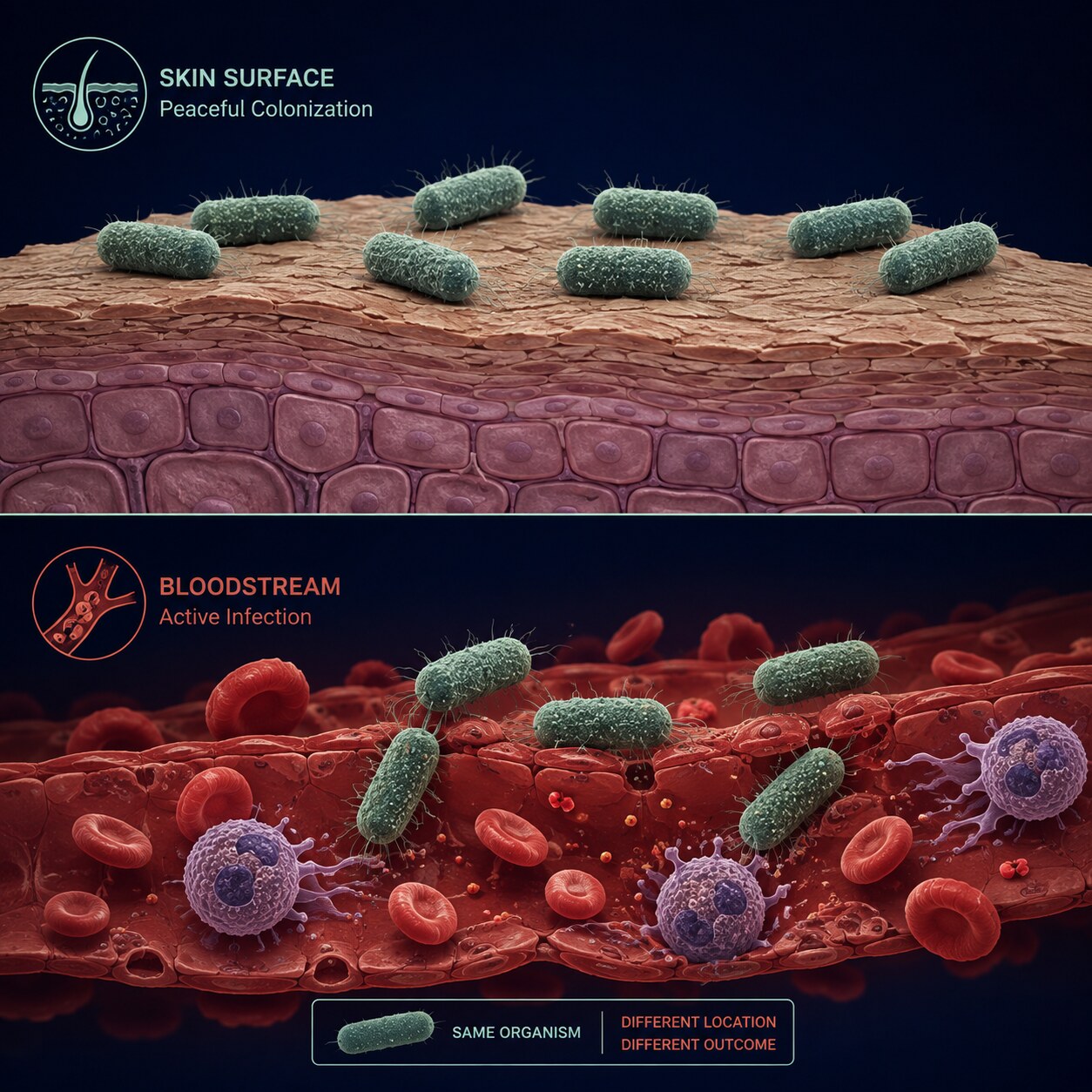
Figure 3. The exact same bacterial species that lives harmlessly on skin can cause a serious infection if it enters the normally sterile bloodstream — location, not identity alone, often determines whether a finding is colonization or infection.
One of the most important, and most frequently misunderstood, aspects of this distinction is that location matters as much as the organism's identity. E. coli living in the gut is completely normal, expected colonization — it's one of the most common resident species there. That exact same E. coli, if it enters the urinary tract, can cause a genuine urinary tract infection. If it enters the bloodstream, it can cause a serious, potentially life-threatening bloodstream infection.
This is precisely why body site is one of the very first, most important pieces of information a doctor or microbiologist considers when interpreting any given culture result — the exact same bacterial name printed on two entirely different reports, drawn from two different body sites, can genuinely carry two completely different clinical meanings despite appearing identical on paper. A specific organism found in a normally sterile location (blood, spinal fluid, a normally sterile joint space) is far more likely to represent genuine infection than that same organism found in a location that's supposed to be colonized as part of normal, healthy anatomy.
Curious what your own culture results actually mean for your specific situation? Upload your results and get a complete, plain-language breakdown in under 15 minutes.
Analyze My ResultsAsymptomatic Bacteriuria: A Specific, Well-Studied Example in the Urinary Tract
The urinary tract offers a particularly well-documented, specifically named example of colonization that's easy to mistake for infection: asymptomatic bacteriuria, meaning bacteria are genuinely present and growing in the bladder or urine in meaningful numbers, but the person has no symptoms whatsoever — no burning, no urgency, no pain, nothing suggesting an active urinary tract infection at all. This is a genuinely quite common finding overall, particularly among older adults and pregnant women specifically, and it illustrates the entire colonization concept especially well in a body location many people mistakenly assume should always, without exception, remain completely sterile.
Current, up-to-date clinical guidelines specifically and explicitly recommend against actively treating asymptomatic bacteriuria with antibiotics in the large majority of situations encountered, precisely because treatment genuinely doesn't improve real health outcomes whenever no actual, active infection is truly present in the first place, and precisely because unnecessary antibiotic use carries the same downsides covered later in this article. There are a small number of specific, genuinely well-defined exceptions carved out of this general overall rule — pregnancy being by far the most clinically significant one, since bacteriuria occurring during pregnancy specifically does carry a documented, real risk of eventually progressing into a more serious kidney infection, or of directly contributing to preterm labor, if left entirely unaddressed throughout the pregnancy, which is precisely, specifically why pregnant women are actually routinely screened for and, when found positive, treated for this exact specific finding even in the complete, total absence of any symptoms whatsoever, a genuinely important, clinically meaningful exception well worth knowing about within an otherwise entirely general, well-established rule of simply leaving asymptomatic bacterial colonization alone in most other circumstances.
The Immune System's Role in Keeping Colonization Contained
Colonized bacteria don't simply exist unnoticed by the body — the immune system is actively aware of them and works continuously to keep them contained within their expected location, preventing the kind of tissue invasion that would define genuine infection. Physical barriers — genuinely intact skin, and the protective mucus layer lining the entire gut, among others — provide the essential first line of containment, physically and reliably separating colonizing bacteria from the sterile tissue that lies directly underneath those barriers throughout the body.
Beyond these physical barriers alone, the immune system also maintains an ongoing, genuinely low-level, largely unnoticed surveillance presence at colonized body surfaces, standing ready to respond quickly and appropriately if bacteria ever attempt to breach that established boundary, all without mounting the kind of full-scale, symptom-producing inflammatory response that would characteristically occur during genuine, active infection. This represents an active, continuously and deliberately maintained state of tolerance and containment, not simple passive neglect on the immune system's part — which is precisely why anything that meaningfully weakens this carefully balanced system, covered in more detail in the next section, creates a genuine, real opportunity for otherwise well-controlled colonization to tip over into an actual, symptomatic infection.
Why This Distinction Only Fully Emerged as Modern Testing Improved
It's worth briefly noting why this distinction, while biologically fundamental, has become an increasingly explicit, actively discussed part of everyday clinical practice specifically in recent decades, rather than being a timeless, always-obvious concept. Older, less sensitive testing methods often couldn't detect bacteria at all unless they were present in fairly large numbers, which meant a positive result, simply by virtue of the older technology's detection limits, was already somewhat more likely to represent a clinically meaningful finding rather than trace, incidental colonization.
Modern testing methods, including highly sensitive genetic and molecular techniques, can now detect bacteria at considerably lower levels than older culture-based methods ever could, which is genuinely useful for catching real infections earlier and more reliably — but it also means modern tests are, correspondingly, more likely to pick up on incidental, clinically insignificant colonization that older methods would have simply missed entirely. This improvement in testing sensitivity is precisely why the colonization-versus-infection distinction has become an increasingly important, actively taught concept in modern clinical training: the more sensitive our tools become at detecting bacteria's mere presence, the more essential it becomes to correctly interpret what that presence actually means.
When Colonization Tips Into Genuine Infection
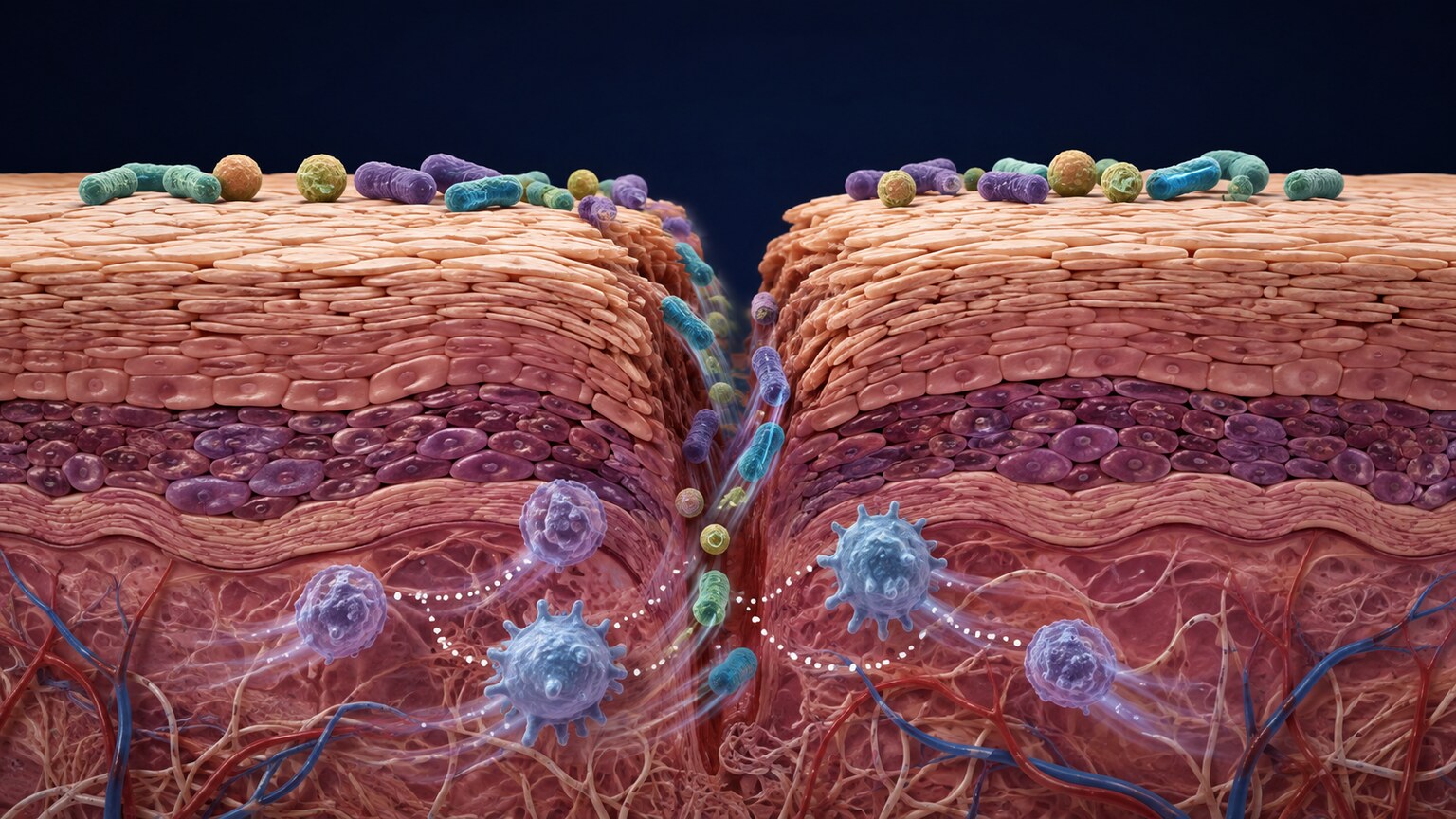
Figure 4. A break in a physical barrier — a wound, a surgical incision, or a medical device — gives normally contained colonizing bacteria a direct route into tissue, which is often exactly when infection begins.
Several specific, well-documented circumstances create the opportunity for colonization to become genuine infection. A physical breach in a barrier is the most direct: a cut, a surgical incision, or a burn gives bacteria that were previously colonizing the skin surface a direct route into normally sterile tissue underneath. Medical devices create a genuinely similar kind of breach in the body's normal defenses — a urinary catheter, an intravenous line, or a surgical implant can each, in their own specific way, provide colonizing bacteria with a direct physical pathway past the body's normal, otherwise reliable physical barriers entirely.
A genuinely weakened immune system represents an entirely different, separate kind of vulnerability worth discussing on its own: chemotherapy treatment, certain immune-suppressing medications, uncontrolled diabetes, advanced age, or an underlying chronic illness can all meaningfully reduce the immune system's overall ability to maintain the kind of active containment already described in the previous section, allowing bacteria that were previously well-controlled, harmless colonizers to begin actively invading tissue they would normally never be able to reach at all. And finally, simple physical relocation, exactly as already covered earlier through the specific E. coli example, effectively moves a colonizing organism away from its normally expected, well-tolerated location and directly into a genuinely sterile one instead, where that same established immune tolerance never actually applies in the first place.
How This Same Concept Applies to Wound Care
Chronic wounds — diabetic foot ulcers, pressure sores, and similar long-standing skin breaks — provide another genuinely instructive real-world application of the colonization-versus-infection distinction, since essentially every open wound that stays open for more than a short period becomes colonized with bacteria, entirely regardless of whether it ever becomes clinically infected. This reality creates genuine diagnostic difficulty for wound-care specialists, since a wound culture will predictably grow bacteria almost every single time it's tested, whether or not that specific wound is actually, clinically infected.
Distinguishing a colonized chronic wound from a genuinely infected one relies on the same clinical framework already established throughout this article — increasing pain, spreading redness beyond the wound's own margins, new or worsening swelling, fever, or a wound that's failing to heal or actively deteriorating despite appropriate care all suggest true infection has developed on top of the expected baseline colonization. A wound culture showing bacterial growth, by itself, without any of these accompanying clinical signs, is treated as expected colonization rather than an indication that antibiotics are suddenly needed — a distinction that prevents considerable unnecessary antibiotic use in wound care specifically, a field where this exact confusion has historically been especially common.
MRSA Colonization Screening: A Real-World Example of This Distinction Mattering

Figure 5. Hospitals routinely screen patients' noses for MRSA colonization before certain procedures — not to diagnose infection, but to identify a risk factor and take preventive precautions before surgery.
MRSA (methicillin-resistant Staphylococcus aureus) offers one of the clearest, most widely used real-world illustrations of why this distinction genuinely matters in everyday clinical practice. Many hospitals routinely swab patients' noses before certain surgeries or procedures specifically to check for MRSA colonization — not infection, colonization. A patient found to be colonized, with no symptoms and no signs of active infection anywhere, isn't diagnosed with an MRSA infection at all.
Instead, that colonization result specifically informs a set of preventive precautions rather than treatment: sometimes a targeted topical decolonization treatment applied directly to the nose before surgery, sometimes additional infection-control precautions maintained throughout the hospital stay, specifically because a person confirmed to be colonized with MRSA carries a somewhat elevated statistical risk of that same organism eventually causing an actual, genuine infection if it happens to get the right opportunity — through a surgical incision, for instance — at some point during their hospital stay. This entire, genuinely carefully designed hospital screening and precaution system depends completely, from start to finish, on correctly and reliably distinguishing genuine colonization from actual, active infection; treating every single colonized person as though they already had an active, confirmed MRSA infection would represent a significant, entirely medically unjustified overreaction with real downstream costs and consequences of its own.
How Clinicians Actually Weigh These Factors in Real Time
It's worth walking through how an experienced clinician actually applies the colonization-versus-infection framework in a real, practical encounter, since seeing the reasoning process laid out end to end makes the abstract distinction covered throughout this article considerably more concrete. When a culture result comes back positive, the first question is almost always whether the sample came from a normally sterile site or a normally colonized one — blood and spinal fluid carry a strong default assumption toward genuine infection, while skin, throat, and stool cultures carry a strong default assumption toward likely colonization unless something else in the picture suggests otherwise.
From there, the clinician layers in the patient's actual symptoms and vital signs, any relevant recent history (a new wound, a recent surgery, immune-suppressing medication), and, when relevant, the pattern and quantity of bacterial growth reported by the lab. No single piece of this puzzle is decisive entirely on its own — it's the combination, weighed together by someone with the clinical training to interpret it, that ultimately determines whether a specific positive result represents colonization to be left alone, or infection genuinely requiring treatment. This layered, contextual reasoning process is precisely why the same raw lab finding can appropriately receive two completely different responses in two different patients, without either response being incorrect.
Why Doctors Deliberately Avoid Treating Colonization With Antibiotics

Figure 6. Treating colonization with antibiotics provides no real benefit, since there's no actual infection to cure, while genuinely risking side effects and contributing to broader antibiotic resistance.
Treating colonization with antibiotics provides essentially no genuine clinical benefit, since there's no actual infection present to cure — the colonizing bacteria genuinely aren't causing any measurable tissue damage in the first place, and successfully eliminating them from an already-colonized site (when that's even reliably achievable at all, since recolonization afterward is genuinely common) doesn't meaningfully improve that person's overall health in any real, measurable way whatsoever. Meanwhile, that same unnecessary antibiotic course carries real, well-documented downsides worth taking genuinely seriously: real medication side effects, meaningful disruption of the beneficial colonizing bacteria already described earlier in this article, and a direct, measurable contribution to the broader, genuinely serious global problem of antibiotic resistance continuing to develop and spread across bacterial populations over time.
This is precisely why appropriately conservative, thoughtful antibiotic prescribing, often specifically referred to as antibiotic stewardship within the medical field, actively trains and encourages clinicians to carefully distinguish colonization from genuine infection before ever reaching directly for a prescription pad, and it also explains why a straightforward positive culture result showing genuine bacterial growth doesn't automatically translate into an immediate antibiotic order the way many patients quite understandably expect it should, given how the two concepts are often casually conflated in everyday conversation. A result correctly, confidently identified as showing simple colonization is genuinely a case where doing nothing further beyond, at most, some targeted preventive precautions represents the appropriate, evidence-based, medically sound response, rather than a gap in care that needs filling with treatment.
Why Newborns and Infants Require Special Consideration
The colonization-versus-infection framework applies a bit differently, and considerably more cautiously, in newborns and young infants, which is genuinely worth understanding separately given how differently these cases are approached clinically compared to healthy adults. A newborn's immune system is still developing and hasn't yet built up the kind of established, mature colonization-resistance relationship with its own bacterial populations that older children and adults have — meaning the same organism that would represent unremarkable, harmless colonization in a healthy adult can carry meaningfully higher infection risk in a very young infant, particularly in the first weeks of life.
This is precisely why certain bacterial findings that would be dismissed as ordinary colonization in an adult prompt a more cautious, sometimes more aggressive clinical response in newborns, and why pregnant women are specifically screened during pregnancy for certain bacteria (Group B Streptococcus being the most well-known example) that are harmless colonizers in the mother herself but carry a documented, meaningful risk of causing serious infection if passed to the newborn during delivery. This screening and preventive treatment approach exists specifically because the same colonization-versus-infection principle plays out differently across the two connected patients involved — genuinely benign in one, genuinely risky in the other.
What Happens When the Distinction Is Genuinely Unclear
Not every case fits neatly into "obviously colonization" or "obviously infection," and it's worth acknowledging that a genuinely ambiguous middle ground exists in real clinical practice, even after everything covered in this article has been applied carefully. Mild, non-specific symptoms combined with a positive culture from a site that could plausibly represent either colonization or early infection can leave even an experienced clinician without complete certainty at a single point in time.
In these genuinely ambiguous situations, the appropriate response is often close monitoring and reassessment rather than an immediate, definitive decision either way — watching for the development of clearer symptoms over the following days, sometimes repeating testing, and treating the situation as an evolving clinical picture rather than a single snapshot that must be conclusively categorized immediately. This measured, patient approach reflects good medical practice rather than indecision, and it's worth knowing that "we need to watch this a bit longer before we're certain" is itself a legitimate, appropriate clinical conclusion, not a sign that something has gone wrong with the diagnostic process.
How to Recognize Which Category a Lab Finding Falls Into
Since the raw lab result alone can't make this distinction, several pieces of surrounding clinical context are what actually determine whether a specific finding represents colonization or infection. Symptoms represent the single most important, most heavily weighted factor in the entire evaluation: fever, genuinely localized pain, visible redness, noticeable swelling, or any other clear sign of active inflammation specifically at the body site in question all point meaningfully toward true infection, while the complete, genuine absence of any such symptom, despite an otherwise positive culture result, points meaningfully toward simple, unremarkable colonization instead.
Body site matters enormously as well, exactly as covered in detail earlier in this article — the exact same organism found present in a normally colonized location (skin, nose, or gut, specifically in the genuine absence of any symptoms) reads very differently indeed than that identical organism found instead in a normally sterile location entirely (blood, spinal fluid, or deep internal tissue). The overall colony count and precisely how a given sample was originally collected also factor meaningfully into this same interpretation, since only a small, sparse amount of bacterial growth from a poorly collected or accidentally contaminated sample reads very differently from heavy, consistent, robust growth obtained from a carefully collected, properly handled clinical specimen. When all of these individual pieces of context are put together and carefully weighed by a genuinely knowledgeable clinician, the correct overall category — colonization or genuine infection — usually becomes reasonably clear, even in situations where the underlying lab test result itself was never actually capable of making that determination in isolation on its own.
A Practical Comparison: Colonization Versus Infection Side by Side
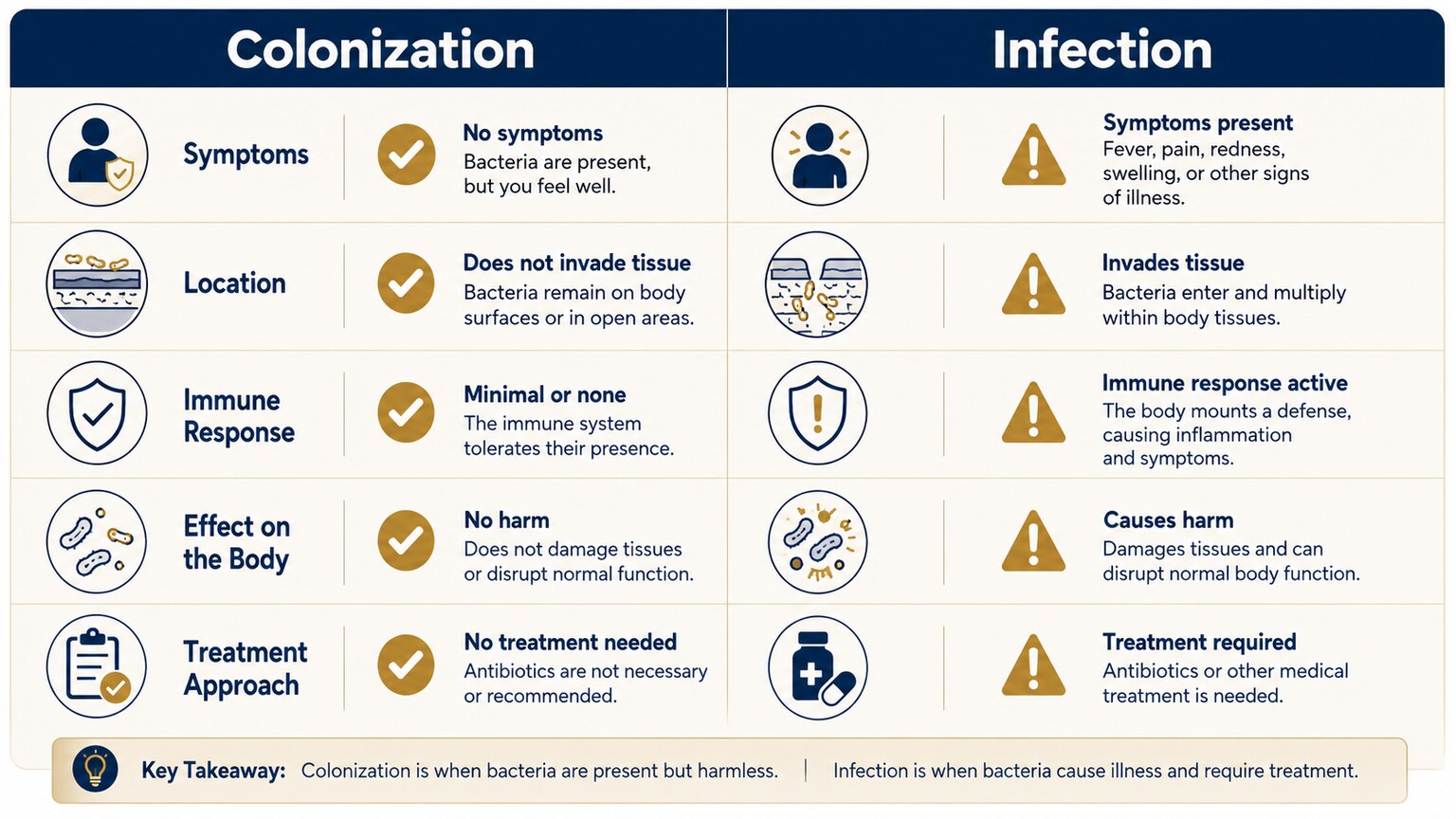
Figure 7. Comparing colonization and infection side by side across symptoms, tissue involvement, immune response, and treatment approach makes the practical distinction considerably easier to apply to a real result.
Pulling everything covered throughout this article into one direct comparison makes the practical distinction easier to apply. Colonization involves bacteria present on a surface without tissue invasion, no meaningful symptoms, a contained low-level immune response, and generally no treatment need. Infection involves bacteria actively invading tissue, genuine symptoms like pain, fever, or redness, a full inflammatory immune response, and a treatment approach specifically guided by the organism's identity and severity of illness.
Neither category is inherently better or worse to have detected on a test — they simply call for entirely different next steps. Recognizing which one actually applies to a specific result, using the symptom, body-site, and clinical-context framework covered earlier in this article, is what ultimately determines whether a positive bacterial finding calls for reassurance, monitoring, or genuine treatment.
Common Misconceptions Worth Addressing Directly
A handful of persistent misconceptions tend to make this distinction feel considerably more confusing than the underlying biology actually is, and directly addressing them helps consolidate everything covered throughout this article. The first misconception treats any bacterial growth reported on a culture as inherently abnormal or concerning, when in reality, as this article has explained at length, bacterial growth is the expected, default result for cultures taken from virtually any non-sterile body site — skin, throat, gut, and many wounds will predictably grow bacteria essentially every time they're tested, entirely independent of whether genuine infection is present.
A second common misconception assumes that a specific organism's name alone determines how seriously a finding should be taken, when in reality, as covered earlier regarding E. coli specifically, the exact same organism can represent either harmless, expected colonization or serious infection depending almost entirely on body site and clinical context rather than on the organism's identity alone. A third misconception assumes that "no treatment needed" for colonization means the finding was meaningless or the testing was pointless — in reality, as the MRSA screening and newborn-related examples earlier in this article both illustrate, a colonization finding can carry genuine, actionable clinical significance (informing precautions, guiding screening decisions) even when it doesn't call for antibiotic treatment itself.
Frequently Asked Questions
If I'm colonized with MRSA, will I always be colonized?
Not necessarily. Colonization can resolve on its own over time, and decolonization treatments can reduce it, though recolonization is common, which is why some hospitals rescreen before future procedures rather than assuming a past negative or positive result still applies.
Can colonization ever be dangerous even without becoming infection?
Colonization itself doesn't directly cause illness, but being colonized with certain resistant organisms does carry a modestly elevated risk of infection if that organism gets an opportunity, which is why it's still clinically relevant information even without active symptoms.
Why did my doctor swab me if they weren't planning to treat a positive result?
Screening for colonization, particularly before surgery or hospital admission, identifies risk factors that inform preventive precautions rather than triggering treatment, which is a genuinely different and equally valid purpose for testing.
Does everyone have some form of bacterial colonization somewhere on their body?
Yes. Colonization by trillions of bacteria across the skin, gut, nose, and other surfaces is the normal, universal, healthy state for essentially every person, not an unusual or concerning finding on its own.
Why do older adults sometimes get treated for asymptomatic bacteriuria when guidelines say not to?
This can happen when new or worsening confusion, functional decline, or other subtle changes are present, since these can occasionally be the only sign of a genuine urinary infection in older adults, a specific clinical judgment call distinct from the general asymptomatic bacteriuria guideline.
Can a wound with visible pus still just be colonized rather than infected?
Generally no. Pus formation itself reflects an active immune response to invading bacteria and is typically considered a sign of infection rather than simple colonization, distinct from the clear or minimal drainage that can accompany an uninfected, healing chronic wound.
Conclusion
Colonization and infection both involve bacteria being genuinely present in or on the body, but they represent fundamentally different biological states — one a normal, expected, often beneficial coexistence, the other an active invasion causing genuine harm. Understanding this distinction, and the specific factors (symptoms, body site, and clinical context) that actually separate the two, replaces the reflexive assumption that any positive bacterial finding demands treatment with a more accurate, evidence-based understanding of what a specific result genuinely means for your own health.
This same underlying principle — that mere presence of an organism is not the same as active disease — extends usefully beyond bacteria specifically to how many other lab findings are best interpreted as well. Approaching an unexpected positive result with this more nuanced framework, asking what body site, what symptoms, and what broader clinical context surround it, is a genuinely valuable habit that applies well beyond bacterial cultures to nearly any lab finding capable of representing either a benign, tolerated state or a genuinely active problem.
Still Not Sure What Your Results Mean?
Upload your labs and get a complete, visual, plain-language interpretation of every biomarker — delivered to your inbox in under 15 minutes.
Get My ReportThis article is for educational purposes only and does not constitute medical advice. Always consult your healthcare provider regarding your specific lab results.