
Why Did My Urine Culture Come Back Positive?
A "positive" urine culture isn't a simple yes-or-no finding — it's the outcome of a specific counting process, comparing how much bacteria actually grew from your sample against an established numeric threshold that separates a meaningful bacterial presence from background noise. Understanding why your particular result came back positive means understanding several distinct things at once: how bacteria realistically get into a normally low-bacteria environment like your bladder in the first place, why the exact species identified matters, why the sample collection technique itself can shape the result, and why a positive culture doesn't automatically mean you have an infection that needs treating. This article walks through each of these pieces individually, so a positive result on your own report becomes something you can actually interpret rather than just react to.
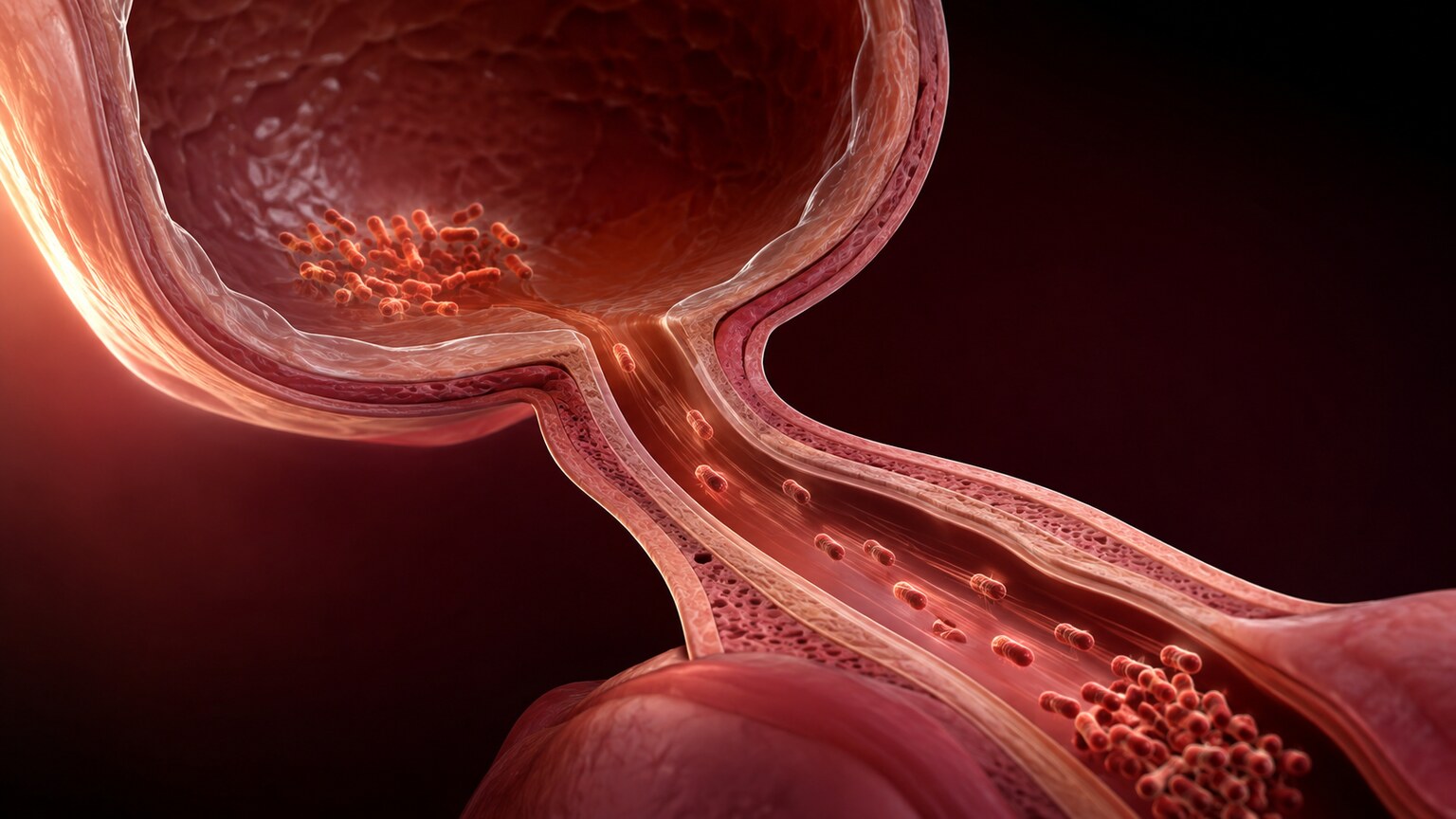
Figure 1. The large majority of urinary tract infections begin the same way: bacteria that normally live harmlessly around the perineal and rectal area migrate backward, upward through the urethra, and reach the bladder, where they're able to multiply.
Why a Urine Culture Is Ordered in the First Place
Before getting into the mechanics of what makes a culture come back positive, it's worth understanding what a urine culture is actually designed to answer, since it's a fundamentally different kind of test than the quicker urinalysis that's often ordered alongside it. A standard urinalysis can flag general signs suggestive of infection, such as the presence of white blood cells or certain chemical markers, within minutes, but it can't identify the specific bacteria responsible, and it can't confirm with certainty that bacteria are genuinely present at a clinically meaningful level rather than at some lower, incidental amount.
A urine culture exists specifically to answer those two more precise questions: is a real, meaningful number of bacteria actually growing from this sample, and if so, exactly which organism is it. Because growing bacteria in a lab takes time, typically one to three days depending on the specific protocol, a culture is slower to result than a urinalysis, but it provides considerably more specific, actionable information — which is exactly why a urinalysis is often used as a fast initial screen, while a culture is reserved for situations where that more specific, confirmed information is actually needed to guide treatment.
This staged approach, a fast screening test followed by a slower, more definitive confirmatory test, is a pattern that shows up across many areas of laboratory medicine, not just urinary testing, and understanding it here provides a useful template for thinking about similar two-step testing strategies encountered elsewhere.
How Bacteria Actually Get Into the Urinary Tract
Urine, as it's produced by healthy kidneys and stored in a healthy bladder, is normally low in bacteria, which is exactly why finding a significant amount of bacterial growth in a properly collected sample is meaningful in the first place. The overwhelming majority of urinary tract infections happen through what's called the ascending route: bacteria that normally live harmlessly on the skin around the perineal and rectal area migrate backward, entering the urethra's opening and traveling upward against the natural downward flow of urine until they reach the bladder, where conditions allow them to multiply if the body's normal defenses don't clear them out first.
This ascending mechanism is also the direct reason urinary tract infections are considerably more common in women than in men — the female urethra is significantly shorter than the male urethra, meaning bacteria have a much shorter distance to travel to reach the bladder, and its opening sits closer in proximity to both the vaginal opening and the anus, two areas naturally populated with the exact bacteria most likely to cause this kind of ascending infection.
Once bacteria reach the bladder, several of the body's own defenses normally work to clear them out before they can establish a genuine foothold. The simple, mechanical act of urinating flushes out a meaningful portion of any bacteria present with each void, which is part of why staying well hydrated and urinating regularly is a commonly cited, genuinely mechanistic piece of general urinary health advice rather than an arbitrary folk recommendation. The bladder lining itself also produces certain natural antimicrobial substances, and the local immune system can recruit white blood cells to help identify and clear bacteria that manage to adhere to the bladder wall despite these mechanical defenses.
A positive culture, in this context, essentially represents a situation where bacteria have managed to overcome this multi-layered defense system long enough to multiply to a detectable, significant level — whether that's because an unusually large number of bacteria arrived at once, because a particular strain is especially good at resisting these defenses (as covered in the next section), or because one or more of the body's own normal defenses happen to be weakened by an underlying risk factor covered later in this article.
Curious what the rest of your urinalysis or culture results are telling you? Upload your results and get a complete, plain-language breakdown in under 15 minutes.
Analyze My ResultsWhich Bacteria Actually Show Up, and Why
A specific bacterium called Escherichia coli, or E. coli, is responsible for the substantial majority of urinary tract infections, typically cited as somewhere around 80 to 90% of cases in otherwise healthy people. This isn't a coincidence of naming or convenience — certain strains of E. coli that live in the intestinal tract carry specific structures on their surface, sometimes described as adhesion structures, that allow them to physically grip onto the cells lining the urinary tract with unusual effectiveness, letting them establish themselves and resist simply being flushed out with normal urination in a way that many other bacterial species can't manage nearly as well.
Beyond E. coli, a handful of other organisms make up most of the remaining cases: other related gram-negative rod-shaped bacteria from the same broad family, a bacterium called Enterococcus, and a species called Staphylococcus saprophyticus, which shows up disproportionately in young, sexually active women specifically. Each of these organisms is identified specifically by the laboratory, not just reported as a generic "positive," because the exact species identified carries real clinical weight — it shapes which antibiotics are likely to work, whether the specific bacterium found is generally considered a true urinary pathogen at all, and whether its presence fits the expected pattern for a genuine infection versus a more ambiguous, incidental finding.
Identifying the specific species isn't a simple, instant process either — after bacteria have grown into visible colonies on the culture plate, the laboratory examines their physical characteristics under magnification, runs a series of biochemical reactions that different bacterial species respond to differently, and, in many modern labs, uses a specialized instrument that can identify a species based on the unique molecular fingerprint of its proteins. This identification step happens before the antibiotic sensitivity testing described later in this article, since a clinician needs to know exactly what organism they're dealing with before that testing's results can be properly interpreted and applied.
Certain bacterial species found in a urine culture carry their own specific, additional context worth knowing. Klebsiella pneumoniae, another gram-negative organism, is a less common but recognized cause of urinary tract infections, sometimes associated with a somewhat higher likelihood of antibiotic resistance than a typical E. coli infection, which can influence how aggressively a clinician pursues sensitivity testing before committing to a treatment. Proteus mirabilis, a distinctive organism known for its ability to alter the chemical properties of urine as it grows, is specifically associated with a higher risk of forming certain types of kidney stones when infections recur, adding a layer of long-term clinical relevance beyond the immediate infection itself. Recognizing these species-specific patterns is part of why the exact organism identified matters well beyond simply confirming that "some bacteria" are present.
It's also worth understanding why certain bacteria that are perfectly normal, common inhabitants of other parts of the body are rarely, if ever, considered significant when they show up in small amounts on a urine culture. Certain skin bacteria, for instance, are ubiquitous residents of human skin everywhere on the body, and finding a small amount of this organism in a urine culture is generally interpreted as incidental skin contamination rather than a genuine urinary pathogen, precisely because this bacterium only rarely causes true urinary tract infections in otherwise healthy people. This is another concrete example of why the specific organism identified, not just the raw presence of "bacteria," shapes how a result should actually be interpreted.
Why Some People Get Recurrent Positive Cultures
For some people, a positive urine culture isn't an isolated, one-time event but a recurring pattern, sometimes happening several times within a single year. Recurrence can happen through two genuinely different mechanisms that look identical on a single culture report but mean different things for long-term management. A true reinfection involves a new episode caused by a different bacterial strain (or occasionally the same species, but a genuinely new infection event) entering the urinary tract fresh each time, often following the same basic ascending route described earlier. A relapse, by contrast, involves the original infecting organism never being fully cleared in the first place, persisting at a low, sometimes undetectable level before flaring back up into a fresh, detectable infection.
Distinguishing between these two patterns matters because it changes the practical approach to prevention and management. Frequent true reinfections, particularly in women, sometimes prompt a conversation about specific preventive strategies tailored to interrupting the ascending route itself, since the underlying anatomical vulnerability responsible for the first infection hasn't gone anywhere and remains just as capable of allowing a fresh infection to establish itself again. A genuine relapse, by contrast, more often prompts a closer look at whether the original antibiotic course was adequate, whether the specific organism identified has any unusual resistance pattern that made it harder to fully clear, or whether an anatomical abnormality in the urinary tract is allowing a persistent reservoir of bacteria to survive treatment.
Genetic testing techniques capable of comparing the specific bacterial strain across multiple episodes can, in some research and specialized clinical settings, directly confirm which of these two patterns is actually happening in a given person, rather than relying purely on the clinical timing and pattern of symptoms to infer it. This level of testing isn't part of routine clinical practice for most recurrent infections, but it illustrates that the reinfection-versus-relapse distinction is a genuinely real, biologically confirmable difference, not simply a conceptual framework used for convenience.
The Colony Count: Why a Specific Number Matters So Much

Figure 2. A urine culture isn't read as simply positive or negative — a specific number of colonies is counted from a precisely measured volume of urine and converted into a colony-forming-units-per-milliliter value, which is then compared against an established clinical threshold.
A urine sample isn't just checked for the presence or absence of bacteria — a precisely measured, tiny volume of it is spread across a nutrient-rich culture plate, and after an incubation period allows any bacteria present to multiply into visible colonies, a laboratory technician counts exactly how many distinct colonies formed. Because the volume of urine originally applied to the plate is known precisely, that colony count can be mathematically converted into a standardized measurement: colony-forming units per milliliter, abbreviated CFU/mL.
This number is what actually gets compared against an established clinical threshold, most commonly 100,000 CFU/mL for a classic, symptomatic urinary tract infection, though this exact cutoff can be adjusted lower in certain specific clinical situations, such as when a sample is collected via catheter rather than a normal voided sample, or when a person has clear symptoms despite a somewhat lower count. A result well above this threshold is considered strong evidence of true bacterial growth from the urinary tract itself; a result well below it, or showing several different bacterial types at low counts, is more often interpreted as contamination rather than genuine infection, a distinction covered in more detail in the next section.
Contamination: When the Collection Technique Shapes the Result

Figure 3. A sample contaminated with normal skin flora typically shows several different bacterial species, each present at a low count, a pattern that looks visually distinct from the single, dominant, high-count organism typical of a genuine urinary tract infection.
Urine itself, once safely inside the bladder, is normally low in bacteria, but the path it travels on its way out, through the urethra and past the external genital area, is absolutely not sterile — it's populated with a variety of normal, harmless skin and perineal bacteria that have nothing to do with what's actually happening inside the bladder. This is exactly why a standard "clean-catch, mid-stream" collection technique exists: cleansing the area beforehand and specifically collecting only the middle portion of the urine stream, after the first bit has flushed away any bacteria sitting right at the opening, meaningfully reduces how much of this normal surface bacteria ends up contaminating the actual sample being tested.
Even with careful technique, some degree of contamination is difficult to fully eliminate, which is part of why a laboratory doesn't just look at the total colony count in isolation — a sample showing multiple different bacterial species, each present only at a low count, is a classic pattern suggesting contamination from mixed skin flora rather than a single organism that's actually established a genuine infection inside the urinary tract. A sample showing one single organism at a high, well-defined count is a much more classic, straightforward pattern for genuine infection, which is why the overall pattern of the result, not just a single yes-or-no positive flag, is what a clinician actually reads when interpreting a urine culture.
When a result looks genuinely ambiguous — a borderline count, or a mix that could plausibly reflect either a mild true infection or simple contamination — the most common next step is a repeat collection, performed with extra attention to proper technique, rather than treating an uncertain result as automatically positive or automatically dismissing it. This is a reasonable, low-cost way to clarify a genuinely unclear picture before committing to an antibiotic course that may turn out to be entirely unnecessary.
Why the Collection Method Itself Matters

Figure 4. Following clean-catch collection instructions carefully — washing hands, cleansing the area, and collecting only the mid-stream portion — meaningfully reduces the chance that a result reflects contamination rather than the bladder's actual bacterial status.
Different collection methods carry meaningfully different baseline contamination risks, which is part of why the exact colony-count threshold considered clinically significant isn't identical across every collection type. A sample collected through a catheter, where a thin tube is inserted directly into the bladder, bypasses the external genital area and urethra almost entirely, meaningfully reducing the opportunity for skin flora contamination — this is part of why a lower colony count, sometimes even as low as 1,000 to 10,000 CFU/mL depending on the specific clinical guideline being used, can already be considered clinically significant for a catheterized sample, compared to the higher threshold typically applied to a standard voided clean-catch sample.
A standard voided sample, by contrast, always carries some inherent contamination risk no matter how carefully it's collected, since it necessarily passes through territory with normal bacterial residents on its way out. This is exactly why the higher, more conservative threshold applies to this more common collection method — it's calibrated specifically to account for the small amount of contamination that even a genuinely well-executed clean-catch technique can't fully eliminate, ensuring that a result crossing this higher bar reflects true bladder bacteria rather than an artifact of the collection method itself.
A third collection method, called suprapubic aspiration, bypasses both the urethra and any catheter-related risk entirely by drawing urine directly from the bladder through a needle inserted through the lower abdominal wall. Because this method avoids contact with any normally colonized tissue whatsoever, essentially any bacterial growth detected this way is considered clinically significant, regardless of count — though this collection method is reserved for specific, less common clinical situations, such as certain evaluations in very young infants, rather than being used as a routine option for most people.
Asymptomatic Bacteriuria: A Positive Result Without Being a True Infection
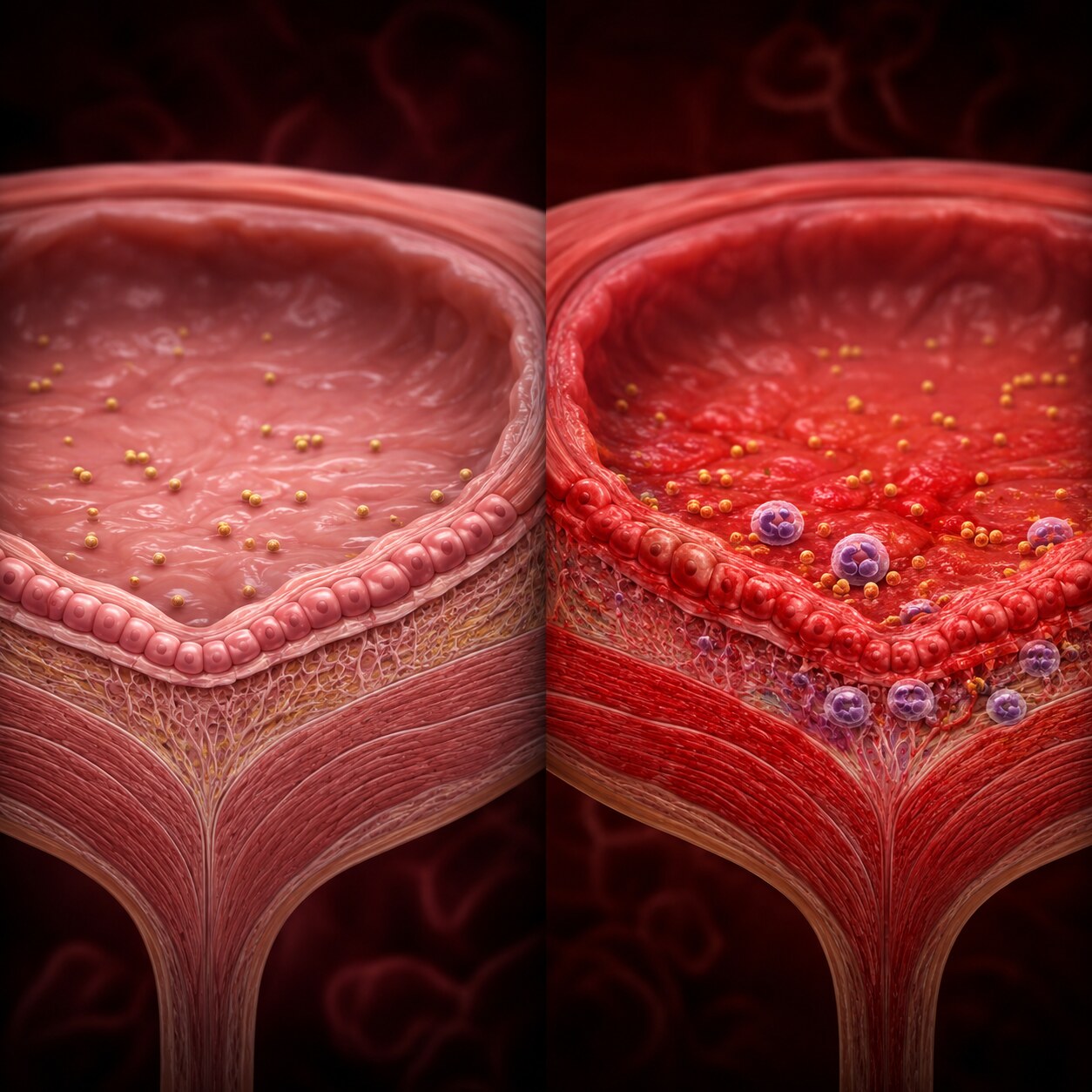
Figure 5. Asymptomatic bacteriuria describes bacteria genuinely present in the bladder at a significant count, without triggering the inflammatory response that produces actual symptoms — the same organism, at a similar count, can look identical on a culture whether or not it's actually causing a problem.
One of the more important and frequently misunderstood concepts in this entire topic is that a genuinely positive culture, well above the standard colony-count threshold, doesn't automatically mean a person has, or needs treatment for, a true urinary tract infection. A condition called asymptomatic bacteriuria describes exactly this scenario: bacteria are genuinely present in the bladder in significant numbers, confirmed by a real, above-threshold culture result, but the person has no symptoms at all, and the bacteria aren't triggering the inflammatory response that actually defines a symptomatic infection.
This distinction matters enormously in practice, because major clinical guidelines specifically recommend against treating asymptomatic bacteriuria with antibiotics in most people, precisely because treating bacteria that aren't causing any harm exposes someone to unnecessary antibiotic side effects and contributes to broader antibiotic resistance, without providing any real benefit. There are specific important exceptions to this general rule — pregnant women and people undergoing certain urological procedures are generally treated even without symptoms, since bacteriuria in those specific situations does carry documented risk — but for the large majority of otherwise healthy people, a positive culture without any accompanying symptoms is generally observed rather than automatically treated.
Asymptomatic bacteriuria is also considerably more common than many people realize, particularly in certain populations. Older adults, especially those living in long-term care settings, show a notably high prevalence of asymptomatic bacteriuria, sometimes cited well above 20% in some studied groups, without this reflecting any acute problem requiring treatment. This high baseline prevalence is exactly why guidelines specifically caution against reflexively culturing urine, or treating an incidentally found positive result, in an older adult who has no actual urinary symptoms, even if a vague, nonspecific symptom like general confusion happens to be present for an unrelated reason — a scenario that has historically led to considerable unnecessary antibiotic use before this specific guidance became more widely established.
The reason symptoms matter so much more than the culture number alone comes down to what's actually different, biologically, between asymptomatic bacteriuria and a true symptomatic infection. In a genuine symptomatic infection, the bacteria present are actively triggering a meaningful inflammatory response from the bladder wall, and it's this inflammatory response, not the bacteria's mere presence, that produces the burning, urgency, and frequency most people associate with a urinary tract infection. In asymptomatic bacteriuria, for reasons still being actively studied, that same inflammatory trigger simply doesn't occur to the same degree, even with a similar bacterial count present, leaving the bladder essentially undisturbed by bacteria that are nonetheless genuinely there.
Symptoms That Typically Accompany a Genuine Infection
Because the presence of symptoms is such a central factor in distinguishing a true infection from asymptomatic bacteriuria, it's worth being specific about what those symptoms actually look like. A classic lower urinary tract infection typically produces a burning sensation during urination, a persistent urge to urinate even shortly after having just gone, urinating more frequently than usual, and sometimes cloudy or strong-smelling urine, though this last detail is a considerably less reliable indicator on its own than the other, more specific symptoms.
When an infection progresses beyond the bladder and involves the kidneys themselves, a more serious condition called pyelonephritis, additional symptoms typically appear that go well beyond simple bladder discomfort: fever, chills, and pain specifically in the flank or lower back region, often accompanied by nausea. This upper urinary tract involvement is treated with considerably more urgency than a simple bladder infection, since it carries a real risk of the infection spreading further into the bloodstream if not addressed promptly, which is exactly why these specific additional symptoms are taken so seriously when they accompany a positive culture.
Risk Factors That Make a Positive Culture More Likely
Beyond basic anatomy, several specific factors meaningfully raise the likelihood of bacteria successfully establishing themselves in the urinary tract. Sexual activity can mechanically introduce bacteria from the surrounding area toward the urethral opening, which is part of why urinary tract infections cluster around sexual activity in some people. Urinary catheters, tubes placed directly into the bladder for medical reasons, bypass the body's normal anatomical defenses entirely and are one of the most significant, well-documented risk factors for bacteria establishing themselves in the bladder, with risk climbing the longer a catheter remains in place.
Diabetes increases risk through a couple of related mechanisms: elevated glucose can end up in the urine itself, providing an unusually rich nutrient source for bacteria to multiply more easily than they otherwise would, and diabetes can also subtly impair some aspects of normal immune function, reducing the body's ability to clear bacteria efficiently once they've arrived. Pregnancy causes physical and hormonal changes that can slow the normal flow of urine somewhat, giving bacteria more time to establish themselves before being flushed out, which is part of why routine urine culture screening is a standard part of prenatal care even in the complete absence of symptoms.
Anatomical differences beyond the basic male-female urethral length difference can also meaningfully affect risk. Anything that partially obstructs the normal flow of urine, whether from certain structural abnormalities present from birth, an enlarged prostate in older men, or kidney stones sitting somewhere along the urinary tract, creates areas where urine can pool or flow more slowly than normal, giving bacteria more opportunity to establish themselves rather than being efficiently flushed through and out. This is part of why an enlarged prostate specifically is a well-recognized risk factor for urinary tract infections in older men, a population where infections are otherwise considerably less common than in women of a similar age.
Menopause introduces its own specific risk factor worth mentioning separately, since it involves a hormonal rather than purely anatomical mechanism. Declining estrogen levels after menopause lead to thinning of the tissue lining the vagina and urethra, along with shifts in the normal bacterial population that inhabits the vaginal area, changes that together can make it somewhat easier for infection-causing bacteria to establish themselves near the urethral opening than before menopause. This is part of why postmenopausal women can experience a renewed or increased susceptibility to urinary tract infections compared to their own risk earlier in adulthood, a pattern specific enough that it's sometimes addressed directly with targeted, localized hormone therapy in cases of frequent recurrence.
What a Repeat or Follow-Up Culture Actually Checks For
Beyond the initial diagnostic culture, a repeat urine culture is sometimes ordered specifically after treatment has been completed, and it's worth understanding that this follow-up test is checking something meaningfully different from the original diagnostic question. Rather than asking "is an infection present," a follow-up culture, sometimes called a test of cure, specifically asks whether the bacteria originally identified have actually been successfully cleared following a completed course of antibiotics.
This kind of follow-up culture isn't performed after every single treated infection — for an uncomplicated infection in an otherwise healthy person whose symptoms have fully resolved, it's often not considered necessary, since symptom resolution itself is generally taken as sufficient evidence that treatment worked. Follow-up cultures become more clinically important specifically in pregnancy, in cases involving a more resistant or unusual organism, or when symptoms persist or return shortly after finishing treatment, situations where confirming true bacterial clearance carries genuine additional value beyond what symptom improvement alone can tell a clinician, since these are precisely the scenarios where a quietly persisting infection could otherwise go unnoticed until it resurfaces later.
What Happens After a Confirmed Positive Result
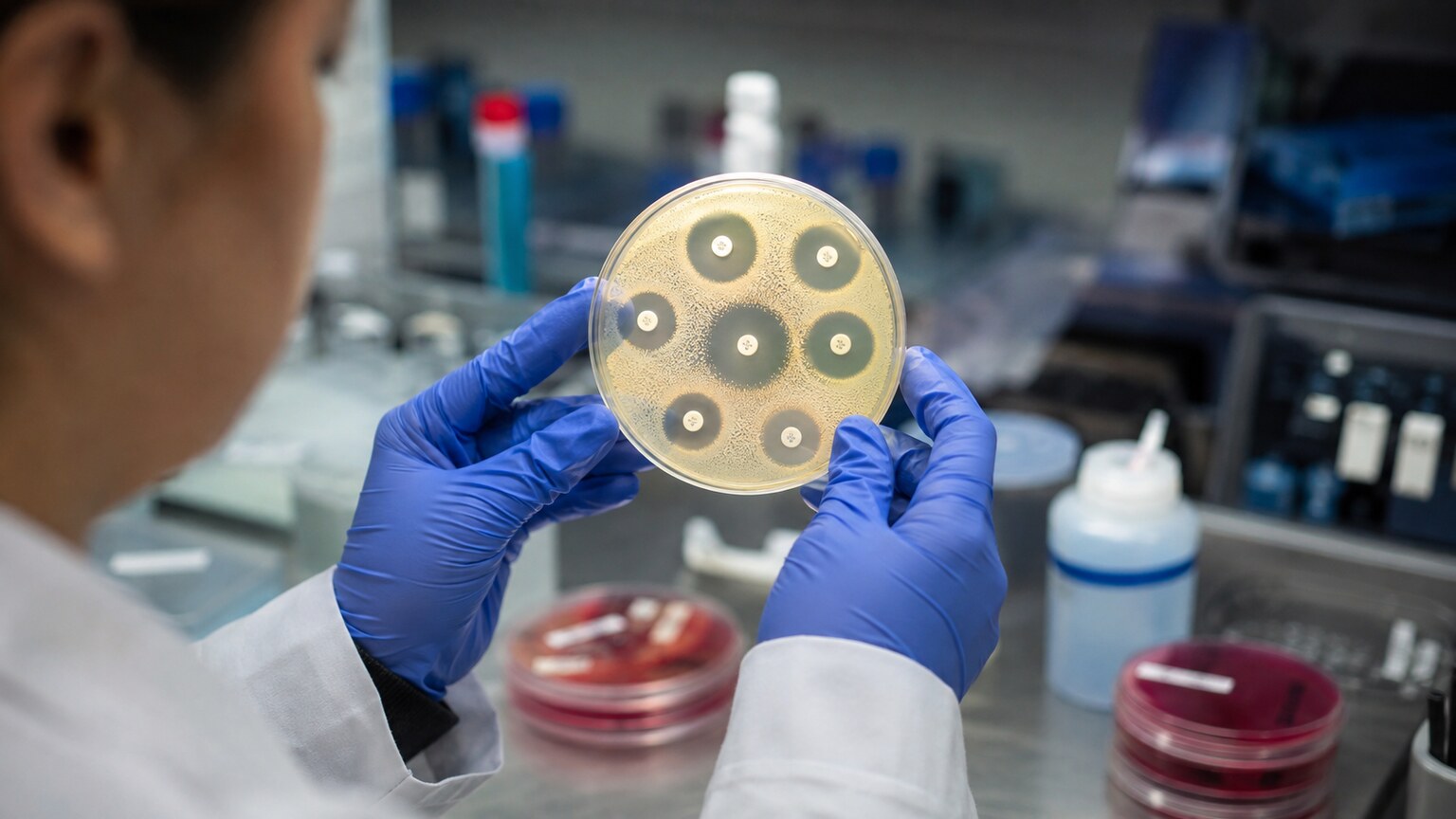
Figure 6. Once a specific bacterium is identified from a positive culture, sensitivity testing exposes it to a panel of different antibiotics directly, revealing which specific medications will actually work before any treatment decision is made.
Once a urine culture identifies a significant, clinically meaningful positive result, particularly in someone with actual symptoms, the same bacterial sample is typically taken a step further through antibiotic sensitivity testing, sometimes reported alongside the culture as a combined "culture and sensitivity" result. This testing exposes the specific bacteria that grew to a panel of different antibiotics directly, on the same plate, revealing exactly which medications are likely to be effective against that particular organism before a treatment decision is finalized.
This step exists precisely because bacterial resistance to specific antibiotics has become common enough that prescribing a treatment based purely on which organism was identified, without confirming its actual antibiotic sensitivity pattern, risks choosing a medication the bacteria have already developed resistance to. Sensitivity testing turns a positive culture from a simple identification into a genuinely actionable treatment guide, tailored to the specific bacterium actually present in that individual sample rather than a generic, one-size-fits-all assumption about what should work.
In many uncomplicated cases, particularly a straightforward, first-time bladder infection with classic symptoms, a clinician will start treatment with a commonly effective antibiotic before the full culture and sensitivity results are even back, since waiting the full one to three days for growth and identification would mean leaving a symptomatic infection untreated for an unnecessarily long time. This initial choice is generally based on well-established local and national resistance patterns for the most likely causative organisms. Once the full culture and sensitivity results do return, the treatment plan is reassessed and adjusted if needed — continuing the original medication if it matches the identified organism's sensitivity pattern, or switching to a different, more appropriate antibiotic if the results reveal the original choice wasn't actually well-suited to the specific bacterium involved.
This two-step approach, an educated initial choice followed by a confirmed, tailored adjustment once full information is available, reflects a broader, sensible principle running through much of infectious disease management: treat promptly based on the best available information, but remain willing to revise that treatment once more specific, confirmed information comes in, rather than rigidly sticking with an initial guess after better data has actually arrived, even after a treatment plan has already begun.
Frequently Asked Questions
Does a positive urine culture always mean I have a UTI that needs treatment?
Not necessarily. A condition called asymptomatic bacteriuria describes a genuinely positive culture without any symptoms, which most guidelines recommend against treating in otherwise healthy people, since treating bacteria that aren't causing harm carries risk without real benefit.
Why did my culture show more than one type of bacteria at low counts?
This pattern, multiple organisms each at a low count, is a classic sign of contamination from normal skin or perineal bacteria introduced during collection, rather than a genuine urinary tract infection, which typically shows a single organism at a high, well-defined count.
Why is E. coli the bacteria found in most positive urine cultures?
Certain E. coli strains carry specific surface structures that let them grip onto the cells lining the urinary tract unusually effectively, helping them resist being flushed out with normal urination in a way many other bacteria can't manage as well.
What does sensitivity testing add beyond just identifying the bacteria?
It directly exposes the specific bacteria found to a panel of different antibiotics, revealing which ones will actually work against that particular sample, rather than relying on a generic assumption based only on which species was identified.
Why do I need to give a follow-up sample after finishing antibiotics?
A follow-up culture, sometimes called a test of cure, checks specifically whether the originally identified bacteria have actually been cleared, which is a different question from the original diagnostic culture. It's not routinely needed for every treated infection, but becomes more important in pregnancy or with resistant organisms.
Why do infections keep recurring even after treatment seems to work?
Recurrence can happen either through a genuinely new reinfection following the same ascending route, or through a relapse where the original bacteria were never fully cleared. Distinguishing between the two shapes whether prevention strategies or a reassessment of the original treatment makes more sense.
Conclusion
A positive urine culture is the product of several distinct pieces coming together: bacteria migrating up the urethra and establishing themselves in the bladder, a specific organism identified by species, a precise colony count compared against an established threshold, and a collection technique that shapes how much normal surface bacteria contaminates the result. Whether that positive result represents a genuine infection needing treatment, or asymptomatic bacteriuria that's best left alone, depends on the full pattern — the count, the specific organism, and whether real symptoms actually accompany it — not on the single word "positive" by itself. Understanding that full pattern is exactly what turns a culture result from a source of confusion into something genuinely informative about what's actually happening in your urinary tract.
The next time a lab report shows a positive urine culture, working through this same handful of questions — what was the actual colony count, was one organism dominant or several present at low levels, and are there real symptoms to go along with it — is a far more useful way to interpret the result than reacting to the single word "positive" on its own, and it's exactly the same process a clinician goes through before deciding what, if anything, should happen next.
Still Not Sure What Your Results Mean?
Upload your labs and get a complete, visual, plain-language interpretation of every biomarker — delivered to your inbox in under 15 minutes.
Get My ReportThis article is for educational purposes only and does not constitute medical advice. Always consult your healthcare provider regarding your specific lab results.