
Understanding Why Blood Magnesium Doesn't Reflect Total Body Levels
A standard blood magnesium test measures something surprisingly small: less than 1% of the magnesium your body actually contains. The remaining 99% or so is locked away in bone, muscle, and other soft tissue, and the small fraction circulating in blood is kept remarkably stable by a tightly coordinated hormonal system that pulls magnesium out of those larger reserves specifically to keep the blood number looking normal, even while those reserves are being steadily drained. This means a genuinely magnesium-deficient person can have a completely normal blood magnesium result for a surprisingly long time, sometimes for months, since the body prioritizes defending that one small circulating pool right up until its larger reserves are significantly depleted. Understanding this gap between what a standard test measures and what it's actually trying to represent is essential for making sense of why magnesium deficiency is considered one of the more commonly under-diagnosed nutrient shortfalls in modern medicine, and why some symptomatic patients need more than a single blood draw to get a real answer.

Figure 1. Roughly 50% to 60% of the body's magnesium is stored in bone, about 25% to 30% in muscle and soft tissue, and less than 1% circulates in blood — the only fraction a standard test actually measures.
Already have a magnesium number from a recent test, but not sure if it's actually good or bad for you? Just plug it in and see instantly.
🧮 Try the Free CalculatorWhere the Body's Magnesium Actually Lives
Magnesium is the fourth most abundant mineral in the human body, and the average adult carries somewhere between 20 and 28 grams of it total — but that total is distributed in a way most people find genuinely surprising once they see the actual breakdown. Roughly 50% to 60% is stored within bone, incorporated into the mineral matrix alongside calcium and phosphate, functioning as a structural reservoir the body can draw from during periods of shortage. Another 25% to 30% resides inside muscle and other soft tissue cells, playing an active role in hundreds of enzymatic reactions happening constantly inside those cells, including energy production, protein synthesis, and muscle contraction and relaxation. The remaining small fraction — well under 1% of the body's total magnesium — circulates in the blood, split further into three states: about 55% as free, ionized magnesium (the biologically active form), roughly 30% bound to proteins like albumin, and the remainder complexed with small anions such as phosphate and citrate.
A standard serum magnesium test, the kind included on most basic and comprehensive metabolic panels, measures this last small circulating fraction — total serum magnesium, combining the free, protein-bound, and complexed portions together into one number. It does not, and structurally cannot, measure what's happening inside cells or stored in bone, which is precisely where the vast majority of the body's magnesium actually sits.

Figure 2. More than half of the body's total magnesium is incorporated directly into bone's mineral matrix, functioning as the largest single reservoir the body draws from during a shortage.
This distribution isn't accidental — it reflects magnesium's dual role as both a structural component and a functional cofactor. Inside cells, magnesium is required for the activity of more than 300 different enzymes, including virtually every enzyme that uses or produces ATP, the molecule cells rely on for energy. Because so much of the body's essential biological machinery depends on maintaining adequate intracellular magnesium at all times, the body treats preserving that internal supply as a higher priority than keeping blood levels perfectly representative of the body's overall status — an arrangement that works well for protecting acute cellular function, but creates exactly the blind spot this article is about.
Why the Body Defends Blood Magnesium So Aggressively
The kidneys are the primary regulator of blood magnesium, filtering and reabsorbing magnesium continuously to keep the circulating level within a narrow target range, typically around 1.7 to 2.2 mg/dL. When dietary magnesium intake drops, or when magnesium losses increase through some other route, the kidneys respond by reabsorbing a larger percentage of filtered magnesium rather than allowing it to be lost in urine, functioning almost like a valve that tightens in response to scarcity. If that adjustment alone isn't enough to hold the blood level steady, the body's next move is to pull magnesium out of its larger reserves — bone and soft tissue — releasing it into circulation specifically to buffer the blood concentration against the shortfall.
This buffering system is remarkably effective at its actual job, which is keeping blood magnesium stable, not necessarily keeping total body magnesium adequate. Research on magnesium depletion has found that a person can lose a meaningful percentage of their total body magnesium stores — some studies estimate a deficit of 5% to as much as 15% or more of total body magnesium — before serum magnesium drops low enough to register as abnormal on a standard blood test. In other words, by the time a standard blood magnesium result actually reads low, the underlying deficiency has typically already been present and progressing for some time, since the body's buffering mechanisms have to be substantially overwhelmed before the blood number itself moves.

Figure 3. When magnesium intake falls short, the kidneys reabsorb more of what's filtered while bone releases stored magnesium into circulation, both working to keep the blood level artificially stable.
The Practical Consequence: A Normal Result That Isn't the Whole Story
This buffering system creates a real, well-documented diagnostic gap. Multiple studies comparing serum magnesium against more direct measures of magnesium status have found that a meaningful proportion of people with normal serum magnesium — commonly cited estimates range from roughly 15% to as high as 30% or more in certain studied populations — actually show evidence of magnesium deficiency when assessed through more sensitive methods. This mismatch is exactly why magnesium deficiency has developed a reputation among some clinicians and researchers as an under-recognized, under-diagnosed condition: the most commonly ordered test for it is structurally biased toward returning a falsely reassuring result.
This gap matters most for people whose symptoms genuinely fit a magnesium deficiency picture — muscle cramps, tremor, fatigue, difficulty sleeping, or in more significant cases, cardiac rhythm disturbances — but whose standard blood test comes back within the normal range. In this specific situation, a normal serum magnesium doesn't definitively rule deficiency out, and a clinician who understands this gap may consider either a trial of magnesium supplementation despite the normal blood test, or move to one of the more direct assessment methods discussed below, rather than dismissing the possibility of deficiency based on the blood number alone.
Red Blood Cell Magnesium: A Partial Improvement
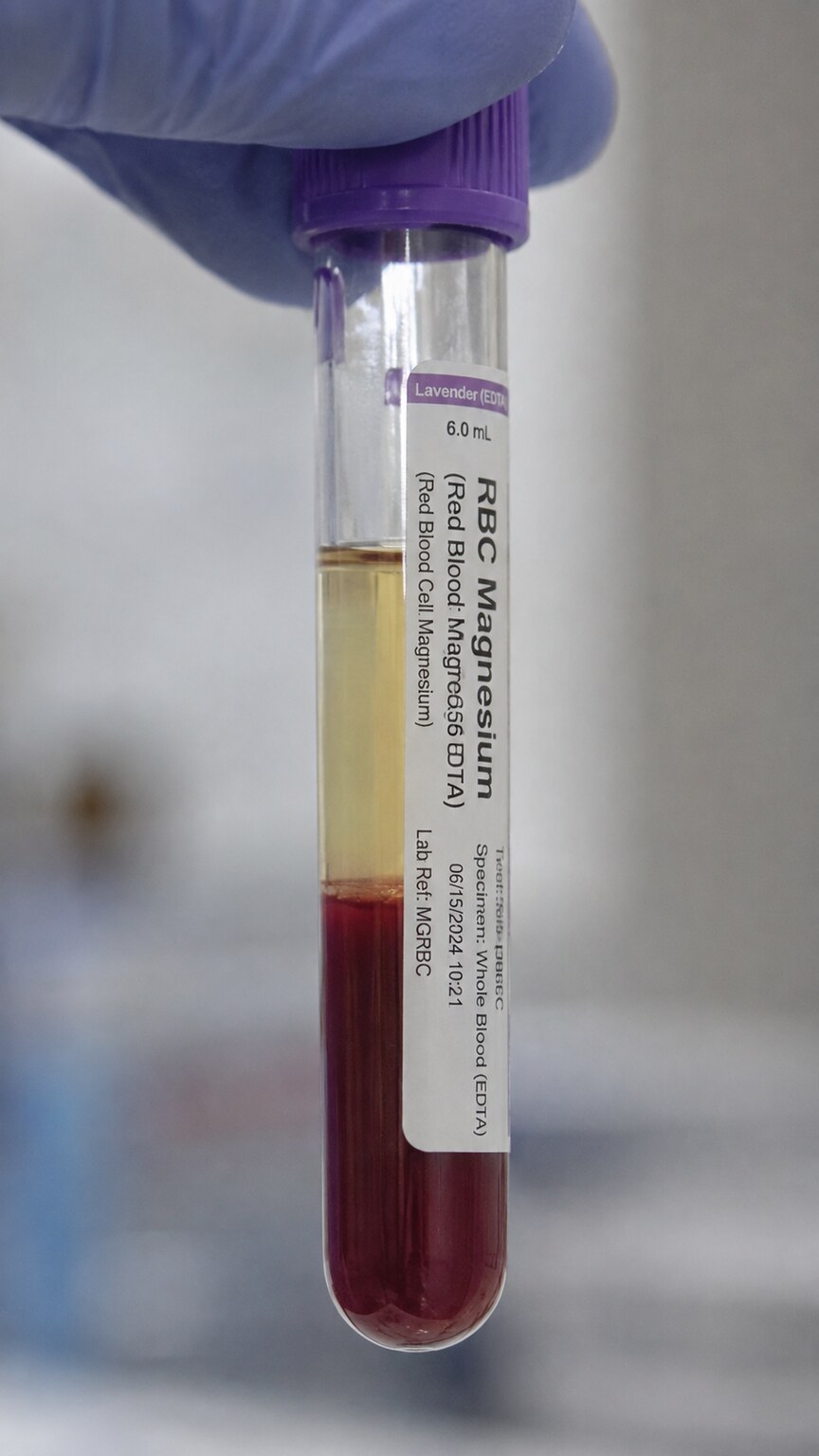
Figure 4. Red blood cell magnesium testing measures magnesium concentration inside red blood cells themselves, offering a longer-term window into intracellular status than a standard serum test.
One alternative some clinicians turn to is red blood cell (RBC) magnesium, which measures the magnesium concentration inside red blood cells rather than in the surrounding plasma. Because red blood cells live for approximately 120 days before being replaced, and because intracellular magnesium behaves more like the magnesium found in other body cells than the small, tightly-buffered plasma fraction does, RBC magnesium is thought to offer a longer-term, somewhat more representative window into a person's overall magnesium status than a single serum measurement taken at one isolated moment in time.
RBC magnesium isn't a perfect solution, however. Research directly comparing RBC magnesium against total body magnesium content — measured through more invasive research methods like muscle biopsy — has found the correlation, while generally better than serum magnesium's correlation with total body stores, is still imperfect. Red blood cells are only one specific cell type, and their magnesium handling doesn't necessarily mirror what's happening inside muscle, nerve, or other tissue cells precisely. RBC magnesium testing is also less standardized across laboratories than serum magnesium, with reference ranges and methodology varying somewhat between testing facilities, which is part of why it hasn't fully replaced serum magnesium as the routine, first-line test despite its theoretical advantages.
Why This Matters More Than It Might Seem
It's worth pausing on why this particular measurement gap has drawn as much attention from researchers and clinicians as it has, rather than being treated as a minor technical footnote. Magnesium deficiency, when it does become clinically significant, is associated with a genuinely wide range of downstream health effects — beyond the muscle cramping and fatigue most commonly mentioned, research has linked chronic magnesium insufficiency to an increased risk of cardiovascular problems, impaired glucose regulation and a potentially elevated risk of type 2 diabetes over time, reduced bone density, and heightened neuromuscular excitability that in more severe cases can progress toward tremor or seizure activity. Given this breadth of downstream effects, a diagnostic tool that systematically under-detects mild-to-moderate deficiency carries real public health weight, not just an individual inconvenience.
Population-level nutrition surveys add another layer of context worth understanding. Large dietary intake surveys conducted in the United States and several other developed countries have repeatedly found that a substantial share of adults consume less than the recommended daily amount of magnesium through diet alone, driven largely by the prevalence of processed foods, which tend to be stripped of much of their original magnesium content during refining, alongside declining soil magnesium content in some modern agricultural practices affecting the magnesium content of plant foods more broadly. When a population already runs a real risk of suboptimal magnesium intake at the dietary level, and the standard test used to catch resulting deficiency has the specific blind spot described throughout this article, the combination plausibly contributes to magnesium deficiency being under-recognized on a wider scale than serum testing alone would suggest.
The Magnesium Loading Test: A More Direct Functional Assessment
For situations where a more definitive answer is genuinely needed, the magnesium loading test — also called the magnesium tolerance test or magnesium retention test — is generally considered the most direct functional assessment of total body magnesium status available outside of a research setting. The test works on a clever principle: a measured dose of magnesium is administered, typically intravenously over several hours, and then all urine produced over the following 24 hours is collected and measured for how much of that administered magnesium was excreted versus retained.

Figure 5. The magnesium loading test measures how much of an administered intravenous magnesium dose is retained versus excreted over 24 hours, functionally revealing how depleted the body's stores actually are.
The logic behind the test is grounded in basic physiology: someone with adequate total body magnesium stores has little functional need for the administered dose, so their kidneys excrete most of it in urine over the following day. Someone who is genuinely magnesium-deficient, by contrast, has tissue actively "hungry" for magnesium, and a meaningfully larger share of the administered dose gets retained and taken up by depleted tissues rather than excreted — typically, retaining more than roughly 20% to 25% of the administered dose is considered suggestive of a true underlying deficiency, though exact cutoffs vary somewhat between published protocols. Because this test directly measures how the body actually handles a magnesium load, rather than inferring status from a single static blood number, it sidesteps the entire buffering-system blind spot described earlier in this article.
The tradeoff is practicality. The magnesium loading test requires intravenous administration, a full 24-hour urine collection (which depends on the patient's cooperation and normal kidney function to interpret correctly), and isn't appropriate for people with significant kidney disease, since impaired kidney function itself alters how much magnesium gets excreted regardless of underlying body stores, confounding the result. Because of this complexity and cost, the loading test is generally reserved for research settings or specific clinical situations where a confident diagnosis genuinely changes management — not used as a routine, everyday screening tool the way serum magnesium is.
Interpreting a Loading Test Result
When a magnesium loading test is performed, the resulting percentage of retained magnesium is generally interpreted along a spectrum rather than a strict binary pass-fail cutoff, though different published protocols vary somewhat in their exact thresholds. Retention below roughly 20% is generally considered reassuring, consistent with adequate total body magnesium stores. Retention in an intermediate range, often cited as somewhere between 20% and 25%, is sometimes considered a borderline or equivocal result, warranting clinical correlation with symptoms and risk factors rather than a definitive conclusion either way. Retention meaningfully above that range, often cited above 25% to 30% depending on the specific protocol used, is generally considered strong evidence of a genuine underlying magnesium deficit significant enough that the body's tissues actively absorbed a disproportionate share of the administered dose.
It's worth noting that the loading test, despite being the most direct functional method commonly referenced in clinical literature, is itself an indirect measure in one sense — it infers total body magnesium status from how the body handles an acute magnesium load, rather than directly sampling tissue magnesium content the way a muscle biopsy would. Muscle biopsy itself, while considered a true gold-standard research measure of intracellular magnesium content, is invasive, painful, requires a trained clinician to perform and interpret, and is impractical for anything beyond controlled research settings, which is exactly why the loading test has become the most commonly referenced practical alternative when a truly rigorous, functionally meaningful assessment is genuinely needed outside of a formal research context.
Ionized Magnesium: Measuring the Active Fraction Directly
A more recent development in magnesium testing involves measuring ionized magnesium directly — the free, biologically active fraction of magnesium circulating in blood, as opposed to the combined total that standard serum testing reports. Using specialized ion-selective electrode technology, similar in principle to how ionized calcium is measured, this method isolates just the active fraction rather than lumping it together with protein-bound and complexed magnesium.
Some research suggests ionized magnesium may correlate somewhat better with clinical symptoms and physiological magnesium status than total serum magnesium does, since it's measuring the specific fraction actually available to participate in the body's magnesium-dependent processes. However, ionized magnesium testing remains far less widely available than standard serum magnesium, requires specialized equipment most routine labs don't have, and hasn't been as extensively validated or standardized across different patient populations and clinical scenarios — meaning it currently occupies a similar niche to RBC magnesium: a promising, more targeted alternative used selectively rather than a routine replacement for the standard test.
How Standard Reference Ranges Were Established
It's worth understanding briefly how the "normal" serum magnesium reference range printed on a lab report was actually determined, since that context helps explain some of its inherent limitations. Reference ranges for most routine blood tests, magnesium included, are typically established by measuring the test result across a large sample of presumably healthy individuals and defining the normal range as the interval that captures the central 95% of that population's results — a statistical convention, not a physiological guarantee that every value inside the range represents genuine adequacy for every single person, and every value outside it represents genuine abnormality.
Because this statistical approach defines "normal" based on population distribution rather than direct confirmation of adequate cellular magnesium status, someone whose intracellular and bone magnesium stores are genuinely trending downward can still fall within that statistically normal serum range for some time — the range was never designed to detect the specific, slower-developing kind of deficiency this article has been describing throughout, since it was built around cross-sectional population sampling rather than around distinguishing tissue-adequate from tissue-deficient individuals directly. This is a limitation shared by many reference ranges across different lab tests, but it applies with particular force to magnesium given how tightly its blood level is buffered relative to how much of the body's total supply that blood level actually represents.
When a Clinician Looks Beyond the Standard Blood Test
Given the cost, complexity, and limited availability of these alternative methods, they aren't used for every patient — a normal serum magnesium is still considered adequate reassurance in most everyday situations. The decision to look further typically hinges on a mismatch between the clinical picture and the blood result: a patient with risk factors for magnesium deficiency (chronic alcohol use, malabsorption conditions like celiac disease or inflammatory bowel disease, long-term use of certain medications including proton pump inhibitors and some diuretics, poorly controlled diabetes, or a diet very low in magnesium-rich foods) combined with symptoms consistent with deficiency, despite a normal or borderline serum result, is the classic scenario where a clinician might pursue RBC magnesium, consider a magnesium loading test, or simply proceed with an empirical trial of supplementation and monitor for symptom improvement as a practical diagnostic step in itself.
Cardiac patients represent another group where this gap draws particular clinical attention, since magnesium plays a direct role in maintaining normal heart rhythm, and low intracellular magnesium has been linked to an increased risk of certain arrhythmias even when serum magnesium looks unremarkable. In critical care and cardiology settings specifically, this has led some clinicians to maintain a lower threshold for magnesium repletion in symptomatic or high-risk patients, rather than waiting for serum magnesium to drop into clearly abnormal territory before acting.
What Magnesium Actually Does Inside Cells
Appreciating why the body guards its intracellular magnesium supply so fiercely requires understanding just how deeply magnesium is woven into basic cellular function. Magnesium acts as a required cofactor for hundreds of enzymatic reactions, meaning those enzymes simply cannot function properly without a magnesium ion bound to them — this isn't a supporting or optional role, it's a structural requirement built into the enzyme's chemistry. Among the most critical of these are the enzymes involved in ATP metabolism: ATP, the molecule every cell in the body relies on as its primary energy currency, is almost always found in cells bound to a magnesium ion, forming a complex (Mg-ATP) that's the actual biologically functional form most enzymes recognize and use, rather than free ATP alone.
Beyond energy metabolism, magnesium is essential for DNA and RNA synthesis and stability, for the function of hundreds of enzymes involved in protein synthesis, and for maintaining the electrical stability of cell membranes throughout the nervous system and heart — magnesium acts as a natural counterbalance to calcium at the cellular level, and this balance is part of why magnesium deficiency is so closely linked to excitability-related symptoms like muscle cramping, tremor, and in more severe cases, seizures or cardiac arrhythmias. Given how central magnesium is to processes this fundamental, it makes physiological sense that the body would treat maintaining an adequate intracellular supply as a higher priority than keeping the small circulating blood fraction perfectly representative of overall status — a design that protects the most immediately critical cellular function at the expense of long-term diagnostic transparency for anyone later trying to interpret a simple blood test.
How Researchers First Identified This Gap
The recognition that serum magnesium poorly reflects total body status didn't emerge as a single discovery but accumulated gradually across several decades of clinical and research observation, starting most notably in the mid-twentieth century as researchers began studying magnesium balance more systematically using metabolic ward studies — controlled settings where every gram of a subject's dietary intake and every output through urine and stool could be precisely measured and tracked over extended periods. These studies revealed something that surprised researchers at the time: subjects could be placed on a deliberately magnesium-restricted diet for extended periods, developing measurable signs of physiological magnesium depletion, including changes in nerve and muscle excitability, while their serum magnesium levels remained largely within what would be considered a normal range for much of that period, only dropping into clearly abnormal territory relatively late in the depletion process.
Later research using more invasive techniques, including muscle biopsy to directly sample intracellular magnesium content, provided even more direct evidence of the disconnect — studies found only a modest correlation between serum magnesium and muscle tissue magnesium concentration across study populations, reinforcing that a blood draw simply wasn't capturing what was happening inside cells with any real precision. This body of research, accumulated across nutrition science, nephrology, and critical care medicine over the following decades, is what eventually led professional guidelines and reference textbooks to explicitly caution that serum magnesium should be interpreted as a screening tool with real, well-documented limitations, rather than a definitive, standalone measure of total body magnesium status — the exact caveat this article has been building toward throughout, and one that remains just as relevant in current clinical practice as it was when this research first emerged.
Populations Where This Gap Matters Most
While the serum-versus-total-body gap technically applies to everyone, it carries outsized clinical importance for certain populations whose baseline risk of magnesium depletion is already elevated. Critically ill patients in intensive care settings are one such group — studies have found that a substantial proportion of ICU patients show evidence of magnesium deficiency by more sensitive measures despite frequently normal-appearing serum magnesium, a combination of factors including acute illness, medication effects, and altered kidney handling of magnesium all compounding at once. This is part of why some intensive care protocols include a lower threshold for empiric magnesium repletion in specific clinical scenarios, rather than waiting for serum levels to drop into clearly abnormal territory.
Older adults represent another population worth particular attention, since age-related declines in kidney function, increased likelihood of taking medications known to affect magnesium handling (including certain diuretics and proton pump inhibitors), and often lower overall dietary intake can combine to create a higher baseline risk of magnesium depletion — one that a single normal serum result doesn't necessarily rule out given everything already discussed. Similarly, people with poorly controlled diabetes experience increased urinary magnesium losses tied to elevated blood glucose, a mechanism that can deplete total body magnesium meaningfully before serum levels reflect it, making this population another group where clinicians are often encouraged to maintain a somewhat lower threshold of suspicion despite reassuring blood work.

Figure 6. Muscle cramping can reflect intracellular magnesium depletion even when a standard blood test, which measures a different pool entirely, comes back normal.
This is exactly the kind of mismatch that prompts a second look: a person experiencing recurring muscle cramps, especially at night or after exercise, who has already had a blood magnesium test come back unremarkable, is often left wondering whether magnesium has genuinely been ruled out as a cause. Given everything covered above, it hasn't — the blood test ruled out a specific kind of severe, decompensated deficiency, not a milder, tissue-level shortfall that hasn't yet overwhelmed the body's buffering capacity. This is precisely the scenario where discussing RBC magnesium, a supplementation trial, or further evaluation with a healthcare provider tends to be more productive than treating the normal blood result as a closed question.
How This Compares to Other Better-Known Testing Gaps
For readers already familiar with similar concepts in other areas of lab testing, the magnesium blood-versus-total-body gap sits alongside a small family of related, well-recognized measurement limitations. Total calcium testing, for instance, is affected by protein binding in a way that requires its own correction, since roughly half of circulating calcium is bound to albumin and doesn't reflect the biologically active free fraction directly. Iron studies similarly separate what's circulating from what's stored, since serum iron reflects only a momentary snapshot while ferritin offers a better window into the body's actual iron reserves. Magnesium's situation is arguably more pronounced than either of these examples, given just how small a fraction of the body's total supply circulates in blood to begin with, and how aggressively that small fraction is defended by the body's regulatory systems specifically to keep it appearing stable.
Recognizing this shared pattern across several different biomarkers is useful beyond magnesium specifically: it's a reminder that a single blood number, however precisely measured, is always a proxy for some larger underlying biological reality, and understanding exactly what any given proxy is and isn't capturing is what separates a superficial reading of a lab report from a genuinely informed one — the kind of understanding this entire article has been building toward, one mechanism at a time.
What This Means for a Magnesium Supplementation Trial
Given the real limitations of standard testing, many clinicians treat a carefully monitored trial of magnesium supplementation as a practical, low-risk diagnostic tool in its own right, particularly for patients with a symptom profile and risk factors that fit a deficiency picture despite normal blood work. If a person's muscle cramps, sleep quality, or other relevant symptoms meaningfully improve after several consistent weeks of appropriate supplementation, that clinical response itself becomes genuinely useful diagnostic information, even without ever having directly measured the underlying tissue-level shortfall through any of the more specialized testing methods described above.
This approach isn't without its own limitations, since a symptom improvement could plausibly reflect a placebo effect, spontaneous symptom resolution unrelated to the supplement, or a genuine but coincidental improvement in some other contributing factor happening around the same time — none of which is easily or reliably distinguished from a true, genuinely magnesium-related response without pursuing more rigorous, direct testing alongside it. Even so, given that dietary magnesium supplementation at appropriate, conservative doses is generally low-risk for people without significant kidney impairment, many clinicians consider this an acceptable, pragmatic tradeoff in situations where the more direct, more specialized testing methods discussed earlier in this article aren't readily available nearby, aren't covered by insurance, or would meaningfully delay addressing symptoms that are already meaningfully affecting a person's day-to-day quality of life.
Frequently Asked Questions
If my blood magnesium is normal, should I stop worrying about deficiency?
For most people without specific risk factors or symptoms, a normal serum magnesium is reasonably reassuring. However, if you have risk factors for deficiency (certain medications, digestive conditions, heavy alcohol use) or symptoms like muscle cramps or unusual fatigue, a normal result doesn't completely rule out a genuine shortfall, and it's worth discussing with a healthcare provider.
Is RBC magnesium testing something I can just ask for?
It's available at many labs, though not as universally offered as standard serum magnesium, and insurance coverage can vary. It's reasonable to ask a healthcare provider whether it's appropriate for your specific situation, particularly if you have symptoms and risk factors that make standard testing feel insufficient.
Why doesn't every doctor just order the magnesium loading test if it's more accurate?
The loading test requires intravenous administration, a full 24-hour urine collection, and isn't appropriate for people with significant kidney disease. Its complexity and cost make it impractical as a routine screening test, so it's generally reserved for specific situations where a more definitive answer meaningfully changes treatment decisions.
Can I be magnesium deficient even with a healthy diet?
Yes. Certain medications, digestive conditions that impair absorption, chronic alcohol use, and increased losses through the kidneys can all deplete magnesium regardless of dietary intake. Diet is one factor among several that determine total body magnesium status.
How much magnesium deficit has to build up before serum magnesium actually drops?
Research estimates vary, but a commonly cited range is that somewhere between roughly 5% and 15% or more of total body magnesium stores can be depleted before serum magnesium falls low enough to register as abnormal on a standard test, since the body's buffering system defends the blood level until it's substantially overwhelmed.
Does this same blind spot apply to other minerals, or is magnesium unusual?
A similar principle applies to some other minerals whose blood levels are tightly regulated, such as calcium, though the specific mechanisms and thresholds differ. Magnesium is a particularly well-documented example because such a small fraction of total body magnesium circulates in blood to begin with.
How to Talk to a Healthcare Provider About This
If any of this resonates with your own situation — persistent symptoms that fit a magnesium deficiency picture, known risk factors, and a blood test that came back reassuringly normal — the most useful thing to bring into a conversation with a healthcare provider isn't a request for a specific test by name, but a clear description of the symptoms, their timing, and any risk factors that apply, letting the provider weigh whether further evaluation genuinely makes sense for your particular situation. Mentioning that you're aware serum magnesium has known, well-documented limitations in detecting milder deficiency can be a useful, low-pressure way to open that conversation, since it signals you're not simply dismissing a normal result out of anxiety, but asking a genuinely informed, specific question about whether the particular test that was actually performed was capable of fully answering the underlying clinical question at hand.
Conclusion
Blood magnesium testing measures a small, tightly regulated fraction of the body's total magnesium supply — a fraction the body actively defends, often at the expense of its much larger bone and tissue reserves, specifically to keep that number looking stable. This is a reasonable design from the body's perspective, prioritizing the function that circulating magnesium supports, but it creates a genuine limitation for anyone trying to use a single blood test as a complete picture of magnesium status. For most people, a normal result is a reliable, practical signal. For those with real risk factors or persistent symptoms despite a normal blood test, understanding that alternatives exist — RBC magnesium, the magnesium loading test, or ionized magnesium, each with its own tradeoffs between precision and practicality — is what turns "the test was normal" from a dead end into the start of a more useful, better-informed conversation with a healthcare provider about what might actually be going on beneath a single reassuring number.
Still Not Sure What Your Results Mean?
Upload your labs and get a complete, visual, plain-language interpretation of every biomarker — delivered to your inbox in under 15 minutes.
Get My ReportThis article is for educational purposes only and does not constitute medical advice. Always consult your healthcare provider regarding your specific lab results.