
Understanding the Difference Between D2 and D3 Testing
Most vitamin D blood tests report a single combined number, but that number is quietly made up of two chemically distinct compounds: vitamin D2 (ergocalciferol), which comes from plants, fungi, and fortified foods or prescription supplements, and vitamin D3 (cholecalciferol), which your skin makes from sunlight and which is also found in animal-based foods and most over-the-counter supplements. Standard labs typically measure "total 25-hydroxyvitamin D" — the sum of both forms after your liver has converted each one into its circulating storage form — without breaking out how much came from D2 versus D3, since the assay used for routine testing simply isn't built to make that distinction in the first place. Most of the time, this combined number is exactly what a clinician needs. But in specific situations — tracking whether a prescribed D2 supplement is actually being absorbed, investigating an unexpectedly low result despite consistent supplementation, or working through certain lab result inconsistencies — a fractionated test that separates 25-hydroxy-D2 from 25-hydroxy-D3 becomes genuinely useful, and understanding what that split actually reveals, and when it's worth asking for, is the point of this article.

Figure 1. Vitamin D3 is produced when UVB sunlight strikes the skin or is obtained from animal-based foods, while vitamin D2 comes from plant, fungal, and fortified food sources.
Already have a vitamin D number from a recent test, but not sure if it's actually good or bad for you? Just plug it in and see instantly.
🧮 Try the Free CalculatorTwo Molecules, One Name
"Vitamin D" is really an umbrella term covering a small family of closely related fat-soluble compounds, and D2 and D3 are the two that matter for human nutrition and testing. Structurally, they're nearly identical — both are steroid-derived molecules built on the same core ring structure — but they differ in one specific detail: the side chain attached to that core. Vitamin D3, cholecalciferol, has a side chain that matches what your own skin naturally produces. Vitamin D2, ergocalciferol, has a slightly different side chain, originally derived from a plant sterol called ergosterol, found abundantly in yeast, certain mushrooms, and other fungi. That one structural difference is small enough that both molecules get processed through the same metabolic pathway in your body, but large enough that researchers have found real differences in how efficiently each one is absorbed, how long each one stays active in your system, and how strongly each one raises your blood level per equivalent dose.
It's worth being clear that neither form is inherently "fake" or synthetic in a way the other isn't — both D2 and D3 are naturally occurring compounds found in nature, they simply arise through different biological processes in different organisms, and both can be produced industrially at scale for use in supplements and fortified foods. Neither D2 nor D3 does anything useful in its original form — a fact that surprises many people who assume the vitamin they swallow or the sunlight their skin absorbs is already biologically active the moment it enters the bloodstream. Both have to be converted, in two sequential steps, into the form your cells actually use. The first conversion happens in the liver, which adds a hydroxyl group to produce 25-hydroxyvitamin D — written as 25(OH)D — the relatively stable, slow-turnover form that circulates in blood and is what a standard vitamin D blood test actually measures. The second conversion happens mainly in the kidneys, turning 25-hydroxyvitamin D into 1,25-dihydroxyvitamin D, the active hormone form that directly controls calcium absorption and a wide range of other cellular processes throughout the body. Because this second, active form is tightly regulated and exists in the blood at concentrations roughly a thousand times lower than 25-hydroxyvitamin D, it isn't practical to measure routinely, and virtually all standard vitamin D testing — including the fractionated D2/D3 version discussed in this article — measures the 25-hydroxy storage form instead.
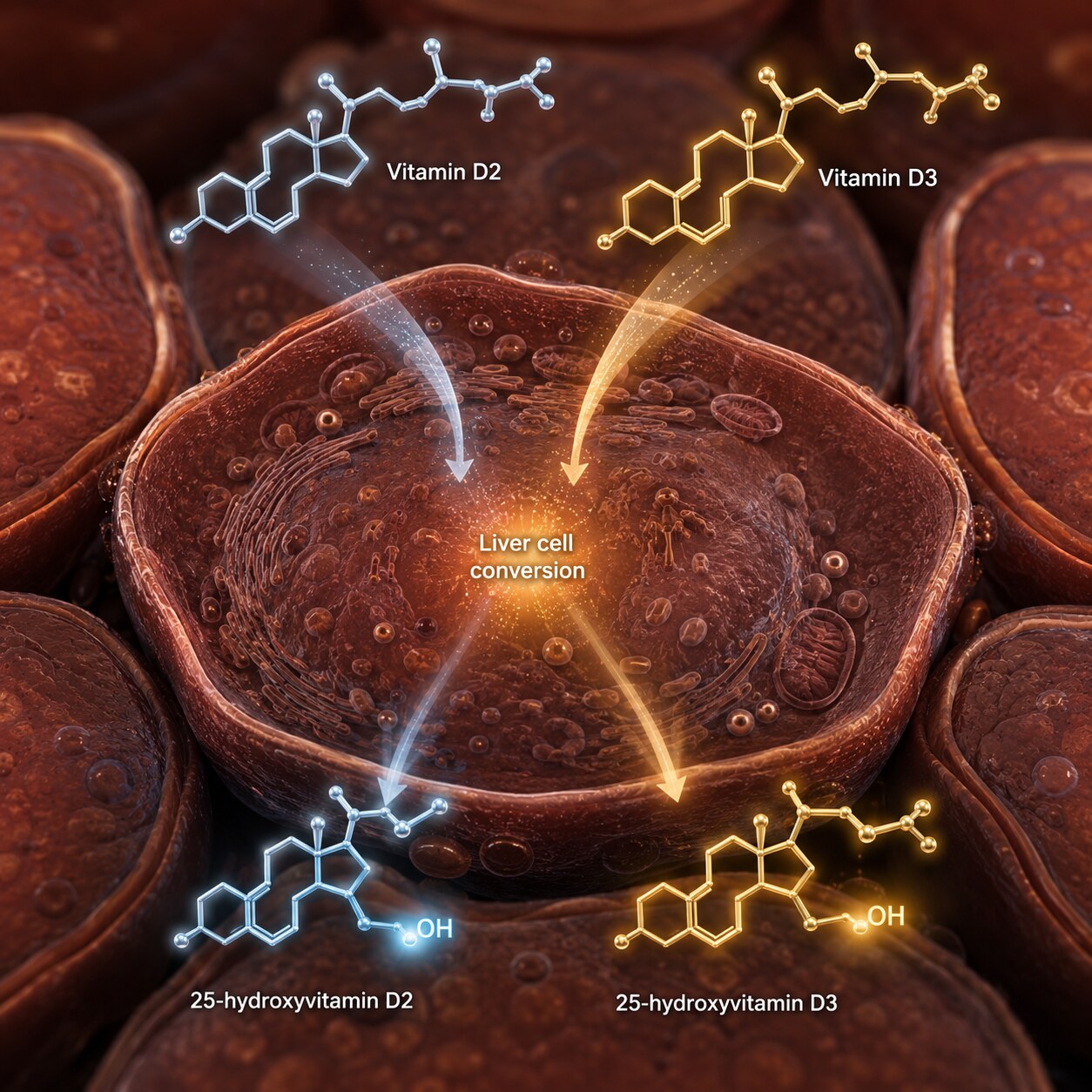
Figure 2. Both D2 and D3 are converted by the liver into 25-hydroxyvitamin D — the stable, storage form that a standard blood test measures.
This shared endpoint is exactly why most vitamin D tests report one combined total: once both forms have been hydroxylated into their 25-hydroxy versions, standard testing methods, particularly the immunoassay techniques used in most commercial labs, generally can't distinguish which molecule a given 25-hydroxyvitamin D unit originally came from — the antibody-based detection used in these assays binds to a structural region shared by both forms. A combined total is genuinely the right number for most clinical purposes, since what actually matters for bone health, immune function, and the many other processes vitamin D supports is the total amount of 25-hydroxyvitamin D circulating in your blood, regardless of which original source it came from.
Why D3 Tends to Raise Blood Levels More Than D2
Where the distinction between D2 and D3 becomes practically important is in how effectively each one raises that combined total, because research has consistently found the two forms are not equally potent, dose for dose. Multiple clinical trials comparing equal doses of D2 and D3 supplementation have found that D3 raises and sustains 25-hydroxyvitamin D blood levels more effectively than an equivalent dose of D2, particularly with less frequent, higher-dose regimens such as a single large weekly or monthly dose rather than daily dosing.
Several proposed mechanisms help explain this gap. D3 appears to bind more tightly to vitamin D binding protein, the carrier protein responsible for transporting both forms through the bloodstream, which may make D3 more efficiently retained and recycled through the liver's conversion process. D3 and its hydroxylated metabolites also appear to have a longer half-life in circulation than the corresponding D2 metabolites, meaning a given dose of D3 tends to stick around in a usable form longer before being broken down and cleared. Some researchers have also pointed to differences in how efficiently the liver enzyme responsible for the first hydroxylation step processes each substrate, though this particular mechanism remains an active area of ongoing research rather than settled science.
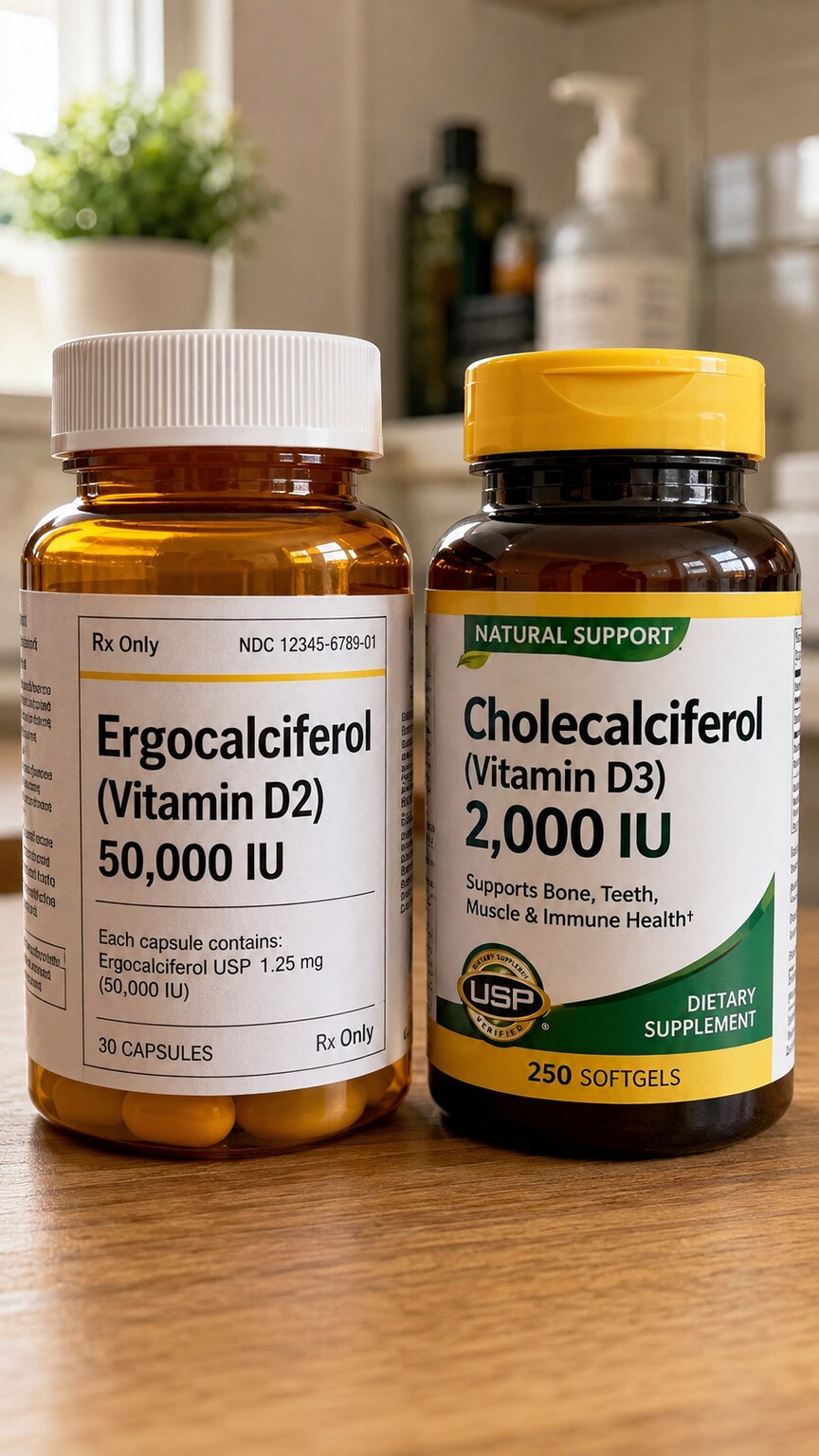
Figure 3. Reading a supplement label carefully — ergocalciferol versus cholecalciferol — reveals which form of vitamin D is actually inside the bottle.
This difference in potency has real practical consequences. In the United States, prescription-strength vitamin D, most commonly dispensed as a 50,000 IU capsule for correcting significant deficiency, is almost always formulated as D2, largely for historical and manufacturing reasons rather than because D2 is preferred clinically. Over-the-counter supplements sold without a prescription, by contrast, are overwhelmingly formulated as D3. This means a person switching from a prescription D2 regimen to an over-the-counter D3 supplement, or vice versa, isn't necessarily getting an equivalent effect from an equivalent dose in IU, and a clinician tracking someone's response to treatment benefits from knowing which form was actually taken.
When a Fractionated D2/D3 Test Actually Gets Ordered
Because a standard combined total 25-hydroxyvitamin D test already answers the question that matters most of the time — is your overall vitamin D level sufficient — a fractionated test that separately reports 25-hydroxy-D2 and 25-hydroxy-D3 is ordered far less often, and generally only in specific situations where knowing the source actually changes what happens next.
The most common reason is checking adherence and absorption in someone taking a prescribed high-dose D2 regimen. If a patient has been prescribed weekly 50,000 IU D2 capsules for several months to correct a deficiency, and their total vitamin D level still isn't rising as expected, a fractionated test can help distinguish between two very different explanations: either the D2 fraction itself is low, suggesting a genuine absorption problem — malabsorption conditions like celiac disease, inflammatory bowel disease, or a history of bariatric surgery can all significantly impair fat-soluble vitamin absorption, since vitamin D requires dietary fat to be absorbed properly in the gut — or the D2 fraction is appropriately elevated but simply isn't converting or persisting the way expected, pointing toward a different kind of investigation entirely, such as liver function or a genetic variation affecting the conversion enzymes involved.

Figure 4. Fractionated D2/D3 testing requires a more specialized method — typically liquid chromatography-tandem mass spectrometry — than the immunoassay used for a standard combined vitamin D test.
A second common reason is unexplained supplement non-response more broadly. If someone reports taking an over-the-counter D3 supplement consistently, exactly as directed, but their total level stays stubbornly low, a fractionated test can confirm whether meaningful D3 is even showing up in their blood at all — a near-zero D3 fraction despite reported consistent supplementation is a strong signal pointing toward either a genuine absorption problem or, less charitably but not uncommonly, inconsistent actual adherence to the supplement regimen, which the fractionated result can help a clinician address directly and specifically rather than simply increasing the dose and hoping for a different outcome.
A third, more research-oriented reason involves dietary studies or specific clinical research protocols investigating comparative D2 versus D3 supplementation strategies, where distinguishing the two forms is the entire point of the study rather than an incidental detail — this use case is far less common in routine individual patient care but is a significant part of why the fractionated methodology exists and continues to be refined in clinical laboratories.
A fourth, somewhat less common but clinically meaningful reason involves certain interference or discrepancy issues with a person's initial standard test result. Occasionally, a total vitamin D result comes back looking inconsistent with a patient's known supplement history and reported symptoms in a way that raises a clinician's suspicion of a laboratory or assay issue rather than a true biological finding — for instance, certain older or less well-calibrated immunoassay platforms have historically shown some cross-reactivity or measurement bias specifically related to the D2 fraction, occasionally under- or over-reporting it relative to what a reference-standard LC-MS/MS method would find. In these situations, ordering a fractionated LC-MS/MS-based test serves as a more reliable, gold-standard confirmation, resolving the ambiguity by using a fundamentally more precise measurement method rather than repeating the same potentially unreliable immunoassay a second time.
How the Fractionated Test Actually Works
It's a reasonable question why laboratories don't simply run the more precise LC-MS/MS method on every single vitamin D order by default, given that it's considered the reference-standard technique overall. The reason fractionated D2/D3 testing isn't offered as the default, routine method comes down to the technology required. Standard total vitamin D testing typically uses an immunoassay — a method relying on antibodies that bind to 25-hydroxyvitamin D regardless of which original form it came from, which is fast, relatively inexpensive, and well suited to high-volume routine lab work, but structurally incapable of telling D2 and D3 apart, since the antibody doesn't distinguish the small side-chain difference between them.
Separating the two forms requires a fundamentally different technology: liquid chromatography-tandem mass spectrometry, commonly abbreviated LC-MS/MS. This method physically separates molecules based on subtle differences in their chemical properties as they pass through a chromatography column, then identifies and quantifies each separated compound based on its precise molecular mass, detected by the mass spectrometer. Because LC-MS/MS can resolve the small structural difference between 25-hydroxy-D2 and 25-hydroxy-D3 as physically distinct peaks, it can report each one as an individual number rather than a combined total. This same LC-MS/MS methodology is generally considered the gold-standard reference method for vitamin D testing overall, even for a standard combined total, since it avoids certain cross-reactivity and calibration issues that can affect immunoassay results — but it requires more specialized, expensive equipment, longer sample processing time, and considerably more technical expertise to run and interpret correctly than the automated immunoassay platforms most routine labs already have in place. That cost and complexity gap is the entire explanation: running LC-MS/MS on every routine vitamin D order would meaningfully raise the price and turnaround time of one of the most commonly ordered tests in primary care, for a level of precision that simply isn't necessary for the vast majority of orders, which is why many routine clinical labs still rely on immunoassay methods for everyday total vitamin D testing and reserve LC-MS/MS-based fractionated testing specifically for the narrower situations described above, where the extra precision actually changes the clinical decision being made.
Reading a Fractionated Result
When a fractionated report comes back, it typically lists three numbers: 25-hydroxy-D2, 25-hydroxy-D3, and a total that's simply the sum of the two. Interpreting the individual fractions depends heavily on context — specifically, what form of vitamin D, if any, the person has been taking. In someone taking no supplements at all and getting their vitamin D exclusively from sunlight and a typical Western diet, the vast majority of circulating 25-hydroxyvitamin D is normally D3, since natural dietary D2 sources are relatively limited outside of specific mushroom varieties and fortified products, and sunlight exposure produces D3 exclusively, never D2.
In someone taking a prescription D2 supplement, a meaningfully elevated D2 fraction confirms the supplement is being absorbed and metabolized as expected, while a D2 fraction that remains near zero despite consistent, verified supplement intake points toward an absorption problem worth investigating further, potentially including a workup for an underlying malabsorption condition. There isn't a single universal "normal" ratio between D2 and D3 the way there is a general reference range for total 25-hydroxyvitamin D — the appropriate ratio depends entirely on what someone has actually been taking and for how long, which is exactly why fractionated results are always interpreted alongside a person's specific supplement and medication history rather than against a fixed target on their own.
Timing also matters when interpreting a fractionated result, since D2 and D3 don't persist in the blood at exactly the same rate once supplementation stops. Because 25-hydroxy-D3 tends to have a somewhat longer half-life in circulation than 25-hydroxy-D2, a fractionated test drawn several weeks after someone discontinued a D2 supplement may show the D2 fraction has already dropped substantially, even if the total level is still elevated, while a similarly timed test after stopping D3 supplementation might still show a more clearly detectable D3 fraction. This is one more reason the exact timing of a fractionated blood draw relative to a person's last supplement dose is worth noting in the clinical record, since interpreting the fractionated numbers without that timing context can lead to an inaccurate read on how well a given supplement was actually being absorbed while it was still being taken.
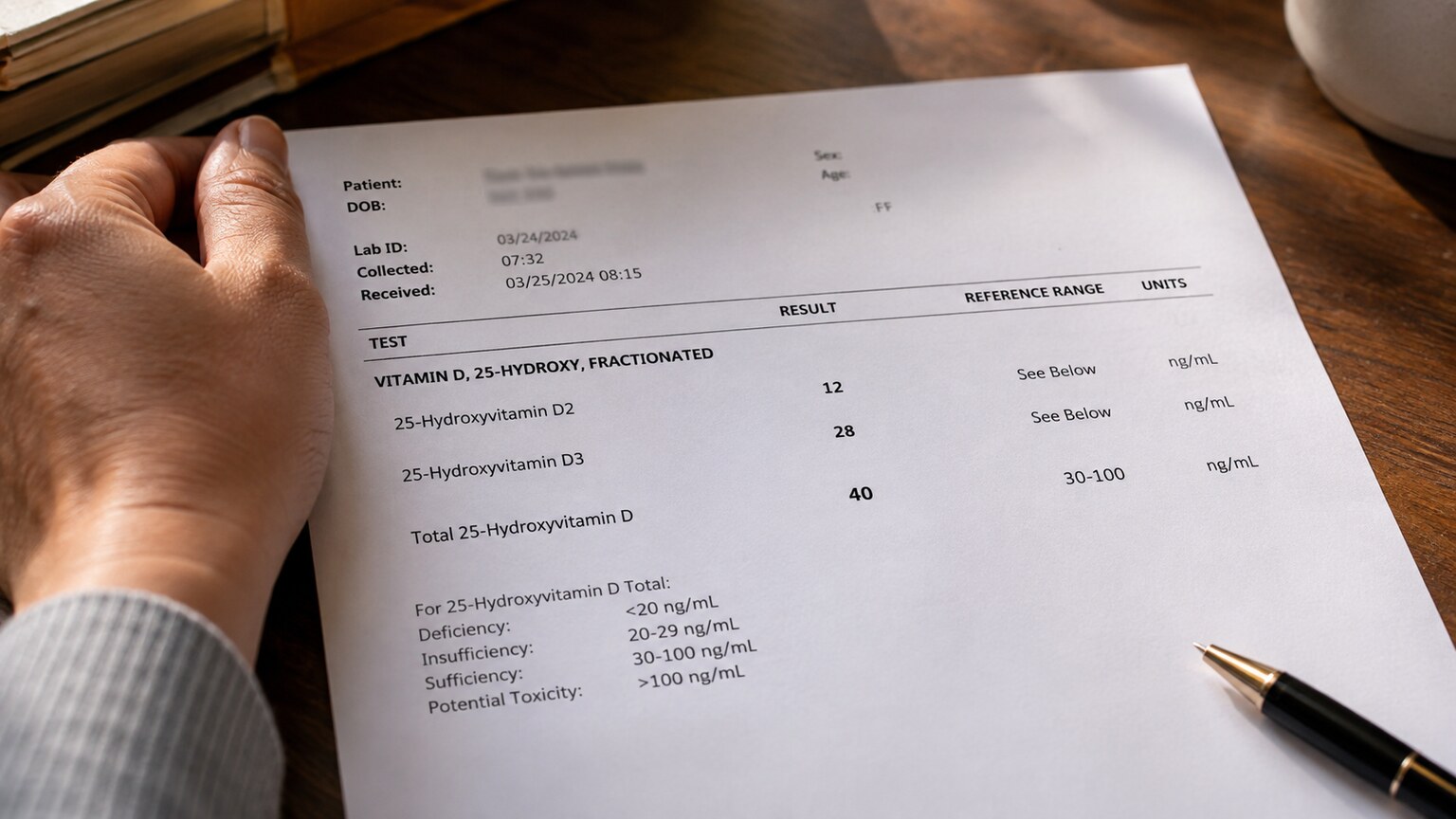
Figure 5. A fractionated report lists 25-hydroxy-D2 and 25-hydroxy-D3 as individual values, with the combined total calculated as the sum of both.
Does the Source Matter Once Levels Are Corrected?
A reasonable question, once someone understands that D2 and D3 differ in potency, is whether the source still matters after a deficiency has been successfully corrected and total levels are sitting comfortably in a normal range. For most day-to-day physiological purposes, the research answer is generally no: once converted to 25-hydroxyvitamin D and, further, to the active 1,25-dihydroxyvitamin D hormone, the molecules originating from D2 and D3 function essentially identically at the cellular level, binding the same vitamin D receptor and triggering the same downstream biological effects on calcium absorption, bone mineralization, and immune regulation.
The practical difference lies almost entirely in getting to and maintaining an adequate total level in the first place — how much of each form you need to take, and how often, to reach and sustain a target blood level — rather than in any meaningful difference in what the two forms do once they've reached their active state inside your cells. This is part of why current major clinical guidelines don't generally recommend one form over the other for someone without a specific dietary restriction, though some clinicians do favor D3 specifically because of its somewhat greater potency per equivalent dose, particularly for people who struggle with adherence to frequent dosing schedules and benefit from the more sustained blood levels D3 tends to produce.
It's worth being precise about what "functions identically" actually means here, since it's a claim about the active hormone form itself, not a claim about the entire supplement product someone swallows or how quickly it gets there. Once 1,25-dihydroxyvitamin D — regardless of whether its original source was D2 or D3 — reaches a target cell, it binds the same vitamin D receptor protein inside that cell, and that receptor doesn't have any mechanism to distinguish which precursor it originated from; the binding and the downstream genetic signaling it triggers are chemically identical either way. Some early laboratory research using isolated cell cultures had raised questions about whether the two forms' metabolites might bind the receptor with slightly different affinity, but more recent and more rigorous research has generally not found a clinically meaningful difference at the receptor level in real physiological conditions, reinforcing that the entire practical difference between D2 and D3 lives upstream, in how efficiently each gets absorbed, converted, and sustained in the bloodstream — not in what either one does once it finally reaches its destination.
What the Research Actually Shows, Study by Study
Because the D2-versus-D3 potency question comes up so often, it's worth understanding a bit about how the underlying research has actually been conducted, rather than accepting the conclusion as an unexamined fact. One of the most frequently cited pieces of evidence is a systematic review and meta-analysis pooling results across multiple randomized controlled trials, which found that D3 supplementation raised serum 25-hydroxyvitamin D levels significantly more than equivalent D2 doses overall, with the size of that advantage varying depending on the specific dosing schedule used across the pooled studies. Individual trials feeding into that broader analysis have used a range of designs — some comparing single large bolus doses, others comparing months of daily dosing — and the consistency of D3's advantage across most, though not all, of these different designs is part of what has made the finding a fairly well-accepted piece of clinical knowledge rather than a single contested result.
That said, the research isn't entirely uniform. A smaller number of studies, particularly ones using daily dosing regimens rather than bolus dosing, have found the difference between D2 and D3 to be modest or, in a few cases, not statistically significant at all — reinforcing the dosing-frequency point made earlier in this article, that the size of the gap depends heavily on how each form is actually administered rather than being a single fixed number that applies identically to every dosing strategy. Researchers have also pointed out that individual variation — differences in body weight, baseline vitamin D status, genetics affecting the relevant metabolic enzymes, and even gut health affecting fat-soluble vitamin absorption generally — can meaningfully affect how any one person responds to either form, meaning population-level research findings describe an average tendency rather than a guarantee for any specific individual.
Who Specifically Needs to Choose D2 Over D3
Despite D3's generally greater potency, D2 remains an important and sometimes necessary option for a specific group of people: strict vegans and others avoiding all animal-derived products for ethical, religious, or dietary reasons. Because D3 is traditionally manufactured from lanolin, a substance derived from sheep's wool, or occasionally from fish liver oil, most conventional D3 supplements are not vegan. D2, derived from irradiated yeast or fungal sources, has historically been the standard vegan-compatible option, which is exactly why prescription D2 became the default high-dose formulation in many healthcare systems in the first place, ensuring the option remained available to patients regardless of dietary restriction.
In recent years, lichen-derived vegan D3 supplements have become increasingly available on the commercial market, offering vegan consumers access to the more potent D3 form without an animal-derived source — a development that has somewhat reduced, though not eliminated, the practical reasons someone might specifically need D2 rather than D3 today. For someone currently taking a vegan D2 supplement and wondering whether their dose is adequate, this is precisely the kind of situation where understanding D2's somewhat lower relative potency, discussed earlier in this article, becomes practically relevant to interpreting their own test results and supplement strategy — it may mean a somewhat higher IU dose, or more consistent daily rather than infrequent dosing, is genuinely appropriate to reach and hold the same target blood level a D3 user might reach with a comparatively smaller or less frequent dose.

Figure 6. Lichen-derived vitamin D3 has become an increasingly available vegan-compatible alternative to traditional lanolin-based D3 supplements.
This growing availability of lichen-derived D3 hasn't fully displaced D2 from vegan supplement shelves, largely because lichen-derived D3 production remains smaller-scale and somewhat more expensive than either conventional D3 or standard D2 manufacturing, meaning D2 still shows up regularly in vegan multivitamins and standalone supplements even as D3 alternatives expand. Beyond strict vegans, this same source consideration occasionally comes up for people following certain religious dietary laws, including some interpretations of kosher and halal dietary practice regarding animal-derived ingredients, where a lanolin-derived D3 supplement's acceptability can depend on specific certification and sourcing details that vary by product and by the standards of a given religious authority, making D2 or certified lichen-derived D3 a more straightforward choice in some of these situations as well.
Doctors treating patients with known lanolin allergies — a genuine, if uncommon, sensitivity to a component of sheep's wool — represent another specific group for whom D2 sometimes becomes the more practical prescribing choice, since it sidesteps the underlying source material entirely rather than requiring a search for a lanolin-free D3 product, which historically has been harder to find than standard D3 formulations, though this has also become somewhat easier as more manufacturers now clearly label their D3 sourcing on the product itself.
For someone reading a supplement label and trying to figure out exactly which form they're taking, checking for the words "ergocalciferol" (D2) versus "cholecalciferol" (D3) directly on the ingredient list remains the most reliable way to know for certain, since "vitamin D" alone on a label doesn't specify which form is inside without checking that chemical name.A Brief History of Why D2 Became the Prescription Standard
Understanding why D2 ended up as the default prescription formulation, despite D3 being generally more potent, requires a bit of manufacturing history. Vitamin D2 was actually isolated and characterized before D3 — early twentieth-century researchers working on rickets, the severe childhood bone disease caused by vitamin D deficiency, identified and began commercially producing ergocalciferol from irradiated ergosterol well before the D3 pathway from cholesterol precursors and UVB light was fully understood and industrially replicable. This early head start meant D2 production infrastructure, quality control standards, and regulatory approval pathways were established first, and pharmaceutical manufacturing — particularly for prescription-strength formulations requiring strict dosing consistency — tends to be conservative about switching established, already-approved production methods once they're in place, even when a scientifically comparable or superior alternative later becomes available.
By the time D3 manufacturing at scale became more practical and its somewhat greater potency became well documented in research, D2 was already the entrenched prescription standard in many healthcare systems, including the United States, and switching an approved prescription drug's active ingredient involves substantial regulatory work that manufacturers haven't broadly pursued, given that D2 remains a perfectly effective treatment for deficiency when dosed appropriately — it simply requires accounting for its somewhat lower potency per IU compared to D3. This is a useful piece of context for understanding why a seemingly "less potent" option remains the standard prescription choice: it isn't a clinical endorsement of D2 over D3, it's largely a historical manufacturing artifact that current practice has simply continued rather than actively re-engineered.
How Dosing Frequency Changes the D2-Versus-D3 Gap
The size of the potency gap between D2 and D3 isn't fixed — it varies meaningfully depending on how the dose is administered, which is a detail easy to miss if you only skim the top-line research conclusion that "D3 is more potent than D2." Several studies have found that the gap between the two forms is considerably smaller, and in some cases nearly disappears, when each is given as a smaller daily dose rather than a large infrequent one. The difference becomes most pronounced specifically with the large, infrequent bolus dosing pattern common in prescription treatment — a single 50,000 IU dose given weekly or monthly — where D3's longer persistence in circulation and stronger binding protein affinity give it more opportunity to demonstrate a sustained advantage over the several weeks between doses.
This distinction matters practically for anyone comparing their own experience against general advice they've read about D2 versus D3, since a friend or online source describing a large gap between the two forms may have been referring specifically to bolus dosing research, while someone taking a modest daily supplement of either form might reasonably see a much smaller practical difference between them. It's another reason a clinician interpreting someone's vitamin D response considers not just which form was taken, but exactly how it was dosed, before drawing conclusions about why a particular level did or didn't respond as expected.
Vitamin D2 and D3 in Food, Beyond Supplements
Supplements and prescriptions aren't the only sources of D2 and D3 worth understanding, since dietary intake and sun exposure both contribute meaningfully to most people's baseline vitamin D status before any supplementation ever enters the picture. On the D3 side, naturally occurring dietary sources are relatively concentrated in a fairly short list of animal foods: fatty fish such as salmon, mackerel, and sardines carry meaningful amounts, egg yolks contain smaller amounts, and beef liver contains a modest quantity as well. Many countries also fortify certain foods, most commonly cow's milk and some plant-based milk alternatives, with added vitamin D — and depending on the specific product and manufacturer, that added fortification may be either D2 or D3, since regulations in most regions permit either form to be used for fortification purposes.
On the D2 side, dietary sources are considerably more limited in ordinary diets. UV-exposed mushrooms are the most significant natural food source, since mushrooms, like human skin, can produce vitamin D when exposed to UV light — some commercial mushroom growers now deliberately expose their crop to UV light specifically to boost its D2 content as a marketed nutritional feature, since standard indoor-grown mushrooms without deliberate UV exposure contain comparatively little vitamin D at all. Fortified foods represent the other major D2 source in most diets, particularly in products marketed specifically as vegan-fortified, where D2 is more commonly used than D3 precisely because of D2's traditional plant and fungal origin, even though lichen-derived vegan D3 fortification has begun appearing in some newer products as well.
Frequently Asked Questions
Is D3 always better than D2?
D3 tends to raise and sustain blood vitamin D levels more effectively per equivalent dose, largely due to differences in binding protein affinity and how long each form persists in circulation. However, "better" depends on context — D2 remains an important option for people avoiding animal-derived products, and once converted to their active form, both function essentially identically at the cellular level.
Will my regular vitamin D test show whether I took D2 or D3?
No. A standard immunoassay-based total vitamin D test reports one combined number and cannot distinguish which original form it came from. Only a specialized fractionated test using LC-MS/MS technology reports 25-hydroxy-D2 and 25-hydroxy-D3 as separate values.
Why would my doctor specifically prescribe D2 instead of D3?
In the United States, prescription high-dose vitamin D (commonly 50,000 IU capsules) is most often formulated as D2 for historical manufacturing reasons, not because it's clinically preferred. Some clinicians may also choose D2 specifically for patients following a vegan diet, since traditional D3 supplements are typically derived from animal sources.
Can taking both D2 and D3 supplements at once cause a problem?
Not inherently — both forms are metabolized through the same pathway and contribute to the same total 25-hydroxyvitamin D level. The main consideration is avoiding an excessive combined total dose, since vitamin D toxicity, while uncommon, is possible with very high sustained intake from any combination of sources over time.
Does the potency gap between D2 and D3 matter for everyday supplement doses, not just prescription doses?
The gap tends to be smaller with modest daily dosing than with large, infrequent bolus doses like a weekly or monthly prescription capsule. Someone taking a standard daily over-the-counter supplement of either form is likely to see a less pronounced practical difference than the gap reported in studies specifically comparing large infrequent doses.
How can I tell which form is in a supplement without asking a lab to test it?
Check the supplement facts label for the specific chemical name rather than just "Vitamin D" — ergocalciferol indicates D2, while cholecalciferol indicates D3. This labeling requirement makes it possible to identify the form directly from the bottle without needing a blood test.
Conclusion
D2 and D3 are close enough chemically to be processed through the exact same metabolic pathway and measured together as a single "vitamin D" number on most standard lab reports — but they aren't identical, and the gap between them shows up specifically in how efficiently each one raises and sustains your blood level, not in what they do once they're actually converted and active in your cells. For the vast majority of people, that distinction never needs to surface: a combined total tells a clinician everything necessary to guide care. It becomes genuinely useful only in narrower situations — confirming a prescribed supplement is actually being absorbed, troubleshooting an unexpectedly stubborn deficiency, or navigating a dietary restriction that rules one form out — which is exactly why fractionated D2/D3 testing exists as a specialized tool rather than a routine default — a purpose-built answer for a purpose-built question, not a replacement for the standard total that already serves nearly everyone else just fine.
Still Not Sure What Your Results Mean?
Upload your labs and get a complete, visual, plain-language interpretation of every biomarker — delivered to your inbox in under 15 minutes.
Get My ReportThis article is for educational purposes only and does not constitute medical advice. Always consult your healthcare provider regarding your specific lab results.